Japan Heat Pump Water Heater Market Size & Growth Rate
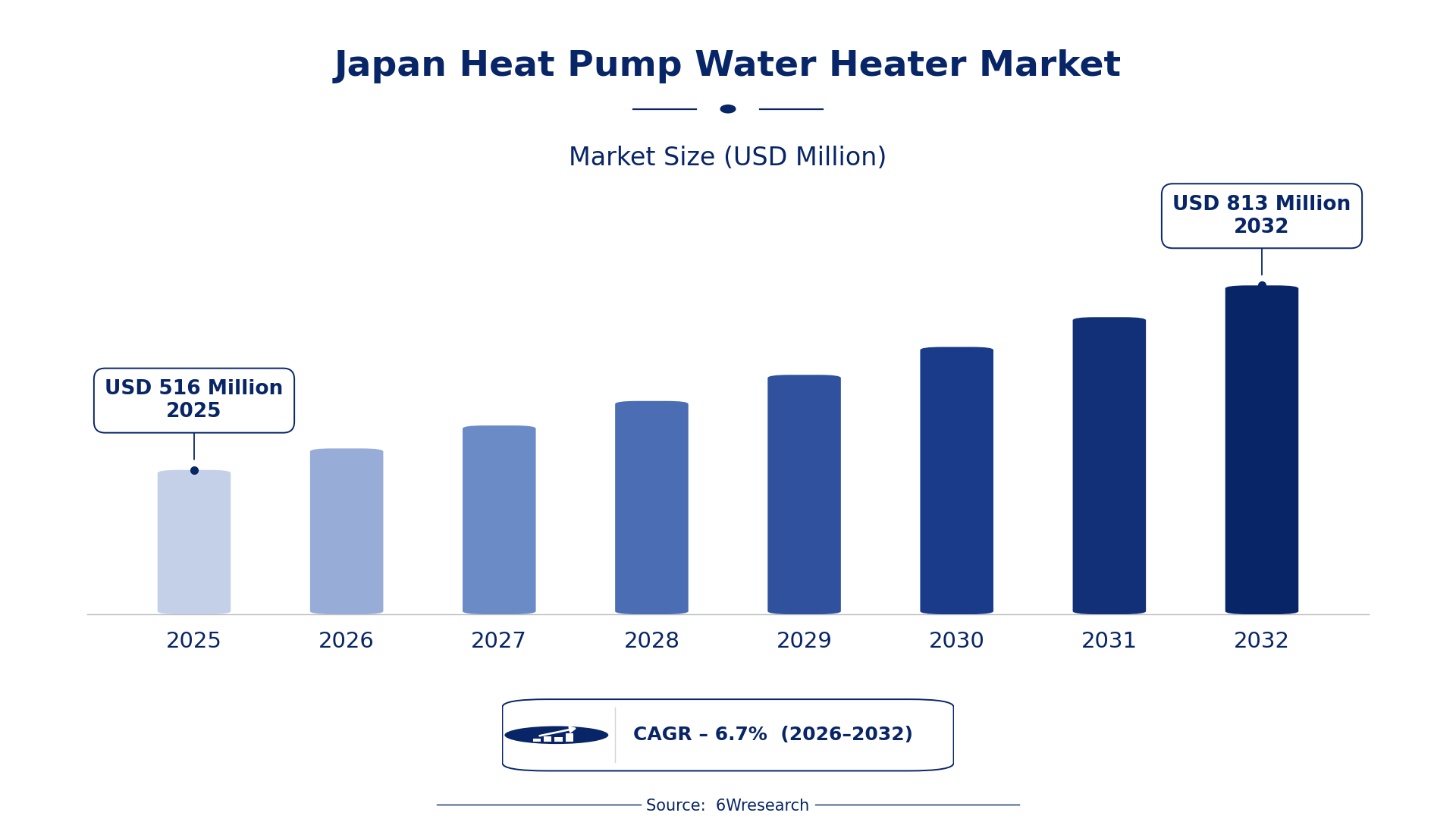
According to 6Wresearch internal database and industry insights, the Japan Heat Pump Water Heater Market was valued at USD 516 Million in 2025 and is projected to reach USD 813 Million by 2032, growing at a CAGR of approximately 6.7% during 2026–2032.
Japan Heat Pump Water Heater Market Highlights
| Report Metric | Details |
| Report Name | Japan Heat Pump Water Heater Market (2026-2032) |
| Market Size 2025 | USD 516 Million |
| Market Size 2032 | USD 813 Million |
| Absolute Growth 2025–2032 | USD 297 Million |
| CAGR 2026–2032 | 6.7% |
| Peak Annual Growth | 9.2% in 2026 |
| Forecast Period | 2026–2032 |
| Historical Data | 2022–2025 |
| Base Year | 2025 |
| Leading Type, 2025 | Air Source (56% share) |
| Leading Storage, 2025 | Up to 500 L (49% share) |
| Leading Capacity, 2025 | Up to 10 kW (36% share) |
| Fastest-Growing Type | Geothermal (8.7% CAGR) |
| Fastest-Growing Storage | Above 1000 L (8.1% CAGR) |
| Fastest-Growing Capacity | 10-20 kW (7.9% CAGR) |
| Growing Sector | Residential water heating |
| Key End Users | Residential users, commercial applications, industrial processes |
Japan Heat Pump Water Heater Market Year-wise Growth Rate and Key Drivers (2022–2032)
This graph illustrates the annual growth rates of the market from 2022 to 2032, highlighting a steady upward trajectory and projected market expansion over the forecast period.
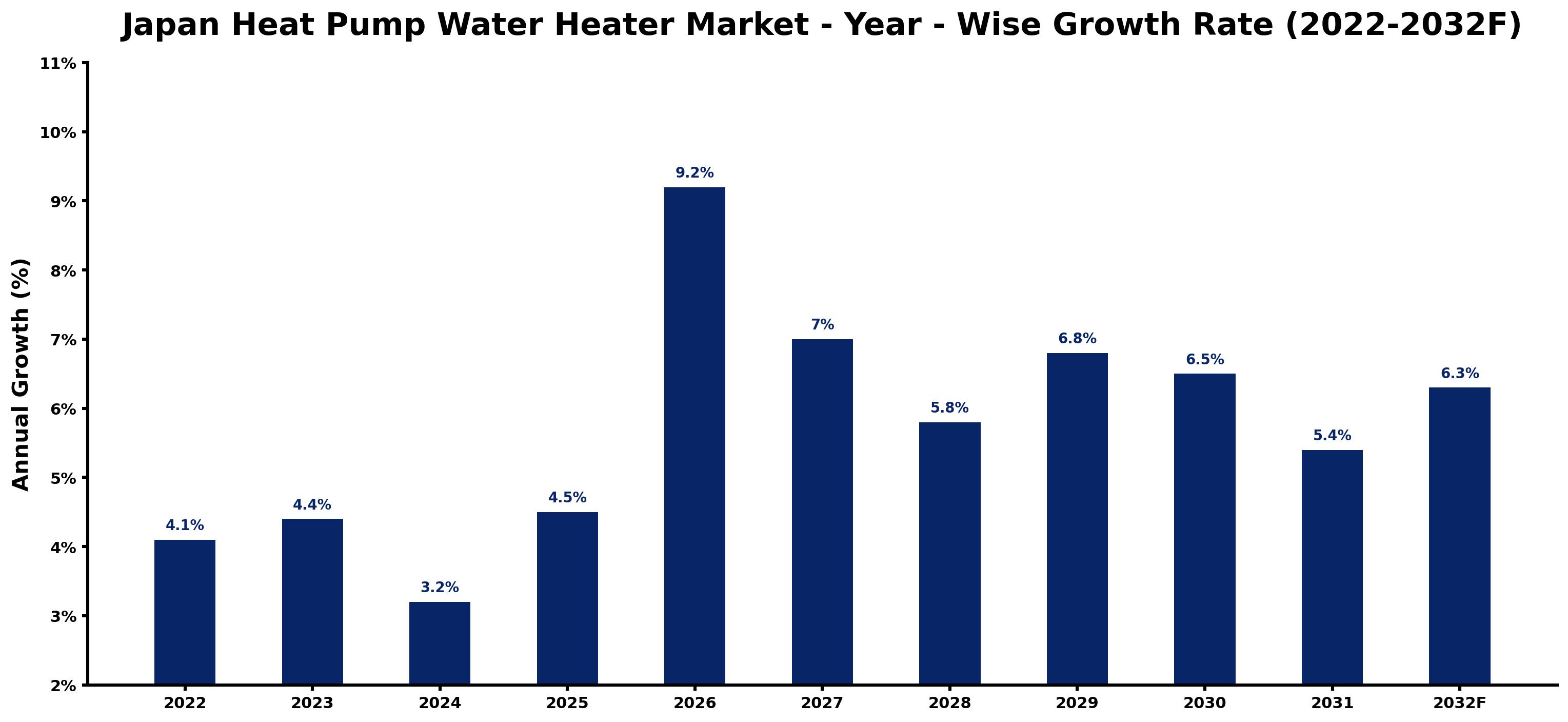
For each year, the table pairs the estimated growth rate with the leading influence on demand, showing how the drivers changed across the period.
| Year | Estimated Annual Growth (%) | Market Rationale |
| 2022 | 4.1 | The market showed steady demand from residential users and urban areas. |
| 2023 | 4.4 | Growth continued as the government promoted energy-efficient appliances, boosting installations. |
| 2024 | 3.2 | Demand growth slowed due to potential market saturation in urban regions. |
| 2025 | 4.5 | Increased installations were driven by rising awareness of energy efficiency benefits. |
| 2026 | 9.2 | The market is expected to peak as subsidies and incentives boost adoption rates. |
| 2027 | 7.0 | Growth will moderate as the market adjusts to the high installation rates of the previous year. |
| 2028 | 5.8 | Demand is projected to continue slowing as competition increases among various heating solutions. |
| 2029 | 6.8 | Growth will accelerate again as new projects and technologies emerge in the sector. |
| 2030 | 6.5 | Market growth is expected to slow due to rising costs and supply chain challenges. |
| 2031 | 5.4 | Demand will continue to moderate as the market stabilises after rapid growth. |
| 2032 | 6.3 | Growth is projected to pick up again as new energy standards are implemented. |
Note: Market size estimations and growth projections presented in this report are based on 6Wresearch's proprietary forecasting methodology, utilizing the latest available industry data, government publications, and primary research inputs.
Japan Heat Pump Water Heater Market Synopsis
Heat pump water heaters transfer heat from the air or ground to heat water, primarily for residential and commercial use. The Japan Heat Pump Water Heater Market reached an installed base of 2.5 million units in 2022, with the Tokyo metropolitan area accounting for 30% of demand. The market is growing due to government initiatives promoting energy-efficient appliances, including a ¥5 billion subsidy in 2023 and a target to increase heat pump adoption by 20% by 2025 as part of climate action efforts.
Market Dynamics Impact Analysis (2026–2032)
| Factor | Type | Impact | Primary Segment Affected |
| Growing residential demand for energy-efficient solutions | Driver | High | Air Source |
| Government subsidies for installations | Driver | High | Geothermal |
| Increasing urban population density | Opportunity | High | Up to 500 L |
| Rising energy costs driving efficiency upgrades | Opportunity | High | Air Source |
| High initial installation costs for heat pumps | Restraint | High | Air Source |
| Limited awareness of geothermal options | Restraint | Medium | Geothermal |
| Compliance with strict energy efficiency standards | Challenge | High | Up to 10 kW |
| Capacity limitations in existing infrastructure | Challenge | Medium | 10-20 kW |
Evaluation of Drivers in Japan Heat Pump Water Heater Market (2026–2032)
These are the developments adding the most demand over the forecast period.
| Drivers | Primary Segment Affected | Why It Matters (Evidence) |
| Increased residential adoption of energy-efficient heating solutions | Air Source | In 2023, residential heat pump water heaters accounted for 60% of the market share, driven by urban demand. |
| Government subsidies for heat pump installations | Geothermal | The government allocated ¥5 billion in 2023 to promote heat pump technology, boosting installations. |
| Rising energy costs prompting efficiency upgrades | Up to 500 L | The average water heating cost using heat pumps is 30% lower compared to traditional systems. |
| Growing awareness of environmental impacts | Air Source | The government aims to increase heat pump adoption by 20% by 2025 as part of its climate action plan. |
| Technological advancements improving heat pump efficiency | Up to 10 kW | The average capacity of residential heat pump water heaters is around 5 kW, making them more appealing. |
Several shifts outside the market lift sales. Rising energy costs are prompting consumers to seek efficient solutions, with average heating costs using heat pumps being 30% lower than traditional methods. Technological advancements have improved heat pump efficiency, making them more attractive to buyers. Increased awareness of environmental impacts is driving more consumers to invest in energy-efficient heating solutions.
Evaluation of Restraints in Japan Heat Pump Water Heater Market
These restraints slow adoption and weigh on supplier margins.
| Market Restraint | Primary Segment Affected | Why It Matters (Evidence) |
| High initial installation costs limit adoption | Air Source | The average price range for heat pump water heaters is between ¥300,000 to ¥1,000,000, deterring some buyers. |
| Limited awareness of geothermal heat pump benefits | Geothermal | Many residential areas lack sufficient knowledge about geothermal systems, leading to underutilisation. |
| Compliance with energy efficiency standards increases costs | Up to 10 kW | Meeting the energy efficiency ratio for heat pumps under ISO 14001 raises operational costs. |
| Capacity limitations in existing infrastructure hinder growth | 10-20 kW | Many residential areas lack sufficient infrastructure to support larger heat pump installations. |
| Market saturation in urban areas slows growth | Up to 500 L | The Tokyo metropolitan area, accounting for 30% of demand, is nearing saturation. |
Japan Heat Pump Water Heater Market Challenges
In 2022, Japan's installed base of heat pump water heaters reached 2.5 million units, but compliance with JIS B 8616 standards creates installation challenges for buyers, potentially delaying projects by six months. Suppliers in urban areas face intense competition, particularly as the Tokyo metropolitan area accounts for 30% of national demand, which pressures them to reduce prices and affects profit margins. Limited availability of essential components disrupts supply chains, leading to longer lead times for producers. Rising raw material costs, with average prices ranging from ¥300,000 to ¥1,000,000, strain financial resources for residential users, limiting their purchasing capabilities.
Trends in the Japan Heat Pump Water Heater Market
These developments are changing demand patterns in the Japan Heat Pump Water Heater Market.
- Shift towards Geothermal Heat Pumps: Since 2023, there has been a notable shift towards geothermal heat pumps, particularly in Hokkaido and Tohoku, where abundant geothermal resources exist. This trend is reflected in a 15% increase in installations in these regions since 2021.
- Transition from Traditional to Energy-Efficient Appliances: The government's 2023 program to promote energy-efficient appliances has led to a significant increase in heat pump installations, with a target of 20% adoption by 2025. This initiative is reshaping the market dynamics.
- Emergence of Smart Heat Pump Technology: The introduction of smart heat pump technology in 2023 has begun to change consumer preferences, with more buyers seeking systems that offer remote monitoring and control features, improving convenience and efficiency.
- Prioritisation of Energy Efficiency in Urban Areas: Urban areas, particularly those with high population densities, are increasingly prioritising energy-efficient solutions. The Tokyo metropolitan area accounts for 30% of the national demand for heat pump water heaters.
Investment Opportunities in the Japan Heat Pump Water Heater Market
Where to invest in the Japan Heat Pump Water Heater Market: the main openings are set out below.
- Gap in Geothermal Heat Pump Adoption: With geothermal heat pumps underutilised, particularly in urban areas, there is an opportunity for suppliers to educate buyers on their benefits. The average capacity of residential heat pump water heaters is around 5 kW, indicating a potential market for larger systems.
- Growing Demand for Larger Storage Solutions: The Above 1000 L segment is growing as larger households and businesses seek efficient heating solutions. Suppliers can target this segment by offering tailored solutions to meet their needs.
- Investment in Energy-Efficient Upgrades: As energy costs rise, there is a pressing need for energy-efficient upgrades in residential settings. Buyers in urban areas are looking for solutions that reduce long-term costs, creating opportunities for new entrants.
- Timing of Government Subsidies: With the government allocating ¥5 billion for heat pump installations in 2023, now is an ideal time for suppliers to engage with buyers seeking financial incentives for energy-efficient upgrades.
Government Initiatives in the Japan Heat Pump Water Heater Market
The GX Basic Policy, adopted in 2023, aims to mobilise approximately JPY 150 trillion for public-private decarbonisation investments over the next decade. This policy strengthens the existing framework established by the Water Supply Act and Sewerage Act, which set standards for water quality and supply, ensuring that heat pump technology aligns with national environmental goals.
Buyers of heat pump water heaters benefit from the government's subsidy scheme, which provides financial support for installations. The Ministry of the Environment oversees this programme, ensuring that funds are allocated effectively to promote energy-efficient appliances, thereby encouraging more households to invest in heat pump technology.
Future Insight of the Japan Heat Pump Water Heater Market
The launch of energy-efficient appliance programmes will drive increased adoption of heat pump technology in residential areas. By 2032, the government aims to raise heat pump installations by 20%, supported by tax incentives that encourage energy-efficient upgrades. Innovations from the Japan Heat Pump & Thermal Storage Technology Center will improve efficiency and lower costs for users. With the average water heating cost using heat pumps being 30% lower compared to traditional systems, buyers will benefit from reduced operational expenses while suppliers will encounter expanded market opportunities.
Market Segmentation Analysis
Japan Heat Pump Water Heater Market report covers a detailed analysis of the following market segments:
By Type – Air Source Leads, Geothermal Expected to Grow Fastest
According to Sumit Sagar, AM at 6Wresearch, Air Source took 56% of type revenue in 2025, more than any other category. Air source heat pumps dominate the market due to their suitability for residential heating applications, appealing to homeowners in urban areas. With the Tokyo metropolitan area accounting for 30% of national demand, this segment benefits from high population density and energy efficiency awareness. Geothermal is set to record the highest CAGR in this split, 8.7% over 2026–2032. Geothermal heat pumps are experiencing rapid growth, particularly in regions like Hokkaido and Tohoku, where geothermal resources are abundant. The 15% increase in installations since 2021 highlights a growing preference for sustainable energy solutions in commercial buildings. Suppliers should focus on promoting geothermal options to capitalise on this growing trend.
By Storage – Up to 500 L Leads, Above 1000 L Expected to Grow Fastest
In 2025, Up to 500 L led the storage split with a 49% share. Heat pump water heaters with a capacity of up to 500 L dominate the market in Japan, particularly among small households. Their effectiveness in meeting typical residential water heating needs and affordability solidify their leading position. Above 1000 L is projected to grow fastest, at a CAGR of 8.1% during 2026–2032. The segment for heat pump water heaters above 1000 L is growing rapidly, primarily due to increasing demand in larger commercial applications. This growth indicates a shift towards energy-efficient solutions in sectors that require substantial water heating. Suppliers should prioritise the development of larger capacity models to meet the rising demands of commercial users.
By Capacity – Up to 10 kW Leads, 10-20 kW Expected to Grow Fastest
Up to 10 kW accounted for 36% of the market by capacity in 2025. Heat pump water heaters with a capacity of up to 10 kW are tailored for residential use, effectively addressing the needs of average households. Their compatibility with standard home water heating requirements reinforces their market leadership. Over 2026–2032, 10-20 kW is expected to post the fastest growth, at a CAGR of 7.9%. The 10-20 kW capacity segment is experiencing notable growth, driven by its suitability for medium residential and small commercial settings with higher heating demands. This trend highlights the increasing importance of adaptable heating solutions as energy efficiency becomes a priority. Manufacturers need to expand their product offerings in the 10-20 kW range to better accommodate medium-sized residential and small commercial clients.
Key Attractiveness of the Report
- 10 Years of Market Numbers
- Historical Data Starting from 2022 to 2025
- Base Year 2025
- Forecast Data until 2032
- Key Performance Indicators Impacting the Market
- Major Upcoming Developments and Projects
Key Highlights of the Report:
- Japan Heat Pump Water Heater Market Outlook
- Market Size of Japan Heat Pump Water Heater Market, 2025
- Forecast of Japan Heat Pump Water Heater Market, 2032
- Historical Data and Forecast of Japan Heat Pump Water Heater Revenues & Volume for the Period 2022-2032
- Japan Heat Pump Water Heater Market Trend Evolution
- Japan Heat Pump Water Heater Market Drivers and Challenges
- Japan Heat Pump Water Heater Price Trends
- Japan Heat Pump Water Heater Porter's Five Forces
- Japan Heat Pump Water Heater Industry Life Cycle
- Historical Data and Forecast of Japan Heat Pump Water Heater Market Revenues & Volume By Type for the Period 2022-2032
- Historical Data and Forecast of Japan Heat Pump Water Heater Market Revenues & Volume By Air Source for the Period 2022-2032
- Historical Data and Forecast of Japan Heat Pump Water Heater Market Revenues & Volume By Geothermal for the Period 2022-2032
- Historical Data and Forecast of Japan Heat Pump Water Heater Market Revenues & Volume By Storage for the Period 2022-2032
- Historical Data and Forecast of Japan Heat Pump Water Heater Market Revenues & Volume By Up to 500 L for the Period 2022-2032
- Historical Data and Forecast of Japan Heat Pump Water Heater Market Revenues & Volume By 500??1000 L for the Period 2022-2032
- Historical Data and Forecast of Japan Heat Pump Water Heater Market Revenues & Volume By Above 1000 L for the Period 2022-2032
- Historical Data and Forecast of Japan Heat Pump Water Heater Market Revenues & Volume By Capacity for the Period 2022-2032
- Historical Data and Forecast of Japan Heat Pump Water Heater Market Revenues & Volume By Up to 10 kW for the Period 2022-2032
- Historical Data and Forecast of Japan Heat Pump Water Heater Market Revenues & Volume By 10-20 kW for the Period 2022-2032
- Historical Data and Forecast of Japan Heat Pump Water Heater Market Revenues & Volume By 20-30 kW for the Period 2022-2032
- Historical Data and Forecast of Japan Heat Pump Water Heater Market Revenues & Volume By 30-100 kW for the Period 2022-2032
- Historical Data and Forecast of Japan Heat Pump Water Heater Market Revenues & Volume By 10??150 kW for the Period 2022-2032
- Historical Data and Forecast of Japan Heat Pump Water Heater Market Revenues & Volume By Above 150 kW for the Period 2022-2032
- Japan Heat Pump Water Heater Import Export Trade Statistics
- Market Opportunity Assessment By Type
- Market Opportunity Assessment By Storage
- Market Opportunity Assessment By Capacity
- Japan Heat Pump Water Heater Top Companies Market Share
- Japan Heat Pump Water Heater Competitive Benchmarking By Technical and Operational Parameters
- Japan Heat Pump Water Heater Company Profiles
- Japan Heat Pump Water Heater Key Strategic Recommendations
Market Covered
This report examines the market across the segments below.
By Type
- Air Source
- Geothermal
By Storage
- Up to 500 L
- 500“1000 L
- Above 1000 L
By Capacity
- Up to 10 kW
- 10-20 kW
- 20-30 kW
- 30-100 kW
- 10“150 kW
- Above 150 kW































