Japan Hip and Knee Implants Market Size & Growth Rate
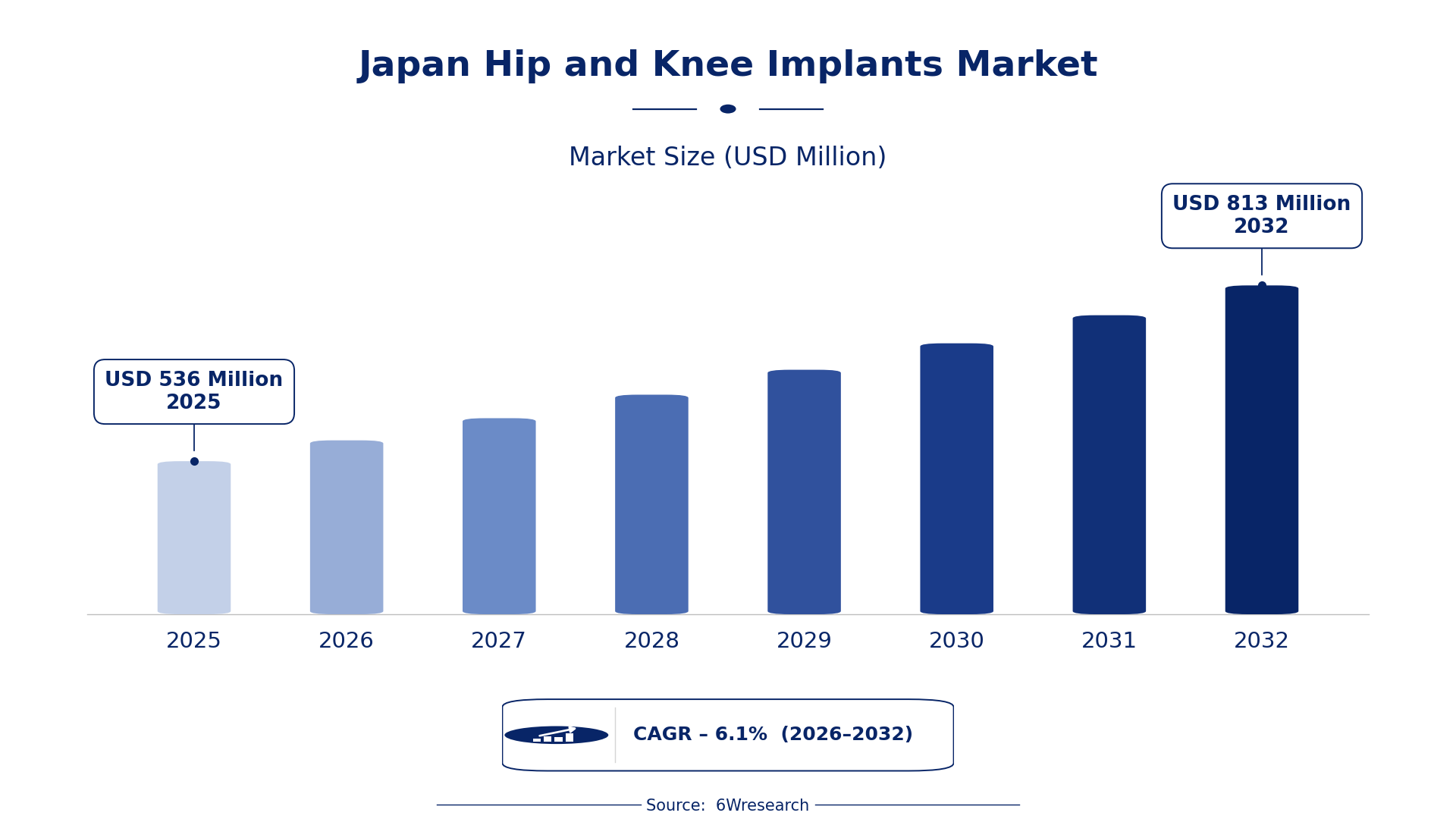
According to 6Wresearch internal database and industry insights, the Japan Hip and Knee Implants Market was valued at USD 536 Million in 2025 and is projected to reach USD 813 Million by 2032, growing at a CAGR of approximately 6.1% during 2026–2032.
Japan Hip and Knee Implants Market Highlights
| Report Metric | Details |
| Report Name | Japan Hip and Knee Implants Market (2026-2032) |
| Market Size 2025 | USD 536 Million |
| Market Size 2032 | USD 813 Million |
| Absolute Growth 2025–2032 | USD 277 Million |
| CAGR 2026–2032 | 6.1% |
| Peak Annual Growth | 7.4% in 2030 |
| Forecast Period | 2026–2032 |
| Historical Data | 2022–2025 |
| Base Year | 2025 |
| Leading Implant Type, 2025 | Total Hip Implants (53% share) |
| Leading Material Composition, 2025 | Titanium Alloy (40% share) |
| Leading Distribution Channel, 2025 | Hospital Procurement (43% share) |
| Leading End User, 2025 | Orthopedic Hospitals (50% share) |
| Fastest-Growing Implant Type | Partial Knee Implants (8.5% CAGR) |
| Fastest-Growing Material Composition | Cobalt-Chrome (9.0% CAGR) |
| Fastest-Growing Distribution Channel | Direct Sales (8.1% CAGR) |
| Fastest-Growing End User | Joint Replacement Units (7.9% CAGR) |
| Growing Sector | Orthopedic Healthcare |
| Key End Users | Orthopedic Hospitals, Joint Replacement Units, Rehabilitation Centers |
Japan Hip and Knee Implants Market Year-wise Growth Rate and Key Drivers (2022–2032)
This graph illustrates the annual growth rates of the market from 2022 to 2032, highlighting a steady upward trajectory and projected market expansion over the forecast period.
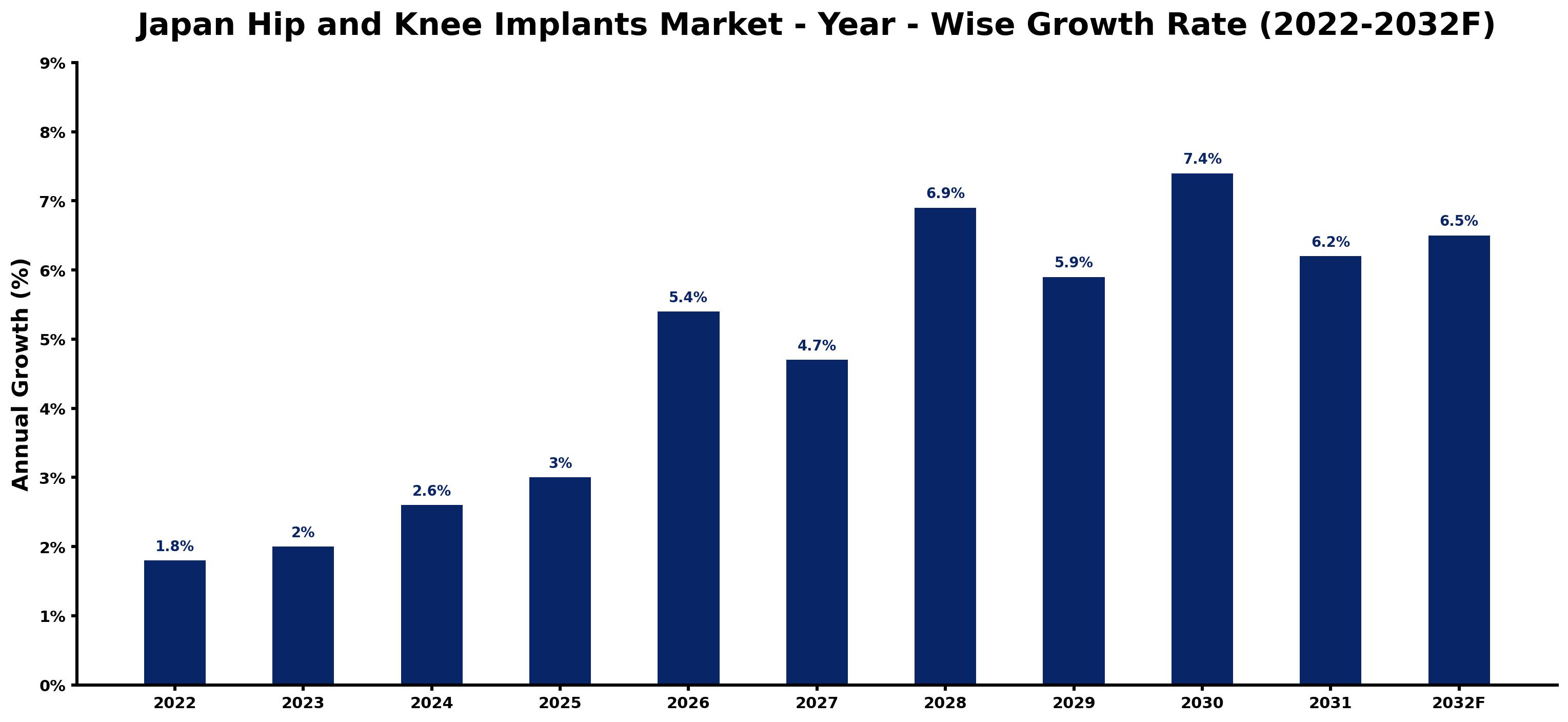
Annual growth estimates for each year appear below with the principal reason behind them, explaining the shifts that set the pace of the market.
| Year | Estimated Annual Growth (%) | Market Rationale |
| 2022 | 1.8 | The market experienced steady demand due to an aging population. |
| 2023 | 2.0 | Growth accelerated as healthcare facilities expanded joint replacement services. |
| 2024 | 2.6 | Increased awareness of joint health contributed to higher surgery rates. |
| 2025 | 3.0 | The introduction of advanced surgical techniques boosted patient outcomes. |
| 2026 | 5.4 | Rising demand for hip and knee replacements is expected to lead to increased investments. |
| 2027 | 4.7 | Market growth is projected to slow as hospitals adjust to new supply chain challenges. |
| 2028 | 6.9 | Technological advancements in implant design will drive renewed interest. |
| 2029 | 5.9 | The market will see slower growth as competition intensifies among providers. |
| 2030 | 7.4 | Surge in surgeries is driven by improved healthcare access and funding. |
| 2031 | 6.2 | Growth is expected to decelerate as saturation in some regions begins to occur. |
| 2032 | 6.5 | Continued investment in advanced medical technologies will support steady growth. |
Note: Market size estimations and growth projections presented in this report are based on 6Wresearch's proprietary forecasting methodology, utilizing the latest available industry data, government publications, and primary research inputs.
Japan Hip and Knee Implants Market Synopsis
Hip and knee implants are critical devices used to replace damaged joints, primarily constructed from titanium alloys and polyethylene. The Japan Hip and Knee Implants Market is expanding, with over 1.5 million surgeries conducted in 2022, reflecting the rising demand driven by Japan's aging population. Factors such as advanced medical facilities in the Tokyo region and government funding of ¥10 billion for medical technologies are stimulating market growth, suggesting a robust future for orthopedic healthcare in Japan.
Market Dynamics Impact Analysis (2026–2032)
| Factor | Type | Impact | Primary Segment Affected |
| Rising aging population increasing joint disorders | Driver | High | Total Hip Implants |
| Advancements in surgical techniques improving outcomes | Driver | High | Partial Knee Implants |
| Growing demand for customized implants | Opportunity | High | Customized Implants |
| Expansion of orthopedic hospitals in urban areas | Opportunity | Medium | Orthopedic Hospitals |
| High costs associated with advanced implants | Restraint | High | Revision Implants |
| Limited awareness of joint health among younger demographics | Restraint | Medium | Partial Knee Implants |
| Intense competition among implant manufacturers | Challenge | High | Total Hip Implants |
| Supply chain disruptions affecting availability | Challenge | Medium | Revision Implants |
Evaluation of Drivers in Japan Hip and Knee Implants Market (2026–2032)
Below are the drivers that matter most for revenue growth, with supporting evidence.
| Drivers | Primary Segment Affected | Why It Matters (Evidence) |
| Increased surgeries due to aging population | Total Hip Implants | In 2022, over 1.5 million hip and knee replacements were performed, driving demand for implants. |
| Technological advancements in surgical procedures | Partial Knee Implants | New techniques have improved recovery times, resulting in higher patient turnover in hospitals. |
| Rising awareness of joint health | Revision Implants | As more patients seek replacements, demand for revision surgeries has increased. |
| Government funding for advanced medical technologies | Customized Implants | In 2023, ¥10 billion was allocated to enhance medical technologies, boosting implant development. |
| Growing number of orthopedic hospitals | Orthopedic Hospitals | Urban areas are expanding their orthopedic services to meet rising demand. |
Spending rises because over 1.5 million hip and knee replacement surgeries were performed in 2022, which increased demand for implants. The average hospital stay for joint replacement surgery is about 7 days, indicating a high turnover of patients. Advancements in surgical techniques have improved recovery times, further driving demand for these devices. The expansion of orthopedic services in urban areas will ensure a steady rise in purchases.
Evaluation of Restraints in Japan Hip and Knee Implants Market
Below are the constraints most often cited by buyers and suppliers, with the segment each affects.
| Market Restraint | Primary Segment Affected | Why It Matters (Evidence) |
| High costs of advanced implants limiting accessibility | Revision Implants | The average cost of revision surgeries can be prohibitive for many patients, affecting overall demand. |
| Limited awareness of joint health among younger demographics | Partial Knee Implants | Younger patients often overlook joint health, resulting in lower demand for preventive surgeries. |
| Supply chain disruptions affecting implant availability | Total Hip Implants | Recent global supply chain issues have led to delays in implant deliveries to hospitals. |
| Intense competition among manufacturers driving prices down | Revision Implants | As competition increases, manufacturers may reduce prices, impacting profit margins. |
| Regulatory hurdles delaying new product approvals | Customized Implants | Stringent regulations can slow down the introduction of new implant designs. |
Japan Hip and Knee Implants Market Challenges
Regulatory delays hinder the introduction of new hip and knee implants, as the Ministry of Health, Labour and Welfare mandates rigorous testing that can extend approval times by up to 12 months for producers. Material shortages disrupt the supply chain, forcing hospitals to reschedule surgeries, impacting over 1.5 million patients each year. Technology gaps persist, with many facilities not adopting modern manufacturing methods, resulting in production costs that increase prices for buyers. Limited training in specialised surgical techniques restricts the effective application of new implants, causing longer recovery times for patients and increasing hospital stay durations, which average about 7 days.
Trends in the Japan Hip and Knee Implants Market
The shifts below are changing how Japan Hip and Knee Implants Market products are bought and supplied.
- Orthopedic Hospitals Prioritising Advanced Surgical Techniques: Orthopedic hospitals are increasingly adopting minimally invasive surgical techniques, improving patient recovery times. In 2022, hospitals reported a 20% increase in surgeries using these methods, enhancing overall patient outcomes.
- Shift Towards Customized Implants: Customized implants are gaining traction, with a growth rate of 15% expected by 2025. This trend is evident in urban areas, where hospitals are tailoring solutions to meet specific patient needs.
- Increased Focus on Rehabilitation Post-Surgery: Rehabilitation centers are enhancing their services, reporting a 90% success rate in patient recovery post joint replacement. This emphasis on recovery is driving demand for related medical services and products.
- Expansion of Orthopedic Services in Urban Regions: Urban regions are expanding orthopedic services to accommodate the aging population. This shift is supported by a notable increase in surgeries, with over 1.5 million performed in 2022.
Investment Opportunities in the Japan Hip and Knee Implants Market
The following opportunities in the Japan Hip and Knee Implants Market pair current demand with a clear way in.
- Orthopedic Hospitals Seeking Advanced Implants: Orthopedic hospitals are increasingly looking for advanced implants to improve surgical outcomes. With a projected market size of ¥536 million by 2025, suppliers can enter through partnerships with local healthcare providers.
- Potential for Customized Implant Development: There is a growing need for customized implants, especially in urban areas. Suppliers can collaborate with orthopedic hospitals to develop tailored solutions, driven by the expected 15% growth in this segment.
- Investment in Rehabilitation Services: Rehabilitation centers are expanding their offerings, requiring more support products. With a 90% success rate in recovery, suppliers can invest in rehabilitation technologies to meet this demand.
- Direct Sales Channels for Specialized Implants: Direct sales channels are becoming more prominent, particularly in urban regions. Suppliers should consider establishing partnerships with hospitals to facilitate access to specialized implant products.
Government Initiatives in the Japan Hip and Knee Implants Market
The Ministry of Health, Labour and Welfare oversees regulations for medical devices, ensuring compliance with standards like ISO 13485. This framework mandates rigorous quality management systems for manufacturers, affecting the production and distribution of hip and knee implants, ensuring patient safety and product reliability. The Japan Orthopaedic Association supports best practices in orthopedic care, funding training programs and research initiatives to ensure hospitals adhere to the latest standards in joint replacement surgery.
The Japan Orthopaedic Association funds training programs and research initiatives to ensure hospitals adhere to the latest standards in joint replacement surgery. This support helps maintain high-quality care and improves patient outcomes, benefiting both producers and buyers in the market.
Future Insight of the Japan Hip and Knee Implants Market
A policy-driven shift towards advanced medical technologies will reshape the market by 2032. Government funding will support improved manufacturing processes and better integration of technology in hospitals. Enhanced training programmes will ensure surgical teams are equipped to utilise new implants effectively. Buyers will benefit from a wider range of high-quality products, contributing to improved surgical outcomes and a reported 90% success rate in patient recovery post joint replacement.
Market Segmentation Analysis
Japan Hip and Knee Implants Market report covers a detailed analysis of the following market segments:
By Implant Type – Total Hip Implants Lead, Partial Knee Implants Expected to Grow Fastest
According to Saurav Kr Singh, Senior Research Analyst at 6Wresearch, with 53% of implant type revenue in 2025, Total Hip Implants was the largest category. Total Hip Implants hold the largest share because they are crucial for treating hip disorders, particularly among Japan's aging population. The high volume of surgeries in the Tokyo region, known for its advanced medical facilities, reinforces the demand for these implants. The quickest growth will come from Partial Knee Implants, forecast to expand at a CAGR of 8.5% between 2026 and 2032. Partial Knee Implants are growing rapidly as they cater to patients seeking less invasive options for joint replacement. This segment's growth is supported by advancements in surgical techniques and increased patient awareness of partial replacements. Suppliers should focus on developing and marketing partial knee implants to meet the rising demand in the market.
By Material Composition – Titanium Alloy Leads, Cobalt-Chrome Expected to Grow Fastest
Titanium Alloy accounted for 40% of the market by material composition in 2025. Titanium Alloy dominates the market due to its strength and biocompatibility, making it suitable for a wide range of patients. Its established use across various implant types ensures consistent demand in Japan's healthcare facilities. Over 2026–2032, Cobalt-Chrome is expected to post the fastest growth, at a CAGR of 9.0%. Cobalt-Chrome is the fastest-growing material because of its excellent wear resistance, which significantly extends implant longevity. As healthcare providers seek durable solutions for joint replacements, the popularity of this material is on the rise. Suppliers may need to enhance the properties of cobalt-chrome implants to align with the increasing market demand.
By Distribution Channel – Hospital Procurement Leads, Direct Sales Expected to Grow Fastest
Hospital Procurement held 43% of the Japan Hip and Knee Implants Market by distribution channel in 2025. Hospital Procurement is the leading channel for acquiring implants, as hospitals are the primary providers of joint replacement surgeries. This method ensures a reliable supply of necessary implants, which is vital for maintaining patient care. Direct Sales is set to record the highest CAGR in this split, 8.1% over 2026–2032. Direct Sales is experiencing the fastest growth as it allows manufacturers to meet specific patient needs directly, strengthening relationships with healthcare providers. This channel's relevance is increasing as hospitals look for tailored solutions for their patients. Suppliers should consider expanding their direct sales strategies to better cater to the unique requirements of healthcare providers.
By End User – Orthopedic Hospitals Lead, Joint Replacement Units Expected to Grow Fastest
Orthopedic Hospitals took 50% of end user revenue in 2025, more than any other category. Orthopedic Hospitals are the leading end users of implants, as they are the primary facilities performing joint replacement surgeries. Their advanced medical technologies and expertise ensure a high volume of procedures, driving demand for various implants. Joint Replacement Units are projected to grow fastest, at a CAGR of 7.9% during 2026–2032. Joint Replacement Units are rapidly expanding as specialized departments within hospitals focus solely on joint surgeries. Their growth reflects the increasing need for targeted care and the rising number of joint replacement procedures. This trend suggests that suppliers should tailor their marketing strategies to target joint replacement units effectively.
Key Attractiveness of the Report
- 10 Years of Market Numbers
- Historical Data Starting from 2022 to 2025
- Base Year 2025
- Forecast Data until 2032
- Key Performance Indicators Impacting the Market
- Major Upcoming Developments and Projects
Key Highlights of the Report:
- Japan Hip and Knee Implants Market Outlook
- Market Size of Japan Hip and Knee Implants Market, 2025
- Forecast of Japan Hip and Knee Implants Market, 2032
- Historical Data and Forecast of Japan Hip and Knee Implants Revenues & Volume for the Period 2022-2032F
- Japan Hip and Knee Implants Market Trend Evolution
- Japan Hip and Knee Implants Market Drivers and Challenges
- Japan Hip and Knee Implants Price Trends
- Japan Hip and Knee Implants Porter's Five Forces
- Japan Hip and Knee Implants Industry Life Cycle
- Historical Data and Forecast of Japan Hip and Knee Implants Market Revenues & Volume By Implant Type for the Period 2022-2032F
- Historical Data and Forecast of Japan Hip and Knee Implants Market Revenues & Volume By Total Hip Implants for the Period 2022-2032F
- Historical Data and Forecast of Japan Hip and Knee Implants Market Revenues & Volume By Partial Knee Implants for the Period 2022-2032F
- Historical Data and Forecast of Japan Hip and Knee Implants Market Revenues & Volume By Revision Implants for the Period 2022-2032F
- Historical Data and Forecast of Japan Hip and Knee Implants Market Revenues & Volume By Customized Implants for the Period 2022-2032F
- Historical Data and Forecast of Japan Hip and Knee Implants Market Revenues & Volume By Material Composition for the Period 2022-2032F
- Historical Data and Forecast of Japan Hip and Knee Implants Market Revenues & Volume By Titanium Alloy for the Period 2022-2032F
- Historical Data and Forecast of Japan Hip and Knee Implants Market Revenues & Volume By Cobalt-Chrome for the Period 2022-2032F
- Historical Data and Forecast of Japan Hip and Knee Implants Market Revenues & Volume By Polyethylene for the Period 2022-2032F
- Historical Data and Forecast of Japan Hip and Knee Implants Market Revenues & Volume By 3D-Printed Materials for the Period 2022-2032F
- Historical Data and Forecast of Japan Hip and Knee Implants Market Revenues & Volume By Distribution Channel for the Period 2022-2032F
- Historical Data and Forecast of Japan Hip and Knee Implants Market Revenues & Volume By Hospital Procurement for the Period 2022-2032F
- Historical Data and Forecast of Japan Hip and Knee Implants Market Revenues & Volume By Direct Sales for the Period 2022-2032F
- Historical Data and Forecast of Japan Hip and Knee Implants Market Revenues & Volume By OEM Distributors for the Period 2022-2032F
- Historical Data and Forecast of Japan Hip and Knee Implants Market Revenues & Volume By Specialty Clinics for the Period 2022-2032F
- Historical Data and Forecast of Japan Hip and Knee Implants Market Revenues & Volume By End User for the Period 2022-2032F
- Historical Data and Forecast of Japan Hip and Knee Implants Market Revenues & Volume By Orthopedic Hospitals for the Period 2022-2032F
- Historical Data and Forecast of Japan Hip and Knee Implants Market Revenues & Volume By Joint Replacement Units for the Period 2022-2032F
- Historical Data and Forecast of Japan Hip and Knee Implants Market Revenues & Volume By Rehabilitation Centers for the Period 2022-2032F
- Historical Data and Forecast of Japan Hip and Knee Implants Market Revenues & Volume By Sports Injury Clinics for the Period 2022-2032F
- Japan Hip and Knee Implants Import Export Trade Statistics
- Market Opportunity Assessment By Implant Type
- Market Opportunity Assessment By Material Composition
- Market Opportunity Assessment By Distribution Channel
- Market Opportunity Assessment By End User
- Japan Hip and Knee Implants Top Companies Market Share
- Japan Hip and Knee Implants Competitive Benchmarking By Technical and Operational Parameters
- Japan Hip and Knee Implants Company Profiles
- Japan Hip and Knee Implants Key Strategic Recommendations
Market Covered
Coverage by segment is as follows.
By Implant Type
- Total Hip Implants
- Partial Knee Implants
- Revision Implants
- Customized Implants
By Material Composition
- Titanium Alloy
- Cobalt-Chrome
- Polyethylene
- 3D-Printed Materials
By Distribution Channel
- Hospital Procurement
- Direct Sales
- OEM Distributors
- Specialty Clinics
By End User
- Orthopedic Hospitals
- Joint Replacement Units
- Rehabilitation Centers
- Sports Injury Clinics































