Japan Histamine Receptor Drugs Market Size & Growth Rate
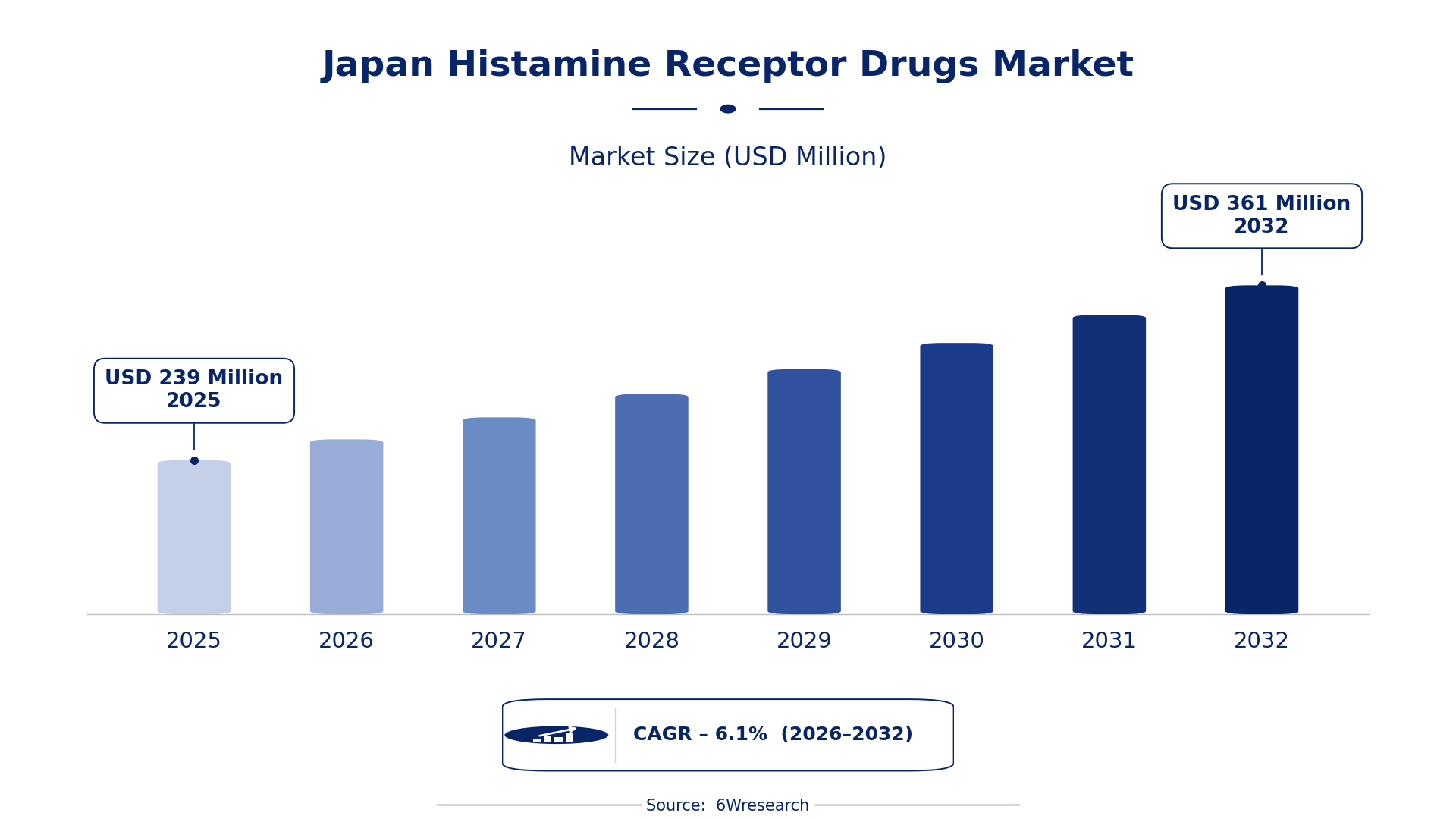
According to 6Wresearch internal database and industry insights, the Japan Histamine Receptor Drugs Market was valued at USD 239 Million in 2025 and is projected to reach USD 361 Million by 2032, growing at a CAGR of approximately 6.1% during 2026–2032.
Japan Histamine Receptor Drugs Market Highlights
| Report Metric | Details |
| Report Name | Japan Histamine Receptor Drugs Market (2026-2032) |
| Market Size 2025 | USD 239 Million |
| Market Size 2032 | USD 361 Million |
| Absolute Growth 2025–2032 | USD 122 Million |
| CAGR 2026–2032 | 6.1% |
| Peak Annual Growth | 7.0% in 2028 |
| Forecast Period | 2026–2032 |
| Historical Data | 2022–2025 |
| Base Year | 2025 |
| Leading Drug Class, 2025 | H1 Antihistamines (42% share) |
| Leading Receptor Type, 2025 | H1 Receptor (49% share) |
| Leading Distribution Channel, 2025 | Retail Pharmacies (47% share) |
| Leading End User, 2025 | Allergy Patients (41% share) |
| Fastest-Growing Drug Class | Dual Antagonists (7.9% CAGR) |
| Fastest-Growing Receptor Type | H1 + H2 (8.5% CAGR) |
| Fastest-Growing Distribution Channel | Online Pharmacies (7.8% CAGR) |
| Fastest-Growing End User | Clinical Researchers (8.0% CAGR) |
| Growing Sector | Allergy Treatments |
| Key End Users | Allergy Patients, Gastric Ulcer Clinics, ENT Specialists |
Japan Histamine Receptor Drugs Market Year-wise Growth Rate and Key Drivers (2022–2032)
This graph illustrates the annual growth rates of the market from 2022 to 2032, highlighting a steady upward trajectory and projected market expansion over the forecast period.
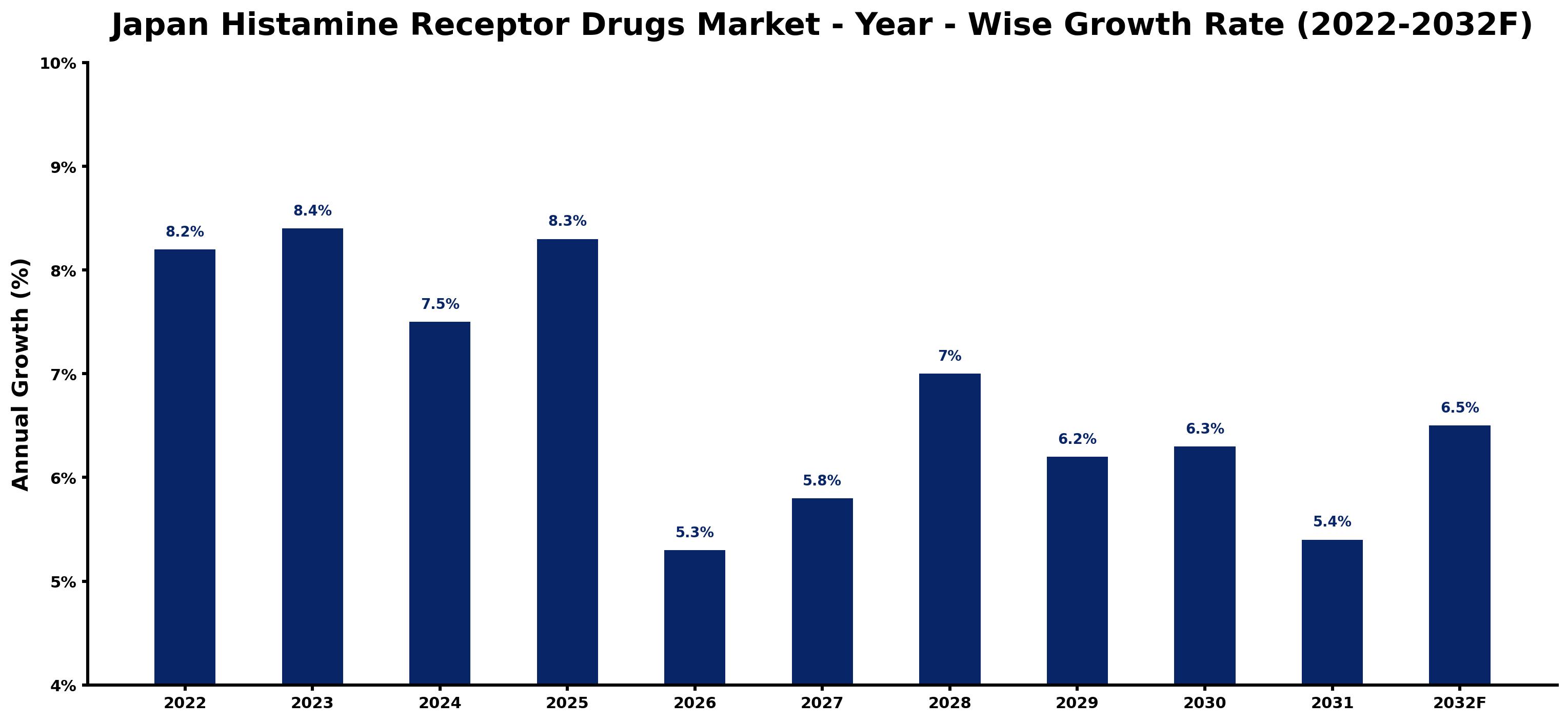
For each year, the table pairs the estimated growth rate with the leading influence on demand, showing how the drivers changed across the period.
| Year | Estimated Annual Growth (%) | Market Rationale |
| 2022 | 8.2 | The market exhibited strong growth due to rising allergy cases across the population. |
| 2023 | 8.4 | Growth accelerated as awareness campaigns for allergy treatments gained traction. |
| 2024 | 7.5 | A slight slowdown occurred as market adjustments followed the previous year's surge. |
| 2025 | 8.3 | Demand increased again as healthcare providers expanded access to antihistamines. |
| 2026 | 5.3 | Growth is expected to slow as the market stabilises after rapid expansions in prior years. |
| 2027 | 5.8 | A moderate rise is projected as investments in research and development continue. |
| 2028 | 7.0 | Demand is expected to surge again as new formulations of antihistamines enter the market. |
| 2029 | 6.2 | Growth is projected to slow as market saturation begins to affect purchasing rates. |
| 2030 | 6.3 | A slight increase is expected as more elderly patients seek allergy relief. |
| 2031 | 5.4 | Demand growth is projected to decelerate as competition intensifies among suppliers. |
| 2032 | 6.5 | An uptick in growth is expected as new clinical trials yield positive results. |
Note: Market size estimations and growth projections presented in this report are based on 6Wresearch's proprietary forecasting methodology, utilizing the latest available industry data, government publications, and primary research inputs.
Japan Histamine Receptor Drugs Market Synopsis
Histamine receptor drugs are critical medications that block histamine action, primarily used for treating allergies and gastric issues. Japan has a high prevalence of allergic rhinitis, affecting around 40% of adults, which drives demand for these medications. The Japan Histamine Receptor Drugs Market is growing due to rising demand from healthcare providers and patients, supported by substantial investments in research and development, which exceeded 1 trillion yen in 2023. This investment indicates strong future growth potential as new treatments are developed.
Market Dynamics Impact Analysis (2026–2032)
| Factor | Type | Impact | Primary Segment Affected |
| Rising prevalence of allergic conditions among the population | Driver | High | H1 Antihistamines |
| Increased investment in research and development for new formulations | Driver | High | H1 Receptor |
| Growing online pharmacy sales for allergy medications | Opportunity | High | Online Pharmacies |
| Expansion of allergy awareness campaigns by health organizations | Opportunity | Medium | Allergy Patients |
| Regulatory hurdles in drug approval processes | Restraint | High | H2 Blockers |
| Market saturation affecting pricing strategies | Restraint | Medium | H1 Antihistamines |
| Competition from alternative treatments for allergies | Challenge | High | H1 + H2 |
| Rising costs of pharmaceutical research and development | Challenge | Medium | Dual Antagonists |
Evaluation of Drivers in Japan Histamine Receptor Drugs Market (2026–2032)
Demand rests on the following drivers, each shown with the segment it touches most.
| Drivers | Primary Segment Affected | Why It Matters (Evidence) |
| Increasing incidence of allergic rhinitis | H1 Antihistamines | Approximately 40% of adults in Japan suffer from allergies, driving demand for antihistamines. |
| Investments in pharmaceutical R&D | H1 Receptor | Pharmaceutical investments exceeded 1 trillion yen in 2023, facilitating new drug development. |
| Expansion of online pharmacies | Online Pharmacies | Sales of allergy medications through online pharmacies increased by 15% in recent years. |
| Rising awareness of allergy treatments | Allergy Patients | Awareness campaigns from health organizations improve treatment accessibility. |
| Growth in clinical trials for antihistamines | H2 Blockers | Ongoing clinical trials in 2023 are expected to introduce new effective treatments. |
The strongest pull on demand comes from the increasing incidence of allergic rhinitis, with around 40% of adults in Japan affected. This condition drives sales of H1 antihistamines, which are widely prescribed. Pharmaceutical investments in research and development exceeded 1 trillion yen in 2023, facilitating the introduction of new formulations. The expansion of online pharmacies has led to a 15% increase in sales of allergy medications, improving patient access. Ongoing clinical trials are expected to introduce new treatments, further driving demand among healthcare providers and patients.
Evaluation of Restraints in Japan Histamine Receptor Drugs Market
These are the pressures that could keep growth below its potential.
| Market Restraint | Primary Segment Affected | Why It Matters (Evidence) |
| Regulatory hurdles delaying drug approvals | H2 Blockers | The approval process can extend timelines, impacting market availability of new treatments. |
| Market saturation leading to price competition | H1 Antihistamines | Increased competition among suppliers results in price reductions, affecting profitability. |
| Limited reimbursement for certain drugs under NHI | H1 + H2 | Reimbursement constraints limit patient access to specific treatments. |
| Rising costs associated with pharmaceutical R&D | Dual Antagonists | High research costs deter investment in new drug development. |
| Alternative treatments gaining popularity | H1 Receptor | The emergence of alternative therapies shifts patient preferences away from traditional antihistamines. |
Japan Histamine Receptor Drugs Market Challenges
Rising regulatory scrutiny has delayed drug approvals, costing healthcare providers up to six months in bringing new antihistamines to market. Shortages of skilled professionals in pharmaceutical manufacturing have led to production delays, resulting in a 20% reduction in the availability of essential allergy medications for patients. Increased competition from online pharmacies has forced traditional distributors to cut prices, which can compromise service quality for healthcare providers. Escalating raw material costs have pushed up prices for consumers, making allergy treatments less accessible for the elderly population, who represent a growing segment of patients.
Trends in the Japan Histamine Receptor Drugs Market
The following changes are redrawing the Japan Histamine Receptor Drugs Market.
- Shift to Online Pharmacies for Allergy Medications: The Tokyo metropolitan area has seen a shift towards online pharmacies for allergy medications, with sales increasing by 15% recently. This trend is changing how patients access treatments, making them more convenient.
- Increased Focus on Allergy Awareness Campaigns: Health organizations are ramping up allergy awareness campaigns, impacting patient education. The prevalence of allergic rhinitis is around 40%, prompting more initiatives to inform the public about available treatments.
- Growth in Clinical Trials for Antihistamines: In 2023, ongoing clinical trials for new antihistamines are expected to yield promising results. This focus on research is vital for developing more effective treatments for allergy sufferers.
- Rising Demand for Dual Antagonists: The market is experiencing a growing interest in dual antagonists, with a projected CAGR of 7.9% from 2026 to 2032. This trend reflects the need for more comprehensive treatment options in allergy management.
Investment Opportunities in the Japan Histamine Receptor Drugs Market
The openings below show where demand in the Japan Histamine Receptor Drugs Market is visible and how suppliers can enter.
- Gap in Allergy Treatment Options: With a growing population suffering from allergies, the market for antihistamines is expanding. Allergy patients represent a significant buyer group, and suppliers can enter through partnerships with local pharmacies.
- Investment in Innovative Drug Formulations: Pharmaceutical companies should focus on developing new antihistamine formulations to meet rising demand. Ongoing clinical trials provide an opportunity for suppliers to collaborate with research institutions.
- Growing Demand for Online Distribution Channels: As online pharmacies expand, there is a clear opportunity for suppliers to enhance their digital presence. This shift is particularly relevant for allergy medications, which are in high demand.
- Expansion of Allergy Clinics: The increasing number of allergy clinics, especially in urban areas, presents a chance for suppliers to provide specialized products. Investing in partnerships with these clinics can improve market access.
Government Initiatives in the Japan Histamine Receptor Drugs Market
The NHI drug price standard, revised regularly by the Ministry of Health, Labour and Welfare, sets reimbursement prices for drugs, impacting how much patients pay for histamine receptor drugs. This policy ensures that essential medications remain accessible to the public, particularly for allergy treatments, which are critical given the high prevalence of allergies in Japan.
The Pharmaceuticals and Medical Devices Agency (PMDA) reviews pharmaceuticals and monitors post-market safety. This agency ensures that new histamine receptor drugs meet safety and efficacy standards, facilitating timely access to effective treatments for patients.
Future Insight of the Japan Histamine Receptor Drugs Market
A shift in regulatory policies will streamline the approval process for new antihistamines, allowing healthcare providers to access treatments more rapidly. Advances in technology will lead to the development of more effective allergy medications, addressing the 40% prevalence of allergic rhinitis among adults. Enhanced distribution networks will improve access to medications in densely populated areas like Tokyo, where allergy clinics are concentrated. With pharmaceutical investments exceeding 1 trillion yen, suppliers will likely pursue innovative solutions to cater to the specific needs of healthcare providers.
Market Segmentation Analysis
Japan Histamine Receptor Drugs Market report covers a detailed analysis of the following market segments:
By Drug Class – H1 Antihistamines Lead, Dual Antagonists Expected to Grow Fastest
According to Saurav Kr Singh, Senior Research Analyst at 6Wresearch, H1 Antihistamines took 42% of drug class revenue in 2025, more than any other category. H1 antihistamines hold the largest share as they are extensively prescribed for allergy relief, catering to a vast population affected by allergic rhinitis. Their widespread use is supported by guidelines from the Japanese Society of Allergology, ensuring their prominence in treatment protocols. The quickest growth will come from Dual Antagonists, forecast to expand at a CAGR of 7.9% between 2026 and 2032. Dual antagonists are rapidly gaining traction due to their effectiveness in specific allergy cases, with ongoing clinical trials highlighting their potential benefits. This growth is expected to continue as healthcare providers increasingly incorporate these treatments into their practice based on new research findings. Suppliers should consider expanding their product lines to include dual antagonists to capitalise on this growing interest.
By Receptor Type – H1 Receptor Leads, H1 + H2 Expected to Grow Fastest
The largest receptor type category in 2025 was H1 Receptor, at 49% of revenue. The H1 receptor is the primary target for allergy medications, making it the leading segment as it addresses the needs of a significant portion of the population suffering from allergies. Its inclusion in the National Health Insurance system ensures that patients have access to these essential treatments. Over 2026–2032, H1 + H2 is expected to post the fastest growth, at a CAGR of 8.5%. The combination of H1 and H2 receptors is gaining momentum as healthcare providers adopt combination therapies to enhance treatment outcomes for allergy patients. This trend is driven by the rising prevalence of allergies and the need for more comprehensive management strategies. Buyers may find greater availability of combination therapies that effectively manage multiple allergy symptoms.
By Distribution Channel – Retail Pharmacies Lead, Online Pharmacies Expected to Grow Fastest
Retail Pharmacies accounted for 47% of the market by distribution channel in 2025. Retail pharmacies serve as the main distribution channel for allergy medications, ensuring essential access for patients throughout Japan via their extensive network. This established presence allows patients to conveniently obtain necessary treatments for their conditions. Online Pharmacies are set to record the highest CAGR in this split, 7.8% over 2026–2032. Online pharmacies are experiencing notable growth, with a 15% increase in sales of allergy medications reflecting a shift towards more convenient purchasing options. This trend is likely to persist as consumers increasingly prefer the ease of online shopping for healthcare products. Suppliers should strengthen their online strategies to meet the increasing demand for allergy medications through digital platforms.
By End User – Allergy Patients Lead, Clinical Researchers Expected to Grow Fastest
In 2025, Allergy Patients led the end user split with a 41% share. Allergy patients represent the largest user group for antihistamines, driven by the high prevalence of allergic rhinitis in Japan, affecting around 40% of adults. This substantial patient population ensures a steady demand for allergy treatments. Clinical Researchers are projected to grow fastest, at a CAGR of 8.0% during 2026–2032. Clinical researchers are seeing increased activity as they engage in drug development and studies, particularly for new antihistamines, which is critical for advancing treatment options. This focus on research is likely to accelerate as the market evolves to meet patient needs. Suppliers should collaborate with clinical researchers to stay ahead of emerging trends and innovations in allergy treatments.
Key Attractiveness of the Report
- 10 Years of Market Numbers
- Historical Data Starting from 2022 to 2025
- Base Year 2025
- Forecast Data until 2032
- Key Performance Indicators Impacting the Market
- Major Upcoming Developments and Projects
Key Highlights of the Report:
- Japan Histamine Receptor Drugs Market Outlook
- Market Size of Japan Histamine Receptor Drugs Market, 2025
- Forecast of Japan Histamine Receptor Drugs Market, 2032
- Historical Data and Forecast of Japan Histamine Receptor Drugs Revenues & Volume for the Period 2022-2032F
- Japan Histamine Receptor Drugs Market Trend Evolution
- Japan Histamine Receptor Drugs Market Drivers and Challenges
- Japan Histamine Receptor Drugs Price Trends
- Japan Histamine Receptor Drugs Porter's Five Forces
- Japan Histamine Receptor Drugs Industry Life Cycle
- Historical Data and Forecast of Japan Histamine Receptor Drugs Market Revenues & Volume By Drug Class for the Period 2022-2032F
- Historical Data and Forecast of Japan Histamine Receptor Drugs Market Revenues & Volume By H1 Antihistamines for the Period 2022-2032F
- Historical Data and Forecast of Japan Histamine Receptor Drugs Market Revenues & Volume By H2 Blockers for the Period 2022-2032F
- Historical Data and Forecast of Japan Histamine Receptor Drugs Market Revenues & Volume By Dual Antagonists for the Period 2022-2032F
- Historical Data and Forecast of Japan Histamine Receptor Drugs Market Revenues & Volume By Inverse Agonists for the Period 2022-2032F
- Historical Data and Forecast of Japan Histamine Receptor Drugs Market Revenues & Volume By Receptor Type for the Period 2022-2032F
- Historical Data and Forecast of Japan Histamine Receptor Drugs Market Revenues & Volume By H1 Receptor for the Period 2022-2032F
- Historical Data and Forecast of Japan Histamine Receptor Drugs Market Revenues & Volume By H2 Receptor for the Period 2022-2032F
- Historical Data and Forecast of Japan Histamine Receptor Drugs Market Revenues & Volume By H1 + H2 for the Period 2022-2032F
- Historical Data and Forecast of Japan Histamine Receptor Drugs Market Revenues & Volume By Receptor Subtypes for the Period 2022-2032F
- Historical Data and Forecast of Japan Histamine Receptor Drugs Market Revenues & Volume By Distribution Channel for the Period 2022-2032F
- Historical Data and Forecast of Japan Histamine Receptor Drugs Market Revenues & Volume By Online Pharmacies for the Period 2022-2032F
- Historical Data and Forecast of Japan Histamine Receptor Drugs Market Revenues & Volume By Retail Pharmacies for the Period 2022-2032F
- Historical Data and Forecast of Japan Histamine Receptor Drugs Market Revenues & Volume By Prescription Networks for the Period 2022-2032F
- Historical Data and Forecast of Japan Histamine Receptor Drugs Market Revenues & Volume By Hospital Distribution for the Period 2022-2032F
- Historical Data and Forecast of Japan Histamine Receptor Drugs Market Revenues & Volume By End User for the Period 2022-2032F
- Historical Data and Forecast of Japan Histamine Receptor Drugs Market Revenues & Volume By Allergy Patients for the Period 2022-2032F
- Historical Data and Forecast of Japan Histamine Receptor Drugs Market Revenues & Volume By Gastric Ulcer Clinics for the Period 2022-2032F
- Historical Data and Forecast of Japan Histamine Receptor Drugs Market Revenues & Volume By ENT Specialists for the Period 2022-2032F
- Historical Data and Forecast of Japan Histamine Receptor Drugs Market Revenues & Volume By Clinical Researchers for the Period 2022-2032F
- Japan Histamine Receptor Drugs Import Export Trade Statistics
- Market Opportunity Assessment By Drug Class
- Market Opportunity Assessment By Receptor Type
- Market Opportunity Assessment By Distribution Channel
- Market Opportunity Assessment By End User
- Japan Histamine Receptor Drugs Top Companies Market Share
- Japan Histamine Receptor Drugs Competitive Benchmarking By Technical and Operational Parameters
- Japan Histamine Receptor Drugs Company Profiles
- Japan Histamine Receptor Drugs Key Strategic Recommendations
Market Covered
This report examines the market across the segments below.
By Drug Class
- H1 Antihistamines
- H2 Blockers
- Dual Antagonists
- Inverse Agonists
By Receptor Type
- H1 Receptor
- H2 Receptor
- H1 + H2
- Receptor Subtypes
By Distribution Channel
- Online Pharmacies
- Retail Pharmacies
- Prescription Networks
- Hospital Distribution
By End User
- Allergy Patients
- Gastric Ulcer Clinics
- ENT Specialists
- Clinical Researchers































