Japan HIV Antiretroviral Market Size & Growth Rate
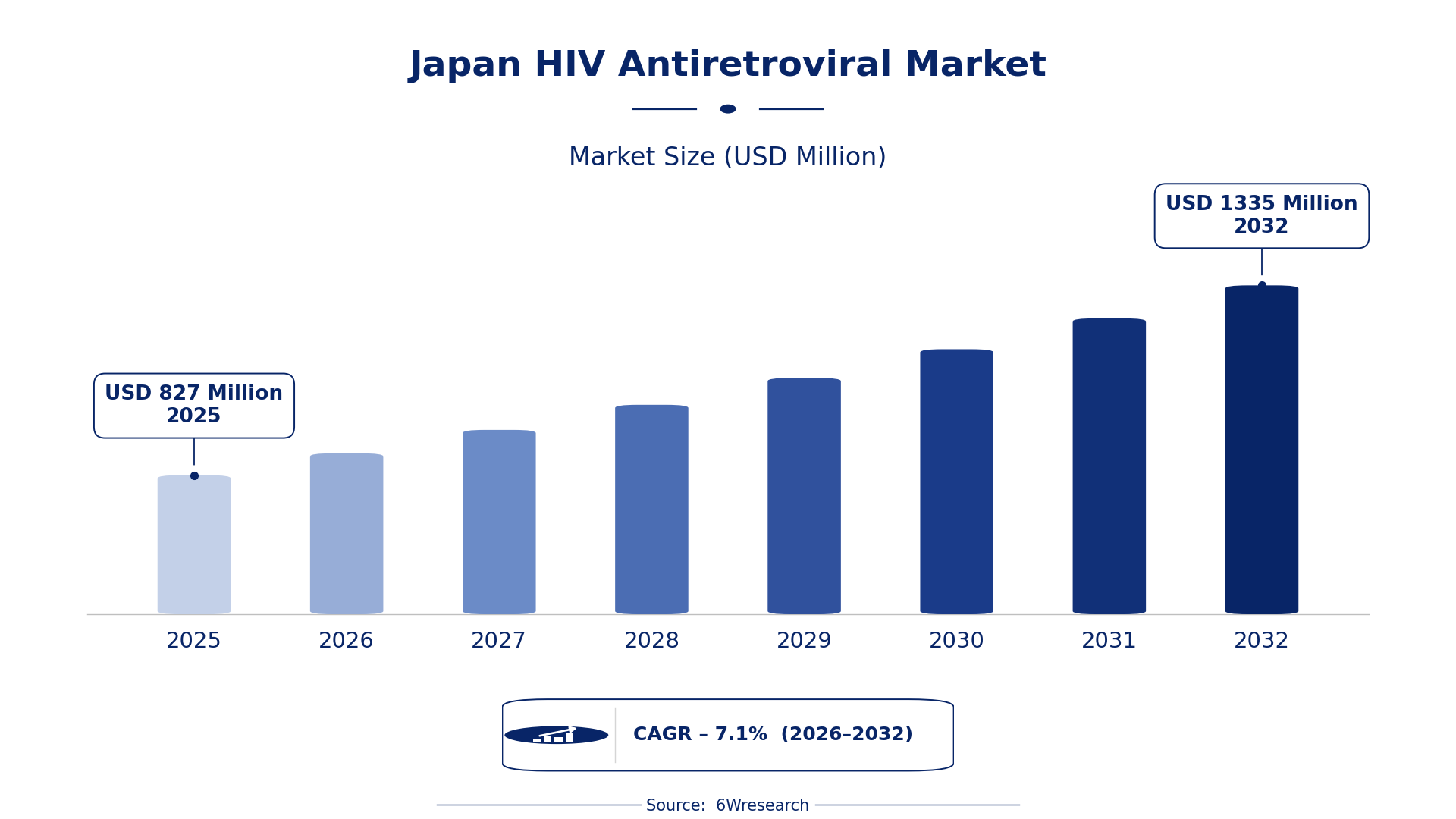
According to 6Wresearch internal database and industry insights, the Japan HIV Antiretroviral Market was valued at USD 827 Million in 2025 and is projected to reach USD 1,335 Million by 2032, growing at a CAGR of approximately 7.1% during 2026–2032.
Japan HIV Antiretroviral Market Highlights
| Report Metric | Details |
| Report Name | Japan HIV Antiretroviral Market (2026-2032) |
| Market Size 2025 | USD 827 Million |
| Market Size 2032 | USD 1,335 Million |
| Absolute Growth 2025–2032 | USD 508 Million |
| CAGR 2026–2032 | 7.1% |
| Peak Annual Growth | 8.1% in 2027 |
| Forecast Period | 2026–2032 |
| Historical Data | 2022–2025 |
| Base Year | 2025 |
| Leading Drug Type, 2025 | NRTIs (43% share) |
| Leading Mechanism of Action, 2025 | Reverse Transcriptase Inhibitors (47% share) |
| Leading Distribution Channel, 2025 | Direct Sales (53% share) |
| Leading End User, 2025 | AIDS Treatment Centers (47% share) |
| Fastest-Growing Drug Type | NNRTIs (9.7% CAGR) |
| Fastest-Growing Mechanism of Action | Non-Nucleoside Inhibitors (9.0% CAGR) |
| Fastest-Growing Distribution Channel | Government Programs (8.9% CAGR) |
| Fastest-Growing End User | Infectious Disease Clinics (9.1% CAGR) |
| Growing Sector | HIV treatment and care |
| Key End Users | Healthcare providers, government health programs, NGOs, HIV care facilities |
Japan HIV Antiretroviral Market Year-wise Growth Rate and Key Drivers (2022–2032)
This graph illustrates the annual growth rates of the market from 2022 to 2032, highlighting a steady upward trajectory and projected market expansion over the forecast period.
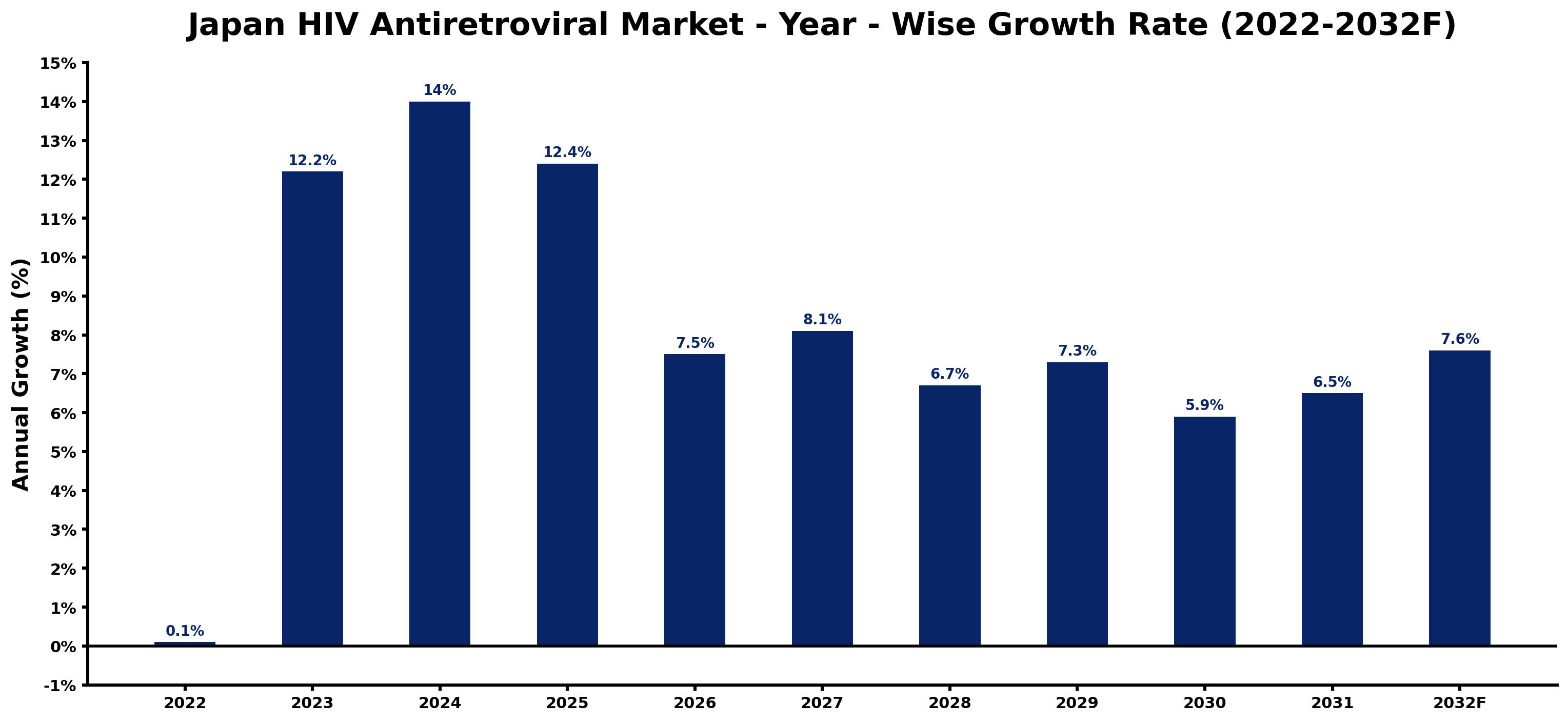
Each row of the following table gives one year's estimated growth and the event or demand shift that explains it.
| Year | Estimated Annual Growth (%) | Market Rationale |
| 2022 | 0.1 | The market experienced minimal growth as healthcare providers adjusted to new treatment protocols. |
| 2023 | 12.2 | Demand surged as healthcare facilities increased access to antiretroviral medications. |
| 2024 | 14.0 | The introduction of new therapies contributed to accelerated market growth. |
| 2025 | 12.4 | Growth slowed slightly as the market began to stabilise following rapid expansion. |
| 2026 | 7.5 | The market is expected to continue growing, but at a slower rate due to increased competition. |
| 2027 | 8.1 | Demand rose again as awareness campaigns effectively reached more patients. |
| 2028 | 6.7 | Growth is projected to decelerate as market saturation begins to take effect among existing treatments. |
| 2029 | 7.3 | The market will see renewed interest as new treatment guidelines are published. |
| 2030 | 5.9 | Growth is expected to slow further as the market adjusts to evolving healthcare needs. |
| 2031 | 6.5 | Demand will increase as healthcare providers expand their treatment offerings. |
| 2032 | 7.6 | The market is projected to grow steadily as new therapies gain approval. |
Note: Market size estimations and growth projections presented in this report are based on 6Wresearch's proprietary forecasting methodology, utilizing the latest available industry data, government publications, and primary research inputs.
Japan HIV Antiretroviral Market Synopsis
HIV antiretrovirals are critical medications that inhibit the replication of the HIV virus, improving immune function and preventing progression to AIDS. The Japan HIV Antiretroviral Market is expanding due to increased demand from healthcare providers and government health programs, with approximately 70% of HIV patients receiving antiretroviral therapy. Key initiatives such as the 'HIV/AIDS Comprehensive Strategy' launched in 2018 are driving further demand, ensuring that more individuals receive timely treatment and care.
Market Dynamics Impact Analysis (2026–2032)
| Factor | Type | Impact | Primary Segment Affected |
| Growing prevalence of HIV cases | Driver | High | NRTIs |
| Increased government funding for HIV prevention programs | Driver | High | Government Programs |
| Rising number of HIV care facilities | Opportunity | Medium | HIV Care Facilities |
| Expansion of treatment guidelines to include new therapies | Opportunity | Medium | Integrase Inhibitors |
| Limited awareness in rural areas | Restraint | High | Infectious Disease Clinics |
| Competition from generic antiretroviral drugs | Restraint | Medium | NNRTIs |
| Supply chain disruptions affecting medication availability | Challenge | High | Hospital Distributors |
| Regulatory hurdles delaying new drug approvals | Challenge | Medium | AIDS Treatment Centers |
Evaluation of Drivers in Japan HIV Antiretroviral Market (2026–2032)
The following drivers explain most of the expected growth.
| Drivers | Primary Segment Affected | Why It Matters (Evidence) |
| Increased prevalence of HIV | NRTIs | Approximately 20,000 people are living with HIV in Japan, driving demand for first-line treatments. |
| Government health initiatives | Government Programs | The government allocated ¥2 billion for HIV prevention programs in 2023, improving access to treatments. |
| Rising healthcare infrastructure | HIV Care Facilities | Japan has over 1,000 registered HIV care facilities, enhancing patient access to antiretroviral therapy. |
| Growing awareness and testing | Infectious Disease Clinics | The launch of the 'HIV Testing and Counseling Program' in 2023 aims to increase testing rates significantly. |
| Advancements in treatment options | Integrase Inhibitors | New therapies are being integrated into treatment regimens, expanding options for healthcare providers. |
A wider customer base explains much of the growth, as approximately 20,000 people are living with HIV in Japan, increasing the demand for antiretroviral treatments. The presence of over 1,000 registered HIV care facilities ensures that patients receive timely treatment. Awareness campaigns launched in recent years are expected to boost testing rates, further driving demand. New treatment options are expanding the choices available to healthcare providers, contributing to the market's growth.
Evaluation of Restraints in Japan HIV Antiretroviral Market
Several factors work against faster growth; the main ones are summarised below.
| Market Restraint | Primary Segment Affected | Why It Matters (Evidence) |
| Limited awareness in rural areas | Infectious Disease Clinics | Many rural regions lack sufficient education on HIV treatment options, hindering patient access. |
| Competition from generic antiretroviral drugs | NNRTIs | The availability of generics at lower prices can reduce market share for branded medications. |
| Supply chain disruptions | Hospital Distributors | Disruptions can delay the availability of essential medications, impacting patient treatment schedules. |
| Regulatory hurdles | AIDS Treatment Centers | Complex approval processes for new therapies can slow down the introduction of new treatments. |
| Insufficient funding for outreach programs | Government Programs | Limited resources can restrict the effectiveness of programs aimed at increasing awareness and testing. |
Japan HIV Antiretroviral Market Challenges
In Japan, limited supplier options for HIV antiretrovirals can delay procurement processes by several weeks, negatively impacting patient care for healthcare providers. Competition among producers leads to price wars, which can reduce profit margins by up to 15% for manufacturers, forcing them to cut back on research and development. High production costs from complex synthesis processes inflate prices for buyers, straining government health programs that allocated ¥2 billion for prevention in 2023. Skills shortages in specialised pharmaceutical manufacturing disrupt production efficiency, causing delays that hinder timely medication delivery to clinics.
Trends in the Japan HIV Antiretroviral Market
Below are the shifts with the largest effect on the Japan HIV Antiretroviral Market.
- Shift in Treatment Protocols: AIDS Treatment Centers are adopting new treatment protocols to include Integrase Inhibitors, reflecting evolving clinical guidelines. This shift is expected to improve patient outcomes, with approximately 70% of patients receiving antiretroviral therapy.
- Expansion of Testing Programs: The 'HIV/AIDS Comprehensive Strategy' launched in 2018 has increased testing rates in Tokyo and Osaka. This initiative aims to identify more individuals living with HIV, enhancing early treatment opportunities.
- Increased Focus on Patient Education: Healthcare providers are prioritising patient education initiatives to raise awareness about HIV treatment options. This trend is evident in the growing number of outreach programs, supported by government funding.
- Integration of Telehealth in HIV Care: Telehealth services are being integrated into HIV care facilities, allowing patients to access consultations remotely. This shift began in 2023 and is projected to improve treatment adherence and patient engagement.
Investment Opportunities in the Japan HIV Antiretroviral Market
The opportunities below stand out in the Japan HIV Antiretroviral Market for new entrants and existing suppliers.
- Growing Demand for New Therapies: With a projected market size of USD 1,335 million by 2032, there is an opportunity to invest in novel antiretroviral therapies. Infectious Disease Clinics are seeking new treatment options to improve patient care.
- Expansion of Government Programs: The Japanese government is increasing its funding for HIV prevention programs, presenting opportunities for partnerships. Collaborating with local NGOs can facilitate access to these funds and enhance outreach efforts.
- Rising Need for Comprehensive Care: With over 20,000 individuals living with HIV, there is a pressing need for comprehensive care solutions. Collaborating with AIDS Treatment Centers can help address this demand effectively.
- Investment in Healthcare Infrastructure: The growth of HIV care facilities presents an opportunity to invest in healthcare infrastructure. Partnering with local health authorities can streamline the process of establishing new facilities.
Government Initiatives in the Japan HIV Antiretroviral Market
The Medical Care Act (1948) establishes standards for hospitals and clinics, ensuring adequate facilities and staffing for effective HIV treatment. The Long-Term Care Insurance Act (1997, in force 2000) funds nursing care and support services, impacting the accessibility of HIV treatment.
In 2023, the government allocated ¥2 billion for HIV prevention programs, overseen by the Ministry of Health, Labour and Welfare. This funding supports various initiatives aimed at increasing testing and treatment accessibility for patients.
Future Insight of the Japan HIV Antiretroviral Market
Healthcare providers will increasingly adopt advanced technologies like AI for patient management, streamlining treatment processes. The implementation of ISO 9001 standards will enhance quality assurance in HIV care facilities, benefiting both buyers and suppliers. Government-funded prevention initiatives will likely lead to a notable rise in diagnosed cases, with an estimated 30% increase in patients receiving treatment. Enhanced funding for HIV programs will further improve access to antiretrovirals for patients.
Market Segmentation Analysis
Japan HIV Antiretroviral Market report covers a detailed analysis of the following market segments:
By Drug Type – NRTIs Leads, NNRTIs Expected to Grow Fastest
According to Saurav Kr Singh, Senior Research Analyst at 6Wresearch, NRTIs accounted for 43% of the market by drug type in 2025. NRTIs hold the largest market share as they serve as the first-line treatment for HIV infection, widely prescribed by healthcare providers across Japan. Their established role in managing HIV effectively creates a strong installed base among patients, particularly in urban areas like Tokyo. NNRTIs is set to record the highest CAGR in this split, 9.7% over 2026–2032. NNRTIs are experiencing rapid growth due to their increasing use in combination therapies, which are favoured for their enhanced efficacy. The rise in tailored treatment plans, particularly in specialised clinics, is driving their adoption among healthcare professionals. Suppliers should focus on expanding their offerings in combination therapies to align with the growing preference for effective treatment regimens.
By Mechanism of Action – Reverse Transcriptase Inhibitors Lead, Non-Nucleoside Inhibitors Expected to Grow Fastest
Reverse Transcriptase Inhibitors took 47% of mechanism of action revenue in 2025, more than any other category. Reverse Transcriptase Inhibitors dominate the market as they are essential for inhibiting HIV replication, making them a staple in treatment regimens across Japan. Their effectiveness is well-recognised among healthcare providers, ensuring a robust and consistent demand for these medications. Non-Nucleoside Inhibitors are projected to grow fastest, at a CAGR of 9.0% during 2026–2032. Non-Nucleoside Inhibitors are experiencing rapid growth as they are often used alongside other antiretrovirals, enhancing overall treatment efficacy. This synergy in treatment approaches is driving their increased adoption in clinical settings, particularly in urban healthcare facilities. Buyers may benefit from considering a broader range of inhibitors to optimise treatment outcomes and improve patient care.
By Distribution Channel – Direct Sales Leads, Government Programs Expected to Grow Fastest
In 2025, Direct Sales led the distribution channel split with a 53% share. Direct Sales is the primary distribution method, allowing healthcare providers to efficiently obtain medications directly from manufacturers. This channel's established network ensures consistent availability of antiretrovirals across the country, particularly in metropolitan regions. The quickest growth will come from Government Programs, forecast to expand at a CAGR of 8.9% between 2026 and 2032. Government Programs are rapidly expanding, facilitating access to medications for a larger segment of the population. The government's commitment to HIV prevention initiatives, including funding and support, is significantly boosting this distribution channel's growth. Suppliers should strengthen partnerships with government programs to enhance market reach and ensure wider distribution of their products.
By End User – AIDS Treatment Centers Lead, Infectious Disease Clinics Expected to Grow Fastest
The largest end user category in 2025 was AIDS Treatment Centers, at 47% of revenue. AIDS Treatment Centers lead the market as they provide specialised care tailored to the needs of HIV patients, ensuring comprehensive management of the disease. Their focus on patient-centred care drives consistent demand for antiretrovirals, particularly in urban areas with higher patient populations. Over 2026–2032, Infectious Disease Clinics are expected to post the fastest growth, at a CAGR of 9.1%. Infectious Disease Clinics are witnessing the fastest growth due to their concentrated focus on HIV management and an increase in patient referrals. As awareness of HIV treatment options grows, these clinics are becoming essential in the healthcare landscape, driving demand for effective therapies. Suppliers should target Infectious Disease Clinics to capture the growing segment of HIV management and enhance their market presence.
Key Attractiveness of the Report
- 10 Years of Market Numbers
- Historical Data Starting from 2022 to 2025
- Base Year 2025
- Forecast Data until 2032
- Key Performance Indicators Impacting the Market
- Major Upcoming Developments and Projects
Key Highlights of the Report:
- Japan HIV Antiretroviral Market Outlook
- Market Size of Japan HIV Antiretroviral Market, 2025
- Forecast of Japan HIV Antiretroviral Market, 2032
- Historical Data and Forecast of Japan HIV Antiretroviral Revenues & Volume for the Period 2022-2032F
- Japan HIV Antiretroviral Market Trend Evolution
- Japan HIV Antiretroviral Market Drivers and Challenges
- Japan HIV Antiretroviral Price Trends
- Japan HIV Antiretroviral Porter's Five Forces
- Japan HIV Antiretroviral Industry Life Cycle
- Historical Data and Forecast of Japan HIV Antiretroviral Market Revenues & Volume By Drug Type for the Period 2022-2032F
- Historical Data and Forecast of Japan HIV Antiretroviral Market Revenues & Volume By NRTIs for the Period 2022-2032F
- Historical Data and Forecast of Japan HIV Antiretroviral Market Revenues & Volume By NNRTIs for the Period 2022-2032F
- Historical Data and Forecast of Japan HIV Antiretroviral Market Revenues & Volume By Protease Inhibitors for the Period 2022-2032F
- Historical Data and Forecast of Japan HIV Antiretroviral Market Revenues & Volume By Integrase Inhibitors for the Period 2022-2032F
- Historical Data and Forecast of Japan HIV Antiretroviral Market Revenues & Volume By Mechanism of Action for the Period 2022-2032F
- Historical Data and Forecast of Japan HIV Antiretroviral Market Revenues & Volume By Reverse Transcriptase Inhibitors for the Period 2022-2032F
- Historical Data and Forecast of Japan HIV Antiretroviral Market Revenues & Volume By Non-Nucleoside Inhibitors for the Period 2022-2032F
- Historical Data and Forecast of Japan HIV Antiretroviral Market Revenues & Volume By Viral Enzyme Blockers for the Period 2022-2032F
- Historical Data and Forecast of Japan HIV Antiretroviral Market Revenues & Volume By Viral DNA Blocking for the Period 2022-2032F
- Historical Data and Forecast of Japan HIV Antiretroviral Market Revenues & Volume By Distribution Channel for the Period 2022-2032F
- Historical Data and Forecast of Japan HIV Antiretroviral Market Revenues & Volume By Direct Sales for the Period 2022-2032F
- Historical Data and Forecast of Japan HIV Antiretroviral Market Revenues & Volume By Government Programs for the Period 2022-2032F
- Historical Data and Forecast of Japan HIV Antiretroviral Market Revenues & Volume By Hospital Distributors for the Period 2022-2032F
- Historical Data and Forecast of Japan HIV Antiretroviral Market Revenues & Volume By NGOs & Health NGOs for the Period 2022-2032F
- Historical Data and Forecast of Japan HIV Antiretroviral Market Revenues & Volume By End User for the Period 2022-2032F
- Historical Data and Forecast of Japan HIV Antiretroviral Market Revenues & Volume By AIDS Treatment Centers for the Period 2022-2032F
- Historical Data and Forecast of Japan HIV Antiretroviral Market Revenues & Volume By Infectious Disease Clinics for the Period 2022-2032F
- Historical Data and Forecast of Japan HIV Antiretroviral Market Revenues & Volume By HIV Care Facilities for the Period 2022-2032F
- Historical Data and Forecast of Japan HIV Antiretroviral Market Revenues & Volume By Global Health Programs for the Period 2022-2032F
- Japan HIV Antiretroviral Import Export Trade Statistics
- Market Opportunity Assessment By Drug Type
- Market Opportunity Assessment By Mechanism of Action
- Market Opportunity Assessment By Distribution Channel
- Market Opportunity Assessment By End User
- Japan HIV Antiretroviral Top Companies Market Share
- Japan HIV Antiretroviral Competitive Benchmarking By Technical and Operational Parameters
- Japan HIV Antiretroviral Company Profiles
- Japan HIV Antiretroviral Key Strategic Recommendations
Market Covered
The report covers the following segments.
By Drug Type
- NRTIs
- NNRTIs
- Protease Inhibitors
- Integrase Inhibitors
By Mechanism of Action
- Reverse Transcriptase Inhibitors
- Non-Nucleoside Inhibitors
- Viral Enzyme Blockers
- Viral DNA Blocking
By Distribution Channel
- Direct Sales
- Government Programs
- Hospital Distributors
- NGOs & Health NGOs
By End User
- AIDS Treatment Centers
- Infectious Disease Clinics
- HIV Care Facilities
- Global Health Programs































