Japan Home Heaters Market Size & Growth Rate
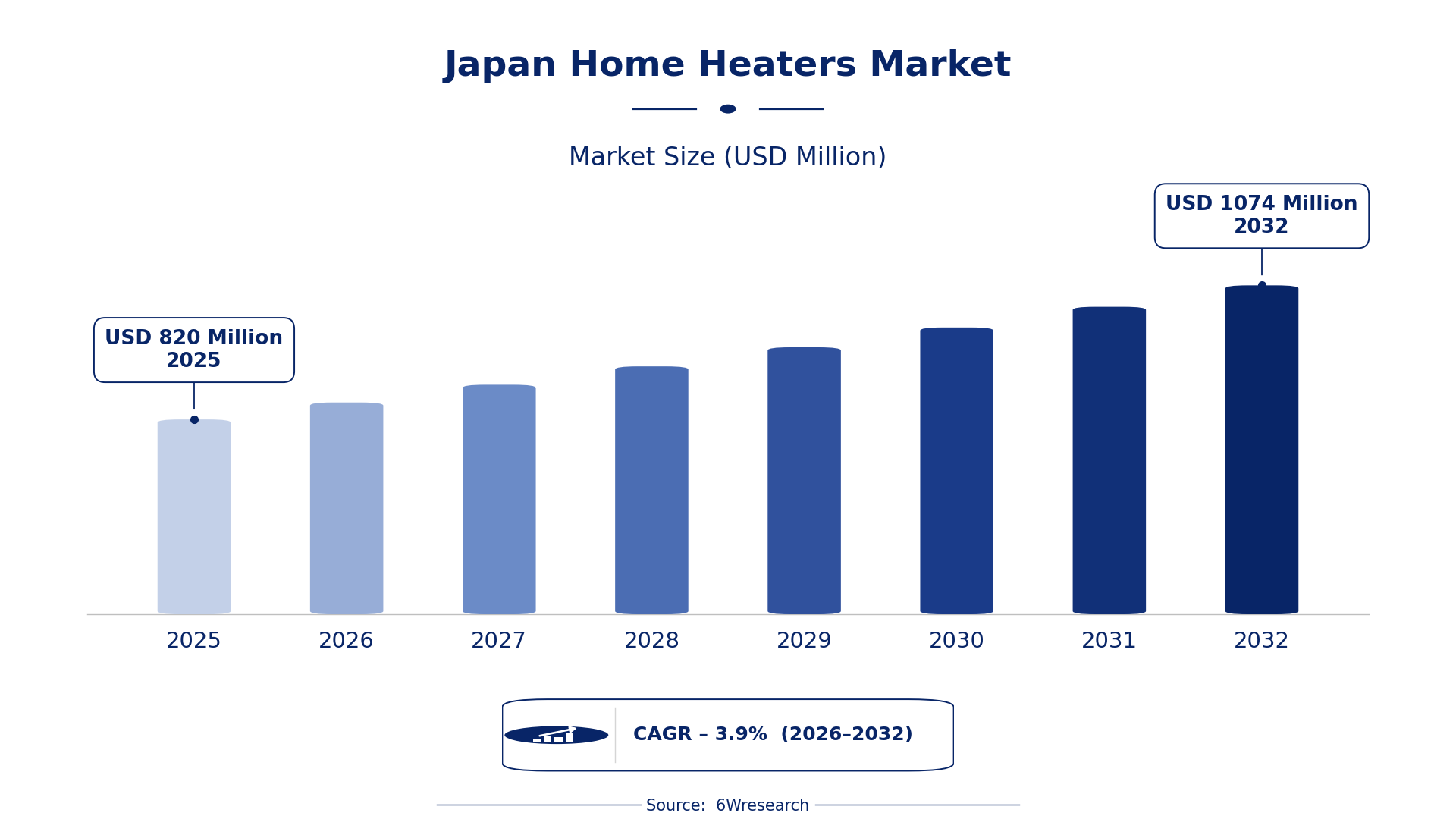
According to 6Wresearch internal database and industry insights, the Japan Home Heaters Market was valued at USD 820 Million in 2025 and is projected to reach USD 1,074 Million by 2032, growing at a CAGR of approximately 3.9% during 2026–2032.
Japan Home Heaters Market Highlights
| Report Metric | Details |
| Report Name | Japan Home Heaters Market (2026-2032) |
| Market Size 2025 | USD 820 Million |
| Market Size 2032 | USD 1,074 Million |
| Absolute Growth 2025–2032 | USD 254 Million |
| CAGR 2026–2032 | 3.9% |
| Peak Annual Growth | 5.5% in 2026 |
| Forecast Period | 2026–2032 |
| Historical Data | 2022–2025 |
| Base Year | 2025 |
| Leading Types, 2025 | Heat Pumps (41% share) |
| Leading Distribution Channel, 2025 | Retail (51% share) |
| Fastest-Growing Distribution Channel | E-commerce (4.9% CAGR) |
| Growing Sector | Residential Heating |
| Key End Users | Homeowners, Property Managers, Contractors, Energy Efficiency Advocates |
Japan Home Heaters Market Year-wise Growth Rate and Key Drivers (2022–2032)
This graph illustrates the annual growth rates of the market from 2022 to 2032, highlighting a steady upward trajectory and projected market expansion over the forecast period.
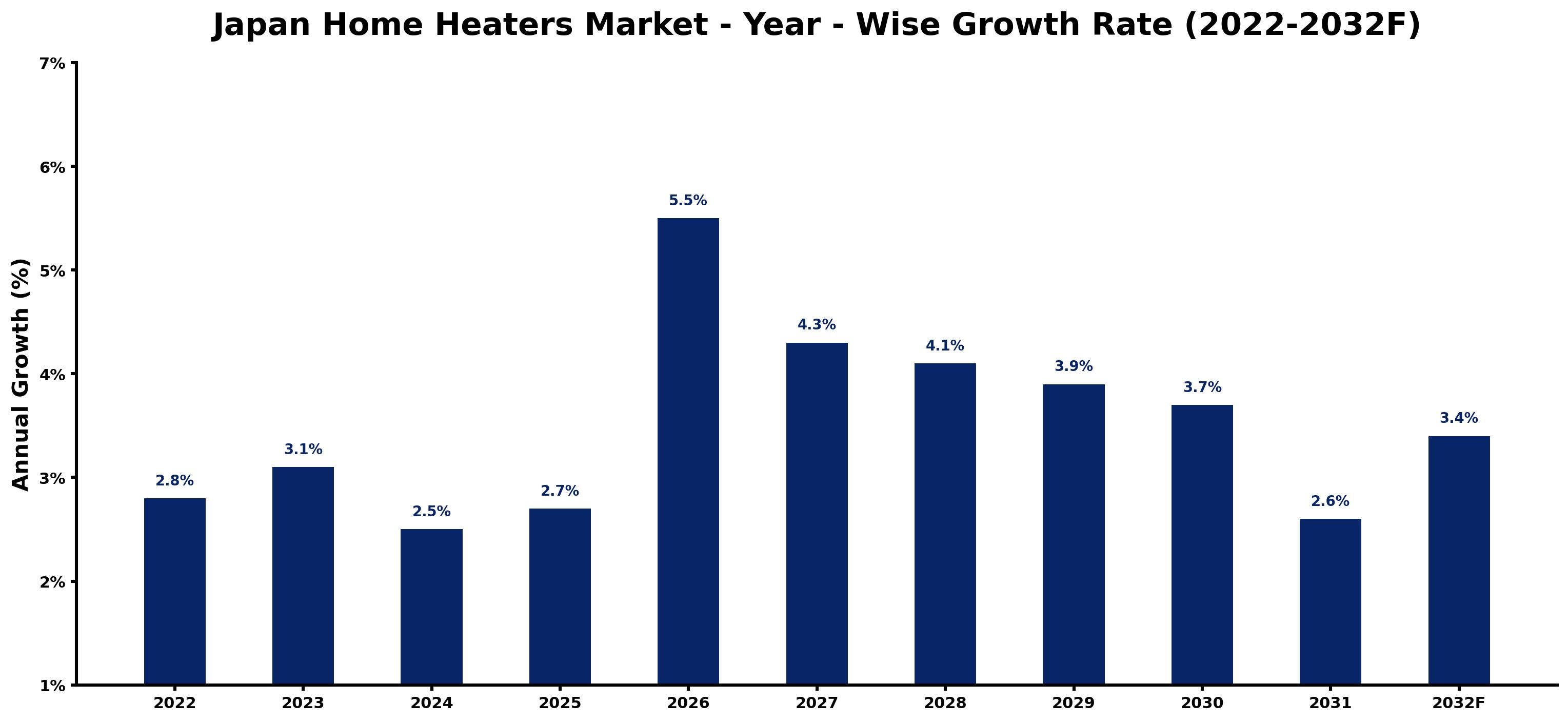
The table below sets out the estimated growth rate for each year and the main factor behind it.
| Year | Estimated Annual Growth (%) | Market Rationale |
| 2022 | 2.8 | The market showed steady growth, reflecting ongoing demand for home heating solutions. |
| 2023 | 3.1 | Increased installations of heat pumps contributed to stronger growth compared to the previous year. |
| 2024 | 2.5 | Demand growth slowed as consumers became more cautious with spending on heating appliances. |
| 2025 | 2.7 | A rise in household heating expenditures led to improved growth over the previous year. |
| 2026 | 5.5 | The introduction of new energy-efficient models is likely to spur growth in the market. |
| 2027 | 4.3 | Growth is projected to slow as market saturation begins to affect new installations and replacements. |
| 2028 | 4.1 | Continued interest in energy-efficient options is anticipated to lead to a slight slowdown in growth. |
| 2029 | 3.9 | Consumer preference for advanced heating technologies will contribute to sustained growth. |
| 2030 | 3.7 | The market is projected to experience a slowdown as economic factors influence consumer purchasing decisions. |
| 2031 | 2.6 | Growth is expected to continue slowing as the market matures and competition intensifies. |
| 2032 | 3.4 | A renewed focus on energy efficiency initiatives is likely to boost growth. |
Note: Market size estimations and growth projections presented in this report are based on 6Wresearch's proprietary forecasting methodology, utilizing the latest available industry data, government publications, and primary research inputs.
Japan Home Heaters Market Synopsis
Home heaters encompass central heat furnaces, boilers, heat pumps, and ductless systems, designed for residential heating to ensure comfort during colder months. In 2022, retail sales reached 1.5 million units, driven by a growing population of older adults and increasing demand for energy-efficient solutions. The Tokyo metropolitan area, with its high concentration of residential heating demand, significantly influences this growth, alongside government initiatives promoting energy efficiency through the GX Basic Policy.
Market Dynamics Impact Analysis (2026–2032)
| Factor | Type | Impact | Primary Segment Affected |
| Growing demand for energy-efficient heating solutions | Driver | High | Heat Pumps |
| High concentration of residential heating demand in urban areas | Driver | High | Central Heat Furnaces |
| Increasing adoption of ductless systems in urban households | Opportunity | Medium | Ductless Systems |
| Rising consumer interest in smart home technologies | Opportunity | Medium | Heat Pumps |
| High initial costs of energy-efficient heating systems | Restraint | High | Boilers |
| Market saturation affecting new installations | Restraint | Medium | Central Heat Furnaces |
| Competition from alternative heating technologies | Challenge | High | Heat Pumps |
| Economic fluctuations impacting consumer spending | Challenge | Medium | Ductless Systems |
Evaluation of Drivers in Japan Home Heaters Market (2026–2032)
Below are the drivers that matter most for revenue growth, with supporting evidence.
| Drivers | Primary Segment Affected | Why It Matters (Evidence) |
| Increased installations of heat pumps | Heat Pumps | In 2023, heat pumps accounted for 30% of new heating installations, driving demand for energy-efficient solutions. |
| Growing popularity of ductless systems | Ductless Systems | Over 10 million households in Japan used ductless systems in 2023, reflecting a shift towards flexible heating options. |
| Government initiatives promoting energy efficiency | Boilers | The Ministry of the Environment launched a subsidy program for energy-efficient home heaters in 2023, encouraging upgrades. |
| Rising household expenditure on heating | Heat Pumps | The average household expenditure on heating is around ¥100,000 annually, influencing purchasing decisions. |
| Increased consumer awareness of energy-efficient options | Central Heat Furnaces | As awareness grows, more consumers are opting for energy-efficient heating solutions. |
A wider customer base explains much of the growth, as the Tokyo metropolitan area shows a high concentration of residential heating demand, with over 10 million households using ductless systems. In 2023, heat pumps represented 30% of new installations, reflecting a shift towards energy-efficient solutions. Average household expenditure on heating remains around ¥100,000 annually, driving purchases.
Evaluation of Restraints in Japan Home Heaters Market
The following restraints limit how fast demand can grow.
| Market Restraint | Primary Segment Affected | Why It Matters (Evidence) |
| High initial costs of energy-efficient heating systems | Boilers | The average cost of installing energy-efficient systems can deter budget-conscious consumers from upgrading. |
| Market saturation affecting new installations | Central Heat Furnaces | With many homes already equipped, the potential for new installations diminishes, slowing growth. |
| Competition from alternative heating technologies | Heat Pumps | Emerging technologies may divert consumer interest away from traditional heating solutions. |
| Economic fluctuations impacting consumer spending | Ductless Systems | Economic uncertainty can lead consumers to postpone investments in new heating systems. |
| Limited awareness of energy-efficient options | Boilers | Some consumers remain unaware of available energy-efficient solutions, hindering market growth. |
Japan Home Heaters Market Challenges
Households face rising heating costs due to intense competition among suppliers, which can inflate annual expenses beyond ¥100,000. Regulatory compliance with JIS standards requires producers to invest in advanced technology, increasing operational costs and squeezing profit margins. Buyers experience delays in heating system installations because of a shortage of skilled technicians, leaving many homes inadequately heated during winter. Increasing energy prices place additional financial pressure on consumers, making it difficult for them to manage essential household expenditures effectively.
Trends in the Japan Home Heaters Market
The shifts below are changing how Japan Home Heaters Market products are bought and supplied.
- Rise in Heat Pump Installations: In 2023, heat pump installations rose by 20%, reflecting a growing focus on energy efficiency. This trend indicates changing consumer preferences towards sustainable heating solutions, particularly in urban areas.
- Shift Towards Ductless Systems: Ductless systems are becoming increasingly popular among urban households, with over 10 million users in 2023. This shift indicates a preference for flexible heating options that save space and energy.
- Integration of Smart Heating Technologies: The integration of smart technologies in home heating systems is gaining traction, particularly in the Kansai region. This trend improves user control and energy management, appealing to tech-savvy consumers.
- Focus on Energy Management Practices: The introduction of JIS standards for energy efficiency in home heating appliances is shaping purchasing decisions. These standards ensure that consumers have access to high-performance heating solutions.
Investment Opportunities in the Japan Home Heaters Market
Where to invest in the Japan Home Heaters Market: the main openings are set out below.
- Energy-Efficient Home Heaters: The Japanese government allocated ¥10 billion for energy efficiency programs in 2023, creating opportunities for suppliers of energy-efficient home heaters. Retailers can partner with local manufacturers to meet this demand.
- Smart Home Heating Solutions: With rising consumer interest in smart technologies, there is a growing market for smart home heating solutions. Urban households are increasingly looking for integrated systems that offer convenience and efficiency.
- Ductless System Expansion: The increasing adoption of ductless systems presents an opportunity for suppliers to expand their offerings. Retailers in urban areas can target households seeking flexible and efficient heating solutions.
- Investment in Energy Management Technologies: As the average household expenditure on heating remains significant, investing in energy management technologies can yield returns. Suppliers can enter the market by collaborating with local energy management firms.
Government Initiatives in the Japan Home Heaters Market
The Waste Management and Public Cleansing Act (1970) establishes regulations for waste treatment, impacting producers of home heating systems by ensuring compliance with environmental standards. The Energy Conservation Law mandates energy efficiency measures, influencing the design and production of home heaters, with the government aiming for a 30% reduction in energy consumption by 2030.
The Ministry of the Environment oversees the implementation of various energy efficiency programs, including the subsidy program launched in 2023. This agency approves funding for initiatives aimed at promoting energy-efficient home heating solutions, benefiting both producers and consumers.
Future Insight of the Japan Home Heaters Market
Households will increasingly prioritise energy-efficient heating solutions, driven by government subsidies that encourage advanced technologies. The Tokyo metropolitan area will see a significant rise in energy-efficient system installations as local initiatives facilitate this shift. By 2030, the government aims for a 30% reduction in energy consumption, compelling suppliers to innovate and enhance product efficiency. The implementation of ISO 50001 standards will refine energy management practices, aligning supplier offerings with consumer expectations for sustainability.
Market Segmentation Analysis
Japan Home Heaters Market report covers a detailed analysis of the following market segments:
By Types – Heat Pumps Lead and Record the Fastest Growth
According to Ravi Bhandari, Research Head at 6Wresearch, Heat Pumps accounted for 41% of the market by types in 2025. Heat pumps dominate the Japan home heaters market due to their energy efficiency and compliance with government energy conservation initiatives. Their popularity is particularly evident in urban areas like Tokyo, where they represented 30% of new heating installations in 2023. Heat Pumps are also forecast to expand faster than any other category, at a CAGR of 5.2% over 2026–2032. The surge in heat pump installations, marked by a 20% increase in 2023, reflects a strong consumer preference for energy-efficient heating solutions. With ongoing government backing for these technologies, the growth of heat pumps is expected to accelerate further. This suggests that suppliers should focus on advancing heat pump technologies to meet the rising demand.
By Distribution Channel – Retail Leads, E-commerce Expected to Grow Fastest
With 51% of distribution channel revenue in 2025, Retail was the largest category. Retail is the primary distribution channel for home heaters in Japan, providing consumers with direct access to a wide range of products. This channel aligns well with the traditional purchasing habits of Japanese households, ensuring steady sales. E-commerce is set to record the highest CAGR in this split, 4.9% over 2026–2032. E-commerce is emerging as the fastest-growing distribution channel, driven by the convenience of online shopping and evolving consumer preferences. The increasing trend towards digital purchasing indicates a shift in how consumers acquire home heating solutions. Suppliers should strengthen their online strategies to leverage the expanding e-commerce segment in the home heating market.
Key Attractiveness of the Report
- 10 Years of Market Numbers
- Historical Data Starting from 2022 to 2025
- Base Year 2025
- Forecast Data until 2032
- Key Performance Indicators Impacting the Market
- Major Upcoming Developments and Projects
Key Highlights of the Report:
- Japan Home Heaters Market Outlook
- Market Size of Japan Home Heaters Market, 2025
- Forecast of Japan Home Heaters Market, 2032
- Historical Data and Forecast of Japan Home Heaters Revenues & Volume for the Period 2022-2032
- Japan Home Heaters Market Trend Evolution
- Japan Home Heaters Market Drivers and Challenges
- Japan Home Heaters Price Trends
- Japan Home Heaters Porter's Five Forces
- Japan Home Heaters Industry Life Cycle
- Historical Data and Forecast of Japan Home Heaters Market Revenues & Volume By Types for the Period 2022-2032
- Historical Data and Forecast of Japan Home Heaters Market Revenues & Volume By Central Heat Furnaces for the Period 2022-2032
- Historical Data and Forecast of Japan Home Heaters Market Revenues & Volume By Boilers for the Period 2022-2032
- Historical Data and Forecast of Japan Home Heaters Market Revenues & Volume By Heat Pumps for the Period 2022-2032
- Historical Data and Forecast of Japan Home Heaters Market Revenues & Volume By Ductless Systems for the Period 2022-2032
- Historical Data and Forecast of Japan Home Heaters Market Revenues & Volume By Distribution Channel for the Period 2022-2032
- Historical Data and Forecast of Japan Home Heaters Market Revenues & Volume By E-commerce for the Period 2022-2032
- Historical Data and Forecast of Japan Home Heaters Market Revenues & Volume By Retail for the Period 2022-2032
- Historical Data and Forecast of Japan Home Heaters Market Revenues & Volume By Others for the Period 2022-2032
- Japan Home Heaters Import Export Trade Statistics
- Market Opportunity Assessment By Types
- Market Opportunity Assessment By Distribution Channel
- Japan Home Heaters Top Companies Market Share
- Japan Home Heaters Competitive Benchmarking By Technical and Operational Parameters
- Japan Home Heaters Company Profiles
- Japan Home Heaters Key Strategic Recommendations
Market Covered
The report covers the following segments.
By Types
- Central Heat Furnaces
- Boilers
- Heat Pumps
- Ductless Systems
By Distribution Channel
- E-commerce
- Retail
- Others































