Japan Hospital Infection Control Market Size & Growth Rate
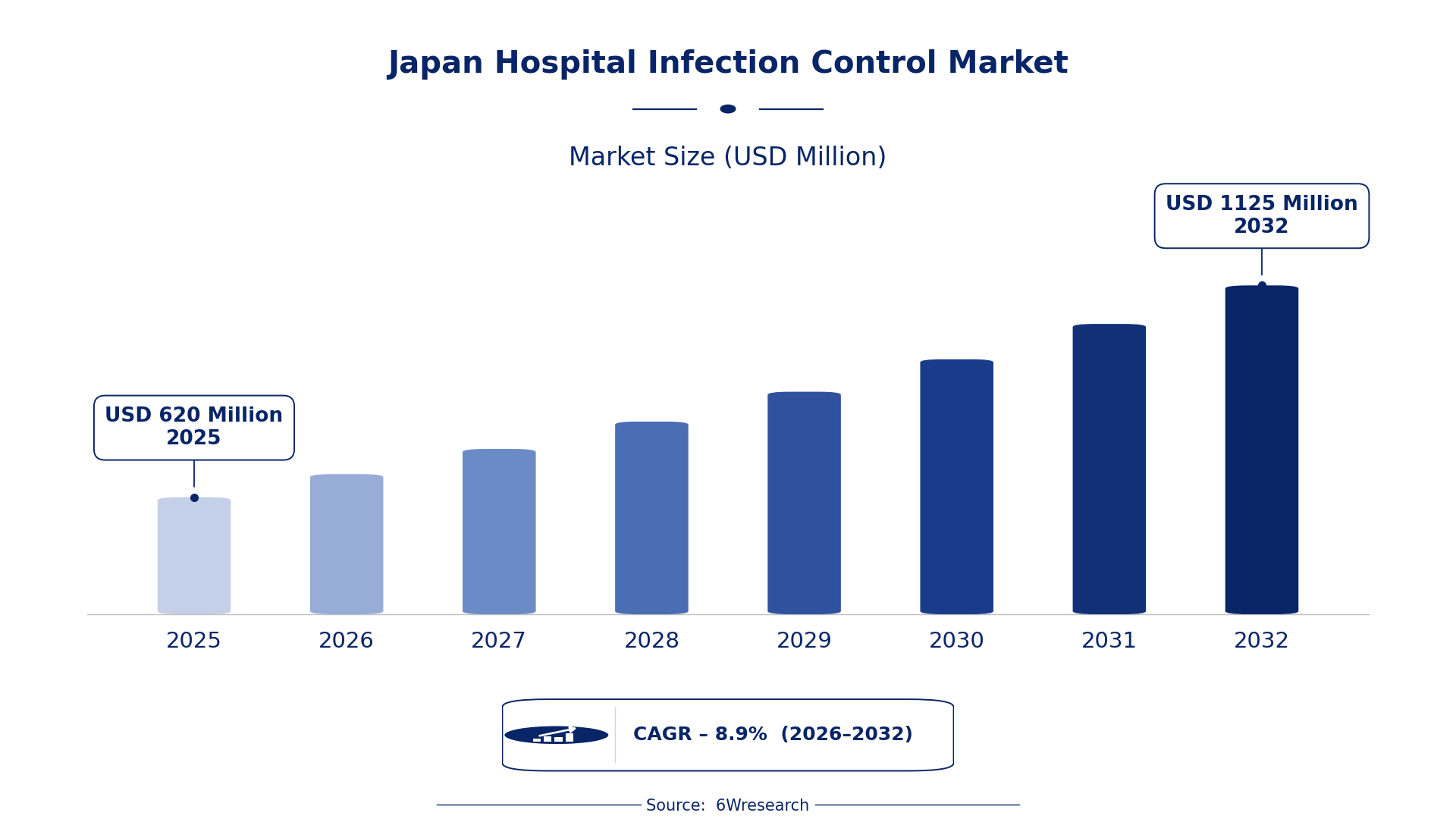
According to 6Wresearch internal database and industry insights, the Japan Hospital Infection Control Market was valued at USD 620 Million in 2025 and is projected to reach USD 1,125 Million by 2032, growing at a CAGR of approximately 8.9% during 2026–2032.
Japan Hospital Infection Control Market Highlights
| Report Metric | Details |
| Report Name | Japan Hospital Infection Control Market (2026-2032) |
| Market Size 2025 | USD 620 Million |
| Market Size 2032 | USD 1,125 Million |
| Absolute Growth 2025–2032 | USD 505 Million |
| CAGR 2026–2032 | 8.9% |
| Peak Annual Growth | 9.8% in 2029 |
| Forecast Period | 2026–2032 |
| Historical Data | 2022–2025 |
| Base Year | 2025 |
| Leading Control Measure, 2025 | Surface Disinfection (45% share) |
| Leading Target Pathogen, 2025 | Bacteria/Viruses (47% share) |
| Leading Distribution Channel, 2025 | Hospital Distributors (51% share) |
| Leading End User, 2025 | Environmental Teams (39% share) |
| Fastest-Growing Control Measure | Airborne Control (11.3% CAGR) |
| Fastest-Growing Target Pathogen | Tuberculosis/COVID (11.9% CAGR) |
| Fastest-Growing Distribution Channel | HVAC Installers (10.9% CAGR) |
| Fastest-Growing End User | ICU and Isolation Units (11.6% CAGR) |
| Growing Sector | Hospital Infection Control |
| Key End Users | Hospitals, Environmental Teams, Medical Suppliers, Nursing Departments |
Japan Hospital Infection Control Market Year-wise Growth Rate and Key Drivers (2022–2032)
This graph illustrates the annual growth rates of the market from 2022 to 2032, highlighting a steady upward trajectory and projected market expansion over the forecast period.
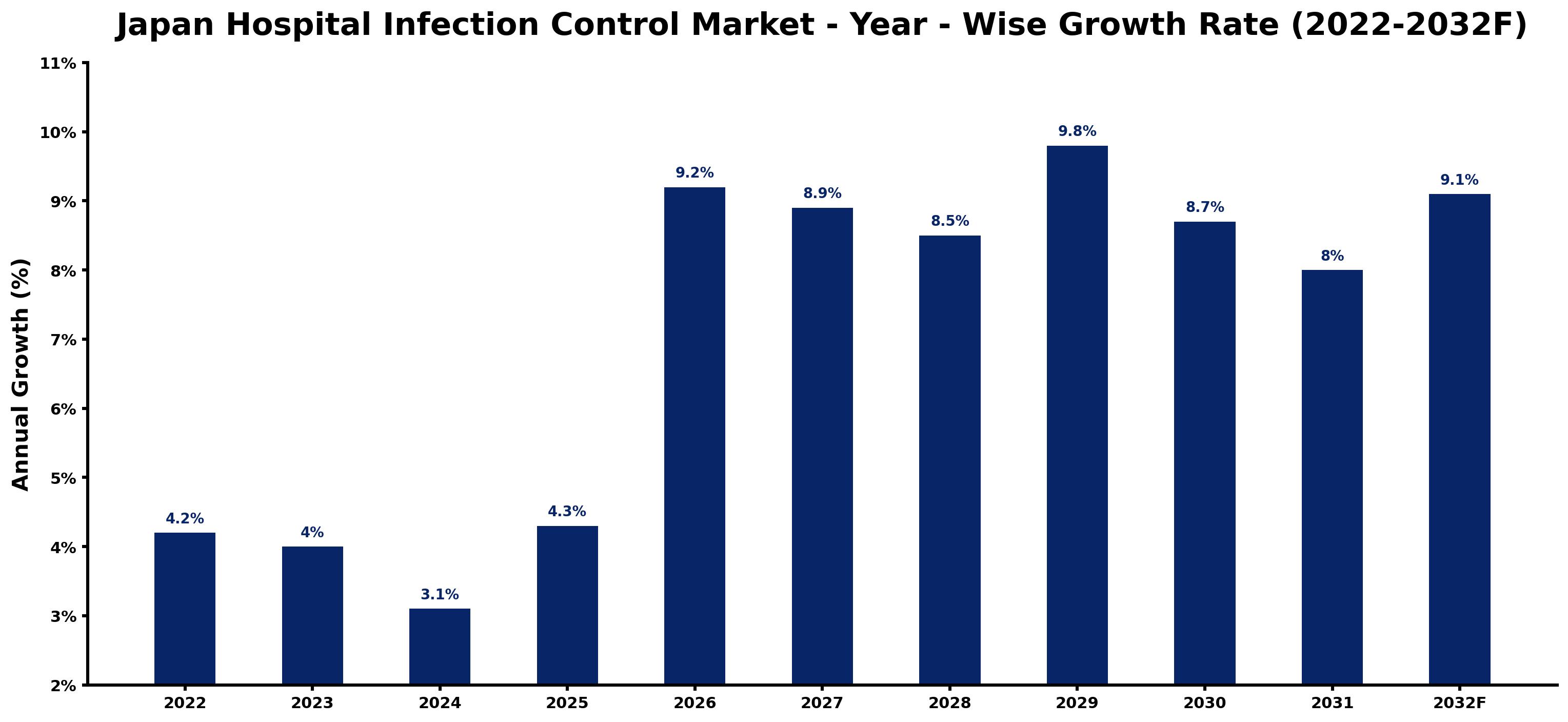
For each year, the table pairs the estimated growth rate with the leading influence on demand, showing how the drivers changed across the period.
| Year | Estimated Annual Growth (%) | Market Rationale |
| 2022 | 4.2 | The market experienced steady growth due to ongoing healthcare demands. |
| 2023 | 4.0 | Growth slowed as hospitals adjusted to new infection control protocols. |
| 2024 | 3.1 | Market expansion continued but at a reduced pace amid rising costs. |
| 2025 | 4.3 | Infection control measures gained traction, leading to accelerated growth. |
| 2026 | 9.2 | Demand is expected to surge as hospitals adopt advanced sterilisation technologies. |
| 2027 | 8.9 | Growth is projected to slow slightly as the market begins to stabilise. |
| 2028 | 8.5 | The market will continue to grow as infection rates remain a concern. |
| 2029 | 9.8 | Demand is expected to peak with the introduction of new infection control standards. |
| 2030 | 8.7 | Growth will moderate as hospitals optimise their infection control strategies. |
| 2031 | 8.0 | A slight slowdown is anticipated as the market stabilises post-peak. |
| 2032 | 9.1 | Demand is expected to rise again with new healthcare initiatives. |
Note: Market size estimations and growth projections presented in this report are based on 6Wresearch's proprietary forecasting methodology, utilizing the latest available industry data, government publications, and primary research inputs.
Japan Hospital Infection Control Market Synopsis
Hospital infection control products are essential for preventing and managing infections in healthcare settings, including surface disinfection and sterilisation of medical instruments. The Japan Hospital Infection Control Market is expanding, driven by a growing elderly population, which reached 29.3% in 2024, and increased healthcare expenditure, estimated at JPY 46.7 trillion in 2022. Ongoing stringent regulations and national programmes further fuel demand, particularly in the Tokyo metropolitan area, a major hub for these products.
Market Dynamics Impact Analysis (2026–2032)
| Factor | Type | Impact | Primary Segment Affected |
| Growing elderly population increases healthcare demands for infection control solutions. | Driver | High | Surface Disinfection |
| Implementation of advanced sterilisation technologies drives market growth. | Driver | High | Instrument Sterilization |
| Rising demand for infection control products in hospitals presents opportunities. | Opportunity | High | Environmental Teams |
| Increasing focus on airborne infection control creates new market avenues. | Opportunity | Medium | Airborne Control |
| High costs of advanced infection control technologies may limit access. | Restraint | High | Instrument Sterilization |
| Regulatory compliance requirements can delay product approvals. | Restraint | Medium | Surface Disinfection |
| Limited budget allocations for infection control hinder procurement efforts. | Challenge | High | Environmental Teams |
| Shortage of trained healthcare personnel affects implementation of protocols. | Challenge | Medium | ICU and Isolation Units |
Evaluation of Drivers in Japan Hospital Infection Control Market (2026–2032)
The main growth drivers and the segments they affect most are set out below.
| Drivers | Primary Segment Affected | Why It Matters (Evidence) |
| Increasing healthcare expenditure drives demand for infection control products. | Surface Disinfection | Japan's national medical care expenditure was about JPY 46.7 trillion in fiscal 2022, prompting hospitals to invest more in infection control. |
| Aging population leads to higher hospitalisation rates. | Instrument Sterilization | With 29.3% of Japan's population aged 65 or older in 2024, hospitals require more sterilisation solutions for surgical procedures. |
| Implementation of national infection prevention programmes boosts demand. | Airborne Control | In 2023, the Ministry of Health launched a national infection prevention program, increasing the need for airborne control measures. |
| Rising infection rates necessitate enhanced control measures. | Contact Precautions | The average hospital infection rate in Japan is about 5%, driving demand for effective control measures. |
| Strict adherence to ISO 14644 standards ensures cleanroom environments. | Surface Disinfection | Compliance with ISO 14644 standards in hospitals necessitates regular use of disinfectants and sterilisation products. |
Most of the extra volume comes from rising healthcare expenditure, which reached JPY 43 trillion in 2022, prompting hospitals to invest in infection control products. The ageing population, with 29.3% aged 65 or older in 2024, drives demand for sterilisation solutions in surgical procedures. The average hospital infection rate in Japan is about 5%, necessitating effective contact precautions. Compliance with JIS Z 2801 standards ensures that hospitals maintain cleanroom environments, increasing the regular use of disinfectants.
Evaluation of Restraints in Japan Hospital Infection Control Market
These restraints slow adoption and weigh on supplier margins.
| Market Restraint | Primary Segment Affected | Why It Matters (Evidence) |
| High costs of advanced infection control technologies limit access for smaller hospitals. | Instrument Sterilization | With Japan's healthcare expenditure around ¥43 trillion annually, smaller facilities struggle to afford advanced technologies. |
| Regulatory compliance can delay the introduction of new products. | Surface Disinfection | Approval processes under the PMD Act can extend timelines for new infection control products. |
| Limited budget allocations for infection control measures hinder procurement. | Environmental Teams | Budget constraints affect hospitals' ability to invest in necessary infection control solutions. |
| Shortage of trained personnel impacts effective implementation of protocols. | ICU and Isolation Units | The lack of adequately trained healthcare workers can delay the adoption of infection control measures. |
| Market saturation in certain product categories restricts growth potential. | Airborne Control | With many established products in the market, new entrants face challenges in gaining market share. |
Japan Hospital Infection Control Market Challenges
Buyers of hospital infection control products encounter technological limitations due to outdated sterilisation equipment, raising operational costs by up to 15% and delaying procedures, which impacts patient care. Local producers face competition from low-cost alternatives, forcing them to reduce margins by as much as 20%, potentially compromising product quality. Healthcare workers experience skills shortages in infection control training, contributing to an average infection rate of about 5% in hospitals. Budget constraints arise as Japan's healthcare expenditure is approximately ¥43 trillion annually, restricting buyers' investment in advanced infection control solutions.
Trends in the Japan Hospital Infection Control Market
The trends below show where the Japan Hospital Infection Control Market is heading.
- Environmental Teams Adopting Advanced Disinfection Technologies: Environmental Teams are increasingly employing advanced disinfection technologies to enhance infection control protocols. In 2023, the government allocated ¥5 billion for infection control initiatives, promoting the adoption of these technologies.
- Shift Towards Airborne Infection Control: A notable shift towards airborne infection control measures is occurring in hospitals. In 2023, the national infection prevention programme emphasised the need for improved air quality, leading to increased demand for airborne control products.
- Increase in Surgical Procedures Driving Sterilisation Demand: The average hospital in Japan conducts over 200 surgical procedures monthly, creating a strong demand for sterilisation solutions. This trend is expected to persist as hospitals concentrate on safety.
- Focus on Compliance with ISO Standards: Hospitals are prioritising compliance with ISO 14644 standards for cleanroom environments. This focus is particularly evident in the Tokyo metropolitan area, where strict adherence to these standards is driving product demand.
Investment Opportunities in the Japan Hospital Infection Control Market
Investors looking at the Japan Hospital Infection Control Market should consider the following areas.
- Partnerships with Local Distributors: Now is an opportune moment for partnerships with local distributors in Japan's hospital sector. The Tokyo metropolitan area, a hub for infection control products, presents numerous opportunities for collaboration.
- Investment in Airborne Control Solutions: The increasing emphasis on airborne infection control creates a demand for effective solutions. Environmental Teams in urban hospitals are actively seeking advanced products to improve air quality.
- Expansion of Training Programs for Healthcare Workers: With mandatory infection control training for all healthcare workers, there is a growing need for effective training programmes. This presents an opportunity for educational institutions to develop specialised courses.
- Development of Cost-Effective Disinfection Technologies: Current market conditions favour the development of cost-effective disinfection technologies. Hospitals are seeking affordable solutions to meet stringent infection control standards.
Government Initiatives in the Japan Hospital Infection Control Market
The PMD Act regulates the approval and quality of medical devices, ensuring compliance with safety standards for hospital infection control products. This law complements the Electrical Appliance and Material Safety Act, which governs the safety of medical devices and materials used in healthcare settings.
In 2023, the government allocated ¥5 billion for infection control initiatives, administered by the Ministry of Health, Labour and Welfare. This funding supports hospitals in implementing effective infection control measures and improving patient safety.
Future Insight of the Japan Hospital Infection Control Market
The introduction of advanced sterilisation technologies in hospitals will reshape infection control practices by 2032, enhancing patient safety. The implementation of ISO 14644 standards for cleanroom environments will improve air quality management in healthcare settings. With an annual demand for surface disinfectants projected at 10 million litres, suppliers will need to innovate to meet this growing requirement. Government funding of ¥5 billion for infection control initiatives will support the development of new products and training programmes, providing benefits for both buyers and suppliers.
Market Segmentation Analysis
Japan Hospital Infection Control Market report covers a detailed analysis of the following market segments:
By Control Measure – Surface Disinfection Leads, Airborne Control Expected to Grow Fastest
According to Saurav Kr Singh, Senior Research Analyst at 6Wresearch, with 45% of control measure revenue in 2025, Surface Disinfection was the largest category. Surface disinfection is essential for maintaining hygiene in patient areas, making it the largest segment in Japan's hospital infection control market. With over 8,100 hospitals requiring effective solutions, the demand for surface disinfectants remains consistently high. The quickest growth will come from Airborne Control, forecast to expand at a CAGR of 11.3% between 2026 and 2032. Airborne control is experiencing rapid growth as it addresses the urgent need to prevent airborne transmission of infections, particularly in densely populated areas like Tokyo. The government's promotion of advanced sterilization technologies is further accelerating this segment's expansion. Suppliers should focus on developing airborne control solutions to meet the rising demand in healthcare settings.
By Target Pathogen – Bacteria/Viruses Lead, Tuberculosis/COVID Expected to Grow Fastest
Bacteria/Viruses took 47% of target pathogen revenue in 2025, more than any other category. Bacteria and viruses are the primary targets for infection control measures, representing a significant share of hospital-acquired infections. The average infection rate of about 5% in Japanese hospitals highlights the necessity of effectively addressing these pathogens. Over 2026–2032, Tuberculosis/COVID is expected to post the fastest growth, at a CAGR of 11.9%. The focus on tuberculosis and COVID-19 is driving growth in this segment, as public health concerns necessitate enhanced infection control measures. The reported 5,000 tuberculosis cases in 2022 emphasise the urgency for effective solutions. Buyers should prioritise products targeting tuberculosis and COVID-19 to align with ongoing public health initiatives.
By Distribution Channel – Hospital Distributors Lead, HVAC Installers Expected to Grow Fastest
Hospital Distributors accounted for 51% of the market by distribution channel in 2025. Hospital distributors are the leading channel for supplying infection control products, ensuring timely access to essential solutions for healthcare facilities. Their established networks are vital for servicing over 8,100 hospitals across Japan. HVAC Installers are projected to grow fastest, at a CAGR of 10.9% during 2026–2032. HVAC installers are gaining momentum as they play a key role in maintaining air quality, which is essential for effective infection control. The growing focus on air quality management in hospitals is contributing to their rapid expansion. Suppliers should explore partnerships with HVAC installers to broaden their market reach.
By End User – Environmental Teams Lead, ICU and Isolation Units Expected to Grow Fastest
In 2025, Environmental Teams led the end user split with a 39% share. Environmental teams are at the forefront of implementing infection control protocols, making them the largest user group in the market. Their critical responsibility for maintaining hygiene across various hospital departments ensures a steady demand for infection control products. ICU and Isolation Units are set to record the highest CAGR in this split, 11.6% over 2026–2032. ICU and isolation units are experiencing the fastest growth as they are primary users of infection control measures, particularly given the high volume of surgical procedures conducted monthly. Their specific requirements for stringent infection control drive this segment's rapid expansion. Buyers in ICU and isolation units must secure access to the latest infection control solutions to protect patient health.
Key Attractiveness of the Report
- 10 Years of Market Numbers
- Historical Data Starting from 2022 to 2025
- Base Year 2025
- Forecast Data until 2032
- Key Performance Indicators Impacting the Market
- Major Upcoming Developments and Projects
Key Highlights of the Report:
- Japan Hospital Infection Control Market Outlook
- Market Size of Japan Hospital Infection Control Market, 2025
- Forecast of Japan Hospital Infection Control Market, 2032
- Historical Data and Forecast of Japan Hospital Infection Control Revenues & Volume for the Period 2022-2032F
- Japan Hospital Infection Control Market Trend Evolution
- Japan Hospital Infection Control Market Drivers and Challenges
- Japan Hospital Infection Control Price Trends
- Japan Hospital Infection Control Porter's Five Forces
- Japan Hospital Infection Control Industry Life Cycle
- Historical Data and Forecast of Japan Hospital Infection Control Market Revenues & Volume By Control Measure for the Period 2022-2032F
- Historical Data and Forecast of Japan Hospital Infection Control Market Revenues & Volume By Surface Disinfection for the Period 2022-2032F
- Historical Data and Forecast of Japan Hospital Infection Control Market Revenues & Volume By Airborne Control for the Period 2022-2032F
- Historical Data and Forecast of Japan Hospital Infection Control Market Revenues & Volume By Contact Precautions for the Period 2022-2032F
- Historical Data and Forecast of Japan Hospital Infection Control Market Revenues & Volume By Instrument Sterilization for the Period 2022-2032F
- Historical Data and Forecast of Japan Hospital Infection Control Market Revenues & Volume By Target Pathogen for the Period 2022-2032F
- Historical Data and Forecast of Japan Hospital Infection Control Market Revenues & Volume By Bacteria/Viruses for the Period 2022-2032F
- Historical Data and Forecast of Japan Hospital Infection Control Market Revenues & Volume By Tuberculosis/COVID for the Period 2022-2032F
- Historical Data and Forecast of Japan Hospital Infection Control Market Revenues & Volume By MRSA/VRE for the Period 2022-2032F
- Historical Data and Forecast of Japan Hospital Infection Control Market Revenues & Volume By Bloodborne Pathogens for the Period 2022-2032F
- Historical Data and Forecast of Japan Hospital Infection Control Market Revenues & Volume By Distribution Channel for the Period 2022-2032F
- Historical Data and Forecast of Japan Hospital Infection Control Market Revenues & Volume By Hospital Distributors for the Period 2022-2032F
- Historical Data and Forecast of Japan Hospital Infection Control Market Revenues & Volume By HVAC Installers for the Period 2022-2032F
- Historical Data and Forecast of Japan Hospital Infection Control Market Revenues & Volume By Hygiene Product Vendors for the Period 2022-2032F
- Historical Data and Forecast of Japan Hospital Infection Control Market Revenues & Volume By Medical Suppliers for the Period 2022-2032F
- Historical Data and Forecast of Japan Hospital Infection Control Market Revenues & Volume By End User for the Period 2022-2032F
- Historical Data and Forecast of Japan Hospital Infection Control Market Revenues & Volume By Environmental Teams for the Period 2022-2032F
- Historical Data and Forecast of Japan Hospital Infection Control Market Revenues & Volume By ICU and Isolation Units for the Period 2022-2032F
- Historical Data and Forecast of Japan Hospital Infection Control Market Revenues & Volume By Nursing Departments for the Period 2022-2032F
- Historical Data and Forecast of Japan Hospital Infection Control Market Revenues & Volume By OT and Lab Teams for the Period 2022-2032F
- Japan Hospital Infection Control Import Export Trade Statistics
- Market Opportunity Assessment By Control Measure
- Market Opportunity Assessment By Target Pathogen
- Market Opportunity Assessment By Distribution Channel
- Market Opportunity Assessment By End User
- Japan Hospital Infection Control Top Companies Market Share
- Japan Hospital Infection Control Competitive Benchmarking By Technical and Operational Parameters
- Japan Hospital Infection Control Company Profiles
- Japan Hospital Infection Control Key Strategic Recommendations
Market Covered
Segments analysed in this report are listed below.
By Control Measure
- Surface Disinfection
- Airborne Control
- Contact Precautions
- Instrument Sterilization
By Target Pathogen
- Bacteria/Viruses
- Tuberculosis/COVID
- MRSA/VRE
- Bloodborne Pathogens
By Distribution Channel
- Hospital Distributors
- HVAC Installers
- Hygiene Product Vendors
- Medical Suppliers
By End User
- Environmental Teams
- ICU and Isolation Units
- Nursing Departments
- OT and Lab Teams































