Japan Hydrocolloid Patch Market Size & Growth Rate
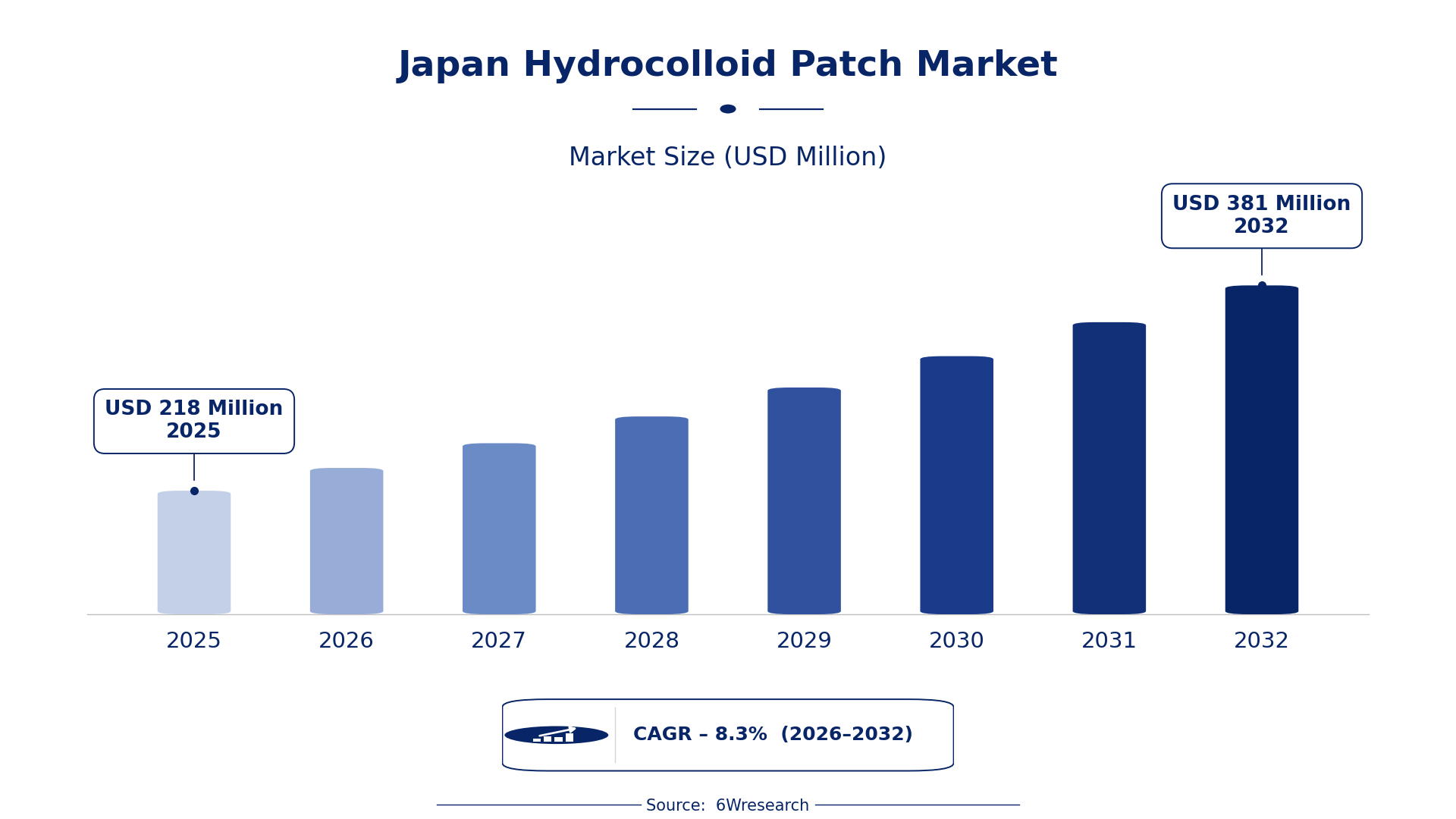
According to 6Wresearch internal database and industry insights, the Japan Hydrocolloid Patch Market was valued at USD 218 Million in 2025 and is projected to reach USD 381 Million by 2032, growing at a CAGR of approximately 8.3% during 2026–2032.
Japan Hydrocolloid Patch Market Highlights
| Report Metric | Details |
| Report Name | Japan Hydrocolloid Patch Market (2026-2032) |
| Market Size 2025 | USD 218 Million |
| Market Size 2032 | USD 381 Million |
| Absolute Growth 2025–2032 | USD 163 Million |
| CAGR 2026–2032 | 8.3% |
| Peak Annual Growth | 10.9% in 2026 |
| Forecast Period | 2026–2032 |
| Historical Data | 2022–2025 |
| Base Year | 2025 |
| Leading Patch Type, 2025 | Wound Healing Patches (52% share) |
| Leading Application Area, 2025 | Medical Wounds (44% share) |
| Leading Material Used, 2025 | Hydrocolloid Gel (48% share) |
| Leading End User, 2025 | Hospitals (40% share) |
| Fastest-Growing Patch Type | Acne Patches (11.1% CAGR) |
| Fastest-Growing Application Area | Skincare (9.4% CAGR) |
| Fastest-Growing End User | Clinics (10.2% CAGR) |
| Growing Sector | Skincare |
| Key End Users | Medical Wounds, Post-Surgical Care, Skincare, Footcare |
Japan Hydrocolloid Patch Market Year-wise Growth Rate and Key Drivers (2022–2032)
This graph illustrates the annual growth rates of the market from 2022 to 2032, highlighting a steady upward trajectory and projected market expansion over the forecast period.
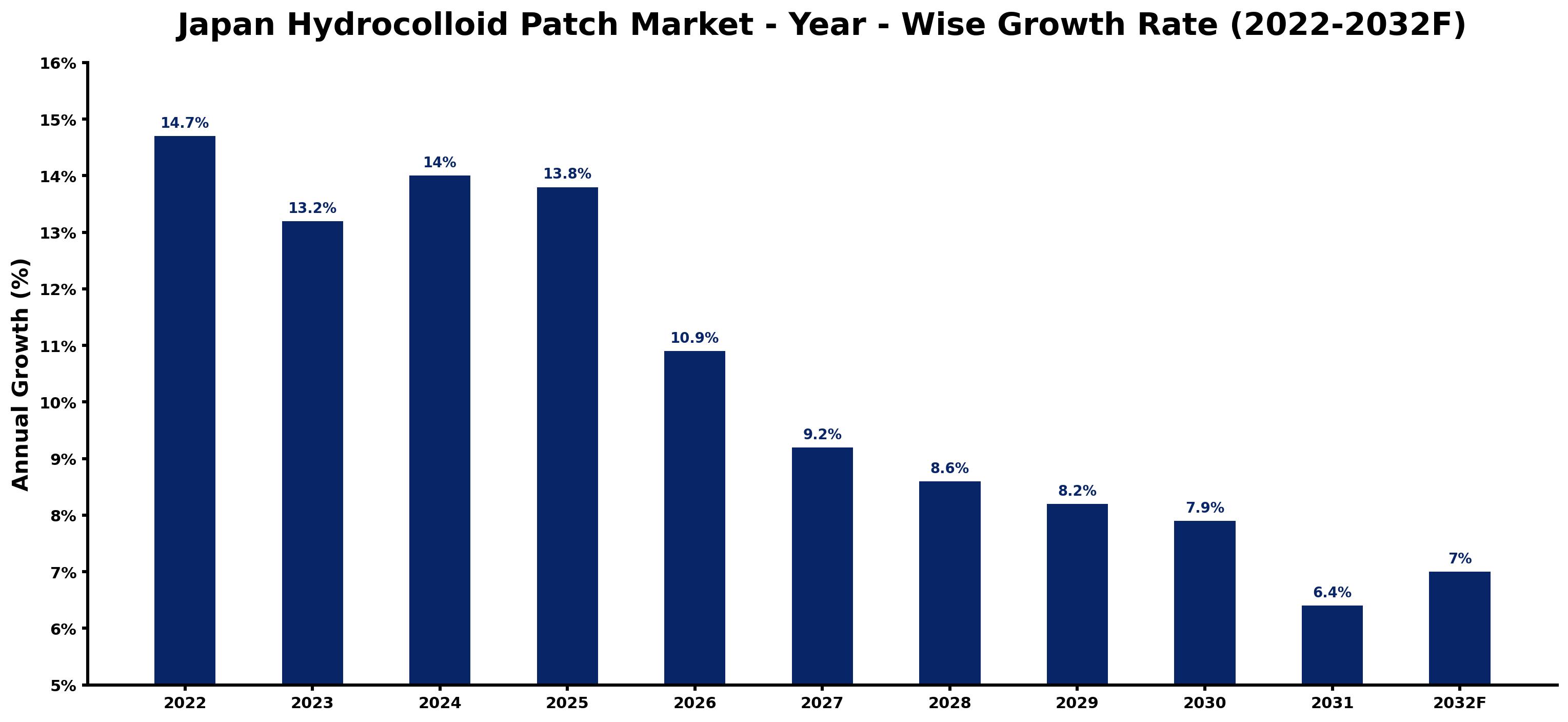
The following figures match every annual growth estimate with the main market development of that year, giving the reasoning behind each rise or slowdown.
| Year | Estimated Annual Growth (%) | Market Rationale |
| 2022 | 14.7 | The market experienced high demand due to increased awareness of skincare products and their benefits. |
| 2023 | 13.2 | Growth slowed as consumers adjusted spending habits after economic shifts. |
| 2024 | 14.0 | Demand rose as new products entered the market, attracting more users and expanding choices. |
| 2025 | 13.8 | Market growth slowed slightly as competition intensified among various brands and offerings. |
| 2026 | 10.9 | Growth is expected to decelerate as the market stabilises after rapid expansion in recent years. |
| 2027 | 9.2 | A slowdown is projected as market saturation becomes apparent, affecting new user acquisition. |
| 2028 | 8.6 | Demand growth is expected to slow further as consumers become more price-sensitive and selective. |
| 2029 | 8.2 | Market growth will continue to decelerate as consumer preferences evolve towards new trends. |
| 2030 | 7.9 | A further slowdown is projected as the market matures and options expand for consumers. |
| 2031 | 6.4 | The market growth rate will slow as competition and consumer choices increase significantly. |
| 2032 | 7.0 | Demand is expected to rise again as new technologies are introduced, enhancing product appeal. |
Note: Market size estimations and growth projections presented in this report are based on 6Wresearch's proprietary forecasting methodology, utilizing the latest available industry data, government publications, and primary research inputs.
Japan Hydrocolloid Patch Market Synopsis
Hydrocolloid patches are adhesive dressings made from a gel-like substance that absorbs moisture and promotes healing. The Japan Hydrocolloid Patch Market is valued at approximately 15 billion JPY in 2023, driven by increasing consumer awareness and a growing skincare sector. Domestic users, particularly in the skincare and medical sectors, primarily fuel this demand as the industry remains active and expanding. The Tokyo region accounted for 30% of sales, highlighting regional demand for these products.
Market Dynamics Impact Analysis (2026–2032)
| Factor | Type | Impact | Primary Segment Affected |
| Growing popularity of skincare and wound care products | Driver | High | Acne Patches |
| Increased availability in pharmacies and clinics | Driver | High | Medical Wounds |
| Rising consumer interest in eco-friendly products | Opportunity | Medium | Hydrocolloid Gel |
| Expansion of the healthcare sector in urban areas | Opportunity | High | Wound Healing Patches |
| Regulatory compliance costs for manufacturers | Restraint | High | Blister Care Patches |
| Market saturation limiting new entrants | Restraint | Medium | Post-Surgical Care |
| High production costs for innovative materials | Challenge | High | Hydrocolloid Gel |
| Intense competition among local and international brands | Challenge | Medium | Acne Patches |
Evaluation of Drivers in Japan Hydrocolloid Patch Market (2026–2032)
The main growth drivers and the segments they affect most are set out below.
| Drivers | Primary Segment Affected | Why It Matters (Evidence) |
| Increased consumer awareness of skincare benefits | Acne Patches | This awareness has led to higher sales, with endorsements from the Japanese Dermatological Association boosting demand. |
| Rising healthcare investments in urban areas | Wound Healing Patches | More hospitals are adopting hydrocolloid patches for wound care, evidenced by their use in over 70% of hospitals. |
| Growth in eco-friendly product offerings | Blister Care Patches | The market has seen a notable increase in sustainable hydrocolloid options, aligning with consumer preferences for environmentally friendly products. |
| Higher consumer spending on skincare products | Skincare | The average annual expenditure on acne treatment products is around 3,000 JPY, driving demand for hydrocolloid patches. |
| Support from healthcare associations | Medical Wounds | The Japan Society for Wound Healing promotes best practices that include the use of hydrocolloid patches, enhancing their acceptance. |
Spending rises because consumer awareness of skincare benefits has increased, with endorsements from dermatological associations encouraging higher sales. Urban healthcare investments are also on the rise, as evidenced by a significant number of hospitals using hydrocolloid patches for wound care. The market is shifting towards eco-friendly products, with a notable increase in sustainable hydrocolloid options in 2023. Consumers are spending more on skincare, with the average annual expenditure on acne treatment products reaching approximately 3,000 JPY. This trend reflects a broader acceptance of new skincare solutions among users across Japan.
Evaluation of Restraints in Japan Hydrocolloid Patch Market
These are the pressures that could keep growth below its potential.
| Market Restraint | Primary Segment Affected | Why It Matters (Evidence) |
| Intense competition leading to price reductions | Wound Healing Patches | Average selling prices have decreased by 15% over the past two years, impacting profit margins for producers. |
| Rising production costs for raw materials | Acne Patches | Producers have faced a 10% increase in expenses, forcing them to pass costs onto buyers. |
| Supply chain disruptions affecting delivery times | Blister Care Patches | Delays in supply can impact hospitals' access to patches, potentially delaying patient treatment by up to two weeks. |
| Regulatory compliance costs for producers | Medical Wounds | Producers must invest in meeting safety and efficacy standards set by the Ministry of Health, Labour and Welfare. |
| Limited awareness among some consumer segments | Skincare | Not all consumers are informed about the benefits of hydrocolloid patches, affecting overall market penetration. |
Japan Hydrocolloid Patch Market Challenges
Producers in the hydrocolloid patch market face increased costs due to intense competition, which has driven average selling prices down by 15% over the past two years. This competition stems from the high number of manufacturers in Japan, leading to reduced profit margins for suppliers. Rising production costs, particularly for raw materials, have raised expenses by approximately 10% for producers, forcing them to pass these costs onto buyers. Supply chain disruptions have delayed deliveries, impacting hospitals that rely on timely access to patches for wound care, potentially delaying patient treatment and recovery by up to two weeks.
Trends in the Japan Hydrocolloid Patch Market
Several trends are reshaping the Japan Hydrocolloid Patch Market; the most important are set out below.
- Shift in Consumer Preferences Towards Eco-Friendly Products: The Tokyo region has seen a notable increase in eco-friendly hydrocolloid products in 2023, aligning with sustainability trends. This shift is prompting suppliers to develop greener options, appealing to environmentally conscious consumers.
- Transition from Traditional to Advanced Wound Care Technologies: In 2023, the government launched a campaign to promote advanced wound care technologies, including hydrocolloid patches. This initiative is expected to improve product development and patient outcomes.
- Emergence of Hydrocolloid Patches in Skincare Routines: The growing popularity of hydrocolloid patches in skincare routines has been clear since 2023, with increased usage among consumers. This trend reflects a broader acceptance of new skincare solutions.
- Increased Adoption of Hydrocolloid Patches in Medical Settings: Hydrocolloid patches have become integral to wound care in over 70% of hospitals in Japan. This adoption highlights their effectiveness and the growing recognition of their benefits in clinical settings.
Investment Opportunities in the Japan Hydrocolloid Patch Market
The following areas offer the clearest openings for investors and suppliers in the Japan Hydrocolloid Patch Market.
- Rising demand for eco-friendly products: With the market seeing an increase in sustainable hydrocolloid options, producers can invest in eco-friendly materials. The Tokyo Metropolitan Government supports initiatives for the development of medical devices, providing a pathway for collaboration.
- Expansion in urban healthcare facilities: The growing number of hospitals adopting hydrocolloid patches creates an opportunity for suppliers to meet rising demand. In 2023, over 70% of hospitals used these products, indicating a strong market presence.
- Increased focus on skincare: The average consumer's annual expenditure on acne treatment products is around 3,000 JPY, presenting a significant opportunity for manufacturers to introduce new patches. Targeting pharmacies can enhance distribution.
- Support from healthcare associations: Endorsements from the Japan Society for Wound Healing can drive demand for hydrocolloid patches. Collaborating with clinics can facilitate access to a broader customer base.
Government Initiatives in the Japan Hydrocolloid Patch Market
The Ministry of Health, Labour and Welfare oversees the regulation of medical hydrocolloid products, ensuring compliance with safety and efficacy standards. Producers must adhere to these regulations to maintain market access and consumer trust, as the industry is closely monitored to ensure quality and safety.
In 2023, a campaign was launched to promote advanced wound care technologies, including hydrocolloid patches, backed by the Tokyo Metropolitan Government. This initiative aims to improve the development of medical devices and enhance patient care across healthcare facilities.
Future Insight of the Japan Hydrocolloid Patch Market
Advancements in smart materials will reshape demand for hydrocolloid patches, improving their healing capabilities. The government's initiative to promote advanced wound care technologies is expected to drive product innovation, with the Tokyo region accounting for 30% of sales in 2023. Research from Tokyo Medical University will establish higher efficacy standards, benefiting both buyers and suppliers. Eco-friendly hydrocolloid products will gain traction, appealing to environmentally conscious consumers and aligning with sustainability trends.
Market Segmentation Analysis
Japan Hydrocolloid Patch Market report covers a detailed analysis of the following market segments:
By Patch Type – Wound Healing Patches Lead, Acne Patches Expected to Grow Fastest
According to Saurav Kr Singh, Senior Research Analyst at 6Wresearch, the largest patch type category in 2025 was Wound Healing Patches, at 52% of revenue. Wound Healing Patches dominate the market due to their extensive use in hospitals and clinics for treating minor injuries. Their effectiveness in facilitating healing makes them a preferred choice among healthcare providers, particularly in the Tokyo region where they account for a substantial portion of sales. Acne Patches are projected to grow fastest, at a CAGR of 11.1% during 2026–2032. Acne Patches are experiencing rapid growth, particularly as the average consumer spends around 3,000 JPY annually on acne treatment products. The endorsement from the Japanese Dermatological Association further drives their adoption among skincare users. Suppliers should focus on expanding their acne patch offerings to capture the growing consumer interest.
By Application Area – Medical Wounds Lead, Skincare Expected to Grow Fastest
With 44% of application area revenue in 2025, Medical Wounds was the largest category. Medical Wounds hold the largest share as they are commonly used in hospitals for various treatments, ensuring a steady demand. The integration of hydrocolloid patches into standard medical practices reinforces their leading position in the market. Skincare is set to record the highest CAGR in this split, 9.4% over 2026–2032. Skincare is the fastest-growing application area, driven by the increasing awareness of skincare routines among consumers. The rise in demand for effective acne treatment solutions is a key factor contributing to this growth. Buyers in the skincare segment may benefit from a wider range of hydrocolloid products tailored to their needs.
By Material Used – Hydrocolloid Gel Leads and Records the Fastest Growth
Hydrocolloid Gel took 48% of material used revenue in 2025, more than any other category. Hydrocolloid Gel is the primary component in hydrocolloid patches, which ensures its leading share in the market. Its unique properties allow for moisture retention and healing, making it a critical material for effective patch performance. The same category is also set to grow fastest, at a CAGR of 11.3% during 2026–2032. Hydrocolloid Gel is also the fastest-growing material due to its versatility and effectiveness in various applications. As demand for eco-friendly options rises, this material is likely to see continued growth and innovation. Suppliers should prioritise the development of eco-friendly hydrocolloid gel products to meet changing consumer preferences.
By End User – Hospitals Lead, Clinics Expected to Grow Fastest
Hospitals accounted for 40% of the market by end user in 2025. Hospitals represent the largest end-user segment as they rely heavily on hydrocolloid patches for medical treatments and wound care. Their established protocols for using these patches ensure consistent demand within medical facilities. The quickest growth will come from Clinics, forecast to expand at a CAGR of 10.2% between 2026 and 2032. Clinics are the fastest-growing end-user segment, with approximately 5,000 clinics in Japan utilising hydrocolloid patches for outpatient care. The increasing number of clinics adopting these products indicates a shift towards more accessible treatment options for patients. Suppliers should consider targeting clinics with tailored marketing strategies to capitalise on this growth opportunity.
Key Attractiveness of the Report
- 10 Years of Market Numbers
- Historical Data Starting from 2022 to 2025
- Base Year 2025
- Forecast Data until 2032
- Key Performance Indicators Impacting the Market
- Major Upcoming Developments and Projects
Key Highlights of the Report:
- Japan Hydrocolloid Patch Market Outlook
- Market Size of Japan Hydrocolloid Patch Market, 2025
- Forecast of Japan Hydrocolloid Patch Market, 2032
- Historical Data and Forecast of Japan Hydrocolloid Patch Revenues & Volume for the Period 2022-2032F
- Japan Hydrocolloid Patch Market Trend Evolution
- Japan Hydrocolloid Patch Market Drivers and Challenges
- Japan Hydrocolloid Patch Price Trends
- Japan Hydrocolloid Patch Porter's Five Forces
- Japan Hydrocolloid Patch Industry Life Cycle
- Historical Data and Forecast of Japan Hydrocolloid Patch Market Revenues & Volume By Patch Type for the Period 2022-2032F
- Historical Data and Forecast of Japan Hydrocolloid Patch Market Revenues & Volume By Acne Patches for the Period 2022-2032F
- Historical Data and Forecast of Japan Hydrocolloid Patch Market Revenues & Volume By Blister Care Patches for the Period 2022-2032F
- Historical Data and Forecast of Japan Hydrocolloid Patch Market Revenues & Volume By Wound Healing Patches for the Period 2022-2032F
- Historical Data and Forecast of Japan Hydrocolloid Patch Market Revenues & Volume By Moisture Absorption for the Period 2022-2032F
- Historical Data and Forecast of Japan Hydrocolloid Patch Market Revenues & Volume By Application Area for the Period 2022-2032F
- Historical Data and Forecast of Japan Hydrocolloid Patch Market Revenues & Volume By Skincare for the Period 2022-2032F
- Historical Data and Forecast of Japan Hydrocolloid Patch Market Revenues & Volume By Footcare for the Period 2022-2032F
- Historical Data and Forecast of Japan Hydrocolloid Patch Market Revenues & Volume By Medical Wounds for the Period 2022-2032F
- Historical Data and Forecast of Japan Hydrocolloid Patch Market Revenues & Volume By Post-Surgical Care for the Period 2022-2032F
- Historical Data and Forecast of Japan Hydrocolloid Patch Market Revenues & Volume By Material Used for the Period 2022-2032F
- Historical Data and Forecast of Japan Hydrocolloid Patch Market Revenues & Volume By Hydrocolloid Gel for the Period 2022-2032F
- Historical Data and Forecast of Japan Hydrocolloid Patch Market Revenues & Volume By Polyurethane Film for the Period 2022-2032F
- Historical Data and Forecast of Japan Hydrocolloid Patch Market Revenues & Volume By Sodium Carboxymethyl Cellulose for the Period 2022-2032F
- Historical Data and Forecast of Japan Hydrocolloid Patch Market Revenues & Volume By Gelatin/Pectin for the Period 2022-2032F
- Historical Data and Forecast of Japan Hydrocolloid Patch Market Revenues & Volume By End User for the Period 2022-2032F
- Historical Data and Forecast of Japan Hydrocolloid Patch Market Revenues & Volume By Cosmetic Brands for the Period 2022-2032F
- Historical Data and Forecast of Japan Hydrocolloid Patch Market Revenues & Volume By Pharmacies for the Period 2022-2032F
- Historical Data and Forecast of Japan Hydrocolloid Patch Market Revenues & Volume By Hospitals for the Period 2022-2032F
- Historical Data and Forecast of Japan Hydrocolloid Patch Market Revenues & Volume By Clinics for the Period 2022-2032F
- Japan Hydrocolloid Patch Import Export Trade Statistics
- Market Opportunity Assessment By Patch Type
- Market Opportunity Assessment By Application Area
- Market Opportunity Assessment By Material Used
- Market Opportunity Assessment By End User
- Japan Hydrocolloid Patch Top Companies Market Share
- Japan Hydrocolloid Patch Competitive Benchmarking By Technical and Operational Parameters
- Japan Hydrocolloid Patch Company Profiles
- Japan Hydrocolloid Patch Key Strategic Recommendations
Market Covered
The following segment groups are covered in the report.
By Patch Type
- Acne Patches
- Blister Care Patches
- Wound Healing Patches
- Moisture Absorption
By Application Area
- Skincare
- Footcare
- Medical Wounds
- Post-Surgical Care
By Material Used
- Hydrocolloid Gel
- Polyurethane Film
- Sodium Carboxymethyl Cellulose
- Gelatin/Pectin
By End User
- Cosmetic Brands
- Pharmacies
- Hospitals
- Clinics































