Japan Hydrogenation Catalyst Market Size & Growth Rate
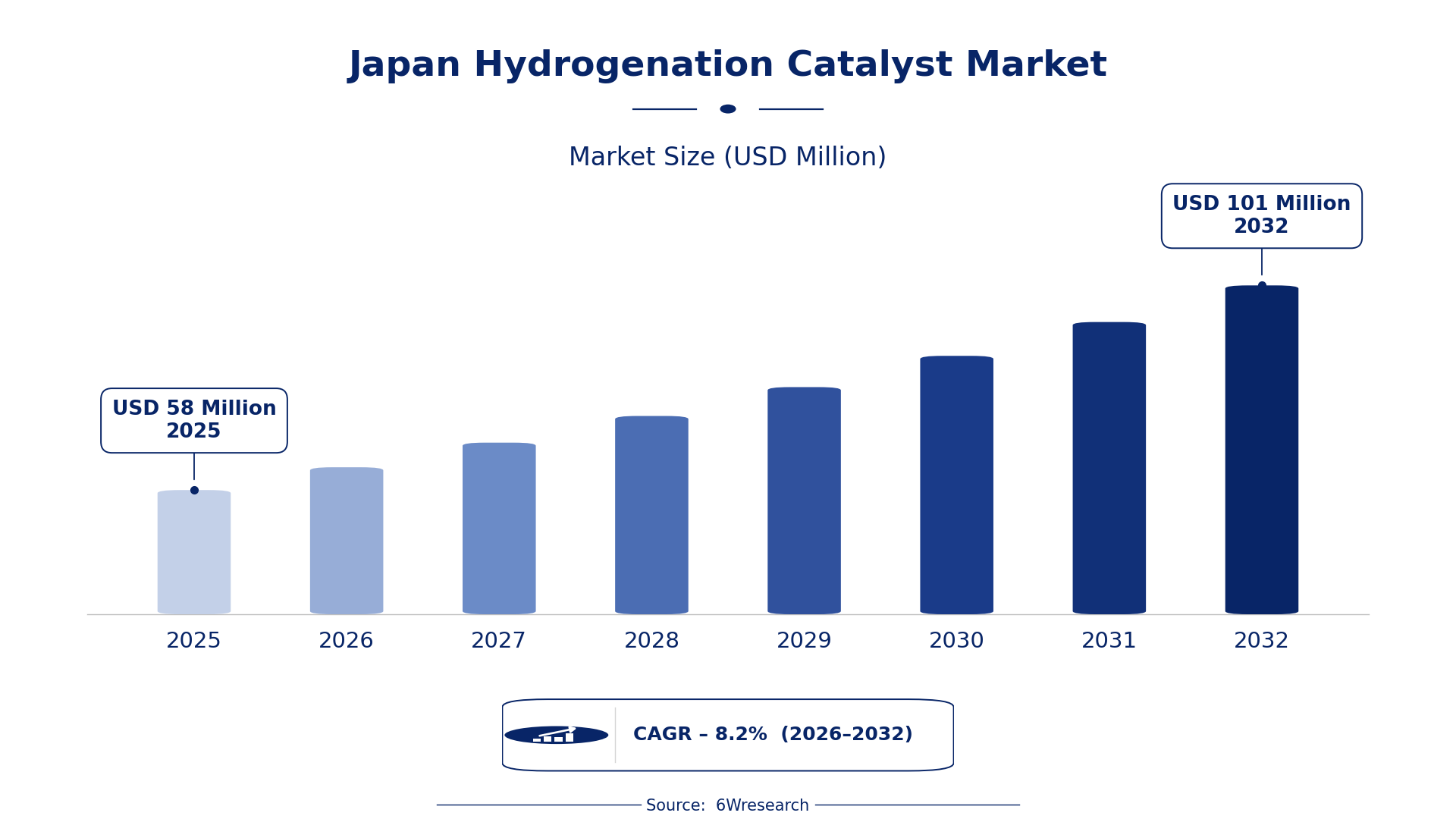
According to 6Wresearch internal database and industry insights, the Japan Hydrogenation Catalyst Market was valued at USD 58 Million in 2025 and is projected to reach USD 101 Million by 2032, growing at a CAGR of approximately 8.2% during 2026–2032.
Japan Hydrogenation Catalyst Market Highlights
| Report Metric | Details |
| Report Name | Japan Hydrogenation Catalyst Market (2026-2032) |
| Market Size 2025 | USD 58 Million |
| Market Size 2032 | USD 101 Million |
| Absolute Growth 2025–2032 | USD 43 Million |
| CAGR 2026–2032 | 8.2% |
| Peak Annual Growth | 9.8% in 2032 |
| Forecast Period | 2026–2032 |
| Historical Data | 2022–2025 |
| Base Year | 2025 |
| Leading Catalyst Type, 2025 | Heterogeneous Catalysts (42% share) |
| Leading Metal Used, 2025 | Palladium/Platinum (36% share) |
| Leading Application Use, 2025 | Oil Refining (49% share) |
| Leading End User, 2025 | Petrochemical Refineries (39% share) |
| Fastest-Growing Catalyst Type | Bimetallic Catalysts (11.9% CAGR) |
| Fastest-Growing Metal Used | Dual Metal Mix (11.1% CAGR) |
| Fastest-Growing Application Use | Fine Chemicals (11.3% CAGR) |
| Fastest-Growing End User | Agrochemical Companies (10.9% CAGR) |
| Growing Sector | specialty chemicals |
| Key End Users | petrochemical refineries, specialty chemical makers, drug manufacturers |
Japan Hydrogenation Catalyst Market Year-wise Growth Rate and Key Drivers (2022–2032)
This graph illustrates the annual growth rates of the market from 2022 to 2032, highlighting a steady upward trajectory and projected market expansion over the forecast period.
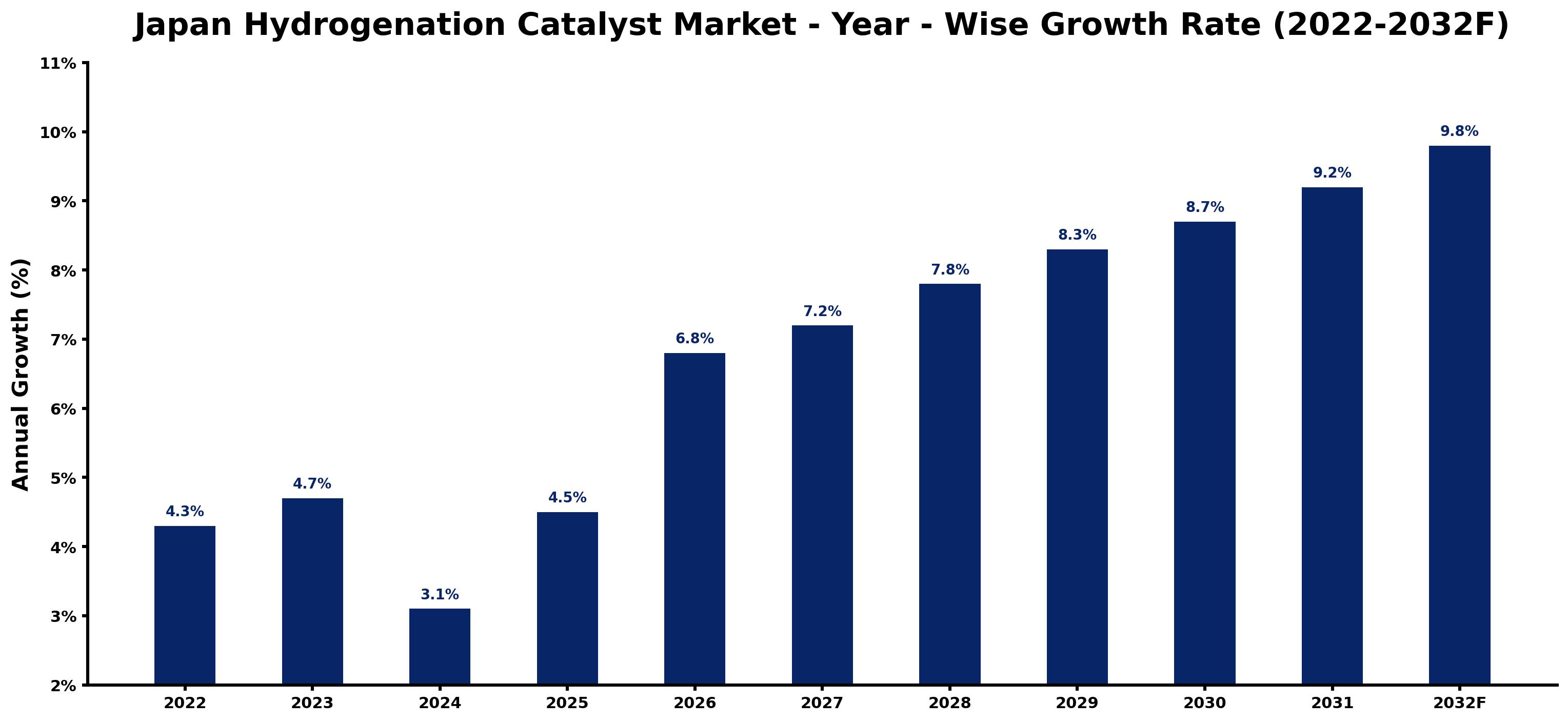
The table below sets out the estimated growth rate for each year and the main factor behind it.
| Year | Estimated Annual Growth (%) | Market Rationale |
| 2022 | 4.3 | The market showed steady growth, reflecting ongoing demand in specialty chemicals. |
| 2023 | 4.7 | Growth accelerated due to increased investments in the pharmaceutical sector. |
| 2024 | 3.1 | Manufacturers adjusted to market conditions, leading to slower growth. |
| 2025 | 4.5 | Demand rose again as oil refining activities expanded in the Tokyo region. |
| 2026 | 6.8 | The rise of green chemistry initiatives is expected to boost market growth. |
| 2027 | 7.2 | The chemical industry modernises processes, contributing to continued growth. |
| 2028 | 7.8 | Increased production capacity is projected to support higher demand levels. |
| 2029 | 8.3 | Rising petrochemical activities are expected to expand the market further. |
| 2030 | 8.7 | New applications for catalysts in pharmaceuticals are anticipated to drive growth. |
| 2031 | 9.2 | Sustainability practices gaining traction will support market expansion. |
| 2032 | 9.8 | Demand will peak as the hydrogenation process becomes integral to various industries. |
Note: Market size estimations and growth projections presented in this report are based on 6Wresearch's proprietary forecasting methodology, utilizing the latest available industry data, government publications, and primary research inputs.
Japan Hydrogenation Catalyst Market Synopsis
Hydrogenation catalysts facilitate the addition of hydrogen to unsaturated organic compounds, essential for organic synthesis, oil refining, and pharmaceutical production. In 2022, Japan produced 3,000 tons of hydrogenation catalysts, underscoring the market's significance. The Japan Hydrogenation Catalyst Market is expanding due to rising demand from specialty chemical producers and petrochemical refineries, alongside government initiatives promoting green chemistry and sustainable practices, aiming to reduce carbon emissions by 26% by 2030.
Market Dynamics Impact Analysis (2026–2032)
| Factor | Type | Impact | Primary Segment Affected |
| Growing investments in the pharmaceutical sector drive demand for hydrogenation catalysts. | Driver | High | Pharmaceutical Synthesis |
| The expansion of oil refining operations increases the need for efficient catalysts. | Driver | High | Oil Refining |
| The rise of fine chemicals production presents new opportunities for catalyst suppliers. | Opportunity | High | Fine Chemicals |
| The adoption of bimetallic catalysts is gaining traction among drug manufacturers. | Opportunity | Medium | Pharmaceutical Synthesis |
| Regulatory compliance costs can burden catalyst manufacturers, affecting pricing. | Restraint | High | Heterogeneous Catalysts |
| Market saturation in certain catalyst types may limit growth potential. | Restraint | Medium | Supported Catalysts |
| Supply chain disruptions can delay production and increase costs for buyers. | Challenge | High | Heterogeneous Catalysts |
| Technological advancements in catalyst efficiency require continuous investment. | Challenge | Medium | Bimetallic Catalysts |
Evaluation of Drivers in Japan Hydrogenation Catalyst Market (2026–2032)
The main growth drivers and the segments they affect most are set out below.
| Drivers | Primary Segment Affected | Why It Matters (Evidence) |
| Increased pharmaceutical production requires advanced catalysts for synthesis processes. | Pharmaceutical Synthesis | The pharmaceutical sector in Japan is valued at approximately $100 billion, driving catalyst demand. |
| Expansion of oil refining operations necessitates efficient hydrogenation processes. | Oil Refining | Refineries in the Osaka region consume substantial amounts of hydrogenation catalysts. |
| Growth in the fine chemicals market boosts demand for specialty catalysts. | Fine Chemicals | The Fine Chemicals market in Japan is projected to reach $30 billion by 2025. |
| Sustainability initiatives encourage the adoption of green chemistry practices. | Specialty Chemical Makers | The Japanese government launched a program to promote green chemistry in 2023. |
| Technological advancements in catalyst production improve efficiency. | Supported Catalysts | Research from the National Institute of Advanced Industrial Science and Technology supports innovation. |
A wider customer base explains much of the growth, as the pharmaceutical sector, valued at approximately $100 billion, drives demand for hydrogenation catalysts. The expansion of oil refining operations necessitates efficient hydrogenation processes, leading to increased purchases. Continuous technological advancements in catalyst production attract new buyers, ensuring the market's ongoing expansion.
Evaluation of Restraints in Japan Hydrogenation Catalyst Market
The main factors holding the market back are set out below.
| Market Restraint | Primary Segment Affected | Why It Matters (Evidence) |
| Compliance with environmental regulations increases operational costs for manufacturers. | Heterogeneous Catalysts | The PRTR Law requires businesses to report chemical substance releases, impacting costs. |
| Market saturation in traditional catalyst types limits growth opportunities. | Supported Catalysts | Heterogeneous catalysts account for 70% of the market, reducing demand for alternatives. |
| Supply chain disruptions can lead to delays in catalyst availability. | Bimetallic Catalysts | Global supply chain issues affect the timely delivery of raw materials. |
| High production costs can deter new entrants into the catalyst market. | Homogeneous Catalysts | The Chemical Substances Control Law imposes stringent requirements on new substances. |
| Technological advancements require continuous investment, straining budgets. | Supported Catalysts | The Act on the Rational Use of Energy obliges large users to improve efficiency. |
Japan Hydrogenation Catalyst Market Challenges
Japan produced 3,000 tons of hydrogenation catalysts in 2022, revealing a technology gap that limits output for producers. Many manufacturers depend on outdated processes due to insufficient investment, causing delays in fulfilling orders for the specialty chemicals sector. Local distributors face intense competition from global suppliers, forcing them to cut prices, which can shrink profit margins and jeopardise their operations. A shortage of skilled workers in advanced catalyst production leads to training delays, increasing costs and extending onboarding times for producers. Supply chain disruptions in sourcing key metals like palladium can delay delivery schedules for buyers, affecting their production timelines.
Trends in the Japan Hydrogenation Catalyst Market
The shifts below are changing how Japan Hydrogenation Catalyst Market products are bought and supplied.
- Shift from Traditional to Bimetallic Catalysts: The adoption of bimetallic catalysts is increasing, particularly among drug manufacturers. In Japan, the use of bimetallic catalysts is projected to grow by 15% by 2026.
- Transition to Green Chemistry: A government program launched in 2023 promotes green chemistry, aiming to reduce carbon emissions by 26% by 2030. This initiative encourages suppliers to innovate in catalyst production.
- Emergence of Fine Chemicals as a Key Sector: Fine chemicals are becoming a major focus for hydrogenation catalyst applications. The Fine Chemicals market in Japan is projected to reach $30 billion by 2025, driving increased catalyst demand.
- Increasing Demand from Specialty Chemical Makers: Specialty chemical makers are relying more on advanced hydrogenation catalysts. The Tokyo region is a major hub for specialty chemical production, significantly contributing to market growth.
Investment Opportunities in the Japan Hydrogenation Catalyst Market
Investors looking at the Japan Hydrogenation Catalyst Market should consider the following areas.
- Petrochemical Refineries Seeking Efficient Solutions: Petrochemical refineries are looking for advanced hydrogenation catalysts to improve efficiency. The Osaka region, known for its petrochemical refineries, presents a significant opportunity for suppliers.
- Collaborations for Green Chemistry Initiatives: Partnering with local entities can facilitate entry into the green chemistry market. The Japanese government's 2023 program supports initiatives aimed at reducing carbon emissions.
- Investment in Bimetallic Catalyst Production: Investing in the production of bimetallic catalysts can meet rising demand. Drug manufacturers are increasingly adopting these catalysts for efficiency, creating a market opportunity.
- Supply of Specialty Catalysts for Fine Chemicals: Fine chemical producers require advanced hydrogenation catalysts to meet growing demand. The projected growth of the Fine Chemicals market to $30 billion by 2025 highlights this opportunity.
Government Initiatives in the Japan Hydrogenation Catalyst Market
The Hydrogen Society Promotion Act, launched in 2024, adds price-gap support for low-carbon hydrogen and ammonia supply chains. This measure encourages manufacturers to invest in cleaner technologies, aligning with Japan's carbon reduction goals and improving previous regulations.
The Ministry of Economy, Trade and Industry (METI) oversees the approval of new chemical substances under the Chemical Substances Control Law. This law requires businesses to evaluate and control chemical substances, ensuring safety and compliance in the hydrogenation catalyst market.
Future Insight of the Japan Hydrogenation Catalyst Market
A shift towards green chemistry will drive changes in hydrogenation catalyst production by 2032, prompting suppliers to adopt more efficient methods. The growth of dual metal mix catalysts, expected to rise by 15% by 2026, will improve performance in chemical processes. As the pharmaceutical sector continues to grow, buyers will benefit from improved sustainability and efficiency in catalyst applications. Research initiatives by the National Institute of Advanced Industrial Science and Technology will support advancements in catalyst performance, facilitating the sector's evolution.
Market Segmentation Analysis
Japan Hydrogenation Catalyst Market report covers a detailed analysis of the following market segments:
By Catalyst Type – Heterogeneous Catalysts Lead, Bimetallic Catalysts Expected to Grow Fastest
According to Saurav Kr Singh, Senior Research Analyst at 6Wresearch, Heterogeneous Catalysts took 42% of catalyst type revenue in 2025, more than any other category. Heterogeneous catalysts dominate the market due to their widespread application in industrial processes, particularly in oil refining and specialty chemicals. Their ease of separation and efficiency make them the preferred choice for facilities across the Tokyo region. Over 2026–2032, Bimetallic Catalysts are expected to post the fastest growth, at a CAGR of 11.9%. Bimetallic catalysts are gaining traction as they offer improved efficiency for specific applications, particularly in the pharmaceutical sector. The increasing demand for more effective catalysts in drug manufacturing is propelling their growth. Suppliers should focus on developing and promoting bimetallic catalysts to capture the growing interest in this segment.
By Metal Used – Palladium/Platinum Leads, Dual Metal Mix Expected to Grow Fastest
Palladium/Platinum accounted for 36% of the market by metal used in 2025. Palladium and platinum are crucial for high-value applications in pharmaceuticals, which is a sector valued at approximately $100 billion. Their effectiveness in hydrogenation processes ensures a strong and consistent demand from manufacturers. Dual Metal Mix is set to record the highest CAGR in this split, 11.1% over 2026–2032. The dual metal mix is experiencing rapid growth due to its potential for improved catalyst efficiency, particularly in emerging applications. This trend signifies a shift towards more versatile catalyst solutions, which will likely expand its market share. Buyers should consider dual metal mix catalysts to improve process efficiencies and meet evolving production requirements.
By Application Use – Oil Refining Leads, Fine Chemicals Expected to Grow Fastest
Oil Refining held 49% of the Japan Hydrogenation Catalyst Market by application use in 2025. Oil refining is the leading application for hydrogenation catalysts, vital for refining processes in petrochemical plants, particularly in regions like Osaka. This critical role ensures that oil refining maintains a dominant position in the market. The quickest growth will come from Fine Chemicals, forecast to expand at a CAGR of 11.3% between 2026 and 2032. Fine chemicals are projected to grow rapidly, driven by their significance in producing specialty chemicals, with expectations of reaching a market value of $30 billion by 2025. This growth highlights the increasing dependence on catalysts in this expanding field. Suppliers must align their products with the growing fine chemicals market to capture emerging business opportunities.
By End User – Petrochemical Refineries Lead, Agrochemical Companies Expected to Grow Fastest
In 2025, Petrochemical Refineries led the end user split with a 39% share. Petrochemical refineries are the largest end users of hydrogenation catalysts, generating substantial demand through their extensive refining operations. The scale and established processes of this sector ensure a steady market for these catalysts. Agrochemical Companies are projected to grow fastest, at a CAGR of 10.9% during 2026–2032. Agrochemical companies are increasingly utilising hydrogenation catalysts for pesticide formulation, indicating a diversification of applications. This shift suggests a strong potential for rapid growth within this user segment. Suppliers should focus on agrochemical companies to expand their customer base and increase market presence.
Key Attractiveness of the Report
- 10 Years of Market Numbers
- Historical Data Starting from 2022 to 2025
- Base Year 2025
- Forecast Data until 2032
- Key Performance Indicators Impacting the Market
- Major Upcoming Developments and Projects
Key Highlights of the Report:
- Japan Hydrogenation Catalyst Market Outlook
- Market Size of Japan Hydrogenation Catalyst Market, 2025
- Forecast of Japan Hydrogenation Catalyst Market, 2032
- Historical Data and Forecast of Japan Hydrogenation Catalyst Revenues & Volume for the Period 2022-2032F
- Japan Hydrogenation Catalyst Market Trend Evolution
- Japan Hydrogenation Catalyst Market Drivers and Challenges
- Japan Hydrogenation Catalyst Price Trends
- Japan Hydrogenation Catalyst Porter's Five Forces
- Japan Hydrogenation Catalyst Industry Life Cycle
- Historical Data and Forecast of Japan Hydrogenation Catalyst Market Revenues & Volume By Catalyst Type for the Period 2022-2032F
- Historical Data and Forecast of Japan Hydrogenation Catalyst Market Revenues & Volume By Homogeneous Catalysts for the Period 2022-2032F
- Historical Data and Forecast of Japan Hydrogenation Catalyst Market Revenues & Volume By Heterogeneous Catalysts for the Period 2022-2032F
- Historical Data and Forecast of Japan Hydrogenation Catalyst Market Revenues & Volume By Supported Catalysts for the Period 2022-2032F
- Historical Data and Forecast of Japan Hydrogenation Catalyst Market Revenues & Volume By Bimetallic Catalysts for the Period 2022-2032F
- Historical Data and Forecast of Japan Hydrogenation Catalyst Market Revenues & Volume By Metal Used for the Period 2022-2032F
- Historical Data and Forecast of Japan Hydrogenation Catalyst Market Revenues & Volume By Palladium/Platinum for the Period 2022-2032F
- Historical Data and Forecast of Japan Hydrogenation Catalyst Market Revenues & Volume By Nickel/Copper for the Period 2022-2032F
- Historical Data and Forecast of Japan Hydrogenation Catalyst Market Revenues & Volume By Activated Carbon Base for the Period 2022-2032F
- Historical Data and Forecast of Japan Hydrogenation Catalyst Market Revenues & Volume By Dual Metal Mix for the Period 2022-2032F
- Historical Data and Forecast of Japan Hydrogenation Catalyst Market Revenues & Volume By Application Use for the Period 2022-2032F
- Historical Data and Forecast of Japan Hydrogenation Catalyst Market Revenues & Volume By Organic Synthesis for the Period 2022-2032F
- Historical Data and Forecast of Japan Hydrogenation Catalyst Market Revenues & Volume By Oil Refining for the Period 2022-2032F
- Historical Data and Forecast of Japan Hydrogenation Catalyst Market Revenues & Volume By Pharmaceutical Synthesis for the Period 2022-2032F
- Historical Data and Forecast of Japan Hydrogenation Catalyst Market Revenues & Volume By Fine Chemicals for the Period 2022-2032F
- Historical Data and Forecast of Japan Hydrogenation Catalyst Market Revenues & Volume By End User for the Period 2022-2032F
- Historical Data and Forecast of Japan Hydrogenation Catalyst Market Revenues & Volume By Specialty Chemical Makers for the Period 2022-2032F
- Historical Data and Forecast of Japan Hydrogenation Catalyst Market Revenues & Volume By Petrochemical Refineries for the Period 2022-2032F
- Historical Data and Forecast of Japan Hydrogenation Catalyst Market Revenues & Volume By Drug Manufacturers for the Period 2022-2032F
- Historical Data and Forecast of Japan Hydrogenation Catalyst Market Revenues & Volume By Agrochemical Companies for the Period 2022-2032F
- Japan Hydrogenation Catalyst Import Export Trade Statistics
- Market Opportunity Assessment By Catalyst Type
- Market Opportunity Assessment By Metal Used
- Market Opportunity Assessment By Application Use
- Market Opportunity Assessment By End User
- Japan Hydrogenation Catalyst Top Companies Market Share
- Japan Hydrogenation Catalyst Competitive Benchmarking By Technical and Operational Parameters
- Japan Hydrogenation Catalyst Company Profiles
- Japan Hydrogenation Catalyst Key Strategic Recommendations
Market Covered
The study includes the following segmentation.
By Catalyst Type
- Homogeneous Catalysts
- Heterogeneous Catalysts
- Supported Catalysts
- Bimetallic Catalysts
By Metal Used
- Palladium/Platinum
- Nickel/Copper
- Activated Carbon Base
- Dual Metal Mix
By Application Use
- Organic Synthesis
- Oil Refining
- Pharmaceutical Synthesis
- Fine Chemicals
By End User
- Specialty Chemical Makers
- Petrochemical Refineries
- Drug Manufacturers
- Agrochemical Companies































