Japan Hygiene and Sanitation Market Size & Growth Rate
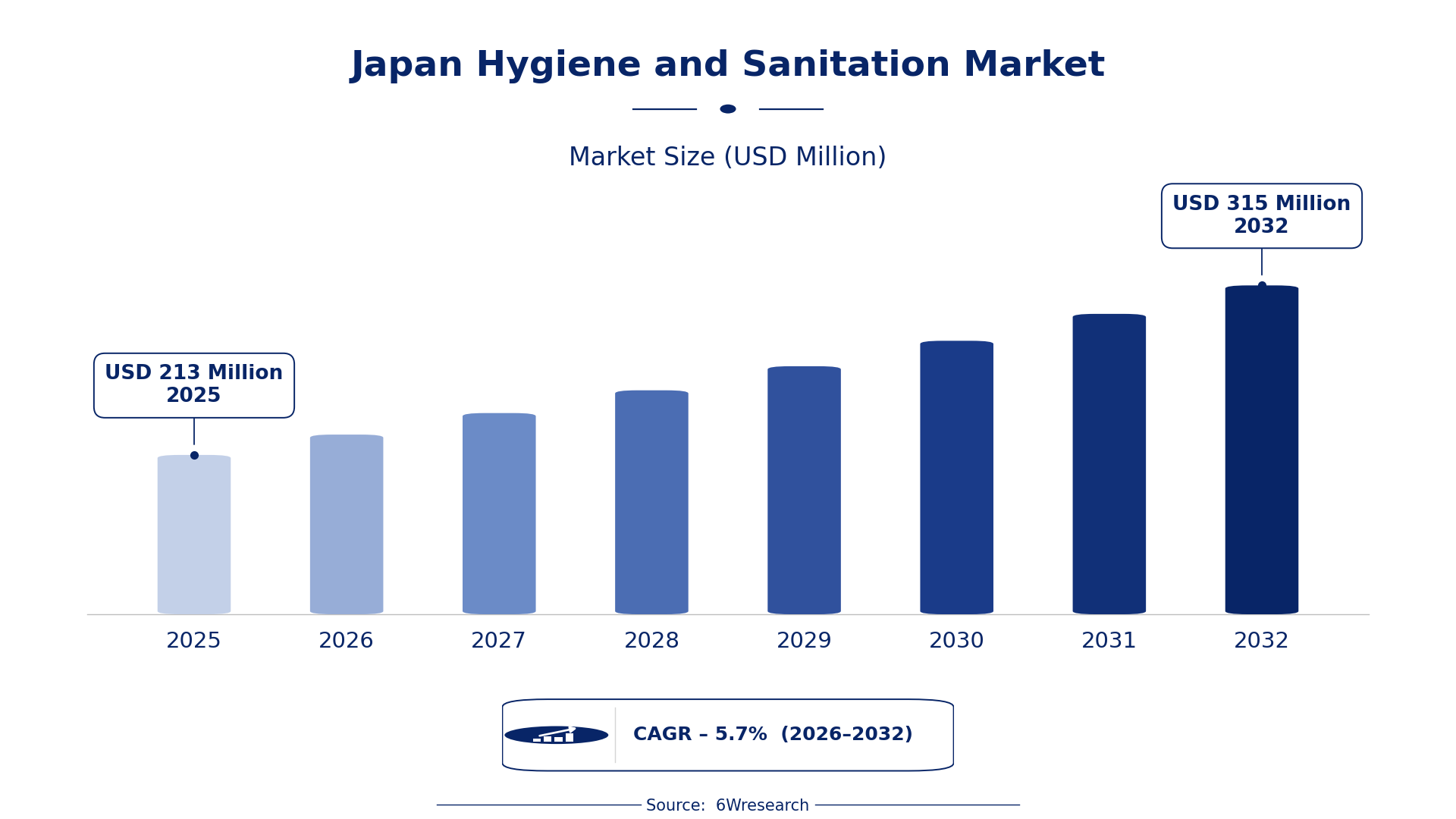
According to 6Wresearch internal database and industry insights, the Japan Hygiene and Sanitation Market was valued at USD 213 Million in 2025 and is projected to reach USD 315 Million by 2032, growing at a CAGR of approximately 5.7% during 2026–2032.
Japan Hygiene and Sanitation Market Highlights
| Report Metric | Details |
| Report Name | Japan Hygiene and Sanitation Market (2026-2032) |
| Market Size 2025 | USD 213 Million |
| Market Size 2032 | USD 315 Million |
| Absolute Growth 2025–2032 | USD 102 Million |
| CAGR 2026–2032 | 5.7% |
| Peak Annual Growth | 7.3% in 2027 |
| Forecast Period | 2026–2032 |
| Historical Data | 2022–2025 |
| Base Year | 2025 |
| Leading Product Type, 2025 | Surface Disinfectants (51% share) |
| Leading Application Setting, 2025 | Healthcare Facilities (42% share) |
| Leading Distribution Channel, 2025 | B2B Supply Chains (40% share) |
| Leading End User, 2025 | Hospitals & Clinics (46% share) |
| Fastest-Growing Product Type | Personal Hygiene Products (7.9% CAGR) |
| Fastest-Growing Application Setting | Households (7.8% CAGR) |
| Fastest-Growing Distribution Channel | Online Retailers (7.4% CAGR) |
| Fastest-Growing End User | Consumers (7.5% CAGR) |
| Growing Sector | Households |
| Key End Users | Healthcare Facilities, Households, Food & Beverage Plants, Airports & Malls |
Japan Hygiene and Sanitation Market Year-wise Growth Rate and Key Drivers (2022–2032)
This graph illustrates the annual growth rates of the market from 2022 to 2032, highlighting a steady upward trajectory and projected market expansion over the forecast period.
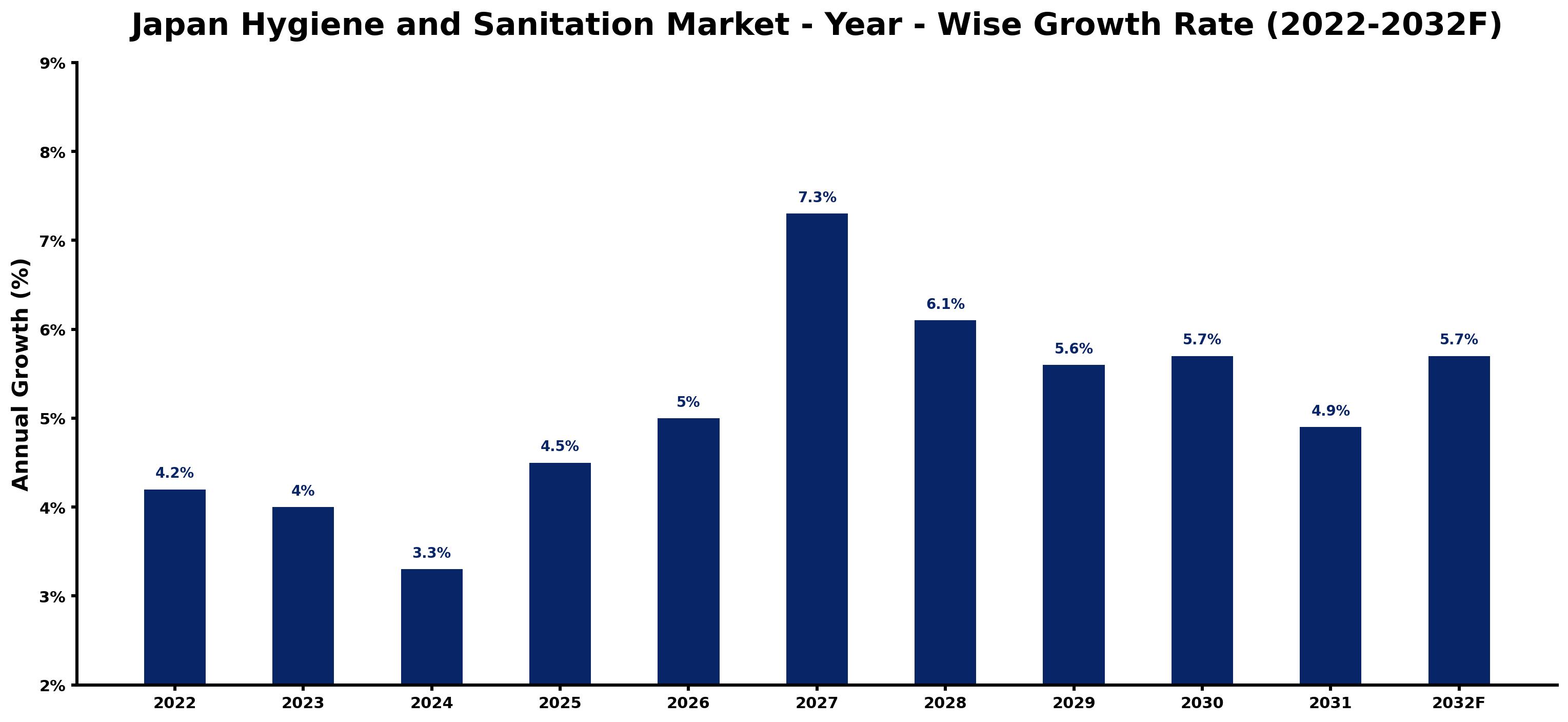
Year by year, the estimates below pair each growth rate with the development that shaped it.
| Year | Estimated Annual Growth (%) | Market Rationale |
| 2022 | 4.2 | The market experienced steady growth, driven by ongoing demand in healthcare and food sectors. |
| 2023 | 4.0 | Growth slowed slightly as market conditions stabilised after a surge in hygiene awareness. |
| 2024 | 3.3 | The market continued to slow down due to saturation in certain product categories. |
| 2025 | 4.5 | Growth accelerated as healthcare facilities increased their procurement of sanitation supplies. |
| 2026 | 5.0 | Demand is expected to rise further as consumers prioritise personal hygiene products amid health concerns. |
| 2027 | 7.3 | The market will peak with investments in public sanitation initiatives and infrastructure. |
| 2028 | 6.1 | Growth is projected to slow as the market begins to stabilise after the peak demand period. |
| 2029 | 5.6 | A slight slowdown is expected as the market adjusts to the previous year's high growth. |
| 2030 | 5.7 | Demand will increase again as new hygiene initiatives are introduced in public spaces. |
| 2031 | 4.9 | Growth is projected to moderate as the market reaches a more stable phase of development. |
| 2032 | 5.7 | The market is expected to grow as consumer awareness of hygiene continues to rise. |
Note: Market size estimations and growth projections presented in this report are based on 6Wresearch's proprietary forecasting methodology, utilizing the latest available industry data, government publications, and primary research inputs.
Japan Hygiene and Sanitation Market Synopsis
Hygiene and sanitation products are essential for maintaining cleanliness and preventing pathogen spread, particularly in healthcare, food processing, and personal care. The Japan Hygiene and Sanitation Market is expanding, driven by a population of approximately 125 million and a healthcare sector with over 8,000 hospitals. The introduction of new public sanitation programs and the ongoing demand for personal hygiene products are key factors contributing to this growth, as consumers and institutions alike prioritise health and safety. Urban initiatives and government programmes aimed at improving public hygiene standards further support this trend.
Market Dynamics Impact Analysis (2026–2032)
| Factor | Type | Impact | Primary Segment Affected |
| Increased healthcare spending | Driver | High | Healthcare Facilities |
| Growing consumer awareness of hygiene | Driver | High | Personal Hygiene Products |
| Emerging public sanitation initiatives | Opportunity | High | Public Area Dispensers |
| Rising demand for sustainable products | Opportunity | Medium | Industrial Sanitizers |
| Regulatory compliance costs | Restraint | High | Food & Beverage Plants |
| Market saturation in certain segments | Restraint | Medium | Surface Disinfectants |
| High competition among suppliers | Challenge | High | B2B Supply Chains |
| Fluctuating raw material prices | Challenge | Medium | Commercial Kitchens |
Evaluation of Drivers in Japan Hygiene and Sanitation Market (2026–2032)
The factors lifting demand, and the evidence behind each, are summarised below.
| Drivers | Primary Segment Affected | Why It Matters (Evidence) |
| Increased healthcare spending drives demand for sanitation supplies in hospitals and clinics. | Healthcare Facilities | The healthcare sector's extensive needs for hygiene products lead to higher procurement levels, particularly in Tokyo and Osaka. |
| Growing consumer awareness of hygiene boosts sales of personal hygiene products. | Personal Hygiene Products | Millions of households prioritising cleanliness lead to rising demand for items like hand sanitizers and soaps. |
| Public sanitation initiatives increase the need for hygiene products in urban areas. | Public Area Dispensers | Recent hygiene initiatives have led to increased installations in public spaces across major cities. |
| Demand for sustainable hygiene solutions is rising among consumers and businesses. | Industrial Sanitizers | Government subsidies for eco-friendly hygiene solutions encourage companies to develop greener products. |
| Compliance with health regulations necessitates the use of industrial sanitizers in food processing. | Food & Beverage Plants | Strict hygiene practices drive demand for sanitizers in this sector. |
The strongest pull on demand comes from the healthcare sector, which includes over 8,000 hospitals requiring extensive sanitation supplies. Japan's population of approximately 125 million drives high demand for personal hygiene products, particularly in households.
Evaluation of Restraints in Japan Hygiene and Sanitation Market
Below are the constraints most often cited by buyers and suppliers, with the segment each affects.
| Market Restraint | Primary Segment Affected | Why It Matters (Evidence) |
| Regulatory compliance costs can burden manufacturers and suppliers in the hygiene sector. | Food & Beverage Plants | Strict regulations increase operational costs for compliance, impacting budgets. |
| Market saturation in certain segments limits growth potential for new entrants. | Surface Disinfectants | As demand stabilises, new suppliers face challenges in gaining market share against established brands. |
| High competition among suppliers leads to price pressures in the market. | B2B Supply Chains | Numerous suppliers compete for contracts, which can drive down prices. |
| Fluctuating raw material prices impact production costs for hygiene products. | Commercial Kitchens | Variability in raw material costs can affect pricing strategies for manufacturers. |
| Consumer preferences shifting towards eco-friendly products may challenge traditional suppliers. | Personal Hygiene Products | As sustainability becomes a priority, suppliers of conventional products may struggle to adapt. |
Japan Hygiene and Sanitation Market Challenges
In 2023, hospitals in Japan are facing rising costs for sanitation supplies due to supply chain disruptions, potentially increasing expenses by up to 20%. Skills shortages in the hygiene manufacturing sector are causing delays in product availability, impacting healthcare providers' ability to maintain necessary sanitation levels. Escalating raw material costs may raise disinfectant prices by 15%, straining budgets for food processing companies. Many producers continue to rely on outdated equipment, which hampers production rates and extends lead times for buyers, complicating inventory management.
Trends in the Japan Hygiene and Sanitation Market
Buyers and suppliers in the Japan Hygiene and Sanitation Market are adjusting to the following trends.
- Shift towards Eco-Friendly Hygiene Products: Consumer demand for sustainability is propelling a trend towards eco-friendly hygiene products. In 2023, government subsidies have motivated manufacturers to create greener products, reflecting evolving consumer preferences.
- Increase in Public Sanitation Initiatives: Public sanitation initiatives have gained momentum since 2023, especially in urban areas. The Tokyo Metropolitan Government's hygiene initiative aims to enhance cleanliness in public spaces, leading to more hygiene dispensers being installed.
- Rising Demand for Personal Hygiene Products: The demand for personal hygiene products has surged, particularly in households. In 2023, items such as hand sanitizers and soaps experienced notable growth as consumers prioritised health and cleanliness.
- Expansion of Hygiene Standards in Food Processing: Stricter hygiene standards in food processing industries have arisen from regulatory changes. As a result, food and beverage plants are increasingly investing in industrial sanitizers to ensure compliance.
Investment Opportunities in the Japan Hygiene and Sanitation Market
The openings below show where demand in the Japan Hygiene and Sanitation Market is visible and how suppliers can enter.
- Timing for Investment in Eco-Friendly Products: With growing consumer interest in sustainability, now is an opportune moment to invest in eco-friendly hygiene products. Government subsidies are available for companies developing greener solutions, particularly in urban areas.
- Growing Demand in Healthcare Facilities: The healthcare sector's continuous need for sanitation supplies presents a valuable opportunity for suppliers. With over 8,000 hospitals in Japan, targeting this market can yield substantial returns.
- Expansion in Public Spaces: The recent emphasis on improving sanitation in public areas creates a gap for suppliers. Urban centres like Tokyo are actively increasing the number of hygiene dispensers, offering new business opportunities.
- Investing in Consumer Hygiene Products: The increasing demand for personal hygiene products among consumers indicates a promising market. Suppliers can capitalise by focusing on households and retail channels.
Government Initiatives in the Japan Hygiene and Sanitation Market
The Economic Security Promotion Act (2022) supports supply-chain resilience for critical hygiene products, building on previous regulations. This law aids manufacturers in meeting compliance standards while ensuring a steady supply of essential goods.
The Ministry of Health, Labour and Welfare oversees hygiene standards in healthcare facilities, approving various sanitation products. This agency also funds initiatives aimed at improving public health and safety through better hygiene practices.
Future Insight of the Japan Hygiene and Sanitation Market
By 2032, new sanitation programmes in public spaces will elevate hygiene standards, benefiting both suppliers and healthcare sectors. Advanced manufacturing technologies will streamline production processes, reducing costs and enhancing supply chain efficiency. Government support for eco-friendly product development will spur innovation. Stricter hygiene regulations will ensure that all products meet high safety standards, boosting consumer trust and market competitiveness.
Market Segmentation Analysis
Japan Hygiene and Sanitation Market report covers a detailed analysis of the following market segments:
By Product Type – Surface Disinfectants Lead, Personal Hygiene Products Expected to Grow Fastest
According to Saurav Kr Singh, Senior Research Analyst at 6Wresearch, with 51% of product type revenue in 2025, Surface Disinfectants was the largest category. Surface disinfectants hold the largest share due to their extensive use in healthcare and food sectors, where infection control is critical. For instance, the annual demand for surface disinfectants in healthcare is estimated at millions of litres, highlighting their importance. Over 2026–2032, Personal Hygiene Products are expected to post the fastest growth, at a CAGR of 7.9%. Personal hygiene products are experiencing rapid growth as they are essential for individual health and sanitation, particularly in households. The increasing awareness of hygiene practices has led to a surge in demand for items like hand sanitizers and soaps. Suppliers should focus on expanding their product lines in personal hygiene to capture growing consumer interest.
By Application Setting – Healthcare Facilities Lead, Households Expected to Grow Fastest
The largest application setting category in 2025 was Healthcare Facilities, at 42% of revenue. Healthcare facilities hold the largest share as they require extensive hygiene products to ensure patient safety and infection control. With over 8,000 hospitals in Japan, the demand for sanitation supplies remains critical and consistent. The quickest growth will come from Households, forecast to expand at a CAGR of 7.8% between 2026 and 2032. Households are witnessing the fastest growth rate as personal hygiene becomes increasingly prioritised, particularly in light of heightened health awareness. This shift is reflected in a marked increase in the purchase of hygiene products for family use, indicating a broader societal trend. Suppliers must tailor their marketing strategies to effectively target household consumers.
By Distribution Channel – B2B Supply Chains Lead, Online Retailers Expected to Grow Fastest
In 2025, B2B Supply Chains led the distribution channel split with a 40% share. B2B supply chains lead the market as they efficiently distribute hygiene products to essential sectors, particularly healthcare facilities. This channel ensures that hygiene products are consistently available where cleanliness is paramount, supporting operational needs. Online Retailers are set to record the highest CAGR in this split, 7.4% over 2026–2032. Online retailers are experiencing the fastest growth, providing consumers with convenient access to hygiene products. The ongoing shift towards e-commerce illustrates changing shopping behaviours, with many consumers preferring the ease of online purchasing. Suppliers should enhance their online presence to capitalise on the increasing trend of e-commerce.
By End User – Hospitals & Clinics Lead, Consumers Expected to Grow Fastest
Hospitals & Clinics took 46% of end user revenue in 2025, more than any other category. Hospitals and clinics are the largest consumer group for hygiene products, necessitating rigorous sanitation measures to ensure patient care. The continuous demand from this sector is driven by the need to uphold strict health standards and regulations. Consumers are projected to grow fastest, at a CAGR of 7.5% during 2026–2032. Consumers are the fastest-growing segment, as individuals increasingly seek hygiene products for personal use in their daily routines. This growth signifies a societal shift towards prioritising health and cleanliness, especially in domestic settings. Suppliers need to adjust their product offerings to meet the specific preferences and needs of individual consumers.
Key Attractiveness of the Report
- 10 Years of Market Numbers
- Historical Data Starting from 2022 to 2025
- Base Year 2025
- Forecast Data until 2032
- Key Performance Indicators Impacting the Market
- Major Upcoming Developments and Projects
Key Highlights of the Report:
- Japan Hygiene and Sanitation Market Outlook
- Market Size of Japan Hygiene and Sanitation Market, 2025
- Forecast of Japan Hygiene and Sanitation Market, 2032
- Historical Data and Forecast of Japan Hygiene and Sanitation Revenues & Volume for the Period 2022-2032F
- Japan Hygiene and Sanitation Market Trend Evolution
- Japan Hygiene and Sanitation Market Drivers and Challenges
- Japan Hygiene and Sanitation Price Trends
- Japan Hygiene and Sanitation Porter's Five Forces
- Japan Hygiene and Sanitation Industry Life Cycle
- Historical Data and Forecast of Japan Hygiene and Sanitation Market Revenues & Volume By Product Type for the Period 2022-2032F
- Historical Data and Forecast of Japan Hygiene and Sanitation Market Revenues & Volume By Surface Disinfectants for the Period 2022-2032F
- Historical Data and Forecast of Japan Hygiene and Sanitation Market Revenues & Volume By Personal Hygiene Products for the Period 2022-2032F
- Historical Data and Forecast of Japan Hygiene and Sanitation Market Revenues & Volume By Industrial Sanitizers for the Period 2022-2032F
- Historical Data and Forecast of Japan Hygiene and Sanitation Market Revenues & Volume By Public Area Dispensers for the Period 2022-2032F
- Historical Data and Forecast of Japan Hygiene and Sanitation Market Revenues & Volume By Application Setting for the Period 2022-2032F
- Historical Data and Forecast of Japan Hygiene and Sanitation Market Revenues & Volume By Healthcare Facilities for the Period 2022-2032F
- Historical Data and Forecast of Japan Hygiene and Sanitation Market Revenues & Volume By Households for the Period 2022-2032F
- Historical Data and Forecast of Japan Hygiene and Sanitation Market Revenues & Volume By Food & Beverage Plants for the Period 2022-2032F
- Historical Data and Forecast of Japan Hygiene and Sanitation Market Revenues & Volume By Airports & Malls for the Period 2022-2032F
- Historical Data and Forecast of Japan Hygiene and Sanitation Market Revenues & Volume By Distribution Channel for the Period 2022-2032F
- Historical Data and Forecast of Japan Hygiene and Sanitation Market Revenues & Volume By B2B Supply Chains for the Period 2022-2032F
- Historical Data and Forecast of Japan Hygiene and Sanitation Market Revenues & Volume By Online Retailers for the Period 2022-2032F
- Historical Data and Forecast of Japan Hygiene and Sanitation Market Revenues & Volume By Institutional Distributors for the Period 2022-2032F
- Historical Data and Forecast of Japan Hygiene and Sanitation Market Revenues & Volume By Government Contracts for the Period 2022-2032F
- Historical Data and Forecast of Japan Hygiene and Sanitation Market Revenues & Volume By End User for the Period 2022-2032F
- Historical Data and Forecast of Japan Hygiene and Sanitation Market Revenues & Volume By Hospitals & Clinics for the Period 2022-2032F
- Historical Data and Forecast of Japan Hygiene and Sanitation Market Revenues & Volume By Consumers for the Period 2022-2032F
- Historical Data and Forecast of Japan Hygiene and Sanitation Market Revenues & Volume By Commercial Kitchens for the Period 2022-2032F
- Historical Data and Forecast of Japan Hygiene and Sanitation Market Revenues & Volume By Civic Institutions for the Period 2022-2032F
- Japan Hygiene and Sanitation Import Export Trade Statistics
- Market Opportunity Assessment By Product Type
- Market Opportunity Assessment By Application Setting
- Market Opportunity Assessment By Distribution Channel
- Market Opportunity Assessment By End User
- Japan Hygiene and Sanitation Top Companies Market Share
- Japan Hygiene and Sanitation Competitive Benchmarking By Technical and Operational Parameters
- Japan Hygiene and Sanitation Company Profiles
- Japan Hygiene and Sanitation Key Strategic Recommendations
Market Covered
Coverage by segment is as follows.
By Product Type
- Surface Disinfectants
- Personal Hygiene Products
- Industrial Sanitizers
- Public Area Dispensers
By Application Setting
- Healthcare Facilities
- Households
- Food & Beverage Plants
- Airports & Malls
By Distribution Channel
- B2B Supply Chains
- Online Retailers
- Institutional Distributors
- Government Contracts
By End User
- Hospitals & Clinics
- Consumers
- Commercial Kitchens
- Civic Institutions































