Japan Hygienic Tissue Products Market Size & Growth Rate
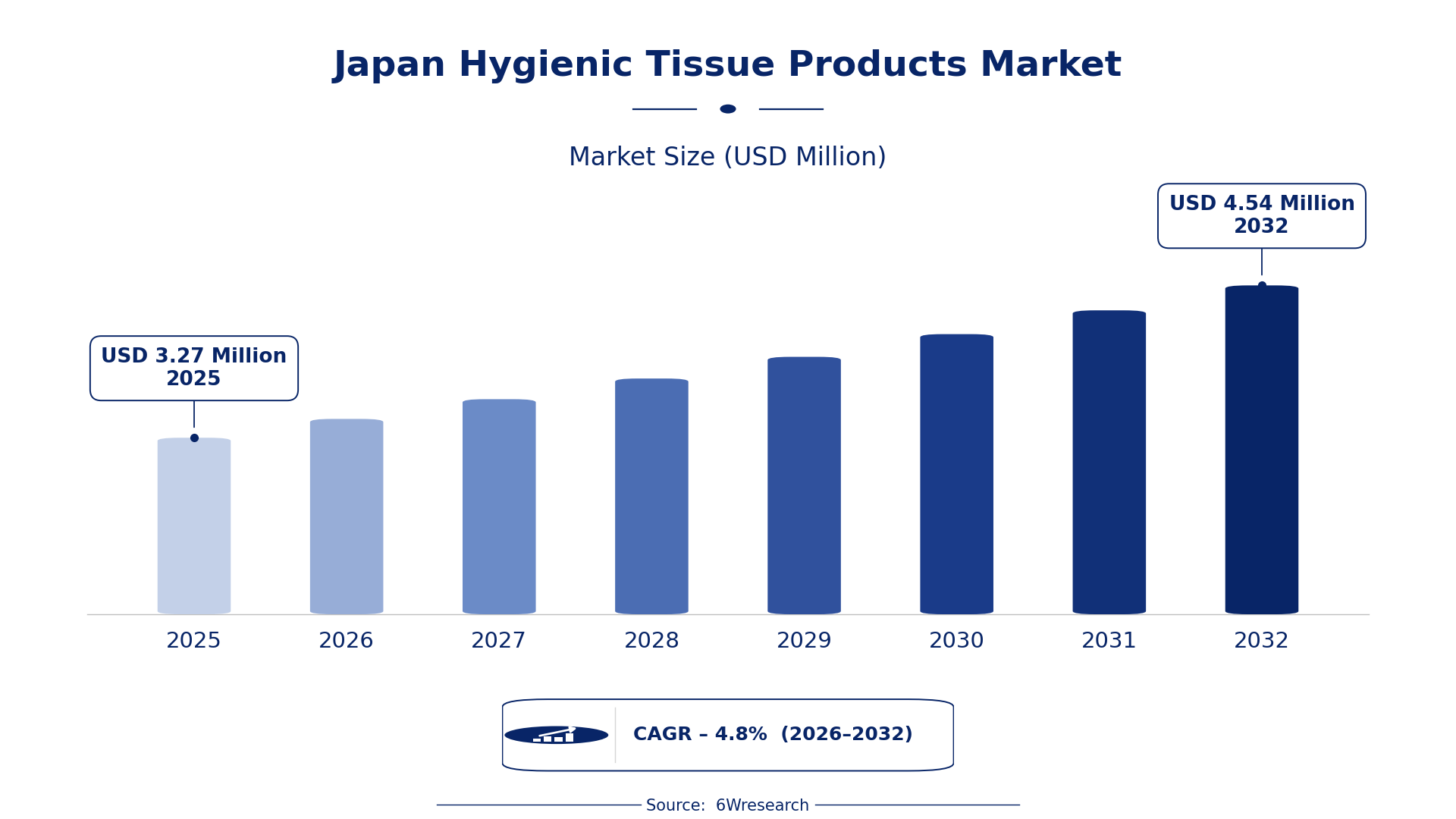
According to 6Wresearch internal database and industry insights, the Japan Hygienic Tissue Products Market was valued at USD 3.27 Million in 2025 and is projected to reach USD 4.54 Million by 2032, growing at a CAGR of approximately 4.8% during 2026–2032.
Japan Hygienic Tissue Products Market Highlights
| Report Metric | Details |
| Report Name | Japan Hygienic Tissue Products Market (2026-2032) |
| Market Size 2025 | USD 3.27 Million |
| Market Size 2032 | USD 4.54 Million |
| Absolute Growth 2025–2032 | USD 1.27 Million |
| CAGR 2026–2032 | 4.8% |
| Peak Annual Growth | 5.2% in 2028 |
| Forecast Period | 2026–2032 |
| Historical Data | 2022–2025 |
| Base Year | 2025 |
| Leading Product Type, 2025 | Toilet Paper (47% share) |
| Leading Material Used, 2025 | Virgin/Recycled Pulp (41% share) |
| Leading Application, 2025 | Personal Hygiene (35% share) |
| Leading End User, 2025 | Retail Consumers (37% share) |
| Fastest-Growing Product Type | Facial Tissue (6.6% CAGR) |
| Fastest-Growing Material Used | Soft Pulp (6.9% CAGR) |
| Fastest-Growing Application | Skincare & Facial Use (7.1% CAGR) |
| Fastest-Growing End User | Cosmetic Consumers (6.4% CAGR) |
| Growing Sector | Personal Hygiene |
| Key End Users | Retail Consumers, Hotels & Restaurants, Medical & General Use |
Japan Hygienic Tissue Products Market Year-wise Growth Rate and Key Drivers (2022–2032)
This graph illustrates the annual growth rates of the market from 2022 to 2032, highlighting a steady upward trajectory and projected market expansion over the forecast period.
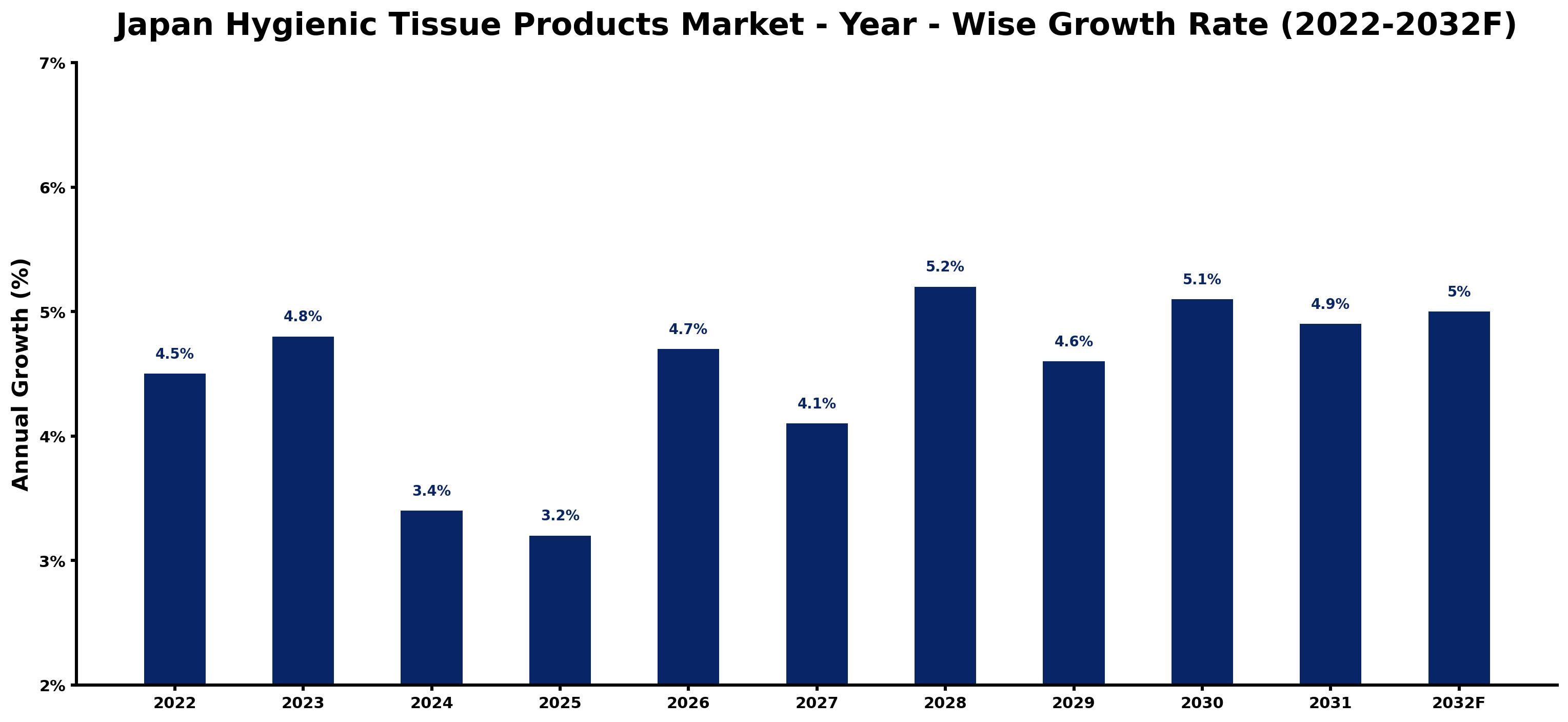
Annual growth estimates for each year appear below with the principal reason behind them, explaining the shifts that set the pace of the market.
| Year | Estimated Annual Growth (%) | Market Rationale |
| 2022 | 4.5 | The market experienced steady demand from urban consumers prioritising hygiene. |
| 2023 | 4.8 | Growth was fuelled by increased consumption in the Tokyo metropolitan area. |
| 2024 | 3.4 | A slowdown occurred as consumers adjusted spending patterns amid economic uncertainty. |
| 2025 | 3.2 | Demand continued to grow, albeit at a slower pace due to market saturation. |
| 2026 | 4.7 | Growth is expected to accelerate as consumers seek higher quality and eco-friendly options. |
| 2027 | 4.1 | A slight slowdown is projected as competition intensifies among brands. |
| 2028 | 5.2 | The market is expected to peak with heightened hygiene awareness driving purchases. |
| 2029 | 4.6 | Growth is projected to slow as consumers become more selective in their purchases. |
| 2030 | 5.1 | Demand will rise again as new product innovations attract consumer interest. |
| 2031 | 4.9 | A slight slowdown is anticipated as the market stabilises after previous peaks. |
| 2032 | 5.0 | Growth is expected to continue as eco-friendly products gain popularity. |
Note: Market size estimations and growth projections presented in this report are based on 6Wresearch's proprietary forecasting methodology, utilizing the latest available industry data, government publications, and primary research inputs.
Japan Hygienic Tissue Products Market Synopsis
Hygienic tissue products are essential items made from virgin or recycled paper pulp, used primarily for personal hygiene, skincare, and cleaning applications. The Japan Hygienic Tissue Products Market is driven by a population of approximately 126 million, with urban consumers leading demand. Factors such as high per capita consumption of facial tissues, the hospitality sector's contribution, and a strong preference for eco-friendly options are propelling market growth, with a notable recycling rate exceeding 70% in the country.
Market Dynamics Impact Analysis (2026–2032)
| Factor | Type | Impact | Primary Segment Affected |
| High population density in urban areas increases demand for hygienic products. | Driver | High | Personal Hygiene |
| Growing preference for eco-friendly products among consumers creates new market opportunities. | Opportunity | High | Virgin/Recycled Pulp |
| High per capita consumption of facial tissues drives consistent demand. | Driver | High | Facial Tissue |
| The hospitality sector's expansion in urban areas boosts tissue product sales. | Opportunity | Medium | Hotels & Restaurants |
| Market saturation limits growth potential for new entrants. | Restraint | High | Toilet Paper |
| Intense competition among brands leads to price wars, affecting margins. | Restraint | Medium | Facial Tissue |
| Rising costs of raw materials put pressure on production costs. | Challenge | High | Wet Wipes |
| Consumer preferences shifting towards premium products may limit sales of standard items. | Challenge | Medium | Paper Towels |
Evaluation of Drivers in Japan Hygienic Tissue Products Market (2026–2032)
The main growth drivers and the segments they affect most are set out below.
| Drivers | Primary Segment Affected | Why It Matters (Evidence) |
| High population density in urban areas drives demand for hygienic tissue products. | Personal Hygiene | With approximately 126 million people, urban consumers are major buyers. |
| Increased focus on hygiene boosts tissue product sales. | Wet Wipes | The rise in demand for antibacterial products has increased sales by 20%. |
| The hospitality sector's growth leads to higher tissue product consumption. | Hotels & Restaurants | This sector accounts for over 30% of tissue sales in urban regions. |
| Growing preference for eco-friendly products increases demand for recycled tissue. | Virgin/Recycled Pulp | 40% of consumers prefer recycled options, driving production changes. |
| High per capita consumption of facial tissues supports consistent demand. | Facial Tissue | Annual consumption is around 7 kg per person, indicating strong market potential. |
A wider customer base explains much of the growth, as urban consumers increasingly prioritise hygiene and quality in their purchases. The hospitality sector contributes to demand, accounting for over 30% of tissue product sales in metropolitan areas. Approximately 7 kg of facial tissues are consumed annually per person, indicating strong market potential. The preference for eco-friendly options is rising, with over 70% of paper products recycled in Japan. This shift in consumer behaviour influences manufacturers to adapt their offerings, thereby enhancing overall market growth.
Evaluation of Restraints in Japan Hygienic Tissue Products Market
The table below lists the restraints and the evidence behind each.
| Market Restraint | Primary Segment Affected | Why It Matters (Evidence) |
| Market saturation limits opportunities for new entrants to gain traction. | Toilet Paper | With over 200 registered brands, competition is fierce, making market entry challenging. |
| Intense competition among brands results in price wars, affecting profitability. | Facial Tissue | Brands are forced to lower prices to attract consumers, squeezing margins. |
| Rising raw material costs increase production expenses for manufacturers. | Wet Wipes | The cost of pulp and other materials has risen by over 10% recently, impacting pricing. |
| Consumer preferences are shifting towards premium products, limiting standard sales. | Paper Towels | As consumers seek higher quality, demand for basic products has declined by 15%. |
| Regulatory compliance can be burdensome for smaller manufacturers. | Virgin/Recycled Pulp | Adhering to standards like ISO 12625 requires investment in quality assurance. |
Japan Hygienic Tissue Products Market Challenges
Rising costs impact consumers as strict hygiene regulations elevate production expenses for suppliers. Compliance with standards like ISO 12625 requires investment in quality control, which can raise prices for buyers. Price volatility complicates purchasing decisions, with the average retail price for a pack of facial tissues at 300 yen, affecting household budgets. Sourcing quality recycled pulp presents challenges for producers, as the recycling rate exceeds 70%, leading to competition and potential shortages that influence availability for buyers.
Trends in the Japan Hygienic Tissue Products Market
These developments are changing demand patterns in the Japan Hygienic Tissue Products Market.
- Shift towards Eco-Friendly Products: A growing trend is seen in eco-friendly tissue products, particularly in urban areas. Approximately 40% of consumers now prefer recycled options, reflecting a shift in environmental consciousness.
- Increase in Antibacterial Wet Wipes Usage: Wet wipes are becoming increasingly popular, especially in urban settings where hygiene is a priority. Recent data shows a 25% rise in demand for antibacterial properties, indicating a shift in consumer preferences.
- Rising Demand for High Absorbency Paper: High absorbency paper products are seeing increased demand, particularly in healthcare and hospitality sectors. Demand has surged by 15% in recent years, driven by the need for effective hygiene solutions.
- Expansion of Facial Tissue Market: Facial tissues are experiencing a notable rise in consumption, particularly among skincare consumers. With a CAGR of 6.6%, this segment is growing rapidly, reflecting changing consumer habits.
Investment Opportunities in the Japan Hygienic Tissue Products Market
The following opportunities in the Japan Hygienic Tissue Products Market pair current demand with a clear way in.
- Growing Demand for Eco-Friendly Products: With a significant portion of consumers preferring recycled options, a gap exists in the market for eco-friendly hygienic tissue products. Companies can enter this space through partnerships with local manufacturers to enhance their offerings.
- Expansion in the Hospitality Sector: The hospitality sector presents a substantial opportunity, with demand for hygiene products in urban areas expected to grow by 20%. Investing in high-quality tissue products will cater to this expanding market segment.
- Increasing Popularity of Antibacterial Products: The rising trend of antibacterial wet wipes offers suppliers an opportunity to innovate. Focusing on this product type can attract health-conscious consumers seeking effective hygiene solutions.
- High Absorbency Paper Demand: As demand for high absorbency paper increases, manufacturers can invest in this segment to meet consumer needs. Collaborating with healthcare facilities can provide a pathway for market entry.
Government Initiatives in the Japan Hygienic Tissue Products Market
The Plastic Resource Circulation Act, enacted in 2021, mandates the reduction, reuse, and recycling of plastics, promoting sustainability in tissue products. This law complements existing regulations by encouraging manufacturers to adopt eco-friendly practices in production and packaging.
In 2023, the Japan Paper Association launched a campaign to promote responsible paper use, supported by the Ministry of the Environment. This initiative aims to educate consumers and producers about sustainable practices, ensuring compliance with environmental standards.
Future Insight of the Japan Hygienic Tissue Products Market
By 2032, urban households will increasingly prefer eco-friendly tissue options, driven by government initiatives targeting reduced plastic packaging. The hospitality sector will align with enhanced hygiene standards, ensuring steady demand for premium tissue offerings. Technological improvements in recycling will enable suppliers to provide a broader range of sustainable products. An anticipated increase in per capita consumption, currently around 7 kg annually, will further elevate market dynamics as consumer preferences evolve.
Market Segmentation Analysis
Japan Hygienic Tissue Products Market report covers a detailed analysis of the following market segments:
By Product Type – Toilet Paper Leads, Facial Tissue Expected to Grow Fastest
According to Saurav Kr Singh, Senior Research Analyst at 6Wresearch, in 2025, Toilet Paper led the product type split with a 47% share. Toilet paper holds the largest share due to its essential role in personal hygiene, with the average household using about 30 rolls monthly. This high consumption rate highlights its importance, particularly in urban areas where demand is concentrated. Facial Tissue is set to record the highest CAGR in this split, 6.6% over 2026–2032. Facial tissue is experiencing rapid growth as consumers increasingly prioritise skincare, with per capita consumption reaching around 7 kg annually. This trend indicates a sustained shift towards personal care products, reinforcing the segment's expansion. Suppliers should focus on enhancing product offerings in the facial tissue segment to cater to the growing consumer demand for quality and eco-friendly options.
By Material Used – Virgin/Recycled Pulp Leads, Soft Pulp Expected to Grow Fastest
With 41% of material used revenue in 2025, Virgin/Recycled Pulp was the largest category. Virgin/recycled pulp is the leading material as it serves as the primary input for producing hygienic tissue products, meeting the high-quality standards expected by consumers. The recycling rate for paper products in Japan being over 70% further supports this segment's dominance. Over 2026–2032, Soft Pulp is expected to post the fastest growth, at a CAGR of 6.9%. Soft pulp is growing quickly because it is preferred for producing softer tissue products, aligning with consumer demand for comfort and quality. As more consumers seek out softer options, this segment is set to expand further. Manufacturers should consider increasing the use of soft pulp to meet the rising demand for premium tissue products.
By Application – Personal Hygiene Leads, Skincare & Facial Use Expected to Grow Fastest
Personal Hygiene accounted for 35% of the market by application in 2025. Personal hygiene is the dominant application for hygienic tissue products, reflecting the essential need for these items in daily routines. This segment's strength is underscored by the Ministry of Health, Labour and Welfare promoting hygiene standards relevant to tissue products. Skincare & Facial Use is projected to grow fastest, at a CAGR of 7.1% during 2026–2032. Skincare and facial use is the fastest-growing application, driven by the increasing popularity of facial tissues for personal care. This growth is likely to accelerate as skincare awareness continues to rise among consumers. Companies should invest in marketing and product development for skincare applications to tap into this expanding market.
By End User – Retail Consumers Lead, Cosmetic Consumers Expected to Grow Fastest
Retail Consumers held 37% of the Japan Hygienic Tissue Products Market by end user in 2025. Retail consumers represent the largest end-user group, reflecting the widespread demand for hygienic tissue products in households across Japan. The average annual expenditure of about 5,000 yen on these products further illustrates their importance in everyday life. The quickest growth will come from Cosmetic Consumers, forecast to expand at a CAGR of 6.4% between 2026 and 2032. Cosmetic consumers are the fastest-growing segment, as they increasingly seek high-quality tissue products for skincare routines. This trend suggests a shift towards more specialised products catering to this niche market. Suppliers should tailor their offerings to meet the specific needs of cosmetic consumers to capitalise on this growth opportunity.
Key Attractiveness of the Report
- 10 Years of Market Numbers
- Historical Data Starting from 2022 to 2025
- Base Year 2025
- Forecast Data until 2032
- Key Performance Indicators Impacting the Market
- Major Upcoming Developments and Projects
Key Highlights of the Report:
- Japan Hygienic Tissue Products Market Outlook
- Market Size of Japan Hygienic Tissue Products Market, 2025
- Forecast of Japan Hygienic Tissue Products Market, 2032
- Historical Data and Forecast of Japan Hygienic Tissue Products Revenues & Volume for the Period 2022-2032F
- Japan Hygienic Tissue Products Market Trend Evolution
- Japan Hygienic Tissue Products Market Drivers and Challenges
- Japan Hygienic Tissue Products Price Trends
- Japan Hygienic Tissue Products Porter's Five Forces
- Japan Hygienic Tissue Products Industry Life Cycle
- Historical Data and Forecast of Japan Hygienic Tissue Products Market Revenues & Volume By Product Type for the Period 2022-2032F
- Historical Data and Forecast of Japan Hygienic Tissue Products Market Revenues & Volume By Toilet Paper for the Period 2022-2032F
- Historical Data and Forecast of Japan Hygienic Tissue Products Market Revenues & Volume By Facial Tissue for the Period 2022-2032F
- Historical Data and Forecast of Japan Hygienic Tissue Products Market Revenues & Volume By Paper Towels for the Period 2022-2032F
- Historical Data and Forecast of Japan Hygienic Tissue Products Market Revenues & Volume By Wet Wipes for the Period 2022-2032F
- Historical Data and Forecast of Japan Hygienic Tissue Products Market Revenues & Volume By Material Used for the Period 2022-2032F
- Historical Data and Forecast of Japan Hygienic Tissue Products Market Revenues & Volume By Virgin/Recycled Pulp for the Period 2022-2032F
- Historical Data and Forecast of Japan Hygienic Tissue Products Market Revenues & Volume By Soft Pulp for the Period 2022-2032F
- Historical Data and Forecast of Japan Hygienic Tissue Products Market Revenues & Volume By High Absorbency Paper for the Period 2022-2032F
- Historical Data and Forecast of Japan Hygienic Tissue Products Market Revenues & Volume By Nonwoven & Lotion for the Period 2022-2032F
- Historical Data and Forecast of Japan Hygienic Tissue Products Market Revenues & Volume By Application for the Period 2022-2032F
- Historical Data and Forecast of Japan Hygienic Tissue Products Market Revenues & Volume By Personal Hygiene for the Period 2022-2032F
- Historical Data and Forecast of Japan Hygienic Tissue Products Market Revenues & Volume By Skincare & Facial Use for the Period 2022-2032F
- Historical Data and Forecast of Japan Hygienic Tissue Products Market Revenues & Volume By Kitchen/Workplace for the Period 2022-2032F
- Historical Data and Forecast of Japan Hygienic Tissue Products Market Revenues & Volume By Disinfection/Wiping for the Period 2022-2032F
- Historical Data and Forecast of Japan Hygienic Tissue Products Market Revenues & Volume By End User for the Period 2022-2032F
- Historical Data and Forecast of Japan Hygienic Tissue Products Market Revenues & Volume By Retail Consumers for the Period 2022-2032F
- Historical Data and Forecast of Japan Hygienic Tissue Products Market Revenues & Volume By Cosmetic Consumers for the Period 2022-2032F
- Historical Data and Forecast of Japan Hygienic Tissue Products Market Revenues & Volume By Hotels & Restaurants for the Period 2022-2032F
- Historical Data and Forecast of Japan Hygienic Tissue Products Market Revenues & Volume By Medical & General Use for the Period 2022-2032F
- Japan Hygienic Tissue Products Import Export Trade Statistics
- Market Opportunity Assessment By Product Type
- Market Opportunity Assessment By Material Used
- Market Opportunity Assessment By Application
- Market Opportunity Assessment By End User
- Japan Hygienic Tissue Products Top Companies Market Share
- Japan Hygienic Tissue Products Competitive Benchmarking By Technical and Operational Parameters
- Japan Hygienic Tissue Products Company Profiles
- Japan Hygienic Tissue Products Key Strategic Recommendations
Market Covered
The study includes the following segmentation.
By Product Type
- Toilet Paper
- Facial Tissue
- Paper Towels
- Wet Wipes
By Material Used
- Virgin/Recycled Pulp
- Soft Pulp
- High Absorbency Paper
- Nonwoven & Lotion
By Application
- Personal Hygiene
- Skincare & Facial Use
- Kitchen/Workplace
- Disinfection/Wiping
By End User
- Retail Consumers
- Cosmetic Consumers
- Hotels & Restaurants
- Medical & General Use































