Japan Hyperactivity Disorder Therapeutics Market Size & Growth Rate
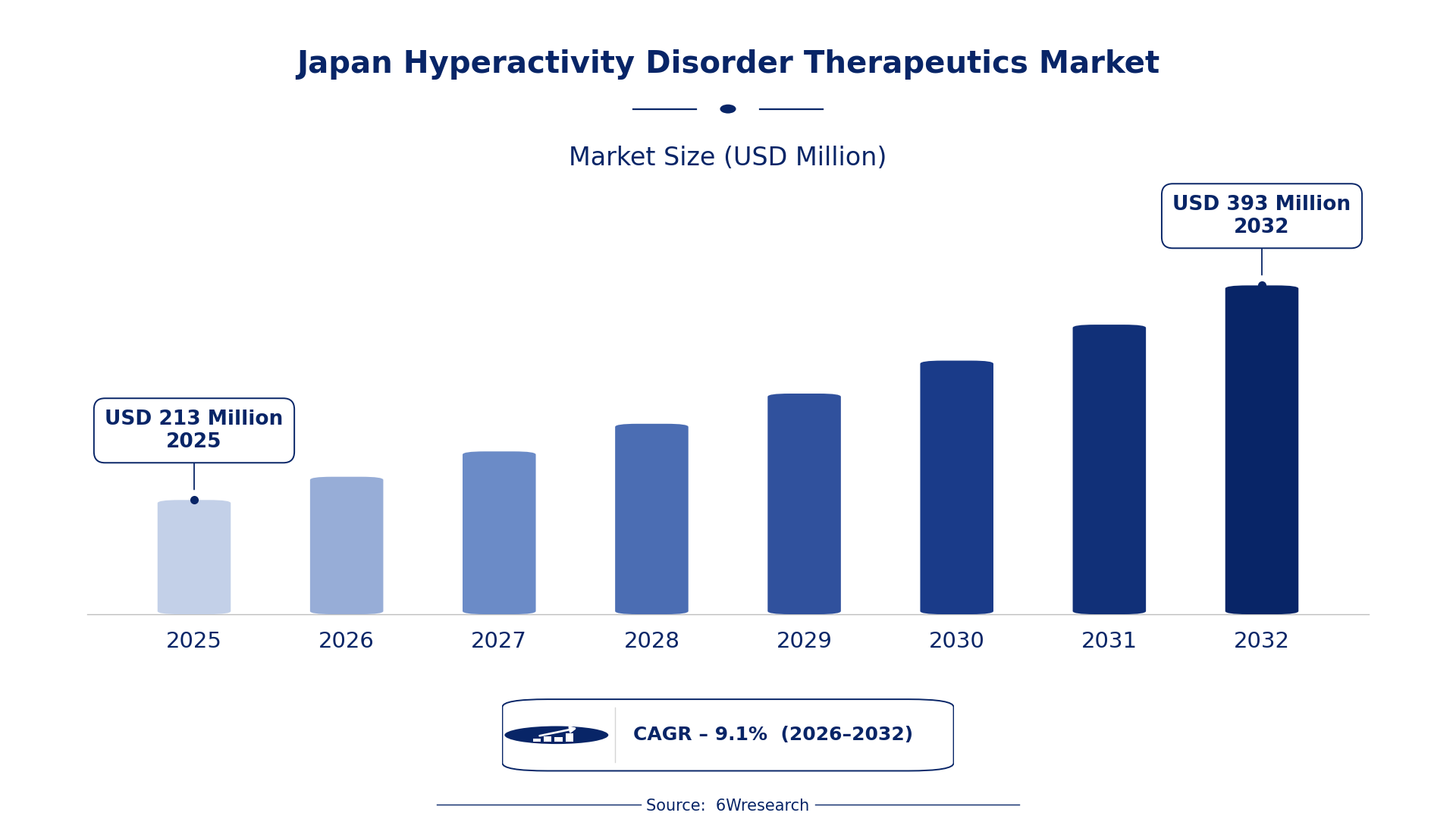
According to 6Wresearch internal database and industry insights, the Japan Hyperactivity Disorder Therapeutics Market was valued at USD 213 Million in 2025 and is projected to reach USD 393 Million by 2032, growing at a CAGR of approximately 9.1% during 2026–2032.
Japan Hyperactivity Disorder Therapeutics Market Highlights
| Report Metric | Details |
| Report Name | Japan Hyperactivity Disorder Therapeutics Market (2026-2032) |
| Market Size 2025 | USD 213 Million |
| Market Size 2032 | USD 393 Million |
| Absolute Growth 2025–2032 | USD 180 Million |
| CAGR 2026–2032 | 9.1% |
| Peak Annual Growth | 10.8% in 2026 |
| Forecast Period | 2026–2032 |
| Historical Data | 2022–2025 |
| Base Year | 2025 |
| Leading Drug Type, 2025 | Stimulants (34% share) |
| Leading Mechanism of Action, 2025 | CNS Activation (45% share) |
| Leading Age Group, 2025 | Children/Teens (48% share) |
| Leading End User, 2025 | Pediatric Clinics (40% share) |
| Fastest-Growing Drug Type | Non-Stimulants (12.3% CAGR) |
| Fastest-Growing Mechanism of Action | Norepinephrine Reuptake (11.4% CAGR) |
| Fastest-Growing Age Group | Adults (11.6% CAGR) |
| Fastest-Growing End User | Mental Health Specialists (11.3% CAGR) |
| Growing Sector | mental health services |
| Key End Users | pediatric clinics, mental health specialists, therapy centers, psychiatric institutions |
Japan Hyperactivity Disorder Therapeutics Market Year-wise Growth Rate and Key Drivers (2022–2032)
This graph illustrates the annual growth rates of the market from 2022 to 2032, highlighting a steady upward trajectory and projected market expansion over the forecast period.
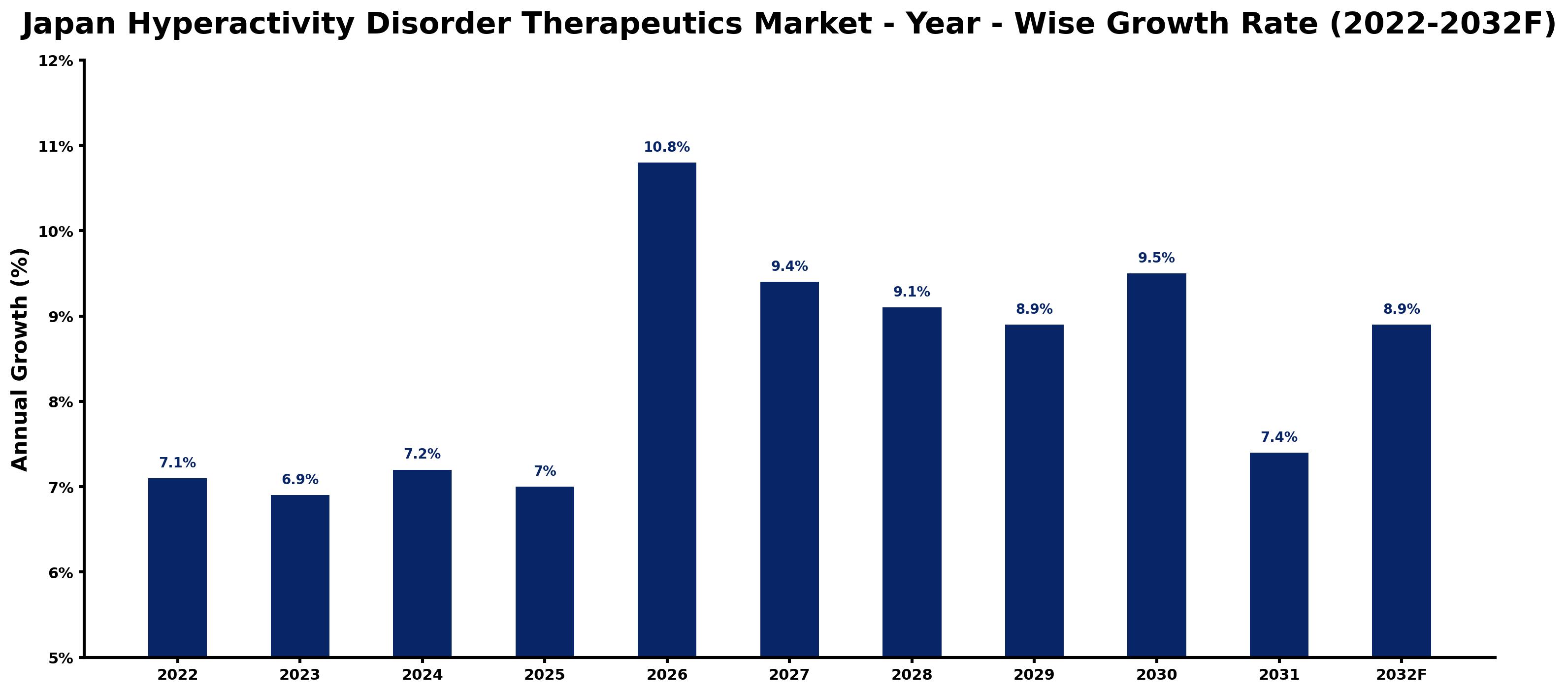
Below, each year's estimated growth is shown next to the factor that most influenced it.
| Year | Estimated Annual Growth (%) | Market Rationale |
| 2022 | 7.1 | The market experienced steady growth, reflecting increased awareness of ADHD treatments. |
| 2023 | 6.9 | Growth slowed slightly due to market saturation in certain regions and treatment options. |
| 2024 | 7.2 | Demand rose as pediatric clinics reported higher diagnosis rates among children. |
| 2025 | 7.0 | Growth slowed again as treatment options became more established in the market. |
| 2026 | 10.8 | A surge in demand is expected as combination treatments gain popularity among practitioners. |
| 2027 | 9.4 | Growth is projected to slow as the market adjusts to new treatment protocols and guidelines. |
| 2028 | 9.1 | The market is expected to continue growing, driven by an increase in non-stimulant prescriptions. |
| 2029 | 8.9 | Demand is projected to slow as competition increases among treatment providers and options expand. |
| 2030 | 9.5 | Growth will accelerate again as public awareness campaigns boost treatment uptake. |
| 2031 | 7.4 | Growth is expected to slow as the market stabilises with established treatment pathways. |
| 2032 | 8.9 | Demand is projected to rise as adult ADHD recognition increases and treatment expands. |
Note: Market size estimations and growth projections presented in this report are based on 6Wresearch's proprietary forecasting methodology, utilizing the latest available industry data, government publications, and primary research inputs.
Japan Hyperactivity Disorder Therapeutics Market Synopsis
Hyperactivity Disorder Therapeutics in Japan includes medications and behavioral therapies aimed at managing ADHD symptoms. These therapeutics are essential for improving focus and reducing impulsivity in affected individuals. The Japan Hyperactivity Disorder Therapeutics Market is expanding due to rising diagnosis rates, particularly among children, and increased investment in mental health initiatives. In 2023, the government allocated ¥1 billion for mental health services, including ADHD treatment, which is expected to further drive demand in this sector.
Market Dynamics Impact Analysis (2026–2032)
| Factor | Type | Impact | Primary Segment Affected |
| Increasing diagnosis rates among children drive demand for ADHD therapeutics. | Driver | High | Behavioral Therapies |
| Growing acceptance of ADHD treatment options among adults expands the market. | Driver | High | Non-Stimulants |
| The rise in combination treatments presents opportunities for new therapies. | Opportunity | High | Combination Treatments |
| Public awareness campaigns are increasing the demand for ADHD services. | Opportunity | High | Pediatric Clinics |
| Limited access to mental health services can hinder treatment availability. | Restraint | Medium | Pediatric Clinics |
| High costs of new therapies can restrict patient access to treatments. | Restraint | Medium | Non-Stimulants |
| Shortage of trained mental health specialists affects service delivery. | Challenge | High | Mental Health Specialists |
| Regulatory hurdles can delay the approval of new ADHD medications. | Challenge | Medium | Combination Treatments |
Evaluation of Drivers in Japan Hyperactivity Disorder Therapeutics Market (2026–2032)
These are the developments adding the most demand over the forecast period.
| Drivers | Primary Segment Affected | Why It Matters (Evidence) |
| Rising diagnosis rates among children create a strong demand for ADHD therapeutics. | Behavioral Therapies | In 2022, approximately 1.2 million children in Japan were diagnosed with ADHD, leading to increased prescriptions. |
| Growing recognition of adult ADHD is expanding the market for treatment options. | Non-Stimulants | The prevalence of ADHD in adults is estimated at 2.5%, prompting more treatment initiatives. |
| Combination treatments are increasingly popular, especially in urban areas. | Combination Treatments | Pediatric clinics report a 20% increase in ADHD cases over the last five years, driving demand. |
| Public awareness campaigns are improving knowledge about ADHD treatment options. | Pediatric Clinics | The Tokyo Metropolitan Government initiated a public awareness campaign for ADHD in 2023. |
| Investment in mental health services is enhancing treatment accessibility. | Mental Health Specialists | In 2023, the government allocated ¥1 billion for mental health initiatives, including ADHD treatment. |
The strongest pull on demand comes from rising diagnosis rates among children, with approximately 1.2 million diagnosed in 2022. This surge leads to increased prescriptions for various treatment options, particularly in pediatric clinics. Growing recognition of adult ADHD, with an estimated prevalence of 2.5%, is expanding treatment options.
Evaluation of Restraints in Japan Hyperactivity Disorder Therapeutics Market
The table below lists the restraints and the evidence behind each.
| Market Restraint | Primary Segment Affected | Why It Matters (Evidence) |
| Limited access to mental health services can hinder treatment availability. | Pediatric Clinics | The Tokyo region has the highest concentration of pediatric clinics, yet access remains uneven, affecting patient care. |
| High costs of new therapies can restrict patient access to treatments. | Non-Stimulants | Non-stimulant medications account for 30% of ADHD treatments, often at higher costs, limiting options for patients. |
| Shortage of trained mental health specialists affects service delivery. | Mental Health Specialists | There are over 300 mental health specialists focusing on ADHD, but demand exceeds supply, impacting treatment availability. |
| Regulatory hurdles can delay the approval of new ADHD medications. | Combination Treatments | The PMDA reviews pharmaceuticals, which can extend the timeline for new treatments, delaying patient access. |
| Insurance coverage limitations can restrict treatment options for patients. | Behavioral Therapies | The National Health Insurance covers ADHD treatments, but not all therapies are included, affecting patient choices. |
Japan Hyperactivity Disorder Therapeutics Market Challenges
Pediatric clinics in Tokyo face challenges in sourcing non-stimulant medications, leading to treatment delays for 30% of ADHD patients. A shortage of qualified mental health professionals hampers the implementation of combination treatments, affecting care for over 1.2 million diagnosed children. Slow adoption of technology results in only 150 therapy centres being equipped for advanced treatment methods, limiting options for families. Compliance with JIS standards raises operational costs, placing financial pressure on clinics and ultimately impacting patients who require timely ADHD management.
Trends in the Japan Hyperactivity Disorder Therapeutics Market
Below are the shifts with the largest effect on the Japan Hyperactivity Disorder Therapeutics Market.
- Shift from Stimulants to Non-Stimulants: In 2023, non-stimulant medications constituted 30% of ADHD treatments, indicating a shift in prescribing practices. This transition allows for more tailored treatment options for patients who cannot tolerate stimulants.
- Increased Focus on Adult ADHD: Recognition of adult ADHD is on the rise, with treatment options expanding. In 2023, the estimated prevalence of ADHD in adults was 2.5%, prompting the development of more targeted therapies.
- Rise in Combination Treatments: Combination treatments are becoming increasingly common, particularly in urban areas. Reports indicate a 20% rise in ADHD cases, resulting in a greater demand for holistic treatment approaches.
- Public Awareness Campaigns for ADHD: The Tokyo Metropolitan Government initiated a public awareness campaign in 2023 to educate the public about ADHD. This initiative seeks to boost diagnosis and treatment rates among affected individuals.
Investment Opportunities in the Japan Hyperactivity Disorder Therapeutics Market
The openings below show where demand in the Japan Hyperactivity Disorder Therapeutics Market is visible and how suppliers can enter.
- Gap in Adult ADHD Treatment: With an estimated 2.5% prevalence of ADHD in adults, there exists a gap in treatment options. Mental health specialists in urban areas particularly require new therapies to meet this demand.
- Investment in Pediatric Clinics: The Tokyo region boasts the highest concentration of pediatric clinics, which are expanding their services. Investing in these clinics now can capture the rising demand for ADHD treatments among children.
- Expansion of Therapy Centers: In 2023, the number of therapy centres specialising in ADHD reached 150 nationwide. This growth presents an opportunity to provide treatment solutions to these facilities.
- Development of Combination Therapies: Combination treatments are gaining traction, especially in urban areas. Investing in the development of these therapies can fulfil the increasing demand from paediatric clinics.
Government Initiatives in the Japan Hyperactivity Disorder Therapeutics Market
The Ministry of Health, Labour and Welfare launched a program in 2023 to improve ADHD treatment accessibility, building on the National Health Insurance coverage established in 2018. This program aims to improve the availability of both medications and behavioral therapies for patients across Japan, ensuring more effective treatment options are accessible.
The PMDA oversees the approval of pharmaceuticals and medical devices, ensuring that ADHD treatments meet safety and efficacy standards. In 2023, the agency approved several new therapies, which will expand treatment options for patients, improving their access to effective care.
Future Insight of the Japan Hyperactivity Disorder Therapeutics Market
Buyers will benefit from improved ADHD treatment accessibility as the government targets enhanced mental health services by 2025, aiming to reduce wait times. The introduction of new programmes will increase the number of therapy centres to 200 by 2032, providing more options for families. Advances in technology will facilitate better treatment tracking, enabling specialists to tailor therapies effectively. The growing emphasis on research and education will empower parents and caregivers, ensuring informed decisions about ADHD management.
Market Segmentation Analysis
Japan Hyperactivity Disorder Therapeutics Market report covers a detailed analysis of the following market segments:
By Drug Type – Stimulants Lead, Non-Stimulants Expected to Grow Fastest
According to Saurav Kr Singh, Senior Research Analyst at 6Wresearch, Stimulants took 34% of drug type revenue in 2025, more than any other category. Stimulants hold the largest share due to their widespread prescription for ADHD symptoms, particularly in pediatric clinics. In 2022, around 1.2 million children diagnosed with ADHD in Japan primarily received stimulant medications. Non-Stimulants are set to record the highest CAGR in this split, 12.3% over 2026–2032. Non-stimulants are experiencing rapid growth as they offer alternatives for patients who cannot tolerate stimulants, reflecting a 30% prescription rate. The increasing awareness of ADHD in adults further drives this segment's expansion. Suppliers should focus on developing non-stimulant options to meet the growing demand among diverse patient groups.
By Mechanism of Action – CNS Activation Leads, Norepinephrine Reuptake Expected to Grow Fastest
With 45% of mechanism of action revenue in 2025, CNS Activation was the largest category. CNS Activation holds the largest share as it directly relates to the mechanism of action of stimulants, which are widely prescribed for ADHD management. This approach is essential for effectively addressing symptoms in the primary demographic of children and teens diagnosed with ADHD. Over 2026–2032, Norepinephrine Reuptake is expected to post the fastest growth, at a CAGR of 11.4%. Norepinephrine Reuptake is experiencing rapid growth due to its association with specific non-stimulant medications that are gaining recognition for their effectiveness. The increasing awareness of ADHD in adults is further driving this segment's expansion. Suppliers should focus on incorporating norepinephrine reuptake medications into their offerings to capitalise on the growing demand.
By Age Group – Children/Teens Lead, Adults Expected to Grow Fastest
In 2025, Children/Teens led the age group split with a 48% share. Children/Teens dominate the market, accounting for the majority of ADHD diagnoses, with approximately 1.2 million children affected in Japan. This demographic remains the primary target for healthcare providers and therapeutic solutions, ensuring a strong market presence. The quickest growth will come from Adults, forecast to expand at a CAGR of 11.6% between 2026 and 2032. Adults represent the fastest-growing segment as awareness of ADHD in this group increases, with an estimated prevalence of 2.5%. Recent government initiatives aimed at improving mental health services are likely to facilitate better access to treatment for adults. Providers should tailor their strategies to meet the specific needs of adult patients seeking ADHD therapies.
By End User – Pediatric Clinics Lead, Mental Health Specialists Expected to Grow Fastest
The largest end user category in 2025 was Pediatric Clinics, at 40% of revenue. Pediatric Clinics dominate the market as they are the primary settings for ADHD diagnosis and treatment, particularly in urban areas with high diagnosis rates. The concentration of such clinics in regions like Tokyo supports this leadership. Mental Health Specialists are projected to grow fastest, at a CAGR of 11.3% during 2026–2032. Mental Health Specialists are rapidly gaining traction as key providers of ADHD therapeutics, reflecting the increasing complexity of ADHD management. The rise in ADHD cases has prompted more specialists to focus on this area. Suppliers should strengthen relationships with mental health specialists to ensure their products are effectively integrated into treatment plans.
Key Attractiveness of the Report
- 10 Years of Market Numbers
- Historical Data Starting from 2022 to 2025
- Base Year 2025
- Forecast Data until 2032
- Key Performance Indicators Impacting the Market
- Major Upcoming Developments and Projects
Key Highlights of the Report:
- Japan Hyperactivity Disorder Therapeutics Market Outlook
- Market Size of Japan Hyperactivity Disorder Therapeutics Market, 2025
- Forecast of Japan Hyperactivity Disorder Therapeutics Market, 2032
- Historical Data and Forecast of Japan Hyperactivity Disorder Therapeutics Revenues & Volume for the Period 2022-2032F
- Japan Hyperactivity Disorder Therapeutics Market Trend Evolution
- Japan Hyperactivity Disorder Therapeutics Market Drivers and Challenges
- Japan Hyperactivity Disorder Therapeutics Price Trends
- Japan Hyperactivity Disorder Therapeutics Porter's Five Forces
- Japan Hyperactivity Disorder Therapeutics Industry Life Cycle
- Historical Data and Forecast of Japan Hyperactivity Disorder Therapeutics Market Revenues & Volume By Drug Type for the Period 2022-2032F
- Historical Data and Forecast of Japan Hyperactivity Disorder Therapeutics Market Revenues & Volume By Stimulants for the Period 2022-2032F
- Historical Data and Forecast of Japan Hyperactivity Disorder Therapeutics Market Revenues & Volume By Non-Stimulants for the Period 2022-2032F
- Historical Data and Forecast of Japan Hyperactivity Disorder Therapeutics Market Revenues & Volume By Behavioral Therapies for the Period 2022-2032F
- Historical Data and Forecast of Japan Hyperactivity Disorder Therapeutics Market Revenues & Volume By Combination Treatments for the Period 2022-2032F
- Historical Data and Forecast of Japan Hyperactivity Disorder Therapeutics Market Revenues & Volume By Mechanism of Action for the Period 2022-2032F
- Historical Data and Forecast of Japan Hyperactivity Disorder Therapeutics Market Revenues & Volume By CNS Activation for the Period 2022-2032F
- Historical Data and Forecast of Japan Hyperactivity Disorder Therapeutics Market Revenues & Volume By Norepinephrine Reuptake for the Period 2022-2032F
- Historical Data and Forecast of Japan Hyperactivity Disorder Therapeutics Market Revenues & Volume By Cognitive Intervention for the Period 2022-2032F
- Historical Data and Forecast of Japan Hyperactivity Disorder Therapeutics Market Revenues & Volume By Drug + Therapy for the Period 2022-2032F
- Historical Data and Forecast of Japan Hyperactivity Disorder Therapeutics Market Revenues & Volume By Age Group for the Period 2022-2032F
- Historical Data and Forecast of Japan Hyperactivity Disorder Therapeutics Market Revenues & Volume By Children/Teens for the Period 2022-2032F
- Historical Data and Forecast of Japan Hyperactivity Disorder Therapeutics Market Revenues & Volume By Adults for the Period 2022-2032F
- Historical Data and Forecast of Japan Hyperactivity Disorder Therapeutics Market Revenues & Volume By All for the Period 2022-2032F
- Historical Data and Forecast of Japan Hyperactivity Disorder Therapeutics Market Revenues & Volume By Adolescents for the Period 2022-2032F
- Historical Data and Forecast of Japan Hyperactivity Disorder Therapeutics Market Revenues & Volume By End User for the Period 2022-2032F
- Historical Data and Forecast of Japan Hyperactivity Disorder Therapeutics Market Revenues & Volume By Pediatric Clinics for the Period 2022-2032F
- Historical Data and Forecast of Japan Hyperactivity Disorder Therapeutics Market Revenues & Volume By Mental Health Specialists for the Period 2022-2032F
- Historical Data and Forecast of Japan Hyperactivity Disorder Therapeutics Market Revenues & Volume By Therapy Centers for the Period 2022-2032F
- Historical Data and Forecast of Japan Hyperactivity Disorder Therapeutics Market Revenues & Volume By Psychiatric Institutions for the Period 2022-2032F
- Japan Hyperactivity Disorder Therapeutics Import Export Trade Statistics
- Market Opportunity Assessment By Drug Type
- Market Opportunity Assessment By Mechanism of Action
- Market Opportunity Assessment By Age Group
- Market Opportunity Assessment By End User
- Japan Hyperactivity Disorder Therapeutics Top Companies Market Share
- Japan Hyperactivity Disorder Therapeutics Competitive Benchmarking By Technical and Operational Parameters
- Japan Hyperactivity Disorder Therapeutics Company Profiles
- Japan Hyperactivity Disorder Therapeutics Key Strategic Recommendations
Market Covered
The report covers the following segments.
By Drug Type
- Stimulants
- Non-Stimulants
- Behavioral Therapies
- Combination Treatments
By Mechanism of Action
- CNS Activation
- Norepinephrine Reuptake
- Cognitive Intervention
- Drug + Therapy
By Age Group
- Children/Teens
- Adults
- All
- Adolescents
By End User
- Pediatric Clinics
- Mental Health Specialists
- Therapy Centers
- Psychiatric Institutions































