Japan Hyperthyroidism Drugs Market Size & Growth Rate
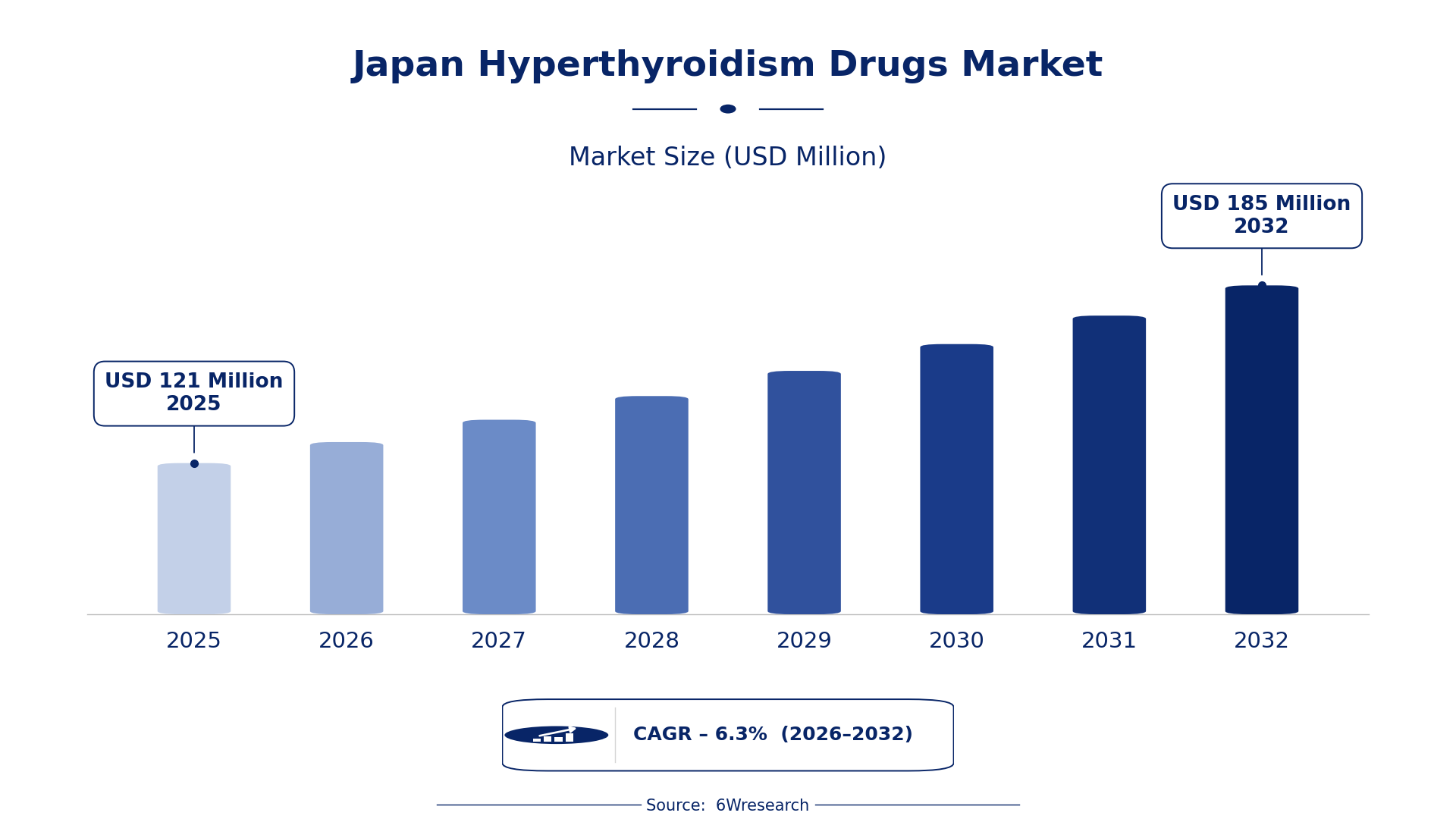
According to 6Wresearch internal database and industry insights, the Japan Hyperthyroidism Drugs Market was valued at USD 121 Million in 2025 and is projected to reach USD 185 Million by 2032, growing at a CAGR of approximately 6.3% during 2026–2032.
Japan Hyperthyroidism Drugs Market Highlights
| Report Metric | Details |
| Report Name | Japan Hyperthyroidism Drugs Market (2026-2032) |
| Market Size 2025 | USD 121 Million |
| Market Size 2032 | USD 185 Million |
| Absolute Growth 2025–2032 | USD 64 Million |
| CAGR 2026–2032 | 6.3% |
| Peak Annual Growth | 7.2% in 2028 |
| Forecast Period | 2026–2032 |
| Historical Data | 2022–2025 |
| Base Year | 2025 |
| Leading Drug Type, 2025 | Antithyroid Drugs (53% share) |
| Leading Mechanism of Action, 2025 | Thyroid Hormone Suppression (42% share) |
| Leading Formulation, 2025 | Tablets (47% share) |
| Leading End User, 2025 | Endocrinologists (51% share) |
| Fastest-Growing Drug Type | Radioactive Iodine (8.7% CAGR) |
| Fastest-Growing Mechanism of Action | Thyroid Tissue Ablation (8.1% CAGR) |
| Fastest-Growing Formulation | Oral Capsule (9.0% CAGR) |
| Fastest-Growing End User | Oncology Departments (8.2% CAGR) |
| Growing Sector | Oncology Departments |
| Key End Users | Endocrinologists, Oncology Departments, General Physicians, Long-Term Care Clinics |
Japan Hyperthyroidism Drugs Market Year-wise Growth Rate and Key Drivers (2022–2032)
This graph illustrates the annual growth rates of the market from 2022 to 2032, highlighting a steady upward trajectory and projected market expansion over the forecast period.
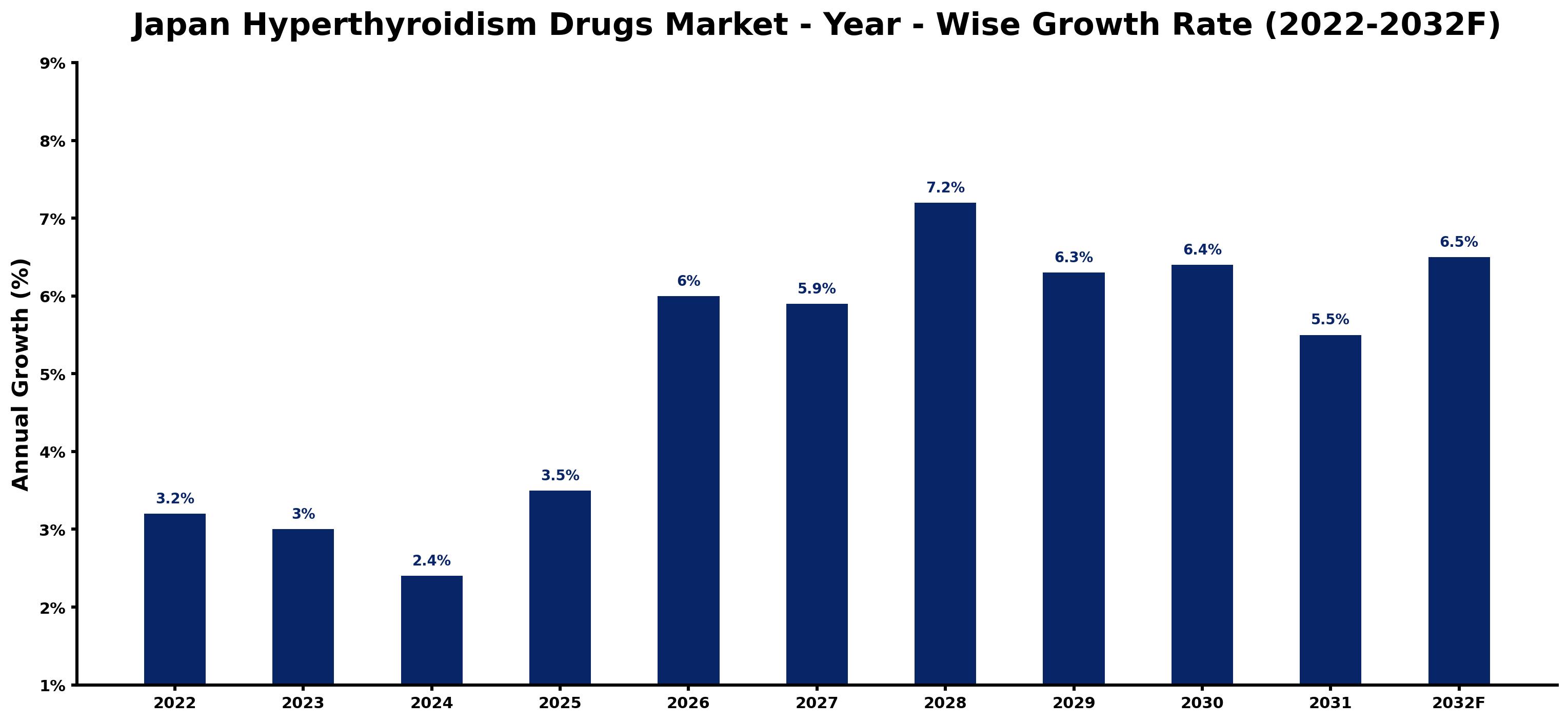
The yearly estimates that follow link every growth rate to its principal driver, so readers can see why the pace changed in each period.
| Year | Estimated Annual Growth (%) | Market Rationale |
| 2022 | 3.2 | The market showed steady growth with a strong patient base diagnosed with hyperthyroidism. |
| 2023 | 3.0 | Growth slowed slightly as awareness campaigns began to take effect among patients. |
| 2024 | 2.4 | The market continued to experience a slowdown as treatment options remained stable and accessible. |
| 2025 | 3.5 | Growth accelerated as more patients sought treatment options for hyperthyroidism. |
| 2026 | 6.0 | Demand is expected to increase sharply due to improved treatment accessibility in hospitals across Japan. |
| 2027 | 5.9 | Growth is projected to slow slightly as the market begins to stabilise after rapid expansion in treatment options. |
| 2028 | 7.2 | The market is expected to peak with heightened awareness and expanded treatment options for patients. |
| 2029 | 6.3 | Growth is projected to slow as the market adjusts to the previous peak in demand for treatments. |
| 2030 | 6.4 | Demand is expected to increase again as new treatment protocols gain traction among healthcare providers. |
| 2031 | 5.5 | Growth is projected to slow slightly as the market reaches a more mature phase in treatment options. |
| 2032 | 6.5 | Demand is expected to rise with ongoing research and development efforts in thyroid treatments. |
Note: Market size estimations and growth projections presented in this report are based on 6Wresearch's proprietary forecasting methodology, utilizing the latest available industry data, government publications, and primary research inputs.
Japan Hyperthyroidism Drugs Market Synopsis
Hyperthyroidism drugs are antithyroid medications that inhibit thyroid hormone production, including radioactive iodine and beta blockers for symptom relief. In Japan, around 1.2 million patients received a hyperthyroidism diagnosis in 2022, driving demand for effective treatments. The Japan Hyperthyroidism Drugs Market is growing due to increased awareness campaigns, the prevalence of thyroid disorders, and a well-established healthcare system that ensures treatment accessibility. These elements contribute to a rising market for hyperthyroidism drugs in Japan.
Market Dynamics Impact Analysis (2026–2032)
| Factor | Type | Impact | Primary Segment Affected |
| Increased prevalence of hyperthyroidism among the population | Driver | High | Antithyroid Drugs |
| Growing number of specialized treatment centres | Driver | High | Radioactive Iodine |
| Rising demand for symptom management solutions | Opportunity | Medium | Beta Blockers |
| Expansion of endocrinology training programs | Opportunity | Medium | Endocrinologists |
| Strict drug approval regulations delaying new entries | Restraint | High | Antithyroid Drugs |
| Limited awareness among patients about treatment options | Restraint | Medium | Radioactive Iodine |
| High treatment costs affecting patient accessibility | Challenge | High | Beta Blockers |
| Competition from alternative therapies impacting market share | Challenge | Medium | Antithyroid Drugs |
Evaluation of Drivers in Japan Hyperthyroidism Drugs Market (2026–2032)
Demand rests on the following drivers, each shown with the segment it touches most.
| Drivers | Primary Segment Affected | Why It Matters (Evidence) |
| Rising patient diagnoses of hyperthyroidism | Antithyroid Drugs | Approximately 1.2 million patients diagnosed in 2022 increases demand for antithyroid medications. |
| Increased treatment facilities for thyroid disorders | Radioactive Iodine | Over 200 specialized centres provide access to radioactive iodine therapy, boosting patient treatment options. |
| Growing awareness of thyroid disorders | Beta Blockers | The 2023 awareness campaign by the Ministry of Health encourages more patients to seek symptom management. |
| Expansion of endocrinology training and guidelines | Endocrinologists | Updated clinical practice guidelines in 2023 enhance treatment protocols, driving demand for endocrinologist consultations. |
| Increased funding for thyroid disease research | Antithyroid Drugs | The ¥500 million allocated in 2023 supports research, leading to improved treatment options. |
Purchasing is picking up as the prevalence of hyperthyroidism continues to rise, with approximately 1.2 million patients diagnosed in 2022, prompting increased demand for antithyroid drugs. The establishment of over 200 specialized centres for radioactive iodine therapy improves treatment accessibility, encouraging more patients to seek care. The 2023 awareness campaign promotes effective symptom management with beta blockers, resulting in higher consultations. Updated clinical practice guidelines from the Japanese Society of Thyroidology improve treatment protocols, driving demand for endocrinologist consultations. The ¥500 million allocated for thyroid disease research supports the development of new treatment options, further improving patient care.
Evaluation of Restraints in Japan Hyperthyroidism Drugs Market
These restraints slow adoption and weigh on supplier margins.
| Market Restraint | Primary Segment Affected | Why It Matters (Evidence) |
| Strict regulations delay drug approvals | Antithyroid Drugs | Regulations from the Pharmaceuticals and Medical Devices Agency can extend approval timelines, affecting market entry. |
| Limited technological advancements in drug synthesis | Radioactive Iodine | Hindrances in production technology can lead to increased costs, affecting pricing strategies. |
| Skills shortages in endocrinology training programs | Beta Blockers | A lack of qualified specialists impacts patient management and care quality in clinics. |
| High costs of drug development | Hormone Replacement | The financial burden of R&D can restrict the introduction of new therapies. |
| Market saturation in treatment options | Thyroid Hormone Suppression | An oversupply of existing treatments can limit the introduction of new solutions. |
Japan Hyperthyroidism Drugs Market Challenges
Producers encounter lengthy drug approval processes due to strict regulations from the Pharmaceuticals and Medical Devices Agency, which can delay launches by up to six months and diminish market competitiveness. Limited technological advancements in drug synthesis restrict producers' ability to streamline production, resulting in higher costs that can increase prices for hospitals. Buyers face rising costs and a shortage of effective treatments as a consequence. A lack of qualified endocrinologists in clinics leads to longer wait times for patients seeking treatment, which can compromise the quality of care provided.
Trends in the Japan Hyperthyroidism Drugs Market
Below are the shifts with the largest effect on the Japan Hyperthyroidism Drugs Market.
- Endocrinologists Prioritised over General Physicians: The focus on endocrinologists is increasing, with 51% of hyperthyroidism patients being treated by these specialists. This shift is particularly noticeable in the Tokyo region, where the concentration of endocrinologists is highest, ensuring better patient outcomes.
- Rise in Radioactive Iodine Use: The use of radioactive iodine for thyroid tissue ablation is gaining traction, with an 8.7% CAGR projected from 2026 to 2032. This trend is supported by the establishment of over 200 specialised centres across Japan.
- Shift Towards Oral Capsule Formulations: Oral capsule formulations are becoming more popular, with a projected CAGR of 9.0% from 2026 to 2032. This change is particularly evident in outpatient settings, where convenience is a priority.
- Increased Focus on Patient Education: There is a growing emphasis on patient education regarding thyroid disorders, driven by initiatives from the Japan Endocrine Society. This focus aims to improve early diagnosis and treatment, enhancing patient engagement.
Investment Opportunities in the Japan Hyperthyroidism Drugs Market
Below are the investment opportunities with the strongest case in the Japan Hyperthyroidism Drugs Market.
- Endocrinologists Seeking Advanced Treatments: Endocrinologists are looking for new treatment options for hyperthyroidism, with a projected market growth of USD 185 million by 2032. Collaborating with local research institutions can facilitate the introduction of new therapies.
- Specialised Clinics for Thyroid Management: The Tokyo region is seeing an increase in specialised clinics for thyroid management, providing opportunities for suppliers of advanced treatment options. Establishing partnerships with these clinics can enhance market entry.
- Development of New Antithyroid Drugs: There is a demand for new antithyroid drugs to address the needs of patients. Engaging in joint ventures with local manufacturers can streamline the approval process.
- Expansion of Research Initiatives: The government’s investment in thyroid disease research presents opportunities for collaboration with academic institutions. Suppliers can engage in joint research projects to develop new therapies.
Government Initiatives in the Japan Hyperthyroidism Drugs Market
The NHI drug price standard sets reimbursement prices for medications, impacting the affordability of hyperthyroidism drugs for patients. Regular revisions ensure that prices reflect current market conditions, making treatments accessible to a broader patient base.
In 2023, the Pharmaceuticals and Medical Devices Agency (PMDA) allocated funding for thyroid disease research initiatives. This funding supports projects aimed at improving treatment protocols and patient outcomes in hyperthyroidism management.
Future Insight of the Japan Hyperthyroidism Drugs Market
New specialised thyroid disease management centres will open by 2032, enhancing patient care and education. The government’s funding of ¥500 million for thyroid disease research initiatives will likely lead to new therapies and improved treatment protocols. Awareness campaigns launched in 2023 will promote early diagnosis and treatment, benefiting both patients and healthcare providers. With the average treatment duration for hyperthyroidism patients around 18 months, a focus on patient education will ensure timely access to necessary treatments.
Market Segmentation Analysis
Japan Hyperthyroidism Drugs Market report covers a detailed analysis of the following market segments:
By Drug Type – Antithyroid Drugs Lead, Radioactive Iodine Expected to Grow Fastest
According to Saurav Kr Singh, Senior Research Analyst at 6Wresearch, Antithyroid Drugs held 53% of the Japan Hyperthyroidism Drugs Market by drug type in 2025. Antithyroid drugs are the primary treatment for hyperthyroidism, with over 70% of patients relying on them for effective management. Their extensive use is backed by established treatment protocols and a comprehensive healthcare system that supports thyroid disorder management in Japan. Radioactive Iodine is projected to grow fastest, at a CAGR of 8.7% during 2026–2032. Radioactive iodine is experiencing rapid growth due to its proven efficacy in thyroid tissue ablation, with over 200 specialised centres offering this treatment across the country. The recent government campaign to increase awareness of thyroid disorders is expected to further boost its adoption rates. Suppliers must ensure the availability of radioactive iodine therapies to meet the rising demand from healthcare providers.
By Mechanism of Action – Thyroid Hormone Suppression Leads, Thyroid Tissue Ablation Expected to Grow Fastest
Thyroid Hormone Suppression took 42% of mechanism of action revenue in 2025, more than any other category. Thyroid hormone suppression is the leading mechanism of action as it directly addresses the underlying issue of hyperthyroidism, making it a cornerstone of treatment protocols. This approach is emphasised in the updated clinical practice guidelines established by the Japanese Society of Thyroidology. Over 2026–2032, Thyroid Tissue Ablation is expected to post the fastest growth, at a CAGR of 8.1%. Thyroid tissue ablation is the fastest-growing mechanism due to its effectiveness and the increasing number of facilities offering radioactive iodine therapy. As awareness of thyroid disorders rises, more patients are likely to seek this targeted treatment. Healthcare providers must ensure they are equipped to offer both thyroid hormone suppression and ablation therapies to cater to diverse patient needs.
By Formulation – Tablets Lead, Oral Capsule Expected to Grow Fastest
The largest formulation category in 2025 was Tablets, at 47% of revenue. Tablets are the leading formulation for hyperthyroidism medications, providing convenience and ensuring high patient adherence. Their widespread application in outpatient settings reinforces their dominant position in the market. Oral Capsule is set to record the highest CAGR in this split, 9.0% over 2026–2032. Oral capsules are gaining traction as a preferred formulation, particularly among patients who find them easier to swallow than traditional tablets. This trend is anticipated to persist as patient preferences shift towards more user-friendly drug delivery options. Manufacturers should consider expanding their product lines to include oral capsules to cater to evolving patient preferences.
By End User – Endocrinologists Lead, Oncology Departments Expected to Grow Fastest
In 2025, Endocrinologists led the end user split with a 51% share. Endocrinologists are the primary prescribers of hyperthyroidism drugs, accounting for a substantial share of the market due to their specialised knowledge and focus on thyroid disorders. Their expertise is critical in managing the treatment of the approximately 1.2 million diagnosed patients in Japan. The quickest growth will come from Oncology Departments, forecast to expand at a CAGR of 8.2% between 2026 and 2032. Oncology departments are emerging as the fastest-growing end user group, occasionally involved in the treatment of thyroid conditions, particularly in cases where cancer is a concern. This trend reflects a broader recognition of the interplay between thyroid health and oncology. Suppliers should engage with oncology departments to explore collaboration opportunities in managing thyroid-related cases.
Key Attractiveness of the Report
- 10 Years of Market Numbers
- Historical Data Starting from 2022 to 2025
- Base Year 2025
- Forecast Data until 2032
- Key Performance Indicators Impacting the Market
- Major Upcoming Developments and Projects
Key Highlights of the Report:
- Japan Hyperthyroidism Drugs Market Outlook
- Market Size of Japan Hyperthyroidism Drugs Market, 2025
- Forecast of Japan Hyperthyroidism Drugs Market, 2032
- Historical Data and Forecast of Japan Hyperthyroidism Drugs Revenues & Volume for the Period 2022-2032F
- Japan Hyperthyroidism Drugs Market Trend Evolution
- Japan Hyperthyroidism Drugs Market Drivers and Challenges
- Japan Hyperthyroidism Drugs Price Trends
- Japan Hyperthyroidism Drugs Porter's Five Forces
- Japan Hyperthyroidism Drugs Industry Life Cycle
- Historical Data and Forecast of Japan Hyperthyroidism Drugs Market Revenues & Volume By Drug Type for the Period 2022-2032F
- Historical Data and Forecast of Japan Hyperthyroidism Drugs Market Revenues & Volume By Antithyroid Drugs for the Period 2022-2032F
- Historical Data and Forecast of Japan Hyperthyroidism Drugs Market Revenues & Volume By Radioactive Iodine for the Period 2022-2032F
- Historical Data and Forecast of Japan Hyperthyroidism Drugs Market Revenues & Volume By Beta Blockers for the Period 2022-2032F
- Historical Data and Forecast of Japan Hyperthyroidism Drugs Market Revenues & Volume By Hormone Replacement for the Period 2022-2032F
- Historical Data and Forecast of Japan Hyperthyroidism Drugs Market Revenues & Volume By Mechanism of Action for the Period 2022-2032F
- Historical Data and Forecast of Japan Hyperthyroidism Drugs Market Revenues & Volume By Thyroid Hormone Suppression for the Period 2022-2032F
- Historical Data and Forecast of Japan Hyperthyroidism Drugs Market Revenues & Volume By Thyroid Tissue Ablation for the Period 2022-2032F
- Historical Data and Forecast of Japan Hyperthyroidism Drugs Market Revenues & Volume By Symptom Relief for the Period 2022-2032F
- Historical Data and Forecast of Japan Hyperthyroidism Drugs Market Revenues & Volume By TSH Regulation for the Period 2022-2032F
- Historical Data and Forecast of Japan Hyperthyroidism Drugs Market Revenues & Volume By Formulation for the Period 2022-2032F
- Historical Data and Forecast of Japan Hyperthyroidism Drugs Market Revenues & Volume By Tablets for the Period 2022-2032F
- Historical Data and Forecast of Japan Hyperthyroidism Drugs Market Revenues & Volume By Oral Capsule for the Period 2022-2032F
- Historical Data and Forecast of Japan Hyperthyroidism Drugs Market Revenues & Volume By Oral for the Period 2022-2032F
- Historical Data and Forecast of Japan Hyperthyroidism Drugs Market Revenues & Volume By Oral for the Period 2022-2032F
- Historical Data and Forecast of Japan Hyperthyroidism Drugs Market Revenues & Volume By End User for the Period 2022-2032F
- Historical Data and Forecast of Japan Hyperthyroidism Drugs Market Revenues & Volume By Endocrinologists for the Period 2022-2032F
- Historical Data and Forecast of Japan Hyperthyroidism Drugs Market Revenues & Volume By Oncology Departments for the Period 2022-2032F
- Historical Data and Forecast of Japan Hyperthyroidism Drugs Market Revenues & Volume By General Physicians for the Period 2022-2032F
- Historical Data and Forecast of Japan Hyperthyroidism Drugs Market Revenues & Volume By Long-Term Care Clinics for the Period 2022-2032F
- Japan Hyperthyroidism Drugs Import Export Trade Statistics
- Market Opportunity Assessment By Drug Type
- Market Opportunity Assessment By Mechanism of Action
- Market Opportunity Assessment By Formulation
- Market Opportunity Assessment By End User
- Japan Hyperthyroidism Drugs Top Companies Market Share
- Japan Hyperthyroidism Drugs Competitive Benchmarking By Technical and Operational Parameters
- Japan Hyperthyroidism Drugs Company Profiles
- Japan Hyperthyroidism Drugs Key Strategic Recommendations
Market Covered
Segments analysed in this report are listed below.
By Drug Type
- Antithyroid Drugs
- Radioactive Iodine
- Beta Blockers
- Hormone Replacement
By Mechanism of Action
- Thyroid Hormone Suppression
- Thyroid Tissue Ablation
- Symptom Relief
- TSH Regulation
By Formulation
- Tablets
- Oral Capsule
- Oral
By End User
- Endocrinologists
- Oncology Departments
- General Physicians
- Long-Term Care Clinics































