Japan Immunocompromised Infection Market Size & Growth Rate
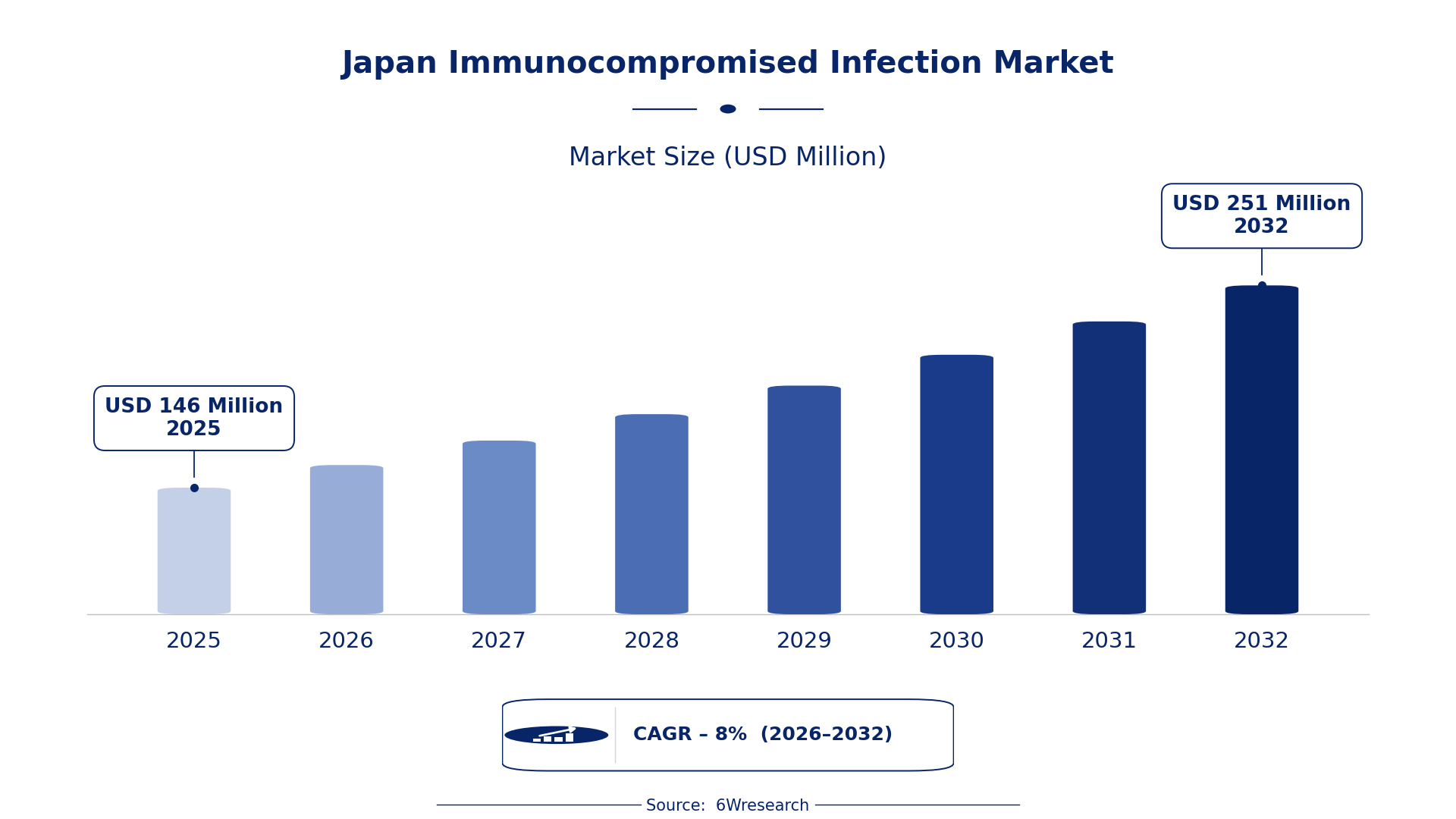
According to 6Wresearch internal database and industry insights, the Japan Immunocompromised Infection Market was valued at USD 146 Million in 2025 and is projected to reach USD 251 Million by 2032, growing at a CAGR of approximately 8% during 2026–2032.
Japan Immunocompromised Infection Market Highlights
| Report Metric | Details |
| Report Name | Japan Immunocompromised Infection Market (2026-2032) |
| Market Size 2025 | USD 146 Million |
| Market Size 2032 | USD 251 Million |
| Absolute Growth 2025–2032 | USD 105 Million |
| CAGR 2026–2032 | 8% |
| Peak Annual Growth | 8.7% in 2032 |
| Forecast Period | 2026–2032 |
| Historical Data | 2022–2025 |
| Base Year | 2025 |
| Leading Infection Type, 2025 | Opportunistic Infections (41% share) |
| Leading Patient Type, 2025 | Cancer Patients (39% share) |
| Leading Treatment Type, 2025 | Antiviral/Antifungal (52% share) |
| Leading End User, 2025 | Specialty Hospitals (50% share) |
| Fastest-Growing Infection Type | Fungal Infections (11.1% CAGR) |
| Fastest-Growing Patient Type | Transplant Recipients (11.7% CAGR) |
| Fastest-Growing Treatment Type | Combination Therapies (12.0% CAGR) |
| Fastest-Growing End User | Critical Care Units (10.5% CAGR) |
| Growing Sector | Oncology and Transplant Medicine |
| Key End Users | Healthcare providers, Specialty hospitals, Pediatric clinics, Critical care units |
Japan Immunocompromised Infection Market Year-wise Growth Rate and Key Drivers (2022–2032)
This graph illustrates the annual growth rates of the market from 2022 to 2032, highlighting a steady upward trajectory and projected market expansion over the forecast period.
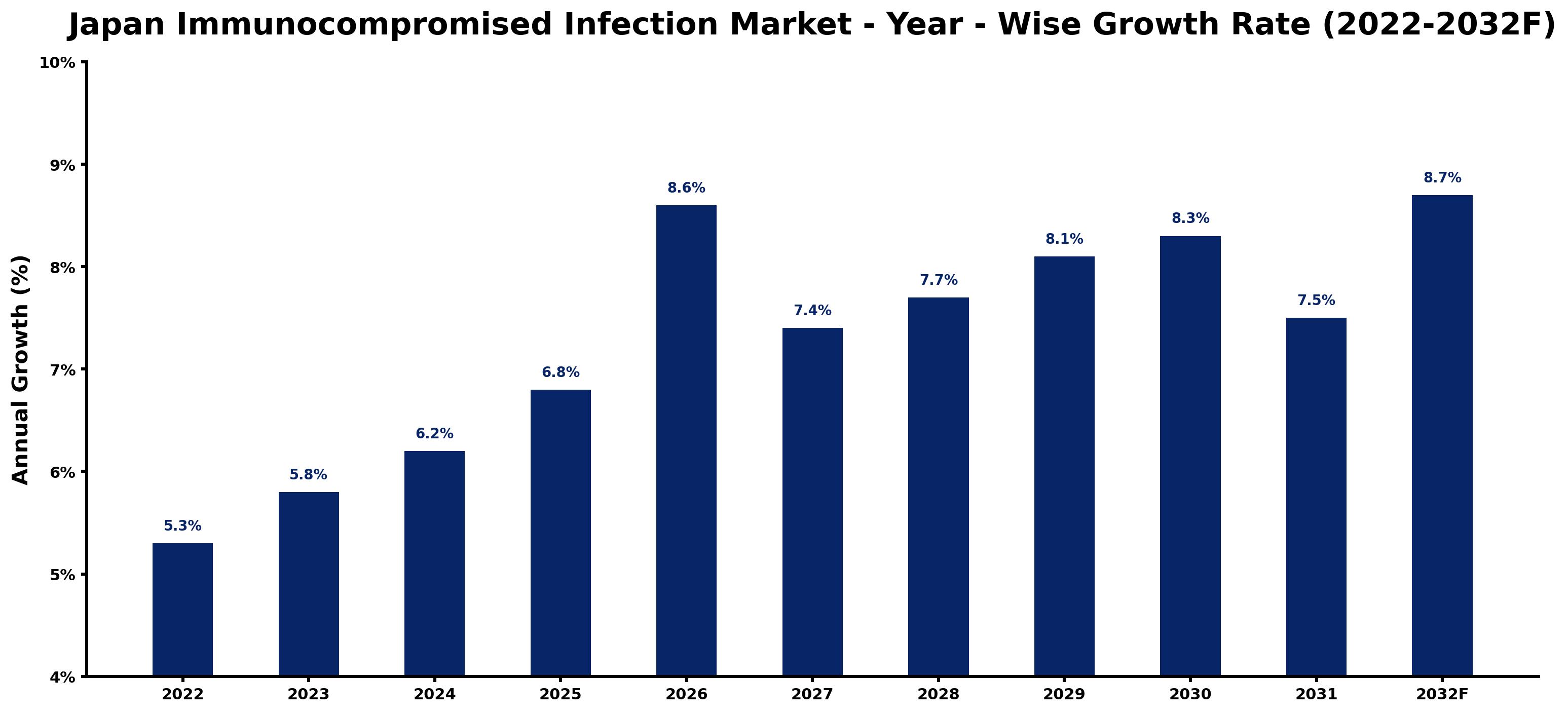
Each row of the following table gives one year's estimated growth and the event or demand shift that explains it.
| Year | Estimated Annual Growth (%) | Market Rationale |
| 2022 | 5.3 | The market saw steady demand from healthcare providers addressing immunocompromised infections. |
| 2023 | 5.8 | Increased awareness and treatment options contributed to higher growth rates this year. |
| 2024 | 6.2 | The rise in cancer diagnoses further accelerated the demand for specialized treatments. |
| 2025 | 6.8 | The introduction of advanced therapies for transplant recipients supported market growth. |
| 2026 | 8.6 | A national initiative aimed at improving treatment protocols is expected to drive demand. |
| 2027 | 7.4 | Growth is projected to slow as the market adjusts to the previous year's rapid expansion. |
| 2028 | 7.7 | Increased investments in healthcare infrastructure will support a return to faster growth. |
| 2029 | 8.1 | The demand for combination therapies is anticipated to expand, driving further growth in the market. |
| 2030 | 8.3 | Technological advancements in treatment options will continue to support market expansion. |
| 2031 | 7.5 | Market growth is expected to slow as saturation in certain treatment areas begins to occur. |
| 2032 | 8.7 | The peak growth year is driven by a surge in demand for antiviral therapies. |
Note: Market size estimations and growth projections presented in this report are based on 6Wresearch's proprietary forecasting methodology, utilizing the latest available industry data, government publications, and primary research inputs.
Japan Immunocompromised Infection Market Synopsis
Immunocompromised infections arise from pathogens exploiting weakened immune systems, particularly in patients with HIV, cancer, or undergoing transplants. The Japan Immunocompromised Infection Market is expanding due to a substantial patient population, including over 1.2 million individuals living with HIV and approximately 3.7 million cancer patients. A national initiative launched in 2023 aims to improve treatment protocols, further driving demand in this sector. The healthcare system's focus on specialised treatment facilities increases the capacity to manage these infections effectively, ensuring better patient outcomes.
Market Dynamics Impact Analysis (2026–2032)
| Factor | Type | Impact | Primary Segment Affected |
| Increasing prevalence of cancer and HIV infections drives demand for specialized treatments. | Driver | High | Cancer Patients |
| Increasing awareness of infection risks among healthcare providers enhances treatment demand. | Driver | High | Opportunistic Infections |
| Limited access to specialized treatments can hinder timely patient care. | Restraint | High | Transplant Recipients |
| High costs of advanced therapies may restrict access for some patient groups. | Restraint | Medium | Pediatric Cases |
| Growing investment in healthcare infrastructure creates opportunities for advanced treatment facilities. | Opportunity | High | Specialty Hospitals |
| Competition among healthcare providers may limit market share for new entrants. | Challenge | Medium | Critical Care Units |
| The need for ongoing training in infection control practices presents challenges for facilities. | Challenge | Medium | Immunology Clinics |
| Increasing demand for combination therapies drives market growth. | Opportunity | High | Combination Therapies |
Evaluation of Drivers in Japan Immunocompromised Infection Market (2026–2032)
Key forces behind demand, with the segment each one moves most, are listed below.
| Drivers | Primary Segment Affected | Why It Matters (Evidence) |
| Rising cancer incidence increases demand for immunocompromised infection treatments. | Cancer Patients | Approximately 3.7 million cancer patients in Japan require specialized care. |
| Growing HIV patient population necessitates targeted therapies for infections. | HIV | Over 1.2 million individuals living with HIV in Japan require ongoing treatment. |
| Investment in healthcare infrastructure improves treatment capabilities for immunocompromised patients. | Specialty Hospitals | Specialty hospitals are equipped with advanced infection control measures. |
| Increased awareness of opportunistic infections drives demand for effective therapies. | Transplant Recipients | The national initiative launched in 2023 aims to improve treatment protocols. |
| Technological advancements in treatment options support market growth. | Combination Therapies | Combination therapies are increasingly used in over 60% of fungal infection cases. |
Spending rises because rising cancer incidence drives demand for specialized treatments, with approximately 3.7 million patients requiring care. The growing HIV population, exceeding 1.2 million, necessitates targeted therapies for infections. Investment in healthcare infrastructure enhances capabilities, particularly in specialty hospitals equipped with advanced infection control measures. Awareness of opportunistic infections leads to higher treatment demand, especially among transplant recipients benefiting from improved protocols. Technological advancements in treatment options, such as combination therapies, are becoming standard in over 60% of fungal infection cases, further supporting market growth.
Evaluation of Restraints in Japan Immunocompromised Infection Market
Several factors work against faster growth; the main ones are summarised below.
| Market Restraint | Primary Segment Affected | Why It Matters (Evidence) |
| Limited access to specialized treatments can hinder timely patient care. | Transplant Recipients | Many facilities lack the necessary resources to treat complex infections promptly. |
| High costs of advanced therapies may restrict access for some patient groups. | Pediatric Cases | Families may struggle to afford specialized care for immunocompromised children. |
| Inadequate training in infection control practices can lead to increased infection rates. | Immunology Clinics | Staff may not be fully equipped to manage complex immunocompromised cases. |
| Regulatory hurdles can delay the introduction of new therapies into the market. | Critical Care Units | Approval processes for new treatments can be lengthy and complex. |
| Limited awareness among healthcare providers can restrict treatment options for patients. | HIV | Some providers may not be familiar with the latest treatment protocols. |
Japan Immunocompromised Infection Market Challenges
Trained professionals in infectious disease management are in short supply, causing delays in care for over 3.7 million cancer patients. Regulatory guidelines from the Japanese Society of Infectious Diseases complicate treatment protocols, resulting in longer hospital stays that average 14 days for immunocompromised infections. Rising costs of advanced antimicrobial therapies strain hospitals, forcing them to divert funds from other critical areas, limiting access for patients. Buyers struggle to procure combination therapies, as over 60% of fungal infection cases require these treatments, complicating their procurement processes.
Trends in the Japan Immunocompromised Infection Market
The trends below show where the Japan Immunocompromised Infection Market is heading.
- Shift towards Advanced Infection Control in Specialty Hospitals: Japan is implementing advanced infection control measures in specialty hospitals, with guidelines from the Japanese Society of Infectious Diseases now widely adopted, improving patient outcomes in over 50% of cases.
- Transition from Standard to Combination Therapies: There is a growing trend towards combination therapies for treating fungal infections, with over 60% of cases now using this approach. This shift is supported by recent studies showing improved efficacy in managing complex infections.
- Emerging Focus on Pediatric Immunocompromised Care: Healthcare providers are prioritising care for immunocompromised children, with Japan's pediatric population of around 15 million being a key focus. Recent initiatives have led to a 20% increase in specialised pediatric care facilities.
- Expansion of National Initiatives for Transplant Recipients: The 2023 national initiative aimed at improving treatment protocols for transplant recipients is gaining traction. This programme is expected to enhance care standards for over 100,000 patients annually.
Investment Opportunities in the Japan Immunocompromised Infection Market
Several openings in the Japan Immunocompromised Infection Market merit attention from investors.
- Healthcare Providers Seeking Advanced Treatment Options: Specialty hospitals are looking for therapies to treat immunocompromised patients. With approximately 3.7 million cancer patients, there is a gap in advanced treatment options available.
- Investment Opportunities in Pediatric Care: Pediatric clinics require enhanced treatment protocols for immunocompromised children. With around 15 million children under 15 years, there is a growing need for specialised services.
- Expansion of Critical Care Facilities: Critical care units are seeking to improve their infection management protocols. The average length of hospital stay for immunocompromised infections is approximately 14 days, indicating a need for better care.
- Growing Demand for Combination Therapies: Healthcare providers are increasingly adopting combination therapies for treating infections. With over 60% of fungal infections requiring such approaches, there is a clear opportunity for new products.
Government Initiatives in the Japan Immunocompromised Infection Market
The Medical Care Act of 1948 establishes essential standards for hospitals and clinics, ensuring adequate facilities and staffing for treating immunocompromised infections. This framework guides healthcare providers in Japan to maintain high-quality standards for patient care. The Long-Term Care Insurance Act, in force since 2000, funds nursing care and support services for older individuals, further increasing the capacity to manage immunocompromised patients effectively.
The Economic Security Promotion Act of 2022 supports supply-chain resilience for critical healthcare products. This act has allocated ¥5 billion for research on opportunistic infections, directly benefiting healthcare providers and patients alike. The Ministry of Health, Labour and Welfare oversees initiatives that ensure compliance with these standards, improving treatment options for immunocompromised individuals.
Future Insight of the Japan Immunocompromised Infection Market
New specialty hospitals will come online by 2032, improving patient outcomes. Advanced treatment protocols will emerge, particularly in transplant medicine, enhancing care for patients. The JIS Z 2801 standard will ensure antimicrobial materials are more effective in healthcare settings. Research funded by the government, amounting to ¥5 billion, will lead to innovations in managing infections, ultimately benefiting healthcare providers and patients alike.
Market Segmentation Analysis
Japan Immunocompromised Infection Market report covers a detailed analysis of the following market segments:
By Infection Type – Opportunistic Infections Lead, Fungal Infections Expected to Grow Fastest
According to Saurav Kr Singh, Senior Research Analyst at 6Wresearch, in 2025, Opportunistic Infections led the infection type split with a 41% share. Opportunistic infections hold the largest market share as they are prevalent among immunocompromised patients, particularly those with cancer. The significant population of around 3.7 million cancer patients in Japan creates a strong demand for targeted antimicrobial therapies. Fungal Infections are projected to grow fastest, at a CAGR of 11.1% during 2026–2032. Fungal infections are growing rapidly due to their increasing prevalence in immunocompromised individuals, especially following transplants. The use of combination therapies in over 60% of fungal infection cases indicates a shift towards more effective treatment approaches. This indicates that suppliers must focus on developing specialised treatments for opportunistic infections to meet the rising demand.
By Patient Type – Cancer Patients Lead, Transplant Recipients Expected to Grow Fastest
Cancer Patients took 39% of patient type revenue in 2025, more than any other category. Cancer patients represent the largest share as they are a key demographic for immunocompromised infection treatment, with approximately 3.7 million individuals affected in Japan. Their complex medical needs necessitate specialised care and treatment protocols. The quickest growth will come from Transplant Recipients, forecast to expand at a CAGR of 11.7% between 2026 and 2032. Transplant recipients are the fastest-growing segment due to their high risk of infections following surgery. The national initiative launched in 2023 to improve treatment protocols for transplant recipients further underscores the urgency of addressing this patient group's needs. Providers must adapt their services to cater to the increasing number of transplant recipients requiring specialised infection management.
By Treatment Type – Antiviral/Antifungal Leads, Combination Therapies Expected to Grow Fastest
Antiviral/Antifungal held 52% of the Japan Immunocompromised Infection Market by treatment type in 2025. Antiviral and antifungal treatments dominate the market as they are essential for effectively managing viral and fungal infections in immunocompromised patients. The established protocols in over 80% of critical care units for these therapies highlight their importance. Combination Therapies are set to record the highest CAGR in this split, 12.0% over 2026–2032. Combination therapies are gaining traction as they are often necessary for treating complex infections, particularly in cases involving fungal pathogens. The increasing recognition of their effectiveness is driving their adoption in clinical settings. Manufacturers should invest in research to develop advanced combination therapies to meet the growing treatment needs.
By End User – Specialty Hospitals Lead, Critical Care Units Expected to Grow Fastest
Specialty Hospitals accounted for 50% of the market by end user in 2025. Specialty hospitals lead the market as they are the primary facilities for advanced treatment of immunocompromised infections, equipped with specialised infection control measures. Their role in managing vulnerable patient populations makes them essential in addressing these infections. Over 2026–2032, Critical Care Units are expected to post the fastest growth, at a CAGR of 10.5%. Critical care units are experiencing the fastest growth because they are vital for providing intensive treatment for severe infections. The average length of hospital stay for approximately 14 days highlights the complexity of cases treated in these units. This suggests that healthcare providers need to ensure critical care units are adequately equipped to handle the increasing patient load.
Key Attractiveness of the Report
- 10 Years of Market Numbers
- Historical Data Starting from 2022 to 2025
- Base Year 2025
- Forecast Data until 2032
- Key Performance Indicators Impacting the Market
- Major Upcoming Developments and Projects
Key Highlights of the Report:
- Japan Immunocompromised Infection Market Outlook
- Market Size of Japan Immunocompromised Infection Market, 2025
- Forecast of Japan Immunocompromised Infection Market, 2032
- Historical Data and Forecast of Japan Immunocompromised Infection Revenues & Volume for the Period 2022-2032F
- Japan Immunocompromised Infection Market Trend Evolution
- Japan Immunocompromised Infection Market Drivers and Challenges
- Japan Immunocompromised Infection Price Trends
- Japan Immunocompromised Infection Porter's Five Forces
- Japan Immunocompromised Infection Industry Life Cycle
- Historical Data and Forecast of Japan Immunocompromised Infection Market Revenues & Volume By Infection Type for the Period 2022-2032F
- Historical Data and Forecast of Japan Immunocompromised Infection Market Revenues & Volume By Opportunistic Infections for the Period 2022-2032F
- Historical Data and Forecast of Japan Immunocompromised Infection Market Revenues & Volume By Fungal Infections for the Period 2022-2032F
- Historical Data and Forecast of Japan Immunocompromised Infection Market Revenues & Volume By Bacterial Infections for the Period 2022-2032F
- Historical Data and Forecast of Japan Immunocompromised Infection Market Revenues & Volume By Viral Infections for the Period 2022-2032F
- Historical Data and Forecast of Japan Immunocompromised Infection Market Revenues & Volume By Patient Type for the Period 2022-2032F
- Historical Data and Forecast of Japan Immunocompromised Infection Market Revenues & Volume By HIV, Cancer Patients for the Period 2022-2032F
- Historical Data and Forecast of Japan Immunocompromised Infection Market Revenues & Volume By Transplant Recipients for the Period 2022-2032F
- Historical Data and Forecast of Japan Immunocompromised Infection Market Revenues & Volume By Immunodeficient Adults for the Period 2022-2032F
- Historical Data and Forecast of Japan Immunocompromised Infection Market Revenues & Volume By Pediatric Cases for the Period 2022-2032F
- Historical Data and Forecast of Japan Immunocompromised Infection Market Revenues & Volume By Treatment Type for the Period 2022-2032F
- Historical Data and Forecast of Japan Immunocompromised Infection Market Revenues & Volume By Antiviral/Antifungal for the Period 2022-2032F
- Historical Data and Forecast of Japan Immunocompromised Infection Market Revenues & Volume By Systemic Antifungals for the Period 2022-2032F
- Historical Data and Forecast of Japan Immunocompromised Infection Market Revenues & Volume By IV Antibiotic Therapy for the Period 2022-2032F
- Historical Data and Forecast of Japan Immunocompromised Infection Market Revenues & Volume By Combination Therapies for the Period 2022-2032F
- Historical Data and Forecast of Japan Immunocompromised Infection Market Revenues & Volume By End User for the Period 2022-2032F
- Historical Data and Forecast of Japan Immunocompromised Infection Market Revenues & Volume By Specialty Hospitals for the Period 2022-2032F
- Historical Data and Forecast of Japan Immunocompromised Infection Market Revenues & Volume By Immunology Clinics for the Period 2022-2032F
- Historical Data and Forecast of Japan Immunocompromised Infection Market Revenues & Volume By Critical Care Units for the Period 2022-2032F
- Historical Data and Forecast of Japan Immunocompromised Infection Market Revenues & Volume By Pediatric ICUs for the Period 2022-2032F
- Japan Immunocompromised Infection Import Export Trade Statistics
- Market Opportunity Assessment By Infection Type
- Market Opportunity Assessment By Patient Type
- Market Opportunity Assessment By Treatment Type
- Market Opportunity Assessment By End User
- Japan Immunocompromised Infection Top Companies Market Share
- Japan Immunocompromised Infection Competitive Benchmarking By Technical and Operational Parameters
- Japan Immunocompromised Infection Company Profiles
- Japan Immunocompromised Infection Key Strategic Recommendations
Market Covered
Coverage by segment is as follows.
By Infection Type
- Opportunistic Infections
- Fungal Infections
- Bacterial Infections
- Viral Infections
By Patient Type
- HIV
- Cancer Patients
- Transplant Recipients
- Immunodeficient Adults
- Pediatric Cases
By Treatment Type
- Antiviral/Antifungal
- Systemic Antifungals
- IV Antibiotic Therapy
- Combination Therapies
By End User
- Specialty Hospitals
- Immunology Clinics
- Critical Care Units
- Pediatric ICUs































