Japan Immunodeficiency Disorder Treatment Market Size & Growth Rate
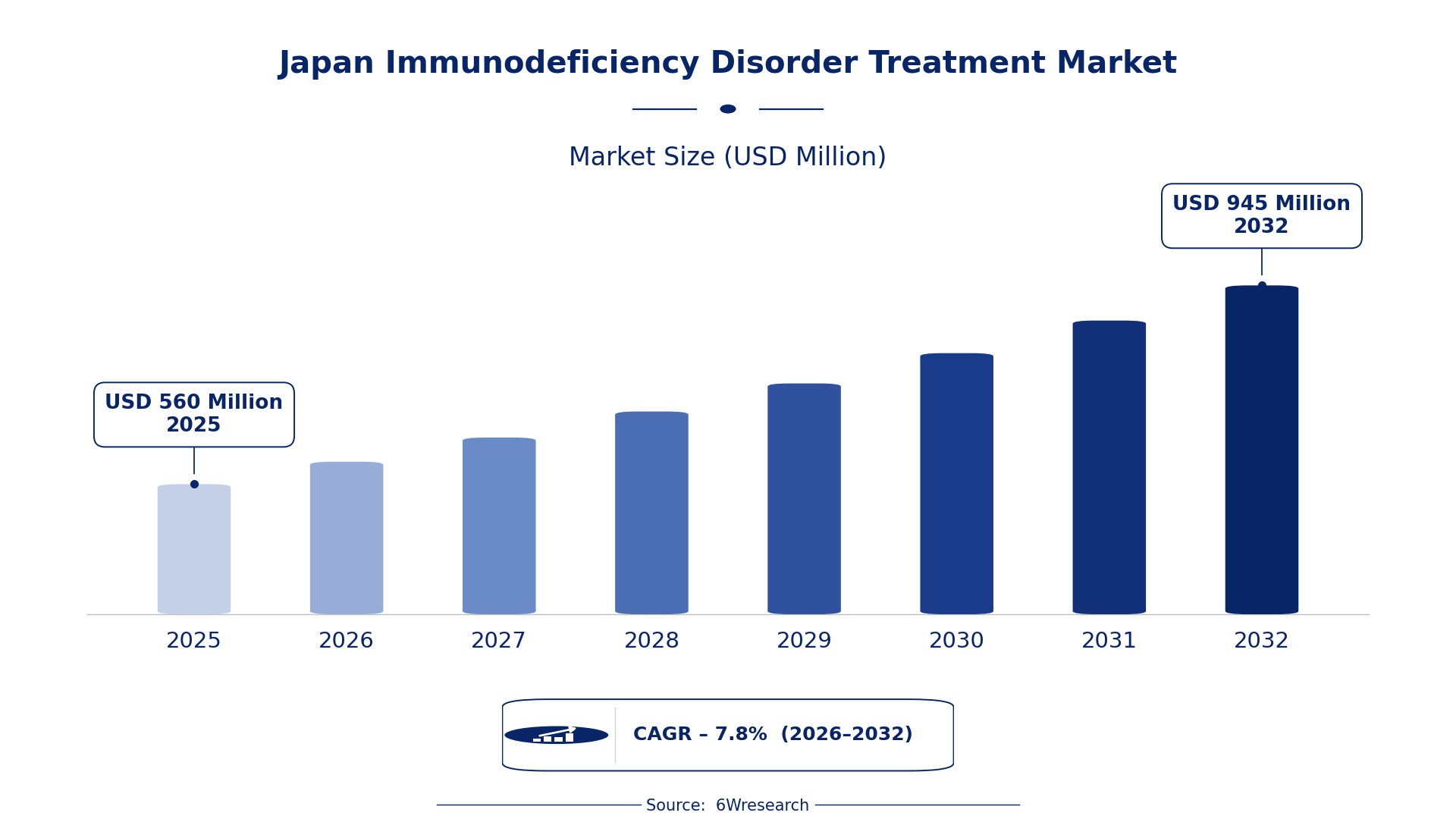
According to 6Wresearch internal database and industry insights, the Japan Immunodeficiency Disorder Treatment Market was valued at USD 560 Million in 2025 and is projected to reach USD 945 Million by 2032, growing at a CAGR of approximately 7.8% during 2026–2032.
Japan Immunodeficiency Disorder Treatment Market Highlights
| Report Metric | Details |
| Report Name | Japan Immunodeficiency Disorder Treatment Market (2026-2032) |
| Market Size 2025 | USD 560 Million |
| Market Size 2032 | USD 945 Million |
| Absolute Growth 2025–2032 | USD 385 Million |
| CAGR 2026–2032 | 7.8% |
| Peak Annual Growth | 9.1% in 2032 |
| Forecast Period | 2026–2032 |
| Historical Data | 2022–2025 |
| Base Year | 2025 |
| Leading Disorder Type, 2025 | Primary Immunodeficiency (36% share) |
| Leading Treatment Approach, 2025 | Immunoglobulin Replacement (46% share) |
| Leading Delivery Route, 2025 | IV/SC (47% share) |
| Leading End User, 2025 | Rare Disease Centers (49% share) |
| Fastest-Growing Disorder Type | Secondary Immunodeficiency (11.3% CAGR) |
| Fastest-Growing Treatment Approach | Gene Therapy/Stem Cells (10.9% CAGR) |
| Fastest-Growing Delivery Route | Intravenous (10.6% CAGR) |
| Fastest-Growing End User | Oncology & HIV Clinics (11.0% CAGR) |
| Growing Sector | Immunodeficiency treatment |
| Key End Users | Healthcare providers, Rare Disease Centers, Oncology clinics, Clinical trial facilities |
Japan Immunodeficiency Disorder Treatment Market Year-wise Growth Rate and Key Drivers (2022–2032)
This graph illustrates the annual growth rates of the market from 2022 to 2032, highlighting a steady upward trajectory and projected market expansion over the forecast period.
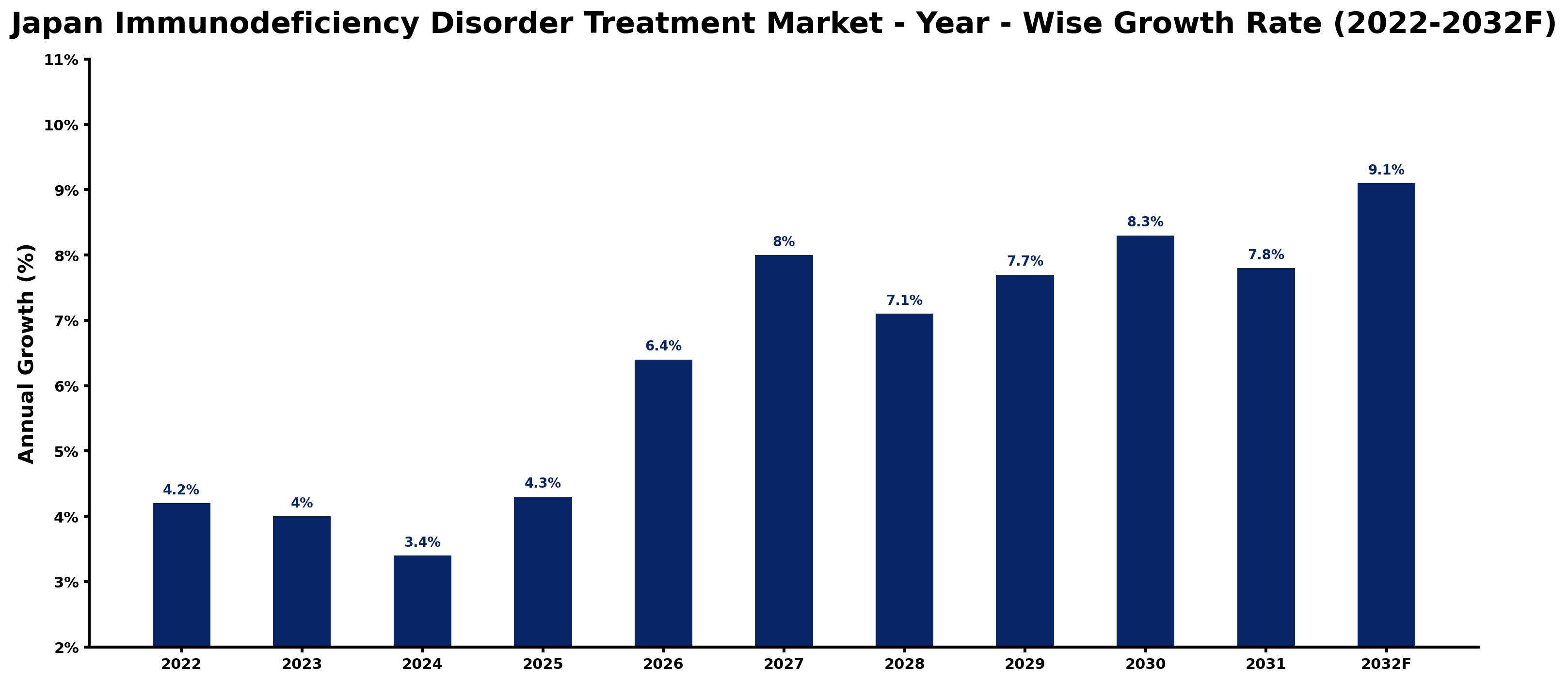
Annual growth estimates for each year appear below with the principal reason behind them, explaining the shifts that set the pace of the market.
| Year | Estimated Annual Growth (%) | Market Rationale |
| 2022 | 4.2 | Demand was strong due to over 20,000 patients receiving immunoglobulin therapy annually. |
| 2023 | 4.0 | Growth slowed as the market adjusted to new treatment guidelines updated in 2023. |
| 2024 | 3.4 | A continued increase in awareness contributed to steady demand for therapies. |
| 2025 | 4.3 | The introduction of new therapies drove faster growth compared to the previous year. |
| 2026 | 6.4 | Rising patient numbers and ongoing gene therapy trials will support higher demand. |
| 2027 | 8.0 | Increased funding for immunodeficiency research will lead to further market expansion. |
| 2028 | 7.1 | Growth will slow as the market matures and competition intensifies among providers. |
| 2029 | 7.7 | New treatment options and improved patient access will stimulate demand growth. |
| 2030 | 8.3 | The ongoing focus on rare disease centers will contribute to rising treatment rates. |
| 2031 | 7.8 | Market growth will slow as the saturation of existing therapies begins to set in. |
| 2032 | 9.1 | The peak growth will be driven by advancements in gene therapy and immunoglobulin treatments. |
Note: Market size estimations and growth projections presented in this report are based on 6Wresearch's proprietary forecasting methodology, utilizing the latest available industry data, government publications, and primary research inputs.
Japan Immunodeficiency Disorder Treatment Market Synopsis
Immunodeficiency disorder treatment includes therapies designed for individuals with weakened immune systems, primarily produced through biopharmaceutical processes. The main applications involve managing both primary and secondary immunodeficiencies, with demand arising from domestic healthcare providers and specialized treatment imports. The Japan Immunodeficiency Disorder Treatment Market is expanding due to over 10,000 diagnosed cases and increased funding, highlighted by the ¥2 billion allocated for immunodeficiency research in 2023, which fuels advancements in treatment options and improves patient care.
Market Dynamics Impact Analysis (2026–2032)
| Factor | Type | Impact | Primary Segment Affected |
| Growing patient population requiring immunoglobulin therapy | Driver | High | Immunoglobulin Replacement |
| Increased funding for immunodeficiency research | Driver | High | Gene Therapy/Stem Cells |
| Rising prevalence of secondary immunodeficiency disorders | Opportunity | High | Secondary Immunodeficiency |
| Expanding Rare Disease Centers providing specialized care | Opportunity | High | Rare Disease Centers |
| Regulatory requirements for treatment facilities | Restraint | Medium | Immunoglobulin Replacement |
| High treatment costs limiting patient access | Restraint | Medium | Primary Immunodeficiency |
| Limited availability of advanced therapies | Challenge | High | Gene Therapy/Stem Cells |
| Competition among treatment providers | Challenge | Medium | Immunoglobulin Replacement |
Evaluation of Drivers in Japan Immunodeficiency Disorder Treatment Market (2026–2032)
The factors lifting demand, and the evidence behind each, are summarised below.
| Drivers | Primary Segment Affected | Why It Matters (Evidence) |
| Increasing number of diagnosed primary immunodeficiency cases | Primary Immunodeficiency | With over 10,000 cases, demand for targeted therapies rises as healthcare providers seek effective solutions. |
| Growth in gene therapy trials for immunodeficiencies | Gene Therapy/Stem Cells | Trials at five major hospitals are expanding treatment options and attracting patient interest. |
| Rising healthcare expenditure on rare diseases | Rare Disease Centers | The government allocated ¥2 billion for immunodeficiency research, improving care and treatment availability. |
| Demand for antiviral drugs in oncology clinics | Antiviral/Cancer Drugs | Antiviral medications are increasingly prescribed for secondary immunodeficiencies, driving market growth. |
| Increasing outpatient service utilization | Immunoglobulin Replacement | About 70% of patients receive treatment through outpatient services, improving accessibility. |
Orders keep climbing as the number of diagnosed cases of primary immunodeficiency exceeds 10,000, leading to a higher demand for targeted therapies. The allocation of ¥2 billion for immunodeficiency research is driving advancements in treatment options. Gene therapy trials in major hospitals are expanding the range of available therapies, attracting more patients. Antiviral drugs are frequently prescribed in oncology clinics, contributing to the growing market for secondary immunodeficiency treatments. Many patients are treated through outpatient services, enhancing market accessibility and driving growth.
Evaluation of Restraints in Japan Immunodeficiency Disorder Treatment Market
These are the pressures that could keep growth below its potential.
| Market Restraint | Primary Segment Affected | Why It Matters (Evidence) |
| Regulatory compliance for immunoglobulin therapy facilities | Immunoglobulin Replacement | Facilities must meet JIS standards, increasing operational costs for providers. |
| High annual treatment costs for patients | Primary Immunodeficiency | The average treatment cost is estimated at ¥1 million, limiting patient access. |
| Limited availability of new therapies | Gene Therapy/Stem Cells | Emerging treatments are still under research, restricting patient options. |
| Stringent clinical trial regulations | Clinical Trial Facilities | Regulations can delay the introduction of new therapies to the market. |
| Intense competition among treatment providers | Immunoglobulin Replacement | Competition pressures pricing and reduces profit margins. |
Japan Immunodeficiency Disorder Treatment Market Challenges
Over 10,000 patients diagnosed with primary immunodeficiency disorders struggle with delays due to a shortage of skilled professionals in immunology, resulting in longer wait times for treatment. Buyers encounter difficulties as outdated technology in some facilities complicates the implementation of new treatment protocols, causing delays in accessing therapies. Compliance with JIS standards for immunoglobulin therapy imposes additional costs on hospitals, impacting their operational efficiency. High treatment costs, averaging ¥1 million per year, burden patients, particularly those relying on outpatient services, limiting their access to essential therapies.
Trends in the Japan Immunodeficiency Disorder Treatment Market
The following changes are redrawing the Japan Immunodeficiency Disorder Treatment Market.
- Focus on Rare Disease Centers: Japan is prioritising Rare Disease Centers, which now provide specialised care for immunodeficiency disorders. With over 50 centers established, this shift improves patient access to targeted therapies.
- Gene Therapy Trials Gain Momentum: Ongoing gene therapy trials are gaining traction in Japan, particularly in major hospitals. These trials aim to provide new solutions for immunodeficiencies, with substantial funding allocated for research.
- Increased Antiviral Drug Use in Oncology: Oncology clinics are increasingly prescribing antiviral drugs to manage secondary immunodeficiencies. This trend reflects the heightened awareness of immunodeficiency disorders among healthcare providers.
- Awareness Campaigns for Immunodeficiencies: The government launched a program in 2023 to raise awareness about immunodeficiencies. This initiative aims to educate healthcare professionals and the public, facilitating earlier diagnosis and treatment.
Investment Opportunities in the Japan Immunodeficiency Disorder Treatment Market
The opportunities below stand out in the Japan Immunodeficiency Disorder Treatment Market for new entrants and existing suppliers.
- Need for Accessible Treatment Options: With around 5,000 patients suffering from secondary immunodeficiency, there is a pressing need for accessible treatment options. Investing in specialised clinics can effectively meet this demand.
- Investment in Gene Therapy Solutions: The ongoing trials for gene therapies present a timely opportunity for investment. Healthcare providers are seeking new treatments to address immunodeficiency disorders, especially in urban areas.
- Collaboration with Rare Disease Centers: The increasing number of Rare Disease Centers creates an opportunity for suppliers of specialised therapies. Partnering with these centers can improve market penetration and service delivery.
- Demand for Efficient Outpatient Services: With a significant portion of patients receiving treatment through outpatient services, there is a growing need for efficient service delivery models. Investing in outpatient facilities can capture this expanding market.
Government Initiatives in the Japan Immunodeficiency Disorder Treatment Market
The Medical Care Act of 1948 establishes standards for hospitals and clinics, ensuring adequate facilities and staffing for immunodeficiency treatments. Updates in 2023 have reinforced these standards, promoting better patient care and compliance with treatment protocols.
The Japan Agency for Medical Research and Development oversees funding for immunodeficiency studies, approving projects aimed at advancing treatment methodologies. With a budget allocation of ¥2 billion in 2023, the agency supports research initiatives in the field.
Future Insight of the Japan Immunodeficiency Disorder Treatment Market
A policy-driven shift will prioritise funding for immunodeficiency research, fostering advancements in treatment options. Awareness programmes launched in 2023 will facilitate earlier diagnosis, benefiting both buyers and suppliers. Gene therapy trials ongoing in five major hospitals are expected to lead to more effective treatments for immunodeficiencies. With over 20,000 patients currently receiving immunoglobulin therapy, improvements in delivery methods and facility standards will streamline care and improve overall treatment effectiveness.
Market Segmentation Analysis
Japan Immunodeficiency Disorder Treatment Market report covers a detailed analysis of the following market segments:
By Disorder Type – Primary Immunodeficiency Leads, Secondary Immunodeficiency Expected to Grow Fastest
According to Saurav Kr Singh, Senior Research Analyst at 6Wresearch, the largest disorder type category in 2025 was Primary Immunodeficiency, at 36% of revenue. The primary immunodeficiency segment holds the largest share due to over 10,000 diagnosed cases in Japan requiring targeted therapies for effective management. The extensive network of over 50 Rare Disease Centers ensures that patients receive specialised care tailored to their specific needs. Secondary Immunodeficiency is set to record the highest CAGR in this split, 11.3% over 2026–2032. The secondary immunodeficiency segment is growing rapidly, with approximately 5,000 patients seeking management solutions, aided by a new government programme launched in 2023 to increase awareness. This initiative is likely to result in more diagnoses and subsequent treatment opportunities. Suppliers must adapt their offerings to address the growing demand for solutions in secondary immunodeficiency management.
By Treatment Approach – Immunoglobulin Replacement Leads, Gene Therapy/Stem Cells Expected to Grow Fastest
With 46% of treatment approach revenue in 2025, Immunoglobulin Replacement was the largest category. Immunoglobulin replacement therapy commands the largest market share as it is essential for treating primary immunodeficiencies, with over 20,000 patients receiving this therapy annually. The stringent regulations under JIS standards guarantee a consistent and reliable supply of these vital treatments. Over 2026–2032, Gene Therapy/Stem Cells are expected to post the fastest growth, at a CAGR of 10.9%. Gene therapy and stem cell treatments are experiencing the fastest growth, bolstered by ongoing trials in five major hospitals that are paving the way for broader adoption. As research progresses, these therapies are expected to gain prominence in clinical practice. Buyers can expect an expanded range of advanced treatment options as research funding continues to increase.
By Delivery Route – IV/SC Leads, Intravenous Expected to Grow Fastest
In 2025, IV/SC led the delivery route split with a 47% share. The IV/SC delivery route dominates the market as it is the most common method for administering immunoglobulin therapy, aligning with the needs of many patients. This method's established use in clinical settings supports its leading position. The quickest growth will come from Intravenous, forecast to expand at a CAGR of 10.6% between 2026 and 2032. Intravenous delivery is the fastest-growing route due to its standardisation in many therapies, ensuring efficient administration for patients. As clinical guidelines continue to evolve, intravenous methods will likely see wider acceptance. Suppliers should prioritise the development of intravenous delivery systems to meet the rising demand for efficient treatment administration.
By End User – Rare Disease Centers Lead, Oncology & HIV Clinics Expected to Grow Fastest
Rare Disease Centers held 49% of the Japan Immunodeficiency Disorder Treatment Market by end user in 2025. Rare Disease Centers dominate the market due to their specialised focus on treating patients with immunodeficiencies, offering tailored and comprehensive care. Their established infrastructure is adept at managing complex cases, ensuring optimal outcomes for patients. Oncology & HIV Clinics are projected to grow fastest, at a CAGR of 11.0% during 2026–2032. Oncology and HIV clinics are the fastest-growing end users, as they increasingly incorporate treatments for related immunodeficiencies into their care protocols. This trend is likely to expand as awareness of immunodeficiencies rises within these clinical environments. Suppliers should focus on oncology and HIV clinics to align their products with the increasing need for integrated immunodeficiency management.
Key Attractiveness of the Report
- 10 Years of Market Numbers
- Historical Data Starting from 2022 to 2025
- Base Year 2025
- Forecast Data until 2032
- Key Performance Indicators Impacting the Market
- Major Upcoming Developments and Projects
Key Highlights of the Report:
- Japan Immunodeficiency Disorder Treatment Market Outlook
- Market Size of Japan Immunodeficiency Disorder Treatment Market, 2025
- Forecast of Japan Immunodeficiency Disorder Treatment Market, 2032
- Historical Data and Forecast of Japan Immunodeficiency Disorder Treatment Revenues & Volume for the Period 2022-2032F
- Japan Immunodeficiency Disorder Treatment Market Trend Evolution
- Japan Immunodeficiency Disorder Treatment Market Drivers and Challenges
- Japan Immunodeficiency Disorder Treatment Price Trends
- Japan Immunodeficiency Disorder Treatment Porter's Five Forces
- Japan Immunodeficiency Disorder Treatment Industry Life Cycle
- Historical Data and Forecast of Japan Immunodeficiency Disorder Treatment Market Revenues & Volume By Disorder Type for the Period 2022-2032F
- Historical Data and Forecast of Japan Immunodeficiency Disorder Treatment Market Revenues & Volume By Primary Immunodeficiency for the Period 2022-2032F
- Historical Data and Forecast of Japan Immunodeficiency Disorder Treatment Market Revenues & Volume By Secondary Immunodeficiency for the Period 2022-2032F
- Historical Data and Forecast of Japan Immunodeficiency Disorder Treatment Market Revenues & Volume By Congenital Disorders for the Period 2022-2032F
- Historical Data and Forecast of Japan Immunodeficiency Disorder Treatment Market Revenues & Volume By Acquired Deficiencies for the Period 2022-2032F
- Historical Data and Forecast of Japan Immunodeficiency Disorder Treatment Market Revenues & Volume By Treatment Approach for the Period 2022-2032F
- Historical Data and Forecast of Japan Immunodeficiency Disorder Treatment Market Revenues & Volume By Immunoglobulin Replacement for the Period 2022-2032F
- Historical Data and Forecast of Japan Immunodeficiency Disorder Treatment Market Revenues & Volume By Antiviral/Cancer Drugs for the Period 2022-2032F
- Historical Data and Forecast of Japan Immunodeficiency Disorder Treatment Market Revenues & Volume By Gene Therapy/Stem Cells for the Period 2022-2032F
- Historical Data and Forecast of Japan Immunodeficiency Disorder Treatment Market Revenues & Volume By Hormone + IG Therapy for the Period 2022-2032F
- Historical Data and Forecast of Japan Immunodeficiency Disorder Treatment Market Revenues & Volume By Delivery Route for the Period 2022-2032F
- Historical Data and Forecast of Japan Immunodeficiency Disorder Treatment Market Revenues & Volume By IV/SC for the Period 2022-2032F
- Historical Data and Forecast of Japan Immunodeficiency Disorder Treatment Market Revenues & Volume By Oral/Injectable for the Period 2022-2032F
- Historical Data and Forecast of Japan Immunodeficiency Disorder Treatment Market Revenues & Volume By Experimental for the Period 2022-2032F
- Historical Data and Forecast of Japan Immunodeficiency Disorder Treatment Market Revenues & Volume By Intravenous for the Period 2022-2032F
- Historical Data and Forecast of Japan Immunodeficiency Disorder Treatment Market Revenues & Volume By End User for the Period 2022-2032F
- Historical Data and Forecast of Japan Immunodeficiency Disorder Treatment Market Revenues & Volume By Rare Disease Centers for the Period 2022-2032F
- Historical Data and Forecast of Japan Immunodeficiency Disorder Treatment Market Revenues & Volume By Oncology & HIV Clinics for the Period 2022-2032F
- Historical Data and Forecast of Japan Immunodeficiency Disorder Treatment Market Revenues & Volume By Clinical Trial Facilities for the Period 2022-2032F
- Historical Data and Forecast of Japan Immunodeficiency Disorder Treatment Market Revenues & Volume By Immunology Departments for the Period 2022-2032F
- Japan Immunodeficiency Disorder Treatment Import Export Trade Statistics
- Market Opportunity Assessment By Disorder Type
- Market Opportunity Assessment By Treatment Approach
- Market Opportunity Assessment By Delivery Route
- Market Opportunity Assessment By End User
- Japan Immunodeficiency Disorder Treatment Top Companies Market Share
- Japan Immunodeficiency Disorder Treatment Competitive Benchmarking By Technical and Operational Parameters
- Japan Immunodeficiency Disorder Treatment Company Profiles
- Japan Immunodeficiency Disorder Treatment Key Strategic Recommendations
Market Covered
The report covers the following segments.
By Disorder Type
- Primary Immunodeficiency
- Secondary Immunodeficiency
- Congenital Disorders
- Acquired Deficiencies
By Treatment Approach
- Immunoglobulin Replacement
- Antiviral/Cancer Drugs
- Gene Therapy/Stem Cells
- Hormone + IG Therapy
By Delivery Route
- IV/SC
- Oral/Injectable
- Experimental
- Intravenous
By End User
- Rare Disease Centers
- Oncology & HIV Clinics
- Clinical Trial Facilities
- Immunology Departments































