Japan Immunomodulator Therapy Market Size & Growth Rate
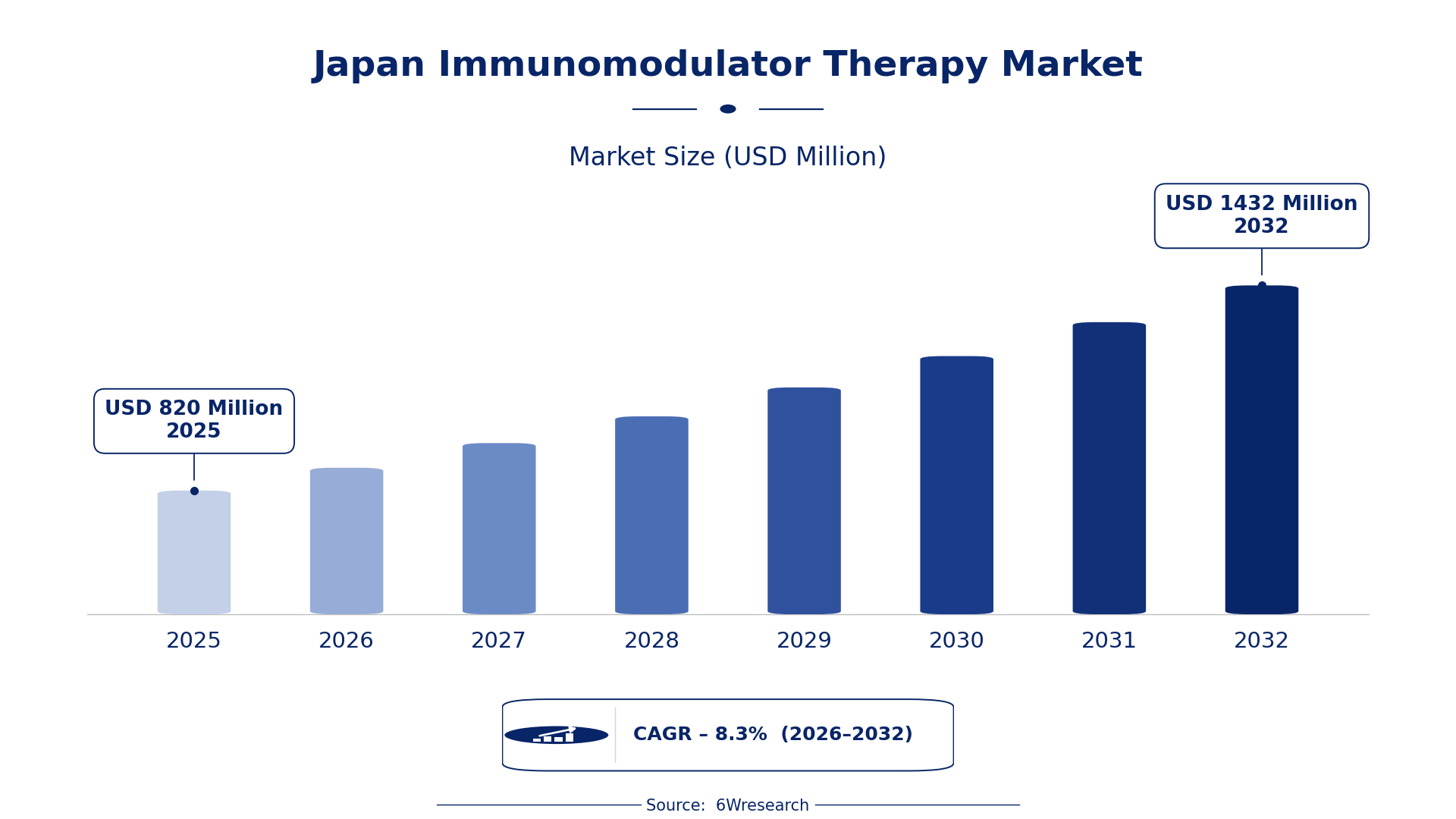
According to 6Wresearch internal database and industry insights, the Japan Immunomodulator Therapy Market was valued at USD 820 Million in 2025 and is projected to reach USD 1,432 Million by 2032, growing at a CAGR of approximately 8.3% during 2026–2032.
Japan Immunomodulator Therapy Market Highlights
| Report Metric | Details |
| Report Name | Japan Immunomodulator Therapy Market (2026-2032) |
| Market Size 2025 | USD 820 Million |
| Market Size 2032 | USD 1,432 Million |
| Absolute Growth 2025–2032 | USD 612 Million |
| CAGR 2026–2032 | 8.3% |
| Peak Annual Growth | 9.7% in 2032 |
| Forecast Period | 2026–2032 |
| Historical Data | 2022–2025 |
| Base Year | 2025 |
| Leading Modulator Type, 2025 | Immunostimulants (42% share) |
| Leading Effect on Immune System, 2025 | Immune Boost (43% share) |
| Leading Use Case, 2025 | Cancer (32% share) |
| Leading End User, 2025 | Oncology Departments (52% share) |
| Fastest-Growing Modulator Type | Immunosuppressants (12.3% CAGR) |
| Fastest-Growing Effect on Immune System | Immune Suppression (12.8% CAGR) |
| Fastest-Growing Use Case | Infections (12.0% CAGR) |
| Fastest-Growing End User | Hospitals (10.8% CAGR) |
| Growing Sector | Oncology |
| Key End Users | Oncology Departments, Research Hospitals, Hospitals |
Japan Immunomodulator Therapy Market Year-wise Growth Rate and Key Drivers (2022–2032)
This graph illustrates the annual growth rates of the market from 2022 to 2032, highlighting a steady upward trajectory and projected market expansion over the forecast period.
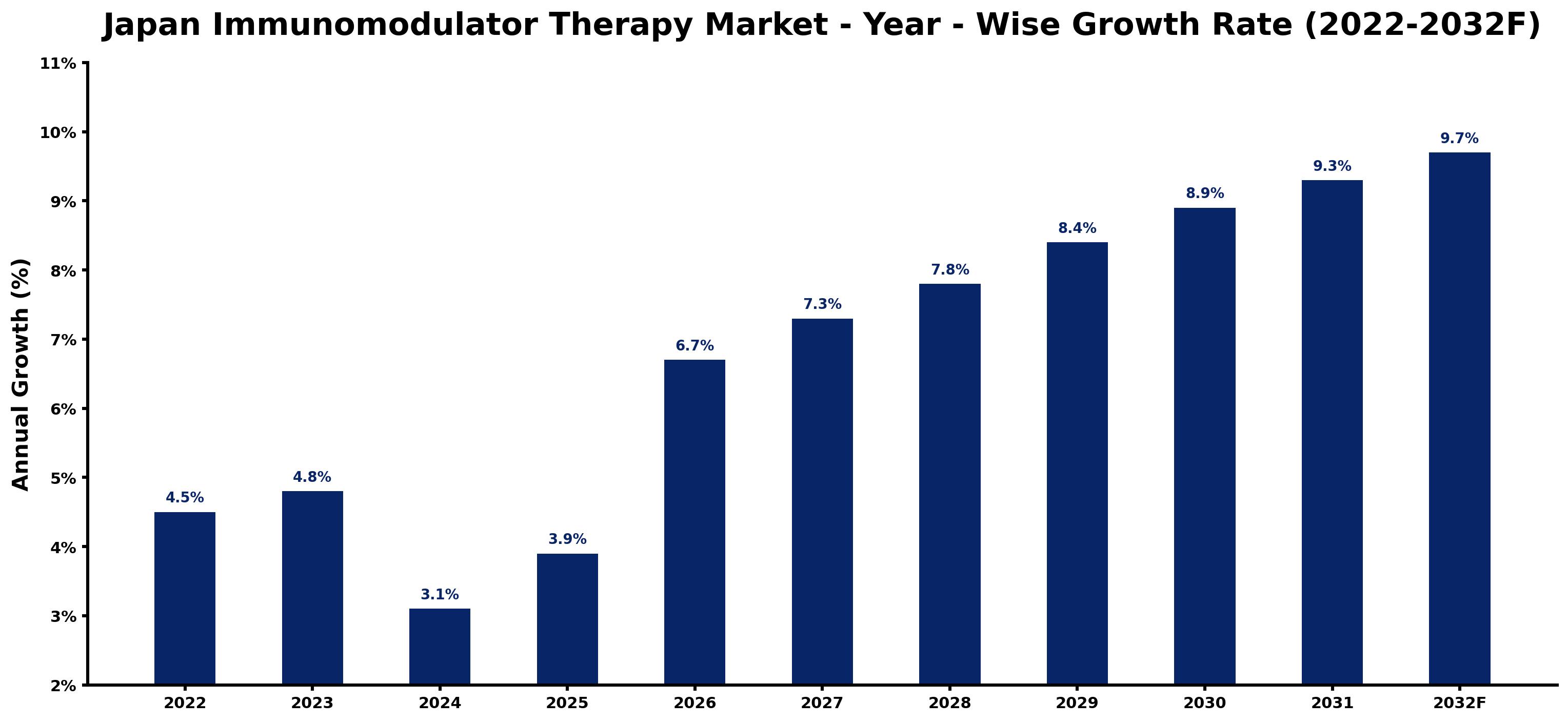
Year by year, the estimates below pair each growth rate with the development that shaped it.
| Year | Estimated Annual Growth (%) | Market Rationale |
| 2022 | 4.5 | The market showed steady growth with increasing adoption of immunomodulator therapies. |
| 2023 | 4.8 | Demand accelerated due to heightened focus on cancer treatments and research initiatives. |
| 2024 | 3.1 | Growth slowed as some hospitals faced supply chain challenges with new therapies. |
| 2025 | 3.9 | Demand improved as more hospitals integrated immunomodulators into treatment protocols. |
| 2026 | 6.7 | The market is expected to rebound with rising patient numbers in oncology departments. |
| 2027 | 7.3 | Expansion of immunomodulator offerings will support continued growth. |
| 2028 | 7.8 | Increased research funding will lead to more clinical trials and treatment options. |
| 2029 | 8.4 | Awareness of immunotherapy benefits is projected to drive market expansion. |
| 2030 | 8.9 | Strengthened demand will result from more patients receiving immunomodulator therapies. |
| 2031 | 9.3 | Advancements in biologic modulators and gene therapies will fuel growth. |
| 2032 | 9.7 | The market is expected to peak as immunomodulators become standard in cancer treatment. |
Note: Market size estimations and growth projections presented in this report are based on 6Wresearch's proprietary forecasting methodology, utilizing the latest available industry data, government publications, and primary research inputs.
Japan Immunomodulator Therapy Market Synopsis
Immunomodulator therapy modifies the immune response using biological or biotechnological substances. These therapies are primarily applied in treating cancer, autoimmune disorders, and organ transplants. The Japan Immunomodulator Therapy Market is expanding due to the increasing prevalence of cancer, with over 150,000 patients treated in 2023. Ongoing research initiatives at institutions like the National Cancer Center Japan and the aging population are driving demand for effective therapies, broadening market potential.
Market Dynamics Impact Analysis (2026–2032)
| Factor | Type | Impact | Primary Segment Affected |
| Growing prevalence of cancer and autoimmune diseases | Driver | High | Cancer |
| Rising number of hospitals adopting immunomodulator therapies | Driver | High | Oncology Departments |
| Increased funding for immunomodulator research initiatives | Opportunity | High | Research Hospitals |
| Emerging gene-based therapies attracting investment | Opportunity | Medium | Gene-Based Therapies |
| Regulatory complexities affecting therapy approvals | Restraint | High | Immunosuppressants |
| Limited awareness about immunomodulator benefits among patients | Restraint | Medium | Immunostimulants |
| Supply chain disruptions impacting therapy availability | Challenge | High | Biologic Modulators |
| Competition from alternative therapies in oncology | Challenge | Medium | Cancer |
Evaluation of Drivers in Japan Immunomodulator Therapy Market (2026–2032)
The following drivers explain most of the expected growth.
| Drivers | Primary Segment Affected | Why It Matters (Evidence) |
| Increasing cancer cases driving therapy demand | Cancer | In 2023, 150,000 patients received immunomodulators for cancer treatment, leading hospitals to expand their offerings. |
| Growing hospital adoption of immunomodulators | Oncology Departments | Over 1,200 hospitals in Japan utilize immunomodulator therapies, improving treatment accessibility. |
| Rising research funding for immunomodulators | Research Hospitals | Funding for clinical trials is increasing, boosting the development of new therapies. |
| Emergence of gene-based therapies | Gene-Based Therapies | Twenty clinical trials are exploring gene-based therapies, attracting investment and interest from hospitals. |
| Focus on biologic modulators in pharmaceutical research | Biologic Modulators | Research on biologic modulators is intensifying, with ongoing studies broadening treatment options. |
Most of the extra volume comes from the growing prevalence of cancer, with 150,000 patients treated in 2023. This increase compels healthcare providers to adopt immunomodulator therapies, which improve patient outcomes. More than 1,200 hospitals are integrating these therapies, leading to wider acceptance among medical professionals. Research funding is rising, supporting numerous clinical trials aimed at developing new therapies. The emergence of gene-based therapies is attracting investment, prompting healthcare facilities to explore new treatment modalities.
Evaluation of Restraints in Japan Immunomodulator Therapy Market
The main factors holding the market back are set out below.
| Market Restraint | Primary Segment Affected | Why It Matters (Evidence) |
| Regulatory complexities delaying therapy approvals | Immunosuppressants | The Clinical Trials Act sets strict guidelines, slowing the introduction of new therapies into the market. |
| Limited patient awareness of immunomodulator benefits | Immunostimulants | Many patients remain unaware of the advantages of immunomodulators, hindering adoption rates. |
| Supply chain disruptions affecting availability | Biologic Modulators | Ongoing global supply chain issues have impacted the timely delivery of essential therapies. |
| High costs associated with advanced therapies | Gene-Based Therapies | Gene-based therapies often involve substantial investment, limiting their accessibility to patients. |
| Competition from alternative treatment options | Cancer | The rise of targeted therapies presents challenges for immunomodulator adoption in oncology. |
Japan Immunomodulator Therapy Market Challenges
In 2023, outdated technology in immunomodulator production hampers efficiency, resulting in longer lead times for hospitals needing these treatments. Rising production costs, influenced by stringent regulations from the Ministry of Health, Labour and Welfare, force healthcare providers to spend approximately 20% more on immunomodulators, straining budgets. A shortage of skilled professionals in immunology limits research institutions' ability to conduct clinical trials, delaying the introduction of new therapies for patients. Buyers in hospitals face accessibility issues, as only 30% of patients currently receive immunomodulator treatments, indicating a substantial gap in availability.
Trends in the Japan Immunomodulator Therapy Market
Below are the shifts with the largest effect on the Japan Immunomodulator Therapy Market.
- National Cancer Center Japan Research Initiatives: The National Cancer Center Japan is intensifying research on immunomodulators, with over 150 ongoing clinical trials. This focus is expected to improve treatment options and patient outcomes, reflecting a commitment to advancing cancer therapies.
- Shift Towards Gene-Based Therapies: There is a growing trend in Japan towards gene-based therapies, with 20 clinical trials currently underway. This shift is reshaping treatment paradigms, promising new solutions for genetic disorders and cancers.
- Oncology Departments Embracing Immunotherapy: Oncology departments are increasingly adopting immunotherapy, with approximately 30% of patients receiving immunomodulator treatments. This trend indicates a shift in cancer treatment approaches, improving patient care.
- Growing Collaboration in Research Hospitals: Research hospitals are collaborating with international institutions on immunomodulator studies, promoting innovation. This trend is illustrated by numerous joint research initiatives, improving the development of new therapies.
Investment Opportunities in the Japan Immunomodulator Therapy Market
Investors looking at the Japan Immunomodulator Therapy Market should consider the following areas.
- Oncology Departments Seeking Advanced Therapies: Oncology departments are in need of advanced immunomodulator therapies, with 150,000 patients treated in 2023. Investment in new treatment options is essential to meet this demand.
- Funding Gap for Research Initiatives: With over 2,000 members in the Japanese Society for Immunology, there is a gap in funding for research. Collaborating with local institutions can help bridge this gap and improve therapy development.
- Entry into Gene-Based Therapy Market: The gene-based therapy market is expanding, with 20 clinical trials underway. Partnering with research hospitals can facilitate entry into this emerging segment and drive innovation.
- Supply of Biologic Modulators to Hospitals: Hospitals are increasingly adopting biologic modulators, focusing on improving patient care. Suppliers can enter this market by ensuring compliance with ISO 9001 standards.
Government Initiatives in the Japan Immunomodulator Therapy Market
The Clinical Trials Act, enforced since 2018, establishes the framework for conducting clinical research on immunomodulators. This law requires rigorous testing and disclosure, ensuring patient safety and efficacy of new therapies. Compliance with these regulations is essential for producers and researchers to bring effective treatments to market.
In 2023, the Japan Agency for Medical Research and Development allocated funding for immunomodulator research initiatives. This agency supports various projects aimed at improving treatment accessibility and efficacy, benefiting both producers and patients.
Future Insight of the Japan Immunomodulator Therapy Market
By 2032, hospitals will see improved access to immunomodulator therapies due to a government programme launched in 2023 aimed at increasing treatment availability. Research initiatives funded by the Japan Agency for Medical Research and Development will accelerate the introduction of new therapies, providing more options for patients. Collaborations between research institutions and international organisations will drive advancements in immunomodulator development. With Japan's aging population, the demand for immunomodulators will rise sharply, necessitating adjustments in treatment strategies across the healthcare system.
Market Segmentation Analysis
Japan Immunomodulator Therapy Market report covers a detailed analysis of the following market segments:
By Modulator Type – Immunostimulants Lead, Immunosuppressants Expected to Grow Fastest
According to Saurav Kr Singh, Senior Research Analyst at 6Wresearch, with 42% of modulator type revenue in 2025, Immunostimulants was the largest category. Immunostimulants hold the largest market share due to their critical application in oncology departments, where they enhance immune responses in cancer patients. In 2023, over 150,000 patients received these therapies, highlighting their importance in cancer treatment. The quickest growth will come from Immunosuppressants, forecast to expand at a CAGR of 12.3% between 2026 and 2032. The rapid growth of immunosuppressants is primarily driven by their essential role in preventing organ rejection during transplant surgeries, with 200 hospitals implementing these therapies. As the number of transplants increases, the demand for immunosuppressants is expected to rise significantly. Suppliers should focus on expanding immunosuppressant offerings to cater to the growing needs of transplant patients.
By Effect on Immune System – Immune Boost Leads, Immune Suppression Expected to Grow Fastest
Immune Boost held 43% of the Japan Immunomodulator Therapy Market by effect on immune system in 2025. Immune Boost therapies lead the market as they are extensively utilised in cancer treatments, particularly in oncology departments that aim to improve patient immunity. This reflects a strong commitment to enhancing treatment outcomes for cancer patients across Japan. Over 2026–2032, Immune Suppression is expected to post the fastest growth, at a CAGR of 12.8%. The swift growth of Immune Suppression therapies is linked to their vital role in managing autoimmune diseases and supporting transplant patients, evidenced by their use in 200 hospitals for organ transplants. This trend suggests a rising demand for effective immune suppression solutions. Buyers should consider the increasing availability of immune suppression therapies to effectively address the needs of patients with autoimmune conditions.
By Use Case – Cancer Leads, Infections Expected to Grow Fastest
Cancer took 32% of use case revenue in 2025, more than any other category. Cancer is the primary application area for immunomodulators, with a substantial number of patients receiving these therapies specifically for cancer treatment. This strong focus on oncology underscores the urgent need for effective cancer therapies within Japan's healthcare system. Infections are set to record the highest CAGR in this split, 12.0% over 2026–2032. Infections are emerging as the fastest-growing use case for immunomodulators, as they play a supportive role in enhancing immune responses during treatment. This shift highlights the expanding role of immunomodulators in addressing infectious diseases alongside cancer. Suppliers should explore opportunities in the infection treatment segment to capitalise on the growing demand for supportive therapies.
By End User – Oncology Departments Lead, Hospitals Expected to Grow Fastest
Oncology Departments accounted for 52% of the market by end user in 2025. Oncology Departments are the leading end users of immunomodulator therapies, reflecting the high volume of cancer patients treated with these therapies in Japan's healthcare facilities. This concentration of use underscores the critical role of oncology in the immunomodulator market. Hospitals are projected to grow fastest, at a CAGR of 10.8% during 2026–2032. Hospitals are experiencing the fastest growth as primary settings for administering immunomodulator treatments, driven by the increasing patient population requiring these therapies. This trend suggests that hospitals will continue to expand their immunomodulator services to meet patient needs. Suppliers should strengthen partnerships with hospitals to ensure a steady supply of immunomodulator therapies in response to rising treatment demands.
Key Attractiveness of the Report
- 10 Years of Market Numbers
- Historical Data Starting from 2022 to 2025
- Base Year 2025
- Forecast Data until 2032
- Key Performance Indicators Impacting the Market
- Major Upcoming Developments and Projects
Key Highlights of the Report:
- Japan Immunomodulator Therapy Market Outlook
- Market Size of Japan Immunomodulator Therapy Market, 2025
- Forecast of Japan Immunomodulator Therapy Market, 2032
- Historical Data and Forecast of Japan Immunomodulator Therapy Revenues & Volume for the Period 2022-2032F
- Japan Immunomodulator Therapy Market Trend Evolution
- Japan Immunomodulator Therapy Market Drivers and Challenges
- Japan Immunomodulator Therapy Price Trends
- Japan Immunomodulator Therapy Porter's Five Forces
- Japan Immunomodulator Therapy Industry Life Cycle
- Historical Data and Forecast of Japan Immunomodulator Therapy Market Revenues & Volume By Modulator Type for the Period 2022-2032F
- Historical Data and Forecast of Japan Immunomodulator Therapy Market Revenues & Volume By Immunostimulants for the Period 2022-2032F
- Historical Data and Forecast of Japan Immunomodulator Therapy Market Revenues & Volume By Immunosuppressants for the Period 2022-2032F
- Historical Data and Forecast of Japan Immunomodulator Therapy Market Revenues & Volume By Biologic Modulators for the Period 2022-2032F
- Historical Data and Forecast of Japan Immunomodulator Therapy Market Revenues & Volume By Gene-Based Therapies for the Period 2022-2032F
- Historical Data and Forecast of Japan Immunomodulator Therapy Market Revenues & Volume By Effect on Immune System for the Period 2022-2032F
- Historical Data and Forecast of Japan Immunomodulator Therapy Market Revenues & Volume By Immune Boost for the Period 2022-2032F
- Historical Data and Forecast of Japan Immunomodulator Therapy Market Revenues & Volume By Immune Suppression for the Period 2022-2032F
- Historical Data and Forecast of Japan Immunomodulator Therapy Market Revenues & Volume By Cytokine Targeted for the Period 2022-2032F
- Historical Data and Forecast of Japan Immunomodulator Therapy Market Revenues & Volume By Genetically Altered Cells for the Period 2022-2032F
- Historical Data and Forecast of Japan Immunomodulator Therapy Market Revenues & Volume By Use Case for the Period 2022-2032F
- Historical Data and Forecast of Japan Immunomodulator Therapy Market Revenues & Volume By Cancer, Infections for the Period 2022-2032F
- Historical Data and Forecast of Japan Immunomodulator Therapy Market Revenues & Volume By Autoimmune, Transplants for the Period 2022-2032F
- Historical Data and Forecast of Japan Immunomodulator Therapy Market Revenues & Volume By RA, Lupus, Psoriasis for the Period 2022-2032F
- Historical Data and Forecast of Japan Immunomodulator Therapy Market Revenues & Volume By Experimental Use for the Period 2022-2032F
- Historical Data and Forecast of Japan Immunomodulator Therapy Market Revenues & Volume By End User for the Period 2022-2032F
- Historical Data and Forecast of Japan Immunomodulator Therapy Market Revenues & Volume By Oncology Departments for the Period 2022-2032F
- Historical Data and Forecast of Japan Immunomodulator Therapy Market Revenues & Volume By Hospitals for the Period 2022-2032F
- Historical Data and Forecast of Japan Immunomodulator Therapy Market Revenues & Volume By Rheumatology Centers for the Period 2022-2032F
- Historical Data and Forecast of Japan Immunomodulator Therapy Market Revenues & Volume By Research Hospitals for the Period 2022-2032F
- Japan Immunomodulator Therapy Import Export Trade Statistics
- Market Opportunity Assessment By Modulator Type
- Market Opportunity Assessment By Effect on Immune System
- Market Opportunity Assessment By Use Case
- Market Opportunity Assessment By End User
- Japan Immunomodulator Therapy Top Companies Market Share
- Japan Immunomodulator Therapy Competitive Benchmarking By Technical and Operational Parameters
- Japan Immunomodulator Therapy Company Profiles
- Japan Immunomodulator Therapy Key Strategic Recommendations
Market Covered
This report examines the market across the segments below.
By Modulator Type
- Immunostimulants
- Immunosuppressants
- Biologic Modulators
- Gene-Based Therapies
By Effect on Immune System
- Immune Boost
- Immune Suppression
- Cytokine Targeted
- Genetically Altered Cells
By Use Case
- Cancer
- Infections
- Autoimmune
- Transplants
- RA
- Lupus
- Psoriasis
- Experimental Use
By End User
- Oncology Departments
- Hospitals
- Rheumatology Centers
- Research Hospitals































