Japan Immunomodulatory Drugs Market Size & Growth Rate
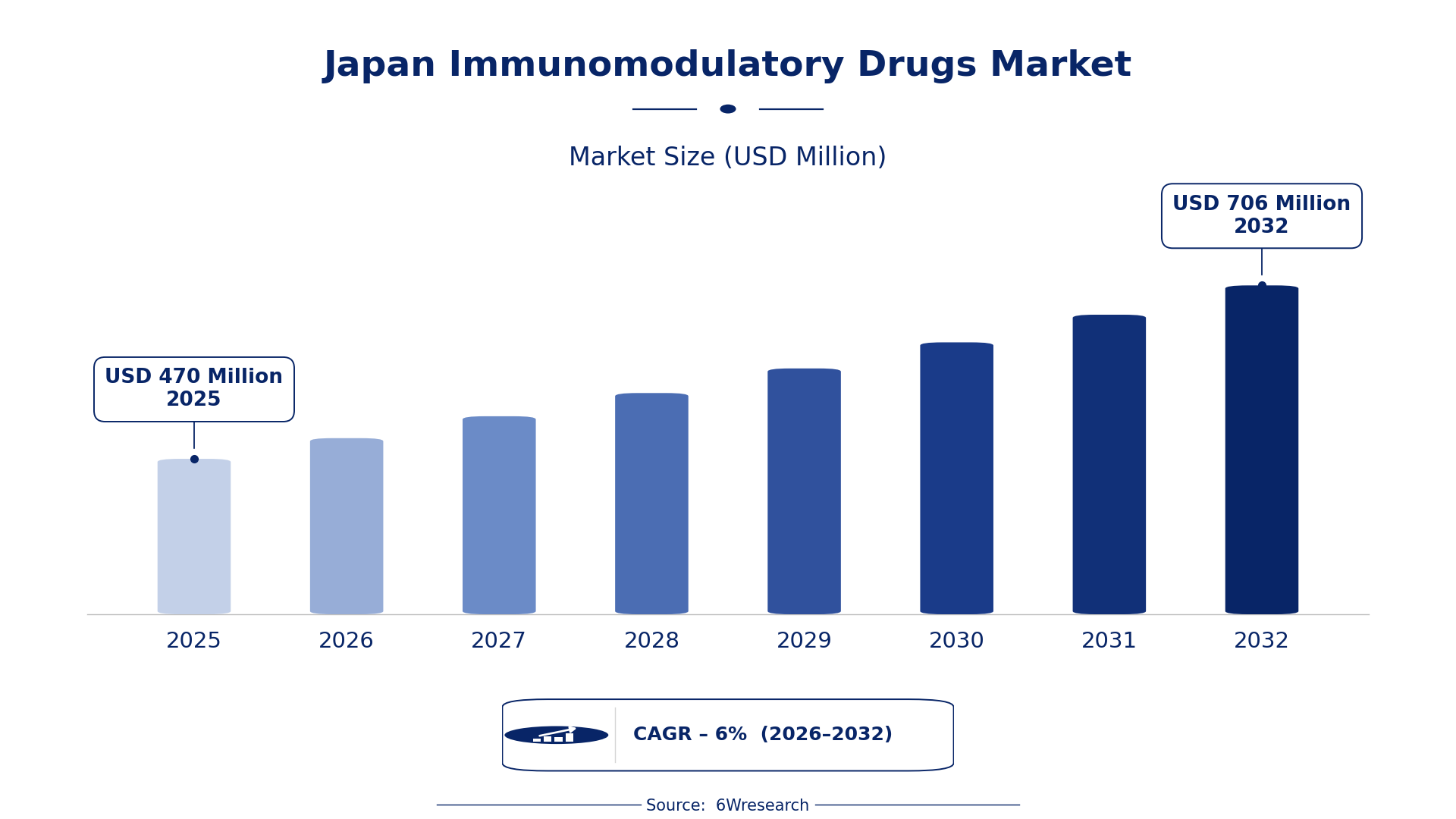
According to 6Wresearch internal database and industry insights, the Japan Immunomodulatory Drugs Market was valued at USD 470 Million in 2025 and is projected to reach USD 706 Million by 2032, growing at a CAGR of approximately 6% during 2026–2032.
Japan Immunomodulatory Drugs Market Highlights
| Report Metric | Details |
| Report Name | Japan Immunomodulatory Drugs Market (2026-2032) |
| Market Size 2025 | USD 470 Million |
| Market Size 2032 | USD 706 Million |
| Absolute Growth 2025–2032 | USD 236 Million |
| CAGR 2026–2032 | 6% |
| Peak Annual Growth | 7.5% in 2032 |
| Forecast Period | 2026–2032 |
| Historical Data | 2022–2025 |
| Base Year | 2025 |
| Leading Drug Type, 2025 | Corticosteroids (44% share) |
| Leading Action Type, 2025 | Broad Immunosuppression (39% share) |
| Leading Disease Target, 2025 | Asthma (37% share) |
| Leading End User, 2025 | Clinics & Pharmacies (46% share) |
| Fastest-Growing Drug Type | Biologics (8.9% CAGR) |
| Fastest-Growing Action Type | Targeted Inhibition (8.7% CAGR) |
| Fastest-Growing Disease Target | Lupus (8.3% CAGR) |
| Fastest-Growing End User | Specialty Drug Providers (8.2% CAGR) |
| Growing Sector | Immunomodulatory therapies for autoimmune diseases |
| Key End Users | Clinics, Pharmacies, Oncology Centers, Specialty Drug Providers |
Japan Immunomodulatory Drugs Market Year-wise Growth Rate and Key Drivers (2022–2032)
This graph illustrates the annual growth rates of the market from 2022 to 2032, highlighting a steady upward trajectory and projected market expansion over the forecast period.
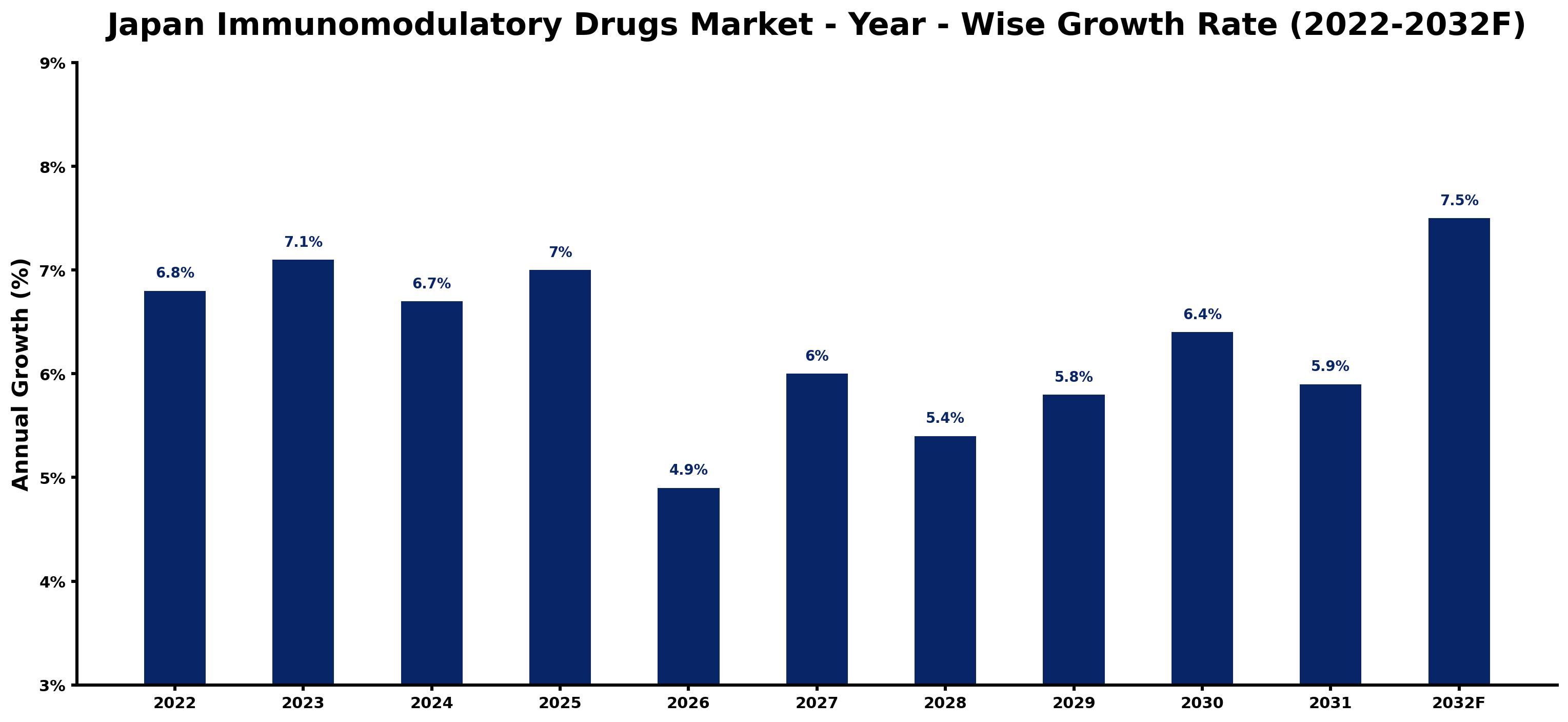
The table below sets out the estimated growth rate for each year and the main factor behind it.
| Year | Estimated Annual Growth (%) | Market Rationale |
| 2022 | 6.8 | The market displayed steady growth, reflecting strong demand from healthcare providers. |
| 2023 | 7.1 | Growth accelerated due to increased patient treatment for autoimmune diseases. |
| 2024 | 6.7 | A slight slowdown occurred as market adjustments followed previous peaks. |
| 2025 | 7.0 | Demand surged again, driven by new treatment options and patient awareness. |
| 2026 | 4.9 | Growth is expected to slow as market saturation begins to affect new prescriptions. |
| 2027 | 6.0 | An uptick in growth is projected as new biologics enter the market. |
| 2028 | 5.4 | Growth is anticipated to decelerate slightly as competition intensifies among drug classes. |
| 2029 | 5.8 | The market will see renewed interest with a rise in chronic condition treatments. |
| 2030 | 6.4 | Demand is expected to increase as healthcare providers adopt new therapies. |
| 2031 | 5.9 | A moderation in growth is projected as the market stabilises. |
| 2032 | 7.5 | The market will peak with significant adoption of advanced immunomodulatory drugs. |
Note: Market size estimations and growth projections presented in this report are based on 6Wresearch's proprietary forecasting methodology, utilizing the latest available industry data, government publications, and primary research inputs.
Japan Immunomodulatory Drugs Market Synopsis
Immunomodulatory drugs are therapeutic agents that modify the immune response, primarily produced through biopharmaceutical processes. They play a crucial role in treating autoimmune diseases, cancers, and inflammatory conditions. The Japan Immunomodulatory Drugs Market is expanding, driven by around 1.5 million patients treated for autoimmune diseases and a rise in the adoption of biologics, which account for 40% of prescriptions. The Tokyo region, with its high concentration of rheumatology clinics, illustrates the growing demand for these therapies.
Market Dynamics Impact Analysis (2026–2032)
| Factor | Type | Impact | Primary Segment Affected |
| Increasing prevalence of autoimmune diseases drives demand for effective treatments. | Driver | High | Corticosteroids |
| Rising adoption of biologics enhances treatment options for patients. | Driver | High | Biologics |
| Expansion of oncology centers increases the need for cancer immunomodulators. | Opportunity | High | Cancer Immunomodulators |
| Growth in specialty drug providers boosts access to advanced therapies. | Opportunity | High | Specialty Drug Providers |
| Regulatory hurdles can delay the approval of new immunomodulatory drugs. | Restraint | Medium | Biologics |
| High costs associated with drug development limit market entry for new players. | Restraint | Medium | Corticosteroids |
| Limited supply of innovative therapies can restrict patient access to treatments. | Challenge | High | JAK/BTK Inhibitors |
| Competition among drug classes may lead to price pressures in the market. | Challenge | Medium | Targeted Inhibition |
Evaluation of Drivers in Japan Immunomodulatory Drugs Market (2026–2032)
The following drivers explain most of the expected growth.
| Drivers | Primary Segment Affected | Why It Matters (Evidence) |
| Rising patient numbers for autoimmune diseases increase drug prescriptions. | Corticosteroids | In 2023, approximately 1.5 million patients are treated for autoimmune diseases, boosting demand for corticosteroids. |
| Biologics have become a preferred treatment option in Japan. | Biologics | Biologics account for 40% of immunomodulatory drug prescriptions, reflecting their growing acceptance among healthcare providers. |
| The increase in oncology centers supports the use of immunomodulatory therapies. | Cancer Immunomodulators | Over 300 oncology centers are utilizing immunomodulatory therapies, driving demand for cancer treatments. |
| The adoption of JAK inhibitors has surged in recent years. | JAK/BTK Inhibitors | JAK inhibitors have seen a 30% increase in adoption, indicating a shift towards targeted therapies. |
| The Tokyo region's high concentration of rheumatology clinics supports immunomodulatory drug use. | Clinics & Pharmacies | The Tokyo region hosts the highest concentration of rheumatology clinics, facilitating patient access to treatments. |
In 2023, around 1.5 million patients are treated for autoimmune diseases, leading to higher prescriptions for corticosteroids. The presence of over 300 oncology centres utilising immunomodulatory therapies drives demand for cancer treatments. The adoption of JAK inhibitors has surged, indicating a shift towards targeted therapies. New biologics entering the market are expanding treatment options, while the high concentration of rheumatology clinics in the Tokyo region improves patient access to crucial treatments.
Evaluation of Restraints in Japan Immunomodulatory Drugs Market
Below are the constraints most often cited by buyers and suppliers, with the segment each affects.
| Market Restraint | Primary Segment Affected | Why It Matters (Evidence) |
| Regulatory hurdles can delay the approval of new immunomodulatory drugs. | Biologics | The Pharmaceuticals and Medical Devices Agency oversees drug regulation, which can slow the introduction of new therapies. |
| High costs associated with drug development limit market entry for new players. | Corticosteroids | The complex biopharmaceutical processes involved in drug development require substantial investment. |
| Limited supply of specific therapies can restrict patient access to treatments. | JAK/BTK Inhibitors | Competition can lead to shortages of certain immunomodulatory drugs. |
| Competition among drug classes may lead to price pressures in the market. | Targeted Inhibition | As more therapies enter the market, pricing strategies may become aggressive, affecting profitability. |
| Market saturation can hinder the growth of existing drug classes. | Cancer Immunomodulators | With many options available, healthcare providers may be less inclined to adopt new treatments. |
Japan Immunomodulatory Drugs Market Challenges
Regulatory hurdles delay drug approvals, frustrating healthcare providers who require timely access to therapies. The Ministry of Health, Labour and Welfare's stringent processes can extend approval times by up to six months, impacting treatment timelines for over 1.5 million patients with autoimmune diseases. Supply chain disruptions affect the availability of immunomodulatory drugs, forcing clinics to manage inconsistent stock levels, which can lead to treatment interruptions. Rising costs of biologics, which account for 40% of prescriptions, strain budgets for hospitals and clinics, limiting their ability to provide effective care and impacting patient outcomes.
Trends in the Japan Immunomodulatory Drugs Market
These developments are changing demand patterns in the Japan Immunomodulatory Drugs Market.
- Shift Towards Biologics in Treatment Protocols: The trend towards biologics as a primary treatment for autoimmune diseases is clear, with 40% of prescriptions in Japan. This shift reflects a growing preference for targeted therapies among healthcare providers.
- Increased Focus on Cancer Immunotherapy: Oncology centres are increasingly adopting immunomodulatory therapies, with over 300 facilities now utilising these treatments. This focus aligns with the rising incidence of cancer in Japan.
- Expansion of Specialty Drug Providers: Specialty drug providers are becoming critical in distributing advanced therapies, with a growth rate of 8.2%. Their role is important in ensuring access to biologics and complex treatments.
- Rising Patient Awareness of Autoimmune Conditions: Patient awareness campaigns have led to increased diagnoses of autoimmune diseases, impacting approximately 1.5 million patients in Japan. This awareness drives demand for effective immunomodulatory treatments.
Investment Opportunities in the Japan Immunomodulatory Drugs Market
Below are the investment opportunities with the strongest case in the Japan Immunomodulatory Drugs Market.
- Tokyo Region's Healthcare Facilities: The Tokyo region has the highest concentration of rheumatology clinics, presenting a strong opportunity for drug suppliers. With over 1,000 clinics dispensing immunomodulatory drugs, entering this market can be profitable.
- Partnerships with Specialty Drug Providers: Collaborating with specialty drug providers can improve market access for new immunomodulatory drugs. This approach is timely, given the 8.2% growth in this sector.
- Investment in New Drug Development: There is a growing need for new therapies, with the Japanese government promoting drug development. This presents an opportunity for investors to participate in this expanding market.
- Approval Pathways for New Therapies: Navigating approval pathways with the Pharmaceuticals and Medical Devices Agency can facilitate market entry for new immunomodulatory drugs. This is important as demand continues to rise.
Government Initiatives in the Japan Immunomodulatory Drugs Market
The NHI drug price standard, revised regularly, sets reimbursement prices for immunomodulatory drugs, influencing their pricing strategies in the market. The PMDA regulates drug approvals and safety, ensuring that new therapies meet stringent standards before reaching the market.
Specialty drug providers benefit from AMED funding for medical research and development, allowing them to improve their offerings. This funding supports new therapies, enabling providers to meet the increasing demand for advanced treatments in immunology.
Future Insight of the Japan Immunomodulatory Drugs Market
Investment in biopharmaceutical technology will transform drug development by 2032, creating a more efficient pipeline. The anticipated increase in JAK inhibitor adoption, projected to rise by 30%, will provide expanded treatment options for autoimmune diseases. A government programme aimed at promoting drug development will facilitate the introduction of new therapies, benefiting both buyers and suppliers. Improved ISO 9001 standards in manufacturing will ensure higher quality and safety, boosting confidence among healthcare providers.
Market Segmentation Analysis
Japan Immunomodulatory Drugs Market report covers a detailed analysis of the following market segments:
By Drug Type – Corticosteroids Lead, Biologics Expected to Grow Fastest
According to Saurav Kr Singh, Senior Research Analyst at 6Wresearch, the largest drug type category in 2025 was Corticosteroids, at 44% of revenue. Corticosteroids hold the largest share due to their widespread use in reducing inflammation across various conditions, which is essential for a vast patient population. Their importance in managing autoimmune diseases, which affect approximately 1.5 million patients in Japan, reinforces their dominant position. Over 2026–2032, Biologics are expected to post the fastest growth, at a CAGR of 8.9%. Biologics are experiencing rapid growth as they target specific pathways in the immune response, leading to more tailored and effective treatments. The notable 30% increase in the adoption of biologics reflects a significant shift towards these therapies, ensuring their growth trajectory continues to rise. This suggests that suppliers must focus on expanding their biologics portfolio to meet the surging demand in the market.
By Action Type – Broad Immunosuppression Leads, Targeted Inhibition Expected to Grow Fastest
Broad Immunosuppression held 39% of the Japan Immunomodulatory Drugs Market by action type in 2025. Broad Immunosuppression is the leading action type because it encompasses a variety of therapies that address multiple conditions, making it a preferred choice for many healthcare providers. Its versatility allows it to meet diverse patient needs across the healthcare system effectively. Targeted Inhibition is set to record the highest CAGR in this split, 8.7% over 2026–2032. Targeted Inhibition is experiencing rapid growth as it delivers precise treatments aimed at specific molecular targets in diseases, which is appealing to both patients and healthcare providers. This method's effectiveness in managing complex conditions is driving its swift adoption in clinical settings. Suppliers must focus on developing targeted therapies to maintain competitiveness in the market.
By Disease Target – Asthma Leads, Lupus Expected to Grow Fastest
With 37% of disease target revenue in 2025, Asthma was the largest category. Asthma is the leading disease target, affecting approximately 3.5 million individuals in Japan, which creates a substantial market for immunomodulatory drugs. The high prevalence of asthma ensures a steady demand for effective treatments among healthcare providers. Lupus is projected to grow fastest, at a CAGR of 8.3% during 2026–2032. Lupus is seeing the fastest growth in the use of immunomodulatory drugs due to increasing awareness of the disease and its treatment requirements. The notable use of these drugs for lupus management underscores the urgent need for effective therapies in this area. This suggests that suppliers should prioritise the development of drugs specifically for lupus to capitalise on this expanding market.
By End User – Clinics & Pharmacies Lead, Specialty Drug Providers Expected to Grow Fastest
Clinics & Pharmacies accounted for 46% of the market by end user in 2025. Clinics & Pharmacies are the primary distribution channels for immunomodulatory drugs, serving as the first point of contact for patients seeking treatment. Their extensive network across Japan ensures that medications are readily available to the patient population. The quickest growth will come from Specialty Drug Providers, forecast to expand at a CAGR of 8.2% between 2026 and 2032. Specialty Drug Providers are rapidly expanding as they focus on complex therapies that require specialised knowledge and distribution. Their role in delivering advanced treatments is becoming increasingly critical as the market shifts towards more sophisticated drug regimens. Suppliers must strengthen partnerships with specialty drug providers to effectively reach patients needing advanced therapies.
Key Attractiveness of the Report
- 10 Years of Market Numbers
- Historical Data Starting from 2022 to 2025
- Base Year 2025
- Forecast Data until 2032
- Key Performance Indicators Impacting the Market
- Major Upcoming Developments and Projects
Key Highlights of the Report:
- Japan Immunomodulatory Drugs Market Outlook
- Market Size of Japan Immunomodulatory Drugs Market, 2025
- Forecast of Japan Immunomodulatory Drugs Market, 2032
- Historical Data and Forecast of Japan Immunomodulatory Drugs Revenues & Volume for the Period 2022-2032F
- Japan Immunomodulatory Drugs Market Trend Evolution
- Japan Immunomodulatory Drugs Market Drivers and Challenges
- Japan Immunomodulatory Drugs Price Trends
- Japan Immunomodulatory Drugs Porter's Five Forces
- Japan Immunomodulatory Drugs Industry Life Cycle
- Historical Data and Forecast of Japan Immunomodulatory Drugs Market Revenues & Volume By Drug Type for the Period 2022-2032F
- Historical Data and Forecast of Japan Immunomodulatory Drugs Market Revenues & Volume By Corticosteroids for the Period 2022-2032F
- Historical Data and Forecast of Japan Immunomodulatory Drugs Market Revenues & Volume By Biologics for the Period 2022-2032F
- Historical Data and Forecast of Japan Immunomodulatory Drugs Market Revenues & Volume By Small Molecule Drugs for the Period 2022-2032F
- Historical Data and Forecast of Japan Immunomodulatory Drugs Market Revenues & Volume By Cancer Immunomodulators for the Period 2022-2032F
- Historical Data and Forecast of Japan Immunomodulatory Drugs Market Revenues & Volume By Action Type for the Period 2022-2032F
- Historical Data and Forecast of Japan Immunomodulatory Drugs Market Revenues & Volume By Broad Immunosuppression for the Period 2022-2032F
- Historical Data and Forecast of Japan Immunomodulatory Drugs Market Revenues & Volume By Targeted Inhibition for the Period 2022-2032F
- Historical Data and Forecast of Japan Immunomodulatory Drugs Market Revenues & Volume By JAK/BTK Inhibitors for the Period 2022-2032F
- Historical Data and Forecast of Japan Immunomodulatory Drugs Market Revenues & Volume By Immune System Activation for the Period 2022-2032F
- Historical Data and Forecast of Japan Immunomodulatory Drugs Market Revenues & Volume By Disease Target for the Period 2022-2032F
- Historical Data and Forecast of Japan Immunomodulatory Drugs Market Revenues & Volume By Asthma, Lupus, RA for the Period 2022-2032F
- Historical Data and Forecast of Japan Immunomodulatory Drugs Market Revenues & Volume By MS, Psoriasis for the Period 2022-2032F
- Historical Data and Forecast of Japan Immunomodulatory Drugs Market Revenues & Volume By Autoimmune Conditions for the Period 2022-2032F
- Historical Data and Forecast of Japan Immunomodulatory Drugs Market Revenues & Volume By Multiple Myeloma for the Period 2022-2032F
- Historical Data and Forecast of Japan Immunomodulatory Drugs Market Revenues & Volume By End User for the Period 2022-2032F
- Historical Data and Forecast of Japan Immunomodulatory Drugs Market Revenues & Volume By Clinics & Pharmacies for the Period 2022-2032F
- Historical Data and Forecast of Japan Immunomodulatory Drugs Market Revenues & Volume By Specialty Drug Providers for the Period 2022-2032F
- Historical Data and Forecast of Japan Immunomodulatory Drugs Market Revenues & Volume By Rheumatology Clinics for the Period 2022-2032F
- Historical Data and Forecast of Japan Immunomodulatory Drugs Market Revenues & Volume By Oncology Centers for the Period 2022-2032F
- Japan Immunomodulatory Drugs Import Export Trade Statistics
- Market Opportunity Assessment By Drug Type
- Market Opportunity Assessment By Action Type
- Market Opportunity Assessment By Disease Target
- Market Opportunity Assessment By End User
- Japan Immunomodulatory Drugs Top Companies Market Share
- Japan Immunomodulatory Drugs Competitive Benchmarking By Technical and Operational Parameters
- Japan Immunomodulatory Drugs Company Profiles
- Japan Immunomodulatory Drugs Key Strategic Recommendations
Market Covered
Segments analysed in this report are listed below.
By Drug Type
- Corticosteroids
- Biologics
- Small Molecule Drugs
- Cancer Immunomodulators
By Action Type
- Broad Immunosuppression
- Targeted Inhibition
- JAK/BTK Inhibitors
- Immune System Activation
By Disease Target
- Asthma
- Lupus
- RA
- MS
- Psoriasis
- Autoimmune Conditions
- Multiple Myeloma
By End User
- Clinics & Pharmacies
- Specialty Drug Providers
- Rheumatology Clinics
- Oncology Centers































