Japan Immunosuppressive Drugs Market Size & Growth Rate
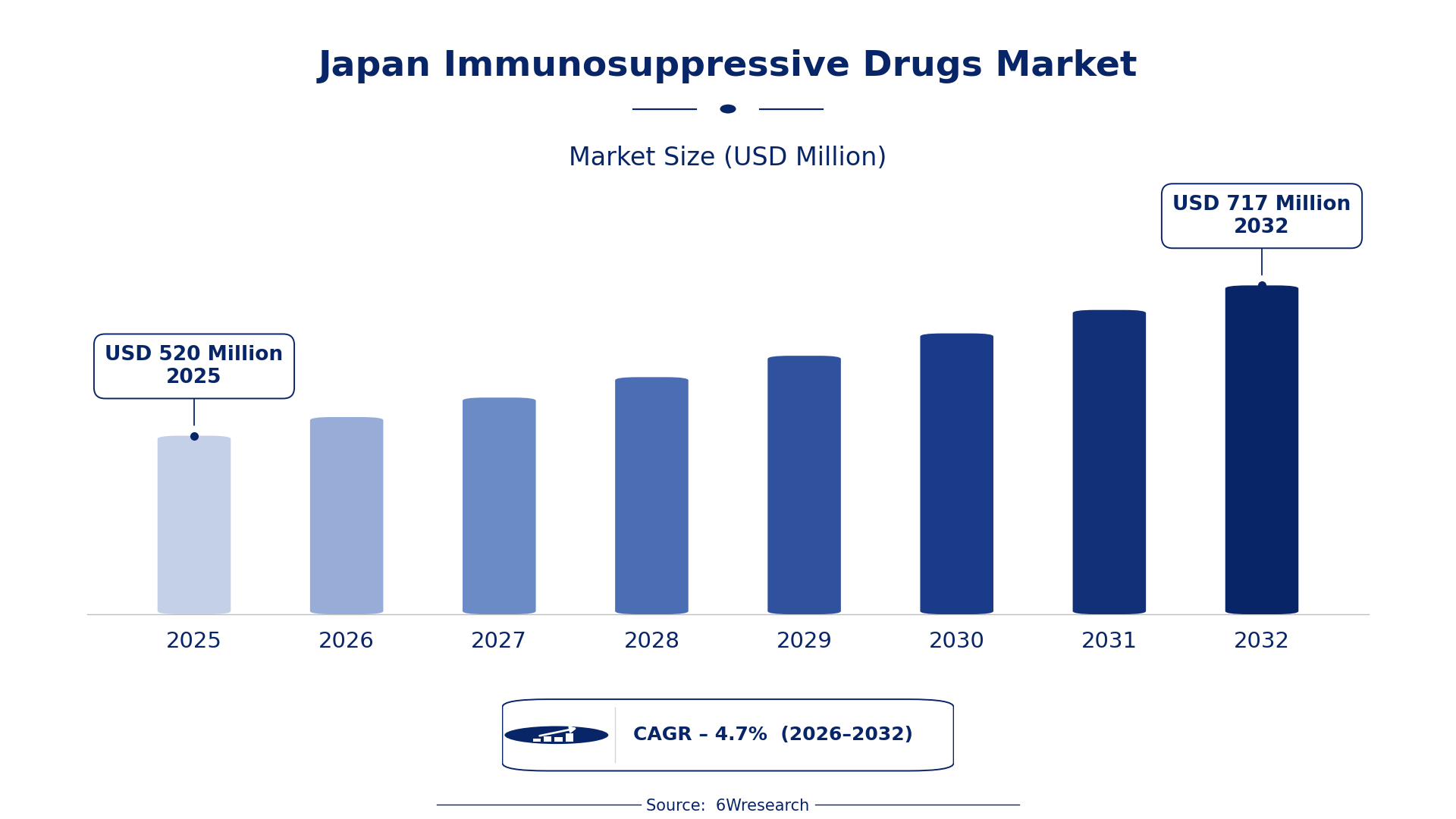
According to 6Wresearch internal database and industry insights, the Japan Immunosuppressive Drugs Market was valued at USD 520 Million in 2025 and is projected to reach USD 717 Million by 2032, growing at a CAGR of approximately 4.7% during 2026–2032.
Japan Immunosuppressive Drugs Market Highlights
| Report Metric | Details |
| Report Name | Japan Immunosuppressive Drugs Market (2026-2032) |
| Market Size 2025 | USD 520 Million |
| Market Size 2032 | USD 717 Million |
| Absolute Growth 2025–2032 | USD 197 Million |
| CAGR 2026–2032 | 4.7% |
| Peak Annual Growth | 5.4% in 2027 |
| Forecast Period | 2026–2032 |
| Historical Data | 2022–2025 |
| Base Year | 2025 |
| Leading Drug Category, 2025 | Short-Term Steroids (43% share) |
| Leading Duration of Therapy, 2025 | Acute Flare-Ups (41% share) |
| Leading Formulation Type, 2025 | Injectable/Oral (38% share) |
| Leading End User, 2025 | Emergency Care Units (40% share) |
| Fastest-Growing Drug Category | Long-Term Immunosuppressants (6.2% CAGR) |
| Fastest-Growing Duration of Therapy | Chronic Use (6.1% CAGR) |
| Fastest-Growing Formulation Type | Extended-Release Tablets (6.5% CAGR) |
| Fastest-Growing End User | Transplant Centers (6.3% CAGR) |
| Growing Sector | Transplant Centers |
| Key End Users | Emergency Care Units, Transplant Centers, Autoimmune Disease Clinics, Specialty Drug Clinics |
Japan Immunosuppressive Drugs Market Year-wise Growth Rate and Key Drivers (2022–2032)
This graph illustrates the annual growth rates of the market from 2022 to 2032, highlighting a steady upward trajectory and projected market expansion over the forecast period.
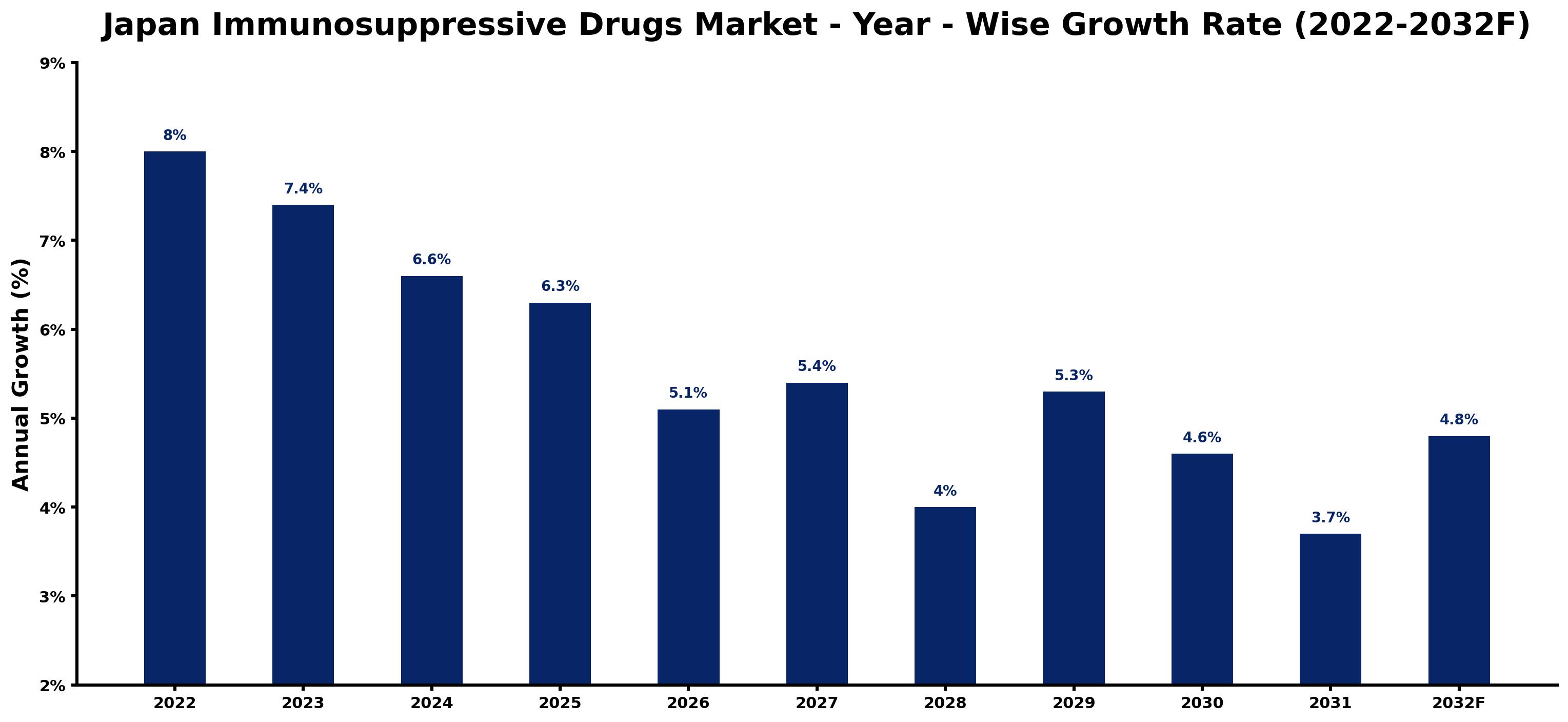
Annual growth estimates for each year appear below with the principal reason behind them, explaining the shifts that set the pace of the market.
| Year | Estimated Annual Growth (%) | Market Rationale |
| 2022 | 8.0 | The market experienced strong growth due to increased organ transplants and autoimmune disease treatments. |
| 2023 | 7.4 | Demand continued to rise, although at a slower pace as healthcare systems adjusted to new protocols. |
| 2024 | 6.6 | The market maintained growth, driven by a steady influx of patients needing immunosuppressive therapies. |
| 2025 | 6.3 | Growth slowed further, influenced by the saturation of certain treatment options in the market. |
| 2026 | 5.1 | A continued decrease in growth rate is expected as the market stabilises after rapid expansion. |
| 2027 | 5.4 | The market is projected to rebound with renewed interest in biologic therapies and combination treatments. |
| 2028 | 4.0 | Growth is anticipated to slow again as patient numbers stabilise and treatment protocols become more standardised. |
| 2029 | 5.3 | An uptick in growth is expected as new therapies enter the market and patient education improves. |
| 2030 | 4.6 | Growth is projected to slow as the market begins to face challenges from competition and regulatory changes. |
| 2031 | 3.7 | The market will continue to grow, albeit at a slower rate, as treatment options diversify. |
| 2032 | 4.8 | Growth is expected to accelerate again with advancements in biologic therapies and increased patient access. |
Note: Market size estimations and growth projections presented in this report are based on 6Wresearch's proprietary forecasting methodology, utilizing the latest available industry data, government publications, and primary research inputs.
Japan Immunosuppressive Drugs Market Synopsis
Immunosuppressive drugs are pharmaceutical agents used to inhibit immune system activity, primarily in organ transplantation and autoimmune diseases. The Japan Immunosuppressive Drugs Market is expanding due to the rising number of organ transplants, which exceeds 30,000 patients, and the growing prevalence of autoimmune diseases affecting 2-3% of the population. Factors such as the increasing use of combination therapies and government measures to improve access to biologic-based treatments are driving this growth. The average duration of therapy for transplant patients is over five years, underscoring the ongoing demand for these drugs.
Market Dynamics Impact Analysis (2026–2032)
| Factor | Type | Impact | Primary Segment Affected |
| Increasing number of organ transplants driving demand for immunosuppressive therapies. | Driver | High | Long-Term Immunosuppressants |
| Rising prevalence of autoimmune diseases necessitating effective treatment options. | Driver | High | Combination Therapy |
| Growing demand for personalized treatment plans in specialty drug clinics. | Opportunity | Medium | Specialty Drug Clinics |
| Expansion of transplant centers in urban areas creating new market potential. | Opportunity | Medium | Transplant Centers |
| High costs associated with biologic therapies limiting patient access. | Restraint | High | Biologic-Based |
| Regulatory hurdles in drug approval processes delaying new therapies. | Restraint | High | Injectable/Oral |
| Competition from alternative therapies affecting market share for traditional drugs. | Challenge | Medium | Short-Term Steroids |
| Limited awareness among patients regarding immunosuppressive therapy options. | Challenge | Medium | Emergency Care Units |
Evaluation of Drivers in Japan Immunosuppressive Drugs Market (2026–2032)
Below are the drivers that matter most for revenue growth, with supporting evidence.
| Drivers | Primary Segment Affected | Why It Matters (Evidence) |
| Rising organ transplant numbers increase demand for immunosuppressive drugs. | Long-Term Immunosuppressants | With over 30,000 patients receiving transplants, the need for effective long-term therapies is critical. |
| Growing prevalence of autoimmune diseases boosts treatment requirements. | Combination Therapy | Approximately 1.5 million patients treated for autoimmune diseases necessitate diverse therapeutic approaches. |
| Increased focus on personalized medicine improves treatment efficacy. | Specialty Drug Clinics | The growing number of specialty clinics provides tailored treatment plans for complex cases. |
| Government initiatives to improve access to biologic therapies expand market potential. | Biologic-Based | A new 2023 program aims to enhance patient access to biologic treatments, driving demand. |
| Rising patient education programs increase awareness and adherence to therapies. | Emergency Care Units | In 2023, educational programs are expected to improve patient understanding of immunosuppressive therapies. |
The strongest pull on demand comes from the increasing number of organ transplants, necessitating effective long-term immunosuppressive therapies. Approximately 1.5 million patients treated for autoimmune diseases drive the need for combination therapies that address complex conditions. The growing number of specialty clinics is improving patient outcomes through tailored treatment plans.
Evaluation of Restraints in Japan Immunosuppressive Drugs Market
The main factors holding the market back are set out below.
| Market Restraint | Primary Segment Affected | Why It Matters (Evidence) |
| High costs of biologic therapies limit patient access to necessary treatments. | Biologic-Based | The average cost of biologic therapies can exceed 1 million yen per patient, impacting affordability. |
| Regulatory hurdles delay the introduction of new immunosuppressive drugs. | Injectable/Oral | Lengthy approval processes can postpone access to new therapies for patients, sometimes exceeding two years. |
| Limited insurance coverage for certain immunosuppressive therapies restricts patient options. | Short-Term Steroids | Insurance policies may not fully cover all treatment regimens, affecting patient compliance. |
| Market saturation in certain drug categories leads to intense competition. | Combination Therapy | With many established therapies, new entrants struggle to gain market share in a crowded market. |
| Lack of awareness among healthcare providers regarding new treatment options. | Emergency Care Units | Some providers may not be fully informed about the latest immunosuppressive therapies available. |
Japan Immunosuppressive Drugs Market Challenges
Rising costs for hospitals in Japan stem from the average annual expense of over 1 million yen per patient for immunosuppressive therapy, straining healthcare budgets. Competition among producers leads to aggressive pricing strategies, which can compromise the quality of these drugs. Buyers face delays in drug approvals, with some therapies taking over two years to reach the market, hindering timely treatment for patients. Technological advancements are insufficient, leaving 1.5 million patients with autoimmune diseases dependent on outdated therapies that fail to address their evolving needs.
Trends in the Japan Immunosuppressive Drugs Market
Four trends stand out in the Japan Immunosuppressive Drugs Market.
- Shift towards Biologic Therapies: In 2023, a new program was launched to improve access to biologic therapies, reflecting a growing trend towards targeted treatments. This shift is expected to improve patient outcomes and expand market opportunities, with funding allocated for research.
- Increase in Specialty Drug Clinics: The Tokyo region has seen a rise in specialty drug clinics focusing on personalised treatment plans. This growth, with over 100 clinics now operating, is reshaping how immunosuppressive therapies are delivered.
- Growing Use of Combination Therapies: Combination therapies are increasingly utilised in transplant cases, highlighting a shift towards more effective treatment protocols. This trend is driven by the need for comprehensive management of complex conditions, with 70% of transplant cases employing such approaches.
- Rising Patient Education Initiatives: In 2023, a new program was introduced to improve patient education on immunosuppressive therapies. This initiative aims to enhance adherence and understanding of treatment regimens among patients, impacting over 30,000 transplant recipients.
Investment Opportunities in the Japan Immunosuppressive Drugs Market
The following areas offer the clearest openings for investors and suppliers in the Japan Immunosuppressive Drugs Market.
- Partnerships with Specialty Clinics: Establishing partnerships with specialty drug clinics can facilitate access to personalised treatment plans. With the number of clinics growing to over 100, there is an opportunity to improve patient care and outcomes.
- Investment in Biologic-Based Therapies: The increasing demand for biologic therapies presents a prime investment opportunity. The government’s 2023 initiative aims to improve access, making this a timely focus for suppliers looking to enter the market.
- Development of Extended-Release Formulations: There is a growing need for extended-release formulations to improve patient adherence. With the rise of chronic therapy regimens, this segment offers potential for innovation and better patient compliance.
- Expansion into Urban Transplant Centers: Urban transplant centers are expanding, creating opportunities for suppliers to meet rising demand. Focusing on these centers can enhance market penetration and service delivery, with over 100 centers currently operational.
Government Initiatives in the Japan Immunosuppressive Drugs Market
The NHI drug price standard, revised regularly, establishes reimbursement prices for immunosuppressive drugs, ensuring that patients can afford necessary treatments. The PMD Act regulates the approval and quality of pharmaceuticals, including immunosuppressive drugs, ensuring safety and efficacy in the market. In 2023, the Japanese government allocated funds for research on immunosuppressive drug efficacy, benefiting both producers and patients.
In 2023, the Japanese government allocated funds for research on immunosuppressive drug efficacy, administered by AMED, which supports medical research and development. This funding aims to improve the understanding and effectiveness of these therapies, benefiting both producers and patients.
Future Insight of the Japan Immunosuppressive Drugs Market
Investment in immunosuppressive drug research will increase by 2032, driven by government funding and a focus on biologic therapies, creating a demand for innovative treatment options. Enhanced patient education programs will empower buyers to make informed treatment choices. The number of transplant centres will expand, facilitating improved access to therapies. Growing specialty drug clinics will enable personalised treatment plans, fostering better adherence and health outcomes for patients.
Market Segmentation Analysis
Japan Immunosuppressive Drugs Market report covers a detailed analysis of the following market segments:
By Drug Category – Short-Term Steroids Lead, Long-Term Immunosuppressants Expected to Grow Fastest
According to Saurav Kr Singh, Senior Research Analyst at 6Wresearch, the largest drug category category in 2025 was Short-Term Steroids, at 43% of revenue. Short-term steroids hold the largest share due to their critical role in the immediate management of inflammation during acute conditions. For instance, they are commonly used in over 30,000 organ transplant patients across Japan, ensuring effective post-operative care. Long-Term Immunosuppressants are set to record the highest CAGR in this split, 6.2% over 2026–2032. Long-term immunosuppressants are experiencing rapid growth as they are essential for maintaining immune suppression in transplant patients over extended periods. The average therapy duration of over 5 years highlights the increasing reliance on these drugs for long-term patient management. Suppliers should focus on developing long-term immunosuppressants to meet the growing demand in transplant care.
By Duration of Therapy – Acute Flare-Ups Lead, Chronic Use Expected to Grow Fastest
Acute Flare-Ups accounted for 41% of the market by duration of therapy in 2025. Acute flare-ups hold the largest share due to their critical role in managing sudden exacerbations of chronic diseases, particularly among the 1.5 million patients treated for autoimmune diseases in Japan. This urgent requirement for immediate intervention solidifies the importance of acute therapies in the market. The quickest growth will come from Chronic Use, forecast to expand at a CAGR of 6.1% between 2026 and 2032. Chronic use is expanding rapidly, driven by the necessity for long-term management of transplant patients. The average therapy duration of over 5 years highlights the sustained demand for these medications, ensuring their continued relevance in treatment protocols. Buyers will increasingly prioritise long-term therapy options to effectively manage chronic conditions.
By Formulation Type – Injectable/Oral Leads, Extended-Release Tablets Expected to Grow Fastest
Injectable/Oral held 38% of the Japan Immunosuppressive Drugs Market by formulation type in 2025. Injectable/oral formulations dominate the market as they provide necessary flexibility and compliance for patients requiring immunosuppressive therapy. Their versatility is vital for addressing the diverse needs of over 30,000 transplant patients in Japan. Extended-Release Tablets are projected to grow fastest, at a CAGR of 6.5% during 2026–2032. Extended-release tablets are growing rapidly due to their ability to offer stable dosing for chronic conditions, appealing to patients needing consistent medication management. This trend is particularly relevant as chronic use becomes more prevalent among transplant recipients. Suppliers should consider expanding their offerings of extended-release formulations to cater to the evolving preferences of patients.
By End User – Emergency Care Units Lead, Transplant Centers Expected to Grow Fastest
With 40% of end user revenue in 2025, Emergency Care Units was the largest category. Emergency care units hold the largest share due to their critical role in the immediate treatment of acute transplant rejection, essential for patient survival. With over 100 transplant centers in Japan, these units are indispensable for ensuring timely interventions during post-operative care. Over 2026–2032, Transplant Centers are expected to post the fastest growth, at a CAGR of 6.3%. Transplant centers exhibit the fastest growth as they are the primary users of immunosuppressive therapies, driven by the increasing number of organ transplants exceeding 30,000 patients. This trend indicates a sustained demand for these therapies, further solidifying their position in the market. Suppliers should prioritise partnerships with transplant centers to secure a consistent supply of immunosuppressive drugs.
Key Attractiveness of the Report
- 10 Years of Market Numbers
- Historical Data Starting from 2022 to 2025
- Base Year 2025
- Forecast Data until 2032
- Key Performance Indicators Impacting the Market
- Major Upcoming Developments and Projects
Key Highlights of the Report:
- Japan Immunosuppressive Drugs Market Outlook
- Market Size of Japan Immunosuppressive Drugs Market, 2025
- Forecast of Japan Immunosuppressive Drugs Market, 2032
- Historical Data and Forecast of Japan Immunosuppressive Drugs Revenues & Volume for the Period 2022-2032F
- Japan Immunosuppressive Drugs Market Trend Evolution
- Japan Immunosuppressive Drugs Market Drivers and Challenges
- Japan Immunosuppressive Drugs Price Trends
- Japan Immunosuppressive Drugs Porter's Five Forces
- Japan Immunosuppressive Drugs Industry Life Cycle
- Historical Data and Forecast of Japan Immunosuppressive Drugs Market Revenues & Volume By Drug Category for the Period 2022-2032F
- Historical Data and Forecast of Japan Immunosuppressive Drugs Market Revenues & Volume By Short-Term Steroids for the Period 2022-2032F
- Historical Data and Forecast of Japan Immunosuppressive Drugs Market Revenues & Volume By Long-Term Immunosuppressants for the Period 2022-2032F
- Historical Data and Forecast of Japan Immunosuppressive Drugs Market Revenues & Volume By Combination Therapy for the Period 2022-2032F
- Historical Data and Forecast of Japan Immunosuppressive Drugs Market Revenues & Volume By Biologic-Based for the Period 2022-2032F
- Historical Data and Forecast of Japan Immunosuppressive Drugs Market Revenues & Volume By Duration of Therapy for the Period 2022-2032F
- Historical Data and Forecast of Japan Immunosuppressive Drugs Market Revenues & Volume By Acute Flare-Ups for the Period 2022-2032F
- Historical Data and Forecast of Japan Immunosuppressive Drugs Market Revenues & Volume By Chronic Use for the Period 2022-2032F
- Historical Data and Forecast of Japan Immunosuppressive Drugs Market Revenues & Volume By Multi-Drug Regimens for the Period 2022-2032F
- Historical Data and Forecast of Japan Immunosuppressive Drugs Market Revenues & Volume By Selective Immune Modulation for the Period 2022-2032F
- Historical Data and Forecast of Japan Immunosuppressive Drugs Market Revenues & Volume By Formulation Type for the Period 2022-2032F
- Historical Data and Forecast of Japan Immunosuppressive Drugs Market Revenues & Volume By Injectable/Oral for the Period 2022-2032F
- Historical Data and Forecast of Japan Immunosuppressive Drugs Market Revenues & Volume By Extended-Release Tablets for the Period 2022-2032F
- Historical Data and Forecast of Japan Immunosuppressive Drugs Market Revenues & Volume By Fixed Dose Combinations for the Period 2022-2032F
- Historical Data and Forecast of Japan Immunosuppressive Drugs Market Revenues & Volume By Subcutaneous Injection for the Period 2022-2032F
- Historical Data and Forecast of Japan Immunosuppressive Drugs Market Revenues & Volume By End User for the Period 2022-2032F
- Historical Data and Forecast of Japan Immunosuppressive Drugs Market Revenues & Volume By Emergency Care Units for the Period 2022-2032F
- Historical Data and Forecast of Japan Immunosuppressive Drugs Market Revenues & Volume By Transplant Centers for the Period 2022-2032F
- Historical Data and Forecast of Japan Immunosuppressive Drugs Market Revenues & Volume By Autoimmune Disease Clinics for the Period 2022-2032F
- Historical Data and Forecast of Japan Immunosuppressive Drugs Market Revenues & Volume By Specialty Drug Clinics for the Period 2022-2032F
- Japan Immunosuppressive Drugs Import Export Trade Statistics
- Market Opportunity Assessment By Drug Category
- Market Opportunity Assessment By Duration of Therapy
- Market Opportunity Assessment By Formulation Type
- Market Opportunity Assessment By End User
- Japan Immunosuppressive Drugs Top Companies Market Share
- Japan Immunosuppressive Drugs Competitive Benchmarking By Technical and Operational Parameters
- Japan Immunosuppressive Drugs Company Profiles
- Japan Immunosuppressive Drugs Key Strategic Recommendations
Market Covered
The study includes the following segmentation.
By Drug Category
- Short-Term Steroids
- Long-Term Immunosuppressants
- Combination Therapy
- Biologic-Based
By Duration of Therapy
- Acute Flare-Ups
- Chronic Use
- Multi-Drug Regimens
- Selective Immune Modulation
By Formulation Type
- Injectable/Oral
- Extended-Release Tablets
- Fixed Dose Combinations
- Subcutaneous Injection
By End User
- Emergency Care Units
- Transplant Centers
- Autoimmune Disease Clinics
- Specialty Drug Clinics































