Japan Immunosuppressive Therapy Market Size & Growth Rate
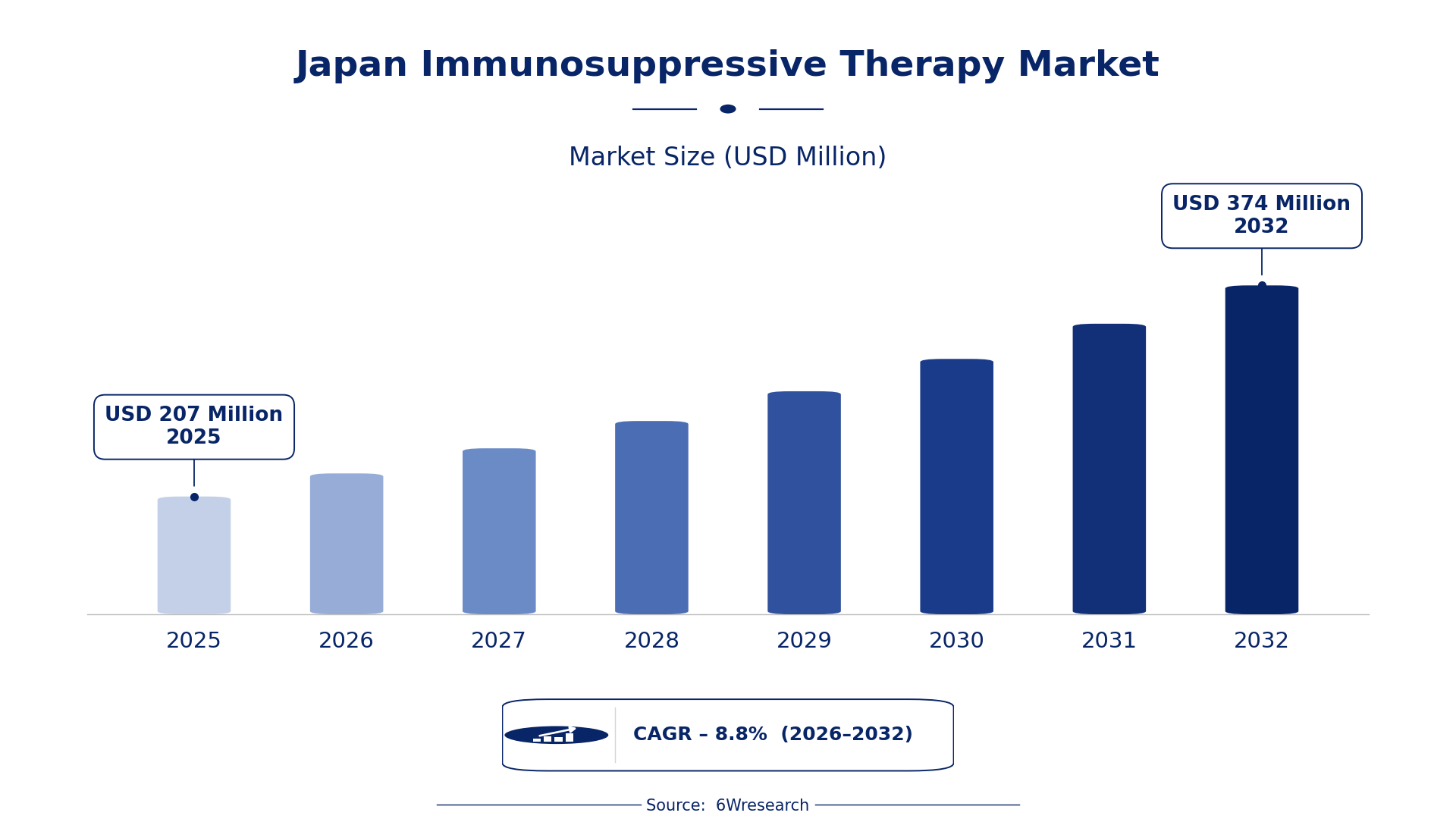
According to 6Wresearch internal database and industry insights, the Japan Immunosuppressive Therapy Market was valued at USD 207 Million in 2025 and is projected to reach USD 374 Million by 2032, growing at a CAGR of approximately 8.8% during 2026–2032.
Japan Immunosuppressive Therapy Market Highlights
| Report Metric | Details |
| Report Name | Japan Immunosuppressive Therapy Market (2026-2032) |
| Market Size 2025 | USD 207 Million |
| Market Size 2032 | USD 374 Million |
| Absolute Growth 2025–2032 | USD 167 Million |
| CAGR 2026–2032 | 8.8% |
| Peak Annual Growth | 9.9% in 2026 |
| Forecast Period | 2026–2032 |
| Historical Data | 2022–2025 |
| Base Year | 2025 |
| Leading Therapy Type, 2025 | Induction Therapy (40% share) |
| Leading Patient Type, 2025 | Transplant Recipients (50% share) |
| Leading Administration Site, 2025 | Hospital IV Unit (35% share) |
| Leading End User, 2025 | Organ Transplant Centers (44% share) |
| Fastest-Growing Therapy Type | Maintenance Therapy (11.3% CAGR) |
| Fastest-Growing Patient Type | Autoimmune Disease Patients (11.9% CAGR) |
| Fastest-Growing Administration Site | Outpatient Injection (11.1% CAGR) |
| Fastest-Growing End User | Immunology Departments (11.2% CAGR) |
| Growing Sector | Immunology Departments |
| Key End Users | Organ Transplant Centers, Immunology Departments, Rheumatology Hospitals, Home Healthcare Providers |
Japan Immunosuppressive Therapy Market Year-wise Growth Rate and Key Drivers (2022–2032)
This graph illustrates the annual growth rates of the market from 2022 to 2032, highlighting a steady upward trajectory and projected market expansion over the forecast period.
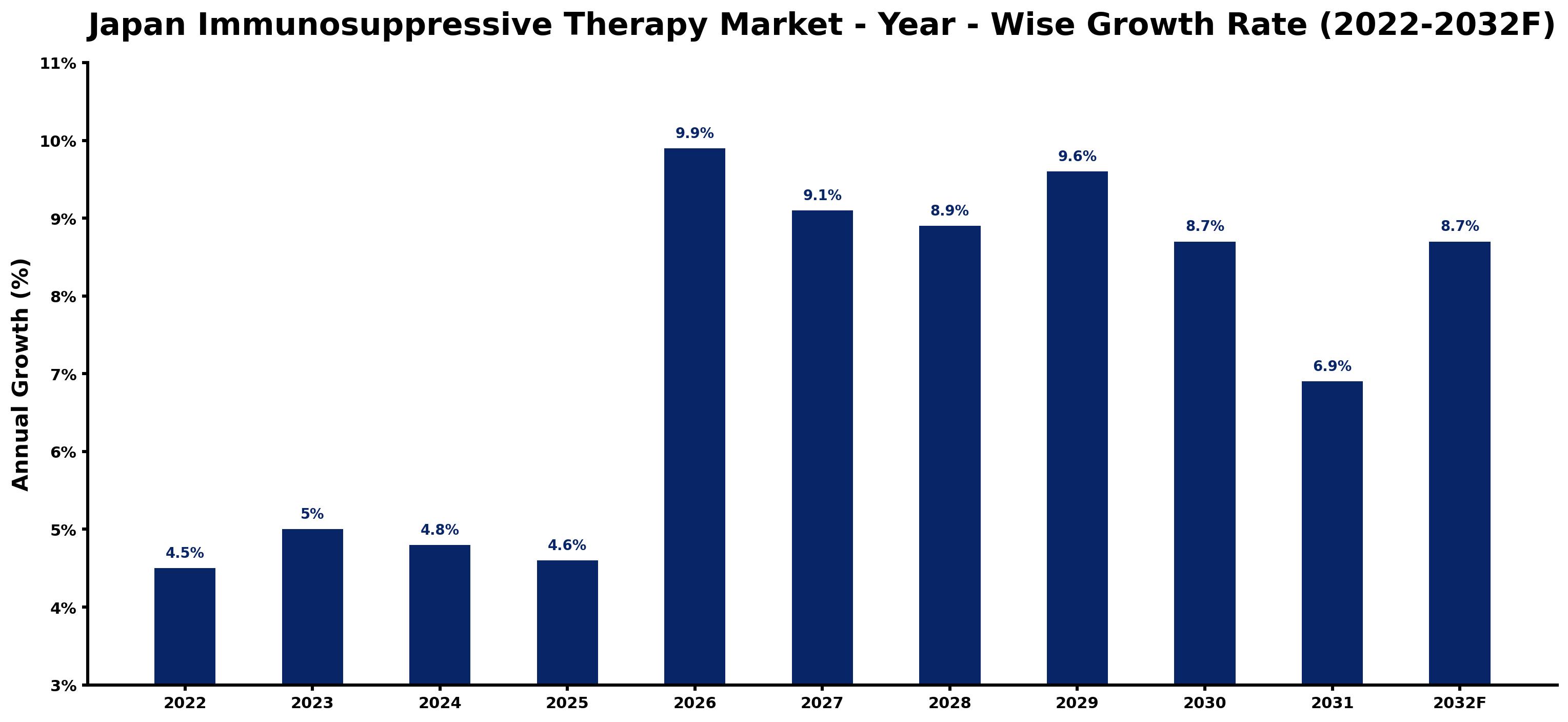
The yearly estimates that follow link every growth rate to its principal driver, so readers can see why the pace changed in each period.
| Year | Estimated Annual Growth (%) | Market Rationale |
| 2022 | 4.5 | The market experienced steady growth due to established transplant procedures and ongoing demand. |
| 2023 | 5.0 | Growth accelerated as more organ transplants were performed, reflecting improved healthcare practices. |
| 2024 | 4.8 | Growth slowed slightly as the market adjusted to previous high rates of expansion. |
| 2025 | 4.6 | The market maintained stable growth as healthcare providers continued to adopt immunosuppressive therapies. |
| 2026 | 9.9 | Growth surged as advancements in transplant success rates generated increased demand for therapies. |
| 2027 | 9.1 | Market growth slowed as the rate of new transplant procedures stabilised. |
| 2028 | 8.9 | Demand continued to rise but at a slower pace as market saturation approached. |
| 2029 | 9.6 | Growth picked up again as awareness of autoimmune disease treatments expanded among healthcare providers. |
| 2030 | 8.7 | The market experienced a slight slowdown as competition among therapy types intensified. |
| 2031 | 6.9 | Growth continued to decelerate as the market matured and patient needs evolved. |
| 2032 | 8.7 | Demand is expected to rise again as new guidelines for autoimmune therapies are implemented. |
Note: Market size estimations and growth projections presented in this report are based on 6Wresearch's proprietary forecasting methodology, utilizing the latest available industry data, government publications, and primary research inputs.
Japan Immunosuppressive Therapy Market Synopsis
Immunosuppressive therapy involves using drugs to prevent rejection of transplanted organs and manage autoimmune diseases. These therapies are essential for organ transplantation and treating conditions like rheumatoid arthritis. The Japan Immunosuppressive Therapy Market is expanding due to increasing organ transplant procedures, with approximately 30,000 transplants performed in 2022. The average patient population for autoimmune diseases is around 1 million, driving demand for effective treatment options. Healthcare initiatives and regional support in areas like Tokyo and Osaka further contribute to market growth.
Market Dynamics Impact Analysis (2026–2032)
| Factor | Type | Impact | Primary Segment Affected |
| Increasing organ transplant procedures drive demand for immunosuppressive therapy. | Driver | High | Transplant Recipients |
| Growing patient population for autoimmune diseases creates a larger market for therapies. | Driver | High | Autoimmune Disease Patients |
| Expansion of outpatient clinics providing immunosuppressive therapy presents new market opportunities. | Opportunity | High | Outpatient Injection |
| Home healthcare services are increasingly focusing on immunosuppressive therapy, creating demand. | Opportunity | Medium | Home Healthcare Providers |
| Limited availability of specific immunosuppressive drugs can hinder treatment options. | Restraint | High | Transplant Recipients |
| Stringent quality standards for immunosuppressive drugs may restrict market entry for new products. | Restraint | Medium | Autoimmune Disease Patients |
| High costs associated with long-term immunosuppressive therapy can deter patient adherence. | Challenge | High | Transplant Recipients |
| Capacity limitations in organ transplant centers may restrict the number of procedures performed. | Challenge | Medium | Organ Transplant Centers |
Evaluation of Drivers in Japan Immunosuppressive Therapy Market (2026–2032)
The main growth drivers and the segments they affect most are set out below.
| Drivers | Primary Segment Affected | Why It Matters (Evidence) |
| Increased organ transplant procedures | Transplant Recipients | Approximately 30,000 organ transplants were performed in 2022, boosting therapy demand. |
| Rising awareness of autoimmune diseases | Autoimmune Disease Patients | The average patient population for autoimmune diseases is around 1 million, increasing therapy needs. |
| Expansion of outpatient clinics | Outpatient Injection | The number of outpatient clinics providing immunosuppressive therapy has increased by 15% since 2020. |
| Growth in home healthcare services | Home Healthcare Providers | The average number of patients receiving home healthcare services has risen, focusing on immunosuppressive therapy. |
| Development of new treatment guidelines | Autoimmune Disease Patients | A new guideline for managing autoimmune therapies was published in 2023, improving treatment options. |
Buyers are adding capacity as approximately 30,000 organ transplants were performed in 2022, leading to increased demand for immunosuppressive therapies. The average patient population for autoimmune diseases in Japan is around 1 million, prompting healthcare providers to seek effective treatment options. The expansion of outpatient clinics has risen by 15% since 2020, making therapies more accessible. The publication of new guidelines for autoimmune therapies in 2023 further supports demand as healthcare providers adapt to evolving treatment protocols. Home healthcare services are growing, focusing on immunosuppressive therapy to improve patient convenience.
Evaluation of Restraints in Japan Immunosuppressive Therapy Market
These are the pressures that could keep growth below its potential.
| Market Restraint | Primary Segment Affected | Why It Matters (Evidence) |
| Limited availability of specific immunosuppressive drugs | Transplant Recipients | The average wait time for organ transplants in Japan is 3 years, impacting therapy access. |
| Stringent quality standards for immunosuppressive drugs | Autoimmune Disease Patients | JIS standards applied to drug quality can restrict new product entry into the market. |
| High costs associated with long-term therapy | Transplant Recipients | Patients face financial burdens, affecting adherence to prescribed therapies. |
| Capacity limitations in transplant centers | Organ Transplant Centers | The number of organ transplants performed may be limited by available healthcare resources. |
| Regulatory hurdles for new therapies | Autoimmune Disease Patients | Compliance with complex regulations can delay the introduction of new treatment options. |
Japan Immunosuppressive Therapy Market Challenges
High costs of immunosuppressive drugs often exceed ¥1 million annually per patient, restricting access for many individuals needing treatment. Organ transplant wait times average three years, causing distress and delaying necessary procedures for around 30,000 recipients each year. Supply chain disruptions for active pharmaceutical ingredients can lead to shortages, impacting the availability of essential therapies for approximately 300,000 individuals. A shortage of skilled professionals in immunology hampers treatment efficiency, increasing the burden on healthcare providers and affecting outcomes for patients relying on these therapies.
Trends in the Japan Immunosuppressive Therapy Market
Buyers and suppliers in the Japan Immunosuppressive Therapy Market are adjusting to the following trends.
- Shift towards Home Healthcare Services: Home healthcare providers are increasingly focusing on immunosuppressive therapy, with a growing number of patients opting for at-home treatment. This shift is evidenced by a 15% increase in outpatient clinics since 2020, making therapies more accessible.
- Expansion of Outpatient Clinics: The rise in outpatient clinics is reshaping how immunosuppressive therapies are administered, with a 15% increase noted since 2020. This trend allows for more convenient treatment options for patients, improving overall care.
- Introduction of New Treatment Guidelines: A new guideline for managing autoimmune therapies was published in 2023, impacting treatment protocols for healthcare providers. This change aims to improve patient outcomes and aligns with evolving medical standards.
- Increased Focus on Autoimmune Disease Awareness: Awareness programs for autoimmune diseases are expanding, highlighting the need for effective therapies. This trend is supported by the average patient population of around 1 million, driving demand for immunosuppressive treatments.
Investment Opportunities in the Japan Immunosuppressive Therapy Market
The following opportunities in the Japan Immunosuppressive Therapy Market pair current demand with a clear way in.
- Growth in Outpatient Injection Facilities: Tokyo and Osaka are major regions for outpatient clinics, with a 15% increase since 2020. Investing in these facilities can meet the rising demand for immunosuppressive therapies.
- Expansion of Home Healthcare Services: With the average patient population for autoimmune diseases around 1 million, there is a growing need for home healthcare providers. Collaborating with local partners can facilitate market entry.
- Investment in Organ Transplant Centers: The government allocated ¥5 billion for transplant-related healthcare improvements in 2023, creating opportunities for investment in organ transplant centers. This funding can improve service delivery and patient care.
- Development of New Therapies: The publication of new guidelines in 2023 creates opportunities for developing new therapies. Engaging with research institutions can foster collaboration and expedite product development.
Government Initiatives in the Japan Immunosuppressive Therapy Market
The Next-Generation Medical Infrastructure Act (2017) allows for the anonymisation of medical data, facilitating research and development in immunosuppressive therapies. This measure enables producers to innovate while ensuring compliance with privacy regulations, ultimately benefiting patients by improving treatment options.
The Ministry of Health oversees the approval of new therapies and allocates funding for transplant-related healthcare improvements. In 2023, the government allocated ¥5 billion to improve transplant success rates, directly impacting the availability of immunosuppressive therapies for patients.
Future Insight of the Japan Immunosuppressive Therapy Market
A policy-driven shift will focus on improving transplant success rates, prompting suppliers to innovate in drug formulations. Updated JIS standards will ensure higher quality in immunosuppressive therapies, providing buyers with more reliable options. Home healthcare services will expand, allowing individuals to manage their treatments more effectively. By 2032, the installed base of immunosuppressive therapy patients is expected to reach 400,000, reflecting increased demand and support for these critical therapies.
Market Segmentation Analysis
Japan Immunosuppressive Therapy Market report covers a detailed analysis of the following market segments:
By Therapy Type – Induction Therapy Leads, Maintenance Therapy Expected to Grow Fastest
According to Saurav Kr Singh, Senior Research Analyst at 6Wresearch, Induction Therapy held 40% of the Japan Immunosuppressive Therapy Market by therapy type in 2025. Induction Therapy holds the largest share due to its crucial role as the initial treatment for transplant patients, ensuring successful organ acceptance. The approximately 30,000 organ transplants performed in Japan in 2022 exemplify the reliance on this therapy to establish a solid foundation for transplant success. The quickest growth will come from Maintenance Therapy, forecast to expand at a CAGR of 11.3% between 2026 and 2032. Maintenance Therapy is experiencing rapid growth as the need for continuous treatment to prevent organ rejection becomes more pronounced among patients. With around 200,000 individuals currently receiving immunosuppressive therapy, the demand for effective long-term management solutions is set to rise, further driving this segment's growth. This indicates that suppliers must focus on developing and providing effective long-term treatment options to cater to the increasing patient population.
By Patient Type – Transplant Recipients Lead, Autoimmune Disease Patients Expected to Grow Fastest
With 50% of patient type revenue in 2025, Transplant Recipients was the largest category. Transplant Recipients form the largest user group for immunosuppressive therapy, as these patients rely on these drugs to ensure their bodies accept transplanted organs. The high volume of organ transplants performed annually reinforces the importance of this segment in the market. Autoimmune Disease Patients are projected to grow fastest, at a CAGR of 11.9% during 2026–2032. Autoimmune Disease Patients represent the fastest-growing group due to the rising incidence of autoimmune disorders, with around 1 million individuals affected in Japan. The introduction of new guidelines for managing these therapies is likely to further accelerate this segment's growth. Buyers should prepare for an upsurge in specialised therapies targeting autoimmune conditions.
By Administration Site – Hospital IV Unit Leads, Outpatient Injection Expected to Grow Fastest
In 2025, Hospital IV Unit led the administration site split with a 35% share. Hospital IV Units dominate the market as the primary administration site for immunosuppressive therapy, providing essential care for transplant patients. These units are integral to the treatment process, ensuring proper drug delivery and monitoring. Over 2026–2032, Outpatient Injection is expected to post the fastest growth, at a CAGR of 11.1%. Outpatient Injection is rapidly gaining traction as a preferred method for ongoing treatment, reflecting the shift towards more accessible healthcare solutions. The increase in outpatient clinics providing immunosuppressive therapy by 15% since 2020 indicates a growing trend in this direction. Suppliers must adapt to the demand for outpatient solutions to remain competitive.
By End User – Organ Transplant Centers Lead, Immunology Departments Expected to Grow Fastest
The largest end user category in 2025 was Organ Transplant Centers, at 44% of revenue. Organ Transplant Centers are the leading end users of immunosuppressive therapy, as they are the primary facilities responsible for administering these critical treatments. Their central role in the transplant process solidifies their position in the market. Immunology Departments are set to record the highest CAGR in this split, 11.2% over 2026–2032. Immunology Departments are experiencing the fastest growth as they expand their focus on treating autoimmune diseases, which are increasingly prevalent. This shift is supported by the Japan Rheumatology Association's commitment to research in this area. Suppliers should engage with immunology departments to align their products with emerging treatment protocols.
Key Attractiveness of the Report
- 10 Years of Market Numbers
- Historical Data Starting from 2022 to 2025
- Base Year 2025
- Forecast Data until 2032
- Key Performance Indicators Impacting the Market
- Major Upcoming Developments and Projects
Key Highlights of the Report:
- Japan Immunosuppressive Therapy Market Outlook
- Market Size of Japan Immunosuppressive Therapy Market, 2025
- Forecast of Japan Immunosuppressive Therapy Market, 2032
- Historical Data and Forecast of Japan Immunosuppressive Therapy Revenues & Volume for the Period 2022-2032F
- Japan Immunosuppressive Therapy Market Trend Evolution
- Japan Immunosuppressive Therapy Market Drivers and Challenges
- Japan Immunosuppressive Therapy Price Trends
- Japan Immunosuppressive Therapy Porter's Five Forces
- Japan Immunosuppressive Therapy Industry Life Cycle
- Historical Data and Forecast of Japan Immunosuppressive Therapy Market Revenues & Volume By Therapy Type for the Period 2022-2032F
- Historical Data and Forecast of Japan Immunosuppressive Therapy Market Revenues & Volume By Induction Therapy for the Period 2022-2032F
- Historical Data and Forecast of Japan Immunosuppressive Therapy Market Revenues & Volume By Maintenance Therapy for the Period 2022-2032F
- Historical Data and Forecast of Japan Immunosuppressive Therapy Market Revenues & Volume By Pulse Therapy for the Period 2022-2032F
- Historical Data and Forecast of Japan Immunosuppressive Therapy Market Revenues & Volume By Combination Therapy for the Period 2022-2032F
- Historical Data and Forecast of Japan Immunosuppressive Therapy Market Revenues & Volume By Patient Type for the Period 2022-2032F
- Historical Data and Forecast of Japan Immunosuppressive Therapy Market Revenues & Volume By Transplant Recipients for the Period 2022-2032F
- Historical Data and Forecast of Japan Immunosuppressive Therapy Market Revenues & Volume By Autoimmune Disease Patients for the Period 2022-2032F
- Historical Data and Forecast of Japan Immunosuppressive Therapy Market Revenues & Volume By Severe Disease Flare-Ups for the Period 2022-2032F
- Historical Data and Forecast of Japan Immunosuppressive Therapy Market Revenues & Volume By Multi-System Disorders for the Period 2022-2032F
- Historical Data and Forecast of Japan Immunosuppressive Therapy Market Revenues & Volume By Administration Site for the Period 2022-2032F
- Historical Data and Forecast of Japan Immunosuppressive Therapy Market Revenues & Volume By Hospital IV Unit for the Period 2022-2032F
- Historical Data and Forecast of Japan Immunosuppressive Therapy Market Revenues & Volume By Outpatient Injection for the Period 2022-2032F
- Historical Data and Forecast of Japan Immunosuppressive Therapy Market Revenues & Volume By Daycare Infusion for the Period 2022-2032F
- Historical Data and Forecast of Japan Immunosuppressive Therapy Market Revenues & Volume By In-Clinic & At-Home for the Period 2022-2032F
- Historical Data and Forecast of Japan Immunosuppressive Therapy Market Revenues & Volume By End User for the Period 2022-2032F
- Historical Data and Forecast of Japan Immunosuppressive Therapy Market Revenues & Volume By Organ Transplant Centers for the Period 2022-2032F
- Historical Data and Forecast of Japan Immunosuppressive Therapy Market Revenues & Volume By Immunology Departments for the Period 2022-2032F
- Historical Data and Forecast of Japan Immunosuppressive Therapy Market Revenues & Volume By Rheumatology Hospitals for the Period 2022-2032F
- Historical Data and Forecast of Japan Immunosuppressive Therapy Market Revenues & Volume By Home Healthcare Providers for the Period 2022-2032F
- Japan Immunosuppressive Therapy Import Export Trade Statistics
- Market Opportunity Assessment By Therapy Type
- Market Opportunity Assessment By Patient Type
- Market Opportunity Assessment By Administration Site
- Market Opportunity Assessment By End User
- Japan Immunosuppressive Therapy Top Companies Market Share
- Japan Immunosuppressive Therapy Competitive Benchmarking By Technical and Operational Parameters
- Japan Immunosuppressive Therapy Company Profiles
- Japan Immunosuppressive Therapy Key Strategic Recommendations
Market Covered
The following segment groups are covered in the report.
By Therapy Type
- Induction Therapy
- Maintenance Therapy
- Pulse Therapy
- Combination Therapy
By Patient Type
- Transplant Recipients
- Autoimmune Disease Patients
- Severe Disease Flare-Ups
- Multi-System Disorders
By Administration Site
- Hospital IV Unit
- Outpatient Injection
- Daycare Infusion
- In-Clinic & At-Home
By End User
- Organ Transplant Centers
- Immunology Departments
- Rheumatology Hospitals
- Home Healthcare Providers































