Japan Immunotherapy for Anemia Market Size & Growth Rate
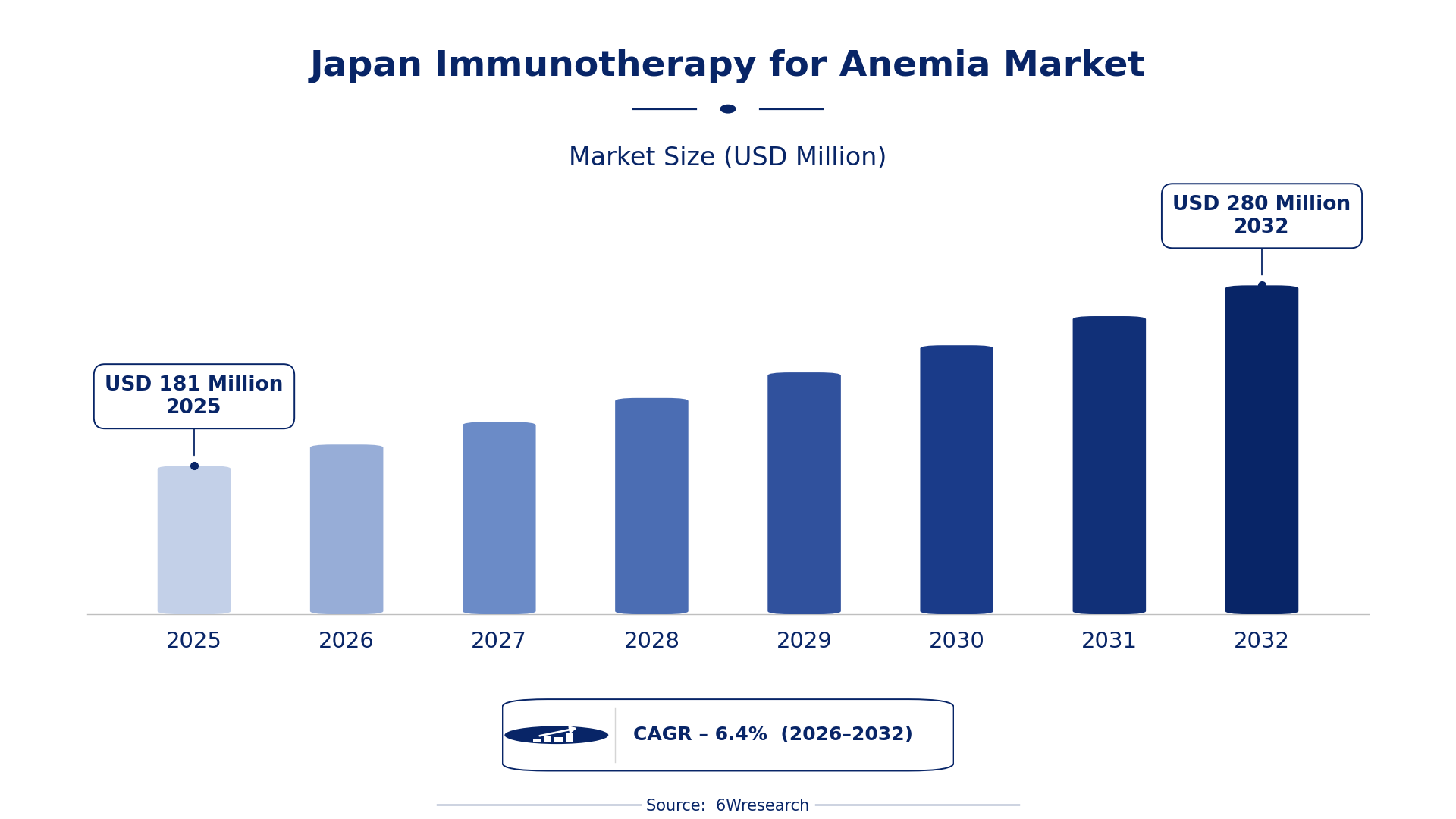
According to 6Wresearch internal database and industry insights, the Japan Immunotherapy for Anemia Market was valued at USD 181 Million in 2025 and is projected to reach USD 280 Million by 2032, growing at a CAGR of approximately 6.4% during 2026–2032.
Japan Immunotherapy for Anemia Market Highlights
| Report Metric | Details |
| Report Name | Japan Immunotherapy for Anemia Market (2026-2032) |
| Market Size 2025 | USD 181 Million |
| Market Size 2032 | USD 280 Million |
| Absolute Growth 2025–2032 | USD 99 Million |
| CAGR 2026–2032 | 6.4% |
| Peak Annual Growth | 7.7% in 2032 |
| Forecast Period | 2026–2032 |
| Historical Data | 2022–2025 |
| Base Year | 2025 |
| Leading Therapy Type, 2025 | Monoclonal Antibodies (42% share) |
| Leading Drug Class, 2025 | Anti-hepcidin Agents (43% share) |
| Leading Administration Route, 2025 | IV/SC (39% share) |
| Leading End User, 2025 | Hematology Clinics (38% share) |
| Fastest-Growing Therapy Type | Combination Therapies (9.1% CAGR) |
| Fastest-Growing Administration Route | Injectable (8.5% CAGR) |
| Fastest-Growing End User | Specialty Hospitals (8.6% CAGR) |
| Growing Sector | Hematology and Oncology |
| Key End Users | Hematology Clinics, Specialty Hospitals, Research Hospitals, Oncology Units |
Japan Immunotherapy for Anemia Market Year-wise Growth Rate and Key Drivers (2022–2032)
This graph illustrates the annual growth rates of the market from 2022 to 2032, highlighting a steady upward trajectory and projected market expansion over the forecast period.
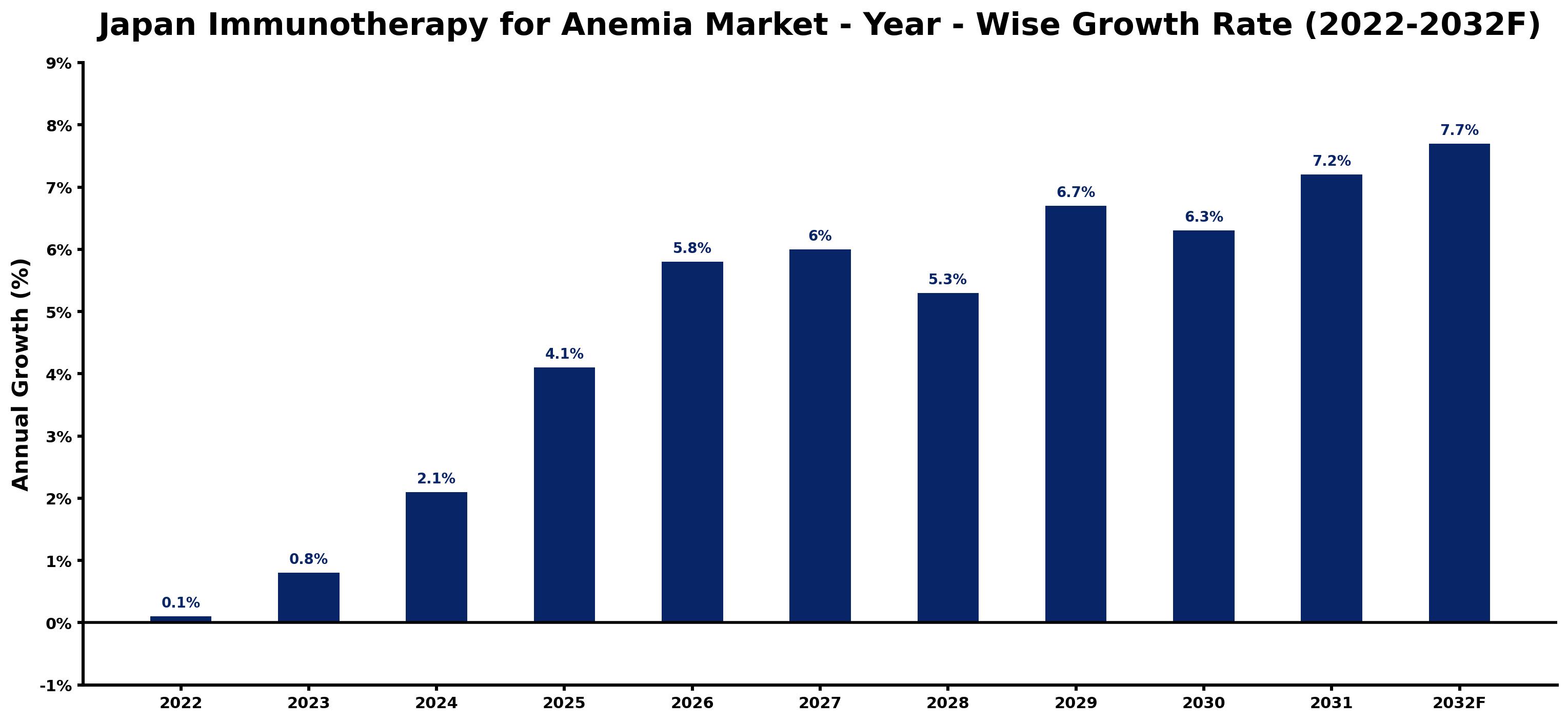
Each row of the following table gives one year's estimated growth and the event or demand shift that explains it.
| Year | Estimated Annual Growth (%) | Market Rationale |
| 2022 | 0.1 | The market showed minimal growth as awareness of immunotherapy was still developing. |
| 2023 | 0.8 | Recognition of immunotherapy's benefits in treating anemia grew, leading to faster growth. |
| 2024 | 2.1 | An increase in chronic kidney disease cases contributed to faster growth rates. |
| 2025 | 4.1 | Clinical guidelines from the Japanese Society of Hematology improved treatment protocols. |
| 2026 | 5.8 | Research funding is projected to increase, boosting demand for innovative therapies. |
| 2027 | 6.0 | Ongoing clinical trials will expand treatment options for patients with anemia. |
| 2028 | 5.3 | Growth is projected to slow slightly as the market adjusts to new treatment standards. |
| 2029 | 6.7 | The introduction of combination therapies will spur renewed interest and demand. |
| 2030 | 6.3 | Market growth is expected to decelerate as adoption rates stabilise among healthcare providers. |
| 2031 | 7.2 | Increased patient awareness and education will lead to higher immunotherapy uptake. |
| 2032 | 7.7 | The market is projected to peak as new therapies enter the market, driving demand. |
Note: Market size estimations and growth projections presented in this report are based on 6Wresearch's proprietary forecasting methodology, utilizing the latest available industry data, government publications, and primary research inputs.
Japan Immunotherapy for Anemia Market Synopsis
Immunotherapy for Anemia involves using biological agents to modulate the immune response against anemia-related conditions, primarily through biotechnological processes. The Japan Immunotherapy for Anemia Market is projected to grow, driven by a rising patient population, particularly those with chronic kidney disease, and increased research funding, with the government allocating ¥2 billion for novel biologics in 2023. The adoption of immunotherapy in hematology clinics is increasing by 15% annually, reflecting a growing demand from healthcare providers and research institutions.
Market Dynamics Impact Analysis (2026–2032)
| Factor | Type | Impact | Primary Segment Affected |
| Increasing patient population with chronic kidney disease | Driver | High | Immunomodulators |
| Rising adoption of combination therapies for better treatment outcomes | Driver | High | Combination Therapies |
| Growing demand for advanced treatment options in hematology | Opportunity | High | Novel Biologics |
| Expansion of clinical trials for new therapies | Opportunity | Medium | Clinical Trials |
| Limited awareness among patients about immunotherapy | Restraint | Medium | Monoclonal Antibodies |
| High costs associated with novel biologics | Restraint | High | Anti-hepcidin Agents |
| Regulatory hurdles in drug approvals | Challenge | High | Cytokine Inhibitors |
| Capacity constraints in specialty hospitals | Challenge | Medium | Specialty Hospitals |
Evaluation of Drivers in Japan Immunotherapy for Anemia Market (2026–2032)
The following drivers explain most of the expected growth.
| Drivers | Primary Segment Affected | Why It Matters (Evidence) |
| Rising prevalence of chronic kidney disease | Immunomodulators | Approximately 30% of patients with chronic kidney disease experience anemia, increasing demand for effective treatments. |
| Increased funding for research on immunotherapy | Novel Biologics | The government allocated ¥2 billion for research on novel biologics in 2023, supporting treatment options. |
| Growing number of hematology clinics | Combination Therapies | In 2023, Japan had over 1,500 hematology clinics providing specialized care, facilitating therapy adoption. |
| Improved treatment protocols from professional societies | Monoclonal Antibodies | Standards set by the Japanese Society of Hematology guide clinical practices for anemia treatment. |
| Expansion of clinical trials for new therapies | Clinical Trials | Over 100 clinical trials for anemia therapies are registered in Japan, promoting innovation. |
Most of the extra volume comes from the increasing prevalence of chronic kidney disease, with a large portion of patients experiencing anemia. This condition drives demand for immunomodulators, as healthcare providers seek effective treatments. The number of hematology clinics has grown to over 1,500, facilitating the adoption of combination therapies. Treatment protocols established by professional societies guide clinical practices, while ongoing clinical trials for anemia therapies promote advancements in therapy options.
Evaluation of Restraints in Japan Immunotherapy for Anemia Market
The following restraints limit how fast demand can grow.
| Market Restraint | Primary Segment Affected | Why It Matters (Evidence) |
| Limited patient awareness about immunotherapy options | Monoclonal Antibodies | Awareness campaigns are necessary as many patients remain uninformed about available therapies. |
| High costs of novel biologics restrict access | Anti-hepcidin Agents | The average patient population in specialty hospitals is around 200, limiting treatment availability. |
| Regulatory delays in drug approvals hinder market entry | Cytokine Inhibitors | Lengthy approval processes overseen by the Japan Pharmaceutical Manufacturers Association can delay access. |
| Capacity constraints in specialty hospitals | Specialty Hospitals | The average length of stay for patients receiving immunotherapy is 5 days, straining hospital resources. |
| Limited integration of immunotherapy in existing treatment protocols | Combination Therapies | Current guidelines may not fully incorporate new immunotherapy options, affecting adoption. |
Japan Immunotherapy for Anemia Market Challenges
High costs emerge for buyers due to strict regulations on immunotherapy approvals, delaying treatments for around 900,000 patients with chronic kidney disease. Suppliers face difficulties with unreliable supply chains for biologics, which can cause shortages and disrupt treatment schedules in over 1,500 hematology clinics. Heightened competition for limited research funding inflates therapy prices for buyers, as funding increased by 20% last year. A shortage of specialised training in immunotherapy restricts the adoption rate, currently rising by 15% annually, limiting treatment options for patients.
Trends in the Japan Immunotherapy for Anemia Market
These developments are changing demand patterns in the Japan Immunotherapy for Anemia Market.
- Shift towards Combination Therapies: Integration of multiple mechanisms for better outcomes is increasingly adopted in hematology clinics. This trend reflects a shift in treatment strategies, with combination therapies gaining popularity, supported by a 9.1% CAGR.
- Emergence of Anti-hepcidin Agents: Since 2023, anti-hepcidin agents have become a focal point in anemia treatment, specifically targeting iron metabolism. This shift is supported by a projected market share of 43% by 2025.
- Surge in Clinical Trials for Anemia Treatments: The number of clinical trials for anemia therapies has surged, with over 100 registered in Japan. This trend indicates a growing commitment to research and development in the field, enhancing treatment options.
- Focus on Personalized Medicine: The emphasis on personalized medicine in anemia treatment has intensified, particularly in specialty hospitals. Tailored therapies are expected to improve patient outcomes, reflecting a shift towards more individualized care.
Investment Opportunities in the Japan Immunotherapy for Anemia Market
Investors looking at the Japan Immunotherapy for Anemia Market should consider the following areas.
- Establish Collaborations with Research Institutions: Forming partnerships with research hospitals can improve access to clinical trials and funding opportunities, particularly in Tokyo and Osaka, where research is thriving, with a 20% increase in funding last year.
- Invest in Immunomodulators: Hematology clinics are increasingly in need of immunomodulators, focusing on improving treatment efficacy. Investing in this area can yield returns as adoption rates rise by 15% annually.
- Supply of Novel Biologics: The demand for novel biologics is growing, driven by increased research funding. Suppliers can enter the market through collaborations with healthcare providers and research institutions, particularly in urban areas.
- Expand Specialty Hospitals: Investing in specialty hospitals can meet the rising demand for advanced anemia treatments, particularly in urban areas where patient populations are concentrated, with an average of 200 patients per facility.
Government Initiatives in the Japan Immunotherapy for Anemia Market
The NHI drug price standard, revised regularly, establishes reimbursement prices for immunotherapy treatments, ensuring that buyers can access these therapies at regulated costs. The Medical Care Act of 1948 sets standards for hospitals and clinics, influencing the quality of care provided to patients with anemia, which is critical for effective treatment delivery.
The Pharmaceuticals and Medical Devices Agency (PMDA) reviews pharmaceuticals and medical devices, ensuring safety and efficacy for immunotherapy for anemia. The Japan Agency for Medical Research and Development (AMED) funds medical research, including studies on immunotherapy, facilitating innovation in anemia treatments.
Future Insight of the Japan Immunotherapy for Anemia Market
Investment in research will drive demand for immunotherapy, supported by ¥2 billion allocated in 2023 for this sector. By 2032, the number of clinical trials for anemia therapies is expected to rise, broadening treatment options for patients. Enhanced collaboration between hospitals and research institutions will promote personalised medicine, improving patient outcomes. The application of established guidelines for monoclonal antibodies will refine treatment protocols, positively impacting both buyers and suppliers.
Market Segmentation Analysis
Japan Immunotherapy for Anemia Market report covers a detailed analysis of the following market segments:
By Therapy Type – Monoclonal Antibodies Lead, Combination Therapies Expected to Grow Fastest
According to Saurav Kr Singh, Senior Research Analyst at 6Wresearch, Monoclonal Antibodies accounted for 42% of the market by therapy type in 2025. Monoclonal antibodies hold the largest share in Japan due to their targeted approach in treating anemia, particularly in patients with chronic diseases. Their established use in over 1,500 hematology clinics illustrates the strong demand from healthcare providers for effective treatment options. Over 2026–2032, Combination Therapies are expected to post the fastest growth, at a CAGR of 9.1%. Combination therapies are experiencing rapid growth as they integrate multiple mechanisms to improve patient outcomes, reflecting a shift towards personalised medicine. The increasing adoption of these therapies in clinical settings indicates a promising future for their application in anemia treatment. Suppliers should focus on developing and promoting combination therapies to meet the growing demand in the market.
By Drug Class – Anti-hepcidin Agents Lead and Record the Fastest Growth
The largest drug class category in 2025 was Anti-hepcidin Agents, at 43% of revenue. Anti-hepcidin agents dominate the market because they specifically target hepcidin, a key regulator of iron metabolism vital for effective anemia treatment. Their established effectiveness in improving iron levels has resulted in widespread adoption among healthcare providers in Japan's network of over 1,500 hematology clinics. Anti-hepcidin Agents are also forecast to expand faster than any other category, at a CAGR of 8.7% over 2026–2032. The rapid growth of anti-hepcidin agents is attributed to their increasing recognition for effectively managing anemia, solidifying their role as a primary treatment option. Their distinctive ability to simultaneously address anemia and iron metabolism ensures sustained demand within clinical environments. This trend indicates that suppliers should prioritise the development and marketing of anti-hepcidin agents to align with the rising requirements of healthcare providers addressing anemia.
By Administration Route – IV/SC Leads, Injectable Expected to Grow Fastest
IV/SC took 39% of administration route revenue in 2025, more than any other category. IV/SC routes are the most common for administering biologics in Japan, largely due to their effectiveness in delivering monoclonal antibodies. This method is preferred in over 1,500 hematology clinics, ensuring consistent patient access to advanced therapies. Injectable is projected to grow fastest, at a CAGR of 8.5% during 2026–2032. Injectable routes are gaining traction as they represent a standard method for administering immunotherapy, with increasing acceptance among healthcare providers. As the market evolves, the preference for injectables is likely to grow, further solidifying their position. Suppliers must ensure that their products are compatible with injectable administration to meet market expectations.
By End User – Hematology Clinics Lead, Specialty Hospitals Expected to Grow Fastest
With 38% of end user revenue in 2025, Hematology Clinics was the largest category. Hematology clinics are the primary settings for administering anemia treatments, with a strong patient population of around 200 per facility. Their specialised focus on hematological disorders ensures a consistent demand for effective therapies. The quickest growth will come from Specialty Hospitals, forecast to expand at a CAGR of 8.6% between 2026 and 2032. Specialty hospitals are rapidly becoming the fastest-growing segment, as they cater to complex cases requiring advanced treatment options. The increasing complexity of anemia cases is driving more patients to seek care in these facilities. Suppliers should target specialty hospitals to capitalise on the growing demand for advanced anemia treatments.
Key Attractiveness of the Report
- 10 Years of Market Numbers
- Historical Data Starting from 2022 to 2025
- Base Year 2025
- Forecast Data until 2032
- Key Performance Indicators Impacting the Market
- Major Upcoming Developments and Projects
Key Highlights of the Report:
- Japan Immunotherapy for Anemia Market Outlook
- Market Size of Japan Immunotherapy for Anemia Market, 2025
- Forecast of Japan Immunotherapy for Anemia Market, 2032
- Historical Data and Forecast of Japan Immunotherapy for Anemia Revenues & Volume for the Period 2022-2032F
- Japan Immunotherapy for Anemia Market Trend Evolution
- Japan Immunotherapy for Anemia Market Drivers and Challenges
- Japan Immunotherapy for Anemia Price Trends
- Japan Immunotherapy for Anemia Porter's Five Forces
- Japan Immunotherapy for Anemia Industry Life Cycle
- Historical Data and Forecast of Japan Immunotherapy for Anemia Market Revenues & Volume By Therapy Type for the Period 2022-2032F
- Historical Data and Forecast of Japan Immunotherapy for Anemia Market Revenues & Volume By Monoclonal Antibodies for the Period 2022-2032F
- Historical Data and Forecast of Japan Immunotherapy for Anemia Market Revenues & Volume By Immunomodulators for the Period 2022-2032F
- Historical Data and Forecast of Japan Immunotherapy for Anemia Market Revenues & Volume By Combination Therapies for the Period 2022-2032F
- Historical Data and Forecast of Japan Immunotherapy for Anemia Market Revenues & Volume By Novel Biologics for the Period 2022-2032F
- Historical Data and Forecast of Japan Immunotherapy for Anemia Market Revenues & Volume By Drug Class for the Period 2022-2032F
- Historical Data and Forecast of Japan Immunotherapy for Anemia Market Revenues & Volume By Anti-hepcidin Agents for the Period 2022-2032F
- Historical Data and Forecast of Japan Immunotherapy for Anemia Market Revenues & Volume By Cytokine Inhibitors for the Period 2022-2032F
- Historical Data and Forecast of Japan Immunotherapy for Anemia Market Revenues & Volume By EPO + Immunotherapy for the Period 2022-2032F
- Historical Data and Forecast of Japan Immunotherapy for Anemia Market Revenues & Volume By Clinical Trials for the Period 2022-2032F
- Historical Data and Forecast of Japan Immunotherapy for Anemia Market Revenues & Volume By Administration Route for the Period 2022-2032F
- Historical Data and Forecast of Japan Immunotherapy for Anemia Market Revenues & Volume By IV/SC for the Period 2022-2032F
- Historical Data and Forecast of Japan Immunotherapy for Anemia Market Revenues & Volume By Oral for the Period 2022-2032F
- Historical Data and Forecast of Japan Immunotherapy for Anemia Market Revenues & Volume By Injectable for the Period 2022-2032F
- Historical Data and Forecast of Japan Immunotherapy for Anemia Market Revenues & Volume By IV for the Period 2022-2032F
- Historical Data and Forecast of Japan Immunotherapy for Anemia Market Revenues & Volume By End User for the Period 2022-2032F
- Historical Data and Forecast of Japan Immunotherapy for Anemia Market Revenues & Volume By Hematology Clinics for the Period 2022-2032F
- Historical Data and Forecast of Japan Immunotherapy for Anemia Market Revenues & Volume By Specialty Hospitals for the Period 2022-2032F
- Historical Data and Forecast of Japan Immunotherapy for Anemia Market Revenues & Volume By Oncology & Hematology Units for the Period 2022-2032F
- Historical Data and Forecast of Japan Immunotherapy for Anemia Market Revenues & Volume By Research Hospitals for the Period 2022-2032F
- Japan Immunotherapy for Anemia Import Export Trade Statistics
- Market Opportunity Assessment By Therapy Type
- Market Opportunity Assessment By Drug Class
- Market Opportunity Assessment By Administration Route
- Market Opportunity Assessment By End User
- Japan Immunotherapy for Anemia Top Companies Market Share
- Japan Immunotherapy for Anemia Competitive Benchmarking By Technical and Operational Parameters
- Japan Immunotherapy for Anemia Company Profiles
- Japan Immunotherapy for Anemia Key Strategic Recommendations
Market Covered
Coverage by segment is as follows.
By Therapy Type
- Monoclonal Antibodies
- Immunomodulators
- Combination Therapies
- Novel Biologics
By Drug Class
- Anti-hepcidin Agents
- Cytokine Inhibitors
- EPO + Immunotherapy
- Clinical Trials
By Administration Route
- IV/SC
- Oral
- Injectable
- IV
By End User
- Hematology Clinics
- Specialty Hospitals
- Oncology & Hematology Units
- Research Hospitals































