Japan Immunotherapy for Leukemia Market Size & Growth Rate
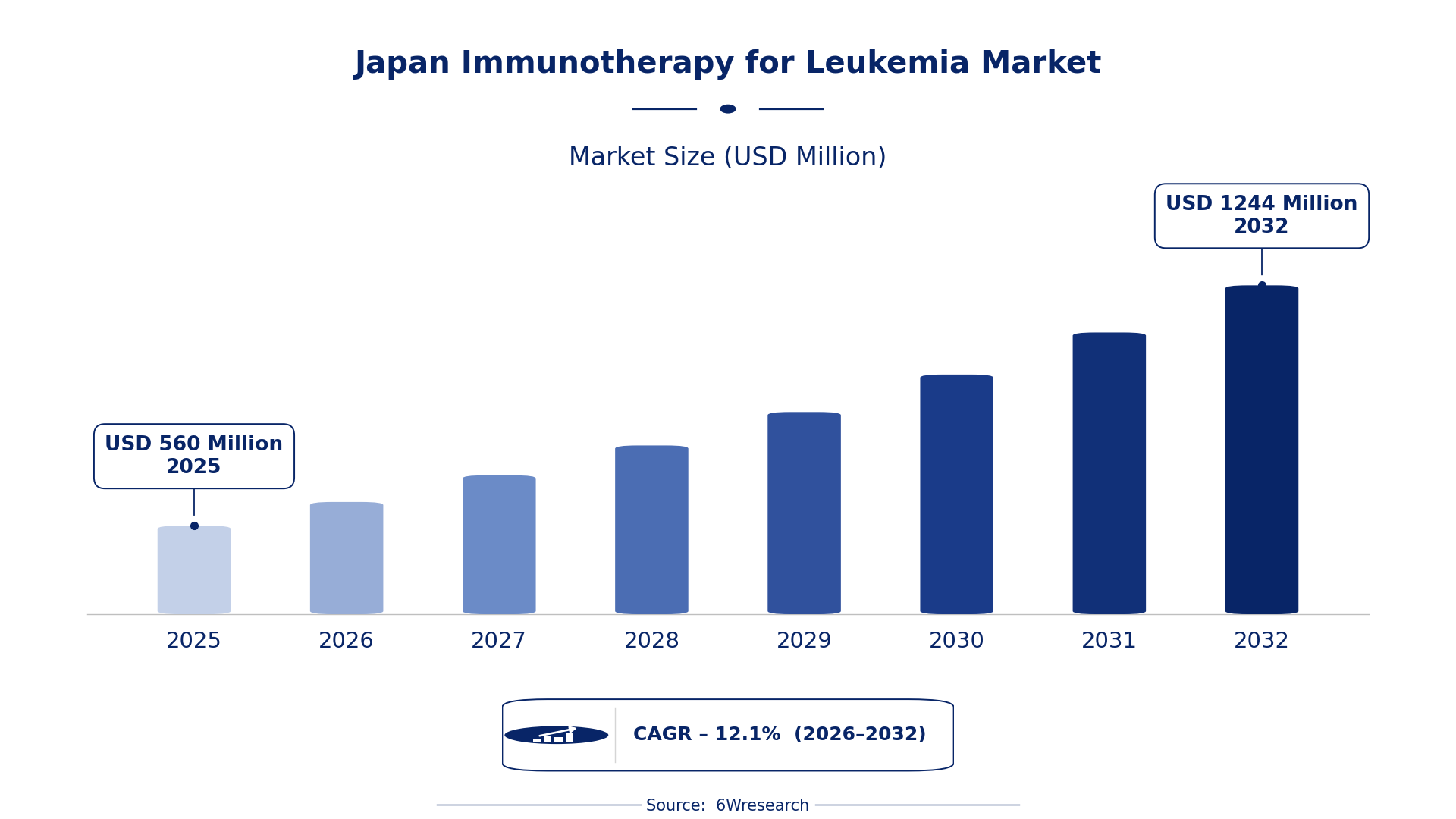
According to 6Wresearch internal database and industry insights, the Japan Immunotherapy for Leukemia Market was valued at USD 560 Million in 2025 and is projected to reach USD 1,244 Million by 2032, growing at a CAGR of approximately 12.1% during 2026–2032.
Japan Immunotherapy for Leukemia Market Highlights
| Report Metric | Details |
| Report Name | Japan Immunotherapy for Leukemia Market (2026-2032) |
| Market Size 2025 | USD 560 Million |
| Market Size 2032 | USD 1,244 Million |
| Absolute Growth 2025–2032 | USD 684 Million |
| CAGR 2026–2032 | 12.1% |
| Peak Annual Growth | 13.1% in 2030 |
| Forecast Period | 2026–2032 |
| Historical Data | 2022–2025 |
| Base Year | 2025 |
| Leading Immunotherapy Type, 2025 | CAR-T Cell Therapy (48% share) |
| Leading Leukemia Subtype, 2025 | ALL (39% share) |
| Leading Delivery Method, 2025 | Intravenous Infusion (40% share) |
| Leading End User, 2025 | Cancer Treatment Centers (47% share) |
| Fastest-Growing Immunotherapy Type | Immune Checkpoint Inhibitors (16.0% CAGR) |
| Fastest-Growing Leukemia Subtype | CLL (17.3% CAGR) |
| Fastest-Growing Delivery Method | Systemic Injection (16.7% CAGR) |
| Fastest-Growing End User | Hematology Departments (16.1% CAGR) |
| Growing Sector | cancer treatment |
| Key End Users | cancer treatment centers, hematology departments, immunotherapy clinics |
Japan Immunotherapy for Leukemia Market Year-wise Growth Rate and Key Drivers (2022–2032)
This graph illustrates the annual growth rates of the market from 2022 to 2032, highlighting a steady upward trajectory and projected market expansion over the forecast period.
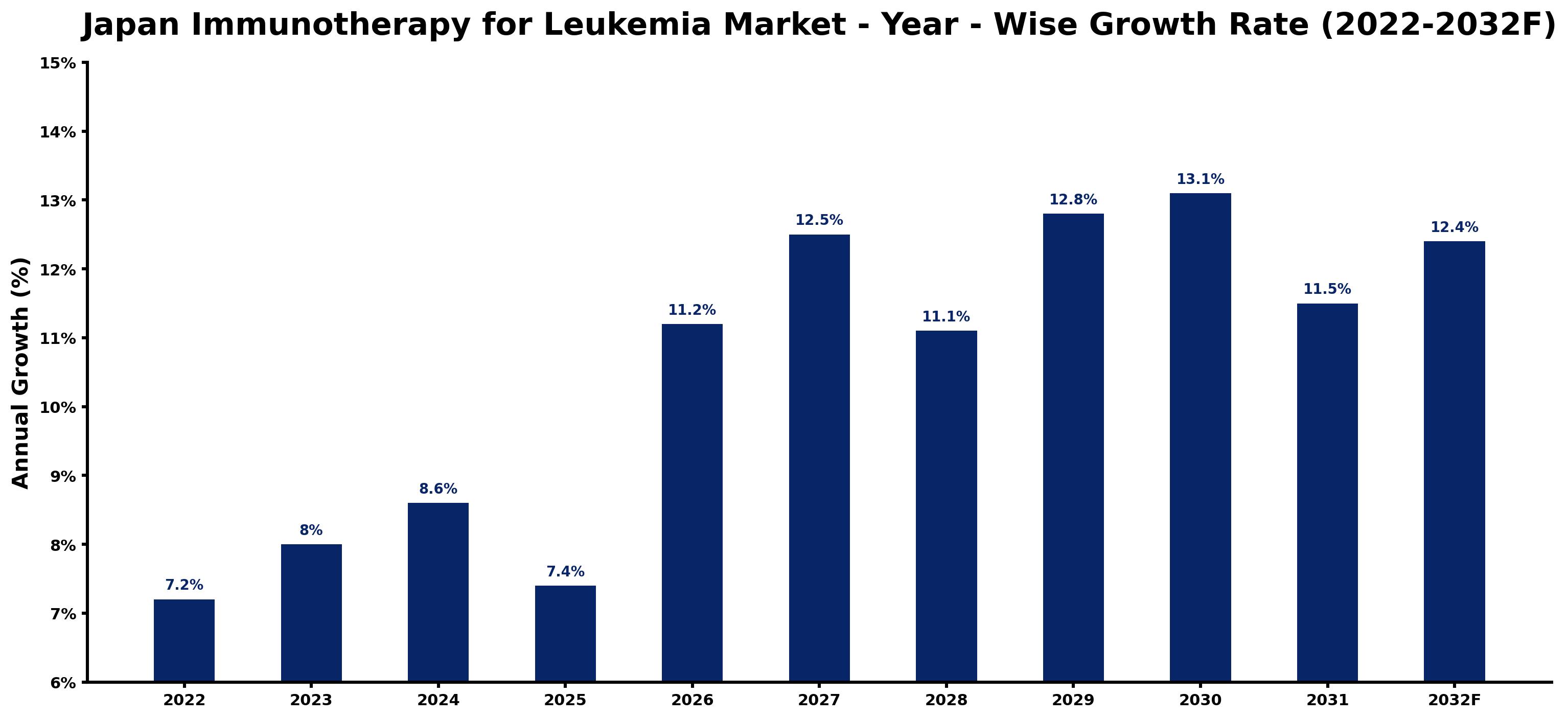
The table below sets out the estimated growth rate for each year and the main factor behind it.
| Year | Estimated Annual Growth (%) | Market Rationale |
| 2022 | 7.2 | The market saw steady demand as healthcare facilities adapted to immunotherapy advancements. |
| 2023 | 8.0 | Growth accelerated due to increased patient awareness and treatment options becoming available. |
| 2024 | 8.6 | Demand continued to rise as CAR-T cell therapy gained traction among healthcare providers. |
| 2025 | 7.4 | Growth slowed slightly as the market adjusted to the influx of new therapies. |
| 2026 | 11.2 | Investment in research initiatives is expected to boost demand for new treatment methods. |
| 2027 | 12.5 | Increased patient enrolment in clinical trials will drive higher therapy adoption rates. |
| 2028 | 11.1 | Demand growth is projected to slow as market saturation begins to take effect in certain areas. |
| 2029 | 12.8 | A surge in funding for cancer research is expected to revitalise interest in immunotherapy. |
| 2030 | 13.1 | Peak growth is anticipated as breakthrough therapies enter the market. |
| 2031 | 11.5 | Growth is projected to moderate as the market stabilises following rapid expansion in previous years. |
| 2032 | 12.4 | Continued advancements in treatment options are expected to sustain demand. |
Note: Market size estimations and growth projections presented in this report are based on 6Wresearch's proprietary forecasting methodology, utilizing the latest available industry data, government publications, and primary research inputs.
Japan Immunotherapy for Leukemia Market Synopsis
Immunotherapy for leukemia utilises the body's immune system to combat cancer, employing therapies such as CAR-T cell therapy and immune checkpoint inhibitors. These therapies are administered in specialised cancer treatment centres, which are crucial for effective treatment delivery. The Japan Immunotherapy for Leukemia Market is expanding due to rising patient numbers and increased investment in research. With over 300 cancer treatment centres in Japan, the market is well-positioned for growth as demand for effective therapies continues to rise.
Market Dynamics Impact Analysis (2026–2032)
| Factor | Type | Impact | Primary Segment Affected |
| Rising patient enrolment in CAR-T cell therapy programmes | Driver | High | CAR-T Cell Therapy |
| Increased funding for cancer research initiatives | Driver | High | Immune Checkpoint Inhibitors |
| Growing demand for advanced treatment options in urban areas | Opportunity | Medium | Cancer Treatment Centers |
| Expansion of clinical trials for new therapies across the country | Opportunity | Medium | Hematology Departments |
| High costs associated with innovative therapies | Restraint | High | Monoclonal Antibodies |
| Limited access to specialized treatment facilities in rural regions | Restraint | Medium | Immunotherapy Clinics |
| Compliance with stringent regulatory standards | Challenge | High | CAR-T Cell Therapy |
| Capacity constraints in existing treatment facilities | Challenge | Medium | Cancer Treatment Centers |
Evaluation of Drivers in Japan Immunotherapy for Leukemia Market (2026–2032)
Demand rests on the following drivers, each shown with the segment it touches most.
| Drivers | Primary Segment Affected | Why It Matters (Evidence) |
| Increased patient enrolment in CAR-T cell therapy programmes | CAR-T Cell Therapy | In 2022, approximately 15,000 patients were treated with CAR-T cell therapy, driving demand for this targeted treatment. |
| Rising investment in immunotherapy research initiatives | Immune Checkpoint Inhibitors | The government allocated ¥5 billion for cancer research funding in 2023, supporting therapy development. |
| Growing patient population seeking advanced treatment options | Monoclonal Antibodies | With an annual average of around 40,000 leukemia patients, demand for effective therapies is increasing. |
| Expansion of clinical trials for immune checkpoint inhibitors | Immune Checkpoint Inhibitors | Numerous clinical trials are currently ongoing, increasing awareness and adoption of these therapies. |
| Adoption of quality management standards like ISO 9001 | Cancer Treatment Centers | Many oncology clinics are implementing ISO 9001, improving service quality and patient outcomes. |
The treatment of a significant number of patients with CAR-T cell therapy in recent years has boosted demand for targeted treatments. The average population of leukemia patients in Japan is considerable, prompting healthcare providers to seek effective options. Ongoing clinical trials for immune checkpoint inhibitors are raising awareness and adoption of these therapies. The implementation of quality management standards in oncology clinics improves service quality, further increasing patient enrolment in advanced treatments.
Evaluation of Restraints in Japan Immunotherapy for Leukemia Market
The main factors holding the market back are set out below.
| Market Restraint | Primary Segment Affected | Why It Matters (Evidence) |
| High costs associated with therapies | Monoclonal Antibodies | The expense of monoclonal antibody treatments limits accessibility for many patients, affecting overall market growth. |
| Limited access to specialized treatment facilities in rural regions | Immunotherapy Clinics | Patients in rural areas often face challenges in accessing advanced immunotherapy treatments, constraining market expansion. |
| Delays in therapy introduction due to regulatory compliance | CAR-T Cell Therapy | Meeting the requirements of the Clinical Trials Act can postpone the launch of new therapies. |
| Capacity constraints in existing treatment facilities | Cancer Treatment Centers | Overwhelmed facilities struggle to accommodate the growing number of patients seeking immunotherapy. |
| Slow adoption of new therapies due to physician hesitancy | Hematology Departments | Physicians may be reluctant to adopt new treatment protocols, impacting patient access to therapies. |
Japan Immunotherapy for Leukemia Market Challenges
Buyers of immunotherapy face high treatment costs, with expenses exceeding ¥10 million per patient, which limits access for many individuals. Technology development encounters delays due to lengthy clinical trials, postponing new therapy availability for up to five years and restricting patient options. Competition among over 300 cancer treatment centres drives prices higher, forcing buyers to pay inflated costs that can increase by 20%. Skills shortages in specialised staff hinder treatment delivery, resulting in wait times that can extend treatment initiation by several months for patients seeking care.
Trends in the Japan Immunotherapy for Leukemia Market
Four trends stand out in the Japan Immunotherapy for Leukemia Market.
- Shift from Traditional to Targeted Therapies: Cancer treatment centres in Japan are increasingly adopting targeted therapies like CAR-T cell therapy, with a significant number of patients treated in recent years. This shift improves treatment precision and patient outcomes.
- Expansion of Clinical Trials for Immunotherapy: Tokyo and Osaka are becoming hubs for clinical trials focused on immune checkpoint inhibitors, with numerous studies ongoing. This trend promotes innovation and accelerates therapy availability.
- Increased Focus on Quality Management Standards: Many oncology clinics are adopting ISO 9001 standards, ensuring high-quality patient care. This shift is evident as more facilities seek certification to improve service delivery.
- Growing Demand for Advanced Treatment Options: Cancer treatment centres are expanding their offerings to include new therapies, driven by a large population of leukemia patients seeking effective treatments.
Investment Opportunities in the Japan Immunotherapy for Leukemia Market
Where to invest in the Japan Immunotherapy for Leukemia Market: the main openings are set out below.
- Collaborate with Local Cancer Treatment Centers: Now is an ideal time to partner with cancer treatment centres, as they seek new therapies to meet rising patient demand, with over 300 centres in Japan.
- Invest in Clinical Trial Infrastructure: The ongoing clinical trials for immune checkpoint inhibitors present an opportunity to invest in trial infrastructure, particularly in urban areas where demand is high.
- Expand Offerings in Hematology Departments: Hematology departments are increasingly adopting advanced therapies, presenting an opportunity to supply treatment options to meet growing patient needs.
- Support Quality Management Certification: With the rising adoption of quality management standards, suppliers can invest in solutions to assist oncology clinics in improving service delivery.
Government Initiatives in the Japan Immunotherapy for Leukemia Market
The Medical Care Act (1948) sets necessary guidelines for hospitals and clinics, including staffing and facility requirements, which directly impact immunotherapy service delivery. The Clinical Trials Act (2017) regulates the conduct of clinical trials, ensuring that new therapies meet safety and efficacy standards before reaching patients. These measures help create a safer environment for administering immunotherapy for leukemia.
The Pharmaceuticals and Medical Devices Agency oversees the approval of new therapies and funds initiatives to support cancer research. The government allocated ¥5 billion for cancer research in 2023, which facilitates the development of new immunotherapy treatments. This funding is essential for advancing treatment options available to patients.
Future Insight of the Japan Immunotherapy for Leukemia Market
Advancements in CAR-T cell therapy will reshape treatment options by 2032, as ongoing clinical trials are expected to yield new therapies. The Japanese Society of Hematology is likely to establish updated standards, improving treatment consistency across clinics. Increased government funding for cancer research, amounting to ¥5 billion, will drive innovation, benefiting both patients and treatment providers. Enhanced diagnostic tools will facilitate earlier detection, allowing patients to receive timely immunotherapy interventions.
Market Segmentation Analysis
Japan Immunotherapy for Leukemia Market report covers a detailed analysis of the following market segments:
By Immunotherapy Type – CAR-T Cell Therapy Leads, Immune Checkpoint Inhibitors Expected to Grow Fastest
According to Saurav Kr Singh, Senior Research Analyst at 6Wresearch, the largest immunotherapy type category in 2025 was CAR-T Cell Therapy, at 48% of revenue. CAR-T cell therapy leads the market due to its targeted effectiveness in treating specific leukemia types, with over 15,000 patients treated in Japan in 2022. This therapy is predominantly utilised in cancer treatment centres that specialise in advanced immunotherapy techniques. Immune Checkpoint Inhibitors are set to record the highest CAGR in this split, 16.0% over 2026–2032. The growth of immune checkpoint inhibitors is propelled by ongoing clinical trials in cities like Tokyo and Osaka, which are expanding treatment options for patients. As these therapies gain acceptance, they are likely to complement existing treatments and draw in more patients. Suppliers should prioritise the development of immune checkpoint inhibitors to address the increasing demand.
By Leukemia Subtype – ALL Leads, CLL Expected to Grow Fastest
ALL took 39% of leukemia subtype revenue in 2025, more than any other category. Acute lymphoblastic leukemia (ALL) holds the largest market share as it is a primary target for many advanced therapies, highlighting the urgent need for effective treatments in Japan. The prevalence of ALL among leukemia patients drives substantial investment in research and treatment options. Over 2026–2032, CLL is expected to post the fastest growth, at a CAGR of 17.3%. Chronic lymphocytic leukemia (CLL) is growing rapidly due to its increasing recognition and advancements in treatment, actively pursued by specialised departments. This focus on CLL is expected to attract additional research funding and clinical trials. Buyers can expect a broader array of treatment options for CLL as research continues to progress.
By Delivery Method – Intravenous Infusion Leads, Systemic Injection Expected to Grow Fastest
Intravenous Infusion accounted for 40% of the market by delivery method in 2025. Intravenous infusion is the most common delivery method for therapies in cancer treatment centres, ensuring effective administration of immunotherapy. Its widespread use among healthcare professionals highlights its reliability and established presence in the market. Systemic Injection is projected to grow fastest, at a CAGR of 16.7% during 2026–2032. Systemic injection is rapidly gaining traction due to its effectiveness in distributing treatments throughout the body, appealing to new therapy developments. This method's potential to enhance patient outcomes will likely sustain its growth momentum. Suppliers should consider focusing on systemic injection technologies to capitalise on the increasing demand for this delivery method.
By End User – Cancer Treatment Centers Lead, Hematology Departments Expected to Grow Fastest
With 47% of end user revenue in 2025, Cancer Treatment Centers was the largest category. Cancer treatment centres are the leading facilities for administering therapies, with over 300 centres across Japan dedicated to immunotherapy. Their specialised focus on advanced cancer treatments makes them essential in the leukemia treatment landscape. The quickest growth will come from Hematology Departments, forecast to expand at a CAGR of 16.1% between 2026 and 2032. Hematology departments are experiencing the fastest growth as they increasingly integrate immunotherapy into their treatment protocols for blood cancers. This trend suggests a shift towards more specialised care and collaboration with research institutions. Suppliers should build strategic partnerships with hematology departments to align with their growing influence in leukemia treatment.
Key Attractiveness of the Report
- 10 Years of Market Numbers
- Historical Data Starting from 2022 to 2025
- Base Year 2025
- Forecast Data until 2032
- Key Performance Indicators Impacting the Market
- Major Upcoming Developments and Projects
Key Highlights of the Report:
- Japan Immunotherapy for Leukemia Market Outlook
- Market Size of Japan Immunotherapy for Leukemia Market, 2025
- Forecast of Japan Immunotherapy for Leukemia Market, 2032
- Historical Data and Forecast of Japan Immunotherapy for Leukemia Revenues & Volume for the Period 2022-2032F
- Japan Immunotherapy for Leukemia Market Trend Evolution
- Japan Immunotherapy for Leukemia Market Drivers and Challenges
- Japan Immunotherapy for Leukemia Price Trends
- Japan Immunotherapy for Leukemia Porter's Five Forces
- Japan Immunotherapy for Leukemia Industry Life Cycle
- Historical Data and Forecast of Japan Immunotherapy for Leukemia Market Revenues & Volume By Immunotherapy Type for the Period 2022-2032F
- Historical Data and Forecast of Japan Immunotherapy for Leukemia Market Revenues & Volume By CAR-T Cell Therapy for the Period 2022-2032F
- Historical Data and Forecast of Japan Immunotherapy for Leukemia Market Revenues & Volume By Immune Checkpoint Inhibitors for the Period 2022-2032F
- Historical Data and Forecast of Japan Immunotherapy for Leukemia Market Revenues & Volume By Tumor Vaccines for the Period 2022-2032F
- Historical Data and Forecast of Japan Immunotherapy for Leukemia Market Revenues & Volume By Monoclonal Antibodies for the Period 2022-2032F
- Historical Data and Forecast of Japan Immunotherapy for Leukemia Market Revenues & Volume By Leukemia Subtype for the Period 2022-2032F
- Historical Data and Forecast of Japan Immunotherapy for Leukemia Market Revenues & Volume By ALL, CLL for the Period 2022-2032F
- Historical Data and Forecast of Japan Immunotherapy for Leukemia Market Revenues & Volume By AML for the Period 2022-2032F
- Historical Data and Forecast of Japan Immunotherapy for Leukemia Market Revenues & Volume By Chronic Leukemia for the Period 2022-2032F
- Historical Data and Forecast of Japan Immunotherapy for Leukemia Market Revenues & Volume By CD20, CD52 Targets for the Period 2022-2032F
- Historical Data and Forecast of Japan Immunotherapy for Leukemia Market Revenues & Volume By Delivery Method for the Period 2022-2032F
- Historical Data and Forecast of Japan Immunotherapy for Leukemia Market Revenues & Volume By Intravenous Infusion for the Period 2022-2032F
- Historical Data and Forecast of Japan Immunotherapy for Leukemia Market Revenues & Volume By Systemic Injection for the Period 2022-2032F
- Historical Data and Forecast of Japan Immunotherapy for Leukemia Market Revenues & Volume By Subcutaneous for the Period 2022-2032F
- Historical Data and Forecast of Japan Immunotherapy for Leukemia Market Revenues & Volume By IV for the Period 2022-2032F
- Historical Data and Forecast of Japan Immunotherapy for Leukemia Market Revenues & Volume By End User for the Period 2022-2032F
- Historical Data and Forecast of Japan Immunotherapy for Leukemia Market Revenues & Volume By Cancer Treatment Centers for the Period 2022-2032F
- Historical Data and Forecast of Japan Immunotherapy for Leukemia Market Revenues & Volume By Hematology Departments for the Period 2022-2032F
- Historical Data and Forecast of Japan Immunotherapy for Leukemia Market Revenues & Volume By Immunotherapy Clinics for the Period 2022-2032F
- Historical Data and Forecast of Japan Immunotherapy for Leukemia Market Revenues & Volume By Clinical Oncology Labs for the Period 2022-2032F
- Japan Immunotherapy for Leukemia Import Export Trade Statistics
- Market Opportunity Assessment By Immunotherapy Type
- Market Opportunity Assessment By Leukemia Subtype
- Market Opportunity Assessment By Delivery Method
- Market Opportunity Assessment By End User
- Japan Immunotherapy for Leukemia Top Companies Market Share
- Japan Immunotherapy for Leukemia Competitive Benchmarking By Technical and Operational Parameters
- Japan Immunotherapy for Leukemia Company Profiles
- Japan Immunotherapy for Leukemia Key Strategic Recommendations
Market Covered
The report covers the following segments.
By Immunotherapy Type
- CAR-T Cell Therapy
- Immune Checkpoint Inhibitors
- Tumor Vaccines
- Monoclonal Antibodies
By Leukemia Subtype
- ALL
- CLL
- AML
- Chronic Leukemia
- CD20
- CD52 Targets
By Delivery Method
- Intravenous Infusion
- Systemic Injection
- Subcutaneous
- IV
By End User
- Cancer Treatment Centers
- Hematology Departments
- Immunotherapy Clinics
- Clinical Oncology Labs































