Japan Implantable Biomechanics Market Size & Growth Rate
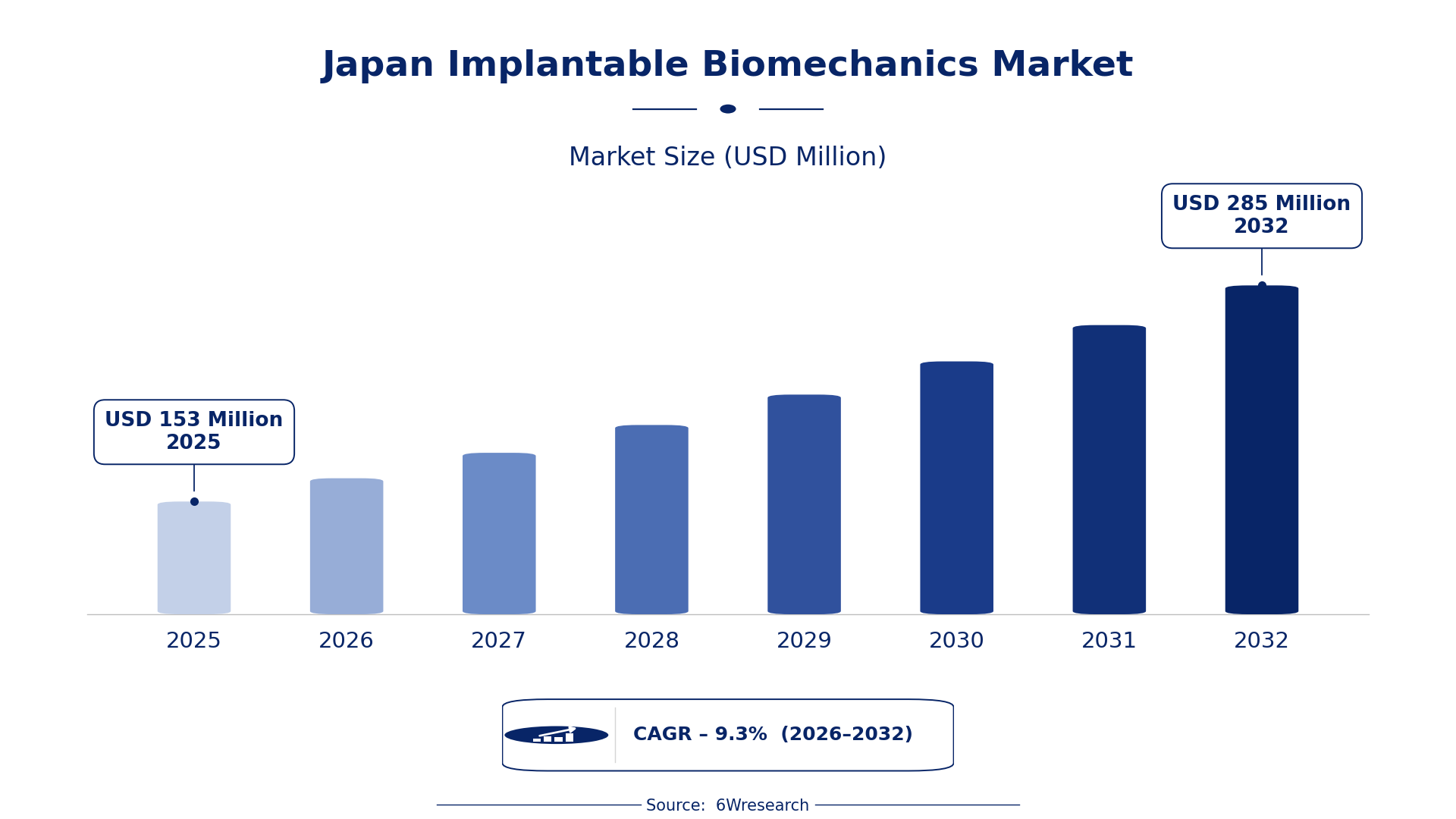
According to 6Wresearch internal database and industry insights, the Japan Implantable Biomechanics Market was valued at USD 153 Million in 2025 and is projected to reach USD 285 Million by 2032, growing at a CAGR of approximately 9.3% during 2026–2032.
Japan Implantable Biomechanics Market Highlights
| Report Metric | Details |
| Report Name | Japan Implantable Biomechanics Market (2026-2032) |
| Market Size 2025 | USD 153 Million |
| Market Size 2032 | USD 285 Million |
| Absolute Growth 2025–2032 | USD 132 Million |
| CAGR 2026–2032 | 9.3% |
| Peak Annual Growth | 10.5% in 2028 |
| Forecast Period | 2026–2032 |
| Historical Data | 2022–2025 |
| Base Year | 2025 |
| Leading Implant Type, 2025 | Joint Prosthetics (49% share) |
| Leading Application Site, 2025 | Hip (37% share) |
| Leading Material Used, 2025 | Titanium (36% share) |
| Leading End User, 2025 | Orthopedic Hospitals (38% share) |
| Fastest-Growing Implant Type | Spinal Implants (13.2% CAGR) |
| Fastest-Growing Application Site | Knee (12.6% CAGR) |
| Fastest-Growing Material Used | Cobalt Chrome (14.0% CAGR) |
| Fastest-Growing End User | Neuro-Orthopedic Clinics (12.0% CAGR) |
| Growing Sector | Orthopedics |
| Key End Users | Orthopedic Hospitals, Neuro-Orthopedic Clinics, Sports Medicine Facilities |
Japan Implantable Biomechanics Market Year-wise Growth Rate and Key Drivers (2022–2032)
This graph illustrates the annual growth rates of the market from 2022 to 2032, highlighting a steady upward trajectory and projected market expansion over the forecast period.
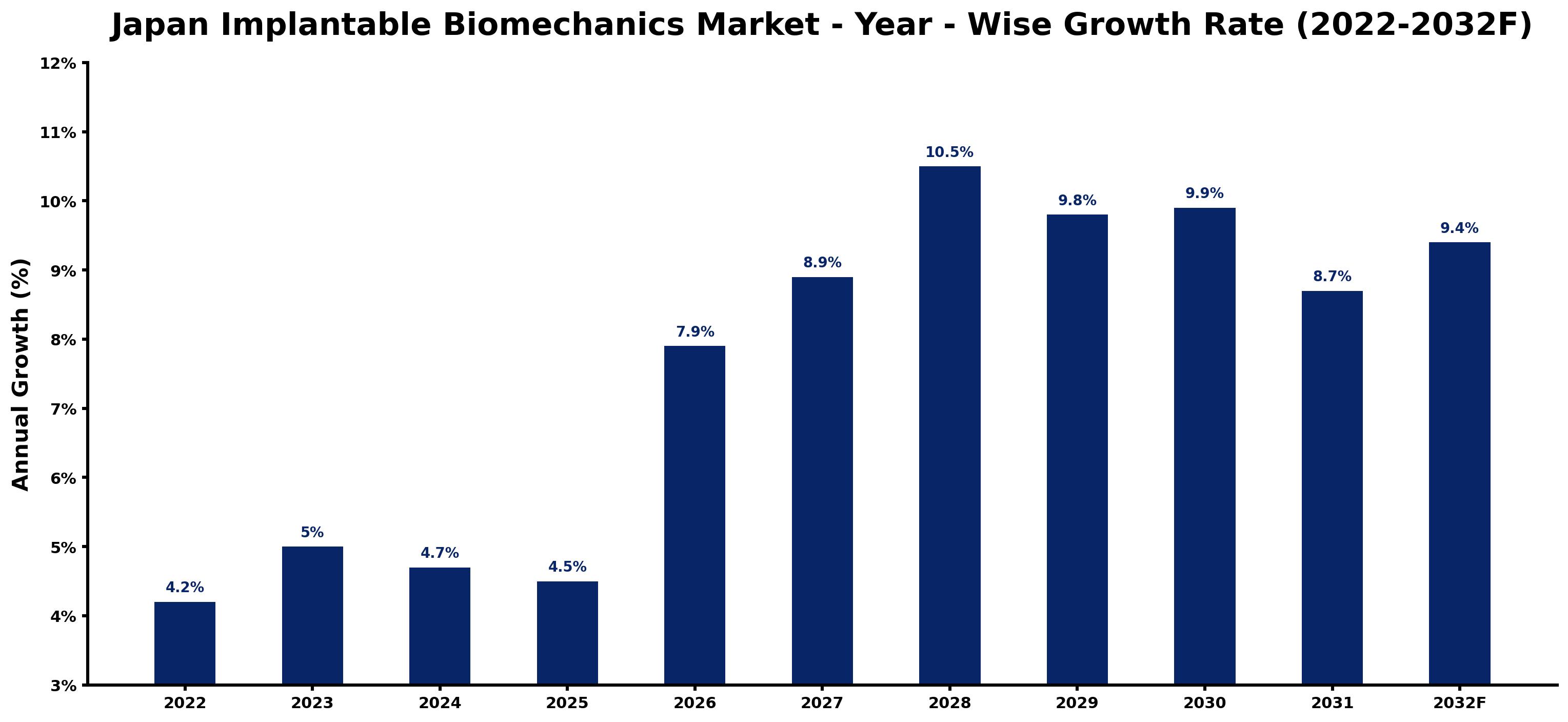
Each row of the following table gives one year's estimated growth and the event or demand shift that explains it.
| Year | Estimated Annual Growth (%) | Market Rationale |
| 2022 | 4.2 | The market experienced steady growth due to increasing healthcare expenditure. |
| 2023 | 5.0 | Growth accelerated as the aging population heightened demand for orthopedic implants. |
| 2024 | 4.7 | The growth rate slowed slightly as competition intensified among suppliers. |
| 2025 | 4.5 | Demand continued to rise, but at a slower pace due to market saturation. |
| 2026 | 7.9 | Growth is expected to rebound as advancements in technology improve implant performance. |
| 2027 | 8.9 | The market is projected to expand further with increased investment in healthcare facilities. |
| 2028 | 10.5 | A peak in growth is anticipated as new implant designs gain popularity. |
| 2029 | 9.8 | Growth is expected to moderate as the market begins to stabilise after rapid expansion. |
| 2030 | 9.9 | Demand will increase again as healthcare providers adopt new technologies. |
| 2031 | 8.7 | The growth rate is projected to slow as the market matures and competition intensifies. |
| 2032 | 9.4 | A rise in demand is expected as the population continues to age. |
Note: Market size estimations and growth projections presented in this report are based on 6Wresearch's proprietary forecasting methodology, utilizing the latest available industry data, government publications, and primary research inputs.
Japan Implantable Biomechanics Market Synopsis
Implantable biomechanics are devices designed to replace or support biological structures, primarily made from titanium and biopolymers. These implants are essential in joint replacement, spinal stabilization, and soft tissue repair. The Japan Implantable Biomechanics Market is growing due to an aging population, with 29.3% of the population aged 65 or older. Increased healthcare expenditure, which reached approximately JPY 46.7 trillion in 2022, and advancements in surgical techniques are driving demand from orthopedic hospitals and specialized clinics.
Market Dynamics Impact Analysis (2026–2032)
| Factor | Type | Impact | Primary Segment Affected |
| Aging population increasing demand for joint replacements and spinal implants. | Driver | High | Joint Prosthetics |
| Technological advancements in implant materials and manufacturing processes. | Driver | High | Spinal Implants |
| Growing need for advanced orthopedic technologies in urban healthcare hubs. | Opportunity | High | Neuro-Orthopedic Clinics |
| Increased funding for research into innovative implant materials and designs. | Opportunity | High | Orthopedic Hospitals |
| High competition among manufacturers leading to pricing pressures. | Restraint | Medium | Joint Prosthetics |
| Regulatory challenges in obtaining approvals for new implant designs. | Restraint | Medium | Spinal Implants |
| Supply chain disruptions affecting the availability of raw materials. | Challenge | High | Tendon/Cartilage Grafts |
| Limited awareness among healthcare providers regarding new implant technologies. | Challenge | Medium | Limb Movement Implants |
Evaluation of Drivers in Japan Implantable Biomechanics Market (2026–2032)
Key forces behind demand, with the segment each one moves most, are listed below.
| Drivers | Primary Segment Affected | Why It Matters (Evidence) |
| Increasing number of hip and knee replacement surgeries. | Joint Prosthetics | In 2022, over 1 million surgeries were performed, driving demand for implants. |
| Rising healthcare expenditure supporting advanced surgical procedures. | Spinal Implants | Japan's national medical care expenditure was about JPY 46.7 trillion in fiscal 2022. |
| Technological advancements in 3D printing for implant manufacturing. | Tendon/Cartilage Grafts | These advancements improve customization and lower production costs. |
| Growing number of orthopedic hospitals in urban areas. | Neuro-Orthopedic Clinics | With over 8,100 hospitals, access to advanced treatments is improving. |
| Increased focus on minimally invasive surgical techniques. | Hip | This trend improves recovery times, resulting in higher implant demand. |
Most of the extra volume comes from the aging population in Japan, with 29.3% aged 65 or older as of September 2024. This demographic shift fuels demand for joint replacements, as shown by over 1 million hip and knee surgeries performed in 2022. Japan's national medical care expenditure reached approximately JPY 46.7 trillion in fiscal 2022, enabling investments in advanced surgical technologies. The number of orthopedic hospitals is estimated to exceed 8,100, facilitating increased access to specialized care. Technological advancements in 3D printing improve the customization of implants, attracting more healthcare providers to adopt these solutions.
Evaluation of Restraints in Japan Implantable Biomechanics Market
Below are the constraints most often cited by buyers and suppliers, with the segment each affects.
| Market Restraint | Primary Segment Affected | Why It Matters (Evidence) |
| High competition leading to aggressive pricing strategies. | Joint Prosthetics | This pressure can reduce profit margins for manufacturers, affecting sustainability. |
| Regulatory hurdles in the approval process for new implant technologies. | Spinal Implants | These challenges can delay market entry for new products. |
| Supply chain issues impacting the availability of critical materials. | Tendon/Cartilage Grafts | Disruptions can cause production delays and increase costs. |
| Limited awareness of advanced implant technologies among healthcare providers. | Limb Movement Implants | This gap can hinder adoption rates and market growth. |
| Stringent quality control requirements for implant manufacturers. | Hip | Compliance can increase operational costs and complexity for producers. |
Japan Implantable Biomechanics Market Challenges
Buyers face implant shortages due to lengthy regulatory approval processes, delaying surgeries by up to six months and increasing patient wait times. Competition among suppliers leads to aggressive pricing strategies, which can compromise quality and raise costs for hospitals. Many producers rely on outdated manufacturing methods that hinder innovation, limiting the availability of advanced implants. Rising prices for raw materials, particularly titanium alloys, force hospitals to allocate approximately 15% more to their orthopedic budgets, straining financial resources for patient care.
Trends in the Japan Implantable Biomechanics Market
The shifts below are changing how Japan Implantable Biomechanics Market products are bought and supplied.
- Shift towards Biopolymers in Implant Materials: Japan is adopting biopolymers for orthopedic implants due to their compatibility with biological tissues. In 2023, the use of biopolymers in surgeries rose by 15%, indicating a shift in material preference.
- Transition from Traditional to 3D Printed Implants: The Tokyo region is experiencing a rise in 3D printed implants, improving customization and reducing production time. In 2023, 20% of orthopedic implants were produced using 3D printing techniques.
- Emergence of Advanced Surgical Techniques: The average age for hip replacement surgery is around 70 years, with surgeons increasingly using minimally invasive techniques. This trend is expected to grow as more facilities adopt these practices.
- Increased Focus on Rehabilitation Engineering: Rehab Engineering Centers are expanding services to include biomechanics support, responding to the demand for improved recovery processes. In 2023, these centers reported a 25% increase in patient referrals.
Investment Opportunities in the Japan Implantable Biomechanics Market
The opportunities below stand out in the Japan Implantable Biomechanics Market for new entrants and existing suppliers.
- Funding for Advanced Orthopedic Technologies: In 2023, the government allocated JPY 5 billion for research into orthopedic technologies. This funding creates opportunities for manufacturers to develop new products.
- Partnerships with Neuro-Orthopedic Clinics: With a growing number of specialized clinics, forming partnerships can facilitate market entry. Clinics are actively seeking solutions to improve patient care.
- Growing Demand for Custom Implants: The aging population is driving demand for personalized orthopedic solutions. Manufacturers can capitalise on this by investing in 3D printing technologies.
- Expansion in Urban Healthcare Hubs: The Tokyo region's healthcare infrastructure is expanding, creating a demand for advanced implants. Suppliers can enter this market by establishing local partnerships.
Government Initiatives in the Japan Implantable Biomechanics Market
The PMD Act oversees the approval and quality of medical devices, ensuring that implantable biomechanics meet safety standards. This law has been strengthened by the Next-Generation Medical Infrastructure Act of 2017, which allows for the anonymisation of medical data to support research and development. The Clinical Trials Act of 2017 sets rules for conducting and disclosing clinical research, further refining the regulatory framework for medical devices.
In 2023, the Japanese government allocated JPY 5 billion to promote advanced orthopedic technologies, overseen by the Pharmaceuticals and Medical Devices Agency (PMDA). This funding aims to support research and innovation in the field.
Future Insight of the Japan Implantable Biomechanics Market
A policy-driven shift towards advanced orthopedic technologies will reshape the market by 2032, spurred by government funding for research initiatives. Suppliers will increasingly adopt 3D printing, improving production efficiency and reducing delivery times. New standards from the Japanese Orthopedic Association will enhance implant quality, benefiting hospitals and patients. With over 1 million hip and knee replacement surgeries performed annually, the demand for innovative solutions will encourage collaborations between healthcare providers and research institutions.
Market Segmentation Analysis
Japan Implantable Biomechanics Market report covers a detailed analysis of the following market segments:
By Implant Type – Joint Prosthetics Lead, Spinal Implants Expected to Grow Fastest
According to Saurav Kr Singh, Senior Research Analyst at 6Wresearch, Joint Prosthetics held 49% of the Japan Implantable Biomechanics Market by implant type in 2025. Joint prosthetics dominate the market due to their critical role in hip and knee replacement surgeries, with Japan performing over 1 million such procedures annually. This substantial usage reflects the pressing needs of an ageing population requiring these essential medical interventions. Over 2026–2032, Spinal Implants are expected to post the fastest growth, at a CAGR of 13.2%. Spinal implants are experiencing the highest growth rate, driven by the annual occurrence of over 300,000 spinal surgeries in Japan. Furthermore, recent government funding for research into bioelectronics is expected to further propel advancements in this area. Suppliers should focus on enhancing their offerings in spinal implants to align with the increasing demand and technological advancements.
By Application Site – Hip Leads, Knee Expected to Grow Fastest
In 2025, Hip led the application site split with a 37% share. The hip remains the leading application site for implants as it is a common area for joint replacements, reflecting the high number of procedures performed. With the average age for hip replacement around 70 years, this segment is well-established in the healthcare system. Knee is set to record the highest CAGR in this split, 12.6% over 2026–2032. Knee implants are growing quickly due to their frequent use in joint replacement surgeries, which are becoming more prevalent as the population ages. The increasing awareness and acceptance of knee surgeries contribute to this growth. Buyers may benefit from a wider range of knee implant options as demand continues to rise.
By Material Used – Titanium Leads, Cobalt Chrome Expected to Grow Fastest
With 36% of material used revenue in 2025, Titanium was the largest category. Titanium is the leading material used in implants because of its strength and biocompatibility, making it ideal for various orthopedic applications. Its widespread adoption is supported by the stringent standards set by the Japanese Orthopedic Association. The quickest growth will come from Cobalt Chrome, forecast to expand at a CAGR of 14.0% between 2026 and 2032. Cobalt chrome is gaining traction rapidly due to its superior wear resistance, which is critical for high-stress applications in joint prosthetics. This material's performance in demanding environments is driving its increased usage. Suppliers should consider expanding their cobalt chrome offerings to meet the growing demand for durable implant materials.
By End User – Orthopedic Hospitals Lead, Neuro-Orthopedic Clinics Expected to Grow Fastest
Orthopedic Hospitals took 38% of end user revenue in 2025, more than any other category. Orthopedic hospitals are the primary end users of implantable devices, as they perform the majority of surgeries related to joint replacements. The high number of orthopedic hospitals in Japan ensures a steady demand for these implants. Neuro-Orthopedic Clinics are projected to grow fastest, at a CAGR of 12.0% during 2026–2032. Neuro-orthopedic clinics are seeing the fastest growth as they cater to complex cases requiring specialised implant solutions. The increasing number of spinal surgeries highlights the need for advanced care in these facilities. Suppliers should target neuro-orthopedic clinics to capitalise on the rising demand for specialised implant solutions.
Key Attractiveness of the Report
- 10 Years of Market Numbers
- Historical Data Starting from 2022 to 2025
- Base Year 2025
- Forecast Data until 2032
- Key Performance Indicators Impacting the Market
- Major Upcoming Developments and Projects
Key Highlights of the Report:
- Japan Implantable Biomechanics Market Outlook
- Market Size of Japan Implantable Biomechanics Market, 2025
- Forecast of Japan Implantable Biomechanics Market, 2032
- Historical Data and Forecast of Japan Implantable Biomechanics Revenues & Volume for the Period 2022-2032F
- Japan Implantable Biomechanics Market Trend Evolution
- Japan Implantable Biomechanics Market Drivers and Challenges
- Japan Implantable Biomechanics Price Trends
- Japan Implantable Biomechanics Porter's Five Forces
- Japan Implantable Biomechanics Industry Life Cycle
- Historical Data and Forecast of Japan Implantable Biomechanics Market Revenues & Volume By Implant Type for the Period 2022-2032F
- Historical Data and Forecast of Japan Implantable Biomechanics Market Revenues & Volume By Joint Prosthetics for the Period 2022-2032F
- Historical Data and Forecast of Japan Implantable Biomechanics Market Revenues & Volume By Spinal Implants for the Period 2022-2032F
- Historical Data and Forecast of Japan Implantable Biomechanics Market Revenues & Volume By Tendon/Cartilage Grafts for the Period 2022-2032F
- Historical Data and Forecast of Japan Implantable Biomechanics Market Revenues & Volume By Limb Movement Implants for the Period 2022-2032F
- Historical Data and Forecast of Japan Implantable Biomechanics Market Revenues & Volume By Application Site for the Period 2022-2032F
- Historical Data and Forecast of Japan Implantable Biomechanics Market Revenues & Volume By Hip, Knee, Shoulder for the Period 2022-2032F
- Historical Data and Forecast of Japan Implantable Biomechanics Market Revenues & Volume By Vertebral Support for the Period 2022-2032F
- Historical Data and Forecast of Japan Implantable Biomechanics Market Revenues & Volume By Soft Tissue Integration for the Period 2022-2032F
- Historical Data and Forecast of Japan Implantable Biomechanics Market Revenues & Volume By Motorized/Augmented Motion for the Period 2022-2032F
- Historical Data and Forecast of Japan Implantable Biomechanics Market Revenues & Volume By Material Used for the Period 2022-2032F
- Historical Data and Forecast of Japan Implantable Biomechanics Market Revenues & Volume By Titanium, Cobalt Chrome for the Period 2022-2032F
- Historical Data and Forecast of Japan Implantable Biomechanics Market Revenues & Volume By PEEK, Carbon Fiber for the Period 2022-2032F
- Historical Data and Forecast of Japan Implantable Biomechanics Market Revenues & Volume By Biopolymers for the Period 2022-2032F
- Historical Data and Forecast of Japan Implantable Biomechanics Market Revenues & Volume By Bioelectronics for the Period 2022-2032F
- Historical Data and Forecast of Japan Implantable Biomechanics Market Revenues & Volume By End User for the Period 2022-2032F
- Historical Data and Forecast of Japan Implantable Biomechanics Market Revenues & Volume By Orthopedic Hospitals for the Period 2022-2032F
- Historical Data and Forecast of Japan Implantable Biomechanics Market Revenues & Volume By Neuro-Orthopedic Clinics for the Period 2022-2032F
- Historical Data and Forecast of Japan Implantable Biomechanics Market Revenues & Volume By Sports Medicine Facilities for the Period 2022-2032F
- Historical Data and Forecast of Japan Implantable Biomechanics Market Revenues & Volume By Rehab Engineering Centers for the Period 2022-2032F
- Japan Implantable Biomechanics Import Export Trade Statistics
- Market Opportunity Assessment By Implant Type
- Market Opportunity Assessment By Application Site
- Market Opportunity Assessment By Material Used
- Market Opportunity Assessment By End User
- Japan Implantable Biomechanics Top Companies Market Share
- Japan Implantable Biomechanics Competitive Benchmarking By Technical and Operational Parameters
- Japan Implantable Biomechanics Company Profiles
- Japan Implantable Biomechanics Key Strategic Recommendations
Market Covered
Coverage by segment is as follows.
By Implant Type
- Joint Prosthetics
- Spinal Implants
- Tendon/Cartilage Grafts
- Limb Movement Implants
By Application Site
- Hip
- Knee
- Shoulder
- Vertebral Support
- Soft Tissue Integration
- Motorized/Augmented Motion
By Material Used
- Titanium
- Cobalt Chrome
- PEEK
- Carbon Fiber
- Biopolymers
- Bioelectronics
By End User
- Orthopedic Hospitals
- Neuro-Orthopedic Clinics
- Sports Medicine Facilities
- Rehab Engineering Centers































