Japan Implantable Bionics Market Size & Growth Rate
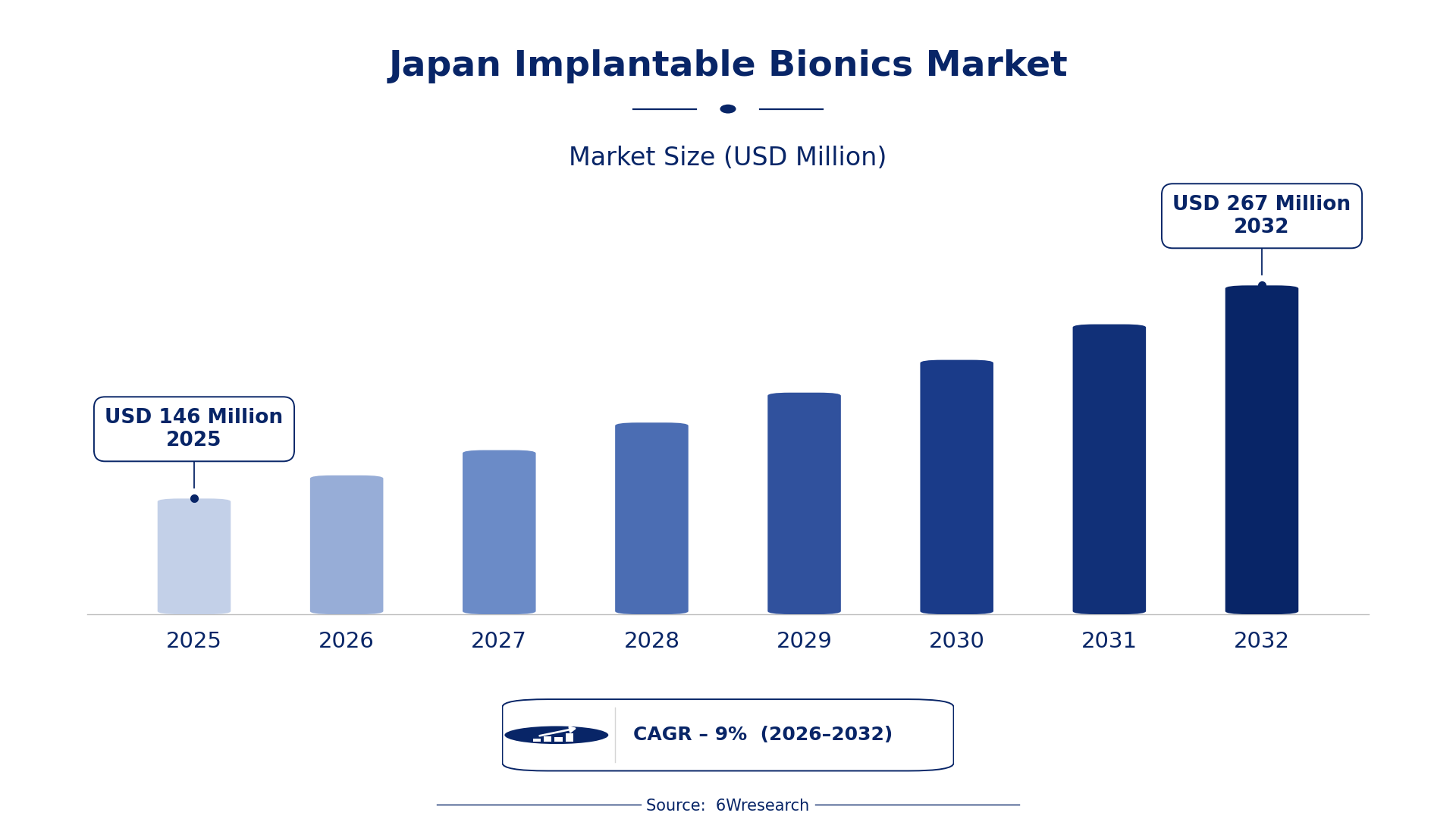
According to 6Wresearch internal database and industry insights, the Japan Implantable Bionics Market was valued at USD 146 Million in 2025 and is projected to reach USD 267 Million by 2032, growing at a CAGR of approximately 9% during 2026–2032.
Japan Implantable Bionics Market Highlights
| Report Metric | Details |
| Report Name | Japan Implantable Bionics Market (2026-2032) |
| Market Size 2025 | USD 146 Million |
| Market Size 2032 | USD 267 Million |
| Absolute Growth 2025–2032 | USD 121 Million |
| CAGR 2026–2032 | 9% |
| Peak Annual Growth | 9.9% in 2026 |
| Forecast Period | 2026–2032 |
| Historical Data | 2022–2025 |
| Base Year | 2025 |
| Leading Device Type, 2025 | Cochlear Implants (39% share) |
| Leading Assistive Function, 2025 | Hearing Enhancement (51% share) |
| Leading Integration Mode, 2025 | Neural Interface (43% share) |
| Leading End User, 2025 | Ophthalmic Hospitals (43% share) |
| Fastest-Growing Device Type | Neuromuscular Implants (12.4% CAGR) |
| Fastest-Growing Assistive Function | Cognitive/Augmented Function (11.9% CAGR) |
| Fastest-Growing Integration Mode | Sensor + Signal Unit (12.1% CAGR) |
| Fastest-Growing End User | Neuroprosthetic Labs (11.6% CAGR) |
| Growing Sector | Assistive Technologies |
| Key End Users | Healthcare providers, Research institutions, Hospitals, Clinics |
Japan Implantable Bionics Market Year-wise Growth Rate and Key Drivers (2022–2032)
This graph illustrates the annual growth rates of the market from 2022 to 2032, highlighting a steady upward trajectory and projected market expansion over the forecast period.
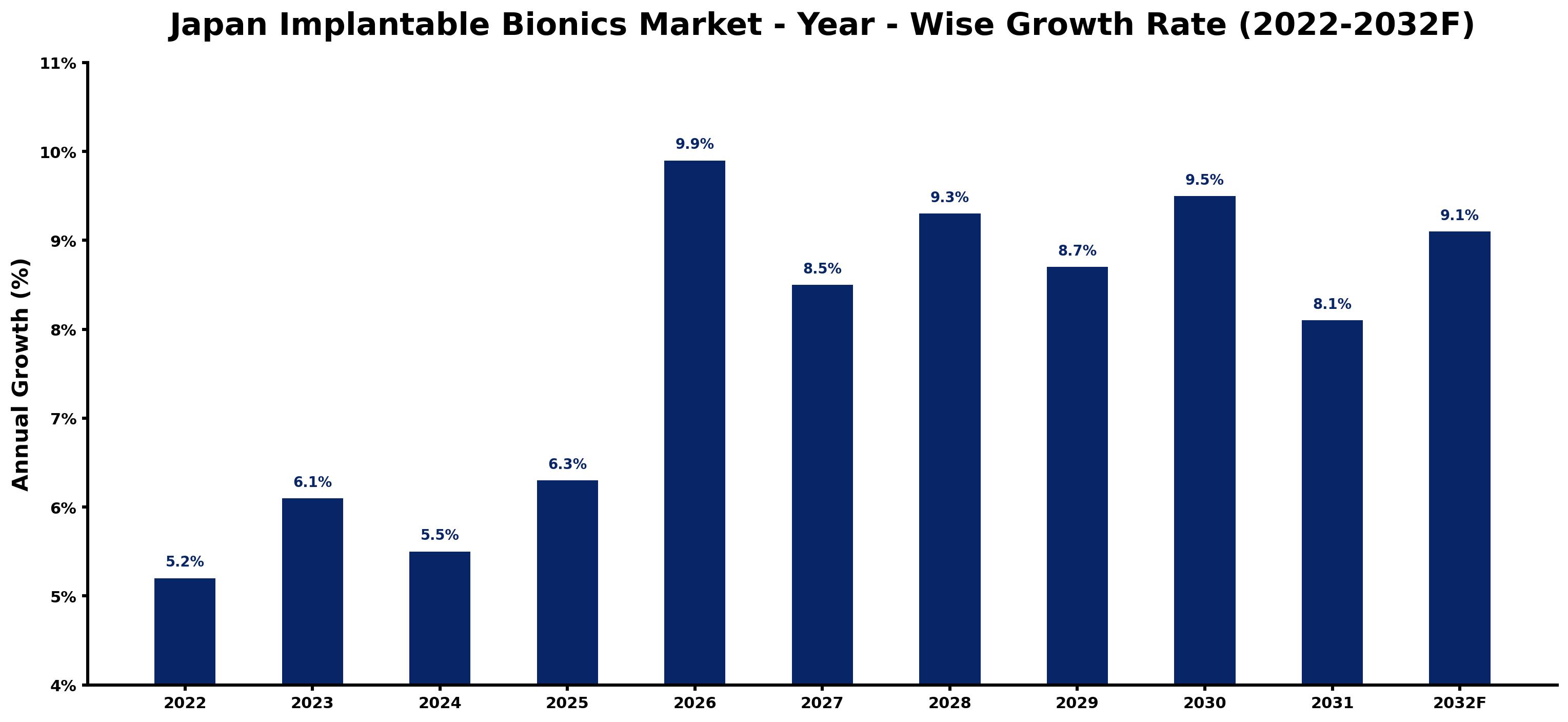
Below, each year's estimated growth is shown next to the factor that most influenced it.
| Year | Estimated Annual Growth (%) | Market Rationale |
| 2022 | 5.2 | The market demonstrated steady growth, reflecting ongoing advancements in medical technology. |
| 2023 | 6.1 | Growth accelerated as healthcare providers increased adoption of implantable bionics. |
| 2024 | 5.5 | The market experienced a slowdown due to saturation in certain segments. |
| 2025 | 6.3 | Demand surged as new technologies improved patient outcomes and accessibility. |
| 2026 | 9.9 | The market is expected to peak with heightened investments in neuroprosthetic research and development. |
| 2027 | 8.5 | Growth is projected to slow as competition intensifies among emerging technologies. |
| 2028 | 9.3 | Demand is expected to increase again due to rising awareness of cognitive function solutions. |
| 2029 | 8.7 | A slowdown is projected as the market adjusts to new regulatory standards. |
| 2030 | 9.5 | Growth is expected to pick up as healthcare facilities expand their bionic device offerings. |
| 2031 | 8.1 | The market is projected to experience a slowdown as established products face market saturation. |
| 2032 | 9.1 | Demand is expected to rise with advancements in neural interface technologies. |
Note: Market size estimations and growth projections presented in this report are based on 6Wresearch's proprietary forecasting methodology, utilizing the latest available industry data, government publications, and primary research inputs.
Japan Implantable Bionics Market Synopsis
Implantable bionics are advanced medical devices designed to restore biological functions, made from biocompatible materials and sophisticated electronics. The Japan Implantable Bionics Market is expanding due to an aging population, with 29.3% aged 65 or older by September 2024, and increasing healthcare expenditure, which reached approximately JPY 46.7 trillion in fiscal 2022. Demand is further driven by advancements in technologies such as retinal implants and cochlear implants, which are critical for improving the quality of life for patients with disabilities.
Market Dynamics Impact Analysis (2026–2032)
| Factor | Type | Impact | Primary Segment Affected |
| Aging population drives demand for hearing enhancement devices. | Driver | High | Hearing Enhancement |
| Technological advancements in neural interfaces are creating new applications. | Driver | High | Neural Interface |
| Increased funding for neuroprosthetic research presents investment opportunities. | Opportunity | High | Neuroprosthetic Labs |
| Growing need for cognitive enhancement technologies opens new markets. | Opportunity | Medium | Cognitive/Augmented Function |
| High costs of advanced bionic devices limit access for some patients. | Restraint | High | Retinal Implants |
| Regulatory challenges can delay the introduction of new devices. | Restraint | Medium | Cochlear Implants |
| Limited awareness among patients about available bionic options affects adoption. | Challenge | High | Vision Restoration |
| Competition from alternative therapies may hinder market growth. | Challenge | Medium | Neuromuscular Implants |
Evaluation of Drivers in Japan Implantable Bionics Market (2026–2032)
The table below links each growth driver to the segment it affects and the evidence for it.
| Drivers | Primary Segment Affected | Why It Matters (Evidence) |
| Aging population increases the need for hearing devices. | Hearing Enhancement | With 29.3% of the population aged 65 or older, demand for hearing devices is rising. |
| Technological advancements in neural interfaces are expanding applications. | Neural Interface | Research centres in Tokyo are developing innovative brain-machine interfaces for various applications. |
| Increased healthcare expenditure supports investment in implantable bionics. | Retinal Implants | Japan's medical care expenditure reached about JPY 46.7 trillion in 2022, facilitating investment. |
| Growing awareness of cognitive function technologies drives demand for related devices. | Cognitive/Augmented Function | Neuroscience R&D centres are focusing on cognitive function improvement technologies. |
| Support from government initiatives boosts research and development efforts. | Neuroprosthetic Labs | The government allocated ¥5 billion in 2023 for advanced medical technology development. |
The strongest pull on demand comes from Japan's aging population, with 29.3% aged 65 or older by September 2024, increasing the need for hearing devices. Healthcare expenditure reached approximately JPY 46.7 trillion in fiscal 2022, enabling healthcare providers to invest in advanced implantable bionics. Research centres in Tokyo are developing brain-machine interfaces, expanding applications in the field. Neuroscience R&D centres are focusing on technologies that improve cognitive function, driving demand for related devices.
Evaluation of Restraints in Japan Implantable Bionics Market
Below are the constraints most often cited by buyers and suppliers, with the segment each affects.
| Market Restraint | Primary Segment Affected | Why It Matters (Evidence) |
| High costs of advanced bionic devices limit patient access. | Retinal Implants | The average cost of retinal implants can exceed JPY 1 million, restricting affordability. |
| Regulatory challenges can delay new product introductions. | Neuromuscular Implants | Compliance with the PMD Act can prolong the approval process for new devices. |
| Limited awareness among patients about available bionic options affects adoption. | Vision Restoration | Many patients remain unaware of the benefits of retinal implants for vision restoration. |
| Competition from alternative therapies may hinder market growth. | Cognitive/Augmented Function | Emerging therapies for limb control could divert attention from traditional bionic solutions. |
| Insurance coverage limitations restrict access to implantable bionics. | Hearing Enhancement | Not all insurance plans cover cochlear implants, making them less accessible. |
Japan Implantable Bionics Market Challenges
Hospitals in Japan struggle with outdated technology for implantable bionics, causing delays in patient treatments and increasing costs for healthcare providers. Suppliers encounter intense competition, leading to price wars that shrink profit margins and restrict R&D funding for producers. Regulatory obstacles complicate the approval process for new devices, often extending timelines by up to 18 months, which delays access for patients in need. A shortage of skilled professionals in specialised medical fields hampers effective implementation of advanced bionic technologies, resulting in a backlog of procedures for clinics and hospitals.
Trends in the Japan Implantable Bionics Market
The shifts below are changing how Japan Implantable Bionics Market products are bought and supplied.
- Shift towards Advanced Cognitive Function Technologies: A shift is occurring towards cognitive function technologies, with over 50 neuroprosthetic devices in clinical trials as of 2023. This trend is supported by increasing research in neuroscience R&D centres focusing on brain-machine interfaces.
- Growing Adoption of Retinal Implants: Ophthalmic hospitals are increasingly adopting retinal implants, with a rise in procedures reported in 2023. This change is evidenced by the government's initiative to improve access to these devices, reflecting a growing demand for vision restoration.
- Increase in Implant Procedures: ENT clinics are reporting a steady increase in implant procedures, with thousands performed annually. This trend highlights the rising demand for hearing solutions among the aging population.
- Expansion of Neuroprosthetic Research: Neuroprosthetic labs are expanding their research efforts, focusing on developing new brain-machine interfaces. With a budget of ¥5 billion allocated in 2023, the government is actively supporting this growth.
Investment Opportunities in the Japan Implantable Bionics Market
Where to invest in the Japan Implantable Bionics Market: the main openings are set out below.
- Healthcare Providers Seeking a leading supplier: Ophthalmic hospitals are looking to improve their offerings with advanced retinal implants. With the government aiming to increase adoption by 2025, partnerships with local manufacturers could facilitate entry.
- Investment in Neuroprosthetic Research: Neuroprosthetic labs are in need of new technologies for brain-machine interfaces. Collaborating with research institutions can provide access to funding and expertise, essential for development.
- Supply of Cognitive Function Devices: Neuroscience R&D centres require advanced cognitive function devices to support their research. Engaging in joint ventures with these centres can open new market opportunities.
- Expansion in ENT Clinics: ENT clinics are expanding their services to include implant procedures. Establishing partnerships with these clinics can enhance market presence and drive sales.
Government Initiatives in the Japan Implantable Bionics Market
The PMD Act, renamed in 2014, regulates the approval and quality of medical devices, ensuring safety and efficacy for implantable bionics. The Clinical Trials Act, enacted in 2017, sets rules for conducting clinical research, promoting transparency and accountability in testing new devices.
The Pharmaceuticals and Medical Devices Agency (PMDA) oversees the approval process for medical devices, ensuring compliance with safety standards. The Japan Agency for Medical Research and Development (AMED) funds medical research initiatives, including those focused on neuroprosthetics, promoting the development of implantable bionics.
Future Insight of the Japan Implantable Bionics Market
By 2032, clinics will see improved access to implantable bionics as government initiatives drive the adoption of assistive technologies. The number of neuroprosthetic devices in clinical trials will surpass 50, fostering innovation and enabling suppliers to launch new products. Collaboration between research institutions and hospitals will expedite development processes, allowing buyers to obtain advanced technologies more swiftly. Research at neuroscience R&D centres in Tokyo will likely yield breakthroughs that enhance rehabilitation practices.
Market Segmentation Analysis
Japan Implantable Bionics Market report covers a detailed analysis of the following market segments:
By Device Type – Cochlear Implants Lead, Neuromuscular Implants Expected to Grow Fastest
According to Saurav Kr Singh, Senior Research Analyst at 6Wresearch, Cochlear Implants took 39% of device type revenue in 2025, more than any other category. With over 10,000 cochlear implants installed as of 2023, they are essential in auditory rehabilitation across Japan. Over 2026–2032, Neuromuscular Implants are expected to post the fastest growth, at a CAGR of 12.4%. Neuromuscular implants are experiencing rapid growth as they are vital for supporting limb control in patients with paralysis. This segment's expansion is propelled by advancements in rehabilitation technologies and increasing awareness among healthcare providers. Suppliers should focus on enhancing product offerings in neuromuscular implants to capitalise on this growing market.
By Assistive Function – Hearing Enhancement Leads, Cognitive/Augmented Function Expected to Grow Fastest
Hearing Enhancement accounted for 51% of the market by assistive function in 2025. Hearing enhancement leads the market as it significantly improves the quality of life for individuals with hearing impairments. Research indicates that over 70% of patients with severe hearing loss benefit from these devices, underscoring their importance. The quickest growth will come from Cognitive/Augmented Function, forecast to expand at a CAGR of 11.9% between 2026 and 2032. Cognitive and augmented function is the fastest-growing segment, reflecting the rising application of advanced neurological therapies in clinical settings. The growing interest in cognitive enhancement technologies is a key factor behind this rapid expansion. Buyers should consider investing in cognitive and augmented function technologies to stay ahead in the evolving healthcare landscape.
By Integration Mode – Neural Interface Leads, Sensor + Signal Unit Expected to Grow Fastest
In 2025, Neural Interface led the integration mode split with a 43% share. The neural interface segment dominates as it is essential for connecting devices to the nervous system, enabling effective communication between bionic devices and the human body. This integration is crucial for the functionality of various implantable bionics. Sensor + Signal Unit is set to record the highest CAGR in this split, 12.1% over 2026–2032. The sensor and signal unit integration mode is witnessing the fastest growth, driven by the need for precise data collection and processing in bionic devices. The rise in demand for smart medical devices further accelerates this trend. Suppliers must prioritise the development of sensor and signal unit technologies to meet the increasing demand for data-driven bionic solutions.
By End User – Ophthalmic Hospitals Lead, Neuroprosthetic Labs Expected to Grow Fastest
Ophthalmic Hospitals held 43% of the Japan Implantable Bionics Market by end user in 2025. Ophthalmic hospitals lead the market as they are specialised facilities dedicated to vision-related treatments, making them key players in the adoption of implantable bionics. Their advanced surgical technologies support the effective implementation of these devices for patients. Neuroprosthetic Labs are projected to grow fastest, at a CAGR of 11.6% during 2026–2032. Neuroprosthetic labs are the fastest-growing end user, focusing on the development and testing of neuroprosthetic devices. The increasing number of clinical trials for these devices indicates a robust pipeline for future growth. Providers should strengthen partnerships with neuroprosthetic labs to leverage emerging opportunities in device development.
Key Attractiveness of the Report
- 10 Years of Market Numbers
- Historical Data Starting from 2022 to 2025
- Base Year 2025
- Forecast Data until 2032
- Key Performance Indicators Impacting the Market
- Major Upcoming Developments and Projects
Key Highlights of the Report:
- Japan Implantable Bionics Market Outlook
- Market Size of Japan Implantable Bionics Market, 2025
- Forecast of Japan Implantable Bionics Market, 2032
- Historical Data and Forecast of Japan Implantable Bionics Revenues & Volume for the Period 2022-2032F
- Japan Implantable Bionics Market Trend Evolution
- Japan Implantable Bionics Market Drivers and Challenges
- Japan Implantable Bionics Price Trends
- Japan Implantable Bionics Porter's Five Forces
- Japan Implantable Bionics Industry Life Cycle
- Historical Data and Forecast of Japan Implantable Bionics Market Revenues & Volume By Device Type for the Period 2022-2032F
- Historical Data and Forecast of Japan Implantable Bionics Market Revenues & Volume By Retinal Implants for the Period 2022-2032F
- Historical Data and Forecast of Japan Implantable Bionics Market Revenues & Volume By Cochlear Implants for the Period 2022-2032F
- Historical Data and Forecast of Japan Implantable Bionics Market Revenues & Volume By Neuromuscular Implants for the Period 2022-2032F
- Historical Data and Forecast of Japan Implantable Bionics Market Revenues & Volume By Brain-Machine Interfaces for the Period 2022-2032F
- Historical Data and Forecast of Japan Implantable Bionics Market Revenues & Volume By Assistive Function for the Period 2022-2032F
- Historical Data and Forecast of Japan Implantable Bionics Market Revenues & Volume By Vision Restoration for the Period 2022-2032F
- Historical Data and Forecast of Japan Implantable Bionics Market Revenues & Volume By Hearing Enhancement for the Period 2022-2032F
- Historical Data and Forecast of Japan Implantable Bionics Market Revenues & Volume By Limb Control/Support for the Period 2022-2032F
- Historical Data and Forecast of Japan Implantable Bionics Market Revenues & Volume By Cognitive/Augmented Function for the Period 2022-2032F
- Historical Data and Forecast of Japan Implantable Bionics Market Revenues & Volume By Integration Mode for the Period 2022-2032F
- Historical Data and Forecast of Japan Implantable Bionics Market Revenues & Volume By Neural Interface for the Period 2022-2032F
- Historical Data and Forecast of Japan Implantable Bionics Market Revenues & Volume By Electrode + Receiver for the Period 2022-2032F
- Historical Data and Forecast of Japan Implantable Bionics Market Revenues & Volume By Sensor + Signal Unit for the Period 2022-2032F
- Historical Data and Forecast of Japan Implantable Bionics Market Revenues & Volume By Direct Brain Stimulation for the Period 2022-2032F
- Historical Data and Forecast of Japan Implantable Bionics Market Revenues & Volume By End User for the Period 2022-2032F
- Historical Data and Forecast of Japan Implantable Bionics Market Revenues & Volume By Ophthalmic Hospitals for the Period 2022-2032F
- Historical Data and Forecast of Japan Implantable Bionics Market Revenues & Volume By ENT Clinics for the Period 2022-2032F
- Historical Data and Forecast of Japan Implantable Bionics Market Revenues & Volume By Neuroprosthetic Labs for the Period 2022-2032F
- Historical Data and Forecast of Japan Implantable Bionics Market Revenues & Volume By Neuroscience R&D Centers for the Period 2022-2032F
- Japan Implantable Bionics Import Export Trade Statistics
- Market Opportunity Assessment By Device Type
- Market Opportunity Assessment By Assistive Function
- Market Opportunity Assessment By Integration Mode
- Market Opportunity Assessment By End User
- Japan Implantable Bionics Top Companies Market Share
- Japan Implantable Bionics Competitive Benchmarking By Technical and Operational Parameters
- Japan Implantable Bionics Company Profiles
- Japan Implantable Bionics Key Strategic Recommendations
Market Covered
The study includes the following segmentation.
By Device Type
- Retinal Implants
- Cochlear Implants
- Neuromuscular Implants
- Brain-Machine Interfaces
By Assistive Function
- Vision Restoration
- Hearing Enhancement
- Limb Control/Support
- Cognitive/Augmented Function
By Integration Mode
- Neural Interface
- Electrode + Receiver
- Sensor + Signal Unit
- Direct Brain Stimulation
By End User
- Ophthalmic Hospitals
- ENT Clinics
- Neuroprosthetic Labs
- Neuroscience R&D Centers































