Japan Implantable Electronics Market Size & Growth Rate
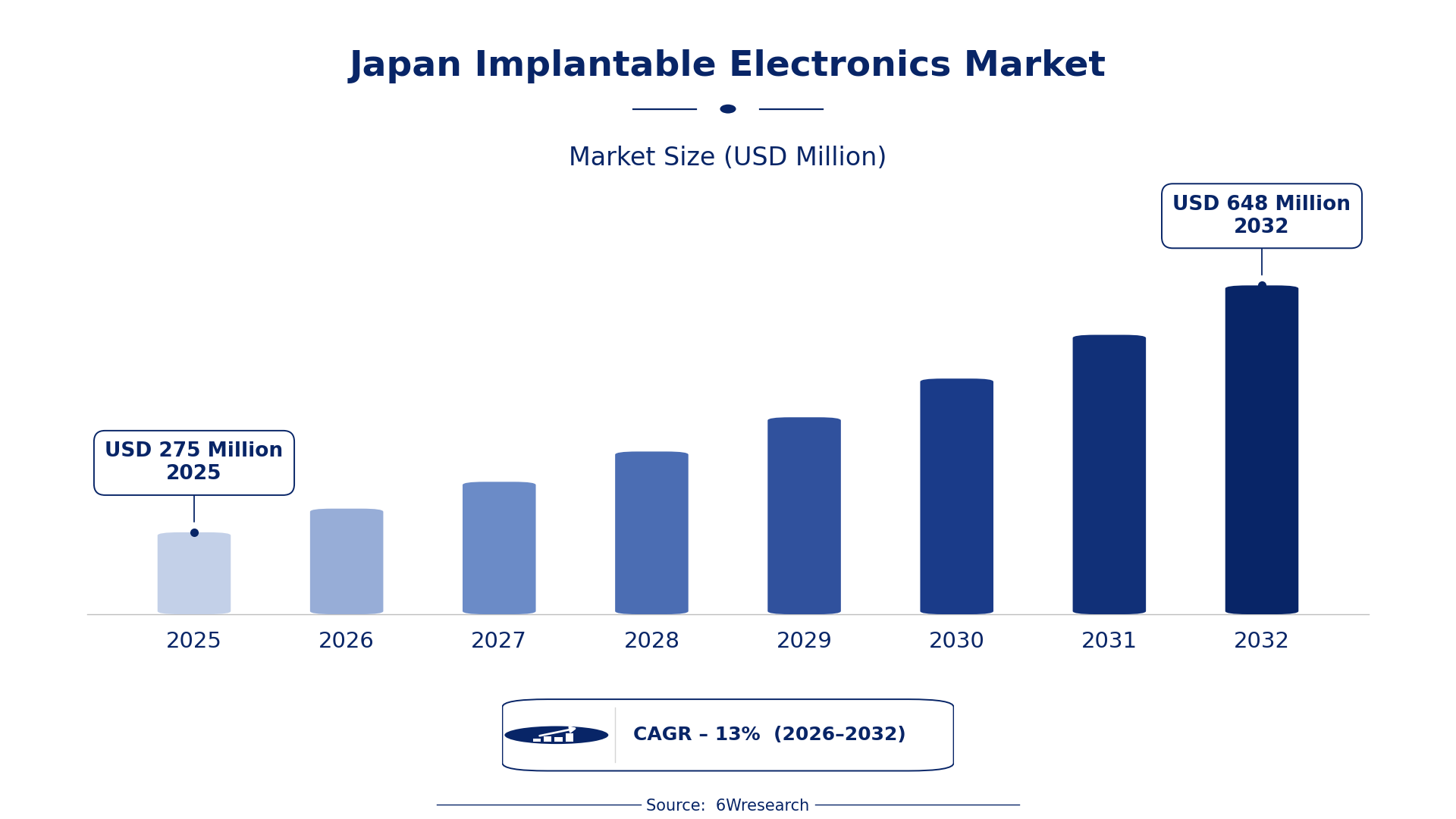
According to 6Wresearch internal database and industry insights, the Japan Implantable Electronics Market was valued at USD 275 Million in 2025 and is projected to reach USD 648 Million by 2032, growing at a CAGR of approximately 13% during 2026–2032.
Japan Implantable Electronics Market Highlights
| Report Metric | Details |
| Report Name | Japan Implantable Electronics Market (2026-2032) |
| Market Size 2025 | USD 275 Million |
| Market Size 2032 | USD 648 Million |
| Absolute Growth 2025–2032 | USD 373 Million |
| CAGR 2026–2032 | 13% |
| Peak Annual Growth | 14.0% in 2028 |
| Forecast Period | 2026–2032 |
| Historical Data | 2022–2025 |
| Base Year | 2025 |
| Leading Component Type, 2025 | Neural Sensors (55% share) |
| Leading Functionality, 2025 | Brain Signal Monitoring (51% share) |
| Leading Connectivity Mode, 2025 | Wireless/Optical (37% share) |
| Leading End User, 2025 | Research Institutions (42% share) |
| Fastest-Growing Component Type | Heart Rhythm Monitors (19.5% CAGR) |
| Fastest-Growing Functionality | Arrhythmia Detection (16.7% CAGR) |
| Fastest-Growing Connectivity Mode | Bluetooth/IoT (17.8% CAGR) |
| Fastest-Growing End User | Cardiac Centers (16.2% CAGR) |
| Growing Sector | Cardiac Centers |
| Key End Users | Research Institutions, Cardiac Centers, Specialized Clinics, Chronic Disease Care Units |
Japan Implantable Electronics Market Year-wise Growth Rate and Key Drivers (2022–2032)
This graph illustrates the annual growth rates of the market from 2022 to 2032, highlighting a steady upward trajectory and projected market expansion over the forecast period.
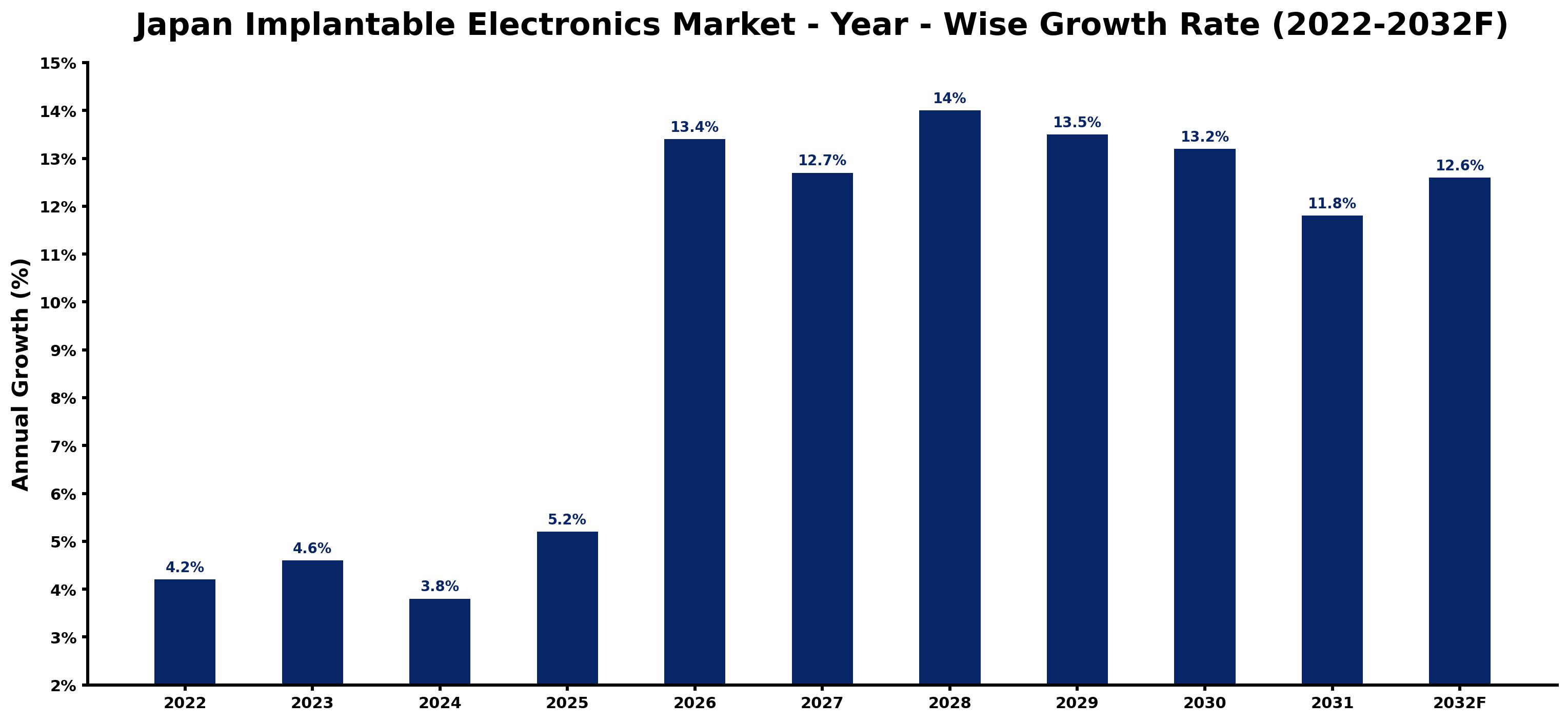
For each year, the table pairs the estimated growth rate with the leading influence on demand, showing how the drivers changed across the period.
| Year | Estimated Annual Growth (%) | Market Rationale |
| 2022 | 4.2 | The market experienced steady growth due to ongoing advancements in medical technology. |
| 2023 | 4.6 | Growth accelerated as healthcare expenditure increased, reflecting higher investment in medical devices. |
| 2024 | 3.8 | A slowdown occurred as market expansion faced temporary challenges from supply chain issues. |
| 2025 | 5.2 | Growth rebounded as hospitals upgraded their monitoring technologies and patient care improved. |
| 2026 | 13.4 | The market is expected to surge as demand for heart rhythm monitors increases among elderly patients. |
| 2027 | 12.7 | Growth will slow slightly as manufacturers face challenges in scaling production capacity. |
| 2028 | 14.0 | The market is projected to peak with rapid adoption of implantable biosensors in leading healthcare facilities. |
| 2029 | 13.5 | A slight slowdown will occur as competition intensifies among device manufacturers in the market. |
| 2030 | 13.2 | Growth is expected to continue to decelerate as market saturation begins to affect new product introductions. |
| 2031 | 11.8 | The market will experience a further slowdown as regulatory changes impact product approvals. |
| 2032 | 12.6 | Growth is projected to pick up again as new technologies gain traction in chronic disease management. |
Note: Market size estimations and growth projections presented in this report are based on 6Wresearch's proprietary forecasting methodology, utilizing the latest available industry data, government publications, and primary research inputs.
Japan Implantable Electronics Market Synopsis
Implantable electronics are sophisticated medical devices inserted into the body for monitoring and therapeutic purposes, made from biocompatible materials. The Japan Implantable Electronics Market is expanding due to increased healthcare expenditure, ongoing research in neural sensors, and the implementation of strict safety standards, which build consumer confidence and drive further adoption. In 2023, Japan's healthcare expenditure reached ¥42 trillion, reflecting strong demand driven by an ageing population and advancements in medical technology.
Market Dynamics Impact Analysis (2026–2032)
| Factor | Type | Impact | Primary Segment Affected |
| Rising healthcare expenditure supports the purchase of advanced medical devices. | Driver | High | Heart Rhythm Monitors |
| Growing elderly population increases demand for chronic disease management solutions. | Driver | High | Drug Delivery Chips |
| The installed base of implantable biosensors is expanding, creating opportunities for upgrades. | Opportunity | High | Implantable Biosensors |
| Research institutions are investing heavily in neural sensors for innovative applications. | Opportunity | Medium | Neural Sensors |
| Regulatory hurdles can delay the introduction of new implantable devices to the market. | Restraint | High | Drug Delivery Chips |
| High costs associated with the development and production of implantable electronics limit market access. | Restraint | Medium | Heart Rhythm Monitors |
| Compliance with stringent regulations can strain resources for manufacturers. | Challenge | High | Implantable Biosensors |
| Capacity constraints in production facilities may hinder timely market supply. | Challenge | Medium | Neural Sensors |
Evaluation of Drivers in Japan Implantable Electronics Market (2026–2032)
Key forces behind demand, with the segment each one moves most, are listed below.
| Drivers | Primary Segment Affected | Why It Matters (Evidence) |
| Increased healthcare spending drives demand for advanced monitoring technologies. | Heart Rhythm Monitors | In 2023, Japan's healthcare expenditure reached ¥42 trillion, prompting hospitals to invest in heart rhythm monitors. |
| An ageing population necessitates more chronic disease management solutions. | Drug Delivery Chips | Approximately 30% of patients in chronic disease care units use implantable electronics, increasing demand for drug delivery systems. |
| Technological advancements in implantable devices improve patient outcomes and drive purchases. | Implantable Biosensors | The installed base of implantable biosensors in Japan is estimated at 500,000 units, reflecting growing adoption. |
| Research institutions focus on neural sensors for new applications. | Neural Sensors | Research institutions are developing neural sensors for brain-computer interface applications, boosting demand. |
| Regulatory standards ensure safety and efficacy, encouraging market growth. | Heart Rhythm Monitors | JIS standards for medical devices ensure quality, fostering consumer trust and increasing purchases. |
A wider customer base explains much of the growth, as Japan's healthcare expenditure reached ¥42 trillion in 2023, prompting hospitals to invest in advanced monitoring technologies. Approximately 30% of patients in chronic disease care units now use implantable electronics, which drives demand for drug delivery chips. The installed base of implantable biosensors is estimated at 500,000 units, indicating increased adoption in clinical settings. Research institutions are actively developing neural sensors for brain-computer interface applications, further expanding the market. Compliance with JIS standards builds consumer confidence, leading to higher purchases of heart rhythm monitors.
Evaluation of Restraints in Japan Implantable Electronics Market
The following restraints limit how fast demand can grow.
| Market Restraint | Primary Segment Affected | Why It Matters (Evidence) |
| Regulatory hurdles can delay the introduction of new implantable devices. | Drug Delivery Chips | Compliance with the PMD Act can prolong the approval process for new drug delivery systems. |
| High costs associated with the development and production of implantable electronics limit market access. | Heart Rhythm Monitors | Manufacturers face high R&D expenses, impacting pricing strategies and market entry. |
| Limited awareness among healthcare providers can hinder device adoption. | Implantable Biosensors | Some healthcare providers are unaware of the latest advancements in biosensor technology. |
| Supply chain disruptions can affect the availability of critical components. | Neural Sensors | Global supply chain issues have impacted the production timelines for neural sensor devices. |
| Market saturation may limit opportunities for new entrants. | Drug Delivery Chips | The presence of established manufacturers creates a challenging environment for newcomers. |
Japan Implantable Electronics Market Challenges
Producers encounter a shortage of skilled technicians, as training programmes have not kept pace with technological advancements, resulting in delays in device development that can extend timelines by six months. Technology integration remains a hurdle, as many manufacturers lack access to advanced microelectronics, which can raise production costs by 20% for implantable devices. Supply chain disruptions stem from reliance on specific components, causing delays in delivery for hospitals that require timely access to devices. Competition intensifies with new entrants, forcing established producers to lower prices, which can reduce profitability by 15%.
Trends in the Japan Implantable Electronics Market
Four trends stand out in the Japan Implantable Electronics Market.
- Shift towards Advanced Telemedicine Solutions: In 2023, the government launched a program to improve telemedicine capabilities using implantable devices, promoting remote patient monitoring. This initiative is projected to increase the adoption of implantable electronics by 20% in the next few years.
- Emergence of Brain-Computer Interfaces: Research institutions are increasingly focusing on neural sensors for brain-computer interface applications, with clinical trials ongoing. This trend is expected to drive a 15% growth in neural sensor adoption by 2026.
- Increased Focus on Patient-Centric Design: Manufacturers are prioritising user-friendly designs in implantable devices, responding to patient feedback. This change is reflected in the rise of implantable biosensors that offer real-time monitoring capabilities, with over 70% now featuring wireless transmission.
- Growing Integration of IoT in Healthcare: The integration of Bluetooth and IoT technologies in implantable devices is gaining traction, improving connectivity. This shift is evident in the increase of devices with wireless transmission technology, now present in over 70% of implantable electronics.
Investment Opportunities in the Japan Implantable Electronics Market
The following opportunities in the Japan Implantable Electronics Market pair current demand with a clear way in.
- Expansion of Implantable Biosensors: With an estimated installed base of 500,000 units, there is a chance to upgrade existing devices. Cardiac centres are looking for advanced biosensors to improve patient monitoring, creating a demand for new solutions.
- Investment in Neural Sensors: Research institutions are heavily investing in neural sensors for brain-computer interfaces, focusing on new applications. This presents an opportunity for manufacturers to partner with these institutions to develop advanced technologies.
- Growing Demand for Drug Delivery Systems: The increasing prevalence of chronic diseases among the elderly population creates a pressing need for efficient drug delivery systems. Now is the time for manufacturers to invest in advanced drug delivery chips to meet this demand.
- Regulatory Pathway for New Devices: Japan has established a regulatory pathway for the approval of new implantable devices, streamlining the process. Manufacturers can utilise this framework to introduce new products more efficiently.
Government Initiatives in the Japan Implantable Electronics Market
The Semiconductor and Digital Industry Strategy, launched in June 2021, aims to secure domestic semiconductor manufacturing, which is vital for implantable electronics production. This strategy complements existing regulations under the PMD Act, improving the quality and safety of medical devices in Japan. In 2023, the Ministry of Health allocated ¥5 billion for research on implantable electronics, supporting innovation and development in the sector.
The Ministry of Health, Labour and Welfare (MHLW) oversees the approval and funding of medical devices, ensuring compliance with the PMD Act. In 2023, the ministry allocated ¥5 billion for research on implantable electronics, supporting innovation and development in the sector.
Future Insight of the Japan Implantable Electronics Market
A shift towards improved telemedicine capabilities will drive demand for implantable devices, prompting suppliers to innovate and diversify their product offerings. By 2032, advancements in technology will enable new applications in chronic disease management, benefiting hospitals and clinics. The installed base of implantable biosensors is projected to reach 1 million units, reflecting a notable increase in usage. Streamlined regulatory pathways will accelerate approvals for new devices, allowing producers to introduce innovations to the market more rapidly.
Market Segmentation Analysis
Japan Implantable Electronics Market report covers a detailed analysis of the following market segments:
By Component Type – Neural Sensors Lead, Heart Rhythm Monitors Expected to Grow Fastest
According to Saurav Kr Singh, Senior Research Analyst at 6Wresearch, Neural Sensors held 55% of the Japan Implantable Electronics Market by component type in 2025. Neural sensors are the leading sub-segment as they are crucial for monitoring brain activity in clinical settings, supported by numerous research institutions dedicated to their development. The ongoing focus on neural sensor research for brain-computer interfaces highlights the robust demand for these devices. Heart Rhythm Monitors are projected to grow fastest, at a CAGR of 19.5% during 2026–2032. Heart rhythm monitors are experiencing rapid growth due to their essential role in detecting arrhythmias among cardiac patients, particularly as the elderly population increases. The rising prevalence of heart conditions among older adults is a key factor propelling this segment's expansion. Suppliers must prioritise advancements in heart rhythm monitor technology to meet the growing demand in cardiac care.
By Functionality – Brain Signal Monitoring Leads, Arrhythmia Detection Expected to Grow Fastest
Brain Signal Monitoring accounted for 51% of the market by functionality in 2025. Brain signal monitoring leads this segment, being directly utilised in neurological research and treatment, making it vital for healthcare providers. The substantial investment in this area, exemplified by the ¥5 billion allocated for research on implantable electronics, underscores its importance. The quickest growth will come from Arrhythmia Detection, forecast to expand at a CAGR of 16.7% between 2026 and 2032. Arrhythmia detection is the fastest-growing functionality, driven by the increasing need for effective cardiac health monitoring solutions. The rising incidence of heart disease, particularly among the elderly, significantly fuels this demand. Buyers can anticipate improved patient outcomes as advancements in arrhythmia detection technologies continue to progress.
By Connectivity Mode – Wireless/Optical Leads, Bluetooth/IoT Expected to Grow Fastest
In 2025, Wireless/Optical led the connectivity mode split with a 37% share. Wireless/optical connectivity holds the largest share in this category, serving a crucial role in data transmission across various implantable devices. This technology enables effective communication between devices and monitoring systems, which is essential in healthcare environments. Bluetooth/IoT is set to record the highest CAGR in this split, 17.8% over 2026–2032. Bluetooth/IoT connectivity is rapidly growing as it enhances device connectivity, facilitating real-time data sharing and remote monitoring capabilities. The surge in telemedicine adoption significantly contributes to this segment's growth. Suppliers should focus on integrating Bluetooth/IoT features to align with the increasing demand for connected healthcare solutions.
By End User – Research Institutions Lead, Cardiac Centers Expected to Grow Fastest
Research Institutions took 42% of end user revenue in 2025, more than any other category. Research institutions dominate the market as they are key users in developing and testing new implantable technologies. Their focus on innovation and collaboration with healthcare providers drives the demand for advanced medical devices. Over 2026–2032, Cardiac Centers are expected to post the fastest growth, at a CAGR of 16.2%. Cardiac centers are the fastest-growing end-user segment, primarily due to their direct involvement in monitoring heart health. The increasing number of cardiac patients necessitates the adoption of advanced monitoring technologies in these facilities. Suppliers must prioritise partnerships with cardiac centers to align their offerings with the needs of this expanding market.
Key Attractiveness of the Report
- 10 Years of Market Numbers
- Historical Data Starting from 2022 to 2025
- Base Year 2025
- Forecast Data until 2032
- Key Performance Indicators Impacting the Market
- Major Upcoming Developments and Projects
Key Highlights of the Report:
- Japan Implantable Electronics Market Outlook
- Market Size of Japan Implantable Electronics Market, 2025
- Forecast of Japan Implantable Electronics Market, 2032
- Historical Data and Forecast of Japan Implantable Electronics Revenues & Volume for the Period 2022-2032F
- Japan Implantable Electronics Market Trend Evolution
- Japan Implantable Electronics Market Drivers and Challenges
- Japan Implantable Electronics Price Trends
- Japan Implantable Electronics Porter's Five Forces
- Japan Implantable Electronics Industry Life Cycle
- Historical Data and Forecast of Japan Implantable Electronics Market Revenues & Volume By Component Type for the Period 2022-2032F
- Historical Data and Forecast of Japan Implantable Electronics Market Revenues & Volume By Neural Sensors for the Period 2022-2032F
- Historical Data and Forecast of Japan Implantable Electronics Market Revenues & Volume By Heart Rhythm Monitors for the Period 2022-2032F
- Historical Data and Forecast of Japan Implantable Electronics Market Revenues & Volume By Drug Delivery Chips for the Period 2022-2032F
- Historical Data and Forecast of Japan Implantable Electronics Market Revenues & Volume By Implantable Biosensors for the Period 2022-2032F
- Historical Data and Forecast of Japan Implantable Electronics Market Revenues & Volume By Functionality for the Period 2022-2032F
- Historical Data and Forecast of Japan Implantable Electronics Market Revenues & Volume By Brain Signal Monitoring for the Period 2022-2032F
- Historical Data and Forecast of Japan Implantable Electronics Market Revenues & Volume By Arrhythmia Detection for the Period 2022-2032F
- Historical Data and Forecast of Japan Implantable Electronics Market Revenues & Volume By Controlled Release for the Period 2022-2032F
- Historical Data and Forecast of Japan Implantable Electronics Market Revenues & Volume By Glucose/Lactate Monitoring for the Period 2022-2032F
- Historical Data and Forecast of Japan Implantable Electronics Market Revenues & Volume By Connectivity Mode for the Period 2022-2032F
- Historical Data and Forecast of Japan Implantable Electronics Market Revenues & Volume By Wireless/Optical for the Period 2022-2032F
- Historical Data and Forecast of Japan Implantable Electronics Market Revenues & Volume By Bluetooth/IoT for the Period 2022-2032F
- Historical Data and Forecast of Japan Implantable Electronics Market Revenues & Volume By NFC for the Period 2022-2032F
- Historical Data and Forecast of Japan Implantable Electronics Market Revenues & Volume By Wireless Transmission for the Period 2022-2032F
- Historical Data and Forecast of Japan Implantable Electronics Market Revenues & Volume By End User for the Period 2022-2032F
- Historical Data and Forecast of Japan Implantable Electronics Market Revenues & Volume By Research Institutions for the Period 2022-2032F
- Historical Data and Forecast of Japan Implantable Electronics Market Revenues & Volume By Cardiac Centers for the Period 2022-2032F
- Historical Data and Forecast of Japan Implantable Electronics Market Revenues & Volume By Specialized Clinics for the Period 2022-2032F
- Historical Data and Forecast of Japan Implantable Electronics Market Revenues & Volume By Chronic Disease Care Units for the Period 2022-2032F
- Japan Implantable Electronics Import Export Trade Statistics
- Market Opportunity Assessment By Component Type
- Market Opportunity Assessment By Functionality
- Market Opportunity Assessment By Connectivity Mode
- Market Opportunity Assessment By End User
- Japan Implantable Electronics Top Companies Market Share
- Japan Implantable Electronics Competitive Benchmarking By Technical and Operational Parameters
- Japan Implantable Electronics Company Profiles
- Japan Implantable Electronics Key Strategic Recommendations
Market Covered
This report examines the market across the segments below.
By Component Type
- Neural Sensors
- Heart Rhythm Monitors
- Drug Delivery Chips
- Implantable Biosensors
By Functionality
- Brain Signal Monitoring
- Arrhythmia Detection
- Controlled Release
- Glucose/Lactate Monitoring
By Connectivity Mode
- Wireless/Optical
- Bluetooth/IoT
- NFC
- Wireless Transmission
By End User
- Research Institutions
- Cardiac Centers
- Specialized Clinics
- Chronic Disease Care Units































