Japan in-car air purification systems Market Size & Growth Rate
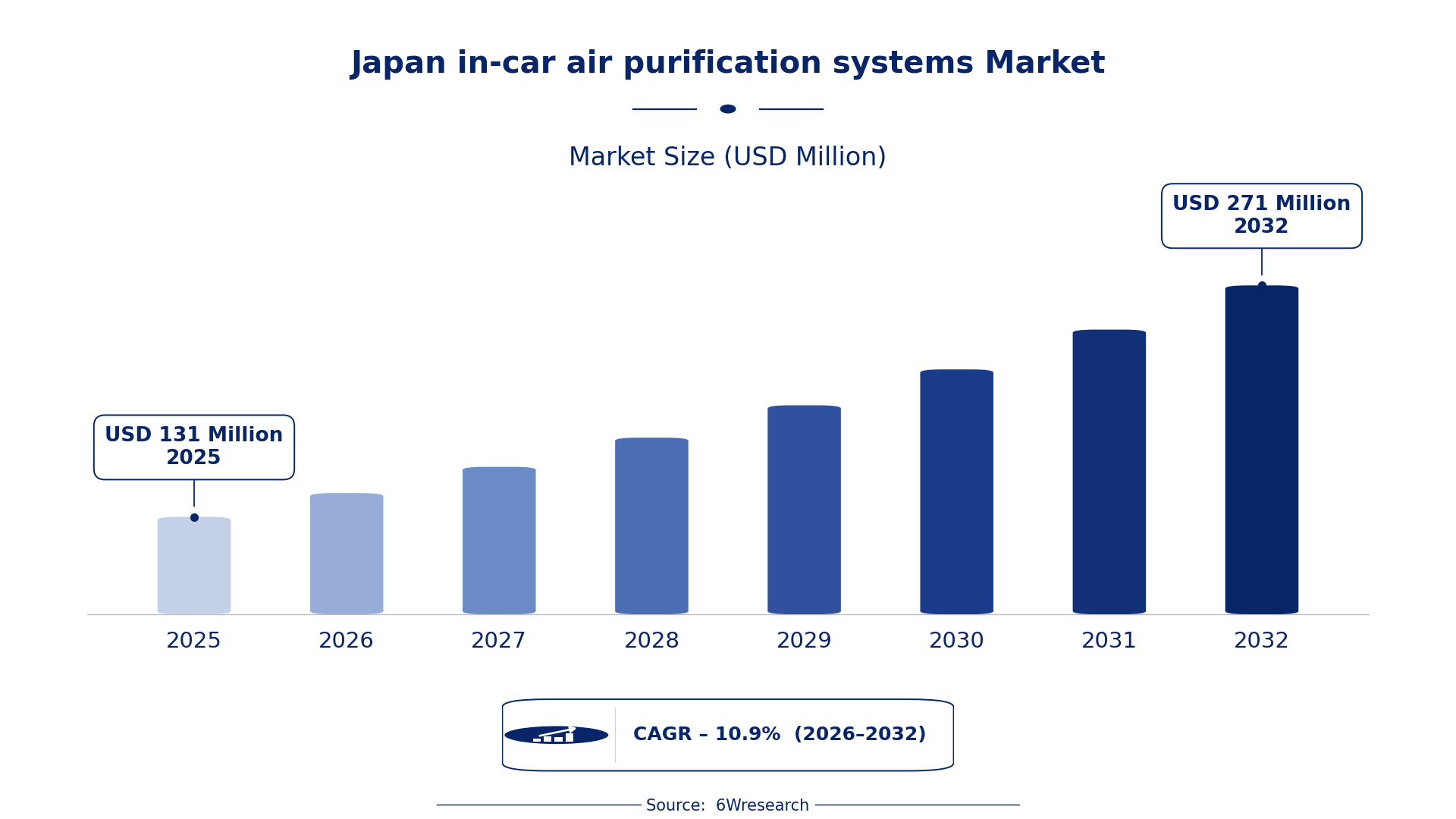
According to 6Wresearch internal database and industry insights, the Japan in-car air purification systems Market was valued at USD 131 Million in 2025 and is projected to reach USD 271 Million by 2032, growing at a CAGR of approximately 10.9% during 2026–2032.
Japan in-car air purification systems Market Highlights
| Report Metric | Details |
| Report Name | Japan in-car air purification systems Market (2026-2032) |
| Market Size 2025 | USD 131 Million |
| Market Size 2032 | USD 271 Million |
| Absolute Growth 2025–2032 | USD 140 Million |
| CAGR 2026–2032 | 10.9% |
| Peak Annual Growth | 13.2% in 2026 |
| Forecast Period | 2026–2032 |
| Historical Data | 2022–2025 |
| Base Year | 2025 |
| Leading System Type, 2025 | Hybrid Systems (37% share) |
| Leading Filtration Method, 2025 | HEPA + Ionizer Combo (38% share) |
| Leading Vehicle Segment, 2025 | SUVs & EVs (46% share) |
| Leading End User, 2025 | OEM Cabin Air Suppliers (47% share) |
| Fastest-Growing Filtration Method | Particle Removal (14.6% CAGR) |
| Fastest-Growing Vehicle Segment | Luxury Vehicles (13.8% CAGR) |
| Fastest-Growing End User | Vehicle HVAC Manufacturers (13.4% CAGR) |
| Growing Sector | Vehicle HVAC Manufacturers |
| Key End Users | OEM Cabin Air Suppliers, Vehicle HVAC Manufacturers, Air Quality Device Makers, Fleet HVAC Integrators |
Japan in-car air purification systems Market Year-wise Growth Rate and Key Drivers (2022–2032)
This graph illustrates the annual growth rates of the market from 2022 to 2032, highlighting a steady upward trajectory and projected market expansion over the forecast period.
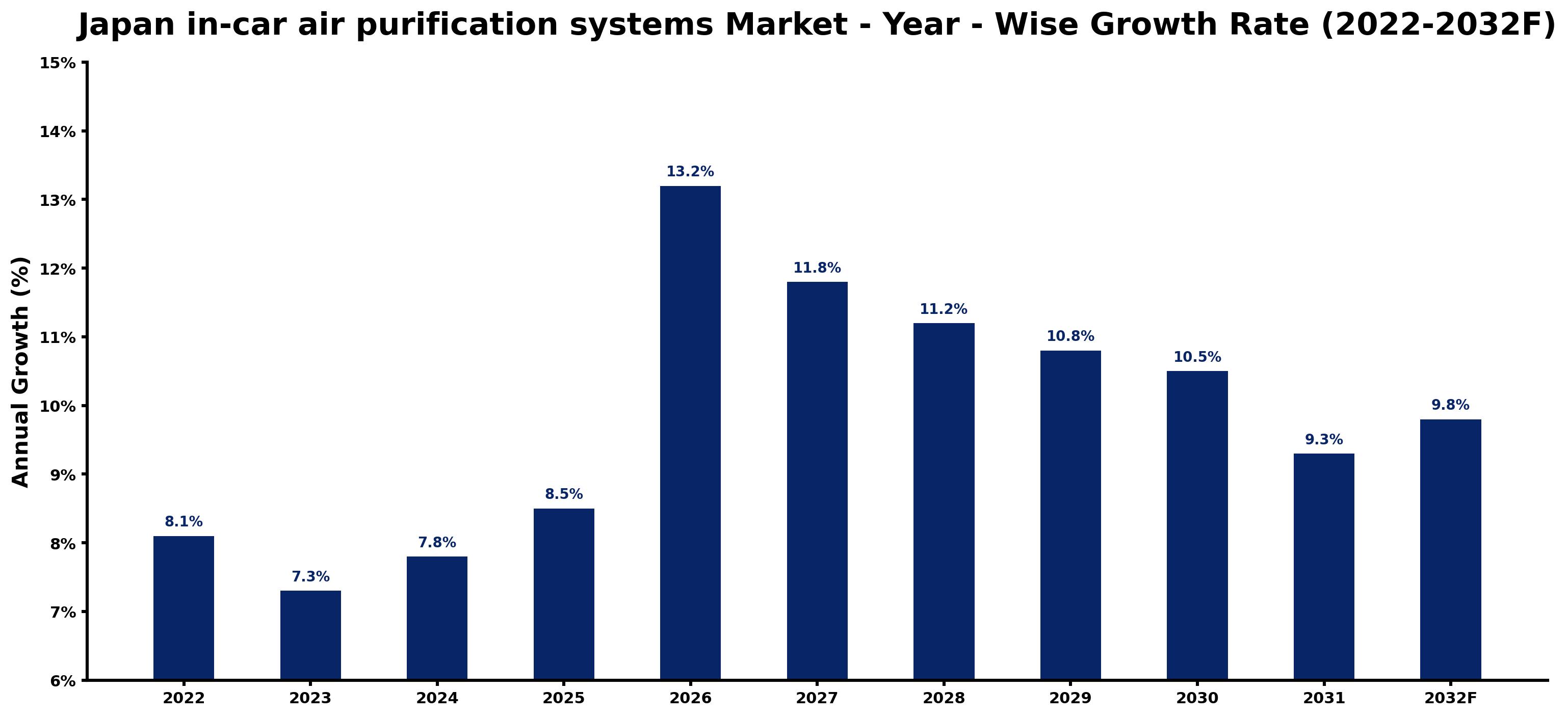
The table below sets out the estimated growth rate for each year and the main factor behind it.
| Year | Estimated Annual Growth (%) | Market Rationale |
| 2022 | 8.1 | The market experienced steady growth due to rising health awareness among consumers. |
| 2023 | 7.3 | Demand growth slowed as consumers adjusted to new air quality standards. |
| 2024 | 7.8 | An increase in vehicle production contributed to a faster growth rate. |
| 2025 | 8.5 | The market saw heightened interest in advanced air purification technologies. |
| 2026 | 13.2 | Investments in air quality solutions will drive peak growth this year. |
| 2027 | 11.8 | Growth will slow as the market begins to stabilise after rapid expansion. |
| 2028 | 11.2 | The market will continue to grow, albeit at a slower pace than previous years. |
| 2029 | 10.8 | Demand will remain strong, supported by ongoing urbanisation and health concerns. |
| 2030 | 10.5 | The market's growth rate will decrease as competition intensifies among suppliers. |
| 2031 | 9.3 | Demand growth will slow as the market matures and consumer preferences stabilise. |
| 2032 | 9.8 | A resurgence in health awareness is projected to boost demand once more. |
Note: Market size estimations and growth projections presented in this report are based on 6Wresearch's proprietary forecasting methodology, utilizing the latest available industry data, government publications, and primary research inputs.
Japan in-car air purification systems Market Synopsis
In-car air purification systems are advanced devices designed to improve air quality within vehicles by removing pollutants and allergens through technologies such as HEPA filters and ionizers. The Japan in-car air purification systems Market is expanding due to rising health awareness, investments in air purification technologies, and increasing demand for SUVs and electric vehicles. Urban areas, particularly Tokyo, with a population exceeding 14 million, drive this demand, where air quality is a pressing concern.
Market Dynamics Impact Analysis (2026–2032)
| Factor | Type | Impact | Primary Segment Affected |
| Rising health awareness among consumers drives demand for cleaner air solutions in vehicles. | Driver | High | HEPA + Ionizer Combo |
| Increasing vehicle production in Japan supports the need for integrated air purification systems. | Driver | High | Hybrid Systems |
| The growing urban population in cities like Tokyo creates a demand for improved air quality in vehicles. | Opportunity | High | Luxury Vehicles |
| The shift towards electric vehicles presents opportunities for advanced air purification integration. | Opportunity | High | SUVs & EVs |
| Strict ISO standards for automotive air quality systems may limit market entry for new players. | Restraint | Medium | OEM Cabin Air Suppliers |
| Rising competition among suppliers could lead to pricing pressures in the market. | Restraint | Medium | Air Quality Device Makers |
| High initial investment costs for advanced air purification technologies can deter some buyers. | Challenge | High | Vehicle HVAC Manufacturers |
| Technological advancements require continuous adaptation, posing challenges for existing manufacturers. | Challenge | Medium | Fleet HVAC Integrators |
Evaluation of Drivers in Japan in-car air purification systems Market (2026–2032)
These are the developments adding the most demand over the forecast period.
| Drivers | Primary Segment Affected | Why It Matters (Evidence) |
| Increased health concerns drive demand for air purification systems in vehicles. | HEPA + Ionizer Combo | With Tokyo's population exceeding 14 million, consumers seek cleaner air solutions. |
| Rising vehicle production necessitates integrated air purification systems. | Hybrid Systems | The Japanese automotive market produced approximately 8 million vehicles in 2022. |
| Urbanisation leads to greater demand for air quality improvements in vehicles. | Luxury Vehicles | The Tokyo Metropolitan Government promotes initiatives to improve urban air quality. |
| The growing popularity of SUVs and EVs boosts demand for advanced air purification. | SUVs & EVs | The demand for SUVs and EVs is rising, focusing on integrated air quality solutions. |
| Investment in air purification technologies is projected to increase by 2025. | Vehicle HVAC Manufacturers | The automotive sector in Japan is set to invest heavily in air purification technologies. |
Behind the steady rise in orders sits increased health concerns among consumers, particularly in urban areas where residents seek cleaner air solutions. The Japanese automotive market produced approximately 8 million vehicles in 2022, creating a need for integrated air purification systems. The growing popularity of electric vehicles will further increase the need for air purification systems, with investments anticipated by 2025.
Evaluation of Restraints in Japan in-car air purification systems Market
These restraints slow adoption and weigh on supplier margins.
| Market Restraint | Primary Segment Affected | Why It Matters (Evidence) |
| Strict ISO standards may limit new entrants in the air purification market. | OEM Cabin Air Suppliers | Japan has stringent ISO standards governing automotive air quality systems, creating barriers. |
| Intense competition among suppliers can lead to pricing pressures. | Air Quality Device Makers | As more players enter the market, pricing strategies may become aggressive. |
| High initial investment costs deter some buyers from adopting advanced systems. | Vehicle HVAC Manufacturers | The cost of implementing advanced air purification technologies can be prohibitive. |
| Technological advancements require constant adaptation from manufacturers. | Fleet HVAC Integrators | Keeping up with rapid technological changes can strain resources and budgets. |
| Market maturity may slow growth as consumer preferences stabilise. | Hybrid Systems | As the market matures, growth rates may normalise, affecting supplier strategies. |
Japan in-car air purification systems Market Challenges
Japan's strict ISO standards for automotive air quality systems create compliance hurdles for producers, delaying product launches and increasing costs by up to 15% for manufacturers. Supply chain disruptions arise from reliance on specific filtration technologies, leading to production delays of up to three months for buyers needing timely vehicle deliveries. Rapid technological advancements leave some producers struggling to keep pace, resulting in outdated products that fail to meet consumer expectations. Increased competition from new entrants innovating faster forces established suppliers to reduce prices, impacting their profit margins by approximately 10%.
Trends in the Japan in-car air purification systems Market
The following changes are redrawing the Japan in-car air purification systems Market.
- Shift Towards Integrated Air Quality Solutions: Tokyo is experiencing a shift towards integrated air quality solutions in vehicles, particularly in luxury models. Approximately 46% of vehicles produced in 2022 were SUVs and EVs, which increasingly incorporate advanced purification technologies.
- Emergence of Hybrid Air Purification Systems: The adoption of hybrid air purification systems is on the rise, particularly in luxury vehicles. By 2025, hybrid systems are expected to hold a 37% market share, reflecting consumer demand for superior air filtration.
- Growing Focus on Urban Air Quality: Urban areas in Japan, especially Tokyo, are prioritising air quality improvement initiatives. The Tokyo Metropolitan Government's programs aim to improve urban air quality, influencing vehicle manufacturers to adopt better purification systems.
- Increase in Health-Conscious Consumer Behaviour: Health-conscious consumers are driving demand for advanced air purification systems. The automotive sector is responding with innovations, as evidenced by the projected growth of air quality device makers in response to rising health concerns.
Investment Opportunities in the Japan in-car air purification systems Market
The following opportunities in the Japan in-car air purification systems Market pair current demand with a clear way in.
- Partnerships with Local Manufacturers: Collaborating with local manufacturers can facilitate entry into the Japanese market, which is projected to reach USD 271 million by 2032. OEM cabin air suppliers are key players that can benefit from such partnerships.
- Investment in Advanced Filtration Technologies: With the automotive sector expected to invest heavily by 2025, suppliers can focus on developing advanced filtration technologies. Luxury vehicle manufacturers are actively seeking enhanced air purification solutions.
- Expansion into Urban Areas: Urban areas like Tokyo present opportunities for air purification system suppliers, with a growing demand for cleaner air solutions. The population of over 14 million drives this need, creating a market gap.
- Certification for JIS Standards Compliance: Obtaining JIS certification can open doors for suppliers in Japan, ensuring compliance with strict automotive air quality regulations. This certification is essential for gaining trust among OEM cabin air suppliers.
Government Initiatives in the Japan in-car air purification systems Market
The Green Growth Strategy Through Achieving Carbon Neutrality in 2050 identifies 14 growth sectors, including automotive air quality technologies. This strategy aims to promote innovations that improve air quality in vehicles, encouraging manufacturers to invest in advanced purification systems.
The Japan Automobile Manufacturers Association supports research in air quality technologies, funding projects that aim to enhance automotive air quality. This initiative helps manufacturers develop compliant air purification systems, ensuring adherence to stringent regulations.
Future Insight of the Japan in-car air purification systems Market
New air quality improvement programmes by the Tokyo Metropolitan Government will enhance in-car air purification systems by 2032, driving demand for advanced technologies. By 2025, the automotive sector is projected to invest heavily in air purification technologies, ensuring vehicles meet rising health standards. The integration of superior filtration solutions in SUVs and EVs will become standard, appealing to environmentally conscious buyers. As urban populations grow, particularly in Tokyo, the need for cleaner air solutions in vehicles will become increasingly critical.
Market Segmentation Analysis
Japan in-car air purification systems Market report covers a detailed analysis of the following market segments:
By System Type – Hybrid Systems Lead and Record the Fastest Growth
According to Saurav Kr Singh, Senior Research Analyst at 6Wresearch, Hybrid Systems accounted for 37% of the market by system type in 2025. Hybrid systems hold the largest share due to their ability to combine multiple technologies for enhanced purification, appealing to consumers concerned about air quality. The automotive sector's projected investment in air purification technologies by 2025 further solidifies their position in the market. Hybrid Systems are also forecast to expand faster than any other category, at a CAGR of 15.4% over 2026–2032. The growth of hybrid systems is propelled by rising health concerns among consumers, particularly in urban areas like Tokyo, where air quality is a pressing issue. As more vehicles adopt these systems, their lead in the market will continue to widen, ensuring they remain the preferred choice. Suppliers should focus on developing advanced hybrid solutions to meet the growing demand for cleaner air in vehicles.
By Filtration Method – HEPA + Ionizer Combo Leads, Particle Removal Expected to Grow Fastest
With 38% of filtration method revenue in 2025, HEPA + Ionizer Combo was the largest category. The HEPA + ionizer combo leads the market as it provides a comprehensive air cleaning solution, making it a popular choice among consumers seeking improved air quality. This method is standard in many mid to premium vehicles, ensuring a significant installed base. The quickest growth will come from Particle Removal, forecast to expand at a CAGR of 14.6% between 2026 and 2032. Particle removal is gaining traction due to its essential role in improving air quality, particularly as urban areas face increasing pollution levels. This method's effectiveness will likely attract more attention from manufacturers looking to enhance their offerings. Buyers will benefit from a wider range of filtration options as manufacturers innovate to meet air quality standards.
By Vehicle Segment – SUVs & EVs Lead, Luxury Vehicles Expected to Grow Fastest
The largest vehicle segment category in 2025 was SUVs & EVs, at 46% of revenue. SUVs and EVs hold the largest share as they are increasingly popular among consumers prioritising both space and environmental concerns. The rising demand for these vehicle types correlates with the growing emphasis on integrated air quality solutions. Over 2026–2032, Luxury Vehicles are expected to post the fastest growth, at a CAGR of 13.8%. Luxury vehicles are experiencing rapid growth as consumers seek premium features, including advanced air quality systems. This trend indicates a shift towards higher-end models that prioritise passenger comfort and health. Suppliers should tailor their products to meet the specific demands of the luxury vehicle market to capture emerging opportunities.
By End User – OEM Cabin Air Suppliers Lead, Vehicle HVAC Manufacturers Expected to Grow Fastest
In 2025, OEM Cabin Air Suppliers led the end user split with a 47% share. OEM cabin air suppliers dominate as they are crucial in providing air quality solutions for new vehicles, ensuring compliance with stringent regulations. Their established relationships with automakers position them well in a competitive market. Vehicle HVAC Manufacturers are set to record the highest CAGR in this split, 13.4% over 2026–2032. Vehicle HVAC manufacturers are seeing increased growth as they integrate advanced air purification systems into vehicle designs, responding to consumer demand for better air quality. This integration trend will likely accelerate as regulations tighten. Collaboration between suppliers and manufacturers will be essential to align product offerings with evolving market needs.
Key Attractiveness of the Report
- 10 Years of Market Numbers
- Historical Data Starting from 2022 to 2025
- Base Year 2025
- Forecast Data until 2032
- Key Performance Indicators Impacting the Market
- Major Upcoming Developments and Projects
Key Highlights of the Report:
- Japan in-car air purification systems Market Outlook
- Market Size of Japan in-car air purification systems Market, 2025
- Forecast of Japan in-car air purification systems Market, 2032
- Historical Data and Forecast of Japan in-car air purification systems Revenues & Volume for the Period 2022-2032F
- Japan in-car air purification systems Market Trend Evolution
- Japan in-car air purification systems Market Drivers and Challenges
- Japan in-car air purification systems Price Trends
- Japan in-car air purification systems Porter's Five Forces
- Japan in-car air purification systems Industry Life Cycle
- Historical Data and Forecast of Japan in-car air purification systems Market Revenues & Volume By System Type for the Period 2022-2032F
- Historical Data and Forecast of Japan in-car air purification systems Market Revenues & Volume By HEPA Filters for the Period 2022-2032F
- Historical Data and Forecast of Japan in-car air purification systems Market Revenues & Volume By Ionizers for the Period 2022-2032F
- Historical Data and Forecast of Japan in-car air purification systems Market Revenues & Volume By UV-Based Purifiers for the Period 2022-2032F
- Historical Data and Forecast of Japan in-car air purification systems Market Revenues & Volume By Hybrid Systems for the Period 2022-2032F
- Historical Data and Forecast of Japan in-car air purification systems Market Revenues & Volume By Filtration Method for the Period 2022-2032F
- Historical Data and Forecast of Japan in-car air purification systems Market Revenues & Volume By Particle Removal for the Period 2022-2032F
- Historical Data and Forecast of Japan in-car air purification systems Market Revenues & Volume By Electrostatic Purification for the Period 2022-2032F
- Historical Data and Forecast of Japan in-car air purification systems Market Revenues & Volume By Germicidal Cleaning for the Period 2022-2032F
- Historical Data and Forecast of Japan in-car air purification systems Market Revenues & Volume By HEPA + Ionizer Combo for the Period 2022-2032F
- Historical Data and Forecast of Japan in-car air purification systems Market Revenues & Volume By Vehicle Segment for the Period 2022-2032F
- Historical Data and Forecast of Japan in-car air purification systems Market Revenues & Volume By Mid to Premium Cars for the Period 2022-2032F
- Historical Data and Forecast of Japan in-car air purification systems Market Revenues & Volume By SUVs & EVs for the Period 2022-2032F
- Historical Data and Forecast of Japan in-car air purification systems Market Revenues & Volume By Luxury Vehicles for the Period 2022-2032F
- Historical Data and Forecast of Japan in-car air purification systems Market Revenues & Volume By Commercial Fleets for the Period 2022-2032F
- Historical Data and Forecast of Japan in-car air purification systems Market Revenues & Volume By End User for the Period 2022-2032F
- Historical Data and Forecast of Japan in-car air purification systems Market Revenues & Volume By OEM Cabin Air Suppliers for the Period 2022-2032F
- Historical Data and Forecast of Japan in-car air purification systems Market Revenues & Volume By Air Quality Device Makers for the Period 2022-2032F
- Historical Data and Forecast of Japan in-car air purification systems Market Revenues & Volume By Vehicle HVAC Manufacturers for the Period 2022-2032F
- Historical Data and Forecast of Japan in-car air purification systems Market Revenues & Volume By Fleet HVAC Integrators for the Period 2022-2032F
- Japan in-car air purification systems Import Export Trade Statistics
- Market Opportunity Assessment By System Type
- Market Opportunity Assessment By Filtration Method
- Market Opportunity Assessment By Vehicle Segment
- Market Opportunity Assessment By End User
- Japan in-car air purification systems Top Companies Market Share
- Japan in-car air purification systems Competitive Benchmarking By Technical and Operational Parameters
- Japan in-car air purification systems Company Profiles
- Japan in-car air purification systems Key Strategic Recommendations
Market Covered
The following segment groups are covered in the report.
By System Type
- HEPA Filters
- Ionizers
- UV-Based Purifiers
- Hybrid Systems
By Filtration Method
- Particle Removal
- Electrostatic Purification
- Germicidal Cleaning
- HEPA + Ionizer Combo
By Vehicle Segment
- Mid to Premium Cars
- SUVs & EVs
- Luxury Vehicles
- Commercial Fleets
By End User
- OEM Cabin Air Suppliers
- Air Quality Device Makers
- Vehicle HVAC Manufacturers
- Fleet HVAC Integrators































