Japan Inborn Errors of Metabolism Market Size & Growth Rate
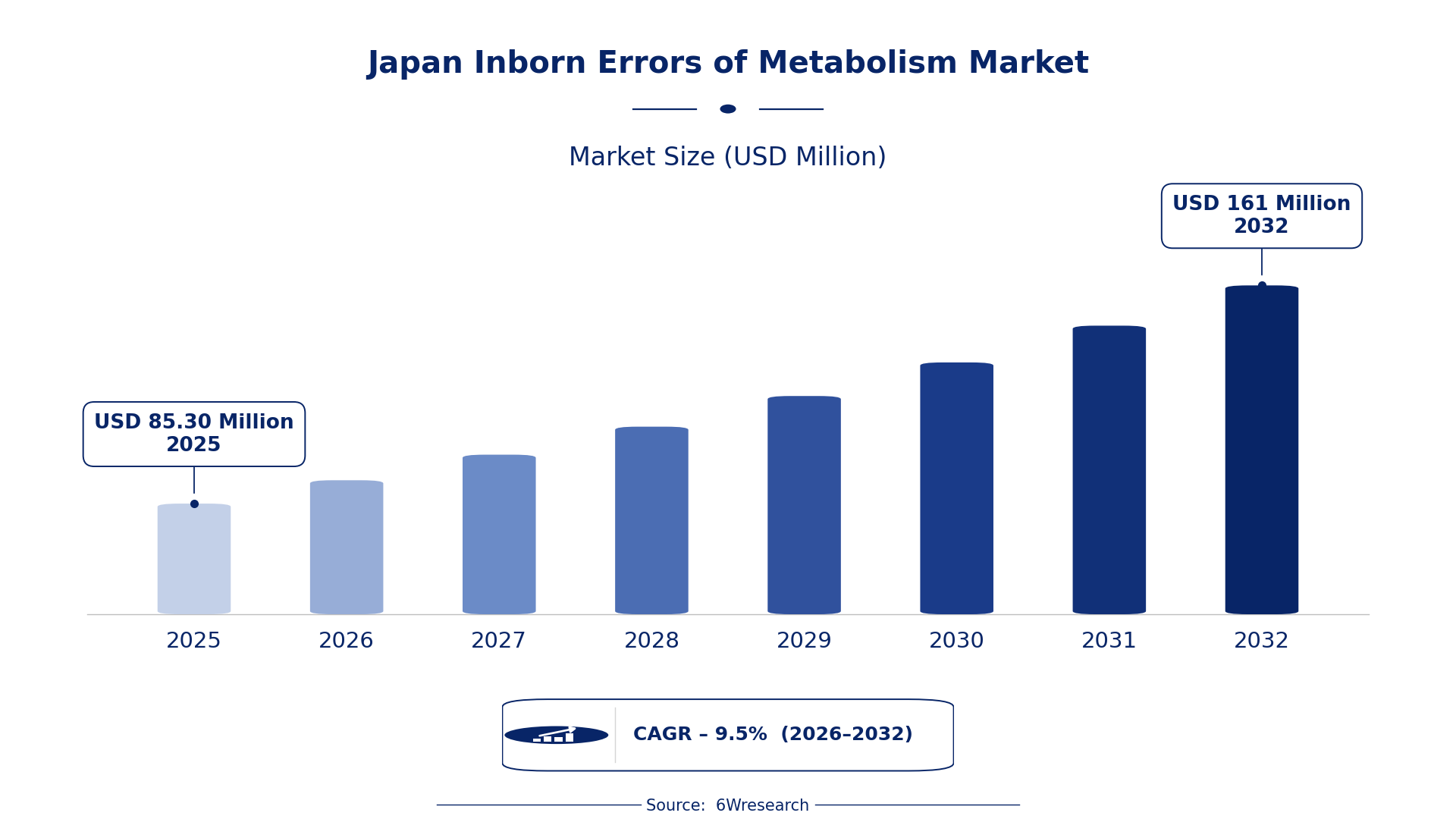
According to 6Wresearch internal database and industry insights, the Japan Inborn Errors of Metabolism Market was valued at USD 85.30 Million in 2025 and is projected to reach USD 161 Million by 2032, growing at a CAGR of approximately 9.5% during 2026–2032.
Japan Inborn Errors of Metabolism Market Highlights
| Report Metric | Details |
| Report Name | Japan Inborn Errors of Metabolism Market (2026-2032) |
| Market Size 2025 | USD 85.30 Million |
| Market Size 2032 | USD 161 Million |
| Absolute Growth 2025–2032 | USD 75.70 Million |
| CAGR 2026–2032 | 9.5% |
| Peak Annual Growth | 10.6% in 2032 |
| Forecast Period | 2026–2032 |
| Historical Data | 2022–2025 |
| Base Year | 2025 |
| Leading Disorder Type, 2025 | Amino Acid Disorders (44% share) |
| Leading Diagnosis Method, 2025 | Newborn Screening (38% share) |
| Leading Treatment Type, 2025 | Enzyme Replacement (41% share) |
| Leading End User, 2025 | Pediatric Hospitals (40% share) |
| Fastest-Growing Disorder Type | Urea Cycle Disorders (13.9% CAGR) |
| Fastest-Growing Diagnosis Method | Tandem Mass Spectrometry (13.6% CAGR) |
| Fastest-Growing End User | Rare Disease Centers (12.8% CAGR) |
| Growing Sector | pediatric hospitals |
| Key End Users | pediatric hospitals, rare disease centers, metabolic clinics |
Japan Inborn Errors of Metabolism Market Year-wise Growth Rate and Key Drivers (2022–2032)
This graph illustrates the annual growth rates of the market from 2022 to 2032, highlighting a steady upward trajectory and projected market expansion over the forecast period.
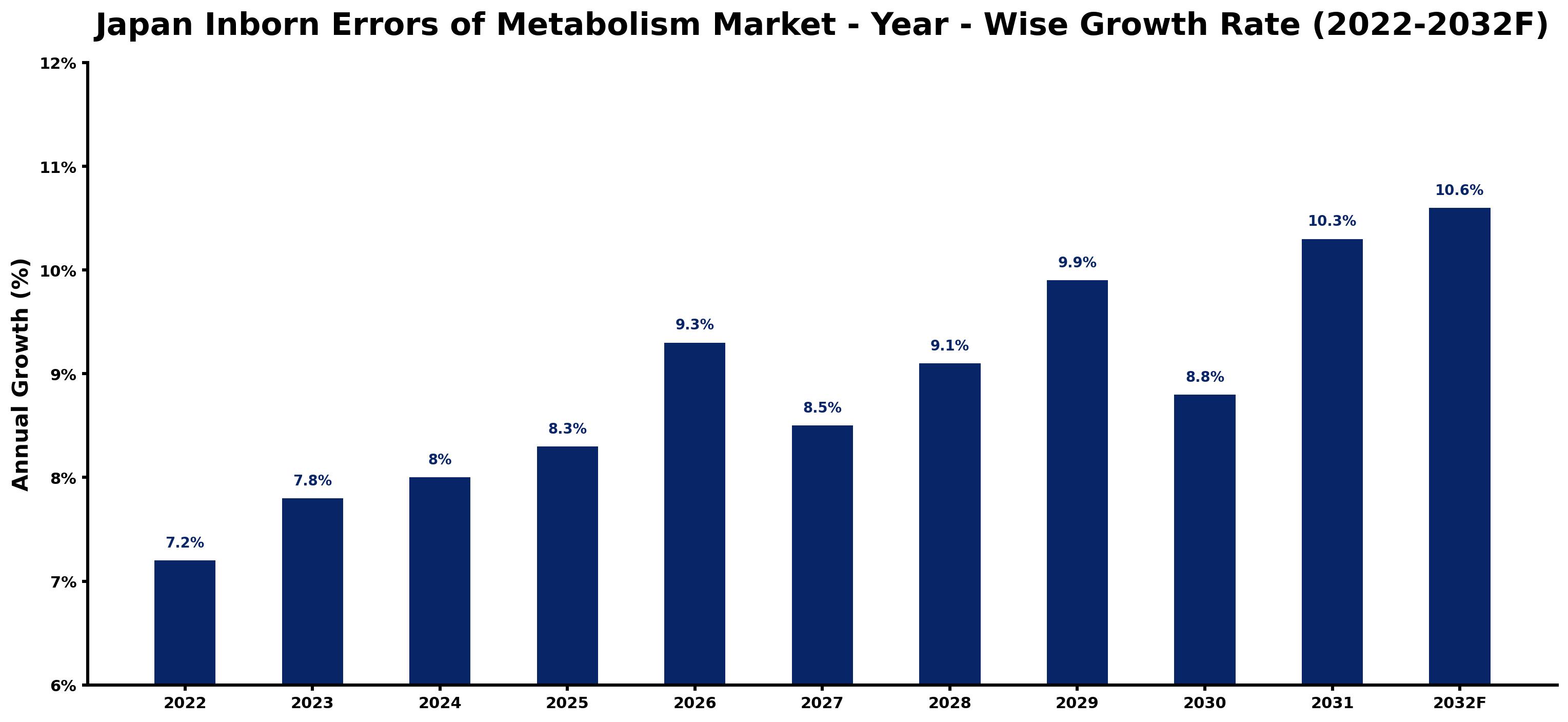
The following figures match every annual growth estimate with the main market development of that year, giving the reasoning behind each rise or slowdown.
| Year | Estimated Annual Growth (%) | Market Rationale |
| 2022 | 7.2 | The market experienced steady growth due to increased awareness of metabolic disorders. |
| 2023 | 7.8 | Demand rose as pediatric hospitals reported more cases of inborn errors of metabolism. |
| 2024 | 8.0 | The introduction of advanced screening technologies boosted market performance. |
| 2025 | 8.3 | Growth accelerated as the prevalence of amino acid disorders became more evident. |
| 2026 | 9.3 | The market expanded with enhanced support for newborn screening initiatives. |
| 2027 | 8.5 | Growth slowed slightly as the market adjusted to previous rapid increases. |
| 2028 | 9.1 | Demand increased again as new treatment methods gained acceptance among healthcare providers. |
| 2029 | 9.9 | The rise in metabolic disorder cases continued to drive market growth. |
| 2030 | 8.8 | Growth slowed as the market stabilised after a period of rapid expansion. |
| 2031 | 10.3 | Demand surged with the introduction of new enzyme replacement therapies. |
| 2032 | 10.6 | The market peaked as advancements in treatment options became widely available. |
Note: Market size estimations and growth projections presented in this report are based on 6Wresearch's proprietary forecasting methodology, utilizing the latest available industry data, government publications, and primary research inputs.
Japan Inborn Errors of Metabolism Market Synopsis
Inborn Errors of Metabolism (IEM) are genetic disorders caused by enzyme deficiencies that disrupt metabolism, diagnosed through newborn screening and genetic testing. Treatment approaches include dietary management and enzyme replacement therapies. The Japan Inborn Errors of Metabolism Market is expanding due to a rise in reported cases from pediatric hospitals, increased research funding, and advancements in screening technologies. With over 1,000 newborn screening programs, Japan's healthcare system supports the ongoing need for effective diagnosis and treatment solutions.
Market Dynamics Impact Analysis (2026–2032)
| Factor | Type | Impact | Primary Segment Affected |
| Increasing awareness of metabolic disorders drives demand for early diagnosis and treatment. | Driver | High | Newborn Screening |
| Advancements in diagnostic technologies enhance treatment options for patients. | Driver | High | Tandem Mass Spectrometry |
| The growing prevalence of metabolic disorders presents opportunities for specialized treatment facilities. | Opportunity | High | Rare Disease Centers |
| Investment in research and development for enzyme replacement therapies is rising. | Opportunity | High | Enzyme Replacement |
| Limited access to specialized care can hinder timely diagnosis and treatment. | Restraint | High | Pediatric Hospitals |
| Regulatory challenges in the approval of new therapies can delay market entry. | Restraint | Medium | Enzyme Replacement |
| The high cost of enzyme replacement therapies can limit patient access. | Challenge | High | Pediatric Hospitals |
| The need for continuous training in metabolic disorder management poses a challenge. | Challenge | Medium | Metabolic Clinics |
Evaluation of Drivers in Japan Inborn Errors of Metabolism Market (2026–2032)
The table below links each growth driver to the segment it affects and the evidence for it.
| Drivers | Primary Segment Affected | Why It Matters (Evidence) |
| Rising prevalence of metabolic disorders increases demand for specialized care. | Rare Disease Centers | These centers serve over 5,000 patients, highlighting the need for specialized treatment. |
| Technological advancements in diagnostic methods improve accuracy. | Tandem Mass Spectrometry | Over 200 hospitals use this technology, enhancing the detection of multiple IEMs. |
| Growing funding for IEM research supports the development of new treatments. | Enzyme Replacement | The Japan Agency for Medical Research and Development allocates significant funds for IEM research initiatives. |
| Increased awareness of metabolic disorders drives demand for genetic testing. | Genetic Testing | Genetic testing for IEM is now covered under national health insurance, facilitating early diagnosis. |
| Expansion of newborn screening programs enhances early detection. | Newborn Screening | Japan has over 1,000 programs, ensuring timely diagnosis and intervention for affected infants. |
Behind the steady rise in orders sits the increasing prevalence of metabolic disorders, with approximately 1 in 10,000 births affected by amino acid disorders. This has led to heightened demand for specialized care, supported by over 5,000 patients treated in rare disease centers across Japan. Technological advancements, particularly in tandem mass spectrometry, have improved diagnostic accuracy, with over 200 hospitals employing this method. Increased funding for IEM research enables the development of new enzyme replacement therapies, while the expansion of genetic testing coverage under national health insurance facilitates early diagnosis and management of these conditions.
Evaluation of Restraints in Japan Inborn Errors of Metabolism Market
These are the pressures that could keep growth below its potential.
| Market Restraint | Primary Segment Affected | Why It Matters (Evidence) |
| Limited access to specialized care hinders timely diagnosis and treatment. | Pediatric Hospitals | Many regions lack specialized facilities, delaying essential care for affected children. |
| Regulatory hurdles in approving new therapies can slow market growth. | Enzyme Replacement | Strict regulations may delay the introduction of new treatments to the market. |
| High costs associated with enzyme replacement therapies restrict patient access. | Enzyme Replacement | Many patients struggle to afford these therapies without adequate insurance coverage. |
| Insufficient training for healthcare providers affects the management of metabolic disorders. | Metabolic Clinics | A lack of trained professionals can lead to suboptimal care for patients. |
| Limited public awareness of metabolic disorders may reduce early diagnosis rates. | Newborn Screening | Parents may not seek screening if they are unaware of the disorders. |
Japan Inborn Errors of Metabolism Market Challenges
Pediatric hospitals face treatment delays due to inconsistent supply of enzyme replacement therapies, potentially jeopardising patient health outcomes. Clinics encounter limited access to advanced diagnostics as suppliers struggle with high costs associated with maintaining the latest metabolic screening technology, resulting in longer wait times for accurate diagnoses. Regulatory changes from the Ministry of Health, Labour and Welfare create uncertainty in treatment protocols, complicating patient care for hospitals. Buyers are under pressure from the rising prevalence of metabolic disorders, with approximately 1 in 10,000 births affected, straining healthcare resources and increasing the urgency for effective solutions.
Trends in the Japan Inborn Errors of Metabolism Market
Below are the shifts with the largest effect on the Japan Inborn Errors of Metabolism Market.
- Shift in Focus to Newborn Screening: Pediatric hospitals are prioritising newborn screening programs to ensure early detection of metabolic disorders. In 2023, Japan reported over 1,000 such programs, improving diagnosis rates.
- Transition to Advanced Diagnostic Technologies: The year 2023 marked a transition as tandem mass spectrometry became the preferred method for metabolic screening. With over 200 hospitals adopting this technology, accuracy in diagnosing IEMs has improved.
- Emergence of Enzyme Replacement Therapies: Enzyme replacement therapies are gaining traction, with several new treatments introduced in 2023. This shift is expected to improve patient outcomes for specific IEMs, backed by increased funding for research.
- Growing Demand for Genetic Counseling Services: In 2023, Japan initiated a program to improve genetic counseling services for families affected by metabolic disorders. This initiative aims to enhance patient education and support, with funding allocated for its implementation.
Investment Opportunities in the Japan Inborn Errors of Metabolism Market
The following opportunities in the Japan Inborn Errors of Metabolism Market pair current demand with a clear way in.
- Partnerships with Rare Disease Centers: Collaborating with rare disease centers presents an opportunity to improve treatment access for patients. With over 5,000 patients served, these centres are critical for specialised care.
- Investment in Newborn Screening Technologies: The focus on improving newborn screening accuracy creates a timely investment opportunity. Pediatric hospitals are actively seeking advanced screening solutions to enhance diagnostic capabilities.
- Expansion of Enzyme Replacement Therapy Offerings: The increasing prevalence of metabolic disorders highlights the need for more enzyme replacement therapies. Investing in this area can meet the demand from pediatric hospitals.
- Development of Genetic Testing Solutions: The coverage of genetic testing under national health insurance opens avenues for investment. Companies can partner with healthcare providers to develop comprehensive testing solutions.
Government Initiatives in the Japan Inborn Errors of Metabolism Market
The Economic Security Promotion Act, enacted in 2022, strengthens supply-chain resilience for critical products, including those used in the treatment of Inborn Errors of Metabolism. This law mandates improved reporting and management of resources, ensuring that producers can maintain consistent access to necessary materials for enzyme replacement therapies and diagnostic tools. Additionally, the PRTR Law requires businesses to disclose chemical substance releases, promoting safer practices in the production of dietary supplements and medical therapies, which are important for managing metabolic disorders.
In 2023, the Japan Agency for Medical Research and Development allocated funding for IEM research, supporting new treatment strategies and diagnostic technologies. This initiative aims to advance the development of new therapies and improve existing protocols, with a focus on enhancing patient care. The Ministry of Health, Labour and Welfare oversees these efforts, ensuring compliance with national health standards and facilitating the integration of new research findings into clinical practice.
Future Insight of the Japan Inborn Errors of Metabolism Market
Pediatric hospitals will benefit from improved genetic counseling services, providing vital support for families. By 2032, innovations in metabolic screening processes will increase diagnostic accuracy across over 1,500 units of installed equipment, directly aiding patient outcomes. The Japanese government will continue funding IEM research, paving the way for new treatment options. Suppliers will need to adapt to growing demand for advanced solutions that meet the needs of a rapidly evolving healthcare environment.
Market Segmentation Analysis
Japan Inborn Errors of Metabolism Market report covers a detailed analysis of the following market segments:
By Disorder Type – Amino Acid Disorders Lead, Urea Cycle Disorders Expected to Grow Fastest
According to Saurav Kr Singh, Senior Research Analyst at 6Wresearch, the largest disorder type category in 2025 was Amino Acid Disorders, at 44% of revenue. Amino Acid Disorders represent a major focus in Japan's healthcare, with over 1,000 newborn screening programs targeting these conditions. The prevalence rate of approximately 1 in 10,000 births indicates a strong demand for effective treatments and management strategies. Urea Cycle Disorders are set to record the highest CAGR in this split, 13.9% over 2026–2032. Urea Cycle Disorders are experiencing rapid growth due to increased awareness of ammonia toxicity, with a prevalence of 1 in 25,000 births. This heightened focus is prompting healthcare facilities to enhance their diagnostic capabilities and therapeutic approaches. Suppliers must align their strategies to meet the growing demand for treatments across both disorder types.
By Diagnosis Method – Newborn Screening Leads, Tandem Mass Spectrometry Expected to Grow Fastest
Newborn Screening accounted for 38% of the market by diagnosis method in 2025. Newborn Screening is the primary method for early detection of IEM, ensuring timely interventions for affected infants. The extensive network of over 1,000 programs across Japan underscores its critical role in the healthcare system. The quickest growth will come from Tandem Mass Spectrometry, forecast to expand at a CAGR of 13.6% between 2026 and 2032. Tandem Mass Spectrometry is gaining traction as a key technology for diagnosing multiple IEMs, with its application in over 200 hospitals. This method's efficiency in screening is driving its adoption and growth in the market. Buyers will benefit from advancements in diagnostic technologies that improve early detection and treatment outcomes.
By Treatment Type – Enzyme Replacement Leads and Records the Fastest Growth
With 41% of treatment type revenue in 2025, Enzyme Replacement was the largest category. Enzyme Replacement is a critical therapy for certain IEMs, providing essential support for patients with specific enzyme deficiencies. The availability of these therapies in Japan highlights their importance in managing metabolic disorders effectively. The same category is also set to grow fastest, at a CAGR of 13.2% during 2026–2032. As Enzyme Replacement is also the fastest-growing treatment type, its lead will continue to widen due to increasing investment in research and development for new therapies. The ongoing demand for effective treatments further solidifies its position in the market. Suppliers must prioritise innovation in enzyme replacement therapies to keep pace with the growing patient population.
By End User – Pediatric Hospitals Lead, Rare Disease Centers Expected to Grow Fastest
In 2025, Pediatric Hospitals led the end user split with a 40% share. Pediatric Hospitals serve as the frontline for diagnosing and treating IEM, providing essential care for affected children. The increasing number of reported IEM cases underscores the vital role these hospitals play in the healthcare infrastructure. Over 2026–2032, Rare Disease Centers are expected to post the fastest growth, at a CAGR of 12.8%. Rare Disease Centers are witnessing accelerated growth as they offer specialised care tailored to patients with metabolic disorders, reflecting a rising need for comprehensive treatment options. Their ability to provide focused services is drawing more patients seeking advanced care. Suppliers should focus on partnerships with pediatric hospitals and rare disease centers to effectively meet the needs of this expanding market.
Key Attractiveness of the Report
- 10 Years of Market Numbers
- Historical Data Starting from 2022 to 2025
- Base Year 2025
- Forecast Data until 2032
- Key Performance Indicators Impacting the Market
- Major Upcoming Developments and Projects
Key Highlights of the Report:
- Japan Inborn Errors of Metabolism Market Outlook
- Market Size of Japan Inborn Errors of Metabolism Market, 2025
- Forecast of Japan Inborn Errors of Metabolism Market, 2032
- Historical Data and Forecast of Japan Inborn Errors of Metabolism Revenues & Volume for the Period 2022-2032F
- Japan Inborn Errors of Metabolism Market Trend Evolution
- Japan Inborn Errors of Metabolism Market Drivers and Challenges
- Japan Inborn Errors of Metabolism Price Trends
- Japan Inborn Errors of Metabolism Porter's Five Forces
- Japan Inborn Errors of Metabolism Industry Life Cycle
- Historical Data and Forecast of Japan Inborn Errors of Metabolism Market Revenues & Volume By Disorder Type for the Period 2022-2032F
- Historical Data and Forecast of Japan Inborn Errors of Metabolism Market Revenues & Volume By Amino Acid Disorders for the Period 2022-2032F
- Historical Data and Forecast of Japan Inborn Errors of Metabolism Market Revenues & Volume By Fatty Acid Oxidation for the Period 2022-2032F
- Historical Data and Forecast of Japan Inborn Errors of Metabolism Market Revenues & Volume By Urea Cycle Disorders for the Period 2022-2032F
- Historical Data and Forecast of Japan Inborn Errors of Metabolism Market Revenues & Volume By Organic Acidurias for the Period 2022-2032F
- Historical Data and Forecast of Japan Inborn Errors of Metabolism Market Revenues & Volume By Diagnosis Method for the Period 2022-2032F
- Historical Data and Forecast of Japan Inborn Errors of Metabolism Market Revenues & Volume By Newborn Screening for the Period 2022-2032F
- Historical Data and Forecast of Japan Inborn Errors of Metabolism Market Revenues & Volume By Genetic Testing for the Period 2022-2032F
- Historical Data and Forecast of Japan Inborn Errors of Metabolism Market Revenues & Volume By Blood Ammonia Analysis for the Period 2022-2032F
- Historical Data and Forecast of Japan Inborn Errors of Metabolism Market Revenues & Volume By Tandem Mass Spectrometry for the Period 2022-2032F
- Historical Data and Forecast of Japan Inborn Errors of Metabolism Market Revenues & Volume By Treatment Type for the Period 2022-2032F
- Historical Data and Forecast of Japan Inborn Errors of Metabolism Market Revenues & Volume By Dietary Supplements for the Period 2022-2032F
- Historical Data and Forecast of Japan Inborn Errors of Metabolism Market Revenues & Volume By Enzyme Replacement for the Period 2022-2032F
- Historical Data and Forecast of Japan Inborn Errors of Metabolism Market Revenues & Volume By Protein Restriction for the Period 2022-2032F
- Historical Data and Forecast of Japan Inborn Errors of Metabolism Market Revenues & Volume By Medical Nutrition Therapy for the Period 2022-2032F
- Historical Data and Forecast of Japan Inborn Errors of Metabolism Market Revenues & Volume By End User for the Period 2022-2032F
- Historical Data and Forecast of Japan Inborn Errors of Metabolism Market Revenues & Volume By Pediatric Hospitals for the Period 2022-2032F
- Historical Data and Forecast of Japan Inborn Errors of Metabolism Market Revenues & Volume By Rare Disease Centers for the Period 2022-2032F
- Historical Data and Forecast of Japan Inborn Errors of Metabolism Market Revenues & Volume By Metabolic Clinics for the Period 2022-2032F
- Historical Data and Forecast of Japan Inborn Errors of Metabolism Market Revenues & Volume By Genetic Counseling Labs for the Period 2022-2032F
- Japan Inborn Errors of Metabolism Import Export Trade Statistics
- Market Opportunity Assessment By Disorder Type
- Market Opportunity Assessment By Diagnosis Method
- Market Opportunity Assessment By Treatment Type
- Market Opportunity Assessment By End User
- Japan Inborn Errors of Metabolism Top Companies Market Share
- Japan Inborn Errors of Metabolism Competitive Benchmarking By Technical and Operational Parameters
- Japan Inborn Errors of Metabolism Company Profiles
- Japan Inborn Errors of Metabolism Key Strategic Recommendations
Market Covered
The report covers the following segments.
By Disorder Type
- Amino Acid Disorders
- Fatty Acid Oxidation
- Urea Cycle Disorders
- Organic Acidurias
By Diagnosis Method
- Newborn Screening
- Genetic Testing
- Blood Ammonia Analysis
- Tandem Mass Spectrometry
By Treatment Type
- Dietary Supplements
- Enzyme Replacement
- Protein Restriction
- Medical Nutrition Therapy
By End User
- Pediatric Hospitals
- Rare Disease Centers
- Metabolic Clinics
- Genetic Counseling Labs































