Japan Indoor Games Market Size & Growth Rate
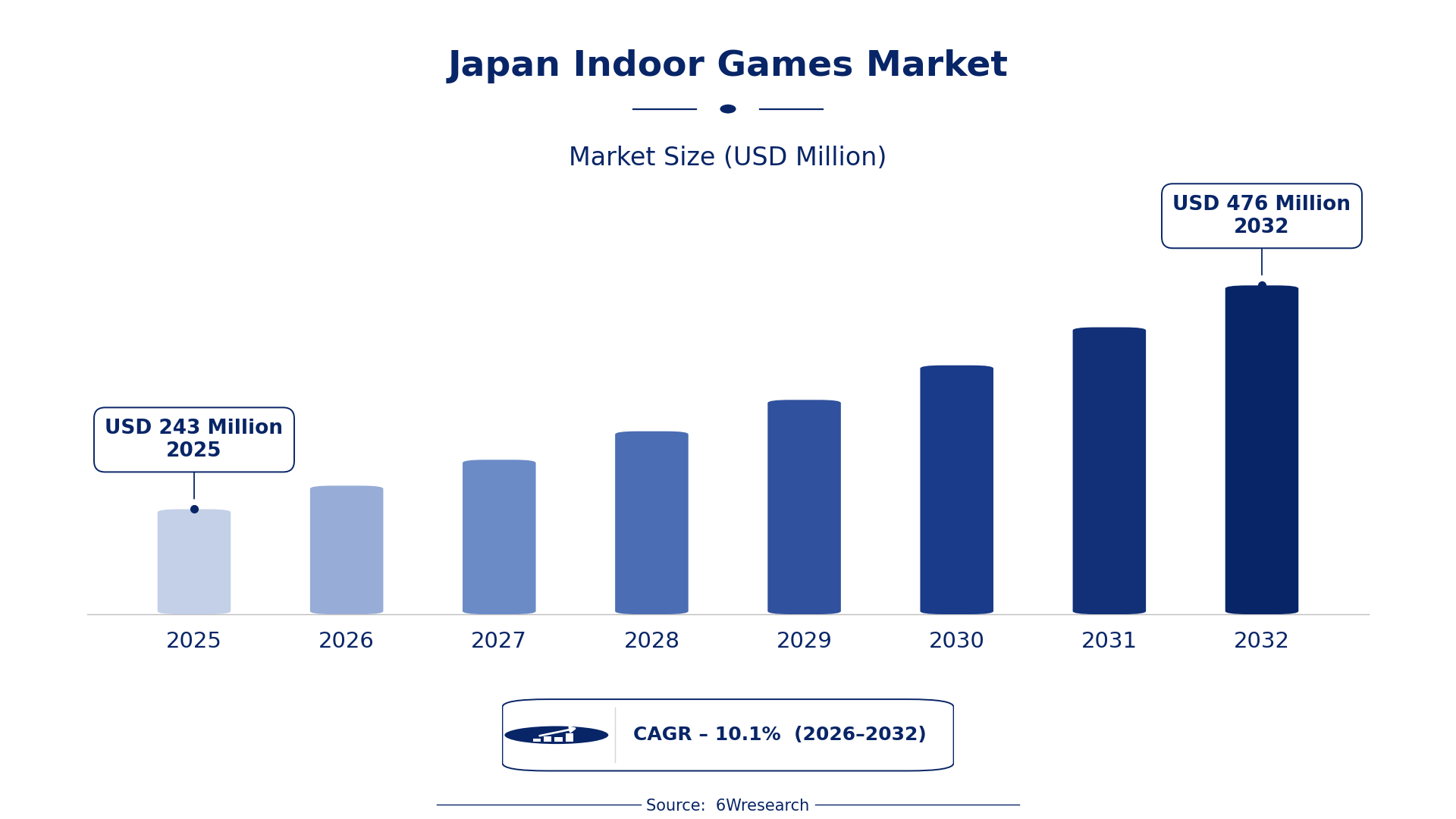
According to 6Wresearch internal database and industry insights, the Japan Indoor Games Market was valued at USD 243 Million in 2025 and is projected to reach USD 476 Million by 2032, growing at a CAGR of approximately 10.1% during 2026–2032.
Japan Indoor Games Market Highlights
| Report Metric | Details |
| Report Name | Japan Indoor Games Market (2026-2032) |
| Market Size 2025 | USD 243 Million |
| Market Size 2032 | USD 476 Million |
| Absolute Growth 2025–2032 | USD 233 Million |
| CAGR 2026–2032 | 10.1% |
| Peak Annual Growth | 11.1% in 2030 |
| Forecast Period | 2026–2032 |
| Historical Data | 2022–2025 |
| Base Year | 2025 |
| Leading Game Type, 2025 | Board Games (46% share) |
| Leading Age Group, 2025 | All Ages (36% share) |
| Leading Game Mode, 2025 | Offline/Multiplayer (37% share) |
| Leading End User, 2025 | Toy & Hobby Retailers (45% share) |
| Fastest-Growing Game Type | Card Games (14.1% CAGR) |
| Fastest-Growing Age Group | Teen to Adult (13.1% CAGR) |
| Fastest-Growing Game Mode | Solo/Party (14.5% CAGR) |
| Fastest-Growing End User | Casual Gamers (13.2% CAGR) |
| Growing Sector | Educational Games |
| Key End Users | Toy & Hobby Retailers, Learning Centers, Casual Gamers |
Japan Indoor Games Market Year-wise Growth Rate and Key Drivers (2022–2032)
This graph illustrates the annual growth rates of the market from 2022 to 2032, highlighting a steady upward trajectory and projected market expansion over the forecast period.
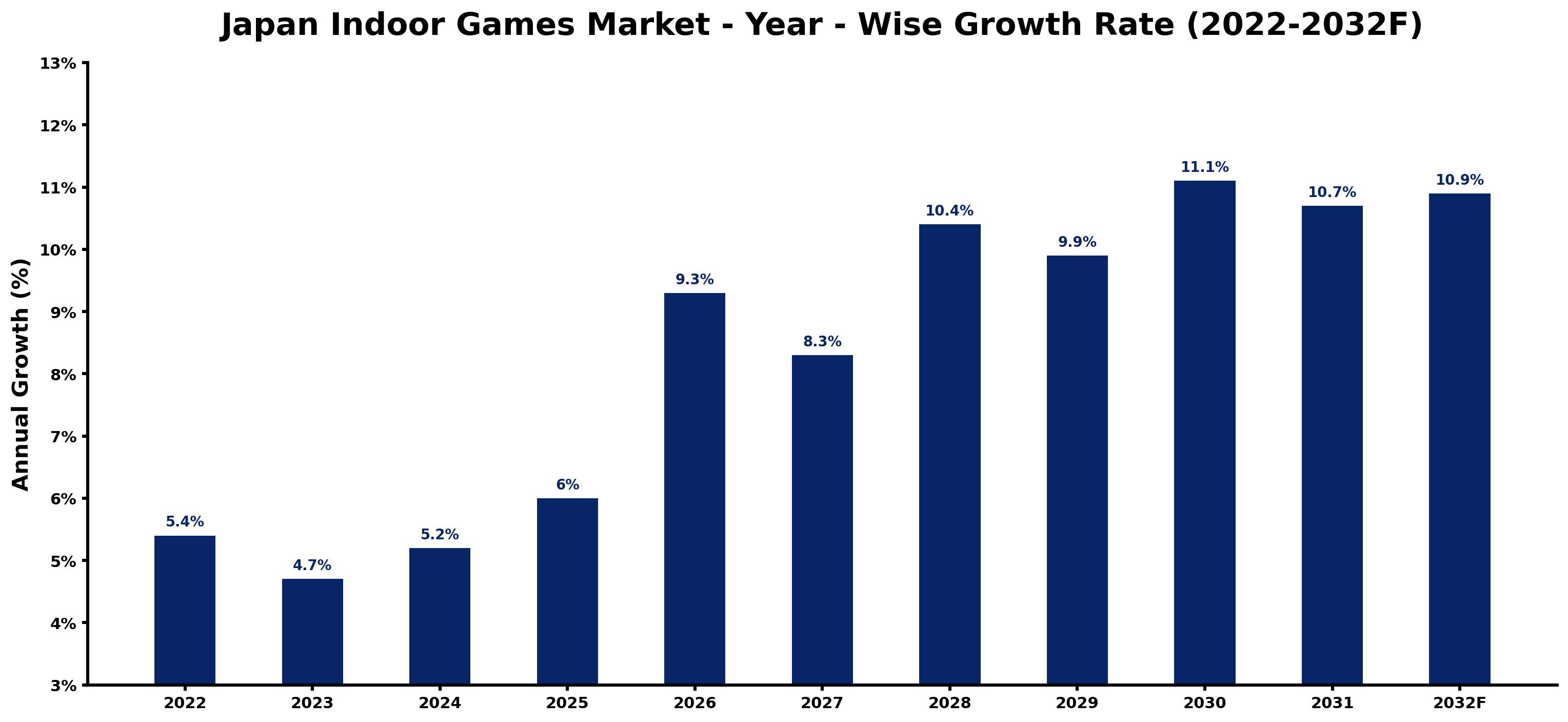
The table below sets out the estimated growth rate for each year and the main factor behind it.
| Year | Estimated Annual Growth (%) | Market Rationale |
| 2022 | 5.4 | The market showed steady engagement from consumers, reflecting ongoing interest in indoor games. |
| 2023 | 4.7 | Growth slowed slightly as consumer spending shifted towards other entertainment options. |
| 2024 | 5.2 | Increased participation in family activities boosted demand for indoor games. |
| 2025 | 6.0 | The market peaked as educational games gained traction in numerous learning centers. |
| 2026 | 9.3 | A surge in interest for card games among casual gamers is expected to drive growth. |
| 2027 | 8.3 | Growth is projected to slow due to market saturation in certain game types, yet demand will remain strong. |
| 2028 | 10.4 | The rise of solo and party games is expected to contribute to renewed interest in indoor entertainment. |
| 2029 | 9.9 | Interest in board games will remain high, but growth is projected to slow as competition increases. |
| 2030 | 11.1 | The market is expected to peak as technological advancements in AR games attract new buyers. |
| 2031 | 10.7 | Growth is projected to slow as the market stabilises after reaching its peak in the previous year. |
| 2032 | 10.9 | The market is expected to grow as educational games continue to be integrated into curricula. |
Note: Market size estimations and growth projections presented in this report are based on 6Wresearch's proprietary forecasting methodology, utilizing the latest available industry data, government publications, and primary research inputs.
Japan Indoor Games Market Synopsis
Indoor games encompass board games, card games, and puzzles, designed for social interaction and cognitive development. Strong domestic demand drives the Japan Indoor Games Market, projected to grow as educational games gain traction in learning centres. Over 60% of families engage in board games during weekends, reflecting the increasing popularity of leisure activities that promote family bonding and cognitive skills.
Market Dynamics Impact Analysis (2026–2032)
| Factor | Type | Impact | Primary Segment Affected |
| Increasing interest in educational games | Driver | High | Educational |
| Growth in family bonding activities | Driver | High | Board Games |
| Emerging demand for AR indoor games | Opportunity | Medium | AR Indoor Games |
| Expansion of board game cafes in urban areas | Opportunity | High | Board Games |
| Market saturation in traditional game types | Restraint | Medium | Card Games |
| Competition from digital gaming alternatives | Restraint | High | All Ages |
| Shifts in consumer preferences towards digital games | Challenge | High | Casual Gamers |
| Increased production costs affecting pricing | Challenge | Medium | Toy & Hobby Retailers |
Evaluation of Drivers in Japan Indoor Games Market (2026–2032)
Demand rests on the following drivers, each shown with the segment it touches most.
| Drivers | Primary Segment Affected | Why It Matters (Evidence) |
| Growing interest in family bonding activities | Board Games | Over 60% of families engage in board games during weekends, leading to increased purchases. |
| Rising demand for educational games | Educational | Educational games are used in over 10,000 learning centers, boosting sales. |
| Popularity of card games among casual gamers | Card Games | Approximately 40% of casual gamers play card games, driving demand for new titles. |
| Expansion of board game cafes in urban areas | Board Games | The Tokyo metropolitan area hosts numerous board game cafes, increasing accessibility and interest. |
| Technological advancements in AR games | AR Indoor Games | The market for AR indoor games is projected to grow with advancements in mobile technology. |
Volumes grow on the back of a strong interest in family bonding activities, with over 60% of families engaging in board games during weekends, boosting purchases. The increasing demand for educational games is evident, as numerous learning centers incorporate them into curriculums, which raises sales. Card games attract approximately 40% of casual gamers, further driving demand. Urban areas see an expansion of board game cafes, enhancing accessibility and attracting more players. Advances in AR games are projected to increase market appeal, particularly among younger demographics seeking engaging experiences.
Evaluation of Restraints in Japan Indoor Games Market
These restraints slow adoption and weigh on supplier margins.
| Market Restraint | Primary Segment Affected | Why It Matters (Evidence) |
| Market saturation in traditional game types | Card Games | The popularity of card games has led to a saturated market, limiting growth opportunities. |
| Competition from digital gaming alternatives | All Ages | Digital games attract younger audiences, diverting attention from traditional indoor games. |
| Increased production costs affecting pricing | Toy & Hobby Retailers | Rising material costs impact pricing strategies, making it challenging for retailers to compete. |
| Limited innovation in game design | Board Games | The Japanese market values innovation, but many traditional games lack new features. |
| Consumer preference shifts towards mobile gaming | Casual Gamers | The convenience of mobile gaming draws consumers away from traditional indoor games. |
Japan Indoor Games Market Challenges
High regulatory standards complicate production processes for indoor games, as compliance with ISO 9001 and JIS standards raises costs for suppliers, resulting in higher prices for buyers. Intense competition from both domestic and international brands pressures suppliers to innovate quickly, which can delay product launches and limit choices for consumers. Rising production costs, particularly for materials like cardboard and plastic, have pushed average board game prices to between 2,000 and 5,000 yen, making it difficult for budget-conscious families to purchase new games. Limited adoption of advanced technology in game design restricts options for producers, hindering their ability to attract younger audiences.
Trends in the Japan Indoor Games Market
Several trends are reshaping the Japan Indoor Games Market; the most important are set out below.
- Shift towards Educational Games in Learning Centres: Japan has seen a notable increase in the use of educational games in over 10,000 learning centres, promoting cognitive development. This trend highlights the growing recognition of games as effective learning tools.
- Transition from Traditional to AR Indoor Games: The rise of mobile technology has led to an increased interest in AR indoor games, particularly among teens. This shift will grow as advancements continue, appealing to tech-savvy consumers.
- Emergence of Solo and Party Games: The popularity of solo and party games has surged, driven by a desire for diverse play modes. This change reflects evolving consumer preferences, with many seeking engaging experiences at home.
- Growing Board Game Cafe Culture in Tokyo: Tokyo's board game cafes have become increasingly popular, providing social spaces for enthusiasts. This trend is supported by a vibrant community, with cafes hosting events and tournaments.
Investment Opportunities in the Japan Indoor Games Market
Below are the investment opportunities with the strongest case in the Japan Indoor Games Market.
- Partnerships with Learning Centres: By collaborating with numerous learning centres, suppliers can tap into the educational games market, which is projected to grow as schools integrate games into their curricula.
- Expansion into Urban Board Game Cafes: Toy and hobby retailers can invest in urban board game cafes, where demand is rising, as these venues attract families and casual gamers seeking social interaction.
- Collaboration with AR Game Developers: With the projected growth in AR indoor games, partnering with developers can create engaging products that appeal to younger audiences, capitalising on the technology trend.
- Investment in Family-Friendly Game Designs: As over 60% of families engage in board games, investing in family-friendly game designs can meet the rising demand for leisure activities that promote bonding.
Government Initiatives in the Japan Indoor Games Market
The Industrial Standardization Act governs the production of indoor games, ensuring quality and safety standards are met. Compliance with JIS standards is vital for producers, as it builds consumer trust and marketability. The Act against Unjustifiable Premiums and Misleading Representations protects consumers from deceptive practices, ensuring that buyers receive accurate information about products.
The Ministry of Education supports initiatives to integrate games into learning environments, funding projects that promote cognitive development through play. This initiative encourages learning centres to adopt educational games, boosting the overall market for indoor games.
Future Insight of the Japan Indoor Games Market
A policy-driven shift will encourage the integration of educational games into learning environments, impacting over 10,000 centres by 2032. Suppliers must adapt their designs to reflect cultural themes, meeting the growing demand for unique experiences. Mobile technology advancements will increase the appeal of indoor games, especially among younger players. Government funding for traditional games in schools will support local designers, ensuring a diverse range of products for families and educators.
Market Segmentation Analysis
Japan Indoor Games Market report covers a detailed analysis of the following market segments:
By Game Type – Board Games Lead, Card Games Expected to Grow Fastest
According to Saurav Kr Singh, Senior Research Analyst at 6Wresearch, Board Games took 46% of game type revenue in 2025, more than any other category. Board games hold a dominant position in the market as they are popular for family and social gatherings, with over 60% of families in Japan engaging in them during weekends. This appeal is further strengthened by a thriving network of board game cafes and retailers concentrated in the Tokyo metropolitan area. Over 2026–2032, Card Games are expected to post the fastest growth, at a CAGR of 14.1%. The rapid growth of card games is largely attributed to their popularity among casual gamers, with approximately 40% of this demographic actively participating in card games. This trend is expected to persist as card games provide a quick and accessible entertainment option. Suppliers should prioritise the availability of card games to capitalise on the increasing interest from casual gamers.
By Age Group – All Ages Lead, Teen to Adult Expected to Grow Fastest
All Ages held 36% of the Japan Indoor Games Market by age group in 2025. The all-ages segment leads the market because indoor games are designed for universal appeal, attracting players from various age groups. This inclusivity is reflected in the wide range of games available that cater to diverse interests and preferences. Teen to Adult is projected to grow fastest, at a CAGR of 13.1% during 2026–2032. The teen to adult demographic is the fastest-growing segment, fuelled by targeted marketing and game designs that resonate with older players. This trend is likely to continue as more games are developed with themes that appeal to these age groups. Suppliers should focus on creating products specifically targeting the teen to adult demographic to take advantage of this growth.
By Game Mode – Offline/Multiplayer Leads, Solo/Party Expected to Grow Fastest
With 37% of game mode revenue in 2025, Offline/Multiplayer was the largest category. Offline/multiplayer games are the leading mode as they encourage social interaction, making them a preferred choice for gatherings and events. This preference is reflected in the popularity of board games and card games in communal settings. The quickest growth will come from Solo/Party, forecast to expand at a CAGR of 14.5% between 2026 and 2032. Solo/party games are growing rapidly, offering a variety of play modes that cater to individual preferences and social gatherings. This flexibility is attracting more players looking for diverse gaming experiences. Suppliers should diversify their offerings to include more solo and party games to meet the increasing demand.
By End User – Toy & Hobby Retailers Lead, Casual Gamers Expected to Grow Fastest
In 2025, Toy & Hobby Retailers led the end user split with a 45% share. Toy and hobby retailers dominate the distribution of indoor games, providing a diverse range of options to cater to various consumer preferences. With approximately 1,500 specialised retailers in Japan, they ensure that indoor games remain accessible to a wide audience. Casual Gamers are set to record the highest CAGR in this split, 13.2% over 2026–2032. Casual gamers represent the fastest-growing segment, driven by their desire for engaging and straightforward games that can be enjoyed during leisure time. This trend indicates a shift towards more accessible gaming options, further expanding the market's reach. Suppliers must focus on enhancing relationships with toy and hobby retailers to capitalise on the increasing demand from casual gamers.
Key Attractiveness of the Report
- 10 Years of Market Numbers
- Historical Data Starting from 2022 to 2025
- Base Year 2025
- Forecast Data until 2032
- Key Performance Indicators Impacting the Market
- Major Upcoming Developments and Projects
Key Highlights of the Report:
- Japan Indoor Games Market Outlook
- Market Size of Japan Indoor Games Market, 2025
- Forecast of Japan Indoor Games Market, 2032
- Historical Data and Forecast of Japan Indoor Games Revenues & Volume for the Period 2022-2032F
- Japan Indoor Games Market Trend Evolution
- Japan Indoor Games Market Drivers and Challenges
- Japan Indoor Games Price Trends
- Japan Indoor Games Porter's Five Forces
- Japan Indoor Games Industry Life Cycle
- Historical Data and Forecast of Japan Indoor Games Market Revenues & Volume By Game Type for the Period 2022-2032F
- Historical Data and Forecast of Japan Indoor Games Market Revenues & Volume By Board Games for the Period 2022-2032F
- Historical Data and Forecast of Japan Indoor Games Market Revenues & Volume By Card Games for the Period 2022-2032F
- Historical Data and Forecast of Japan Indoor Games Market Revenues & Volume By AR Indoor Games for the Period 2022-2032F
- Historical Data and Forecast of Japan Indoor Games Market Revenues & Volume By Indoor Puzzle Games for the Period 2022-2032F
- Historical Data and Forecast of Japan Indoor Games Market Revenues & Volume By Age Group for the Period 2022-2032F
- Historical Data and Forecast of Japan Indoor Games Market Revenues & Volume By All Ages for the Period 2022-2032F
- Historical Data and Forecast of Japan Indoor Games Market Revenues & Volume By Teen to Adult for the Period 2022-2032F
- Historical Data and Forecast of Japan Indoor Games Market Revenues & Volume By Kids + Teen for the Period 2022-2032F
- Historical Data and Forecast of Japan Indoor Games Market Revenues & Volume By Children for the Period 2022-2032F
- Historical Data and Forecast of Japan Indoor Games Market Revenues & Volume By Game Mode for the Period 2022-2032F
- Historical Data and Forecast of Japan Indoor Games Market Revenues & Volume By Offline/Multiplayer for the Period 2022-2032F
- Historical Data and Forecast of Japan Indoor Games Market Revenues & Volume By Solo/Party for the Period 2022-2032F
- Historical Data and Forecast of Japan Indoor Games Market Revenues & Volume By Mobile-based AR for the Period 2022-2032F
- Historical Data and Forecast of Japan Indoor Games Market Revenues & Volume By Educational for the Period 2022-2032F
- Historical Data and Forecast of Japan Indoor Games Market Revenues & Volume By End User for the Period 2022-2032F
- Historical Data and Forecast of Japan Indoor Games Market Revenues & Volume By Toy & Hobby Retailers for the Period 2022-2032F
- Historical Data and Forecast of Japan Indoor Games Market Revenues & Volume By Casual Gamers for the Period 2022-2032F
- Historical Data and Forecast of Japan Indoor Games Market Revenues & Volume By Gaming App Developers for the Period 2022-2032F
- Historical Data and Forecast of Japan Indoor Games Market Revenues & Volume By Learning Centers for the Period 2022-2032F
- Japan Indoor Games Import Export Trade Statistics
- Market Opportunity Assessment By Game Type
- Market Opportunity Assessment By Age Group
- Market Opportunity Assessment By Game Mode
- Market Opportunity Assessment By End User
- Japan Indoor Games Top Companies Market Share
- Japan Indoor Games Competitive Benchmarking By Technical and Operational Parameters
- Japan Indoor Games Company Profiles
- Japan Indoor Games Key Strategic Recommendations
Market Covered
The study includes the following segmentation.
By Game Type
- Board Games
- Card Games
- AR Indoor Games
- Indoor Puzzle Games
By Age Group
- All Ages
- Teen to Adult
- Kids + Teen
- Children
By Game Mode
- Offline/Multiplayer
- Solo/Party
- Mobile-based AR
- Educational
By End User
- Toy & Hobby Retailers
- Casual Gamers
- Gaming App Developers
- Learning Centers































