Japan Indoor Sports Equipment Market Size & Growth Rate
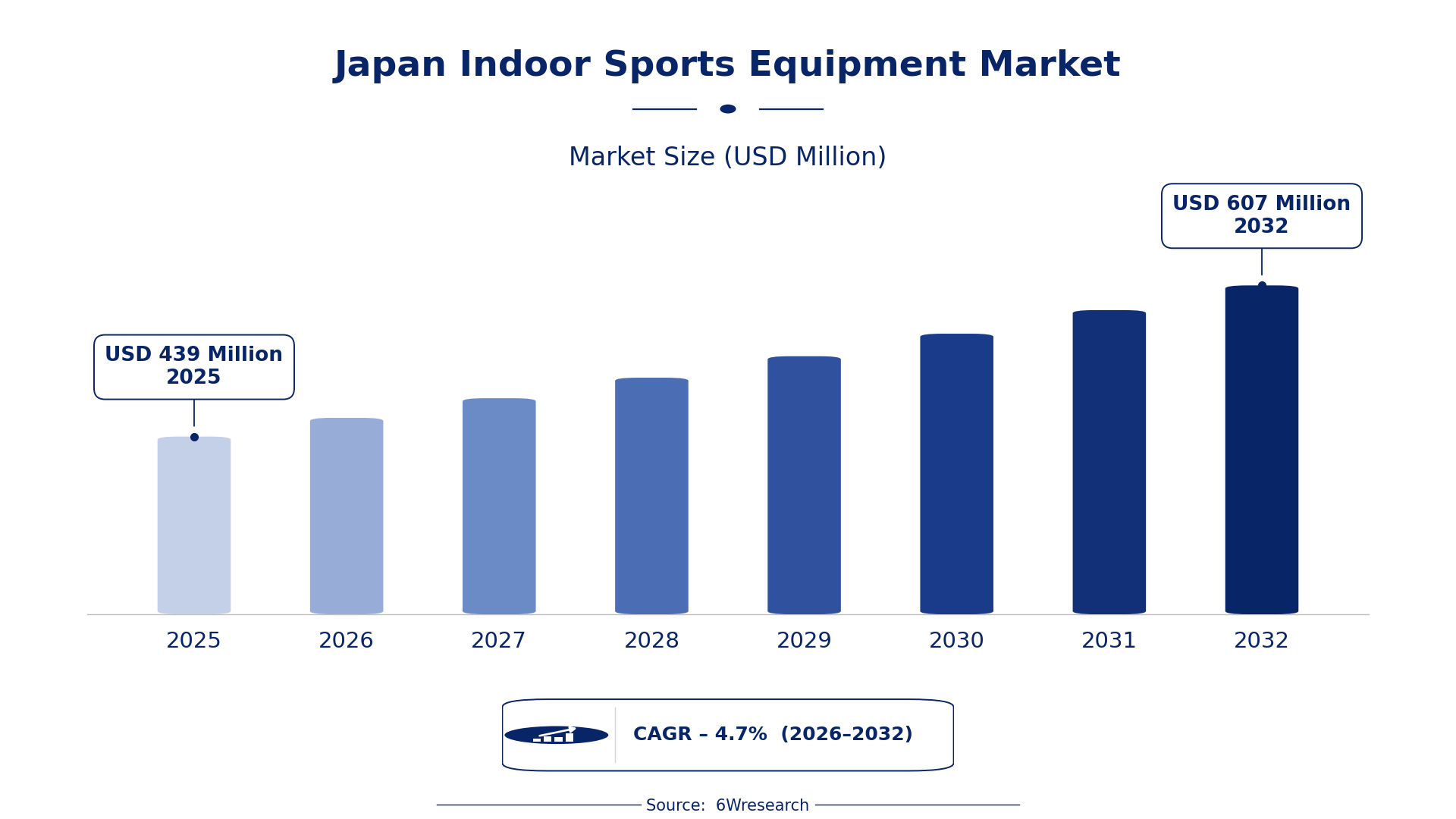
According to 6Wresearch internal database and industry insights, the Japan Indoor Sports Equipment Market was valued at USD 439 Million in 2025 and is projected to reach USD 607 Million by 2032, growing at a CAGR of approximately 4.7% during 2026–2032.
Japan Indoor Sports Equipment Market Highlights
| Report Metric | Details |
| Report Name | Japan Indoor Sports Equipment Market (2026-2032) |
| Market Size 2025 | USD 439 Million |
| Market Size 2032 | USD 607 Million |
| Absolute Growth 2025–2032 | USD 168 Million |
| CAGR 2026–2032 | 4.7% |
| Peak Annual Growth | 6.1% in 2026 |
| Forecast Period | 2026–2032 |
| Historical Data | 2022–2025 |
| Base Year | 2025 |
| Leading Equipment Type, 2025 | Table Tennis Tables (50% share) |
| Leading Sport Type, 2025 | Table Sports (45% share) |
| Leading Material Used, 2025 | MDF (37% share) |
| Leading End User, 2025 | Schools & Sports Clubs (41% share) |
| Fastest-Growing Equipment Type | Badminton Nets & Rackets (6.5% CAGR) |
| Fastest-Growing Sport Type | Racquet Sports (6.4% CAGR) |
| Fastest-Growing Material Used | Alloy (7.0% CAGR) |
| Fastest-Growing End User | Fitness Centers (6.1% CAGR) |
| Growing Sector | fitness centers |
| Key End Users | schools, sports clubs, fitness centers, community centers |
Japan Indoor Sports Equipment Market Year-wise Growth Rate and Key Drivers (2022–2032)
This graph illustrates the annual growth rates of the market from 2022 to 2032, highlighting a steady upward trajectory and projected market expansion over the forecast period.
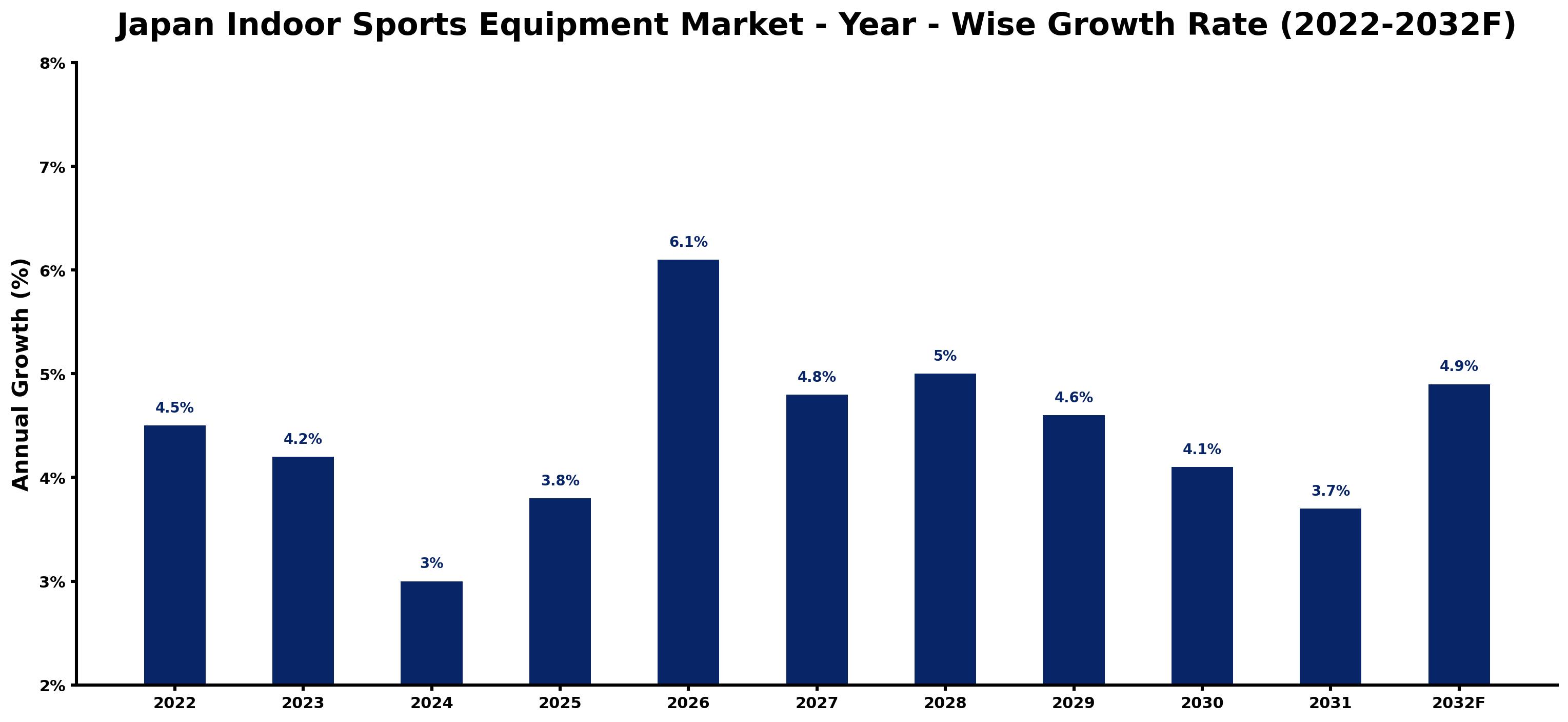
The following figures match every annual growth estimate with the main market development of that year, giving the reasoning behind each rise or slowdown.
| Year | Estimated Annual Growth (%) | Market Rationale |
| 2022 | 4.5 | The market experienced steady growth due to increased interest in indoor sports activities. |
| 2023 | 4.2 | Growth slowed as economic factors influenced consumer spending on recreational equipment. |
| 2024 | 3.0 | A further slowdown occurred as demand stabilised amid changing consumer preferences. |
| 2025 | 3.8 | Growth accelerated as schools invested more in physical education resources. |
| 2026 | 6.1 | The market peaked with a surge in demand driven by major sporting events. |
| 2027 | 4.8 | Growth slowed slightly as market saturation began to take effect. |
| 2028 | 5.0 | Demand is expected to increase again as fitness centres expand their offerings. |
| 2029 | 4.6 | A slowdown is projected as competition intensifies among suppliers. |
| 2030 | 4.1 | Growth will continue to slow as consumer spending habits shift. |
| 2031 | 3.7 | The market is expected to see another slowdown as economic conditions affect discretionary spending. |
| 2032 | 4.9 | Growth is projected to pick up again as new initiatives promote indoor sports participation. |
Note: Market size estimations and growth projections presented in this report are based on 6Wresearch's proprietary forecasting methodology, utilizing the latest available industry data, government publications, and primary research inputs.
Japan Indoor Sports Equipment Market Synopsis
Indoor sports equipment encompasses a range of items designed for use in enclosed spaces, catering to both recreational and competitive activities. The Japan Indoor Sports Equipment Market thrives on demand from schools, fitness centres, and sports clubs, particularly for products such as table tennis tables and badminton nets. A heightened emphasis on physical education, combined with government initiatives to increase sports participation, is driving investment in this sector, with projections indicating the market will reach USD 607 million by 2032.
Market Dynamics Impact Analysis (2026–2032)
| Factor | Type | Impact | Primary Segment Affected |
| Increasing participation in indoor sports activities | Driver | High | Table Sports |
| Expansion of fitness centres and multi-purpose facilities | Driver | High | Fitness Centers |
| Growing interest in recreational sports among youth | Opportunity | Medium | Schools & Sports Clubs |
| Investment in indoor sports facilities post-Tokyo 2020 Olympics | Opportunity | High | Gyms & Arenas |
| Market saturation in certain segments leading to competition | Restraint | Medium | Indoor Turf Mats |
| Economic fluctuations affecting consumer spending | Restraint | High | Badminton Nets & Rackets |
| Challenges in meeting safety and quality standards | Challenge | High | Basketball Hoops |
| Rising costs of raw materials impacting production | Challenge | Medium | MDF |
Evaluation of Drivers in Japan Indoor Sports Equipment Market (2026–2032)
Below are the drivers that matter most for revenue growth, with supporting evidence.
| Drivers | Primary Segment Affected | Why It Matters (Evidence) |
| Increased youth participation in sports | Table Sports | Over 1.5 million participants in badminton drive demand for related equipment. |
| Expansion of multi-purpose sports facilities | Fitness Centers | Over 2,000 gyms in Japan are increasing their indoor sports offerings to attract more users. |
| Government initiatives promoting physical education | Schools & Sports Clubs | The Ministry of Education's guidelines boost demand for indoor sports equipment, encouraging schools to invest. |
| Growth in community sports events | Gyms & Arenas | Community centres host numerous sports events, attracting thousands of participants annually, stimulating equipment demand. |
| Rising health consciousness among consumers | Indoor Turf Mats | The growing focus on fitness leads to increased demand for versatile indoor sports surfaces. |
What keeps demand rising is the increasing youth participation in sports, with badminton attracting over 1.5 million players and driving interest in related equipment. The expansion of multi-purpose fitness centres, with more than 2,000 gyms across Japan, increases the variety of indoor sports offerings. Local sports events hosted at community centres attract thousands of participants, further stimulating demand for gyms and arenas. Growing health consciousness encourages consumers to seek versatile indoor turf mats for various activities.
Evaluation of Restraints in Japan Indoor Sports Equipment Market
The table below lists the restraints and the evidence behind each.
| Market Restraint | Primary Segment Affected | Why It Matters (Evidence) |
| Market saturation in certain segments | Indoor Turf Mats | Increased competition among suppliers leads to price pressures and reduced margins, affecting profitability. |
| Economic fluctuations impacting consumer spending | Badminton Nets & Rackets | Economic uncertainty causes consumers to prioritise essential purchases over recreational items, limiting market growth. |
| Challenges in meeting safety standards | Basketball Hoops | Manufacturers must comply with JIS standards, increasing production costs and limiting price competitiveness. |
| Rising costs of raw materials | MDF | Higher prices for wood and synthetic materials affect overall equipment pricing, impacting affordability for buyers. |
| Limited awareness of indoor sports benefits | Table Sports | Some consumers remain unaware of the advantages of participating in indoor sports, reducing potential market size. |
Japan Indoor Sports Equipment Market Challenges
Indoor sports clubs face intense competition, compelling them to lower membership fees and limiting their capacity to invest in quality items. Buyers encounter fluctuating demand, as participation rates vary seasonally, resulting in inventory management challenges for clubs. Rising production costs, driven by Japan's minimum wage increase to JPY 1,055 per hour, compel suppliers to raise prices, making items less affordable for schools and fitness centres. Supply chain disruptions for imported specialised items can delay availability, impacting training schedules and event planning for athletes across the country.
Trends in the Japan Indoor Sports Equipment Market
The following changes are redrawing the Japan Indoor Sports Equipment Market.
- Shift towards Multi-purpose Sports Facilities: The trend towards multi-purpose sports facilities is growing, with over 2,000 gyms adapting to offer diverse indoor activities. This shift allows for greater flexibility in usage and attracts a wider audience, increasing overall participation rates.
- Growing Popularity of Badminton: Badminton has seen a surge in popularity, with over 1.5 million participants in Japan. This growth is driving demand for badminton nets and rackets, as schools and clubs invest in quality equipment to support the sport.
- Increased Focus on Safety Standards: The emphasis on safety standards has intensified, particularly with JIS regulations governing sports equipment. Compliance ensures that products meet quality benchmarks, thereby increasing consumer trust and market growth.
- Expansion of Community Sports Events: Community sports events are on the rise, attracting thousands of participants annually. This trend encourages local governments and organizations to invest in indoor sports facilities, boosting demand for various equipment types.
Investment Opportunities in the Japan Indoor Sports Equipment Market
The following opportunities in the Japan Indoor Sports Equipment Market pair current demand with a clear way in.
- Timing for Investment in Indoor Facilities: With the government targeting a 70% sports participation rate by 2025, there is an opportunity to invest in indoor sports facilities. Schools and community centres are ideal targets for this investment, catering to growing demand.
- Entry through Partnerships with Local Clubs: Now is the time to form partnerships with local sports clubs, which are increasingly seeking quality equipment. Collaborating with these entities can facilitate market entry and improve brand visibility.
- Focus on Urban Areas for Facility Development: Urban regions like Tokyo and Osaka present opportunities for developing new indoor sports facilities. Investing in these areas can cater to the growing urban population's recreational needs.
- Gap in High-Quality Equipment Supply: The market shows a gap in high-quality indoor sports equipment, particularly in schools. Suppliers can fill this gap by providing durable and compliant products tailored to educational institutions.
Government Initiatives in the Japan Indoor Sports Equipment Market
The Industrial Safety and Health Act of 1972 mandates employer responsibilities for hazardous substances and equipment safety, ensuring that producers of indoor sports equipment adhere to safety protocols. Compliance with this law is essential for manufacturers to maintain operational standards and protect workers. Additionally, the Act against Unjustifiable Premiums and Misleading Representations prohibits misleading labelling and advertising, ensuring consumers receive accurate information about products.
The Japan Sports Agency actively supports initiatives to increase youth participation in sports, funding various projects that improve access to indoor sports facilities. This agency's efforts aim to develop infrastructure and promote healthy lifestyles among young people, benefiting schools and community centres.
Future Insight of the Japan Indoor Sports Equipment Market
By 2032, government initiatives will drive a significant shift in indoor sports participation, aiming for 70% by 2025. This will encourage the development of more multi-purpose facilities, enhancing access for buyers. The introduction of updated JIS standards will elevate safety and quality benchmarks, boosting consumer confidence. Technological advancements will streamline production processes, allowing suppliers to respond more effectively to market needs.
Market Segmentation Analysis
Japan Indoor Sports Equipment Market report covers a detailed analysis of the following market segments:
By Equipment Type – Table Tennis Tables Lead, Badminton Nets & Rackets Expected to Grow Fastest
According to Saurav Kr Singh, Senior Research Analyst at 6Wresearch, Table Tennis Tables held 50% of the Japan Indoor Sports Equipment Market by equipment type in 2025. Table tennis tables dominate the market as they are commonly found in more than 5,000 schools and numerous sports clubs across Japan, facilitating both recreational and competitive play. The Ministry of Education's guidelines underscore their role in enhancing physical education within the school curriculum. Over 2026–2032, Badminton Nets & Rackets are expected to post the fastest growth, at a CAGR of 6.5%. Badminton nets and rackets are experiencing rapid growth due to the participation of over 1.5 million individuals in badminton, with schools and gyms increasingly adopting these necessary items. This momentum is likely to continue as grassroots initiatives by the Japan Badminton Association promote the sport further. This indicates that suppliers must focus on expanding their badminton equipment range to meet the rising demand from educational institutions and fitness facilities.
By Sport Type – Table Sports Lead, Racquet Sports Expected to Grow Fastest
The largest sport type category in 2025 was Table Sports, at 45% of revenue. Table sports, including table tennis and foosball, lead the market as they are popular in recreational settings, particularly in schools and sports clubs. Their established presence ensures a consistent demand for related equipment. Racquet Sports are projected to grow fastest, at a CAGR of 6.4% during 2026–2032. Racquet sports are growing quickly, driven by the increasing popularity of badminton and squash among indoor participants, supported by national tournaments and grassroots programmes. This growth is likely to attract more suppliers to the racquet sports segment. Buyers should consider investing in racquet sports equipment to capitalise on the increasing participation rates.
By Material Used – MDF Leads, Alloy Expected to Grow Fastest
In 2025, MDF led the material used split with a 37% share. MDF is the leading material in the market, primarily used in table tennis tables due to its durability and performance characteristics, making it a preferred choice for schools and clubs. The established supply chain for MDF ensures consistent availability. The quickest growth will come from Alloy, forecast to expand at a CAGR of 7.0% between 2026 and 2032. Alloy is gaining traction as the fastest-growing material, particularly in lightweight sports equipment, which is increasingly favoured for its ease of handling in fitness centres. This trend suggests a shift towards more portable and user-friendly equipment. Suppliers may need to adapt their production strategies to incorporate more alloy-based products to meet changing consumer preferences.
By End User – Schools & Sports Clubs Lead, Fitness Centers Expected to Grow Fastest
Schools & Sports Clubs took 41% of end user revenue in 2025, more than any other category. Schools and sports clubs represent the largest end user segment for indoor sports equipment, as they are essential for facilitating physical education and recreational activities. With over 30,000 registered sports clubs, they create a consistent demand for various types of equipment. Fitness Centers are set to record the highest CAGR in this split, 6.1% over 2026–2032. Fitness centres are rapidly expanding their indoor sports equipment offerings to cater to the growing trend of multi-purpose facilities, reflecting the increasing consumer interest in diverse workout options. This shift indicates a promising opportunity for suppliers to meet the evolving needs of the fitness sector. Suppliers should focus on providing customised solutions for fitness centres to effectively address their demand for a variety of indoor sports equipment.
Key Attractiveness of the Report
- 10 Years of Market Numbers
- Historical Data Starting from 2022 to 2025
- Base Year 2025
- Forecast Data until 2032
- Key Performance Indicators Impacting the Market
- Major Upcoming Developments and Projects
Key Highlights of the Report:
- Japan Indoor Sports Equipment Market Outlook
- Market Size of Japan Indoor Sports Equipment Market, 2025
- Forecast of Japan Indoor Sports Equipment Market, 2032
- Historical Data and Forecast of Japan Indoor Sports Equipment Revenues & Volume for the Period 2022-2032F
- Japan Indoor Sports Equipment Market Trend Evolution
- Japan Indoor Sports Equipment Market Drivers and Challenges
- Japan Indoor Sports Equipment Price Trends
- Japan Indoor Sports Equipment Porter's Five Forces
- Japan Indoor Sports Equipment Industry Life Cycle
- Historical Data and Forecast of Japan Indoor Sports Equipment Market Revenues & Volume By Equipment Type for the Period 2022-2032F
- Historical Data and Forecast of Japan Indoor Sports Equipment Market Revenues & Volume By Table Tennis Tables for the Period 2022-2032F
- Historical Data and Forecast of Japan Indoor Sports Equipment Market Revenues & Volume By Badminton Nets & Rackets for the Period 2022-2032F
- Historical Data and Forecast of Japan Indoor Sports Equipment Market Revenues & Volume By Basketball Hoops for the Period 2022-2032F
- Historical Data and Forecast of Japan Indoor Sports Equipment Market Revenues & Volume By Indoor Turf Mats for the Period 2022-2032F
- Historical Data and Forecast of Japan Indoor Sports Equipment Market Revenues & Volume By Sport Type for the Period 2022-2032F
- Historical Data and Forecast of Japan Indoor Sports Equipment Market Revenues & Volume By Table Sports for the Period 2022-2032F
- Historical Data and Forecast of Japan Indoor Sports Equipment Market Revenues & Volume By Racquet Sports for the Period 2022-2032F
- Historical Data and Forecast of Japan Indoor Sports Equipment Market Revenues & Volume By Team Sports for the Period 2022-2032F
- Historical Data and Forecast of Japan Indoor Sports Equipment Market Revenues & Volume By Multi-purpose for the Period 2022-2032F
- Historical Data and Forecast of Japan Indoor Sports Equipment Market Revenues & Volume By Material Used for the Period 2022-2032F
- Historical Data and Forecast of Japan Indoor Sports Equipment Market Revenues & Volume By MDF, Alloy for the Period 2022-2032F
- Historical Data and Forecast of Japan Indoor Sports Equipment Market Revenues & Volume By Carbon Fiber, Nylon for the Period 2022-2032F
- Historical Data and Forecast of Japan Indoor Sports Equipment Market Revenues & Volume By Steel, Polycarbonate for the Period 2022-2032F
- Historical Data and Forecast of Japan Indoor Sports Equipment Market Revenues & Volume By Synthetic Grass for the Period 2022-2032F
- Historical Data and Forecast of Japan Indoor Sports Equipment Market Revenues & Volume By End User for the Period 2022-2032F
- Historical Data and Forecast of Japan Indoor Sports Equipment Market Revenues & Volume By Schools & Sports Clubs for the Period 2022-2032F
- Historical Data and Forecast of Japan Indoor Sports Equipment Market Revenues & Volume By Fitness Centers for the Period 2022-2032F
- Historical Data and Forecast of Japan Indoor Sports Equipment Market Revenues & Volume By Gyms & Arenas for the Period 2022-2032F
- Historical Data and Forecast of Japan Indoor Sports Equipment Market Revenues & Volume By Community Centers for the Period 2022-2032F
- Japan Indoor Sports Equipment Import Export Trade Statistics
- Market Opportunity Assessment By Equipment Type
- Market Opportunity Assessment By Sport Type
- Market Opportunity Assessment By Material Used
- Market Opportunity Assessment By End User
- Japan Indoor Sports Equipment Top Companies Market Share
- Japan Indoor Sports Equipment Competitive Benchmarking By Technical and Operational Parameters
- Japan Indoor Sports Equipment Company Profiles
- Japan Indoor Sports Equipment Key Strategic Recommendations
Market Covered
The study includes the following segmentation.
By Equipment Type
- Table Tennis Tables
- Badminton Nets & Rackets
- Basketball Hoops
- Indoor Turf Mats
By Sport Type
- Table Sports
- Racquet Sports
- Team Sports
- Multi-purpose
By Material Used
- MDF
- Alloy
- Carbon Fiber
- Nylon
- Steel
- Polycarbonate
- Synthetic Grass
By End User
- Schools & Sports Clubs
- Fitness Centers
- Gyms & Arenas
- Community Centers































