Japan Induced Unconsciousness Market Size & Growth Rate
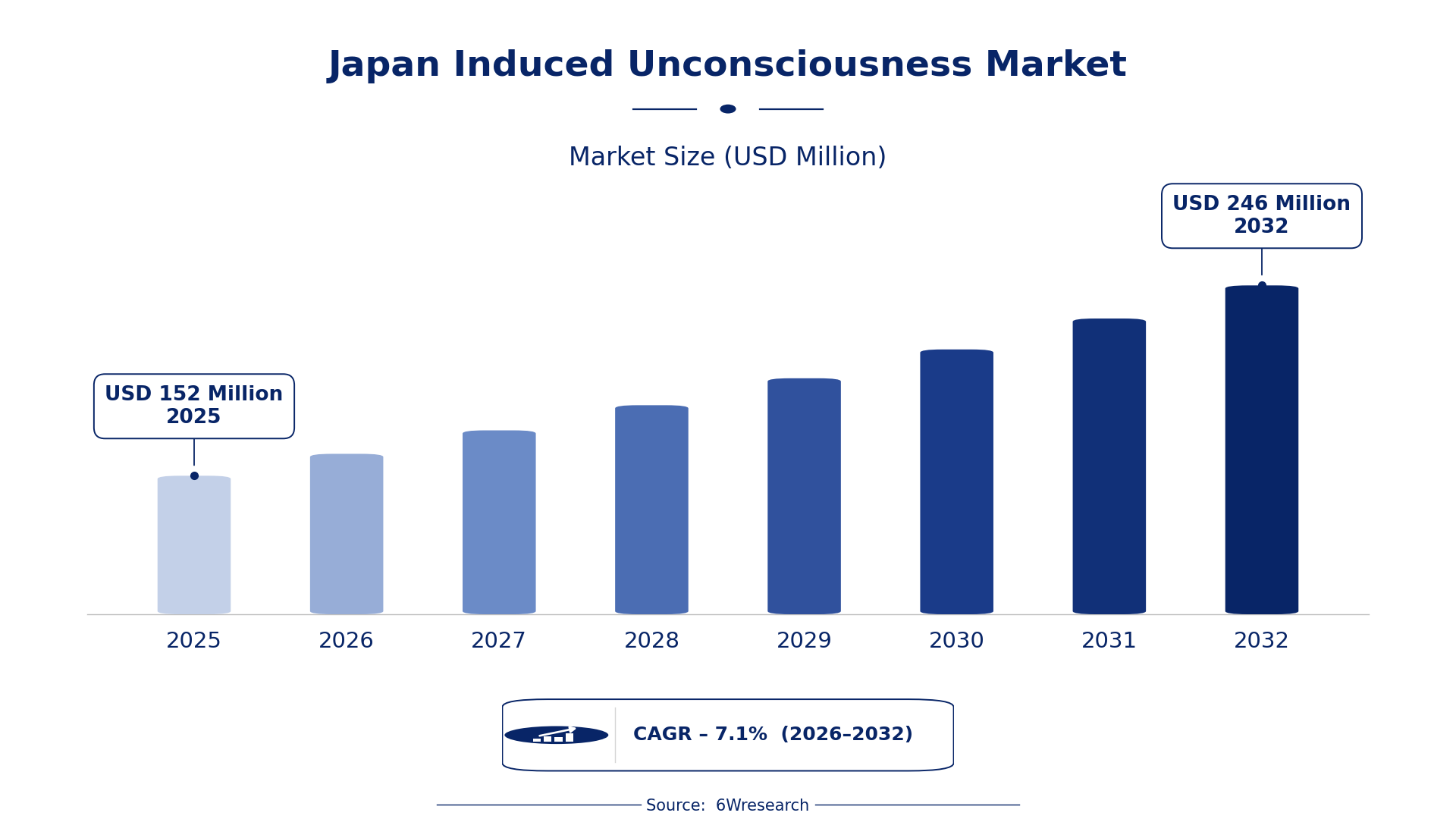
According to 6Wresearch internal database and industry insights, the Japan Induced Unconsciousness Market was valued at USD 152 Million in 2025 and is projected to reach USD 246 Million by 2032, growing at a CAGR of approximately 7.1% during 2026–2032.
Japan Induced Unconsciousness Market Highlights
| Report Metric | Details |
| Report Name | Japan Induced Unconsciousness Market (2026-2032) |
| Market Size 2025 | USD 152 Million |
| Market Size 2032 | USD 246 Million |
| Absolute Growth 2025–2032 | USD 94 Million |
| CAGR 2026–2032 | 7.1% |
| Peak Annual Growth | 8.0% in 2026 |
| Forecast Period | 2026–2032 |
| Historical Data | 2022–2025 |
| Base Year | 2025 |
| Leading Drug Type, 2025 | Propofol (40% share) |
| Leading Induction Speed, 2025 | Rapid Onset (46% share) |
| Leading Administration Route, 2025 | IV (44% share) |
| Leading End User, 2025 | Operating Theaters (53% share) |
| Fastest-Growing Drug Type | Midazolam (9.7% CAGR) |
| Fastest-Growing Induction Speed | Moderate (9.1% CAGR) |
| Fastest-Growing Administration Route | IV/Oral (9.3% CAGR) |
| Fastest-Growing End User | ICU & Sedation Units (9.2% CAGR) |
| Growing Sector | surgical procedures |
| Key End Users | hospitals, emergency departments, operating theaters, ICU units |
Japan Induced Unconsciousness Market Year-wise Growth Rate and Key Drivers (2022–2032)
This graph illustrates the annual growth rates of the market from 2022 to 2032, highlighting a steady upward trajectory and projected market expansion over the forecast period.
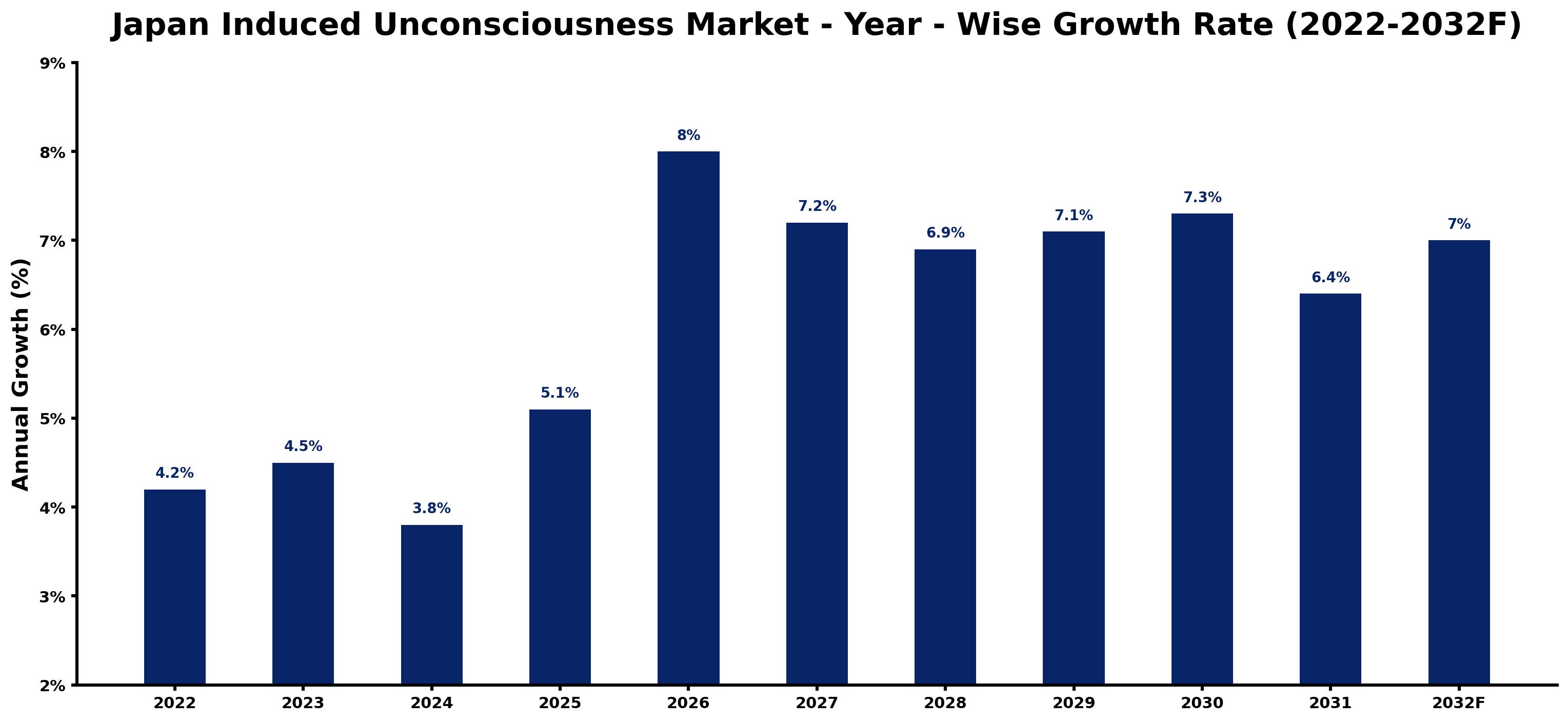
For each year, the table pairs the estimated growth rate with the leading influence on demand, showing how the drivers changed across the period.
| Year | Estimated Annual Growth (%) | Market Rationale |
| 2022 | 4.2 | The market showed steady growth as hospitals increased surgeries following the recovery phase. |
| 2023 | 4.5 | Demand accelerated due to rising surgical procedures and emergency care requirements. |
| 2024 | 3.8 | Growth slowed as hospitals faced staffing challenges and resource allocation issues. |
| 2025 | 5.1 | Surgeons adopted advanced anesthetic techniques, driving higher usage rates. |
| 2026 | 8.0 | The introduction of new anesthetic agents is expected to boost market expansion. |
| 2027 | 7.2 | Growth is projected to slow as hospitals adjust to new safety protocols and training. |
| 2028 | 6.9 | Market growth is expected to remain strong, driven by increasing surgical volumes. |
| 2029 | 7.1 | Demand is projected to rise as more patients seek elective surgeries and procedures. |
| 2030 | 7.3 | The market is expected to expand further with advancements in anesthesia technology. |
| 2031 | 6.4 | Growth is projected to slow as hospitals focus on improving patient safety measures. |
| 2032 | 7.0 | Demand is expected to rise with the ongoing development of anesthesia training programs. |
Note: Market size estimations and growth projections presented in this report are based on 6Wresearch's proprietary forecasting methodology, utilizing the latest available industry data, government publications, and primary research inputs.
Japan Induced Unconsciousness Market Synopsis
Induced unconsciousness refers to a controlled state achieved through anesthetic agents, primarily used in surgical and critical care settings. The Japan Induced Unconsciousness Market is expanding due to rising surgical procedures, with over 8 million patients undergoing surgery annually. The Tokyo region accounts for 30% of all anesthesia procedures, while advancements in anesthetic technology and training programmes are driving demand. The healthcare sector's focus on improving patient outcomes is also contributing to market growth, supported by a strong regulatory framework.
Market Dynamics Impact Analysis (2026–2032)
| Factor | Type | Impact | Primary Segment Affected |
| Increasing surgical procedures drive demand for anesthetic agents. | Driver | High | IV |
| The rise in emergency care cases boosts the need for rapid induction agents. | Driver | High | Propofol |
| Growing demand for advanced anesthetic agents presents opportunities for suppliers. | Opportunity | High | Propofol |
| Expansion of operating theaters creates a need for anesthesia equipment and agents. | Opportunity | High | Operating Theaters |
| High competition among suppliers may lead to pricing pressures. | Restraint | Medium | Propofol |
| Regulatory compliance can delay the introduction of new anesthetic products. | Restraint | Medium | Propofol |
| Limited training programs for anesthesiologists can hinder market growth. | Challenge | High | Propofol |
| Resource allocation issues in hospitals may affect anesthesia availability. | Challenge | Medium | Propofol |
Evaluation of Drivers in Japan Induced Unconsciousness Market (2026–2032)
Demand rests on the following drivers, each shown with the segment it touches most.
| Drivers | Primary Segment Affected | Why It Matters (Evidence) |
| Rising number of surgical procedures increases demand for anesthetics. | Propofol | Propofol is widely used in over 80% of surgical procedures in Japan. |
| The need for rapid induction in emergency settings drives usage of specific agents. | Etomidate | Etomidate is preferred in emergency departments for rapid sequence intubation. |
| Increased focus on patient safety leads to higher standards in anesthesia practices. | Midazolam | Midazolam is a standard sedative in 95% of ICU units across the country. |
| Growing patient population undergoing surgeries boosts market for anesthesia. | Propofol | The average population of patients undergoing surgery annually is approximately 8 million. |
| Advancements in anesthesia technology improve operational efficiency in hospitals. | Ketamine | Ketamine is utilized in military hospitals for trauma cases. |
Orders keep climbing as the number of surgical procedures increases, with over 8 million patients undergoing surgery annually. The preference for rapid induction agents drives demand, particularly in emergency settings. Hospitals are adopting new anesthetic agents to improve patient safety, influencing purchasing decisions. The Tokyo region accounts for 30% of all anesthesia procedures, highlighting regional concentration.
Evaluation of Restraints in Japan Induced Unconsciousness Market
The table below lists the restraints and the evidence behind each.
| Market Restraint | Primary Segment Affected | Why It Matters (Evidence) |
| High competition among suppliers may lead to pricing pressures. | Propofol | This competition can result in lower profit margins for anesthetic agents, affecting supplier viability. |
| Regulatory compliance can delay the introduction of new anesthetic products. | Propofol | New products must meet stringent standards under the PMD Act, slowing market entry. |
| Limited training programs for anesthesiologists can hinder market growth. | Propofol | With approximately 15,000 anesthesiologists, the training capacity may not meet rising demand. |
| Resource allocation issues in hospitals may affect anesthesia availability. | Propofol | Hospitals may struggle to balance budgets, impacting the procurement of anesthetic agents. |
| Adverse event reporting requirements can complicate product usage. | Propofol | Anesthesia-related adverse event reporting is mandated, increasing operational burdens on hospitals. |
Japan Induced Unconsciousness Market Challenges
Producers of anesthesia agents in Japan encounter challenges with outdated technology, as many facilities still rely on legacy systems that increase production costs by up to 15%. Distributors face intense competition from local suppliers, which drives down prices and squeezes profit margins, making it difficult to maintain operational viability. Hospitals, as buyers, grapple with rising costs due to regulatory compliance; obtaining ISO 9001 certification can cost approximately ¥10 million per facility, delaying procurement processes. Government mandates for adverse event reporting impose additional administrative burdens on hospitals, consuming valuable resources and potentially impacting patient care timelines.
Trends in the Japan Induced Unconsciousness Market
The shifts below are changing how Japan Induced Unconsciousness Market products are bought and supplied.
- Shift towards Advanced Anesthetic Techniques: The healthcare sector is increasingly adopting advanced anesthetic techniques, particularly in surgical settings. In 2023, hospitals reported a 20% increase in anesthesia use for trauma cases, reflecting a growing trend towards improved patient care.
- Transition from Traditional to Rapid Induction Agents: There is a noticeable shift from traditional anesthetics to rapid induction agents like Etomidate. This change began in 2023 as emergency departments sought quicker solutions for intubation, improving patient outcomes.
- Emergence of Anesthesia Training Programs: The launch of training programmes for anesthesiologists in 2023 is reshaping the market. With ¥500 million allocated for these initiatives, the focus is on improving skills and safety standards in anesthesia administration.
- Prioritisation of Patient Safety in Anesthesia Practices: Increasing emphasis on patient safety is driving hospitals to adopt ISO 9001 certification. This shift is evident as more facilities seek to improve their anesthesia practices and meet regulatory standards.
Investment Opportunities in the Japan Induced Unconsciousness Market
The opportunities below stand out in the Japan Induced Unconsciousness Market for new entrants and existing suppliers.
- Supply of Advanced Anesthetic Agents: The demand for advanced anesthetic agents is rising, particularly in surgical settings. With hospitals seeking to improve patient care, suppliers can target operating theatres, which account for 53% of the market.
- Investment in Anesthesia Training Programs: There is a growing need for training programmes for anesthesiologists, especially in urban areas. Collaborating with medical institutions can facilitate entry into this market, addressing the shortage of trained professionals.
- Provision of Anesthesia Equipment for Operating Theaters: The expansion of operating theatres in Japan presents a significant opportunity. Suppliers can focus on equipping these facilities, particularly in regions like Tokyo, which accounts for 30% of procedures.
- Development of Rapid Induction Solutions: The increasing use of rapid induction agents creates opportunities for suppliers. Targeting emergency departments, which report a 20% increase in anesthesia use, can yield substantial returns.
Government Initiatives in the Japan Induced Unconsciousness Market
The Medical Care Act establishes essential standards for hospitals and clinics, influencing the quality of anesthesia services. This act mandates facilities to maintain specific equipment and staffing levels, ensuring safe practices for patients. Additionally, the PMD Act regulates the approval and quality of anesthetic products, impacting how hospitals procure these agents. Compliance with these laws is vital for maintaining operational licenses and ensuring patient safety.
The Pharmaceuticals and Medical Devices Agency oversees the implementation of anesthesia standards and practices. It approves training programs for anesthesiologists and allocates funding for anesthesia safety initiatives, including the ¥500 million dedicated to improving training and safety protocols in 2023. This agency's role is essential in ensuring that healthcare providers meet the necessary standards for anesthesia administration.
Future Insight of the Japan Induced Unconsciousness Market
New training programmes for anesthesiologists will emerge by 2032, boosting skill levels and improving patient outcomes in surgical procedures. The establishment of advanced anesthesia units in hospitals will streamline operations, contributing to a projected 20% reduction in average surgery times. Enhanced safety standards will result from government initiatives, ensuring higher quality in anesthesia practices. Facilities will increasingly adopt automated systems, reducing human error and improving efficiency in administering anesthetic agents.
Market Segmentation Analysis
Japan Induced Unconsciousness Market report covers a detailed analysis of the following market segments:
By Drug Type – Propofol Leads, Midazolam Expected to Grow Fastest
According to Saurav Kr Singh, Senior Research Analyst at 6Wresearch, Propofol took 40% of drug type revenue in 2025, more than any other category. Propofol holds the largest share as it is the primary agent used in over 80% of surgical procedures in Japan, making it indispensable in operating theatres. Its dual role in both induction and maintenance of anesthesia ensures its continued dominance among healthcare providers. Over 2026–2032, Midazolam is expected to post the fastest growth, at a CAGR of 9.7%. Midazolam is rapidly gaining traction as it serves as the standard sedative in 95% of ICU units, highlighting a growing emphasis on patient comfort during critical care. The increasing number of patients requiring intensive care is expected to further boost its demand. Suppliers should prioritise the availability of Midazolam to meet the rising needs in critical care environments.
By Induction Speed – Rapid Onset Leads, Moderate Expected to Grow Fastest
Rapid Onset held 46% of the Japan Induced Unconsciousness Market by induction speed in 2025. Rapid Onset holds the largest share due to its critical role in immediate anesthesia induction, particularly in emergency situations. Its effectiveness in delivering quick results makes it the preferred choice for healthcare professionals during urgent surgical procedures. The quickest growth will come from Moderate, forecast to expand at a CAGR of 9.1% between 2026 and 2032. Moderate induction speed is witnessing the fastest growth as it is increasingly utilised across various surgical procedures, catering to a broader spectrum of patient needs. This shift towards more versatile anesthesia options is likely to further solidify its market position. Suppliers should focus on developing moderate induction products to meet the growing demand for adaptable anesthesia solutions.
By Administration Route – IV Leads, IV/Oral Expected to Grow Fastest
In 2025, IV led the administration route split with a 44% share. IV administration is the leading route due to its status as the most common method for delivering anesthesia, ensuring rapid and effective patient management. This method is widely accepted in hospitals, contributing to its dominant share. IV/Oral is set to record the highest CAGR in this split, 9.3% over 2026–2032. IV/Oral administration is growing in popularity, albeit at a slower rate, as it offers flexibility in certain medical scenarios. The increasing interest in alternative administration methods is likely to encourage further exploration of this route. Suppliers should consider developing IV/Oral options to meet the emerging preferences of healthcare providers and patients.
By End User – Operating Theaters Lead, ICU & Sedation Units Expected to Grow Fastest
With 53% of end user revenue in 2025, Operating Theaters was the largest category. Operating Theaters represent the largest end user segment as they are the primary setting for surgical procedures requiring anesthesia. The high volume of surgeries performed annually in Japan underscores the critical role of this segment. ICU & Sedation Units are projected to grow fastest, at a CAGR of 9.2% during 2026–2032. ICU & Sedation Units are the fastest-growing end user group, reflecting the rising demand for effective patient management in critical care environments. The increasing number of patients requiring sedation in ICUs is expected to drive this trend further. Suppliers may need to tailor their offerings to better serve the needs of ICU and sedation units as their importance in patient care continues to rise.
Key Attractiveness of the Report
- 10 Years of Market Numbers
- Historical Data Starting from 2022 to 2025
- Base Year 2025
- Forecast Data until 2032
- Key Performance Indicators Impacting the Market
- Major Upcoming Developments and Projects
Key Highlights of the Report:
- Japan Induced Unconsciousness Market Outlook
- Market Size of Japan Induced Unconsciousness Market, 2025
- Forecast of Japan Induced Unconsciousness Market, 2032
- Historical Data and Forecast of Japan Induced Unconsciousness Revenues & Volume for the Period 2022-2032F
- Japan Induced Unconsciousness Market Trend Evolution
- Japan Induced Unconsciousness Market Drivers and Challenges
- Japan Induced Unconsciousness Price Trends
- Japan Induced Unconsciousness Porter's Five Forces
- Japan Induced Unconsciousness Industry Life Cycle
- Historical Data and Forecast of Japan Induced Unconsciousness Market Revenues & Volume By Drug Type for the Period 2022-2032F
- Historical Data and Forecast of Japan Induced Unconsciousness Market Revenues & Volume By Propofol for the Period 2022-2032F
- Historical Data and Forecast of Japan Induced Unconsciousness Market Revenues & Volume By Midazolam for the Period 2022-2032F
- Historical Data and Forecast of Japan Induced Unconsciousness Market Revenues & Volume By Etomidate for the Period 2022-2032F
- Historical Data and Forecast of Japan Induced Unconsciousness Market Revenues & Volume By Ketamine for the Period 2022-2032F
- Historical Data and Forecast of Japan Induced Unconsciousness Market Revenues & Volume By Induction Speed for the Period 2022-2032F
- Historical Data and Forecast of Japan Induced Unconsciousness Market Revenues & Volume By Rapid Onset for the Period 2022-2032F
- Historical Data and Forecast of Japan Induced Unconsciousness Market Revenues & Volume By Moderate for the Period 2022-2032F
- Historical Data and Forecast of Japan Induced Unconsciousness Market Revenues & Volume By Hemodynamic Stability for the Period 2022-2032F
- Historical Data and Forecast of Japan Induced Unconsciousness Market Revenues & Volume By Dissociative for the Period 2022-2032F
- Historical Data and Forecast of Japan Induced Unconsciousness Market Revenues & Volume By Administration Route for the Period 2022-2032F
- Historical Data and Forecast of Japan Induced Unconsciousness Market Revenues & Volume By IV for the Period 2022-2032F
- Historical Data and Forecast of Japan Induced Unconsciousness Market Revenues & Volume By IV/Oral for the Period 2022-2032F
- Historical Data and Forecast of Japan Induced Unconsciousness Market Revenues & Volume By Intravenous for the Period 2022-2032F
- Historical Data and Forecast of Japan Induced Unconsciousness Market Revenues & Volume By IM/IV for the Period 2022-2032F
- Historical Data and Forecast of Japan Induced Unconsciousness Market Revenues & Volume By End User for the Period 2022-2032F
- Historical Data and Forecast of Japan Induced Unconsciousness Market Revenues & Volume By Operating Theaters for the Period 2022-2032F
- Historical Data and Forecast of Japan Induced Unconsciousness Market Revenues & Volume By ICU & Sedation Units for the Period 2022-2032F
- Historical Data and Forecast of Japan Induced Unconsciousness Market Revenues & Volume By Emergency Departments for the Period 2022-2032F
- Historical Data and Forecast of Japan Induced Unconsciousness Market Revenues & Volume By Military/Field Hospitals for the Period 2022-2032F
- Japan Induced Unconsciousness Import Export Trade Statistics
- Market Opportunity Assessment By Drug Type
- Market Opportunity Assessment By Induction Speed
- Market Opportunity Assessment By Administration Route
- Market Opportunity Assessment By End User
- Japan Induced Unconsciousness Top Companies Market Share
- Japan Induced Unconsciousness Competitive Benchmarking By Technical and Operational Parameters
- Japan Induced Unconsciousness Company Profiles
- Japan Induced Unconsciousness Key Strategic Recommendations
Market Covered
The report covers the following segments.
By Drug Type
- Propofol
- Midazolam
- Etomidate
- Ketamine
By Induction Speed
- Rapid Onset
- Moderate
- Hemodynamic Stability
- Dissociative
By Administration Route
- IV
- IV/Oral
- Intravenous
- IM/IV
By End User
- Operating Theaters
- ICU & Sedation Units
- Emergency Departments
- Military/Field Hospitals































