Japan Industrial Airflow Market Size & Growth Rate
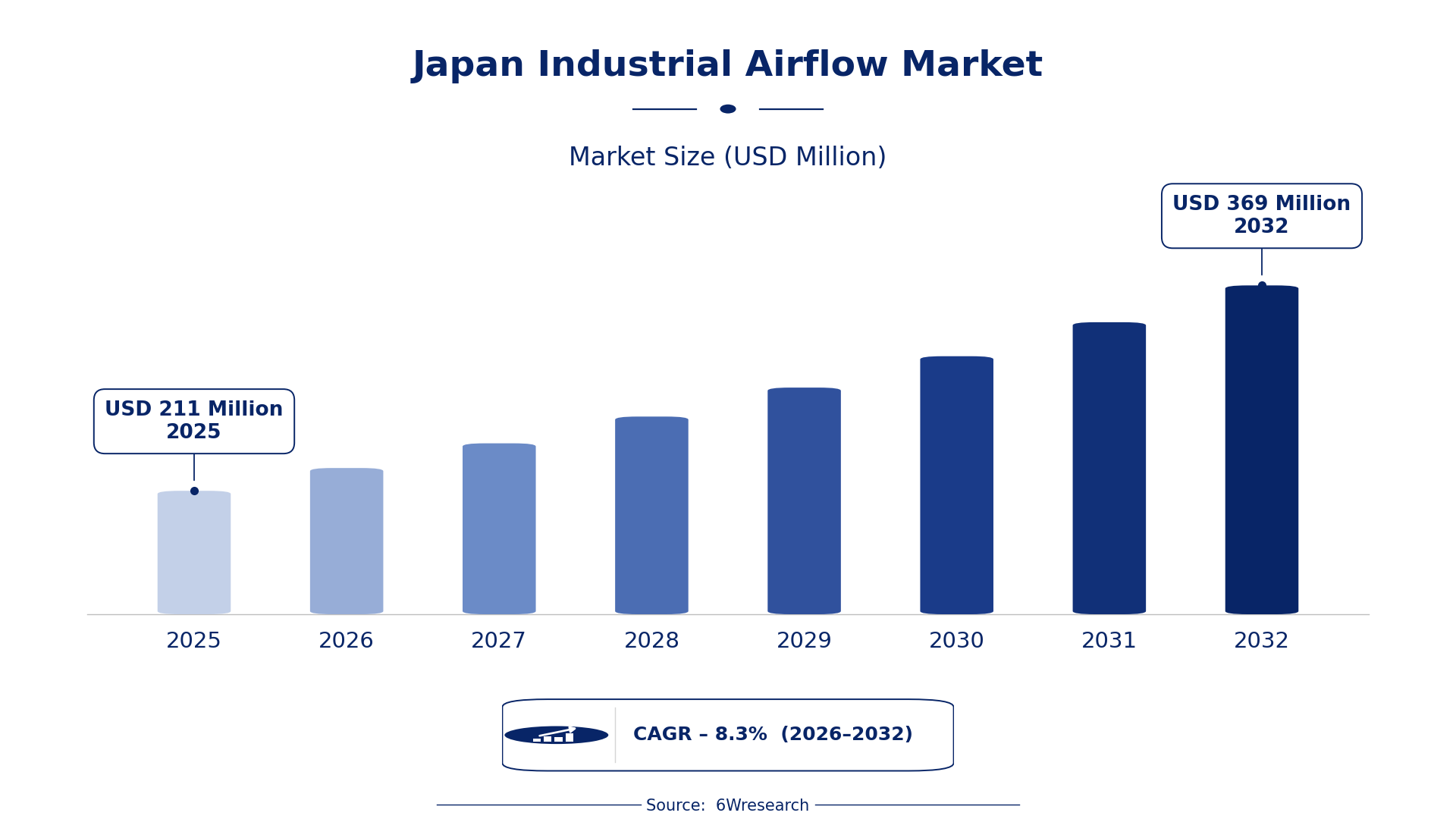
According to 6Wresearch internal database and industry insights, the Japan Industrial Airflow Market was valued at USD 211 Million in 2025 and is projected to reach USD 369 Million by 2032, growing at a CAGR of approximately 8.3% during 2026–2032.
Japan Industrial Airflow Market Highlights
| Report Metric | Details |
| Report Name | Japan Industrial Airflow Market (2026-2032) |
| Market Size 2025 | USD 211 Million |
| Market Size 2032 | USD 369 Million |
| Absolute Growth 2025–2032 | USD 158 Million |
| CAGR 2026–2032 | 8.3% |
| Peak Annual Growth | 9.5% in 2028 |
| Forecast Period | 2026–2032 |
| Historical Data | 2022–2025 |
| Base Year | 2025 |
| Leading Application Type, 2025 | HVAC System Monitoring (41% share) |
| Leading Measurement Device, 2025 | Anemometers (50% share) |
| Leading Control Type, 2025 | Variable Air Volume (48% share) |
| Leading End User, 2025 | Manufacturing Units (43% share) |
| Fastest-Growing Application Type | Cleanroom Environments (11.0% CAGR) |
| Fastest-Growing Measurement Device | Flow Sensors (11.2% CAGR) |
| Fastest-Growing Control Type | Real-Time Adjustment (11.5% CAGR) |
| Fastest-Growing End User | Pharmaceutical Plants (10.9% CAGR) |
| Growing Sector | Manufacturing Units |
| Key End Users | Manufacturing Units, Pharmaceutical Plants, Building Automation Firms |
Japan Industrial Airflow Market Year-wise Growth Rate and Key Drivers (2022–2032)
This graph illustrates the annual growth rates of the market from 2022 to 2032, highlighting a steady upward trajectory and projected market expansion over the forecast period.
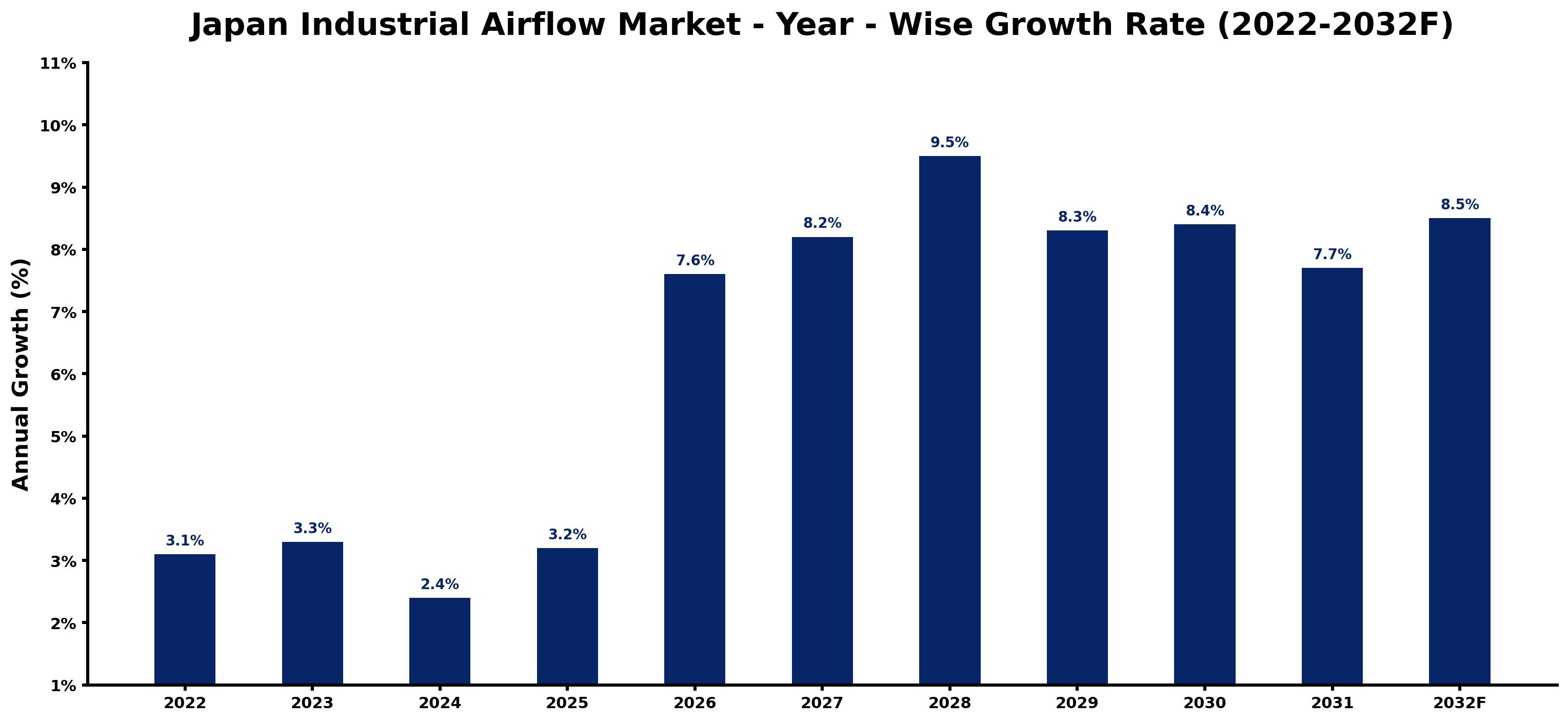
The table below sets out the estimated growth rate for each year and the main factor behind it.
| Year | Estimated Annual Growth (%) | Market Rationale |
| 2022 | 3.1 | The market experienced steady demand due to ongoing industrial activities. |
| 2023 | 3.3 | Growth was supported by increased investment in HVAC systems across sectors. |
| 2024 | 2.4 | A slowdown occurred as some industries faced temporary operational challenges. |
| 2025 | 3.2 | Demand rose again as manufacturers upgraded their airflow systems for efficiency. |
| 2026 | 7.6 | The market is set to accelerate with the introduction of new energy-efficient technologies. |
| 2027 | 8.2 | Continued industrial expansion is expected to further boost demand for airflow solutions. |
| 2028 | 9.5 | A peak growth year is anticipated as urbanisation drives HVAC upgrades. |
| 2029 | 8.3 | Growth will moderate slightly as the market stabilises after rapid expansion. |
| 2030 | 8.4 | Demand is projected to rise again as sustainability initiatives gain traction. |
| 2031 | 7.7 | A slowdown is expected as the market adjusts to new regulatory frameworks. |
| 2032 | 8.5 | Growth will continue as technological advancements improve system capabilities. |
Note: Market size estimations and growth projections presented in this report are based on 6Wresearch's proprietary forecasting methodology, utilizing the latest available industry data, government publications, and primary research inputs.
Japan Industrial Airflow Market Synopsis
Industrial airflow technology is essential for controlling and measuring air flow in various applications. It is produced using advanced sensors and control systems, ensuring optimal air quality and energy efficiency. The Japan Industrial Airflow Market is expanding due to strong demand from manufacturing and pharmaceuticals, with the pharmaceutical industry valued at over $40 billion. The push for energy efficiency and the adoption of smart building technologies are key drivers of this growth, as industries seek to comply with new regulations and improve operational performance.
Market Dynamics Impact Analysis (2026–2032)
| Factor | Type | Impact | Primary Segment Affected |
| Increased urbanisation and industrialisation drive demand for HVAC systems. | Driver | High | HVAC System Monitoring |
| The pharmaceutical sector's growth necessitates stringent airflow management. | Driver | High | Cleanroom Environments |
| Investment in energy-efficient technologies presents significant opportunities. | Opportunity | High | Variable Air Volume |
| The rise of smart buildings creates demand for advanced airflow controls. | Opportunity | High | Building Automation Firms |
| Regulatory compliance can increase operational costs for manufacturers. | Restraint | Medium | Manufacturing Units |
| Limited availability of skilled technicians may hinder system installation. | Restraint | Medium | HVAC System Monitoring |
| High initial investment costs deter some manufacturers from upgrading. | Challenge | High | Industrial Ventilation |
| Technological advancements may outpace current industry standards. | Challenge | Medium | Cleanroom Environments |
Evaluation of Drivers in Japan Industrial Airflow Market (2026–2032)
Key forces behind demand, with the segment each one moves most, are listed below.
| Drivers | Primary Segment Affected | Why It Matters (Evidence) |
| Increased investment in HVAC systems driven by urbanisation. | HVAC System Monitoring | In 2022, Japan had approximately 127 million people requiring efficient HVAC systems. |
| Growth in the pharmaceutical industry fuels demand for cleanroom technology. | Cleanroom Environments | The pharmaceutical industry in Japan is valued at over $40 billion. |
| Rising energy efficiency standards encourage upgrades in airflow systems. | Variable Air Volume | Japan's government aims to reduce energy consumption in buildings by 20% by 2030. |
| Integration of smart technologies in buildings improves airflow management. | Building Automation Firms | Building automation systems in Japan are increasingly integrating airflow controls. |
| Decarbonisation investments support advancements in airflow technology. | Mass Flow Controllers | Japan targets about JPY 150 trillion of public and private decarbonisation investment over 10 years. |
Behind the steady rise in orders sits the growing demand for energy-efficient HVAC systems, as Japan aims to reduce energy consumption in buildings by 20% by 2030. The pharmaceutical sector, valued at over $40 billion, requires advanced cleanroom environments to maintain sterile conditions, leading to increased purchases of airflow technology. Urbanisation and industrialisation are also driving factors, with approximately 127 million people needing efficient HVAC systems. The integration of smart technologies in building automation systems is improving airflow management capabilities, further boosting demand.
Evaluation of Restraints in Japan Industrial Airflow Market
Below are the constraints most often cited by buyers and suppliers, with the segment each affects.
| Market Restraint | Primary Segment Affected | Why It Matters (Evidence) |
| Compliance with energy efficiency regulations raises operational costs. | Manufacturing Units | The Act on the Rational Use of Energy obliges large energy users to improve energy efficiency, increasing operational costs. |
| Shortage of skilled technicians impacts installation and maintenance. | HVAC System Monitoring | The demand for skilled professionals is outpacing supply in the HVAC sector, causing delays. |
| High initial costs of advanced airflow systems deter upgrades. | Industrial Ventilation | Many manufacturers hesitate to invest due to budget constraints, limiting system upgrades. |
| Limited access to advanced technology can hinder efficiency improvements. | Cleanroom Environments | Some facilities lack the latest airflow management solutions, affecting operational efficiency. |
| Regulatory changes may create uncertainty for manufacturers. | Variable Air Volume | Frequent updates to standards can complicate compliance efforts, causing potential delays. |
Japan Industrial Airflow Market Challenges
Buyers in Japan's industrial airflow market experience a skills shortage, as many technicians lack expertise in advanced airflow systems, resulting in project delays of up to six months. Regulatory challenges stem from strict emissions standards, forcing producers to invest in costly upgrades that can exceed JPY 1 billion annually. Technology adoption lags behind market needs, particularly in smart building applications, causing operational inefficiencies that inflate costs by 15% for facilities. Buyers also face rising prices for HVAC systems due to urbanisation, potentially increasing project budgets by 20%.
Trends in the Japan Industrial Airflow Market
Four trends stand out in the Japan Industrial Airflow Market.
- Manufacturing Units Adopting Energy Efficiency: Manufacturing units are increasingly embracing energy-efficient HVAC systems to meet regulatory requirements. In 2023, Japan's government allocated funds to enhance industrial energy efficiency, resulting in a surge in system upgrades.
- Integration of Smart Technologies in Buildings: A growing trend involves the integration of smart technologies into building automation systems. In 2023, the Tokyo Metropolitan Government launched initiatives to improve air quality in urban areas, promoting advanced airflow controls.
- Importance of Cleanroom Technology: Cleanroom technology is becoming indispensable for sectors such as pharmaceuticals and semiconductors. ISO 14644 serves as a standard guiding cleanroom environments, ensuring adherence to stringent contamination control requirements.
- Popularity of Real-Time Adjustment Systems: Real-time adjustment systems are increasingly preferred for their efficiency. The market for these systems is expected to expand as manufacturers aim to optimise airflow management.
Investment Opportunities in the Japan Industrial Airflow Market
Several openings in the Japan Industrial Airflow Market merit attention from investors.
- Supply of Energy-Efficient HVAC Systems: A strong opportunity exists to provide energy-efficient HVAC systems as Japan targets a 20% reduction in energy consumption by 2030. Manufacturing units are actively seeking these solutions to comply with regulations.
- Advanced Airflow Controls for Smart Buildings: The demand for advanced airflow controls is on the rise as building automation firms incorporate smart technologies. Collaborating with local partners can ease market entry in urban areas like Tokyo.
- Cleanroom Solutions for Pharmaceuticals: The pharmaceutical sector offers a notable opportunity for cleanroom solutions, driven by its $40 billion valuation. Suppliers can enter this market by obtaining necessary certifications and aligning with industry standards.
- Mass Flow Controllers for Semiconductor Manufacturing: Mass flow controllers are essential in semiconductor manufacturing, which is experiencing rapid growth. Forming joint ventures with local firms can strengthen market presence in this high-tech sector.
Government Initiatives in the Japan Industrial Airflow Market
The GX Promotion Act (2023) introduces a framework for decarbonisation, building on previous laws like the Industrial Safety and Health Act (1972). This act mandates energy efficiency improvements, impacting industrial airflow producers by requiring compliance with stricter standards.
In 2023, JPY 150 trillion was allocated for decarbonisation investments, overseen by the Ministry of the Environment. This funding supports initiatives aimed at improving energy efficiency in industrial settings, directly benefiting buyers of airflow technology.
Future Insight of the Japan Industrial Airflow Market
The implementation of energy efficiency initiatives for manufacturing facilities will transform industrial airflow practices by 2032, promoting sustainable operations. The integration of advanced sensors in HVAC systems will improve real-time monitoring capabilities, enhancing air quality management. The pharmaceutical sector will increasingly adopt cleanroom standards like ISO 14644, ensuring compliance and safety in production. Japan's government aims for a 20% reduction in energy consumption in buildings, driving demand for advanced airflow solutions that will benefit both buyers and suppliers.
Market Segmentation Analysis
Japan Industrial Airflow Market report covers a detailed analysis of the following market segments:
By Application Type – HVAC System Monitoring Leads, Cleanroom Environments Expected to Grow Fastest
According to Saurav Kr Singh, Senior Research Analyst at 6Wresearch, the largest application type category in 2025 was HVAC System Monitoring, at 41% of revenue. HVAC system monitoring holds the largest share due to its critical role in ensuring air quality across various sectors. With approximately 15 million HVAC systems installed in Japan, this application is indispensable for both industrial and residential environments. Cleanroom Environments are projected to grow fastest, at a CAGR of 11.0% during 2026–2032. The cleanroom environments segment is expanding quickly as the pharmaceutical industry, valued at over $40 billion, increasingly demands stringent contamination control measures. This growth is expected to persist as cleanroom technology aligns with ISO 14644 standards. Suppliers should enhance their offerings for cleanroom applications to capitalise on this increasing demand.
By Measurement Device – Anemometers Lead, Flow Sensors Expected to Grow Fastest
With 50% of measurement device revenue in 2025, Anemometers was the largest category. Anemometers dominate the market as they are essential for accurately measuring air velocity in HVAC systems. Their widespread application across various sectors underscores their importance in maintaining air quality standards. Over 2026–2032, Flow Sensors are expected to post the fastest growth, at a CAGR of 11.2%. Flow sensors are witnessing the fastest growth due to their vital role in real-time monitoring of airflow rates, which is becoming increasingly essential for smart building applications. This trend reflects the shift towards automation in building management. Buyers will benefit from investing in advanced flow sensor technologies to improve operational efficiency.
By Control Type – Variable Air Volume Leads, Real-Time Adjustment Expected to Grow Fastest
Variable Air Volume took 48% of control type revenue in 2025, more than any other category. Variable air volume systems lead the market as they offer energy-efficient airflow management, crucial for reducing operational costs in industrial settings. Their adoption aligns with Japan's governmental initiatives aimed at enhancing energy efficiency in buildings. The quickest growth will come from Real-Time Adjustment, forecast to expand at a CAGR of 11.5% between 2026 and 2032. Real-time adjustment technology is rapidly gaining traction, optimising energy usage and improving system responsiveness. This growth is driven by the increasing demand for adaptable HVAC solutions in dynamic environments. Suppliers must prioritise the development of real-time adjustment technologies to meet the evolving requirements for energy efficiency.
By End User – Manufacturing Units Lead, Pharmaceutical Plants Expected to Grow Fastest
Manufacturing Units accounted for 43% of the market by end user in 2025. Manufacturing units hold the largest share as they necessitate effective airflow management for various processes, reflecting Japan's strong industrial base. Their considerable operational scale requires reliable airflow solutions to maintain efficiency. Pharmaceutical Plants are set to record the highest CAGR in this split, 10.9% over 2026–2032. Pharmaceutical plants are the fastest-growing segment, driven by the need to maintain sterile conditions during production processes. As the pharmaceutical sector expands, the demand for specialised airflow technologies will also increase. Suppliers should prioritise the pharmaceutical sector to align with its rapid growth and specific operational requirements.
Key Attractiveness of the Report
- 10 Years of Market Numbers
- Historical Data Starting from 2022 to 2025
- Base Year 2025
- Forecast Data until 2032
- Key Performance Indicators Impacting the Market
- Major Upcoming Developments and Projects
Key Highlights of the Report:
- Japan Industrial Airflow Market Outlook
- Market Size of Japan Industrial Airflow Market, 2025
- Forecast of Japan Industrial Airflow Market, 2032
- Historical Data and Forecast of Japan Industrial Airflow Revenues & Volume for the Period 2022-2032F
- Japan Industrial Airflow Market Trend Evolution
- Japan Industrial Airflow Market Drivers and Challenges
- Japan Industrial Airflow Price Trends
- Japan Industrial Airflow Porter's Five Forces
- Japan Industrial Airflow Industry Life Cycle
- Historical Data and Forecast of Japan Industrial Airflow Market Revenues & Volume By Application Type for the Period 2022-2032F
- Historical Data and Forecast of Japan Industrial Airflow Market Revenues & Volume By HVAC System Monitoring for the Period 2022-2032F
- Historical Data and Forecast of Japan Industrial Airflow Market Revenues & Volume By Industrial Ventilation for the Period 2022-2032F
- Historical Data and Forecast of Japan Industrial Airflow Market Revenues & Volume By Cleanroom Environments for the Period 2022-2032F
- Historical Data and Forecast of Japan Industrial Airflow Market Revenues & Volume By Combustion Control for the Period 2022-2032F
- Historical Data and Forecast of Japan Industrial Airflow Market Revenues & Volume By Measurement Device for the Period 2022-2032F
- Historical Data and Forecast of Japan Industrial Airflow Market Revenues & Volume By Anemometers for the Period 2022-2032F
- Historical Data and Forecast of Japan Industrial Airflow Market Revenues & Volume By Flow Sensors for the Period 2022-2032F
- Historical Data and Forecast of Japan Industrial Airflow Market Revenues & Volume By Flow Hoods for the Period 2022-2032F
- Historical Data and Forecast of Japan Industrial Airflow Market Revenues & Volume By Mass Flow Controllers for the Period 2022-2032F
- Historical Data and Forecast of Japan Industrial Airflow Market Revenues & Volume By Control Type for the Period 2022-2032F
- Historical Data and Forecast of Japan Industrial Airflow Market Revenues & Volume By Variable Air Volume for the Period 2022-2032F
- Historical Data and Forecast of Japan Industrial Airflow Market Revenues & Volume By Manual or Smart Control for the Period 2022-2032F
- Historical Data and Forecast of Japan Industrial Airflow Market Revenues & Volume By Pressure-Based Zoning for the Period 2022-2032F
- Historical Data and Forecast of Japan Industrial Airflow Market Revenues & Volume By Real-Time Adjustment for the Period 2022-2032F
- Historical Data and Forecast of Japan Industrial Airflow Market Revenues & Volume By End User for the Period 2022-2032F
- Historical Data and Forecast of Japan Industrial Airflow Market Revenues & Volume By Building Automation Firms for the Period 2022-2032F
- Historical Data and Forecast of Japan Industrial Airflow Market Revenues & Volume By Manufacturing Units for the Period 2022-2032F
- Historical Data and Forecast of Japan Industrial Airflow Market Revenues & Volume By Pharmaceutical Plants for the Period 2022-2032F
- Historical Data and Forecast of Japan Industrial Airflow Market Revenues & Volume By Boilers & Furnaces for the Period 2022-2032F
- Japan Industrial Airflow Import Export Trade Statistics
- Market Opportunity Assessment By Application Type
- Market Opportunity Assessment By Measurement Device
- Market Opportunity Assessment By Control Type
- Market Opportunity Assessment By End User
- Japan Industrial Airflow Top Companies Market Share
- Japan Industrial Airflow Competitive Benchmarking By Technical and Operational Parameters
- Japan Industrial Airflow Company Profiles
- Japan Industrial Airflow Key Strategic Recommendations
Market Covered
Coverage by segment is as follows.
By Application Type
- HVAC System Monitoring
- Industrial Ventilation
- Cleanroom Environments
- Combustion Control
By Measurement Device
- Anemometers
- Flow Sensors
- Flow Hoods
- Mass Flow Controllers
By Control Type
- Variable Air Volume
- Manual or Smart Control
- Pressure-Based Zoning
- Real-Time Adjustment
By End User
- Building Automation Firms
- Manufacturing Units
- Pharmaceutical Plants
- Boilers & Furnaces































