Japan Infant Cribs Market Size & Growth Rate
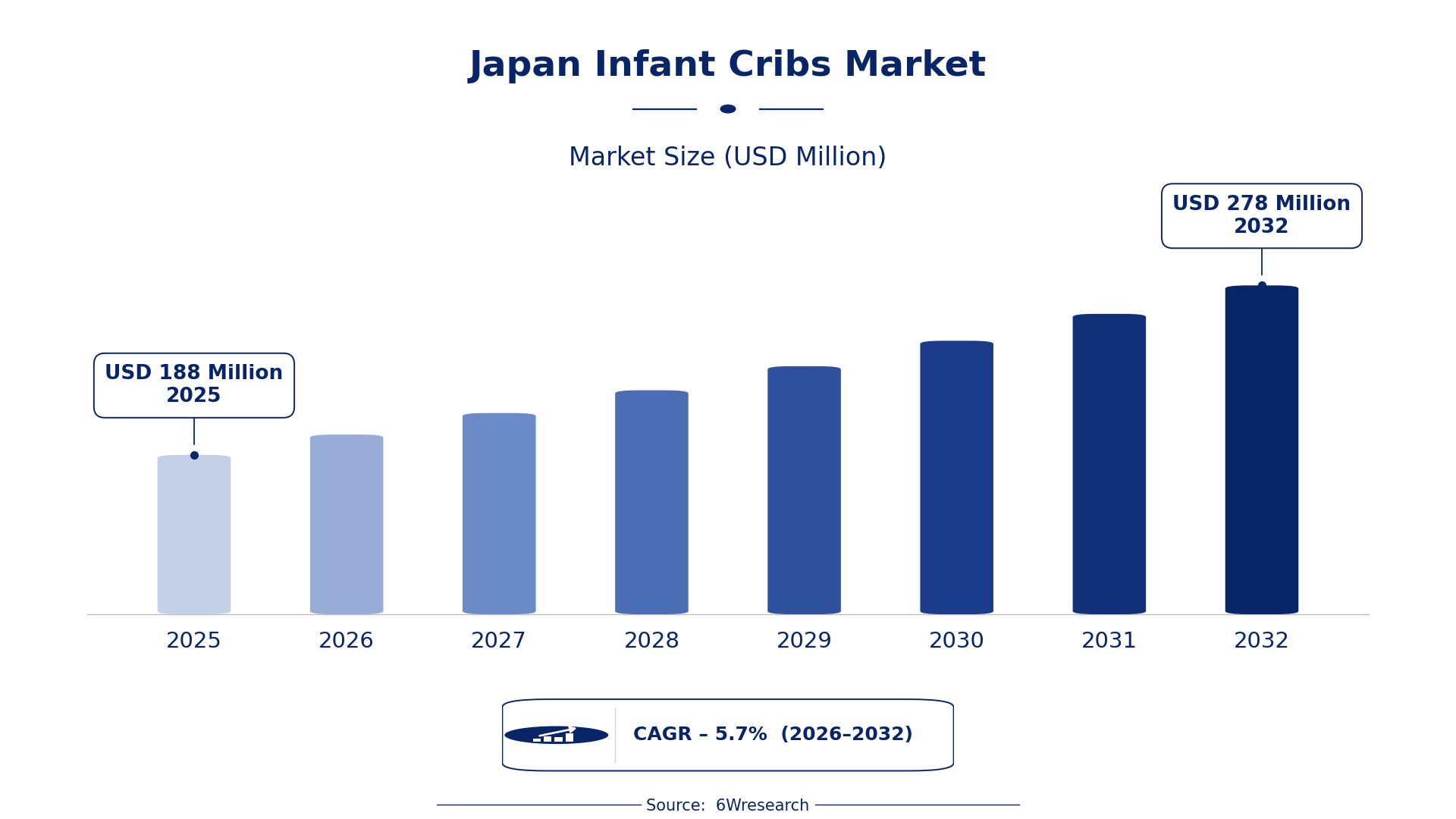
According to 6Wresearch internal database and industry insights, the Japan Infant Cribs Market was valued at USD 188 Million in 2025 and is projected to reach USD 278 Million by 2032, growing at a CAGR of approximately 5.7% during 2026–2032.
Japan Infant Cribs Market Highlights
| Report Metric | Details |
| Report Name | Japan Infant Cribs Market (2026-2032) |
| Market Size 2025 | USD 188 Million |
| Market Size 2032 | USD 278 Million |
| Absolute Growth 2025–2032 | USD 90 Million |
| CAGR 2026–2032 | 5.7% |
| Peak Annual Growth | 6.4% in 2032 |
| Forecast Period | 2026–2032 |
| Historical Data | 2022–2025 |
| Base Year | 2025 |
| Leading Crib Type, 2025 | Convertible Cribs (44% share) |
| Leading Material Type, 2025 | Wood (41% share) |
| Leading Safety Certification, 2025 | JPMA / ASTM (40% share) |
| Leading Distribution Channel, 2025 | Furniture Retailers (39% share) |
| Fastest-Growing Crib Type | Portable Cribs (8.2% CAGR) |
| Fastest-Growing Material Type | Plastic/Aluminum (8.3% CAGR) |
| Fastest-Growing Safety Certification | Foldable Design (7.6% CAGR) |
| Fastest-Growing Distribution Channel | Online Platforms (7.5% CAGR) |
| Growing Sector | Infant Products |
| Key End Users | Parents, Retailers, Childcare Facilities |
Japan Infant Cribs Market Year-wise Growth Rate and Key Drivers (2022–2032)
This graph illustrates the annual growth rates of the market from 2022 to 2032, highlighting a steady upward trajectory and projected market expansion over the forecast period.
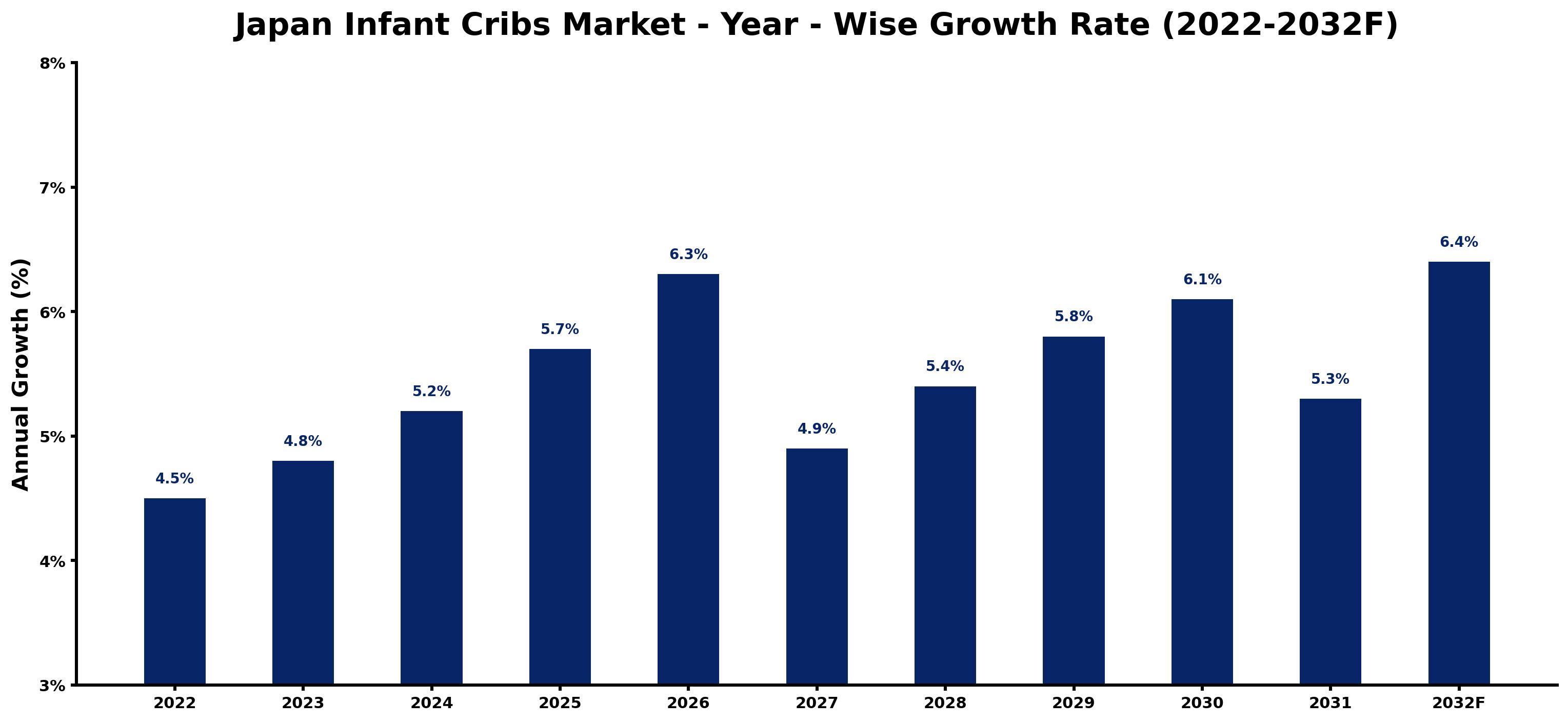
The following figures match every annual growth estimate with the main market development of that year, giving the reasoning behind each rise or slowdown.
| Year | Estimated Annual Growth (%) | Market Rationale |
| 2022 | 4.5 | The market showed steady growth due to stable birth rates and consumer interest in infant safety. |
| 2023 | 4.8 | Growth accelerated as urban parents increasingly sought space-efficient crib solutions. |
| 2024 | 5.2 | Demand rose further with the introduction of new safety standards for infant products. |
| 2025 | 5.7 | The market peaked as convertible cribs gained popularity among families. |
| 2026 | 6.3 | Growth is expected to continue as online sales channels expand, making purchases easier for consumers. |
| 2027 | 4.9 | A slowdown is projected as competition intensifies among various crib types. |
| 2028 | 5.4 | Demand is expected to increase again with rising awareness of safe sleep practices for infants. |
| 2029 | 5.8 | Growth will be driven by parents prioritising durable and aesthetically pleasing cribs for their children. |
| 2030 | 6.1 | The market is projected to see sustained growth as disposable incomes rise among families in urban areas. |
| 2031 | 5.3 | A slowdown is anticipated as market saturation begins to take effect in major cities. |
| 2032 | 6.4 | The market is expected to peak again with the introduction of new crib designs. |
Note: Market size estimations and growth projections presented in this report are based on 6Wresearch's proprietary forecasting methodology, utilizing the latest available industry data, government publications, and primary research inputs.
Japan Infant Cribs Market Synopsis
Infant cribs are designed to provide safety and comfort for infants during sleep, constructed from materials such as wood, plastic, and metal. The Japan Infant Cribs Market is expanding due to a stable birth rate of approximately 840,000 in 2022 and a growing emphasis on safe sleep practices, highlighted by a government initiative launched in 2023.
Market Dynamics Impact Analysis (2026–2032)
| Factor | Type | Impact | Primary Segment Affected |
| Increasing urbanisation drives demand for portable cribs, appealing to space-constrained parents. | Driver | High | Portable Cribs |
| Growing awareness of safe sleep practices among parents enhances demand for certified products. | Driver | High | Bassinets |
| Urban parents require innovative crib designs that save space, creating opportunities for new products. | Opportunity | High | Convertible Cribs |
| The rise of online shopping platforms is creating a significant market for convenient purchases. | Opportunity | High | Online Platforms |
| High competition among crib manufacturers can lead to price wars, impacting profitability. | Restraint | Medium | Convertible Cribs |
| Safety regulations can limit the introduction of new crib designs, slowing innovation. | Restraint | Medium | Bassinets |
| Supply chain disruptions can delay product availability, affecting retailers and consumers. | Challenge | High | Convertible Cribs |
| Rising material costs can increase prices for manufacturers, impacting affordability for buyers. | Challenge | High | Convertible Cribs |
Evaluation of Drivers in Japan Infant Cribs Market (2026–2032)
Demand rests on the following drivers, each shown with the segment it touches most.
| Drivers | Primary Segment Affected | Why It Matters (Evidence) |
| Urbanisation increases demand for space-efficient cribs, leading to higher sales of portable models. | Portable Cribs | Portable cribs are ideal for urban families with limited living space, driving their popularity in cities like Tokyo. |
| The stable birth rate encourages consistent demand for infant products, including cribs. | Convertible Cribs | With approximately 840,000 births in 2022, families are investing in durable crib solutions for their infants. |
| Growing consumer awareness of infant safety standards boosts demand for certified cribs. | Bassinets | JPMA certification ensures safety, prompting parents to prefer compliant products for their children. |
| The rise of e-commerce platforms facilitates easier access to a variety of crib options. | Online Platforms | Online sales of baby products increased by 15% in 2023, allowing parents to shop conveniently from home. |
| Preference for durable materials like hardwood drives demand for high-quality cribs. | Wood | Hardwood cribs are favoured for their longevity and aesthetic appeal, influencing purchasing decisions among parents. |
Volumes grow on the back of a stable birth rate, prompting families to invest in durable and safe infant products. Urban living conditions are driving demand for space-efficient designs, particularly among parents in metropolitan areas. The rise of online sales channels, which increased by 15% in 2023, enhances purchasing convenience for consumers. Awareness of safety standards leads parents to prioritise compliant products, boosting overall market demand for items that meet established criteria.
Evaluation of Restraints in Japan Infant Cribs Market
The table below lists the restraints and the evidence behind each.
| Market Restraint | Primary Segment Affected | Why It Matters (Evidence) |
| Intense competition among manufacturers can lead to price reductions, affecting profit margins for producers. | Convertible Cribs | As brands compete, price reductions squeeze profitability for manufacturers in the market. |
| Strict safety regulations can hinder innovation in crib designs, limiting market variety for consumers. | Bassinets | Compliance with safety standards restricts the introduction of new models, affecting consumer choice. |
| Supply chain disruptions may delay product availability, impacting sales for retailers in urban areas. | Convertible Cribs | Manufacturers face challenges in sourcing materials, which affects delivery timelines for retailers. |
| Rising costs of raw materials can increase production expenses, leading to higher retail prices for consumers. | Convertible Cribs | Manufacturers may pass on increased costs to consumers, affecting affordability for families. |
| Market saturation in urban areas can limit growth opportunities for new entrants in the crib market. | Portable Cribs | With many options available, consumers may delay purchases or choose established brands over newcomers. |
Japan Infant Cribs Market Challenges
Producers struggle with technology compliance, as meeting JPMA and JIS safety standards can take up to six months, delaying product launches. Urban buyers face rising costs, with the average family spending around 100,000 JPY on baby furniture, which strains budgets amid a declining birth rate. Limited access to quality materials like hardwood hampers production, leading to increased prices that affect affordability for families. Competition from alternative sleeping solutions, such as bassinets, threatens traditional crib sales, potentially reducing market share for established manufacturers.
Trends in the Japan Infant Cribs Market
Four trends stand out in the Japan Infant Cribs Market.
- Shift from Traditional to Portable Cribs: Since 2023, portable cribs have gained popularity as urban families seek space-saving solutions for their infants. This trend aligns with the increasing number of small apartments in cities like Tokyo, where space is at a premium.
- Rising Preference for Online Purchases: Online platforms have become the preferred shopping method for parents, with online sales of baby products increasing by 15% in 2023. This shift highlights the convenience factor for busy families looking for infant products.
- Focus on Safety Certifications: The emphasis on safety certifications, particularly JPMA, has intensified since 2022 as parents seek assurance for their infants. This trend is reshaping purchasing decisions, favouring compliant products that meet safety standards.
- Growth of New Crib Designs: New crib designs have emerged since 2023, with features like foldable designs gaining traction among parents. This shift caters to modern families who value both functionality and aesthetics in infant furniture.
Investment Opportunities in the Japan Infant Cribs Market
Where to invest in the Japan Infant Cribs Market: the main openings are set out below.
- Urban Parents Seeking Space-Efficient Solutions: Urban parents need portable cribs due to limited living space, creating opportunities for manufacturers to innovate. The average family in Japan spends around 100,000 JPY on baby furniture, indicating a strong market potential for space-saving designs.
- Investing in Online Sales Channels: With online sales of baby products increasing by 15% in 2023, there is a clear opportunity for investment in e-commerce platforms. Retailers can collaborate with online marketplaces to expand their reach and cater to tech-savvy parents.
- Focus on Safety and Compliance: The demand for safety-certified cribs is rising, driven by consumer awareness of infant safety. Manufacturers can invest in obtaining JPMA certification to appeal to safety-conscious buyers and strengthen their market position.
- Expanding into Urban Markets: Urban areas like Tokyo represent a growing market for cribs, with a significant number of new parents. Suppliers can enter this market through local partnerships and targeted marketing strategies to reach potential customers.
Government Initiatives in the Japan Infant Cribs Market
The Economic Security Promotion Act, enacted in 2022, supports supply-chain resilience for critical products, including infant cribs. This law encourages manufacturers to ensure consistent availability of safe and compliant products, stabilising the market. Additionally, the Chemical Substances Control Law of 1973 mandates the evaluation of chemical substances used in crib manufacturing, ensuring safety for infants and compliance with health standards.
The Ministry of Health, Labour and Welfare oversees the implementation of safety regulations for infant products. Their initiatives include funding for safety compliance programs, which help manufacturers meet the required standards. The agency enforces regulations, ensuring that cribs meet established safety criteria, thereby protecting consumers and promoting safe practices in the market.
Future Insight of the Japan Infant Cribs Market
Urban buyers will increasingly favour portable cribs by 2032, driven by space constraints in city living. The government's safe sleep initiative will raise awareness and encourage purchases of compliant products, benefiting suppliers who adhere to these standards. Online sales of baby products will continue to expand, with a 15% increase in 2023, providing buyers with greater access to diverse crib options. As families invest around 100,000 JPY on baby furniture, suppliers must align their offerings with changing consumer preferences to thrive.
Market Segmentation Analysis
Japan Infant Cribs Market report covers a detailed analysis of the following market segments:
By Crib Type – Convertible Cribs Lead, Portable Cribs Expected to Grow Fastest
According to Saurav Kr Singh, Senior Research Analyst at 6Wresearch, Convertible Cribs took 44% of crib type revenue in 2025, more than any other category. Convertible cribs hold the largest market share due to their versatility, transforming into toddler beds as children grow. This adaptability is particularly valued by families in urban areas like Tokyo, where space and long-term investment are essential. Portable Cribs are projected to grow fastest, at a CAGR of 8.2% during 2026–2032. The demand for portable cribs is surging as urban living trends favour compact solutions for small spaces and travel. Their convenience appeals to parents seeking mobility, which is driving rapid growth in this segment. Suppliers should focus on enhancing features in portable cribs to better meet the needs of the growing urban consumer base.
By Material Type – Wood Leads, Plastic/Aluminum Expected to Grow Fastest
In 2025, Wood led the material type split with a 41% share. Wood is the dominant material for cribs, appreciated for its durability and safety, making it a preferred choice among parents. Its traditional aesthetic is well-aligned with Japanese consumer preferences, reinforcing its strong market position. Over 2026–2032, Plastic/Aluminum is expected to post the fastest growth, at a CAGR of 8.3%. Plastic and aluminium cribs are gaining traction due to their lightweight and transport-friendly characteristics, appealing to parents who value practicality. This shift indicates a growing consumer preference for more versatile crib options. Manufacturers should consider expanding their product lines to include more plastic and aluminium models to meet changing market demands.
By Safety Certification – JPMA / ASTM Leads, Foldable Design Expected to Grow Fastest
JPMA / ASTM held 40% of the Japan Infant Cribs Market by safety certification in 2025. JPMA and ASTM certifications are crucial in the market, providing parents with essential assurance regarding crib safety standards. These certifications are important for compliance with regulations enforced by the Ministry of Health, Labour and Welfare, ensuring consumer trust. Foldable Design is set to record the highest CAGR in this split, 7.6% over 2026–2032. Cribs with foldable designs are increasingly popular among parents needing space-saving solutions, particularly in urban settings. The rising demand for convenient storage options is significantly enhancing the appeal of this segment. Retailers must highlight safety certifications prominently to build consumer trust and encourage purchases among safety-conscious parents.
By Distribution Channel – Furniture Retailers Lead, Online Platforms Expected to Grow Fastest
Furniture Retailers accounted for 39% of the market by distribution channel in 2025. Furniture retailers are the primary distribution channel for cribs, offering a wide selection and expert advice to parents. Their established presence allows customers to physically assess products before making purchasing decisions, enhancing consumer confidence. The quickest growth will come from Online Platforms, forecast to expand at a CAGR of 7.5% between 2026 and 2032. Online platforms are rapidly expanding as they provide convenience and a broader range of options for parents. The 15% increase in online sales of baby products in 2023 indicates a substantial shift towards digital purchasing habits. Suppliers should strengthen their online marketing strategies to capitalise on the growing trend towards e-commerce in the baby product market.
Key Attractiveness of the Report
- 10 Years of Market Numbers
- Historical Data Starting from 2022 to 2025
- Base Year 2025
- Forecast Data until 2032
- Key Performance Indicators Impacting the Market
- Major Upcoming Developments and Projects
Key Highlights of the Report:
- Japan Infant Cribs Market Outlook
- Market Size of Japan Infant Cribs Market, 2025
- Forecast of Japan Infant Cribs Market, 2032
- Historical Data and Forecast of Japan Infant Cribs Revenues & Volume for the Period 2022-2032F
- Japan Infant Cribs Market Trend Evolution
- Japan Infant Cribs Market Drivers and Challenges
- Japan Infant Cribs Price Trends
- Japan Infant Cribs Porter's Five Forces
- Japan Infant Cribs Industry Life Cycle
- Historical Data and Forecast of Japan Infant Cribs Market Revenues & Volume By Crib Type for the Period 2022-2032F
- Historical Data and Forecast of Japan Infant Cribs Market Revenues & Volume By Convertible Cribs for the Period 2022-2032F
- Historical Data and Forecast of Japan Infant Cribs Market Revenues & Volume By Portable Cribs for the Period 2022-2032F
- Historical Data and Forecast of Japan Infant Cribs Market Revenues & Volume By Round Cribs for the Period 2022-2032F
- Historical Data and Forecast of Japan Infant Cribs Market Revenues & Volume By Bassinets for the Period 2022-2032F
- Historical Data and Forecast of Japan Infant Cribs Market Revenues & Volume By Material Type for the Period 2022-2032F
- Historical Data and Forecast of Japan Infant Cribs Market Revenues & Volume By Wood for the Period 2022-2032F
- Historical Data and Forecast of Japan Infant Cribs Market Revenues & Volume By Plastic/Aluminum for the Period 2022-2032F
- Historical Data and Forecast of Japan Infant Cribs Market Revenues & Volume By Hardwood / Metal for the Period 2022-2032F
- Historical Data and Forecast of Japan Infant Cribs Market Revenues & Volume By Mesh + Metal for the Period 2022-2032F
- Historical Data and Forecast of Japan Infant Cribs Market Revenues & Volume By Safety Certification for the Period 2022-2032F
- Historical Data and Forecast of Japan Infant Cribs Market Revenues & Volume By JPMA / ASTM for the Period 2022-2032F
- Historical Data and Forecast of Japan Infant Cribs Market Revenues & Volume By Foldable Design for the Period 2022-2032F
- Historical Data and Forecast of Japan Infant Cribs Market Revenues & Volume By Decorative for the Period 2022-2032F
- Historical Data and Forecast of Japan Infant Cribs Market Revenues & Volume By Travel Use for the Period 2022-2032F
- Historical Data and Forecast of Japan Infant Cribs Market Revenues & Volume By Distribution Channel for the Period 2022-2032F
- Historical Data and Forecast of Japan Infant Cribs Market Revenues & Volume By Furniture Retailers for the Period 2022-2032F
- Historical Data and Forecast of Japan Infant Cribs Market Revenues & Volume By Online Platforms for the Period 2022-2032F
- Historical Data and Forecast of Japan Infant Cribs Market Revenues & Volume By Specialty Stores for the Period 2022-2032F
- Historical Data and Forecast of Japan Infant Cribs Market Revenues & Volume By Supermarkets for the Period 2022-2032F
- Japan Infant Cribs Import Export Trade Statistics
- Market Opportunity Assessment By Crib Type
- Market Opportunity Assessment By Material Type
- Market Opportunity Assessment By Safety Certification
- Market Opportunity Assessment By Distribution Channel
- Japan Infant Cribs Top Companies Market Share
- Japan Infant Cribs Competitive Benchmarking By Technical and Operational Parameters
- Japan Infant Cribs Company Profiles
- Japan Infant Cribs Key Strategic Recommendations
Market Covered
The following segment groups are covered in the report.
By Crib Type
- Convertible Cribs
- Portable Cribs
- Round Cribs
- Bassinets
By Material Type
- Wood
- Plastic/Aluminum
- Hardwood / Metal
- Mesh + Metal
By Safety Certification
- JPMA / ASTM
- Foldable Design
- Decorative
- Travel Use
By Distribution Channel
- Furniture Retailers
- Online Platforms
- Specialty Stores
- Supermarkets































