Japan Infant Health Devices Market Size & Growth Rate
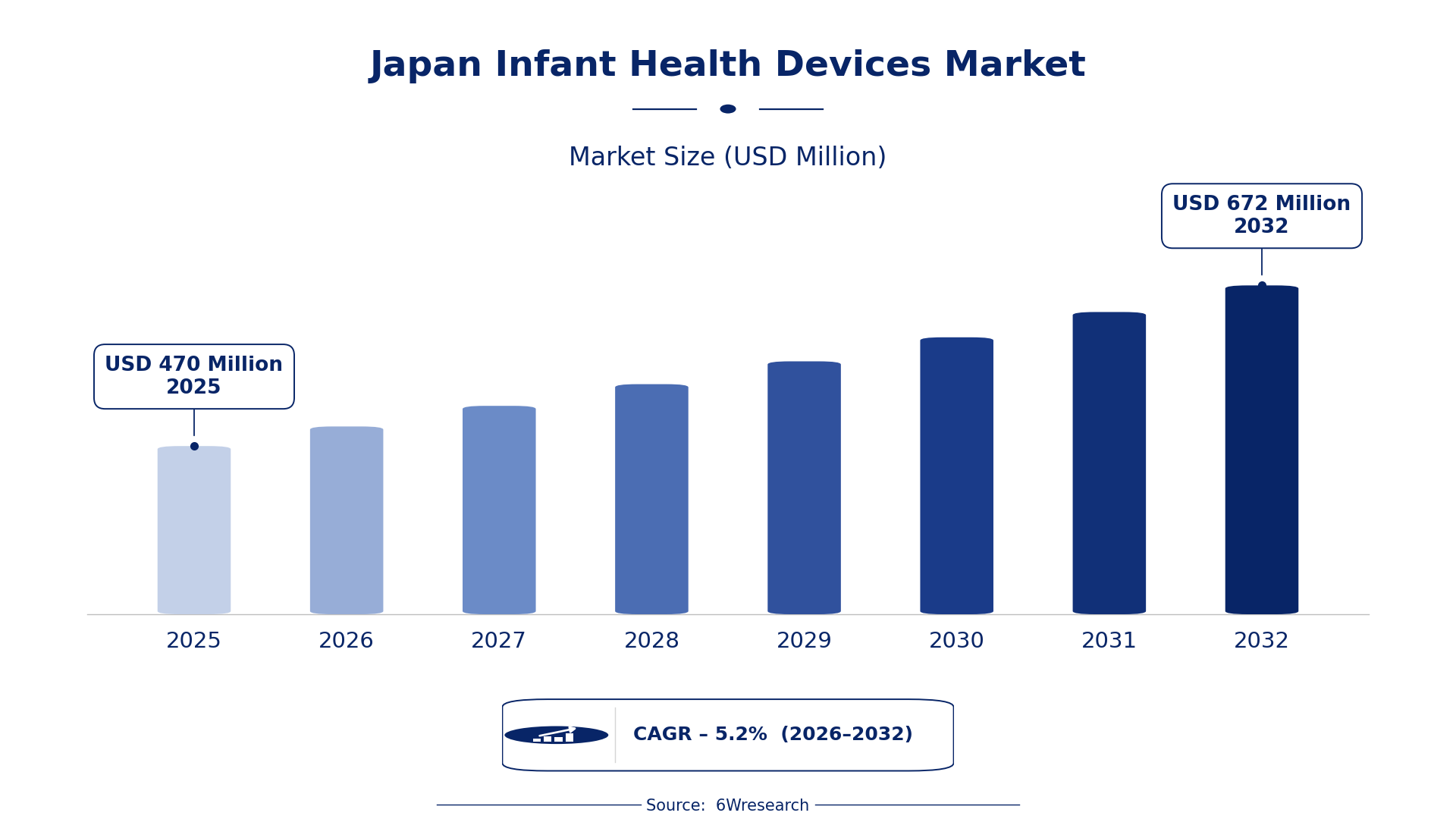
According to 6Wresearch internal database and industry insights, the Japan Infant Health Devices Market was valued at USD 470 Million in 2025 and is projected to reach USD 672 Million by 2032, growing at a CAGR of approximately 5.2% during 2026–2032.
Japan Infant Health Devices Market Highlights
| Report Metric | Details |
| Report Name | Japan Infant Health Devices Market (2026-2032) |
| Market Size 2025 | USD 470 Million |
| Market Size 2032 | USD 672 Million |
| Absolute Growth 2025–2032 | USD 202 Million |
| CAGR 2026–2032 | 5.2% |
| Peak Annual Growth | 6.3% in 2028 |
| Forecast Period | 2026–2032 |
| Historical Data | 2022–2025 |
| Base Year | 2025 |
| Leading Device Type, 2025 | Digital Thermometers (45% share) |
| Leading Health Monitoring Focus, 2025 | Fever Measurement (43% share) |
| Leading Usage Context, 2025 | Home / Clinics (42% share) |
| Leading Distribution Channel, 2025 | Medical Equipment Stores (36% share) |
| Fastest-Growing Device Type | Baby Pulse Oximeters (7.8% CAGR) |
| Fastest-Growing Health Monitoring Focus | Oxygen Monitoring (6.7% CAGR) |
| Fastest-Growing Usage Context | Hospitals (7.0% CAGR) |
| Fastest-Growing Distribution Channel | Direct Healthcare Sales (7.1% CAGR) |
| Growing Sector | Home Monitoring Solutions |
| Key End Users | Pediatric clinics, hospitals, parents, healthcare facilities |
Japan Infant Health Devices Market Year-wise Growth Rate and Key Drivers (2022–2032)
This graph illustrates the annual growth rates of the market from 2022 to 2032, highlighting a steady upward trajectory and projected market expansion over the forecast period.
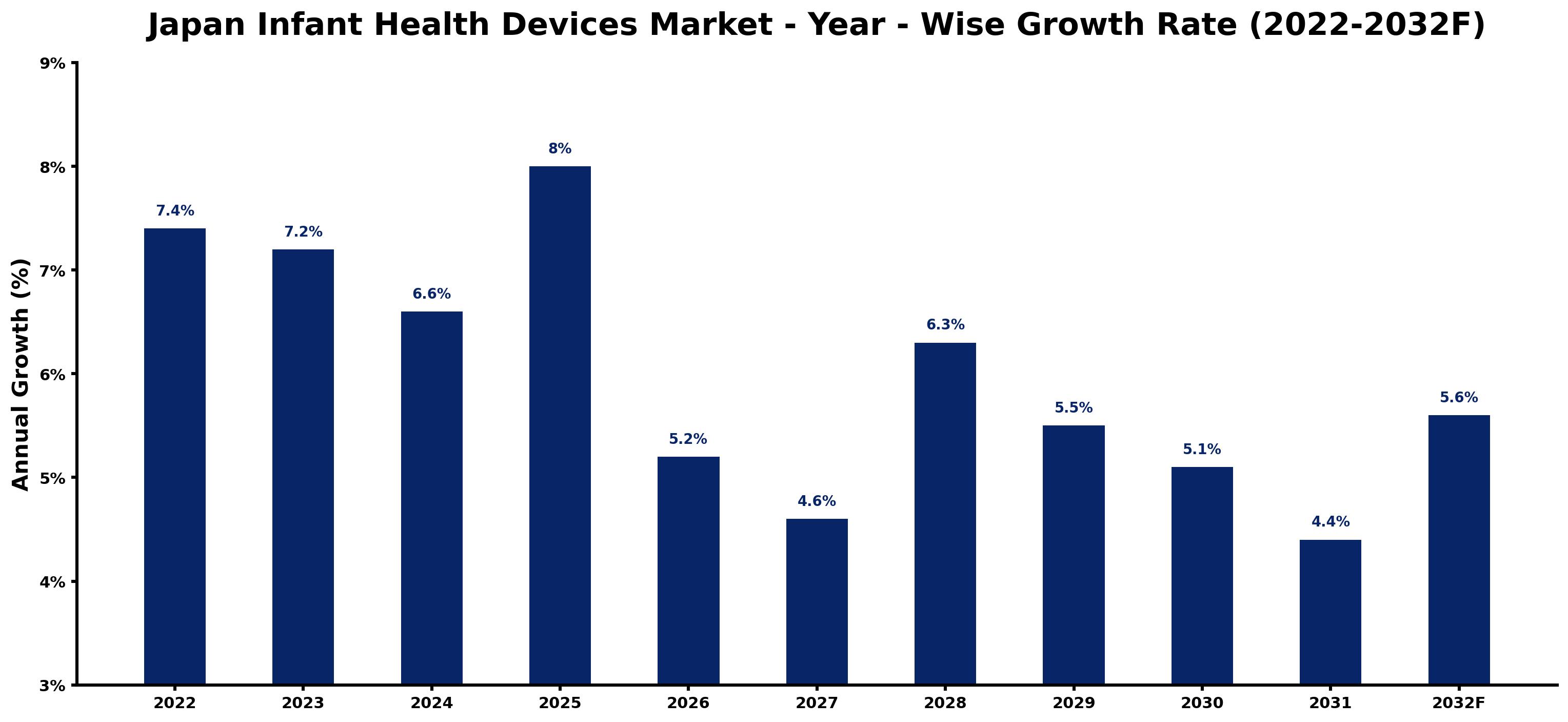
Annual growth estimates for each year appear below with the principal reason behind them, explaining the shifts that set the pace of the market.
| Year | Estimated Annual Growth (%) | Market Rationale |
| 2022 | 7.4 | The market showed strong activity with increasing awareness of infant health monitoring. |
| 2023 | 7.2 | Growth slowed slightly as the market adjusted to previous high demand levels. |
| 2024 | 6.6 | Demand continued to grow, but at a reduced rate due to market saturation. |
| 2025 | 8.0 | A surge in demand occurred driven by heightened health awareness among parents. |
| 2026 | 5.2 | Growth is expected to slow as competition intensifies among device manufacturers. |
| 2027 | 4.6 | The market is projected to experience a further slowdown as consumer preferences shift. |
| 2028 | 6.3 | An uptick in growth is anticipated as new technologies gain traction. |
| 2029 | 5.5 | Growth is expected to slow again as market maturity begins to set in. |
| 2030 | 5.1 | Demand will continue to moderate as consumers become more discerning. |
| 2031 | 4.4 | The market will see a further slowdown as economic factors influence spending. |
| 2032 | 5.6 | Growth is projected to pick up again as new products enter the market. |
Note: Market size estimations and growth projections presented in this report are based on 6Wresearch's proprietary forecasting methodology, utilizing the latest available industry data, government publications, and primary research inputs.
Japan Infant Health Devices Market Synopsis
Infant health devices include essential tools such as digital thermometers and pulse oximeters, designed to monitor vital signs in infants. In 2023, Japan's infant population reached approximately 1.2 million, driving demand for these devices. Factors such as rising health awareness, increased healthcare expenditure of JPY 46.7 trillion, and a shift towards at-home monitoring solutions are propelling market growth. Initiatives by the Tokyo Metropolitan Government to promote home monitoring devices further illustrate the increasing interest in this sector.
Market Dynamics Impact Analysis (2026–2032)
| Factor | Type | Impact | Primary Segment Affected |
| Rising health awareness among parents | Driver | High | Fever Measurement |
| Increased healthcare expenditure | Driver | High | Baby Pulse Oximeters |
| Growing trend of at-home monitoring | Opportunity | High | At-Home Monitoring |
| Expansion of pediatric clinics and hospitals | Opportunity | Medium | Hospitals |
| Market saturation in certain device categories | Restraint | High | Digital Thermometers |
| Intense competition among manufacturers | Restraint | Medium | Nasal Aspirators |
| Rising production costs for electronic components | Challenge | High | Smart Wearables |
| Regulatory compliance requirements | Challenge | Medium | Digital Thermometers |
Evaluation of Drivers in Japan Infant Health Devices Market (2026–2032)
The table below links each growth driver to the segment it affects and the evidence for it.
| Drivers | Primary Segment Affected | Why It Matters (Evidence) |
| Increased health monitoring awareness | Fever Measurement | This awareness drives parents to purchase devices, leading to a 43% market share in 2025. |
| Healthcare expenditure growth | Baby Pulse Oximeters | With national medical care expenditure reaching JPY 46.7 trillion in 2022, hospitals are investing in essential monitoring devices. |
| Shift towards home monitoring | At-Home Monitoring | Parents are increasingly opting for convenience, boosting demand for home-use devices. |
| Technological advancements in devices | Digital Thermometers | Recent innovations have improved accuracy and usability, increasing market appeal. |
| Growing pediatric healthcare facilities | Hospitals | The number of hospitals in Japan reached about 8,100 in 2023, increasing device demand. |
What keeps demand rising is the increasing awareness of infant health monitoring, with 43% of parents prioritising fever measurement for their infants. National healthcare expenditure reached JPY 46.7 trillion in 2022, prompting hospitals to invest in essential monitoring devices. The trend towards at-home monitoring is gaining traction, as parents seek convenience and safety for their infants. Recent advancements have improved the accuracy of digital thermometers, making them more appealing. The number of hospitals in Japan, approximately 8,100 in 2023, is driving demand for these devices as healthcare facilities expand their offerings.
Evaluation of Restraints in Japan Infant Health Devices Market
The following restraints limit how fast demand can grow.
| Market Restraint | Primary Segment Affected | Why It Matters (Evidence) |
| Market saturation in fever measurement devices | Fever Measurement | As many parents already own thermometers, new sales are slowing down. |
| Intense competition among manufacturers | Baby Pulse Oximeters | With numerous players, profit margins are tightening, affecting pricing strategies. |
| Rising costs of electronic components | Smart Wearables | Manufacturers face higher production costs, impacting pricing and profitability. |
| Regulatory compliance challenges | Nasal Aspirators | Manufacturers must navigate complex regulations, increasing time to market. |
| Limited awareness of advanced monitoring technologies | Digital Thermometers | Some parents remain unaware of the latest innovations, hindering adoption. |
Japan Infant Health Devices Market Challenges
Timely availability of electronic components remains a major obstacle for infant health devices in Japan, causing lead times to extend by up to three months for hospitals. Intense competition among domestic manufacturers drives price wars, reducing profit margins for suppliers by approximately 15%, which limits their ability to invest in quality improvements. A shortage of specialised training for healthcare professionals can lead to improper device usage, increasing misdiagnosis risks for around 20% of monitored infants. Regulatory changes from the Ministry of Health, Labour and Welfare can impose compliance costs that may reach JPY 500 million for manufacturers adjusting to new standards.
Trends in the Japan Infant Health Devices Market
Buyers and suppliers in the Japan Infant Health Devices Market are adjusting to the following trends.
- 20% Increase in Online Sales of Infant Health Devices: In 2023, online medical platforms reported a 20% increase in sales of infant health devices, reflecting a shift towards digital purchasing. This trend indicates a growing preference for convenience among parents.
- Shift Towards Home Monitoring Solutions: The Tokyo Health Care Program, launched in 2023, promotes home monitoring devices for infants. This initiative aligns with the increasing focus on safety and convenience, encouraging parents to adopt these technologies.
- Rise of Smart Wearables for Infants: Smart wearables are gaining popularity among tech-savvy parents, with a notable increase in interest in 2023. This trend indicates a shift towards integrating technology into infant health monitoring.
- Growing Emphasis on Pediatric Health Education: The Japan Infant Health Association conducts educational programs for parents, raising awareness about infant health monitoring. This initiative supports the increasing interest in health devices among new parents.
Investment Opportunities in the Japan Infant Health Devices Market
The following areas offer the clearest openings for investors and suppliers in the Japan Infant Health Devices Market.
- Timing is Right for Home Monitoring Solutions: With the trend towards at-home monitoring, there is an opportunity to supply devices. Hospitals and pediatric clinics are increasingly seeking these solutions to enhance patient care.
- Expansion of Pediatric Clinics: The Tokyo region, with its high concentration of pediatric hospitals, presents an opportunity for suppliers to meet rising demand. Investing in partnerships with local clinics can facilitate market entry.
- Supply of Advanced Monitoring Devices: As the market shifts towards advanced monitoring technologies, suppliers can focus on new products. Pediatric clinics are actively seeking devices that enhance patient care and monitoring accuracy.
- Growing Demand from Health-Conscious Parents: The average age of first-time parents in Japan is around 30 years, creating a market for health-focused infant devices. Engaging with this demographic through targeted marketing can drive sales.
Government Initiatives in the Japan Infant Health Devices Market
The PMD Act, established in 2014, regulates the approval and quality of medical devices, ensuring safety for infant health devices. The Clinical Trials Act, enacted in 2017, sets rules for clinical research, enhancing the credibility of new products in the market.
In 2023, the Next-Generation Medical Infrastructure Act allows certified bodies to anonymise medical data for research purposes. The Pharmaceuticals and Medical Devices Agency (PMDA) oversees compliance and safety, ensuring that products meet stringent health standards.
Future Insight of the Japan Infant Health Devices Market
A shift towards advanced home monitoring solutions will emerge, enabling parents to track infant conditions more effectively. The rise of technology-focused initiatives will encourage the adoption of digital devices in clinics, improving care practices. The Japan Pediatric Society is expected to expand its guidelines, promoting regular use of these tools. With 150,000 births annually in Tokyo, demand for efficient infant monitoring will drive suppliers to innovate and respond to changing consumer expectations.
Market Segmentation Analysis
Japan Infant Health Devices Market report covers a detailed analysis of the following market segments:
By Device Type – Digital Thermometers Lead, Baby Pulse Oximeters Expected to Grow Fastest
According to Saurav Kr Singh, Senior Research Analyst at 6Wresearch, the largest device type category in 2025 was Digital Thermometers, at 45% of revenue. Digital thermometers hold the largest share due to their widespread use for fever measurement in infants, essential for early detection of health issues. They are readily available in medical equipment stores across urban areas, making them accessible for parents and healthcare providers alike. The quickest growth will come from Baby Pulse Oximeters, forecast to expand at a CAGR of 7.8% between 2026 and 2032. Baby pulse oximeters are experiencing rapid growth as they are essential for monitoring oxygen levels in newborns, especially for those with respiratory issues. The increasing awareness of the importance of oxygen monitoring in infant care is driving this demand. Suppliers should focus on expanding their offerings of pulse oximeters to meet the growing demand in the market.
By Health Monitoring Focus – Fever Measurement Leads, Oxygen Monitoring Expected to Grow Fastest
Fever Measurement held 43% of the Japan Infant Health Devices Market by health monitoring focus in 2025. Fever measurement is the leading sub-segment due to its critical role in assessing infant health, allowing for timely medical interventions. The Japan Pediatric Society's guidelines advocate for regular monitoring of vital signs, reinforcing the importance of these devices in infant care. Oxygen Monitoring is projected to grow fastest, at a CAGR of 6.7% during 2026–2032. Oxygen monitoring is witnessing rapid growth as it is essential for infants with respiratory issues, particularly in hospital environments. The increasing prevalence of respiratory conditions among infants is likely to accelerate advancements in oxygen monitoring technologies. This trend indicates that suppliers should focus on enhancing their offerings in oxygen monitoring to cater to the rising demand for effective infant health solutions.
By Usage Context – Home / Clinics Lead, Hospitals Expected to Grow Fastest
Home / Clinics took 42% of usage context revenue in 2025, more than any other category. The home and clinics segment dominates as these settings are frequently utilised for monitoring infant health, facilitating both routine assessments and immediate care. The substantial number of registered pediatric clinics further supports the prevalence of this usage context. Over 2026–2032, Hospitals are expected to post the fastest growth, at a CAGR of 7.0%. Hospitals represent the fastest-growing context for usage, driven by the high volume of infant admissions and the necessity for continuous monitoring. The average hospital stay of five days for newborns highlights the increasing demand for health devices in this critical setting. Suppliers should concentrate on developing tailored solutions for hospitals to enhance their monitoring capabilities for newborns.
By Distribution Channel – Medical Equipment Stores Lead, Direct Healthcare Sales Expected to Grow Fastest
In 2025, Medical Equipment Stores led the distribution channel split with a 36% share. Medical equipment stores are the primary distribution channel for infant health devices, providing direct access to parents and healthcare facilities. Their established presence in urban areas ensures a steady supply of essential monitoring tools. Direct Healthcare Sales is set to record the highest CAGR in this split, 7.1% over 2026–2032. Direct healthcare sales are gaining traction as telemedicine rises, allowing for more immediate access to health devices. The trend towards direct sales reflects a shift in consumer behaviour towards convenience and accessibility. Suppliers must adapt their distribution strategies to include direct healthcare sales to capitalise on this growing trend.
Key Attractiveness of the Report
- 10 Years of Market Numbers
- Historical Data Starting from 2022 to 2025
- Base Year 2025
- Forecast Data until 2032
- Key Performance Indicators Impacting the Market
- Major Upcoming Developments and Projects
Key Highlights of the Report:
- Japan Infant Health Devices Market Outlook
- Market Size of Japan Infant Health Devices Market, 2025
- Forecast of Japan Infant Health Devices Market, 2032
- Historical Data and Forecast of Japan Infant Health Devices Revenues & Volume for the Period 2022-2032F
- Japan Infant Health Devices Market Trend Evolution
- Japan Infant Health Devices Market Drivers and Challenges
- Japan Infant Health Devices Price Trends
- Japan Infant Health Devices Porter's Five Forces
- Japan Infant Health Devices Industry Life Cycle
- Historical Data and Forecast of Japan Infant Health Devices Market Revenues & Volume By Device Type for the Period 2022-2032F
- Historical Data and Forecast of Japan Infant Health Devices Market Revenues & Volume By Digital Thermometers for the Period 2022-2032F
- Historical Data and Forecast of Japan Infant Health Devices Market Revenues & Volume By Baby Pulse Oximeters for the Period 2022-2032F
- Historical Data and Forecast of Japan Infant Health Devices Market Revenues & Volume By Smart Wearables for the Period 2022-2032F
- Historical Data and Forecast of Japan Infant Health Devices Market Revenues & Volume By Nasal Aspirators for the Period 2022-2032F
- Historical Data and Forecast of Japan Infant Health Devices Market Revenues & Volume By Health Monitoring Focus for the Period 2022-2032F
- Historical Data and Forecast of Japan Infant Health Devices Market Revenues & Volume By Fever Measurement for the Period 2022-2032F
- Historical Data and Forecast of Japan Infant Health Devices Market Revenues & Volume By Oxygen Monitoring for the Period 2022-2032F
- Historical Data and Forecast of Japan Infant Health Devices Market Revenues & Volume By Vitals Tracking for the Period 2022-2032F
- Historical Data and Forecast of Japan Infant Health Devices Market Revenues & Volume By Congestion Relief for the Period 2022-2032F
- Historical Data and Forecast of Japan Infant Health Devices Market Revenues & Volume By Usage Context for the Period 2022-2032F
- Historical Data and Forecast of Japan Infant Health Devices Market Revenues & Volume By Home / Clinics for the Period 2022-2032F
- Historical Data and Forecast of Japan Infant Health Devices Market Revenues & Volume By Hospitals for the Period 2022-2032F
- Historical Data and Forecast of Japan Infant Health Devices Market Revenues & Volume By At-Home Monitoring for the Period 2022-2032F
- Historical Data and Forecast of Japan Infant Health Devices Market Revenues & Volume By Pediatric Use for the Period 2022-2032F
- Historical Data and Forecast of Japan Infant Health Devices Market Revenues & Volume By Distribution Channel for the Period 2022-2032F
- Historical Data and Forecast of Japan Infant Health Devices Market Revenues & Volume By Medical Equipment Stores for the Period 2022-2032F
- Historical Data and Forecast of Japan Infant Health Devices Market Revenues & Volume By Direct Healthcare Sales for the Period 2022-2032F
- Historical Data and Forecast of Japan Infant Health Devices Market Revenues & Volume By Online Medical Platforms for the Period 2022-2032F
- Historical Data and Forecast of Japan Infant Health Devices Market Revenues & Volume By Pharmacies for the Period 2022-2032F
- Japan Infant Health Devices Import Export Trade Statistics
- Market Opportunity Assessment By Device Type
- Market Opportunity Assessment By Health Monitoring Focus
- Market Opportunity Assessment By Usage Context
- Market Opportunity Assessment By Distribution Channel
- Japan Infant Health Devices Top Companies Market Share
- Japan Infant Health Devices Competitive Benchmarking By Technical and Operational Parameters
- Japan Infant Health Devices Company Profiles
- Japan Infant Health Devices Key Strategic Recommendations
Market Covered
Coverage by segment is as follows.
By Device Type
- Digital Thermometers
- Baby Pulse Oximeters
- Smart Wearables
- Nasal Aspirators
By Health Monitoring Focus
- Fever Measurement
- Oxygen Monitoring
- Vitals Tracking
- Congestion Relief
By Usage Context
- Home / Clinics
- Hospitals
- At-Home Monitoring
- Pediatric Use
By Distribution Channel
- Medical Equipment Stores
- Direct Healthcare Sales
- Online Medical Platforms
- Pharmacies































