Japan Infant Wear Market Size & Growth Rate
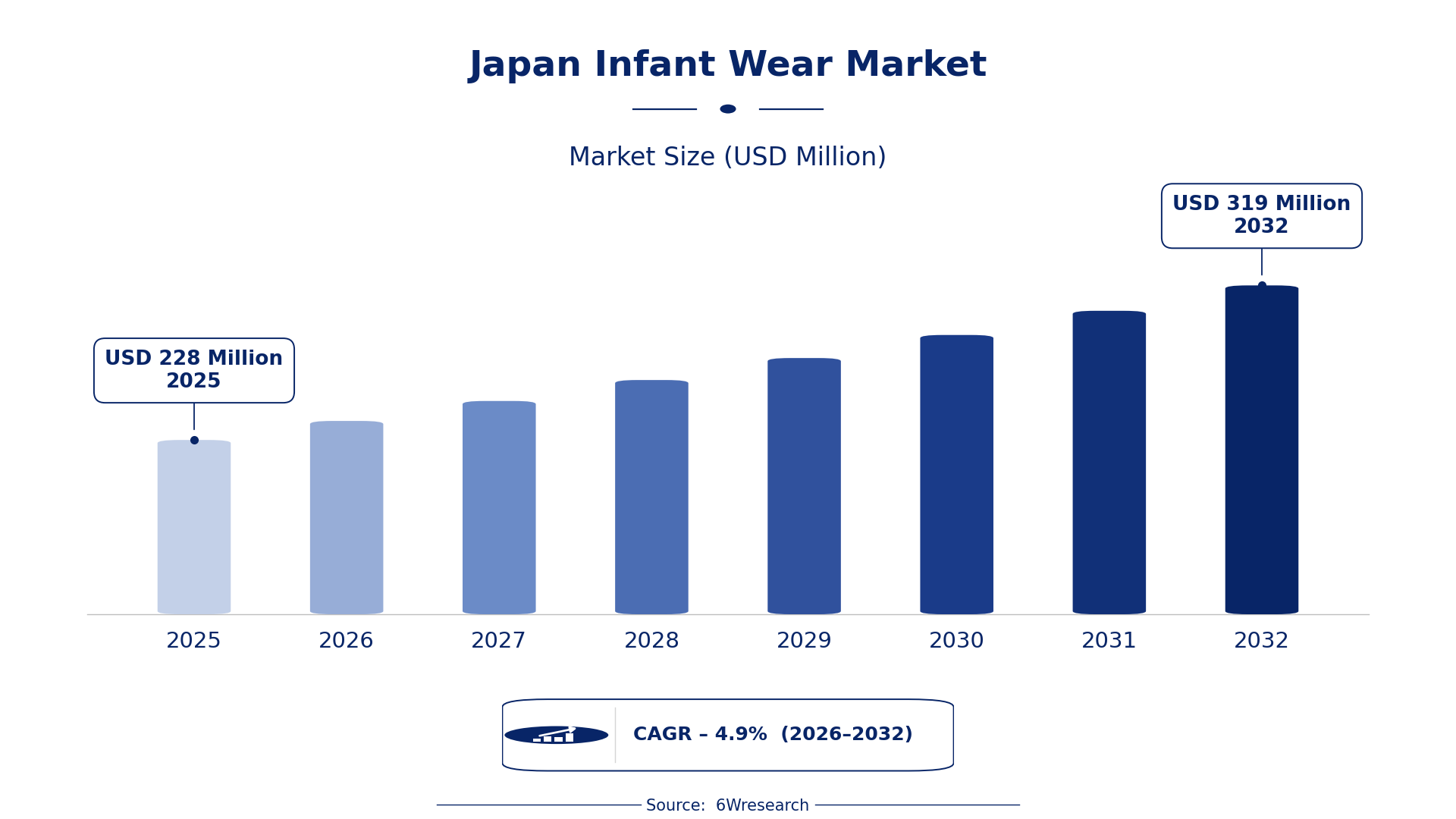
According to 6Wresearch internal database and industry insights, the Japan Infant Wear Market was valued at USD 228 Million in 2025 and is projected to reach USD 319 Million by 2032, growing at a CAGR of approximately 4.9% during 2026–2032.
Japan Infant Wear Market Highlights
| Report Metric | Details |
| Report Name | Japan Infant Wear Market (2026-2032) |
| Market Size 2025 | USD 228 Million |
| Market Size 2032 | USD 319 Million |
| Absolute Growth 2025–2032 | USD 91 Million |
| CAGR 2026–2032 | 4.9% |
| Peak Annual Growth | 5.4% in 2032 |
| Forecast Period | 2026–2032 |
| Historical Data | 2022–2025 |
| Base Year | 2025 |
| Leading Infant Wear, 2025 | Onesies (42% share) |
| Leading Garment Type, 2025 | Bodysuits (44% share) |
| Leading Fabric Material, 2025 | Organic Cotton (49% share) |
| Leading Style Segment, 2025 | Casual Basics (51% share) |
| Leading Sales Channel, 2025 | Apparel Stores (42% share) |
| Fastest-Growing Infant Wear | Rompers (6.3% CAGR) |
| Fastest-Growing Garment Type | Jumpsuits (6.9% CAGR) |
| Fastest-Growing Fabric Material | Bamboo Fabric (7.4% CAGR) |
| Fastest-Growing Style Segment | Printed/Plain (6.5% CAGR) |
| Fastest-Growing Sales Channel | E-commerce Sites (6.6% CAGR) |
| Growing Sector | Infant Wear |
| Key End Users | Parents, E-commerce Retailers, Baby Boutiques, Apparel Stores |
Japan Infant Wear Market Year-wise Growth Rate and Key Drivers (2022–2032)
This graph illustrates the annual growth rates of the market from 2022 to 2032, highlighting a steady upward trajectory and projected market expansion over the forecast period.
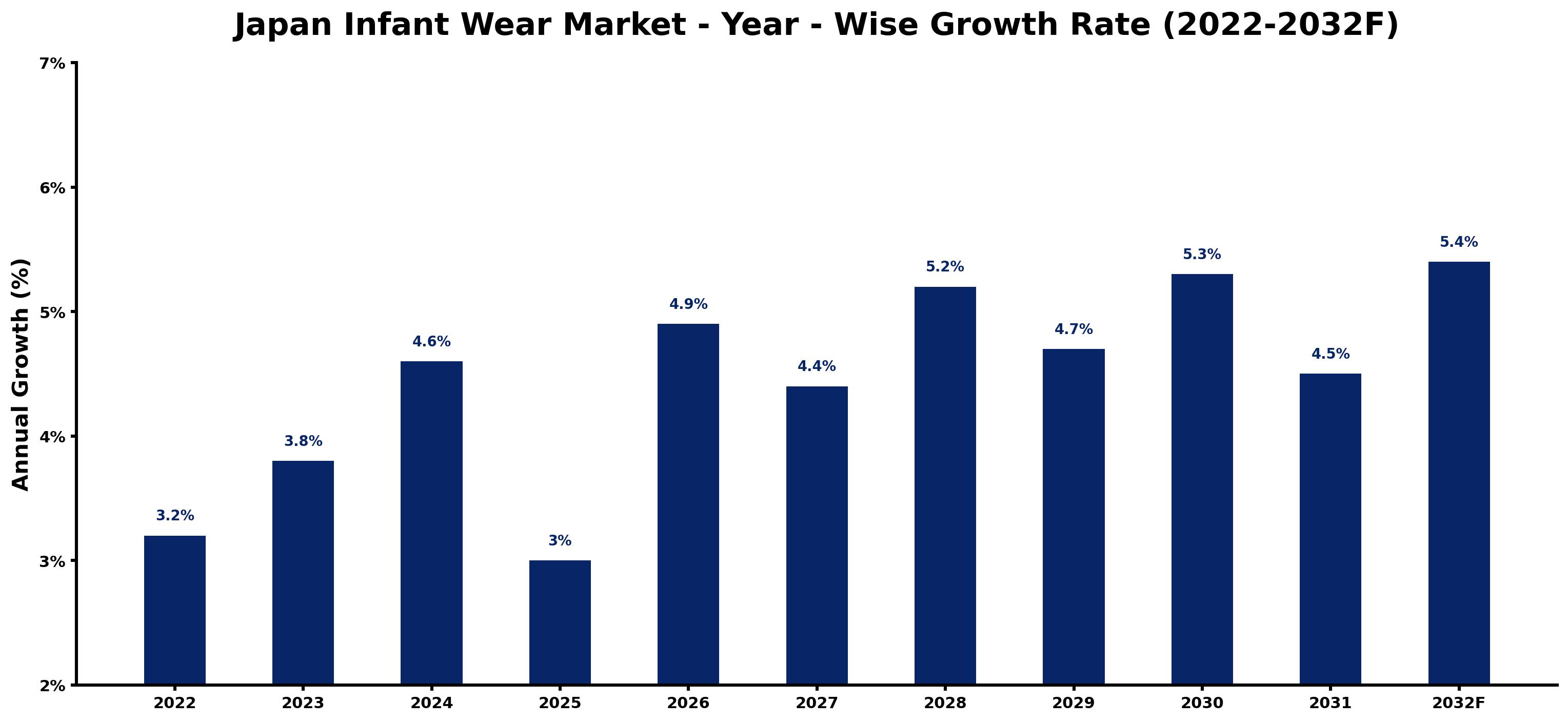
Year by year, the estimates below pair each growth rate with the development that shaped it.
| Year | Estimated Annual Growth (%) | Market Rationale |
| 2022 | 3.2 | The market experienced steady growth, reflecting ongoing demand for infant wear in Japan. |
| 2023 | 3.8 | Growth accelerated as e-commerce sales surged, attracting more consumers to online platforms. |
| 2024 | 4.6 | The market continued to expand, driven by increased birth rates and consumer interest in infant fashion. |
| 2025 | 3.0 | Growth slowed slightly due to market saturation, although demand remained strong overall. |
| 2026 | 4.9 | The market is expected to rebound with renewed interest in sustainable fabrics and eco-friendly options. |
| 2027 | 4.4 | Growth is projected to decelerate as competition intensifies among retailers and product offerings diversify. |
| 2028 | 5.2 | Demand is expected to pick up again, supported by rising disposable incomes and changing consumer preferences. |
| 2029 | 4.7 | Growth is projected to moderate as the market adjusts to new trends and consumer behaviours. |
| 2030 | 5.3 | The market is expected to experience a resurgence, driven by innovations in fabric technology and design. |
| 2031 | 4.5 | Growth is projected to slow again as consumers become more selective in their purchasing choices. |
| 2032 | 5.4 | The market is expected to peak, spurred by heightened awareness of safety standards and eco-friendly materials. |
Note: Market size estimations and growth projections presented in this report are based on 6Wresearch's proprietary forecasting methodology, utilizing the latest available industry data, government publications, and primary research inputs.
Japan Infant Wear Market Synopsis
Infant Wear encompasses clothing designed specifically for babies and toddlers, prioritising comfort and safety through soft materials. The Japan Infant Wear Market is growing due to a high birth rate, with approximately 810,000 infants born in 2022, and an increasing preference for organic cotton and bamboo fabrics. E-commerce platforms are driving sales, evidenced by a 15% growth in 2023, as parents seek convenience and quality in their purchases.
Market Dynamics Impact Analysis (2026–2032)
| Factor | Type | Impact | Primary Segment Affected |
| Rising birth rates in Japan drive demand for infant wear. | Driver | High | Onesies |
| Increasing popularity of organic and eco-friendly fabrics boosts consumer interest. | Driver | High | Onesies |
| The growing e-commerce sector offers significant opportunities for sales expansion. | Opportunity | High | Onesies |
| The trend towards sustainable fashion presents new market entry points for suppliers. | Opportunity | Medium | Onesies |
| High competition among retailers may limit profit margins for suppliers. | Restraint | High | Onesies |
| Consumer preferences for quality and safety standards can restrict product offerings. | Restraint | Medium | Onesies |
| Supply chain disruptions can delay product availability for retailers. | Challenge | High | Onesies |
| Rising costs of raw materials can impact pricing strategies for manufacturers. | Challenge | Medium | Onesies |
Evaluation of Drivers in Japan Infant Wear Market (2026–2032)
Below are the drivers that matter most for revenue growth, with supporting evidence.
| Drivers | Primary Segment Affected | Why It Matters (Evidence) |
| High birth rates fuel demand for infant clothing, leading to increased purchases of onesies and other essentials. | Onesies | In 2022, Japan's birth rate was approximately 810,000 infants, prompting parents to buy more infant wear. |
| Consumer preference for organic cotton drives sales of eco-friendly infant wear, particularly bodysuits. | Organic Cotton | Organic cotton infant wear is popular, complying with JIS standards, ensuring safety and comfort. |
| E-commerce growth allows parents to access a wider range of products conveniently, boosting online sales. | Onesies | E-commerce sales for infant wear grew by 15% in 2023, reflecting changing shopping habits. |
| Rising disposable incomes enable parents to invest in higher-quality infant wear, increasing overall spending. | Onesies | The average age of first-time parents in Japan is 31 years, correlating with increased purchasing power. |
| Innovations in fabric technology attract environmentally conscious consumers, increasing the appeal of infant wear. | Bamboo Fabric | The use of bamboo fabric is increasing due to its eco-friendliness, appealing to modern parents. |
What keeps demand rising is the high birth rate in Japan, with approximately 810,000 infants born in 2022, prompting increased investments in quality infant wear. E-commerce sales surged by 15% in 2023, allowing parents to conveniently access a wider range of products. The average age of first-time parents is 31 years, correlating with increased disposable incomes, enabling higher spending on infant clothing. The growing popularity of organic cotton and bamboo fabrics reflects a shift towards eco-friendly options, appealing to health-conscious consumers. Rising disposable incomes are expected to further drive demand for quality infant wear, particularly in urban areas.
Evaluation of Restraints in Japan Infant Wear Market
The following restraints limit how fast demand can grow.
| Market Restraint | Primary Segment Affected | Why It Matters (Evidence) |
| High competition among retailers can lead to price wars, impacting profit margins. | Onesies | The number of online baby product retailers in Japan exceeds 1,000, intensifying competition. |
| Consumer preferences for quality can limit the types of products offered in the market. | Onesies | Parents often seek clothing that meets safety standards, restricting options for suppliers. |
| Supply chain disruptions can hinder timely product availability, affecting sales. | Onesies | Global supply chain issues have caused delays in the delivery of raw materials. |
| Rising costs of raw materials can lead to increased prices for consumers. | Onesies | Inflationary pressures have affected the cost of organic and eco-friendly fabrics. |
| Limited selections in supermarkets may restrict consumer choices for infant wear. | Supermarkets | Supermarkets typically offer a narrower range of infant clothing compared to specialty stores. |
Japan Infant Wear Market Challenges
Japan's birth rate reached approximately 810,000 infants in 2022, leading to supply shortages that inflate prices for retailers. Many producers struggle to source a variety of safe fabrics, resulting in production delays that increase costs for suppliers. Technology adoption is lagging, with outdated machinery causing longer lead times and higher operational expenses for manufacturers. A notable skills gap exists, as the average age of first-time parents is 31 years, limiting the influx of young workers and ultimately reducing product availability for consumers.
Trends in the Japan Infant Wear Market
Several trends are reshaping the Japan Infant Wear Market; the most important are set out below.
- Increase in Demand for Eco-Friendly Fabrics: Bamboo fabric usage is rising, appealing to environmentally conscious parents. In 2023, the demand for bamboo fabric infant wear increased by 20%, reflecting a trend towards sustainable options.
- Surge in E-Commerce Sales: E-commerce platforms are becoming the primary shopping channel for infant wear, with a 15% increase in sales in 2023. This shift is driven by convenience and a wider selection of products available online.
- Growing Popularity of Organic Cotton: Organic cotton infant wear is gaining traction as parents prioritise safety and comfort. Compliance with JIS standards builds consumer trust, leading to a notable increase in sales by 10% in 2023.
- Heightened Awareness of Safety Standards: The Japan Baby & Maternity Products Association promotes safety standards for infant clothing, leading to increased consumer awareness. This focus on safety has resulted in more parents seeking certified products.
Investment Opportunities in the Japan Infant Wear Market
The openings below show where demand in the Japan Infant Wear Market is visible and how suppliers can enter.
- Rising Demand for Sustainable Fabrics: With a growing preference for eco-friendly materials, now is the time to invest in bamboo fabric infant wear. The demand for such products is rising, particularly among environmentally conscious parents, with a 20% increase in interest.
- Expansion in E-Commerce Offerings: E-commerce sales for infant wear grew by 15% in 2023, indicating a gap for more diverse product offerings. Suppliers can enter this market by partnering with online retailers to expand their reach and product variety.
- Need for High-Quality Infant Wear: Parents are increasingly seeking high-quality infant clothing, particularly in urban areas. Investing in organic cotton and certified safe materials can attract this buyer group, as quality concerns rise.
- Opportunities in Baby Boutiques: The Tokyo region has a high concentration of baby boutiques, presenting opportunities for suppliers to offer unique products. Establishing partnerships with these boutiques can strengthen market presence.
Government Initiatives in the Japan Infant Wear Market
The GX Basic Policy, adopted in 2023, aims for JPY 150 trillion in public-private decarbonisation investment over ten years, promoting sustainability in infant wear production. This complements the Industrial Standardization Act, which governs safety standards for infant clothing, ensuring compliance with JIS regulations.
In 2023, the Consumer Affairs Agency oversees regulations that protect consumers from misleading claims. This ensures that infant wear products are accurately labelled, promoting transparency in the market and building consumer confidence.
Future Insight of the Japan Infant Wear Market
By 2032, advancements in manufacturing technologies will streamline production processes, improving supply chain efficiency. E-commerce growth will create a demand for a wider range of infant wear, encouraging suppliers to expand their online offerings. The rising popularity of eco-friendly materials will drive innovation in fabric development, appealing to environmentally conscious consumers. Support from the Ministry of Health, Labour and Welfare will further elevate safety standards, ensuring higher quality products for buyers, with the average price for a onesie remaining around ¥2,500.
Market Segmentation Analysis
Japan Infant Wear Market report covers a detailed analysis of the following market segments:
By Infant Wear – Onesies Lead, Rompers Expected to Grow Fastest
According to Saurav Kr Singh, Senior Research Analyst at 6Wresearch, Onesies held 42% of the Japan Infant Wear Market by infant wear in 2025. Onesies hold the largest share due to their common use as everyday wear for infants, appealing to parents seeking comfort and practicality. The high birth rate of approximately 810,000 infants in Japan further supports the demand for this essential clothing item. Rompers are set to record the highest CAGR in this split, 6.3% over 2026–2032. Rompers are experiencing the fastest growth as they are increasingly preferred for play and comfort, aligning with the needs of active toddlers. The rise in e-commerce sales for infant wear, which grew by 15% in 2023, also benefits this segment. Suppliers should focus on expanding their onesie offerings while also promoting rompers to capitalise on the growing trend.
By Garment Type – Bodysuits Lead, Jumpsuits Expected to Grow Fastest
With 44% of garment type revenue in 2025, Bodysuits was the largest category. Bodysuits dominate the market as they are essential for layering and comfort, making them a staple in infant wardrobes. Their practicality resonates with parents, ensuring a steady demand throughout the year. Over 2026–2032, Jumpsuits are expected to post the fastest growth, at a CAGR of 6.9%. Jumpsuits are the fastest-growing segment, appealing to parents for their ease of dressing, which is highly valued during busy mornings. The increasing number of online baby product retailers, over 1,000, facilitates access to these products. Retailers should consider increasing their bodysuit and jumpsuit inventories to meet consumer preferences effectively.
By Fabric Material – Organic Cotton Leads, Bamboo Fabric Expected to Grow Fastest
Organic Cotton took 49% of fabric material revenue in 2025, more than any other category. Organic cotton leads the fabric material segment in Japan due to its safety and softness, making it a preferred choice for parents focused on their infants' comfort. Its compliance with JIS standards further appeals to health-conscious consumers, solidifying its market dominance. The quickest growth will come from Bamboo Fabric, forecast to expand at a CAGR of 7.4% between 2026 and 2032. Bamboo fabric is growing rapidly, valued for its breathability, especially during warmer months. The rising consumer awareness of eco-friendly materials is driving this trend, indicating a shift in purchasing preferences towards sustainable options. Suppliers should expand their offerings in organic cotton and bamboo fabric to align with the increasing demand for safe and sustainable infant wear.
By Style Segment – Casual Basics Lead, Printed/Plain Expected to Grow Fastest
The largest style segment category in 2025 was Casual Basics, at 51% of revenue. Casual basics are the leading style segment as they form the foundation of infant wardrobes, appealing to parents seeking practical and versatile clothing options. This consistent demand ensures that casual basics remain a staple in retail inventories throughout Japan. Printed/Plain is projected to grow fastest, at a CAGR of 6.5% during 2026–2032. Printed and plain styles are experiencing rapid growth, as they allow for personal expression, which many parents find appealing. This trend reflects a broader consumer desire for unique and customised infant wear, indicating a shift in market preferences. Manufacturers should enhance their casual basics range while introducing more printed and plain styles to capture a wider audience.
By Sales Channel – Apparel Stores Lead, E-commerce Sites Expected to Grow Fastest
In 2025, Apparel Stores led the sales channel split with a 42% share. Apparel stores are the primary retail channel for infant wear, providing a dedicated space for parents to browse and select clothing for their infants. The established presence of these stores ensures a reliable shopping experience for consumers. E-commerce Sites are set to record the highest CAGR in this split, 6.6% over 2026–2032. E-commerce sites are the fastest-growing sales channel, offering convenience and a wider selection for busy parents. The growth in online shopping for infant wear aligns with the increasing number of online retailers in Japan. Retailers must invest in their online presence to capture the growing e-commerce market and meet consumer demand for convenience.
Key Attractiveness of the Report
- 10 Years of Market Numbers
- Historical Data Starting from 2022 to 2025
- Base Year 2025
- Forecast Data until 2032
- Key Performance Indicators Impacting the Market
- Major Upcoming Developments and Projects
Key Highlights of the Report:
- Japan Infant Wear Market Outlook
- Market Size of Japan Infant Wear Market, 2025
- Forecast of Japan Infant Wear Market, 2032
- Historical Data and Forecast of Japan Infant Wear Revenues & Volume for the Period 2022-2032F
- Japan Infant Wear Market Trend Evolution
- Japan Infant Wear Market Drivers and Challenges
- Japan Infant Wear Price Trends
- Japan Infant Wear Porter's Five Forces
- Japan Infant Wear Industry Life Cycle
- Historical Data and Forecast of Japan Infant Wear Market Revenues & Volume By Infant Wear for the Period 2022-2032F
- Historical Data and Forecast of Japan Infant Wear Market Revenues & Volume By Onesies for the Period 2022-2032F
- Historical Data and Forecast of Japan Infant Wear Market Revenues & Volume By Rompers for the Period 2022-2032F
- Historical Data and Forecast of Japan Infant Wear Market Revenues & Volume By Infant Dresses for the Period 2022-2032F
- Historical Data and Forecast of Japan Infant Wear Market Revenues & Volume By Two-Piece Sets for the Period 2022-2032F
- Historical Data and Forecast of Japan Infant Wear Market Revenues & Volume By Garment Type for the Period 2022-2032F
- Historical Data and Forecast of Japan Infant Wear Market Revenues & Volume By Bodysuits for the Period 2022-2032F
- Historical Data and Forecast of Japan Infant Wear Market Revenues & Volume By Jumpsuits for the Period 2022-2032F
- Historical Data and Forecast of Japan Infant Wear Market Revenues & Volume By Frock Styles for the Period 2022-2032F
- Historical Data and Forecast of Japan Infant Wear Market Revenues & Volume By Pajamas/T-Shirts for the Period 2022-2032F
- Historical Data and Forecast of Japan Infant Wear Market Revenues & Volume By Fabric Material for the Period 2022-2032F
- Historical Data and Forecast of Japan Infant Wear Market Revenues & Volume By Organic Cotton for the Period 2022-2032F
- Historical Data and Forecast of Japan Infant Wear Market Revenues & Volume By Bamboo Fabric for the Period 2022-2032F
- Historical Data and Forecast of Japan Infant Wear Market Revenues & Volume By Linen Blend for the Period 2022-2032F
- Historical Data and Forecast of Japan Infant Wear Market Revenues & Volume By Cotton/Poly Mix for the Period 2022-2032F
- Historical Data and Forecast of Japan Infant Wear Market Revenues & Volume By Style Segment for the Period 2022-2032F
- Historical Data and Forecast of Japan Infant Wear Market Revenues & Volume By Casual Basics for the Period 2022-2032F
- Historical Data and Forecast of Japan Infant Wear Market Revenues & Volume By Printed/Plain for the Period 2022-2032F
- Historical Data and Forecast of Japan Infant Wear Market Revenues & Volume By Partywear for the Period 2022-2032F
- Historical Data and Forecast of Japan Infant Wear Market Revenues & Volume By Sleepwear/Daywear for the Period 2022-2032F
- Historical Data and Forecast of Japan Infant Wear Market Revenues & Volume By Sales Channel for the Period 2022-2032F
- Historical Data and Forecast of Japan Infant Wear Market Revenues & Volume By Apparel Stores for the Period 2022-2032F
- Historical Data and Forecast of Japan Infant Wear Market Revenues & Volume By E-commerce Sites for the Period 2022-2032F
- Historical Data and Forecast of Japan Infant Wear Market Revenues & Volume By Baby Boutiques for the Period 2022-2032F
- Historical Data and Forecast of Japan Infant Wear Market Revenues & Volume By Supermarkets for the Period 2022-2032F
- Japan Infant Wear Import Export Trade Statistics
- Market Opportunity Assessment By Infant Wear
- Market Opportunity Assessment By Garment Type
- Market Opportunity Assessment By Fabric Material
- Market Opportunity Assessment By Style Segment
- Market Opportunity Assessment By Sales Channel
- Japan Infant Wear Top Companies Market Share
- Japan Infant Wear Competitive Benchmarking By Technical and Operational Parameters
- Japan Infant Wear Company Profiles
- Japan Infant Wear Key Strategic Recommendations
Market Covered
Coverage by segment is as follows.
By Infant Wear
- Onesies
- Rompers
- Infant Dresses
- Two-Piece Sets
By Garment Type
- Bodysuits
- Jumpsuits
- Frock Styles
- Pajamas/T-Shirts
By Fabric Material
- Organic Cotton
- Bamboo Fabric
- Linen Blend
- Cotton/Poly Mix
By Style Segment
- Casual Basics
- Printed/Plain
- Partywear
- Sleepwear/Daywear
By Sales Channel
- Apparel Stores
- E-commerce Sites
- Baby Boutiques
- Supermarkets































