Japan Infection Control Devices Market Size & Growth Rate
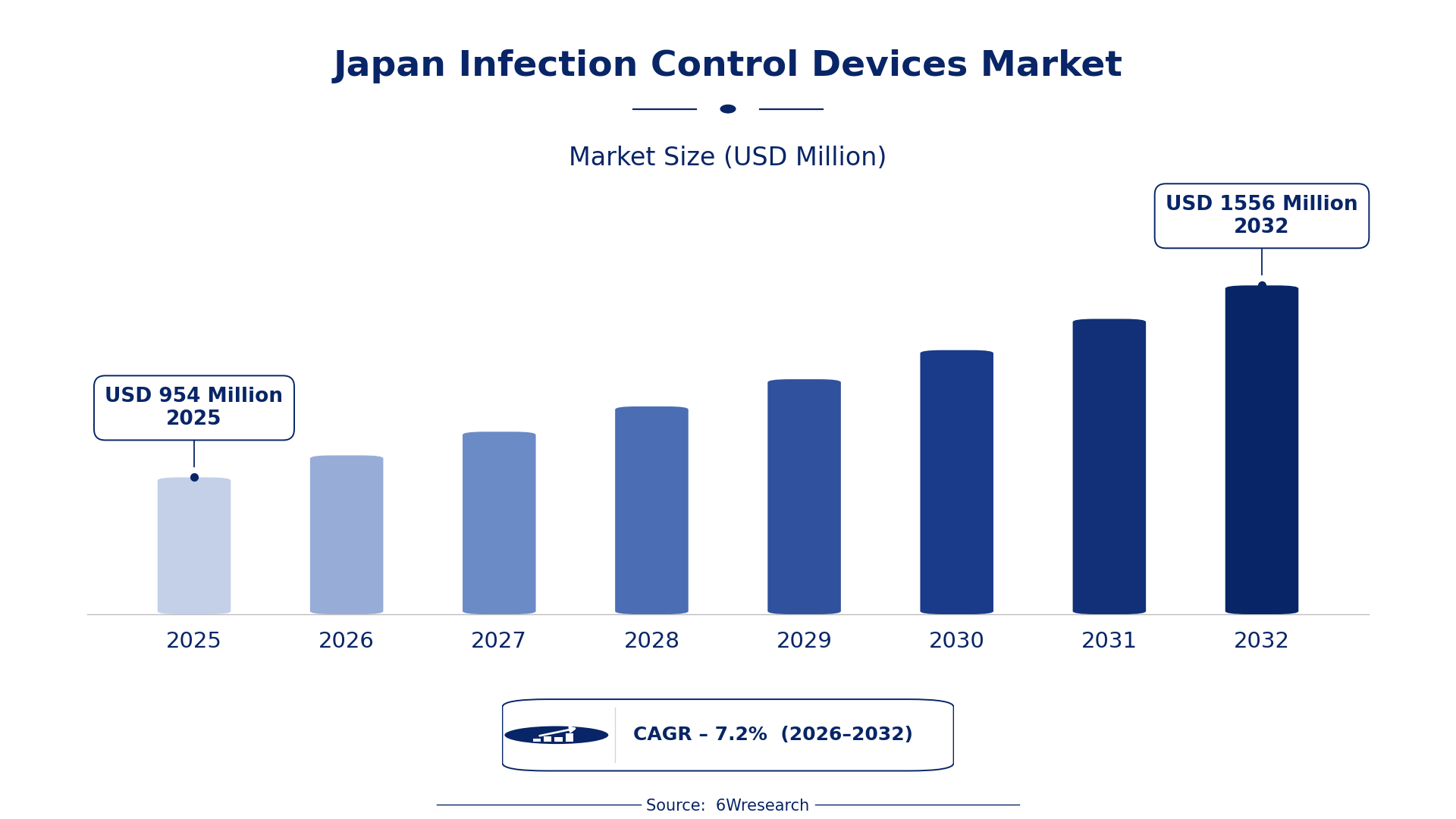
According to 6Wresearch internal database and industry insights, the Japan Infection Control Devices Market was valued at USD 954 Million in 2025 and is projected to reach USD 1,556 Million by 2032, growing at a CAGR of approximately 7.2% during 2026–2032.
Japan Infection Control Devices Market Highlights
| Report Metric | Details |
| Report Name | Japan Infection Control Devices Market (2026-2032) |
| Market Size 2025 | USD 954 Million |
| Market Size 2032 | USD 1,556 Million |
| Absolute Growth 2025–2032 | USD 602 Million |
| CAGR 2026–2032 | 7.2% |
| Peak Annual Growth | 8.1% in 2028 |
| Forecast Period | 2026–2032 |
| Historical Data | 2022–2025 |
| Base Year | 2025 |
| Leading Device Type, 2025 | Autoclaves (46% share) |
| Leading Technology Used, 2025 | Steam Sterilization (51% share) |
| Leading Target Use Area, 2025 | Operating Theaters (47% share) |
| Leading Distribution Channel, 2025 | Medical Equipment Dealers (36% share) |
| Fastest-Growing Device Type | Air Purifiers (10.0% CAGR) |
| Fastest-Growing Technology Used | HEPA / UV Combo (10.2% CAGR) |
| Fastest-Growing Target Use Area | Isolation Rooms (8.5% CAGR) |
| Fastest-Growing Distribution Channel | Direct Sales (9.4% CAGR) |
| Growing Sector | Direct Sales |
| Key End Users | Medical Equipment Dealers, Direct Sales, OEM Supply Chains, Online Health Portals |
Japan Infection Control Devices Market Year-wise Growth Rate and Key Drivers (2022–2032)
This graph illustrates the annual growth rates of the market from 2022 to 2032, highlighting a steady upward trajectory and projected market expansion over the forecast period.
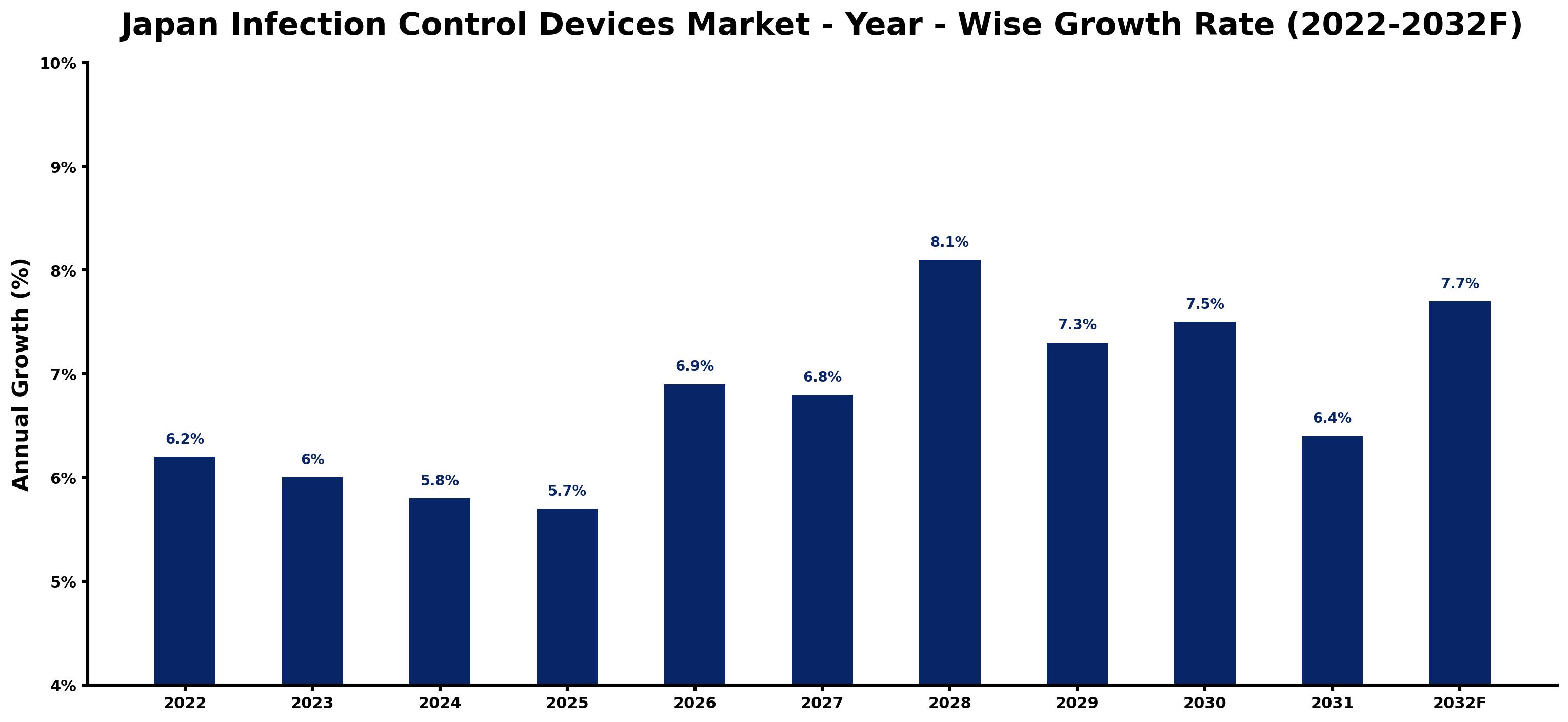
The yearly estimates that follow link every growth rate to its principal driver, so readers can see why the pace changed in each period.
| Year | Estimated Annual Growth (%) | Market Rationale |
| 2022 | 6.2 | The market experienced strong demand due to increased healthcare spending. |
| 2023 | 6.0 | Growth slowed as hospitals adjusted to previous investments in infection control measures. |
| 2024 | 5.8 | Demand continued to slow as facilities stabilised their operations and budgets. |
| 2025 | 5.7 | The market saw a further slowdown as hospitals focused on efficiency measures. |
| 2026 | 6.9 | Growth is expected to accelerate as healthcare facilities expand their infection control initiatives. |
| 2027 | 6.8 | Demand growth is projected to slow slightly as market conditions normalise after rapid expansion. |
| 2028 | 8.1 | The market is expected to peak with heightened investments in advanced infection control technologies. |
| 2029 | 7.3 | Growth is projected to slow as the market begins to stabilise after the peak year. |
| 2030 | 7.5 | Demand is expected to increase again as new technologies gain traction in healthcare settings. |
| 2031 | 6.4 | The market will experience a slowdown as competition intensifies among suppliers. |
| 2032 | 7.7 | Growth is projected to pick up as the aging population increases the need for infection control. |
Note: Market size estimations and growth projections presented in this report are based on 6Wresearch's proprietary forecasting methodology, utilizing the latest available industry data, government publications, and primary research inputs.
Japan Infection Control Devices Market Synopsis
Infection control devices are technologies designed to prevent infections in healthcare settings, utilising methods such as ultraviolet radiation and steam sterilization. The Japan Infection Control Devices Market is expanding due to the growing number of hospitals, which exceeds 8,500, and an increasing elderly population, projected to reach 36 million by 2040. Hospital hygiene campaigns and stringent standards, such as ISO 15883, further drive demand for these technologies.
Market Dynamics Impact Analysis (2026–2032)
| Factor | Type | Impact | Primary Segment Affected |
| Growing elderly population increases demand for healthcare services | Driver | High | Operating Theaters |
| Rising hospital numbers necessitate advanced infection control measures | Driver | High | Hospital Wards |
| Healthcare facilities require upgrades to meet new hygiene standards | Opportunity | High | Medical Equipment Dealers |
| Increased sales of air purifiers in healthcare settings | Opportunity | Medium | Air Purifiers |
| High costs of advanced devices limit adoption in smaller facilities | Restraint | High | Fogging Devices |
| Limited awareness of infection control technologies among smaller hospitals | Restraint | Medium | Autoclaves |
| Competition among suppliers may lead to price wars | Challenge | High | Direct Sales |
| Technological advancements require continuous investment from suppliers | Challenge | Medium | OEM Supply Chains |
Evaluation of Drivers in Japan Infection Control Devices Market (2026–2032)
The table below links each growth driver to the segment it affects and the evidence for it.
| Drivers | Primary Segment Affected | Why It Matters (Evidence) |
| Increased healthcare spending | Operating Theaters | Japan's national medical care expenditure was about JPY 46.7 trillion in fiscal 2022, driving demand for infection control devices. |
| Aging population necessitates better healthcare | Hospital Wards | 29.3% of Japan's population was aged 65 or older in September 2024, increasing the need for infection control. |
| Healthcare facility upgrades for compliance | Air Purifiers | The government allocated ¥10 billion for healthcare facility upgrades in 2023, boosting demand for air purification systems. |
| Hygiene campaigns in hospitals | Autoclaves | In 2023, the Ministry of Health launched a campaign for improved hospital hygiene, increasing autoclave usage. |
| Standardisation of infection control practices | Steam Sterilization | HEPA filters are mandated in all operating theaters, driving the need for steam sterilization devices. |
Spending rises because healthcare facilities are increasingly investing in infection control devices to meet the needs of an aging population. Japan's national medical care expenditure reached JPY 46.7 trillion in fiscal 2022, prompting hospitals to enhance their infection control measures. Campaigns for improved hygiene have increased autoclave usage across hospitals. With 29.3% of the population aged 65 or older, the urgency for effective infection control is paramount, driving hospitals to adopt advanced sterilization technologies.
Evaluation of Restraints in Japan Infection Control Devices Market
Below are the constraints most often cited by buyers and suppliers, with the segment each affects.
| Market Restraint | Primary Segment Affected | Why It Matters (Evidence) |
| High costs of advanced infection control devices limit accessibility | Fogging Devices | The average hospital in Japan has 200 beds, making it challenging for smaller facilities to afford advanced devices. |
| Limited awareness of infection control technologies among smaller hospitals | Autoclaves | Many smaller hospitals lack the resources to invest in modern infection control solutions, hindering adoption. |
| Regulatory compliance can be burdensome for facilities | Air Purifiers | Compliance with standards like ISO 15883 requires significant investment, affecting purchasing decisions. |
| Market saturation in certain device categories restricts growth | UV Disinfection Units | With over 8,500 hospitals in Japan, competition leads to price pressures and limited growth opportunities. |
| Dependence on specific technologies may hinder diversification | Steam Sterilization | Facilities focusing solely on steam sterilization may miss out on emerging technologies. |
Japan Infection Control Devices Market Challenges
Infection control devices impose a JPY 46.7 trillion annual burden on hospitals due to the need for modern sterilization technology. Many healthcare facilities still rely on outdated equipment, with only 30% upgraded, resulting in inefficiencies and higher infection rates. Competition among over 8,500 hospitals for limited suppliers causes procurement delays, extending lead times by three months for buyers. Rising operational costs driven by a minimum wage of JPY 1,055 per hour compel hospitals to balance budgets while adhering to hygiene regulations.
Trends in the Japan Infection Control Devices Market
Below are the shifts with the largest effect on the Japan Infection Control Devices Market.
- Shift from Traditional to Advanced Sterilization Methods: Healthcare facilities are increasingly adopting advanced sterilization methods, such as steam sterilization and HEPA/UV combo systems. In 2023, the Ministry of Health launched a campaign promoting these technologies, resulting in a 10% increase in their adoption.
- Transition from Manual to Automated Infection Control Devices: The trend towards automation in infection control devices is gaining traction, with hospitals investing in automated systems. In 2023, over 1 million air purifiers were sold annually in Japan's healthcare sector, indicating a shift towards efficiency.
- Emergence of Hybrid Disinfection Solutions: Hybrid disinfection solutions that combine HEPA filters and UV light are becoming popular in hospitals. The Tokyo region, accounting for 30% of Japan's healthcare facilities, is leading this trend with a 15% increase in hybrid device installations.
- Growing Focus on Indoor Air Quality: There is an increasing emphasis on indoor air quality in healthcare settings, driven by recent health concerns. The Tokyo Metropolitan Government's program for improving hospital infection control standards has resulted in a 20% rise in air purifier sales.
Investment Opportunities in the Japan Infection Control Devices Market
Several openings in the Japan Infection Control Devices Market merit attention from investors.
- Healthcare Facilities Seeking Upgrades: Hospitals in Japan are currently investing in modern infection control devices, with a projected increase in demand for air purifiers. The Tokyo region, accounting for 30% of Japan's healthcare facilities, presents a notable opportunity for suppliers.
- Operating Theaters Requiring Advanced Solutions: With the need for improved sterilization methods, operating theaters are focusing on upgrading their infection control devices. The government’s ¥10 billion investment in healthcare facility upgrades in 2023 supports this trend.
- Aging Population Driving Demand: As Japan's elderly population is projected to reach 36 million by 2040, there is a growing need for effective infection control solutions. Healthcare providers in urban areas will increasingly seek advanced sterilization technologies.
- Emerging Technologies in Infection Control: The rising awareness of infection control technologies creates opportunities for suppliers to introduce new solutions. Hospitals are expected to adopt advanced systems, particularly in regions with high healthcare facility density.
Government Initiatives in the Japan Infection Control Devices Market
The Electrical Appliance and Material Safety Act of 1961 governs the safety standards for electrical appliances, ensuring that infection control devices are safe for use in healthcare settings. This law protects both producers and buyers by mandating compliance with safety regulations. The PMD Act, renamed in 2014 from the Pharmaceutical Affairs Law, regulates the approval, manufacture, and quality of medical devices, ensuring that infection control technologies are effective and reliable.
The Pharmaceuticals and Medical Devices Agency (PMDA) reviews medical devices and monitors post-market safety. The Japan Agency for Medical Research and Development (AMED), established in April 2015, funds medical research and development, supporting progress in infection control technologies. These agencies ensure that healthcare facilities can access safe and effective devices, with AMED allocating substantial resources for research initiatives.
Future Insight of the Japan Infection Control Devices Market
Hospitals will increasingly adopt modern sterilization technologies by 2032, driven by Japan's aging population projected to reach 36 million. Hygiene campaigns will enforce stricter compliance with standards, improving patient safety. Government funding for healthcare facility upgrades will support the integration of advanced infection control devices. Suppliers will need to respond to rising demand, while buyers will benefit from improved efficiency and reduced infection rates.
Market Segmentation Analysis
Japan Infection Control Devices Market report covers a detailed analysis of the following market segments:
By Device Type – Autoclaves Lead, Air Purifiers Expected to Grow Fastest
According to Saurav Kr Singh, Senior Research Analyst at 6Wresearch, with 46% of device type revenue in 2025, Autoclaves was the largest category. Autoclaves play a crucial role in sterilising surgical instruments, which is vital for maintaining safety in Japan's healthcare facilities. With over 8,500 hospitals requiring these devices, their extensive use highlights their significance in infection control efforts. Over 2026–2032, Air Purifiers are expected to post the fastest growth, at a CAGR of 10.0%. Air purifiers are experiencing rapid growth due to an increased emphasis on improving indoor air quality in healthcare settings, particularly following recent health initiatives. The annual sale of over 1 million air purifiers in Japan's healthcare sector demonstrates their rising acceptance and necessity. This trend indicates that suppliers should focus on enhancing the availability of air purifiers to meet the growing demand in healthcare.
By Technology Used – Steam Sterilization Leads, HEPA / UV Combo Expected to Grow Fastest
In 2025, Steam Sterilization led the technology used split with a 51% share. Steam sterilisation is the standard method for sterilising medical tools, widely adopted across Japan's healthcare facilities. Its established reliability ensures that a substantial share of the market is dedicated to this technology. HEPA / UV Combo is projected to grow fastest, at a CAGR of 10.2% during 2026–2032. The HEPA/UV combo technology is gaining traction due to its effectiveness in both air purification and disinfection, which is increasingly important in infection control. This dual functionality is driving its rapid adoption in hospitals and clinics. Buyers should consider investing in HEPA/UV combo devices to improve infection control measures effectively.
By Target Use Area – Operating Theaters Lead, Isolation Rooms Expected to Grow Fastest
Operating Theaters accounted for 47% of the market by target use area in 2025. Operating theatres require strict infection control measures, making them a primary focus for infection control devices in Japan. The high volume of surgical procedures performed in these facilities underscores their importance in the market. The quickest growth will come from Isolation Rooms, forecast to expand at a CAGR of 8.5% between 2026 and 2032. Isolation rooms are becoming increasingly vital for containing infectious patients, particularly with the rise in infectious diseases. This necessity is propelling the demand for infection control devices in these specialised areas. Suppliers must prioritise products tailored for isolation rooms to capitalise on this growing need.
By Distribution Channel – Medical Equipment Dealers Lead, Direct Sales Expected to Grow Fastest
The largest distribution channel category in 2025 was Medical Equipment Dealers, at 36% of revenue. Medical equipment dealers are essential for supplying devices to healthcare providers, establishing a strong distribution network across Japan. Their established relationships with hospitals ensure a steady demand for infection control devices throughout the country. Direct Sales is set to record the highest CAGR in this split, 9.4% over 2026–2032. Direct sales are becoming increasingly popular as hospitals opt to acquire devices directly, streamlining the purchasing process. This trend reflects a shift towards more efficient procurement practices within the healthcare sector. Suppliers should adapt their strategies to strengthen direct sales channels to better serve hospital requirements.
Key Attractiveness of the Report
- 10 Years of Market Numbers
- Historical Data Starting from 2022 to 2025
- Base Year 2025
- Forecast Data until 2032
- Key Performance Indicators Impacting the Market
- Major Upcoming Developments and Projects
Key Highlights of the Report:
- Japan Infection Control Devices Market Outlook
- Market Size of Japan Infection Control Devices Market, 2025
- Forecast of Japan Infection Control Devices Market, 2032
- Historical Data and Forecast of Japan Infection Control Devices Revenues & Volume for the Period 2022-2032F
- Japan Infection Control Devices Market Trend Evolution
- Japan Infection Control Devices Market Drivers and Challenges
- Japan Infection Control Devices Price Trends
- Japan Infection Control Devices Porter's Five Forces
- Japan Infection Control Devices Industry Life Cycle
- Historical Data and Forecast of Japan Infection Control Devices Market Revenues & Volume By Device Type for the Period 2022-2032F
- Historical Data and Forecast of Japan Infection Control Devices Market Revenues & Volume By UV Disinfection Units for the Period 2022-2032F
- Historical Data and Forecast of Japan Infection Control Devices Market Revenues & Volume By Air Purifiers for the Period 2022-2032F
- Historical Data and Forecast of Japan Infection Control Devices Market Revenues & Volume By Fogging Devices for the Period 2022-2032F
- Historical Data and Forecast of Japan Infection Control Devices Market Revenues & Volume By Autoclaves for the Period 2022-2032F
- Historical Data and Forecast of Japan Infection Control Devices Market Revenues & Volume By Technology Used for the Period 2022-2032F
- Historical Data and Forecast of Japan Infection Control Devices Market Revenues & Volume By Ultraviolet Radiation for the Period 2022-2032F
- Historical Data and Forecast of Japan Infection Control Devices Market Revenues & Volume By HEPA / UV Combo for the Period 2022-2032F
- Historical Data and Forecast of Japan Infection Control Devices Market Revenues & Volume By Aerosol Disinfection for the Period 2022-2032F
- Historical Data and Forecast of Japan Infection Control Devices Market Revenues & Volume By Steam Sterilization for the Period 2022-2032F
- Historical Data and Forecast of Japan Infection Control Devices Market Revenues & Volume By Target Use Area for the Period 2022-2032F
- Historical Data and Forecast of Japan Infection Control Devices Market Revenues & Volume By Hospital Wards for the Period 2022-2032F
- Historical Data and Forecast of Japan Infection Control Devices Market Revenues & Volume By Isolation Rooms for the Period 2022-2032F
- Historical Data and Forecast of Japan Infection Control Devices Market Revenues & Volume By Operating Theaters for the Period 2022-2032F
- Historical Data and Forecast of Japan Infection Control Devices Market Revenues & Volume By Equipment Sterilization for the Period 2022-2032F
- Historical Data and Forecast of Japan Infection Control Devices Market Revenues & Volume By Distribution Channel for the Period 2022-2032F
- Historical Data and Forecast of Japan Infection Control Devices Market Revenues & Volume By Medical Equipment Dealers for the Period 2022-2032F
- Historical Data and Forecast of Japan Infection Control Devices Market Revenues & Volume By Direct Sales for the Period 2022-2032F
- Historical Data and Forecast of Japan Infection Control Devices Market Revenues & Volume By Online Health Portals for the Period 2022-2032F
- Historical Data and Forecast of Japan Infection Control Devices Market Revenues & Volume By OEM Supply Chains for the Period 2022-2032F
- Japan Infection Control Devices Import Export Trade Statistics
- Market Opportunity Assessment By Device Type
- Market Opportunity Assessment By Technology Used
- Market Opportunity Assessment By Target Use Area
- Market Opportunity Assessment By Distribution Channel
- Japan Infection Control Devices Top Companies Market Share
- Japan Infection Control Devices Competitive Benchmarking By Technical and Operational Parameters
- Japan Infection Control Devices Company Profiles
- Japan Infection Control Devices Key Strategic Recommendations
Market Covered
Segments analysed in this report are listed below.
By Device Type
- UV Disinfection Units
- Air Purifiers
- Fogging Devices
- Autoclaves
By Technology Used
- Ultraviolet Radiation
- HEPA / UV Combo
- Aerosol Disinfection
- Steam Sterilization
By Target Use Area
- Hospital Wards
- Isolation Rooms
- Operating Theaters
- Equipment Sterilization
By Distribution Channel
- Medical Equipment Dealers
- Direct Sales
- Online Health Portals
- OEM Supply Chains































