Japan Injector Nozzle Market Size & Growth Rate
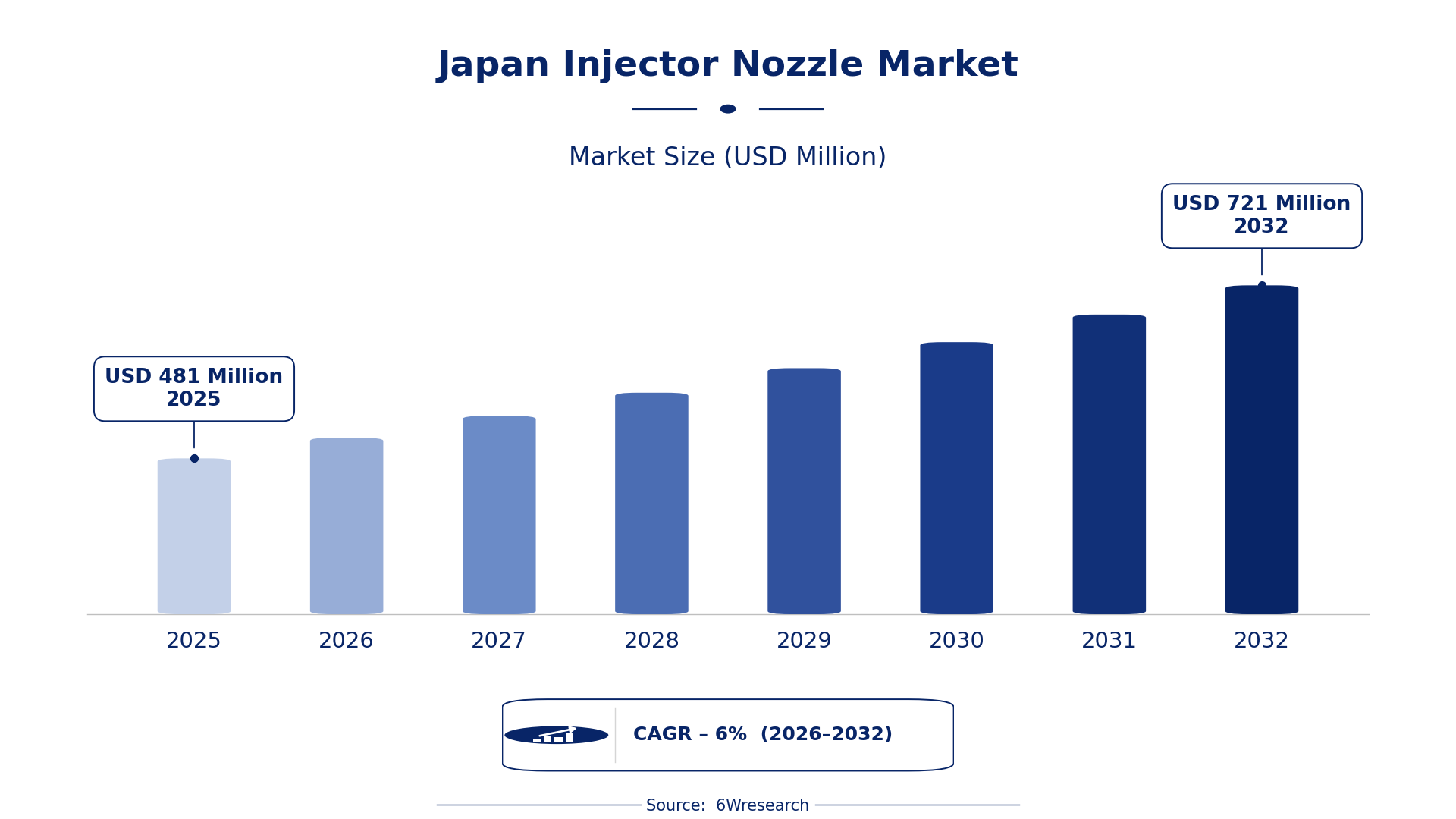
According to 6Wresearch internal database and industry insights, the Japan Injector Nozzle Market was valued at USD 481 Million in 2025 and is projected to reach USD 721 Million by 2032, growing at a CAGR of approximately 6% during 2026–2032.
Japan Injector Nozzle Market Highlights
| Report Metric | Details |
| Report Name | Japan Injector Nozzle Market (2026-2032) |
| Market Size 2025 | USD 481 Million |
| Market Size 2032 | USD 721 Million |
| Absolute Growth 2025–2032 | USD 240 Million |
| CAGR 2026–2032 | 6% |
| Peak Annual Growth | 6.5% in 2026 |
| Forecast Period | 2026–2032 |
| Historical Data | 2022–2025 |
| Base Year | 2025 |
| Leading Vehicle Type, 2025 | Passenger Cars (58% share) |
| Leading Technology, 2025 | Gasoline Port Fuel Injection (49% share) |
| Leading Fuel Type, 2025 | Gasoline (60% share) |
| Fastest-Growing Vehicle Type | LCVS (8.2% CAGR) |
| Fastest-Growing Technology | Gasoline Direct Injection (8.4% CAGR) |
| Growing Sector | automotive |
| Key End Users | automotive manufacturers, vehicle assemblers, aftermarket suppliers |
Japan Injector Nozzle Market Year-wise Growth Rate and Key Drivers (2022–2032)
This graph illustrates the annual growth rates of the market from 2022 to 2032, highlighting a steady upward trajectory and projected market expansion over the forecast period.
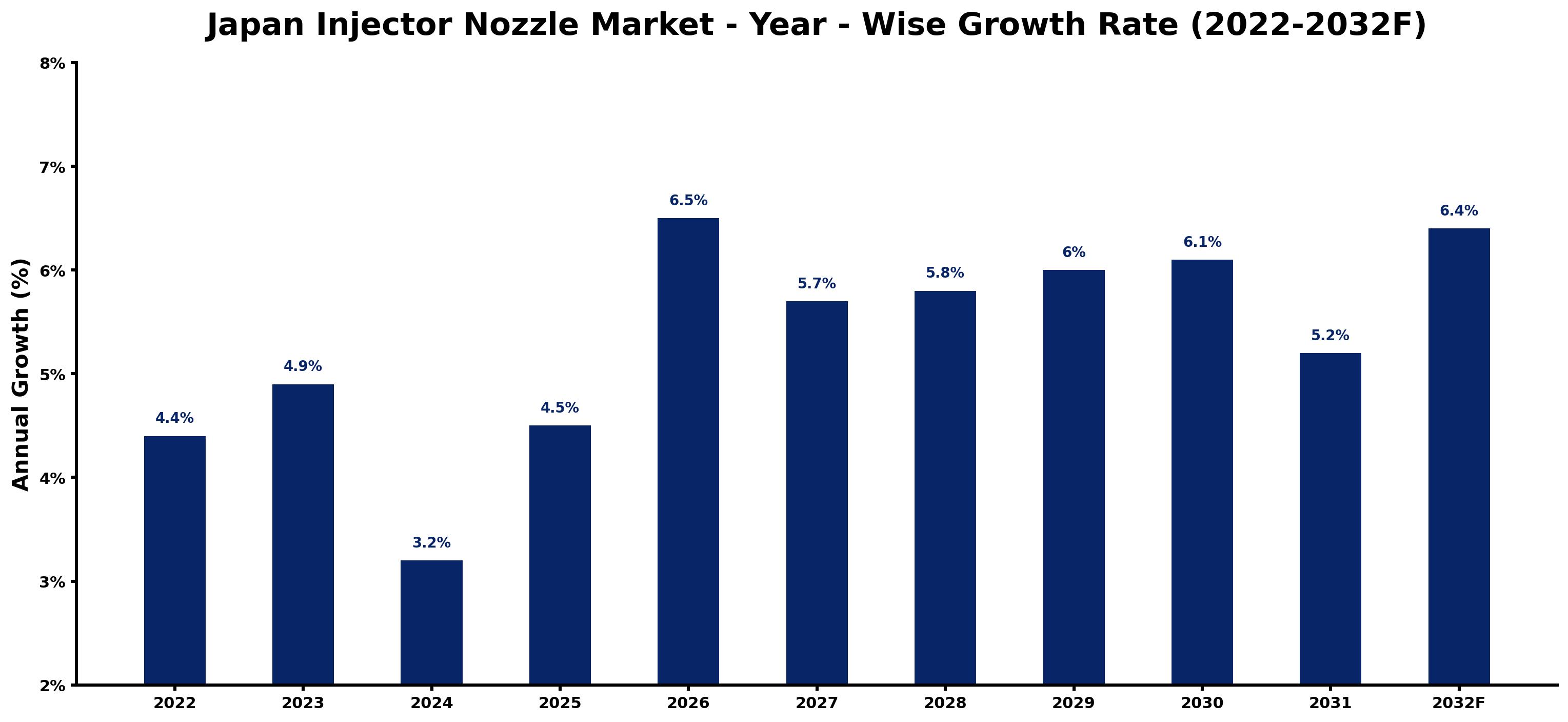
For each year, the table pairs the estimated growth rate with the leading influence on demand, showing how the drivers changed across the period.
| Year | Estimated Annual Growth (%) | Market Rationale |
| 2022 | 4.4 | The market showed steady growth, reflecting ongoing automotive production and demand. |
| 2023 | 4.9 | Growth accelerated due to increased vehicle production and technological advancements in fuel delivery. |
| 2024 | 3.2 | Growth slowed as the market adjusted to previous peaks and faced supply chain challenges. |
| 2025 | 4.5 | Demand improved with rising vehicle registrations and the introduction of new models. |
| 2026 | 6.5 | The peak growth year is driven by heightened automotive exports and innovation in injector technology. |
| 2027 | 5.7 | Growth is expected to moderate as the market stabilises following the peak demand period. |
| 2028 | 5.8 | Demand is projected to increase again due to rising fuel efficiency standards and consumer preferences. |
| 2029 | 6.0 | Growth is expected to continue as investments in automotive technology gain momentum. |
| 2030 | 6.1 | The market will remain strong with sustained demand for high-performance vehicles and components. |
| 2031 | 5.2 | Growth is projected to slow as the market begins to normalise after several years of rapid expansion. |
| 2032 | 6.4 | The market is expected to see renewed growth driven by advancements in fuel injection technology. |
Note: Market size estimations and growth projections presented in this report are based on 6Wresearch's proprietary forecasting methodology, utilizing the latest available industry data, government publications, and primary research inputs.
Japan Injector Nozzle Market Synopsis
Injector nozzles are precision-engineered components used to deliver fuel in internal combustion engines. The Japan Injector Nozzle Market is growing, supported by the production of approximately 8 million vehicles in 2022 and increasing demand from domestic users. Factors such as ongoing automotive innovations and a focus on fuel efficiency are propelling this growth, alongside the employment of over 5 million people in the sector.
Market Dynamics Impact Analysis (2026–2032)
| Factor | Type | Impact | Primary Segment Affected |
| Rising vehicle production and technological advancements drive demand for injector nozzles. | Driver | High | Passenger Cars |
| The need for high-performance components in new vehicle models fuels market growth. | Driver | High | Gasoline Direct Injection |
| Growing emphasis on fuel efficiency in vehicles presents opportunities for advanced injector technologies. | Opportunity | High | LCVS |
| The shift towards electric vehicles creates a gap in the market for traditional injector nozzles. | Opportunity | Medium | Diesel Direct Injection |
| Increasing regulatory standards for emissions control limit the types of injectors that can be used. | Restraint | Medium | HCVS |
| Market saturation in certain segments limits growth potential for new entrants. | Restraint | Medium | Diesel Direct Injection |
| Competition from alternative fuel technologies challenges the traditional injector nozzle market. | Challenge | Medium | Gasoline Port Fuel Injection |
| Fluctuating raw material prices impact production costs for injector nozzles. | Challenge | Medium | LCVS |
Evaluation of Drivers in Japan Injector Nozzle Market (2026–2032)
The main growth drivers and the segments they affect most are set out below.
| Drivers | Primary Segment Affected | Why It Matters (Evidence) |
| Increased vehicle production in Japan drives higher demand for injector nozzles. | Passenger Cars | Japan produced approximately 8 million vehicles in 2022, boosting component demand. |
| Technological advancements in fuel injection systems improve performance and efficiency. | Gasoline Direct Injection | Injector nozzles are critical components in over 90% of new vehicles, enhancing fuel delivery. |
| The automotive sector's focus on emissions reduction leads to more sophisticated injector designs. | Diesel Direct Injection | Diesel engines account for approximately 30% of the vehicle market in Japan, necessitating advanced solutions. |
| Rising consumer preference for high-performance vehicles increases the need for efficient injectors. | LCVS | Light commercial vehicles require effective fuel delivery for optimal performance. |
| Government support for automotive innovation spurs investment in injector technologies. | Gasoline Port Fuel Injection | The Ministry of Economy, Trade and Industry supports automotive innovation programs. |
Most of the extra volume comes from the automotive sector's focus on improving fuel efficiency and performance. Approximately 8 million vehicles were produced in Japan in 2022, leading to heightened demand for injector nozzles. The emphasis on emissions reduction drives advancements in injector technology, with over 90% of new vehicles relying on these components. The automotive sector employs over 5 million people, contributing to a stable market environment. The growing preference for high-performance vehicles further stimulates demand for advanced injector designs, particularly in light commercial vehicles.
Evaluation of Restraints in Japan Injector Nozzle Market
The main factors holding the market back are set out below.
| Market Restraint | Primary Segment Affected | Why It Matters (Evidence) |
| Regulatory standards for emissions control limit the types of injector nozzles that can be used. | HCVS | Compliance with stringent regulations can restrict market options for manufacturers. |
| Market saturation in certain segments limits growth potential for new entrants. | Diesel Direct Injection | With a mature market, new players face challenges in gaining market share. |
| Supply chain disruptions affect the availability of raw materials for injector production. | Gasoline Direct Injection | Global supply chain issues have led to delays and increased costs for manufacturers. |
| Fluctuating raw material prices impact production costs for injector nozzles. | LCVS | Increased costs can lead to higher prices for end-users, affecting demand. |
| Competition from alternative fuel technologies challenges the traditional injector nozzle market. | Gasoline Port Fuel Injection | The rise of electric vehicles may reduce the demand for conventional injectors. |
Japan Injector Nozzle Market Challenges
High production costs for injector nozzles can account for up to 15% of total manufacturing expenses for producers, limiting their competitiveness in the market. This issue stems from the need for advanced materials and precision machining processes, which are costly in Japan. Buyers face increased prices as local suppliers struggle to maintain margins against international competitors. Competition intensifies as manufacturers invest in skills development, causing delays in production and impacting delivery schedules for automotive buyers. Compliance with ISO 9001 standards raises operational costs, further straining profit margins for producers and affecting pricing strategies for automotive buyers.
Trends in the Japan Injector Nozzle Market
Below are the shifts with the largest effect on the Japan Injector Nozzle Market.
- Shift in Fuel Efficiency Standards: Automotive manufacturers are increasingly prioritising fuel efficiency, driven by consumer demand and regulatory requirements. The Japan Automobile Manufacturers Association has set new standards, influencing design choices in injector nozzles.
- Transition to Advanced Injector Technologies: The adoption of advanced injector technologies has accelerated since 2023, with a focus on performance and emissions reduction. This shift is reflected in the growing use of gasoline direct injection systems, which improve fuel efficiency.
- Emergence of Hybrid Vehicles: The rise of hybrid vehicles is reshaping the injector nozzle market, as these vehicles require specialised components. In 2023, hybrid vehicles accounted for a significant percentage of new registrations in Japan.
- Increased Investment in Automotive Innovation: The Tokyo region is experiencing increased investment in automotive innovation, with funding from the Ministry of Economy, Trade and Industry. This investment, valued at several billion yen, supports the development of advanced injector technologies.
Investment Opportunities in the Japan Injector Nozzle Market
The following opportunities in the Japan Injector Nozzle Market pair current demand with a clear way in.
- Market Gap for Advanced Injector Technologies: With the automotive sector aiming for higher fuel efficiency, there is a gap for advanced injector technologies. Light commercial vehicle manufacturers are seeking new solutions to meet new standards.
- Demand for High-Performance Components: The growing market for high-performance vehicles presents an opportunity for suppliers of injector nozzles. Collaborating with automotive manufacturers in the Tokyo region can facilitate entry into this market.
- Expansion of Diesel Engine Applications: The diesel segment is expanding, creating opportunities for injector suppliers. Targeting heavy commercial vehicle manufacturers can lead to significant partnerships and sales growth.
- Investment in R&D for Emission Control: Investment in research and development for emission control technologies is increasing. Local partnerships with automotive research institutions can enhance product offerings and market presence.
Government Initiatives in the Japan Injector Nozzle Market
The regulatory environment for injector nozzle manufacturers in Japan is shaped by several key laws. The ISO 9001 standard ensures quality in manufacturing processes, while the Hydrogen Society Promotion Act (2024) encourages innovation in low-carbon technologies. These measures promote the development of efficient injector systems that meet stringent environmental standards.
Support from the Ministry of Economy, Trade and Industry benefits buyers in the automotive sector. This agency funds various innovation programs, with projected funding reaching JPY 150 trillion over the next decade, impacting the industry's growth.
Future Insight of the Japan Injector Nozzle Market
By 2032, a policy-driven shift towards electric vehicles will transform the injector nozzle market, prompting suppliers to adapt their product offerings. The Ministry of Economy, Trade and Industry's automotive innovation programs will drive advancements in manufacturing processes, benefiting producers. With approximately 30 million registered vehicles in Japan, the demand for modern components will increase. The Tokyo Motor Show will serve as a critical venue for unveiling new technologies, influencing buyer preferences and shaping future trends in automotive components.
Market Segmentation Analysis
Japan Injector Nozzle Market report covers a detailed analysis of the following market segments:
By Vehicle Type – Passenger Cars Lead, LCVS Expected to Grow Fastest
According to Shubham Deep, Research Manager at 6Wresearch, Passenger Cars held 58% of the Japan Injector Nozzle Market by vehicle type in 2025. Passenger cars dominate Japan's injector nozzle market due to their substantial production figures, with approximately 8 million vehicles produced in 2022. This segment is supported by high consumer demand, particularly in urban areas like Tokyo, where personal vehicles are a necessity. LCVS is set to record the highest CAGR in this split, 8.2% over 2026–2032. Light commercial vehicles are experiencing rapid growth as they play a crucial role in logistics and transportation across Japan. The rise of e-commerce and delivery services is propelling this segment's expansion, suggesting a shift in consumer preferences. Suppliers should focus on enhancing their offerings for light commercial vehicles to meet the increasing market demand in this segment.
By Technology – Gasoline Port Fuel Injection Leads, Gasoline Direct Injection Expected to Grow Fastest
Gasoline Port Fuel Injection took 49% of technology revenue in 2025, more than any other category. Gasoline port fuel injection technology holds the largest share as it is the standard for most gasoline engines in passenger vehicles. Its established presence and reliability make it a preferred choice among manufacturers. Gasoline Direct Injection is projected to grow fastest, at a CAGR of 8.4% during 2026–2032. Gasoline direct injection is gaining traction due to its performance advantages, appealing to consumers seeking better fuel efficiency and power. This technology's growing adoption in new models is driving its rapid growth. Manufacturers must invest in gasoline direct injection technology to remain competitive in the evolving market.
By Fuel Type – Gasoline Leads and Records the Fastest Growth
With 60% of fuel type revenue in 2025, Gasoline was the largest category. Gasoline is the predominant fuel type in Japan, utilised in over 90% of new vehicles, underscoring its critical role in the automotive sector. The established infrastructure and consumer preference for gasoline engines further solidify its leading position. The same category is also set to grow fastest, at a CAGR of 8.1% during 2026–2032. Gasoline remains the fastest-growing fuel type as it continues to be the preferred choice for new vehicle purchases, supported by ongoing production trends. This consistent demand reinforces gasoline's dominance in the market. Stakeholders must align their strategies with the sustained preference for gasoline to optimise their market engagement.
Key Attractiveness of the Report
- 10 Years of Market Numbers
- Historical Data Starting from 2022 to 2025
- Base Year 2025
- Forecast Data until 2032
- Key Performance Indicators Impacting the Market
- Major Upcoming Developments and Projects
Key Highlights of the Report:
- Japan Injector Nozzle Market Outlook
- Market Size of Japan Injector Nozzle Market, 2025
- Forecast of Japan Injector Nozzle Market, 2032
- Historical Data and Forecast of Japan Injector Nozzle Revenues & Volume for the Period 2022-2032
- Japan Injector Nozzle Market Trend Evolution
- Japan Injector Nozzle Market Drivers and Challenges
- Japan Injector Nozzle Price Trends
- Japan Injector Nozzle Porter's Five Forces
- Japan Injector Nozzle Industry Life Cycle
- Historical Data and Forecast of Japan Injector Nozzle Market Revenues & Volume By Vehicle Type for the Period 2022-2032
- Historical Data and Forecast of Japan Injector Nozzle Market Revenues & Volume By Passenger Cars for the Period 2022-2032
- Historical Data and Forecast of Japan Injector Nozzle Market Revenues & Volume By LCVS for the Period 2022-2032
- Historical Data and Forecast of Japan Injector Nozzle Market Revenues & Volume By HCVS for the Period 2022-2032
- Historical Data and Forecast of Japan Injector Nozzle Market Revenues & Volume By Technology for the Period 2022-2032
- Historical Data and Forecast of Japan Injector Nozzle Market Revenues & Volume By Gasoline Port Fuel Injection for the Period 2022-2032
- Historical Data and Forecast of Japan Injector Nozzle Market Revenues & Volume By Diesel Direct Injection for the Period 2022-2032
- Historical Data and Forecast of Japan Injector Nozzle Market Revenues & Volume By Gasoline Direct Injection for the Period 2022-2032
- Historical Data and Forecast of Japan Injector Nozzle Market Revenues & Volume By Fuel Type for the Period 2022-2032
- Historical Data and Forecast of Japan Injector Nozzle Market Revenues & Volume By Diesel for the Period 2022-2032
- Historical Data and Forecast of Japan Injector Nozzle Market Revenues & Volume By Gasoline for the Period 2022-2032
- Japan Injector Nozzle Import Export Trade Statistics
- Market Opportunity Assessment By Vehicle Type
- Market Opportunity Assessment By Technology
- Market Opportunity Assessment By Fuel Type
- Japan Injector Nozzle Top Companies Market Share
- Japan Injector Nozzle Competitive Benchmarking By Technical and Operational Parameters
- Japan Injector Nozzle Company Profiles
- Japan Injector Nozzle Key Strategic Recommendations
Market Covered
The study includes the following segmentation.
By Vehicle Type
- Passenger Cars
- LCVS
- HCVS
By Technology
- Gasoline Port Fuel Injection
- Diesel Direct Injection
- Gasoline Direct Injection
By Fuel Type
- Diesel
- Gasoline































