Japan IT Services Market Size & Growth Rate (2026-2032)
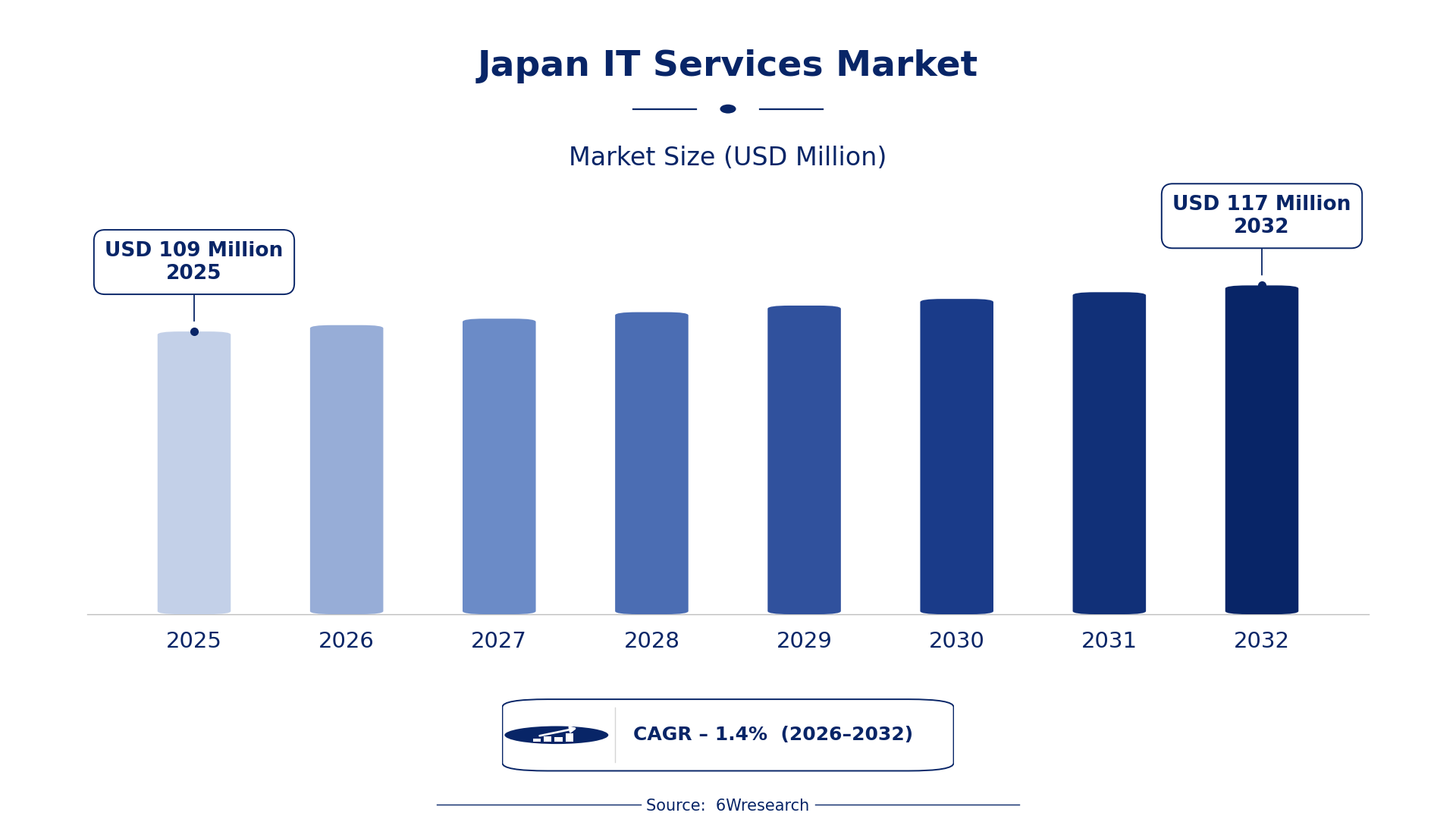
The Japan IT Services Market was estimated at USD 109 Million in 2025 and is projected to reach USD 117 Million by 2032, growing at a CAGR of 1.4% from 2026 to 2032.
Japan IT Services Market Synopsis
In the past few years, the Japan IT Services Market has seen a remarkable shift fueled by the urgent need for digital transformation across various sectors. Companies are increasingly recognizing the value of cloud computing, cybersecurity, and IT consulting services as they strive to maintain competitiveness on a global scale.
A surge in investments aimed at enhancing operational efficiencies and customer experiences is reshaping the market. The focus on integrating advanced technologies such as artificial intelligence and data analytics has become paramount, creating a fertile ground for growth and innovation.
Japan IT Services Market Year-wise Growth Rate and Key Drivers
This graph illustrates the annual growth rates of the Japan IT Services Market from 2021 to 2032, highlighting a steady upward trajectory and projected expansion over the forecast period.
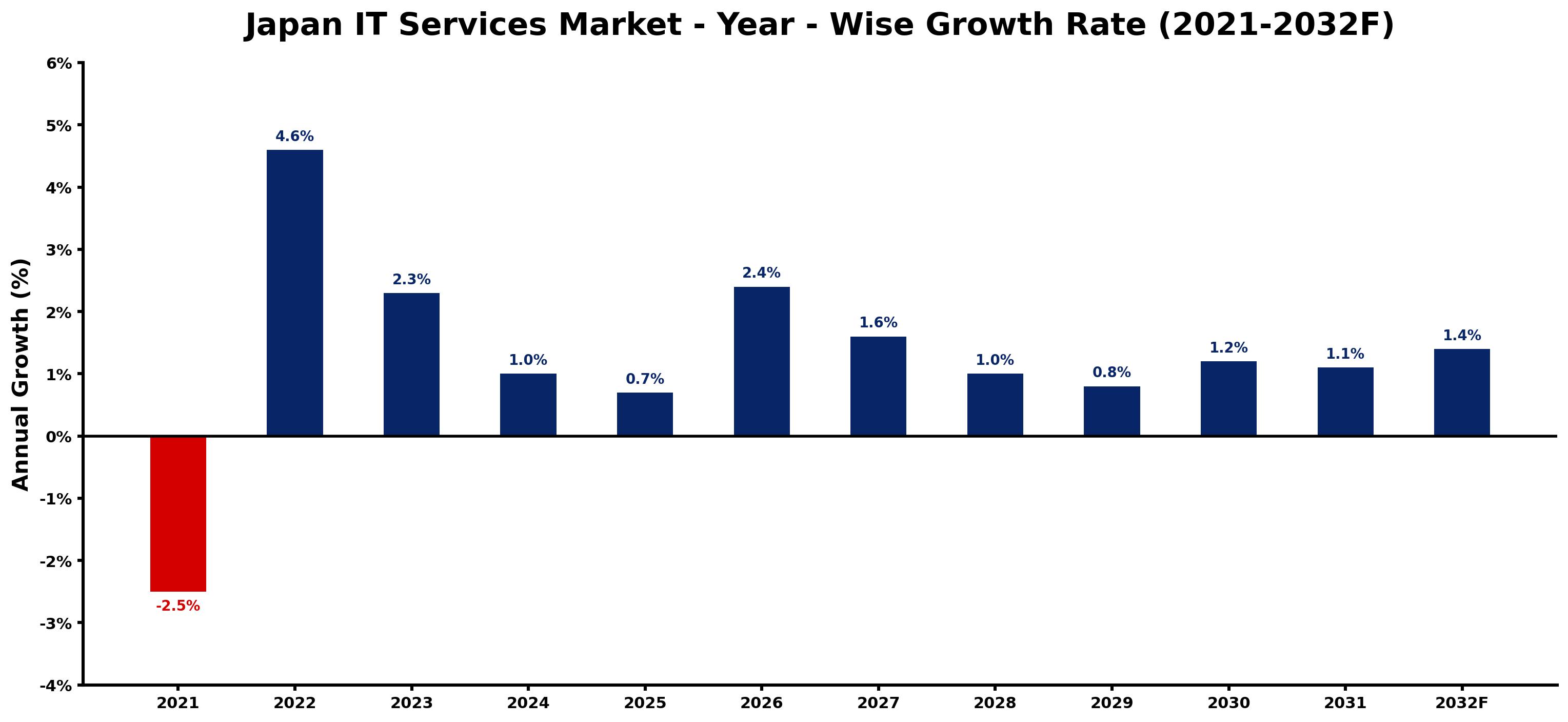
The table below presents the year‑wise growth rates along with the key drivers influencing the market
| Year | Growth Rate | Major Drivers |
| 2021 | -2.5% | Post-pandemic adjustments led to reduced IT spending. |
| 2022 | 4.6% | Japan's digital government initiative boosts IT sector investments. |
| 2023 | 2.3% | Increased adoption of cloud services among SMEs drives demand. |
| 2024 | 1.0% | Emerging cybersecurity regulations heighten enterprise IT service needs. |
| 2025 | 0.7% | Post-pandemic remote work trends sustain IT services growth. |
| 2026 | 2.4% | Aging population increases healthcare IT service requirements. |
| 2027 | 1.6% | Accelerated digitalization in manufacturing enhances IT service uptake. |
| 2028 | 1.0% | 5G rollout spurs demand for advanced IT infrastructure services. |
| 2029 | 0.8% | Increased focus on AI integration in business operations. |
| 2030 | 1.2% | Government subsidies promote digital transformation for SMEs. |
| 2031 | 1.1% | Rising investment in fintech solutions boosts IT service demand. |
| 2032 | 1.4% | Growing IoT applications drive need for IT support services. |
Note: Market size estimations and growth projections presented in this report are based on 6Wresearch's proprietary forecasting methodology, utilizing the latest available industry data, government publications, and primary research inputs.
Japan IT Services Market Key Takeaways
Below are some of the specific key takeaways from the market, including:
- The market is driven by a strong demand for digital transformation services across various industries.
- Cloud computing solutions are becoming increasingly vital as businesses adapt to new operational models.
- Cybersecurity services are gaining traction due to rising concerns over data protection and privacy.
- Government initiatives are fostering a favorable environment for technology adoption in Japan.
- There is a pressing need for skilled IT professionals, impacting service delivery and innovation.
Evaluation of Restraints in Japan IT Services Market
Despite its promising trajectory, the Japan IT Services Market faces notable constraints. Intense competition among domestic and international players creates a challenging environment, often leading to price wars that can erode margins. on top of that, a shortage of qualified IT professionals is limiting the growth potential of service providers, as firms struggle to recruit and retain top talent. The cultural preference for domestic vendors also complicates market entry for foreign companies, requiring them to build strong local partnerships and adapt to Japan's unique business etiquette. Additionally, stringent regulatory frameworks and data privacy concerns can hinder innovation and slow down decision-making processes.
Japan IT Services Market Trends
A definitive trend in the Japan IT Services Market is the accelerated shift toward digital transformation. Organizations are increasingly embracing cloud technologies to enhance operational agility and streamline processes. Alongside this, there’s a growing focus on data analytics and artificial intelligence, enabling businesses to make informed decisions and improve customer interactions.
on top of that, the rising frequency of cyber threats is driving demand for comprehensive cybersecurity solutions. Companies are investing in advanced security measures to protect sensitive information. These trends signal a significant pivot in how businesses operate, highlighting a clear pathway for IT service providers to meet evolving demands.
Japan IT Services Market Opportunities
The landscape is ripe with opportunities for IT service providers willing to innovate and adapt. Businesses are seeking cutting-edge solutions that enhance their digital capabilities, particularly in the areas of cloud migration and AI integration. The Japanese government's push for technology adoption presents an avenue for IT services to flourish, especially in sectors like healthcare and finance, where digitalization is critical.
Additionally, the growing trend of remote work is creating a demand for IT services that support flexible operational models. Service providers that can offer tailored solutions addressing these needs will find lucrative prospects in this evolving market.
Government Initiatives in the Japan IT Services Market
Government policies are playing a crucial role in shaping the Japan IT Services Market. The focus is on enhancing technology adoption to boost the overall economy and competitiveness. Initiatives aimed at promoting digital transformation across various sectors are essential in fostering a conducive environment for IT service growth.
- A recently completed initiative by the Digital Agency aimed to accelerate the integration of digital technologies in public services.
- Ongoing programs focused on enhancing 5G infrastructure are expected to improve connectivity and enable advanced IT services.
- Upcoming regulations to promote billing transparency in IT services are being developed to foster trust and competition in the market.
- The IT Strategy Council is currently setting priorities for national IT strategies to align with the Society 5.0 vision.
- Investment in a national digital infrastructure upgrade program is planned to enhance the accessibility of IT services across Japan.
Future Insights of the Japan IT Services Market
Looking ahead to 2026-2032, the Japan IT Services Market is expected to continue its steady growth as digital transformation initiatives gain momentum. The rising adoption of advanced technologies such as AI, IoT, and cloud computing will drive demand for IT services across various sectors. However, challenges like talent shortages and regulatory hurdles may influence the pace of growth. Companies that prioritize innovation and customer-centric solutions will be well-positioned to thrive in this competitive market.
Japan IT Services Market Latest Developments
In the last 12-14 months, the Japan IT Services Market has witnessed significant activity, reflecting an industry eager to innovate and adapt. Companies are increasingly aligning their strategies with the demands of a digitally transforming economy. Investments in cybersecurity and cloud services are at the forefront as organizations respond to emerging challenges.
- A major technology vendor launched a comprehensive cybersecurity suite in early 2025, targeting enterprises concerned about data breaches.
- An initiative to upgrade cloud infrastructure began in Q3 2025 and remains underway, aimed at improving service efficiency.
- A partnership between local IT firms and international service providers was established in late 2025 to foster technology exchange.
- A planned rollout of a new AI-driven analytics service is expected to begin in the second half of 2026, catering to the retail sector.
- A program to enhance digital skills training for IT professionals is currently being implemented to address the skills gap in the workforce.
Japan IT Services Market - Key Attractiveness of the Report
- 10 Years of Market Numbers
- Historical Data Starting from 2022 to 2025
- Base Year: 2025
- Forecast Data until 2032
- Key Performance Indicators Impacting the Market
- Major Upcoming Developments and Projects
Key Highlights of the Report:
- Japan IT Services Market Outlook
- Market Size of Japan IT Services Market, 2025
- Forecast of Japan IT Services Market, 2032
- Historical Data and Forecast of Japan IT Services Revenues & Volume for the Period 2022-2032F
- Japan IT Services Market Trend Evolution
- Japan IT Services Market Drivers and Challenges
- Japan IT Services Price Trends
- Japan IT Services Porter's Five Forces
- Japan IT Services Industry Life Cycle
- Historical Data and Forecast of Japan IT Services Market Revenues & Volume By Vertical for the Period 2022-2032F
- Historical Data and Forecast of Japan IT Services Market Revenues & Volume By Government and defense for the Period 2022-2032F
- Historical Data and Forecast of Japan IT Services Market Revenues & Volume By Banking, Financial Services, and Insurance (BFSI) for the Period 2022-2032F
- Historical Data and Forecast of Japan IT Services Market Revenues & Volume By Healthcare for the Period 2022-2032F
- Historical Data and Forecast of Japan IT Services Market Revenues & Volume By Media and entertainment for the Period 2022-2032F
- Historical Data and Forecast of Japan IT Services Market Revenues & Volume By Consumer goods and retail for the Period 2022-2032F
- Historical Data and Forecast of Japan IT Services Market Revenues & Volume By IT and telecom for the Period 2022-2032F
- Historical Data and Forecast of Japan IT Services Market Revenues & Volume By Business Function for the Period 2022-2032F
- Historical Data and Forecast of Japan IT Services Market Revenues & Volume By Human Resources for the Period 2022-2032F
- Historical Data and Forecast of Japan IT Services Market Revenues & Volume By Finance and Accounting for the Period 2022-2032F
- Historical Data and Forecast of Japan IT Services Market Revenues & Volume By Sales and Marketing for the Period 2022-2032F
- Historical Data and Forecast of Japan IT Services Market Revenues & Volume By Supply Chain Management for the Period 2022-2032F
- Historical Data and Forecast of Japan IT Services Market Revenues & Volume By Operations and Support for the Period 2022-2032F
- Historical Data and Forecast of Japan IT Services Market Revenues & Volume By Manufacturing for the Period 2022-2032F
- Historical Data and Forecast of Japan IT Services Market Revenues & Volume By Deployment Mode for the Period 2022-2032F
- Historical Data and Forecast of Japan IT Services Market Revenues & Volume By On-premises for the Period 2022-2032F
- Historical Data and Forecast of Japan IT Services Market Revenues & Volume By Cloud for the Period 2022-2032F
- Historical Data and Forecast of Japan IT Services Market Revenues & Volume By Organization Size for the Period 2022-2032F
- Historical Data and Forecast of Japan IT Services Market Revenues & Volume By Large enterprises for the Period 2022-2032F
- Historical Data and Forecast of Japan IT Services Market Revenues & Volume By Small and Medium Enterprises (SMEs) for the Period 2022-2032F
- Historical Data and Forecast of Japan IT Services Market Revenues & Volume By Service Type for the Period 2022-2032F
- Historical Data and Forecast of Japan IT Services Market Revenues & Volume By Professional services for the Period 2022-2032F
- Historical Data and Forecast of Japan IT Services Market Revenues & Volume By Managed services for the Period 2022-2032F
- Historical Data and Forecast of Japan IT Services Market Revenues & Volume By Telecom services for the Period 2022-2032F
- Japan IT Services Import Export Trade Statistics
- Market Opportunity Assessment By Vertical
- Market Opportunity Assessment By Business Function
- Market Opportunity Assessment By Deployment Mode
- Market Opportunity Assessment By Organization Size
- Market Opportunity Assessment By Service Type
- Japan IT Services Top Companies Market Share
- Japan IT Services Competitive Benchmarking By Technical and Operational Parameters
- Japan IT Services Company Profiles
- Japan IT Services Key Strategic Recommendations






































