Japan Ketogenic Diet Market Size & Growth Rate
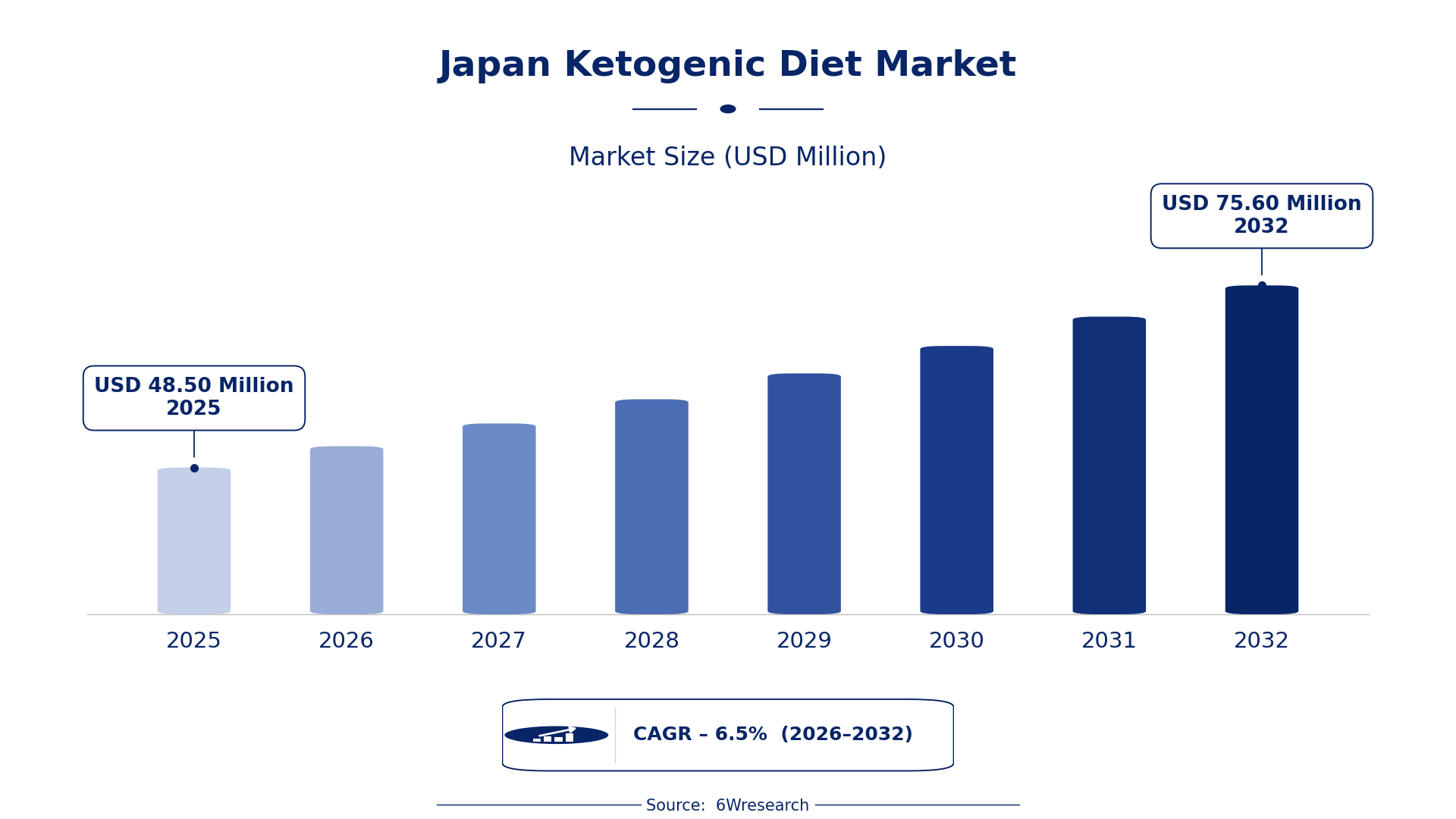
According to 6Wresearch internal database and industry insights, the Japan Ketogenic Diet Market was valued at USD 48.50 Million in 2025 and is projected to reach USD 75.60 Million by 2032, growing at a CAGR of approximately 6.5% during 2026–2032.
Japan Ketogenic Diet Market Highlights
| Report Metric | Details |
| Report Name | Japan Ketogenic Diet Market (2026-2032) |
| Market Size 2025 | USD 48.50 Million |
| Market Size 2032 | USD 75.60 Million |
| Absolute Growth 2025–2032 | USD 27.10 Million |
| CAGR 2026–2032 | 6.5% |
| Peak Annual Growth | 7.5% in 2030 |
| Forecast Period | 2026–2032 |
| Historical Data | 2022–2025 |
| Base Year | 2025 |
| Leading Product, 2025 | Supplements (43% share) |
| Leading Distribution Channel, 2025 | Supermarket/Hypermarket (50% share) |
| Fastest-Growing Product | Snacks (9.0% CAGR) |
| Fastest-Growing Distribution Channel | Online (8.7% CAGR) |
| Growing Sector | health supplements |
| Key End Users | health-conscious consumers, urban populations, fitness enthusiasts |
Japan Ketogenic Diet Market Year-wise Growth Rate and Key Drivers (2022–2032)
This graph illustrates the annual growth rates of the market from 2022 to 2032, highlighting a steady upward trajectory and projected market expansion over the forecast period.
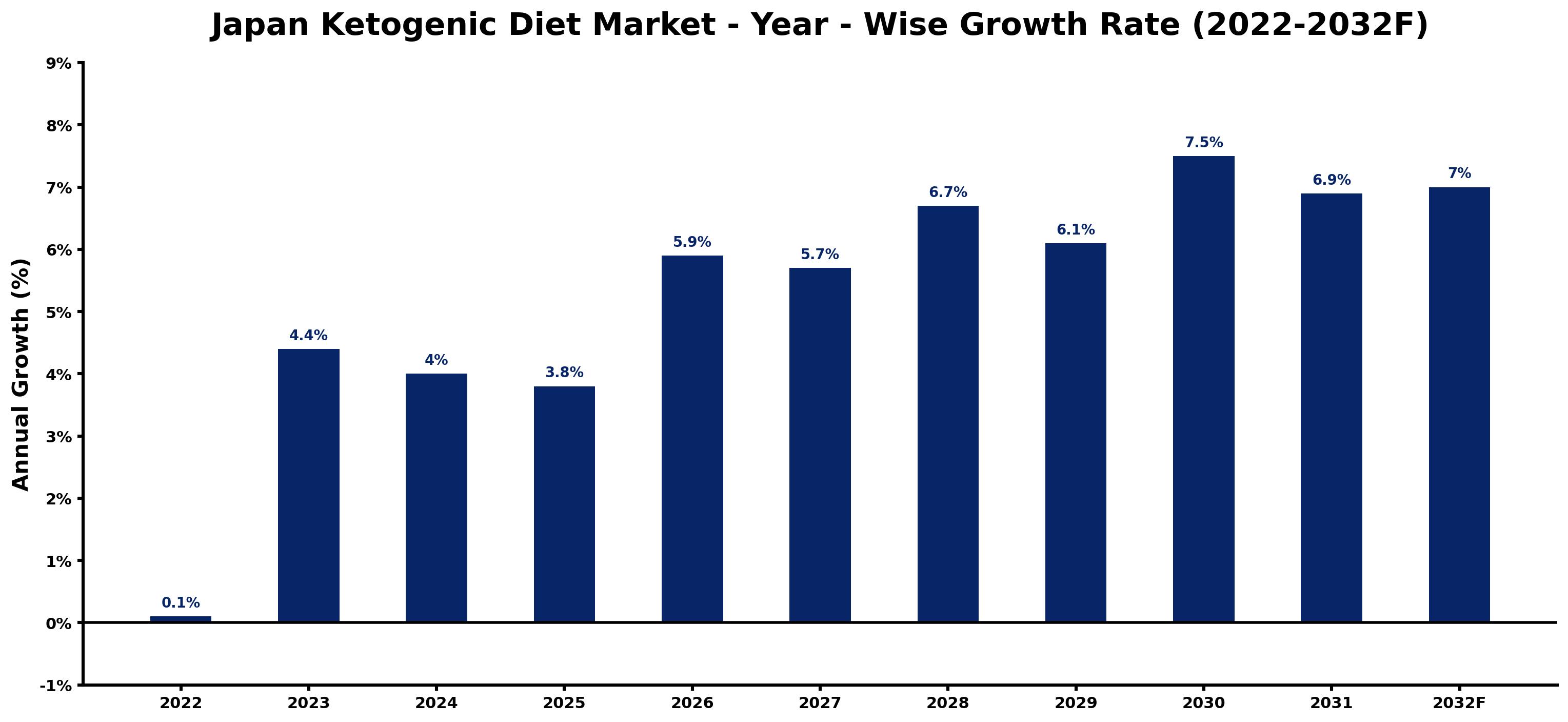
Below, each year's estimated growth is shown next to the factor that most influenced it.
| Year | Estimated Annual Growth (%) | Market Rationale |
| 2022 | 0.1 | The market showed minimal growth as awareness of ketogenic diets began to rise. |
| 2023 | 4.4 | Interest in low-carb diets surged, particularly among urban consumers in Tokyo and Osaka. |
| 2024 | 4.0 | Growth slowed slightly as the market adjusted to increased competition and product offerings. |
| 2025 | 3.8 | A further slowdown occurred as consumers explored diverse dietary options beyond ketogenic diets. |
| 2026 | 5.9 | Growth is expected to accelerate as health awareness campaigns promote ketogenic diets for obesity management. |
| 2027 | 5.7 | Growth is projected to slow as market saturation begins to take effect. |
| 2028 | 6.7 | Demand is expected to increase again as new product innovations attract health-conscious consumers. |
| 2029 | 6.1 | Growth is projected to slow as consumers become more discerning about dietary choices and product claims. |
| 2030 | 7.5 | The market is expected to peak with heightened interest in ketogenic diets driven by health initiatives. |
| 2031 | 6.9 | Growth is projected to slow as the market begins to stabilise amid evolving consumer preferences. |
| 2032 | 7.0 | Demand is expected to rise again as the market adapts to new health trends. |
Note: Market size estimations and growth projections presented in this report are based on 6Wresearch's proprietary forecasting methodology, utilizing the latest available industry data, government publications, and primary research inputs.
Japan Ketogenic Diet Market Synopsis
The ketogenic diet is a high-fat, low-carbohydrate dietary approach that induces ketosis by reducing carbohydrate intake and increasing fat consumption. In Japan, the Japan Ketogenic Diet Market has gained traction, particularly among urban populations in Tokyo and Osaka, driven by health awareness and weight management needs. The market is expanding due to rising interest in low-carb diets, with over 30% of consumers reporting interest, supported by health campaigns and the increasing availability of ketogenic products, which are projected to grow further as consumer awareness increases.
Market Dynamics Impact Analysis (2026–2032)
| Factor | Type | Impact | Primary Segment Affected |
| Growing health awareness among urban consumers | Driver | High | Supplements |
| Increased availability of ketogenic products through various channels | Driver | High | Snacks |
| Rising interest in weight management solutions | Opportunity | High | Snacks |
| Expansion of online retail channels for health products | Opportunity | High | Online |
| Market saturation leading to intense competition | Restraint | Medium | Snacks |
| Consumer confusion regarding dietary claims and product labels | Restraint | Medium | Supplements |
| Supply chain disruptions affecting product availability | Challenge | High | Snacks |
| High costs associated with product development and marketing | Challenge | Medium | Supplements |
Evaluation of Drivers in Japan Ketogenic Diet Market (2026–2032)
Demand rests on the following drivers, each shown with the segment it touches most.
| Drivers | Primary Segment Affected | Why It Matters (Evidence) |
| Increased consumer spending on health supplements | Supplements | The health supplement market in Japan was valued at approximately 1.2 trillion yen, driving demand for ketogenic products. |
| Rising interest in low-carb diets among Japanese consumers | Snacks | Over 30% of Japanese consumers reported interest in low-carb diets, boosting snack sales for ketogenic options. |
| Health initiatives promoting dietary diversity | Snacks | Government health campaigns encourage low-carb options, resulting in higher demand for ketogenic snacks. |
| Expansion of online shopping for health products | Online | The convenience of online shopping has increased access to ketogenic products, boosting market growth. |
| Growing urban population seeking weight management solutions | Supplements | Urban areas like Tokyo and Osaka see higher demand for ketogenic diets as a weight management strategy. |
Much of the new demand traces back to increased consumer spending on health supplements, with the market valued at approximately 1.2 trillion yen. The rising interest in low-carb diets among Japanese consumers, with over 30% expressing interest, drives snack sales for ketogenic options. The expansion of online shopping for health products increases access to ketogenic offerings, while the growing urban population seeks effective weight management solutions through ketogenic diets.
Evaluation of Restraints in Japan Ketogenic Diet Market
These are the pressures that could keep growth below its potential.
| Market Restraint | Primary Segment Affected | Why It Matters (Evidence) |
| Market saturation leading to intense competition | Snacks | As more brands enter the market, competition increases, making it harder for new entrants to gain market share. |
| Consumer confusion regarding dietary claims and product labels | Supplements | Misleading labels can deter consumers, impacting sales and brand trust in the ketogenic segment. |
| Supply chain disruptions affecting product availability | Snacks | Disruptions can result in stock shortages, making it challenging for retailers to meet consumer demand for ketogenic options. |
| High costs associated with product development and marketing | Supplements | The financial burden can limit the ability of smaller producers to compete effectively in the market. |
| Limited consumer knowledge about ketogenic diets | Snacks | A lack of understanding can hinder consumer adoption, affecting overall market growth. |
Japan Ketogenic Diet Market Challenges
Buyers of ketogenic products face technological limitations in local manufacturing, as many facilities lack the necessary equipment for high-quality production. This leads to delays in product availability, forcing consumers to depend on imports. Competition from traditional diets restricts producers' market growth, with over 30% of consumers still favouring conventional food options, which limits the penetration of ketogenic offerings. Skills shortages in nutritional expertise hinder health food stores' ability to effectively educate customers about low-carb diets, which reduces potential sales and stifles overall market expansion. Supply chain disruptions impede the timely delivery of essential ingredients like high-quality fats, delaying product launches and frustrating buyers seeking immediate solutions.
Trends in the Japan Ketogenic Diet Market
Buyers and suppliers in the Japan Ketogenic Diet Market are adjusting to the following trends.
- Shift towards Online Retail for Health Products: The trend towards online shopping is growing as more consumers seek convenient access to ketogenic products. In 2023, online sales of health foods increased by 15%, reflecting changing purchasing habits.
- Rise of Health Initiatives Promoting Low-Carb Diets: The Tokyo Metropolitan Government has launched health programs that include dietary management strategies, increasing public awareness of ketogenic diets. This initiative is expected to boost demand for low-carb options by 20%.
- Increased Focus on Nutritional Education: In 2023, the Japan Dietetic Association promoted low-carb diets as part of nutritional education, influencing consumer choices. This focus is likely to enhance the appeal of ketogenic products by improving consumer understanding.
- Growth of Specialist Health Food Stores: Specialist health food stores are expanding in urban and suburban areas, catering to health-conscious consumers. This trend supports the availability of ketogenic products, with a notable increase of 25% in store numbers.
Investment Opportunities in the Japan Ketogenic Diet Market
Several openings in the Japan Ketogenic Diet Market merit attention from investors.
- Timing for Health Campaigns: With over 30% of consumers interested in low-carb diets, now is an ideal time to invest in ketogenic product development, particularly for health supplements targeting urban populations. This interest is expected to drive sales growth by 10%.
- Expansion in Urban Areas: Urban health food stores are growing, providing an opportunity to supply ketogenic products. Collaborating with local retailers can improve market entry and visibility, especially in metropolitan regions like Tokyo.
- Supply of New Snack Options: The demand for convenient, low-carb snacks is rising, presenting an opportunity to develop new products that cater to health-conscious consumers in Japan. This segment is projected to grow by 9%.
- Online Market Growth: The online retail channel is expanding rapidly, offering a chance to supply a diverse range of ketogenic products. Establishing an online presence can attract a broader consumer base and increase sales.
Government Initiatives in the Japan Ketogenic Diet Market
The Food Sanitation Act amendment, fully applied in June 2021, mandates HACCP-based hygiene management for food businesses, ensuring that ketogenic product manufacturers adhere to strict safety standards. This regulation builds consumer trust and product safety in the market, with a focus on health food production and compliance with ISO 22000 standards.
In 2023, the Japanese government allocated a budget of 1 billion yen for public health campaigns focusing on obesity reduction, with the Ministry of Health, Labour and Welfare overseeing the initiative. This funding supports programs that promote low-carb diets, increasing awareness and demand for ketogenic products.
Future Insight of the Japan Ketogenic Diet Market
A policy-driven shift towards low-carb dietary approaches will encourage suppliers to innovate and diversify their product offerings by 2032. Increased government support for health initiatives will enhance the visibility of ketogenic options in urban areas. The Japan Dietetic Association's promotion of low-carb diets will drive educational efforts, improving consumer understanding of these dietary choices. With the health supplement market valued at approximately 1.2 trillion yen in 2022, suppliers will likely invest in research and development to meet the growing demand for ketogenic products.
Market Segmentation Analysis
Japan Ketogenic Diet Market report covers a detailed analysis of the following market segments:
By Product – Supplements Lead, Snacks Expected to Grow Fastest
According to Vasudha, AM at 6Wresearch, Supplements held 43% of the Japan Ketogenic Diet Market by product in 2025. Supplements hold the largest share in Japan's ketogenic diet market due to their targeted formulation for nutrient support, appealing to health-conscious consumers. For example, the Japan Health Food Association endorses these products as essential for those adhering to low-carb diets. The quickest growth will come from Snacks, forecast to expand at a CAGR of 9.0% between 2026 and 2032. Snacks are experiencing rapid growth as they offer convenient, low-carb options that align with the busy lifestyles of urban consumers. In 2023, over 30% of Japanese consumers expressed interest in low-carb diets, driving demand for these quick dietary solutions. Suppliers should focus on expanding their supplement and snack offerings to meet the increasing consumer demand.
By Distribution Channel – Supermarket/Hypermarket Leads, Online Expected to Grow Fastest
In 2025, Supermarket/Hypermarket led the distribution channel split with a 50% share. Supermarket and hypermarket channels lead the market as they are primary retail locations where consumers can conveniently purchase ketogenic products. Their extensive presence in urban areas like Tokyo and Osaka ensures high visibility and accessibility for health-conscious shoppers. Online is projected to grow fastest, at a CAGR of 8.7% during 2026–2032. The online distribution channel is experiencing rapid growth, offering consumers a wider selection of ketogenic products and the convenience of home delivery. This trend is fuelled by the increasing health awareness among Japanese consumers, who prefer easy access to dietary options. Suppliers should prioritise their online strategies to effectively engage the growing number of consumers who prefer shopping for health products digitally.
Key Attractiveness of the Report
- 10 Years of Market Numbers
- Historical Data Starting from 2022 to 2025
- Base Year 2025
- Forecast Data until 2032
- Key Performance Indicators Impacting the Market
- Major Upcoming Developments and Projects
Key Highlights of the Report:
- Japan Ketogenic Diet Market Outlook
- Market Size of Japan Ketogenic Diet Market, 2025
- Forecast of Japan Ketogenic Diet Market, 2032
- Historical Data and Forecast of Japan Ketogenic Diet Revenues & Volume for the Period 2022-2032
- Japan Ketogenic Diet Market Trend Evolution
- Japan Ketogenic Diet Market Drivers and Challenges
- Japan Ketogenic Diet Price Trends
- Japan Ketogenic Diet Porter's Five Forces
- Japan Ketogenic Diet Industry Life Cycle
- Historical Data and Forecast of Japan Ketogenic Diet Market Revenues & Volume By Product for the Period 2022-2032
- Historical Data and Forecast of Japan Ketogenic Diet Market Revenues & Volume By Supplements for the Period 2022-2032
- Historical Data and Forecast of Japan Ketogenic Diet Market Revenues & Volume By Snacks for the Period 2022-2032
- Historical Data and Forecast of Japan Ketogenic Diet Market Revenues & Volume By Beverages for the Period 2022-2032
- Historical Data and Forecast of Japan Ketogenic Diet Market Revenues & Volume By Others for the Period 2022-2032
- Historical Data and Forecast of Japan Ketogenic Diet Market Revenues & Volume By Distribution Channel for the Period 2022-2032
- Historical Data and Forecast of Japan Ketogenic Diet Market Revenues & Volume By Supermarket/Hypermarket for the Period 2022-2032
- Historical Data and Forecast of Japan Ketogenic Diet Market Revenues & Volume By Specialist Retailers for the Period 2022-2032
- Historical Data and Forecast of Japan Ketogenic Diet Market Revenues & Volume By Online for the Period 2022-2032
- Historical Data and Forecast of Japan Ketogenic Diet Market Revenues & Volume By Others for the Period 2022-2032
- Japan Ketogenic Diet Import Export Trade Statistics
- Market Opportunity Assessment By Product
- Market Opportunity Assessment By Distribution Channel
- Japan Ketogenic Diet Top Companies Market Share
- Japan Ketogenic Diet Competitive Benchmarking By Technical and Operational Parameters
- Japan Ketogenic Diet Company Profiles
- Japan Ketogenic Diet Key Strategic Recommendations
Market Covered
The following segment groups are covered in the report.
By Product
- Supplements
- Snacks
- Beverages
- Others
By Distribution Channel
- Supermarket/Hypermarket
- Specialist Retailers
- Online
- Others






































