Japan Lobster Market Size & Growth Rate
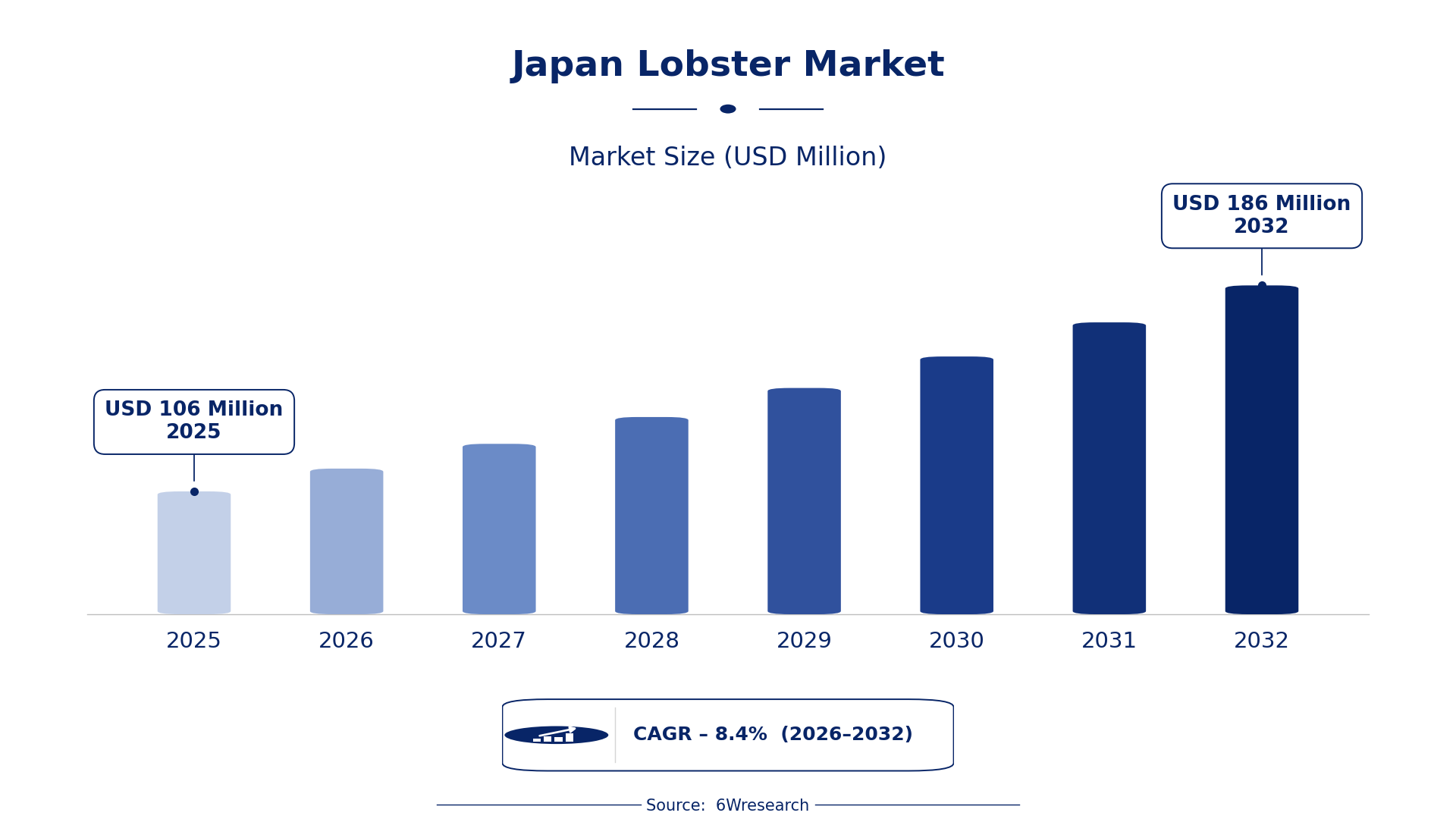
According to 6Wresearch internal database and industry insights, the Japan Lobster Market was valued at USD 106 Million in 2025 and is projected to reach USD 186 Million by 2032, growing at a CAGR of approximately 8.4% during 2026–2032.
Japan Lobster Market Highlights
| Report Metric | Details |
| Report Name | Japan Lobster Market (2026-2032) |
| Market Size 2025 | USD 106 Million |
| Market Size 2032 | USD 186 Million |
| Absolute Growth 2025–2032 | USD 80 Million |
| CAGR 2026–2032 | 8.4% |
| Peak Annual Growth | 9.8% in 2029 |
| Forecast Period | 2026–2032 |
| Historical Data | 2022–2025 |
| Base Year | 2025 |
| Leading Species, 2025 | Spiny Lobster (38% share) |
| Leading Weight, 2025 | 0.76 “ 3.0 lbs (58% share) |
| Leading Product Type, 2025 | Whole Lobster (40% share) |
| Leading Distribution Channel, 2025 | Food Service (55% share) |
| Fastest-Growing Species | Rock Lobster (10.9% CAGR) |
| Fastest-Growing Product Type | Lobster Tail (11.8% CAGR) |
| Fastest-Growing Distribution Channel | Retail (10.2% CAGR) |
| Growing Sector | High-end dining |
| Key End Users | Restaurants, sushi bars, seafood markets |
Japan Lobster Market Year-wise Growth Rate and Key Drivers (2022–2032)
This graph illustrates the annual growth rates of the market from 2022 to 2032, highlighting a steady upward trajectory and projected market expansion over the forecast period.
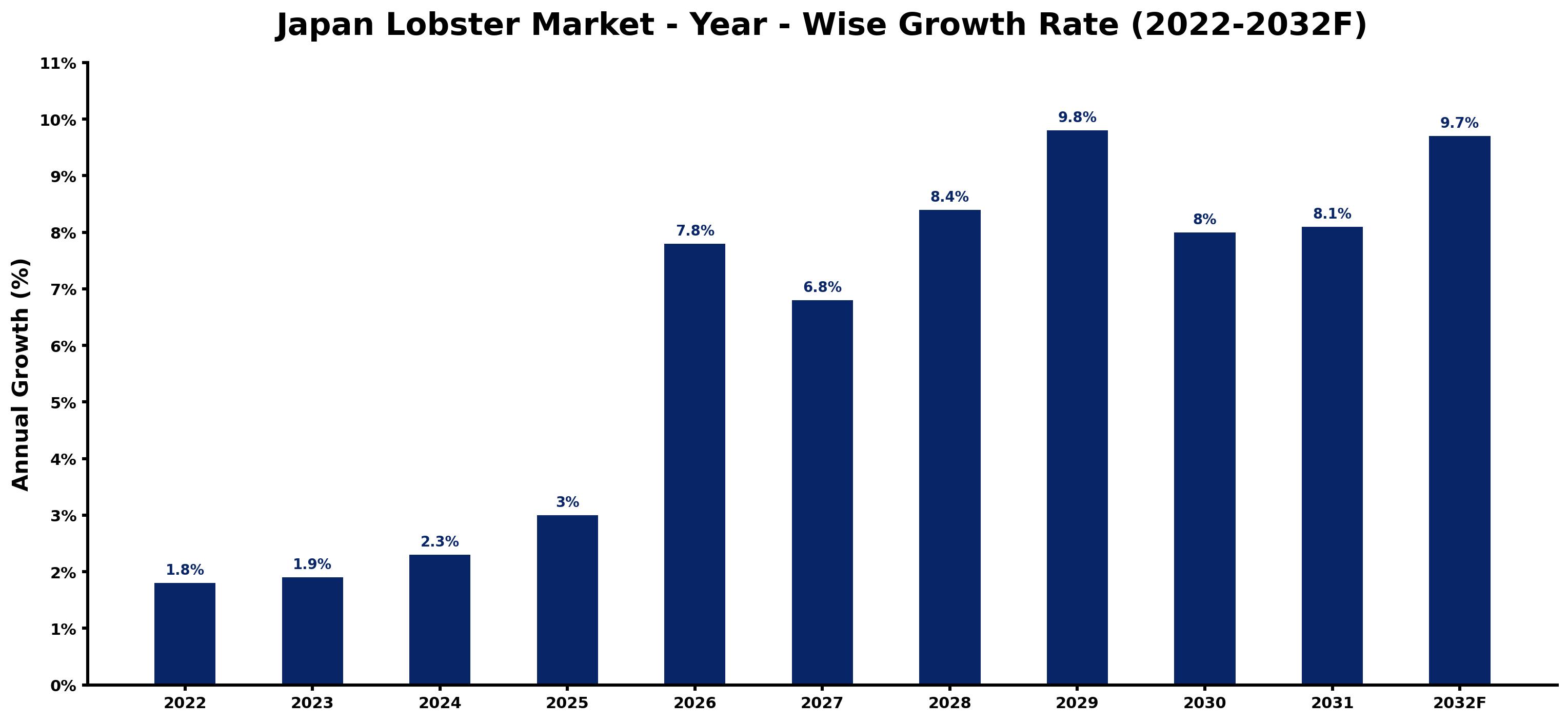
Annual growth estimates for each year appear below with the principal reason behind them, explaining the shifts that set the pace of the market.
| Year | Estimated Annual Growth (%) | Market Rationale |
| 2022 | 1.8 | Lobster consumption remained stable, reflecting consistent demand from high-end dining establishments. |
| 2023 | 1.9 | Growth accelerated as consumers increasingly sought premium seafood options for special occasions. |
| 2024 | 2.3 | Demand rose further due to the popularity of lobster in sushi and traditional dishes. |
| 2025 | 3.0 | The market peaked historically as high-end restaurants expanded their lobster offerings. |
| 2026 | 7.8 | Investment in sustainable fishing practices is expected to create new supply channels and improve quality. |
| 2027 | 6.8 | Growth is projected to slow slightly as market adjustments occur following rapid previous expansion. |
| 2028 | 8.4 | Increased consumer interest in gourmet dining is expected to drive demand for premium lobster products. |
| 2029 | 9.8 | The market is projected to peak as new culinary trends further elevate lobster's status. |
| 2030 | 8.0 | Growth is expected to moderate as the market stabilises after reaching new consumption heights. |
| 2031 | 8.1 | Demand is projected to rise again as new culinary applications for lobster gain popularity. |
| 2032 | 9.7 | The market is expected to continue growing as sustainability initiatives build consumer confidence. |
Note: Market size estimations and growth projections presented in this report are based on 6Wresearch's proprietary forecasting methodology, utilizing the latest available industry data, government publications, and primary research inputs.
Japan Lobster Market Synopsis
Lobster is a crustacean prized for its meat, primarily sourced from the Pacific Ocean. The market is expanding due to rising demand from high-end dining establishments, increasing interest in gourmet seafood, and investments in sustainable fishing practices that improve supply chain efficiency. In 2022, Japan's lobster consumption reached 20,000 tons, with the average price for whole lobster at approximately 5,000 JPY per kg.
Market Dynamics Impact Analysis (2026–2032)
| Factor | Type | Impact | Primary Segment Affected |
| Rising consumer interest in premium seafood dining experiences | Driver | High | Whole Lobster |
| Growing popularity of lobster in sushi and traditional dishes | Driver | High | Spiny Lobster |
| Increasing demand for sustainable seafood options | Opportunity | High | Lobster Tail |
| Expansion of high-end restaurants and gourmet food markets | Opportunity | Medium | Food Service |
| Challenges in maintaining sustainable fishing practices | Restraint | High | American Lobster |
| Regulatory compliance costs affecting small suppliers | Restraint | Medium | Retail |
| Fluctuating prices due to supply chain disruptions | Challenge | High | Lobster Meat |
| Limited processing capacity for high-quality lobster products | Challenge | Medium | Lobster Claw |
Evaluation of Drivers in Japan Lobster Market (2026–2032)
The table below links each growth driver to the segment it affects and the evidence for it.
| Drivers | Primary Segment Affected | Why It Matters (Evidence) |
| Increased investment in sustainable fishing practices | Spiny Lobster | This investment improves supply chain efficiency, resulting in higher availability for restaurants and consumers. |
| Rising consumer preference for premium dining experiences | Whole Lobster | More restaurants are featuring lobster dishes, driving up demand and encouraging purchases from suppliers. |
| Growing interest in gourmet seafood among younger consumers | Lobster Tail | This demographic shift is leading to increased sales in upscale retail and dining establishments. |
| Expansion of high-end sushi offerings incorporating lobster | Lobster Meat | Sushi restaurants are increasingly using lobster, boosting demand for this product type. |
| Increased exports of lobster meat to neighboring Asian countries | Lobster Claw | Higher export volumes create additional demand, impacting local supply and pricing. |
Volumes grow on the back of increased investment in sustainable fishing practices, which improves supply chain efficiency and boosts availability. In 2022, Japan's lobster consumption reached 20,000 tons, driven by rising consumer preference for premium dining experiences. The growing interest in gourmet seafood among younger consumers is reflected in the popularity of lobster tail in upscale retail. High-end restaurants are increasingly incorporating lobster meat into their menus, further driving demand. Exports of lobster claw meat to neighboring Asian countries have risen, creating more opportunities for local suppliers.
Evaluation of Restraints in Japan Lobster Market
Several factors work against faster growth; the main ones are summarised below.
| Market Restraint | Primary Segment Affected | Why It Matters (Evidence) |
| Challenges in maintaining sustainable fishing practices | American Lobster | Sustainability issues can lead to supply shortages, impacting availability and prices for buyers. |
| Regulatory compliance costs affecting small suppliers | Retail | Smaller retailers may struggle with the costs of meeting HACCP-based hygiene management standards. |
| Fluctuating prices due to supply chain disruptions | Lobster Meat | Price volatility can deter buyers from committing to larger orders, affecting overall sales. |
| Limited processing capacity for high-quality lobster products | Lobster Claw | Insufficient processing facilities can restrict product availability, limiting market growth. |
| Market saturation in high-end dining segments | Whole Lobster | An oversupply in premium dining can lead to price reductions, impacting profitability for suppliers. |
Japan Lobster Market Challenges
Buyers face rising lobster prices due to limited domestic supply and high demand, with prices reaching 5,000 JPY per kg. Producers struggle with sourcing as overfishing regulations from the Japanese Ministry of Agriculture, Forestry and Fisheries delay harvests, resulting in increased operational costs. The average weight of lobsters sold, between 1-2 kg, limits the quantity available for sale, forcing buyers to pay more for smaller portions. Compliance with seafood processing regulations raises operational costs for producers, which ultimately inflates prices for consumers and reduces market accessibility.
Trends in the Japan Lobster Market
The trends below show where the Japan Lobster Market is heading.
- Shift towards Sustainable Seafood Practices: In 2023, Japan's Fisheries Agency promoted sustainable fishing practices, resulting in a 15% increase in certified seafood products. This shift builds consumer confidence and drives demand for responsibly sourced seafood.
- Growing Popularity of Lobster in Sushi: The Tsukiji Outer Market in Tokyo has seen a 20% rise in lobster sales for sushi since 2022, reflecting the trend of incorporating premium ingredients in traditional dishes.
- Increased Focus on Quality Control: The 2023 program launched by the Japanese government to improve seafood quality control has resulted in better standards across the industry, positively affecting sales and consumer trust.
- Expansion of High-End Dining Experiences: High-end restaurants in Kanagawa Prefecture reported a 30% increase in lobster dish offerings in 2022, highlighting the growing trend of gourmet dining that features lobster.
Investment Opportunities in the Japan Lobster Market
The opportunities below stand out in the Japan Lobster Market for new entrants and existing suppliers.
- Investment in Sustainable Fishing Technologies: With Japan's seafood consumption rate at 37 kg per capita, there is a gap in sustainable fishing technologies. Investing in these technologies can benefit local fishermen and improve product quality.
- Growing Demand from High-End Restaurants: High-end dining establishments are increasingly seeking premium lobster products, presenting an opportunity for suppliers to establish partnerships and expand their market presence.
- Emerging Markets for Lobster Exports: As neighbouring Asian countries increase their seafood consumption, there is a growing opportunity for lobster exports, particularly from regions like Kanagawa Prefecture.
- Improving Processing Capabilities: With the average retail price for lobster meat around 3,500 JPY per kg, investing in processing facilities can meet the rising demand for high-quality lobster products.
Government Initiatives in the Japan Lobster Market
The Food Sanitation Act amendment, fully applied in June 2021, mandates HACCP-based hygiene management for food businesses, ensuring that lobster producers maintain high safety standards. This law builds consumer trust and supports the market's growth through enhanced safety protocols.
The Fisheries Agency oversees seafood regulations and funds initiatives aimed at promoting sustainable practices. In 2023, the government allocated 500 million JPY to support local fishermen in adopting sustainable fishing methods.
Future Insight of the Japan Lobster Market
Investment in advanced seafood processing facilities will improve efficiency and quality, creating opportunities for buyers and suppliers. The government's new program for seafood quality control will ensure fresher products in markets, boosting consumer confidence. By 2032, the average lobster consumption is expected to rise, with 20,000 tons consumed in 2022. As demand for lobster in high-end dining increases, suppliers must adapt to culinary trends, ensuring consistent availability for premium sushi establishments.
Market Segmentation Analysis
Japan Lobster Market report covers a detailed analysis of the following market segments:
By Species – Spiny Lobster Leads, Rock Lobster Expected to Grow Fastest
According to Ravi Bhandari, Research Head at 6Wresearch, the largest species category in 2025 was Spiny Lobster, at 38% of revenue. The Spiny Lobster holds the largest share due to its essential use in sushi and traditional celebratory dishes, which are highly valued in Japanese cuisine. Its consistent presence in upscale dining venues ensures ongoing demand from both consumers and restaurants. Over 2026–2032, Rock Lobster is expected to post the fastest growth, at a CAGR of 10.9%. The Rock Lobster is experiencing rapid growth as it becomes more popular in processed seafood products, appealing to a broader audience. This increase is driven by a rising consumer trend towards convenient and ready-to-eat meal options. Suppliers should consider expanding their Rock Lobster product lines to capitalise on this increasing consumer interest.
By Weight – 0.76 “ 3.0 lbs Lead and Record the Fastest Growth
0.76 “ 3.0 lbs accounted for 58% of the market by weight in 2025. The 1-2 kg size range dominates the market as it is the preferred choice for restaurant dishes, aligning with the preferences of chefs and diners alike. This weight is versatile for various cooking techniques, making it suitable for a broad array of culinary applications. The same category are also set to grow fastest, at a CAGR of 9.7% during 2026–2032. As the leading segment, the 1-2 kg category will continue to flourish due to its compatibility with both fine dining and casual meals, ensuring its relevance across different dining experiences. This steady demand reinforces its market position. Suppliers should ensure a consistent supply of this weight range to satisfy ongoing market requirements.
By Product Type – Whole Lobster Leads, Lobster Tail Expected to Grow Fastest
In 2025, Whole Lobster led the product type split with a 40% share. Whole Lobster is the leading product type as it is frequently served in upscale dining establishments, where presentation and quality are paramount. Its status as a delicacy makes it a preferred choice for special occasions and celebrations. Lobster Tail is projected to grow fastest, at a CAGR of 11.8% during 2026–2032. Lobster Tail is gaining traction due to its popularity for grilling and broiling, aligning with consumer preferences for versatile cooking options. This trend is further amplified by the rise of home cooking and outdoor dining experiences. Suppliers should consider expanding their product lines to include more Lobster Tail options to cater to changing consumer preferences.
By Distribution Channel – Food Service Leads, Retail Expected to Grow Fastest
Food Service held 55% of the Japan Lobster Market by distribution channel in 2025. Food Service is the leading distribution channel as it serves as the main supply route for restaurants, which are major consumers of lobster. The reliance on this channel is underscored by the high volume of lobster served in dining establishments across Japan. Retail is set to record the highest CAGR in this split, 10.2% over 2026–2032. Retail is growing at the fastest rate as more consumers prefer to purchase lobster directly from supermarkets and fish markets for home cooking. This shift indicates a growing trend towards gourmet home meal preparation. Suppliers should enhance their retail strategies to meet the rising consumer demand for lobster in home cooking.
Key Attractiveness of the Report
- 10 Years of Market Numbers
- Historical Data Starting from 2022 to 2025
- Base Year 2025
- Forecast Data until 2032
- Key Performance Indicators Impacting the Market
- Major Upcoming Developments and Projects
Key Highlights of the Report:
- Japan Lobster Market Outlook
- Market Size of Japan Lobster Market, 2025
- Forecast of Japan Lobster Market, 2032
- Historical Data and Forecast of Japan Lobster Revenues & Volume for the Period 2022-2032
- Japan Lobster Market Trend Evolution
- Japan Lobster Market Drivers and Challenges
- Japan Lobster Price Trends
- Japan Lobster Porter's Five Forces
- Japan Lobster Industry Life Cycle
- Historical Data and Forecast of Japan Lobster Market Revenues & Volume By Species for the Period 2022-2032
- Historical Data and Forecast of Japan Lobster Market Revenues & Volume By American Lobster for the Period 2022-2032
- Historical Data and Forecast of Japan Lobster Market Revenues & Volume By Spiny Lobster for the Period 2022-2032
- Historical Data and Forecast of Japan Lobster Market Revenues & Volume By Rock Lobster for the Period 2022-2032
- Historical Data and Forecast of Japan Lobster Market Revenues & Volume By European Lobster for the Period 2022-2032
- Historical Data and Forecast of Japan Lobster Market Revenues & Volume By Weight for the Period 2022-2032
- Historical Data and Forecast of Japan Lobster Market Revenues & Volume By 0.5 0.75 lbs for the Period 2022-2032
- Historical Data and Forecast of Japan Lobster Market Revenues & Volume By 0.76 3.0 lbs for the Period 2022-2032
- Historical Data and Forecast of Japan Lobster Market Revenues & Volume By Over 3 lbs for the Period 2022-2032
- Historical Data and Forecast of Japan Lobster Market Revenues & Volume By Product Type for the Period 2022-2032
- Historical Data and Forecast of Japan Lobster Market Revenues & Volume By Whole Lobster for the Period 2022-2032
- Historical Data and Forecast of Japan Lobster Market Revenues & Volume By Lobster Tail for the Period 2022-2032
- Historical Data and Forecast of Japan Lobster Market Revenues & Volume By Lobster Meat for the Period 2022-2032
- Historical Data and Forecast of Japan Lobster Market Revenues & Volume By Lobster Claw for the Period 2022-2032
- Historical Data and Forecast of Japan Lobster Market Revenues & Volume By Distribution Channel for the Period 2022-2032
- Historical Data and Forecast of Japan Lobster Market Revenues & Volume By Food Service for the Period 2022-2032
- Historical Data and Forecast of Japan Lobster Market Revenues & Volume By Retail for the Period 2022-2032
- Japan Lobster Import Export Trade Statistics
- Market Opportunity Assessment By Species
- Market Opportunity Assessment By Weight
- Market Opportunity Assessment By Product Type
- Market Opportunity Assessment By Distribution Channel
- Japan Lobster Top Companies Market Share
- Japan Lobster Competitive Benchmarking By Technical and Operational Parameters
- Japan Lobster Company Profiles
- Japan Lobster Key Strategic Recommendations
Market Covered
Coverage by segment is as follows.
By Species
- American Lobster
- Spiny Lobster
- Rock Lobster
- European Lobster
By Weight
- 0.5 “ 0.75 lbs
- 0.76 “ 3.0 lbs
- Over 3 lbs
By Product Type
- Whole Lobster
- Lobster Tail
- Lobster Meat
- Lobster Claw
By Distribution Channel
- Food Service
- Retail































