Japan Location-based Virtual Reality (VR) Market Size & Growth Rate
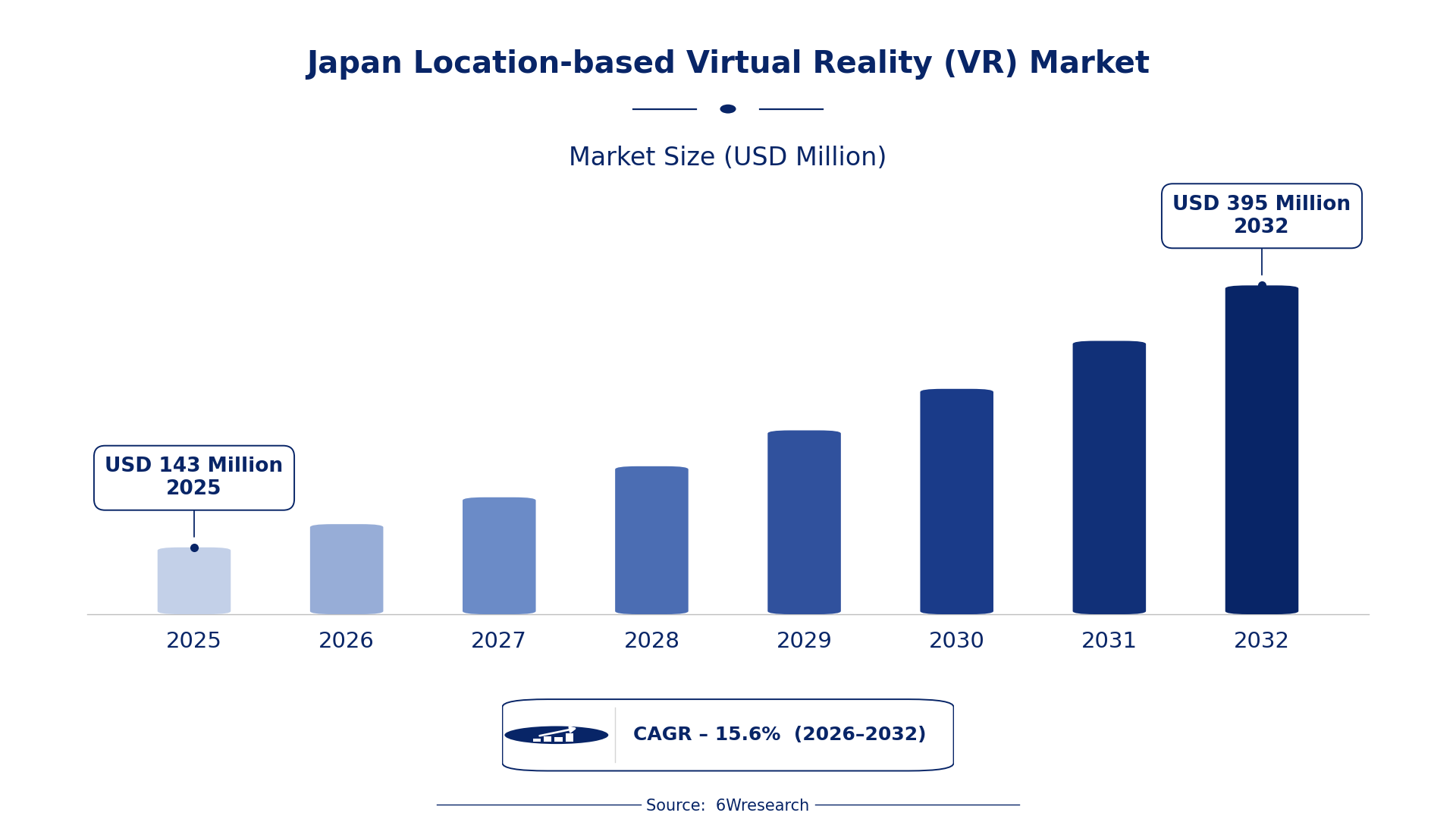
According to 6Wresearch internal database and industry insights, the Japan Location-based Virtual Reality (VR) Market was valued at USD 143 Million in 2025 and is projected to reach USD 395 Million by 2032, growing at a CAGR of approximately 15.6% during 2026–2032.
Japan Location-based Virtual Reality (VR) Market Highlights
| Report Metric | Details |
| Report Name | Japan Location-based Virtual Reality (VR) Market (2026-2032) |
| Market Size 2025 | USD 143 Million |
| Market Size 2032 | USD 395 Million |
| Absolute Growth 2025–2032 | USD 252 Million |
| CAGR 2026–2032 | 15.6% |
| Peak Annual Growth | 16.7% in 2032 |
| Forecast Period | 2026–2032 |
| Historical Data | 2022–2025 |
| Base Year | 2025 |
| Leading Product, 2025 | Hardware (57% share) |
| Leading Application, 2025 | VR Arcades (54% share) |
| Fastest-Growing Product | Software (17.8% CAGR) |
| Fastest-Growing Application | VR Theme Parks (20.5% CAGR) |
| Growing Sector | entertainment |
| Key End Users | entertainment venues, educational institutions, training centres |
Japan Location-based Virtual Reality (VR) Market Year-wise Growth Rate and Key Drivers (2022–2032)
This graph illustrates the annual growth rates of the market from 2022 to 2032, highlighting a steady upward trajectory and projected market expansion over the forecast period.
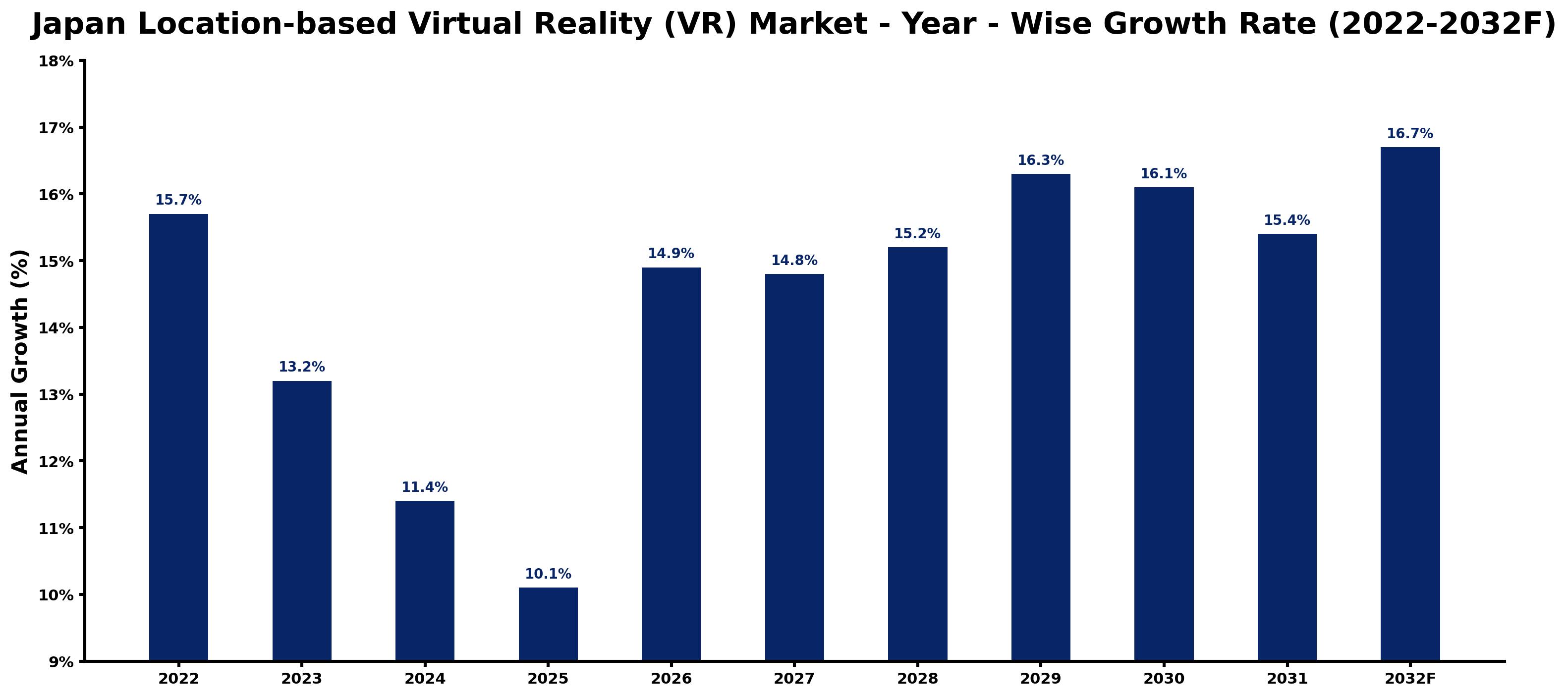
The table below sets out the estimated growth rate for each year and the main factor behind it.
| Year | Estimated Annual Growth (%) | Market Rationale |
| 2022 | 15.7 | The market experienced strong demand from entertainment venues and domestic users. |
| 2023 | 13.2 | Growth slowed due to market saturation in major urban areas like Tokyo and Osaka. |
| 2024 | 11.4 | Demand continued to slow as competition among VR arcades intensified. |
| 2025 | 10.1 | The market faced challenges with limited new technology adoption and user engagement. |
| 2026 | 14.9 | Growth is expected to rise as new VR experiences attract more visitors. |
| 2027 | 14.8 | The market will continue to grow as technology improvements enhance user experiences. |
| 2028 | 15.2 | Increased interest in VR theme parks will drive further growth in this year. |
| 2029 | 16.3 | Demand will rise as more VR content becomes available for various applications. |
| 2030 | 16.1 | The market will experience a slight slowdown as competition increases among venues. |
| 2031 | 15.4 | Growth will slow as the market matures and user preferences stabilise. |
| 2032 | 16.7 | Demand is expected to peak as advanced technology and experiences attract new users. |
Note: Market size estimations and growth projections presented in this report are based on 6Wresearch's proprietary forecasting methodology, utilizing the latest available industry data, government publications, and primary research inputs.
Japan Location-based Virtual Reality (VR) Market Synopsis
Location-based Virtual Reality (VR) provides immersive experiences through advanced hardware and software in designated venues. The Japan Location-based Virtual Reality (VR) Market is thriving, particularly in the arcade segment, with over 300 locations concentrated in Tokyo and Osaka. Domestic interest in entertainment and training simulations drives growth, alongside government support through initiatives like 'Cool Japan'. The anticipated rise in VR theme parks and content development will further stimulate demand, projecting substantial growth by 2032.
Market Dynamics Impact Analysis (2026–2032)
| Factor | Type | Impact | Primary Segment Affected |
| Increasing interest in immersive entertainment experiences | Driver | High | VR Arcades |
| Technological advancements in VR hardware and software | Driver | High | Hardware |
| Growing demand for educational and training applications | Opportunity | Medium | Software |
| Expansion of VR theme parks attracting more visitors | Opportunity | High | VR Theme Parks |
| Market saturation in major urban areas | Restraint | High | VR Arcades |
| High initial investment costs for new venues | Restraint | Medium | VR Theme Parks |
| Intense competition among existing VR arcades | Challenge | High | VR Arcades |
| Limited availability of cutting-edge VR content | Challenge | Medium | Software |
Evaluation of Drivers in Japan Location-based Virtual Reality (VR) Market (2026–2032)
These are the developments adding the most demand over the forecast period.
| Drivers | Primary Segment Affected | Why It Matters (Evidence) |
| Growing number of VR arcades | VR Arcades | The number of VR arcades in Japan reached over 300 in 2023, attracting more users to immersive experiences. |
| Advancements in VR hardware | Hardware | Improvements in VR headsets enhance user satisfaction, leading to increased purchases from entertainment venues. |
| Investment in VR content development | Software | The Japan Content Showcase program supports content creation, driving demand for immersive educational experiences. |
| Expansion of VR theme parks | VR Theme Parks | Tokyo hosts the largest VR theme park in Asia, attracting over 1 million visitors annually. |
| Government initiatives supporting VR technology | Software | The 'Cool Japan' initiative promotes VR development, encouraging more investments in immersive content. |
Spending rises because the number of VR arcades in Japan reached over 300 in 2023, attracting more users to engaging experiences. Advancements in VR hardware improve user satisfaction, which increases purchases from entertainment venues. Investment in VR content development drives demand for immersive educational applications. The expansion of VR theme parks, particularly in Tokyo, attracts over 1 million visitors annually, boosting overall market growth.
Evaluation of Restraints in Japan Location-based Virtual Reality (VR) Market
Several factors work against faster growth; the main ones are summarised below.
| Market Restraint | Primary Segment Affected | Why It Matters (Evidence) |
| Market saturation in major urban areas | VR Arcades | With over 300 VR arcades, competition limits growth potential in cities like Tokyo and Osaka. |
| High initial investment costs for new venues | VR Theme Parks | Setting up VR theme parks requires substantial capital, deterring new entrants in the market. |
| Intense competition among existing VR arcades | VR Arcades | The high number of arcades leads to price wars, affecting profitability for operators. |
| Limited availability of VR content | Software | A shortage of engaging content restricts user participation and repeat visits to VR venues. |
| Consumer hesitance towards new technologies | VR Theme Parks | Potential users may be reluctant to try VR experiences due to unfamiliarity with the technology. |
Japan Location-based Virtual Reality (VR) Market Challenges
Producers in the VR industry face high costs due to skills shortages, which delay content creation and extend project timelines by an average of six months. Supply chain disruptions for advanced technology components lead to increased costs, with some components experiencing price hikes of up to 20%. Buyers encounter rising operational costs as maintenance expenses for VR arcades now average 10 million yen annually. The concentration of VR arcades in Tokyo and Osaka limits access for buyers nationwide, delaying potential revenue generation and restricting market growth.
Trends in the Japan Location-based Virtual Reality (VR) Market
Below are the shifts with the largest effect on the Japan Location-based Virtual Reality (VR) Market.
- Shift from Traditional Entertainment to VR Experiences: Since 2022, consumers have increasingly preferred immersive VR experiences over traditional entertainment. The Tokyo Game Show prominently features VR technology, showcasing its growing popularity with over 300,000 attendees annually.
- Emergence of VR Theme Parks: In 2023, VR theme parks gained traction in Japan, with the largest park in Tokyo attracting over 1 million visitors. This shift indicates a growing demand for immersive entertainment experiences.
- Increase in VR Cinema Installations: In 2023, Japan's VR cinema installations rose by 15% from the previous year, reflecting a rising interest in immersive film experiences among consumers.
- Growth of Educational VR Applications: The demand for educational VR applications has surged, supported by initiatives like the Japan Content Showcase program, which funds content development for schools and training institutions.
Investment Opportunities in the Japan Location-based Virtual Reality (VR) Market
The opportunities below stand out in the Japan Location-based Virtual Reality (VR) Market for new entrants and existing suppliers.
- Gap in Advanced VR Content Development: With the VR content market projected to expand, there is a need for new software solutions. Educational institutions are seeking engaging VR content, presenting opportunities for developers.
- Investment in VR Theme Parks: The growing interest in immersive entertainment creates a demand for new VR theme parks. Investors can partner with local entertainment groups to establish new venues.
- Expansion of VR Arcade Offerings: The market for VR arcades is growing, with over 300 locations. Operators can diversify offerings by incorporating various experiences to attract a wider audience.
- Supply of High-Quality VR Hardware: The increasing number of VR arcades creates a demand for advanced hardware. Suppliers can enter the market by providing high-quality VR headsets and equipment.
Government Initiatives in the Japan Location-based Virtual Reality (VR) Market
The Industrial Standardization Act (1949; amended 2019) governs product standards for VR technology, ensuring that manufacturers comply with quality benchmarks. This law impacts producers by mandating rigorous testing and certification processes for VR hardware and software.
The Digital Agency, established in September 2021, leads the government's digital transformation efforts. It promotes the adoption of VR technology in various sectors, including tourism, by funding projects that improve user experiences in VR environments.
Future Insight of the Japan Location-based Virtual Reality (VR) Market
By 2032, a shift towards enhanced VR technology integration in tourism will drive suppliers to innovate. The Japan Content Showcase program will stimulate diverse content development, enriching buyer experiences. Compliance with ISO/IEC 30170 will standardise quality across the industry, ensuring reliability for users. VR cinema installations are expected to increase by 15%, expanding entertainment options for buyers and creating new opportunities for suppliers in immersive experiences.
Market Segmentation Analysis
Japan Location-based Virtual Reality (VR) Market report covers a detailed analysis of the following market segments:
By Product – Hardware Leads, Software Expected to Grow Fastest
According to Shubham Padhi, Research Analyst at 6Wresearch, Hardware held 57% of the Japan Location-based Virtual Reality (VR) Market by product in 2025. Hardware holds the largest share in Japan due to its necessity for VR setups, with over 300 VR arcades relying on it for immersive experiences. The concentration of these venues in major cities like Tokyo and Osaka highlights the strong demand for quality hardware in the entertainment sector. Software is set to record the highest CAGR in this split, 17.8% over 2026–2032. Software is growing rapidly as VR arcades increasingly seek engaging content, with initiatives like the Japan Content Showcase program driving development. As the hardware market expands, the need for innovative software solutions will continue to rise, further widening the gap with hardware. Suppliers must focus on creating advanced software to meet the increasing demand in the VR market.
By Application – VR Arcades Lead, VR Theme Parks Expected to Grow Fastest
With 54% of application revenue in 2025, VR Arcades was the largest category. VR Arcades dominate the market as they are the main venues for location-based VR experiences, attracting large audiences in urban areas such as Tokyo. The presence of over 300 VR arcades illustrates their established popularity and consistent customer engagement within the entertainment landscape. Over 2026–2032, VR Theme Parks are expected to post the fastest growth, at a CAGR of 20.5%. VR Theme Parks are experiencing rapid growth, driven by their ability to draw substantial visitor numbers and provide unique entertainment, exemplified by Tokyo's leading VR theme park that attracts over 1 million visitors each year. This trend indicates a shift towards more immersive and expansive VR experiences. Buyers should consider investing in VR theme park experiences to capitalise on the growing interest in immersive entertainment.
Key Attractiveness of the Report
- 10 Years of Market Numbers
- Historical Data Starting from 2022 to 2025
- Base Year 2025
- Forecast Data until 2032
- Key Performance Indicators Impacting the Market
- Major Upcoming Developments and Projects
Key Highlights of the Report:
- Japan Location-based Virtual Reality (VR) Market Outlook
- Market Size of Japan Location-based Virtual Reality (VR) Market, 2025
- Forecast of Japan Location-based Virtual Reality (VR) Market, 2032
- Historical Data and Forecast of Japan Location-based Virtual Reality (VR) Revenues & Volume for the Period 2022-2032
- Japan Location-based Virtual Reality (VR) Market Trend Evolution
- Japan Location-based Virtual Reality (VR) Market Drivers and Challenges
- Japan Location-based Virtual Reality (VR) Price Trends
- Japan Location-based Virtual Reality (VR) Porter's Five Forces
- Japan Location-based Virtual Reality (VR) Industry Life Cycle
- Historical Data and Forecast of Japan Location-based Virtual Reality (VR) Market Revenues & Volume By Product for the Period 2022-2032
- Historical Data and Forecast of Japan Location-based Virtual Reality (VR) Market Revenues & Volume By Hardware for the Period 2022-2032
- Historical Data and Forecast of Japan Location-based Virtual Reality (VR) Market Revenues & Volume By Software for the Period 2022-2032
- Historical Data and Forecast of Japan Location-based Virtual Reality (VR) Market Revenues & Volume By Application for the Period 2022-2032
- Historical Data and Forecast of Japan Location-based Virtual Reality (VR) Market Revenues & Volume By VR Arcades for the Period 2022-2032
- Historical Data and Forecast of Japan Location-based Virtual Reality (VR) Market Revenues & Volume By VR Theme Parks for the Period 2022-2032
- Historical Data and Forecast of Japan Location-based Virtual Reality (VR) Market Revenues & Volume By VR Cinemas for the Period 2022-2032
- Japan Location-based Virtual Reality (VR) Import Export Trade Statistics
- Market Opportunity Assessment By Product
- Market Opportunity Assessment By Application
- Japan Location-based Virtual Reality (VR) Top Companies Market Share
- Japan Location-based Virtual Reality (VR) Competitive Benchmarking By Technical and Operational Parameters
- Japan Location-based Virtual Reality (VR) Company Profiles
- Japan Location-based Virtual Reality (VR) Key Strategic Recommendations
Market Covered
Coverage by segment is as follows.
By Product
- Hardware
- Software
By Application
- VR Arcades
- VR Theme Parks
- VR Cinemas































