Japan Marine Plywood Market Import Shipment by Countries (Top 5) & Competition (HHI)
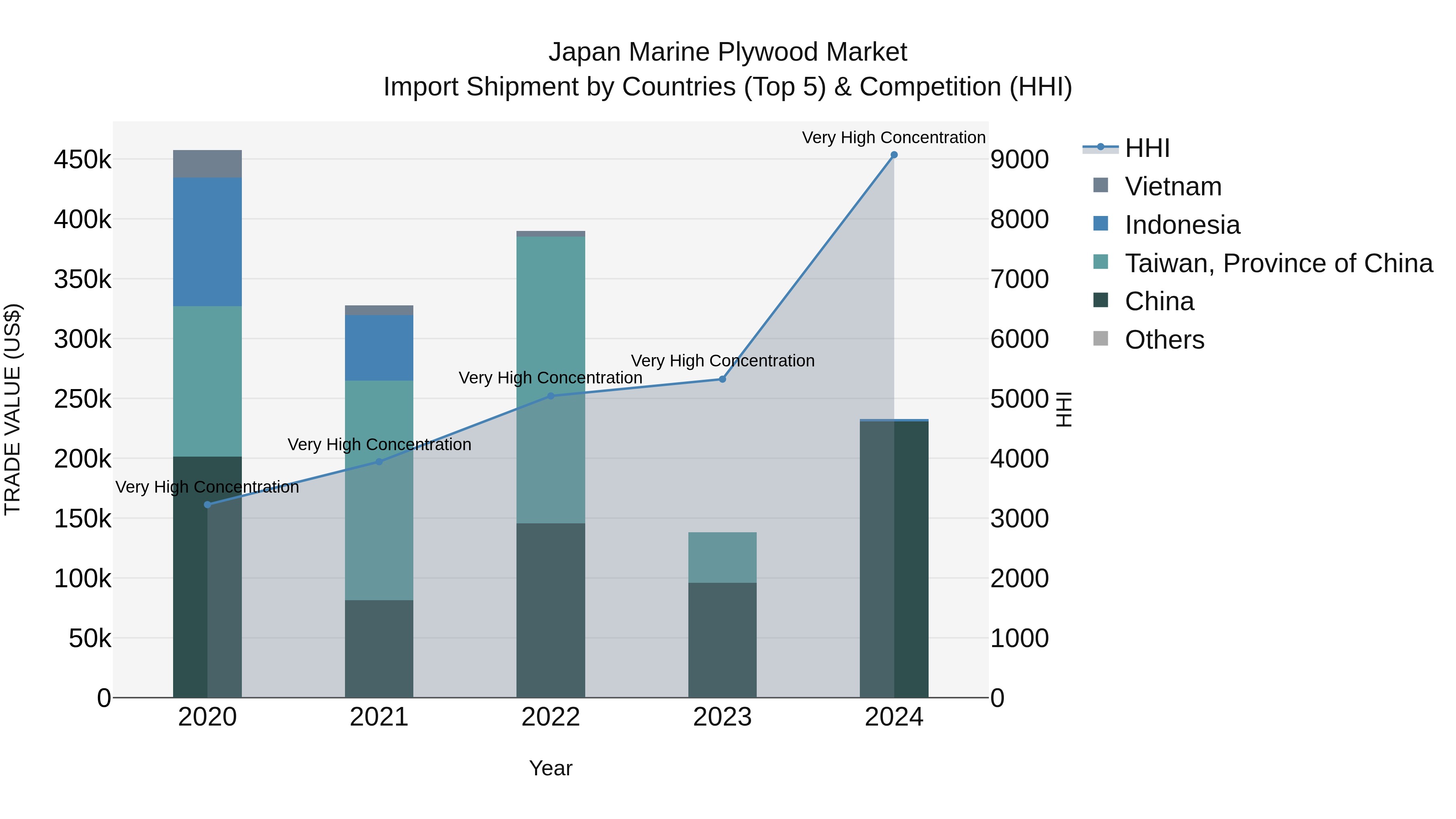
Japan's marine plywood import market in 2024 continues to see a dominance of key players like China, Indonesia, Taiwan, Province of China, and Vietnam. Despite a high concentration level indicated by the Herfindahl-Hirschman Index (HHI), the industry experienced a significant decline with a compound annual growth rate (CAGR) of -15.54% from 2020 to 2024. However, there was a notable rebound in growth in 2024 with a growth rate of 68.52% compared to the previous year, signaling potential opportunities and shifts in the market dynamics.
Japan Marine Plywood Market Overview
The Japan Marine Plywood Market is a key segment within the country`s plywood industry, primarily driven by the robust demand from the construction and marine industries. With Japan being an island nation, there is a high requirement for marine plywood for shipbuilding, boat construction, and other marine applications. The market is characterized by the presence of both domestic manufacturers and international players offering a wide range of marine plywood products, including different grades and sizes to cater to various end-user requirements. Sustainability and environmental concerns are gaining importance in the market, leading to the adoption of eco-friendly practices and materials. The market is expected to witness steady growth in the coming years, supported by infrastructure development projects and the increasing focus on quality and durability in construction and marine applications.
Japan Marine Plywood Market Trends
The Japan Marine Plywood Market is experiencing several key trends. One prominent trend is the increasing demand for sustainable and eco-friendly marine plywood products, driven by growing environmental concerns and regulations. Manufacturers are focusing on developing plywood using certified sustainable wood sources and eco-friendly adhesives. Another trend is the rising popularity of high-performance marine plywood with enhanced strength, durability, and resistance to water damage, particularly in the construction of marine vessels and structures. Additionally, there is a growing emphasis on product innovation and customization to meet the specific requirements of different applications in the marine industry. Overall, the Japan Marine Plywood Market is witnessing a shift towards sustainable practices, advanced technology, and tailored solutions to meet the evolving needs of customers.
Japan Marine Plywood Market Challenges
In the Japan Marine Plywood Market, challenges include increasing competition from cheaper imported plywood products, fluctuating raw material costs, and stringent regulations related to sustainable sourcing and environmental concerns. The market is also impacted by changing consumer preferences towards alternative materials like plastic and composite wood products, posing a threat to traditional marine plywood manufacturers. Additionally, the high cost of production and limited availability of skilled labor further add to the challenges faced by companies operating in this market. To stay competitive, companies in the Japan Marine Plywood Market need to focus on innovation, sustainability, and cost-efficiency while adapting to evolving market trends and regulations.
Japan Marine Plywood Market Investment Opportunities
The Japan Marine Plywood Market offers promising investment opportunities due to the increasing demand for marine-grade plywood in the construction and marine industries. With Japan being a country surrounded by water and having a strong maritime tradition, the need for high-quality, durable plywood for boat building, marine structures, and waterfront infrastructure is substantial. Investing in companies that specialize in manufacturing marine plywood or supply raw materials for its production could be lucrative. Additionally, with a growing focus on sustainable and eco-friendly practices, investing in companies that offer environmentally friendly marine plywood solutions could be a strategic move in this market. Overall, the Japan Marine Plywood Market presents opportunities for investors to capitalize on the country`s robust marine industry and construction sector.
Japan Marine Plywood Market Government Policy
The Japanese government has implemented strict regulations and standards for the production and sale of marine plywood in order to ensure quality and safety in the market. These regulations cover aspects such as the sourcing of raw materials, manufacturing processes, and product testing requirements to meet the stringent industry standards. Additionally, the government has set guidelines for sustainable forestry practices to promote the responsible sourcing of timber used in marine plywood production. Compliance with these regulations is monitored closely by regulatory bodies to uphold the integrity of the market and protect consumer interests. Overall, government policies in Japan aim to maintain a high level of quality and sustainability in the marine plywood industry through stringent regulations and oversight.
Japan Marine Plywood Market Future Outlook
The Japan Marine Plywood Market is expected to witness steady growth in the coming years, driven by the increasing demand for high-quality marine plywood in shipbuilding and construction industries. The market is likely to benefit from the growing maritime trade activities and investments in infrastructure development projects in Japan. Additionally, the rising awareness about the benefits of marine plywood, such as its durability, water resistance, and structural strength, is anticipated to further boost market growth. However, factors such as fluctuating raw material prices and stringent environmental regulations may pose challenges to market expansion. Overall, with the continuous advancements in plywood manufacturing technologies and the focus on sustainable practices, the Japan Marine Plywood Market is projected to show promising growth prospects in the foreseeable future.
Key Highlights of the Report:
- Japan Marine Plywood Market Outlook
- Market Size of Japan Marine Plywood Market, 2024
- Forecast of Japan Marine Plywood Market, 2031
- Historical Data and Forecast of Japan Marine Plywood Revenues & Volume for the Period 2021- 2031
- Japan Marine Plywood Market Trend Evolution
- Japan Marine Plywood Market Drivers and Challenges
- Japan Marine Plywood Price Trends
- Japan Marine Plywood Porter's Five Forces
- Japan Marine Plywood Industry Life Cycle
- Historical Data and Forecast of Japan Marine Plywood Market Revenues & Volume By Application for the Period 2021- 2031
- Historical Data and Forecast of Japan Marine Plywood Market Revenues & Volume By Marine Applications for the Period 2021- 2031
- Historical Data and Forecast of Japan Marine Plywood Market Revenues & Volume By Non-Marine Applications for the Period 2021- 2031
- Japan Marine Plywood Import Export Trade Statistics
- Market Opportunity Assessment By Application
- Japan Marine Plywood Top Companies Market Share
- Japan Marine Plywood Competitive Benchmarking By Technical and Operational Parameters
- Japan Marine Plywood Company Profiles
- Japan Marine Plywood Key Strategic Recommendations






































