Japan Medical Foods For Orphan Diseases Market Size & Growth Rate
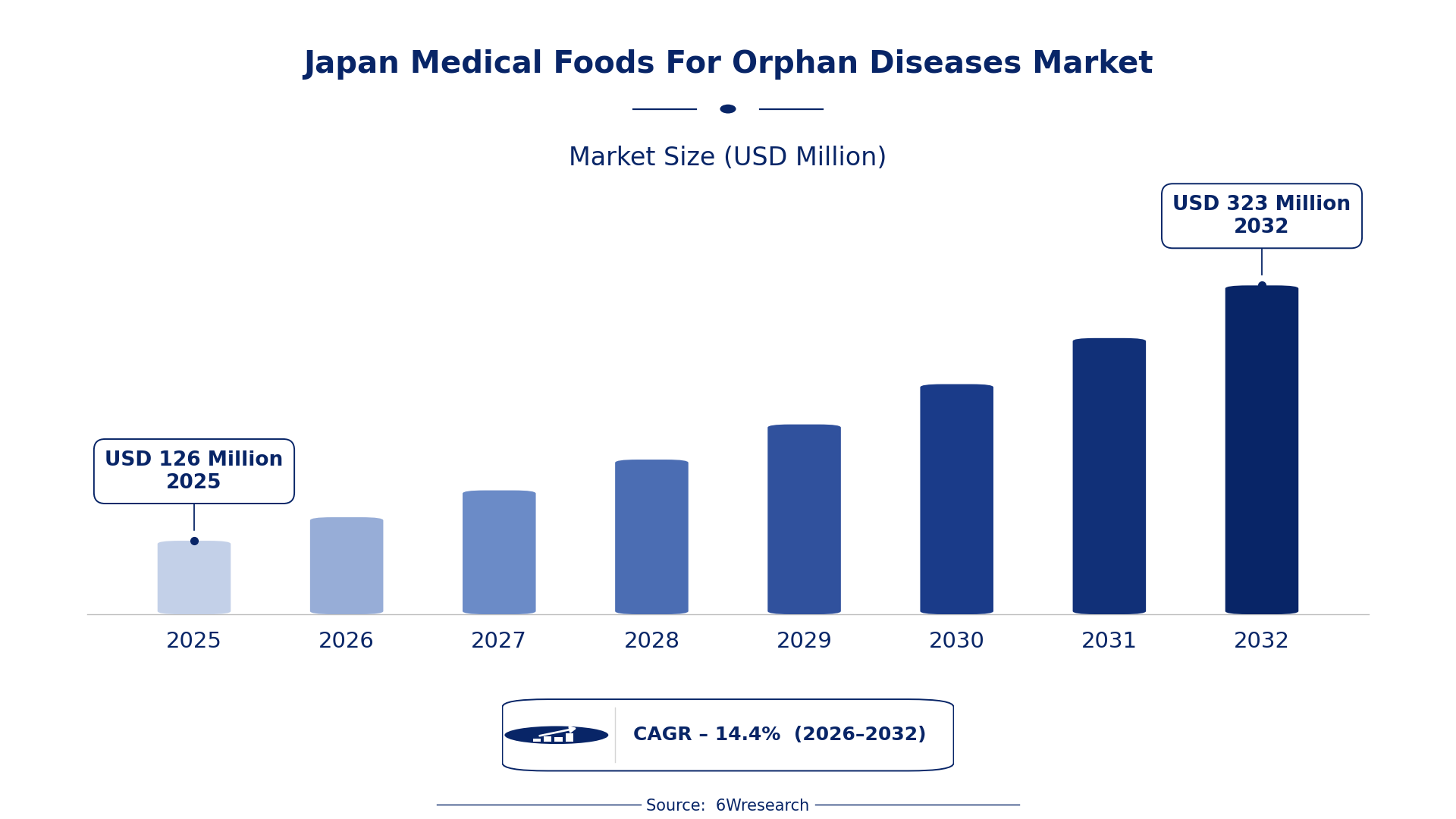
According to 6Wresearch internal database and industry insights, the Japan Medical Foods For Orphan Diseases Market was valued at USD 126 Million in 2025 and is projected to reach USD 323 Million by 2032, growing at a CAGR of approximately 14.4% during 2026–2032.
Japan Medical Foods For Orphan Diseases Market Highlights
| Report Metric | Details |
| Report Name | Japan Medical Foods For Orphan Diseases Market (2026-2032) |
| Market Size 2025 | USD 126 Million |
| Market Size 2032 | USD 323 Million |
| Absolute Growth 2025–2032 | USD 197 Million |
| CAGR 2026–2032 | 14.4% |
| Peak Annual Growth | 16.8% in 2032 |
| Forecast Period | 2026–2032 |
| Historical Data | 2022–2025 |
| Base Year | 2025 |
| Leading Route of Administration, 2025 | Enteral (61% share) |
| Leading Product, 2025 | Liquid (53% share) |
| Leading Application, 2025 | Phenylketonuria (49% share) |
| Leading Sales Channel, 2025 | Institutional Sales (50% share) |
| Fastest-Growing Product | Powder (20.0% CAGR) |
| Fastest-Growing Application | Tyrosinemia (20.1% CAGR) |
| Fastest-Growing Sales Channel | Online Sales (18.5% CAGR) |
| Growing Sector | Healthcare |
| Key End Users | Hospitals, Clinics, Pediatric Facilities, Healthcare Providers |
Japan Medical Foods For Orphan Diseases Market Year-wise Growth Rate and Key Drivers (2022–2032)
This graph illustrates the annual growth rates of the market from 2022 to 2032, highlighting a steady upward trajectory and projected market expansion over the forecast period.
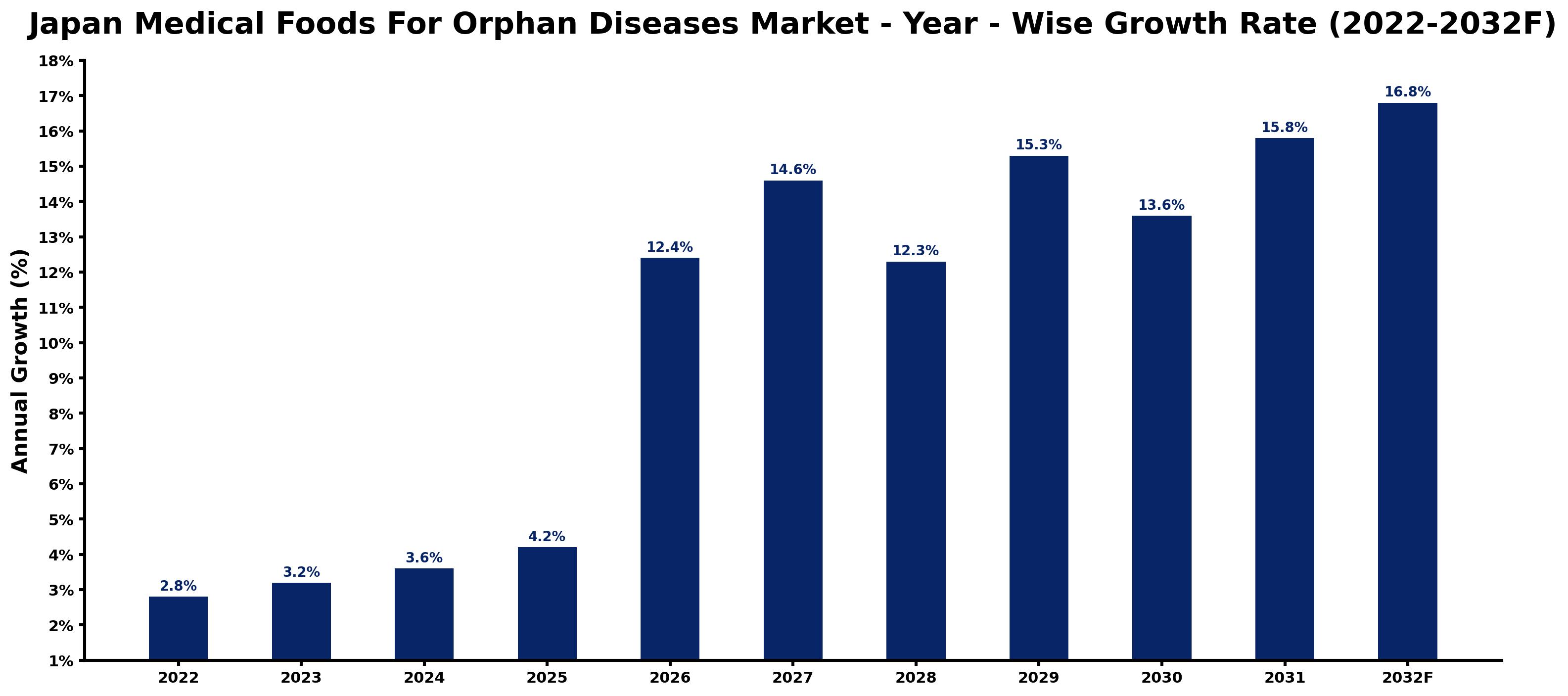
Annual growth estimates for each year appear below with the principal reason behind them, explaining the shifts that set the pace of the market.
| Year | Estimated Annual Growth (%) | Market Rationale |
| 2022 | 2.8 | The market experienced moderate growth, driven by increasing awareness of orphan diseases. |
| 2023 | 3.2 | Demand accelerated as more patients were diagnosed with metabolic disorders. |
| 2024 | 3.6 | Continued growth was supported by advancements in medical food formulations. |
| 2025 | 4.2 | The introduction of new products contributed to a higher growth rate. |
| 2026 | 12.4 | Investments in healthcare infrastructure are expected to create new market potential. |
| 2027 | 14.6 | Growth is projected to surge as hospitals expand their offerings for specialized nutrition. |
| 2028 | 12.3 | A slight slowdown is expected as market maturation begins to set in. |
| 2029 | 15.3 | Demand is anticipated to rebound with new treatment options becoming available. |
| 2030 | 13.6 | Growth is expected to moderate as the market adjusts to increased competition. |
| 2031 | 15.8 | A renewed focus on research and development will spur further growth. |
| 2032 | 16.8 | The market is projected to peak as new solutions address unmet dietary needs. |
Note: Market size estimations and growth projections presented in this report are based on 6Wresearch's proprietary forecasting methodology, utilizing the latest available industry data, government publications, and primary research inputs.
Japan Medical Foods For Orphan Diseases Market Synopsis
Medical foods for orphan diseases are specialized nutritional products designed to manage metabolic disorders, tailored to meet the unique dietary needs of patients with rare conditions. The Japan Medical Foods For Orphan Diseases Market is expanding due to rising patient populations and increased healthcare spending, with approximately JPY 46.7 trillion allocated for medical care in fiscal 2022. Growing awareness of conditions like phenylketonuria and tyrosinemia drives demand, particularly in hospitals and clinics, leading to investments in product development and distribution channels. This growth is supported by a strong focus on research and development, ensuring that patients have access to effective nutritional therapies.
Market Dynamics Impact Analysis (2026–2032)
| Factor | Type | Impact | Primary Segment Affected |
| Growing patient population diagnosed with metabolic disorders | Driver | High | Phenylketonuria |
| Increased healthcare expenditure on specialized nutrition | Driver | High | Enteral |
| Expansion of pediatric hospitals requiring enteral nutrition | Opportunity | High | Enteral |
| Rising awareness and advocacy for orphan diseases | Opportunity | High | Phenylketonuria |
| Regulatory hurdles for new product approvals | Restraint | High | Liquid |
| Limited availability of certain formulations in retail channels | Restraint | Medium | Pills |
| High production costs for specialized formulations | Challenge | High | Powder |
| Competition from alternative nutritional products | Challenge | Medium | Liquid |
Evaluation of Drivers in Japan Medical Foods For Orphan Diseases Market (2026–2032)
Demand rests on the following drivers, each shown with the segment it touches most.
| Drivers | Primary Segment Affected | Why It Matters (Evidence) |
| Increasing investments in healthcare infrastructure | Enteral | Japan's national medical care expenditure reached JPY 46.7 trillion in fiscal 2022, driving demand for enteral nutrition products in hospitals. |
| Rising prevalence of metabolic disorders | Phenylketonuria | Approximately 20,000 patients were diagnosed with phenylketonuria in 2023, increasing the need for specialized medical foods. |
| Growing adoption of liquid formulations | Liquid | Liquid formulations accounted for 60% of medical food sales in hospitals, appealing to patients for ease of consumption. |
| Expansion of pediatric healthcare facilities | Enteral | Pediatric hospitals primarily use enteral nutrition products, boosting demand for these specialized medical foods. |
| Support from medical associations for orphan disease research | Tyrosinemia | The Japan Society for Inherited Metabolic Disorders promotes awareness, increasing product demand for tyrosinemia management. |
Several shifts outside the market lift sales. The rising prevalence of metabolic disorders, with approximately 20,000 patients diagnosed with phenylketonuria in 2023, boosts demand for specialized medical foods. Increased healthcare expenditure, reaching JPY 46.7 trillion in fiscal 2022, supports investments in enteral nutrition products, particularly in pediatric hospitals. Expansion of pediatric healthcare facilities drives the adoption of enteral nutrition, while advocacy from medical associations increases awareness and research into orphan diseases, further stimulating demand.
Evaluation of Restraints in Japan Medical Foods For Orphan Diseases Market
The table below lists the restraints and the evidence behind each.
| Market Restraint | Primary Segment Affected | Why It Matters (Evidence) |
| Regulatory hurdles for new product approvals | Liquid | The complex approval process for medical foods can delay product launches, affecting availability in the market. |
| Limited availability of certain formulations in retail channels | Pills | Pills are less common due to difficulty in swallowing, limiting their reach to patients who need them. |
| High production costs for specialized formulations | Powder | The cost of producing tailored medical foods can restrict market entry for smaller manufacturers. |
| Stringent quality control requirements | Enteral | Compliance with ISO 22000 standards increases production complexity and costs for enteral nutrition products. |
| Market fragmentation with numerous small players | Phenylketonuria | The presence of many small manufacturers can lead to inconsistent quality and supply issues. |
Japan Medical Foods For Orphan Diseases Market Challenges
Producers struggle with outdated technology, which hampers their ability to develop effective formulations for rare diseases. High research and development costs in Japan lead to delayed product launches, limiting options for hospitals. Importers face regulatory challenges, as compliance with the Ministry of Health, Labour and Welfare's guidelines can take up to six months, raising costs for distributors. Buyers encounter fierce competition among hospitals for limited medical food supplies, which can drive prices up by 15%, complicating access to necessary treatments for clinics. Skills shortages in specialised nutrition prolong training periods for staff, negatively impacting service delivery.
Trends in the Japan Medical Foods For Orphan Diseases Market
Four trends stand out in the Japan Medical Foods For Orphan Diseases Market.
- Shift from Retail to Institutional Sales: In Japan, there is a noticeable shift from retail to institutional sales channels for medical foods, particularly in hospitals. In 2023, institutional sales accounted for 50% of the market, reflecting the growing reliance on healthcare facilities for specialized nutrition.
- Transition from Powder to Liquid Formulations: The preference for liquid formulations over powder is increasing, as they offer easier administration for patients. Liquid formulations represented 60% of sales in hospitals in 2023, indicating a clear trend towards more user-friendly options.
- Emergence of Telehealth in Nutritional Management: Telehealth services are becoming more integrated into nutritional management for orphan diseases. This trend is supported by the growing number of patients diagnosed with conditions like phenylketonuria, which reached approximately 20,000 in 2023.
- Increased Focus on Pediatric Nutrition: Healthcare providers are prioritising pediatric nutrition, particularly in hospitals. The expansion of pediatric healthcare facilities is driving demand for enteral nutrition products, essential for young patients with metabolic disorders.
Investment Opportunities in the Japan Medical Foods For Orphan Diseases Market
Below are the investment opportunities with the strongest case in the Japan Medical Foods For Orphan Diseases Market.
- Local Partnerships for Distribution: Now is an ideal time for local partnerships to improve distribution of medical foods. The rising demand from hospitals, which accounted for 50% of sales in 2023, presents an opportunity for suppliers.
- Investment in Research for New Formulations: The growing patient population creates a pressing need for innovative formulations. Investing in research for new medical foods can cater to the approximately 20,000 patients diagnosed with phenylketonuria.
- Joint Ventures for Production: Joint ventures with local manufacturers can streamline production processes. With Japan's healthcare expenditure at JPY 46.7 trillion, there is ample funding for developing new products.
- Certification for International Standards: Obtaining ISO 22000 certification can improve market credibility. This is particularly relevant for producers aiming to enter the institutional sales channel, which is growing rapidly.
Government Initiatives in the Japan Medical Foods For Orphan Diseases Market
The regulatory environment for medical foods in Japan is shaped by several laws, including the Food Sanitation Act amendment of 2018, which introduced a positive list system for food utensils. Additionally, the Food Recycling Law of 2000 mandates food businesses to reduce waste, impacting how medical foods are produced and distributed. These regulations ensure that medical foods meet safety and quality standards, which is essential for patient care.
In 2022, the Japanese government launched a subsidy program aimed at orphan disease treatments, administered by the Ministry of Health, Labour and Welfare. This program allocates funding to support research and development of medical foods, facilitating access for patients with rare diseases. The Pharmaceuticals and Medical Devices Agency (PMDA) monitors compliance with these regulations, ensuring that medical foods are safe and effective for consumers.
Future Insight of the Japan Medical Foods For Orphan Diseases Market
New research initiatives focusing on metabolic disorders will emerge by 2032, driving the development of tailored nutritional products. Advances in production technology will streamline processes, reducing lead times for suppliers. A new subsidy programme for orphan disease treatments will improve access to essential medical foods for hospitals. By 2032, approximately 20,000 patients diagnosed with phenylketonuria will benefit from better nutritional therapies, enabling clinics to provide improved patient care and increasing the demand for specialised medical food formulations.
Market Segmentation Analysis
Japan Medical Foods For Orphan Diseases Market report covers a detailed analysis of the following market segments:
By Route of Administration – Enteral Leads and Records the Fastest Growth
According to Shubham Padhi, Research Analyst at 6Wresearch, with 61% of route of administration revenue in 2025, Enteral was the largest category. Enteral administration holds the largest share as it is essential for patients who cannot consume food orally, particularly in hospital settings. This method effectively addresses the unique dietary requirements of individuals with severe metabolic disorders, ensuring they receive the necessary nutrition. Its lead should widen, with a projected CAGR of 16.5% during 2026–2032, the highest in this split. The enteral route is poised for rapid growth due to an increasing number of diagnoses for conditions such as phenylketonuria, which necessitates specialised nutritional support. As awareness rises and more patients are diagnosed, the demand for enteral products will continue to strengthen, further solidifying its market position. Suppliers should focus on enhancing their enteral product offerings to meet the rising demands of healthcare facilities.
By Product – Liquid Leads, Powder Expected to Grow Fastest
Liquid took 53% of product revenue in 2025, more than any other category. Liquid formulations dominate the market as they are preferred for ease of consumption, especially among children with rare diseases. Their widespread use in hospitals contributes to their substantial market share. The quickest growth will come from Powder, forecast to expand at a CAGR of 20.0% between 2026 and 2032. Powder products are experiencing the fastest growth due to their flexibility in dosage and administration, appealing to caregivers managing complex dietary needs. This trend indicates a shift towards more adaptable nutritional solutions. Buyers may benefit from exploring a wider range of powder products to accommodate varying patient requirements.
By Application – Phenylketonuria Leads, Tyrosinemia Expected to Grow Fastest
The largest application category in 2025 was Phenylketonuria, at 49% of revenue. Phenylketonuria products lead the market as they are critical for managing dietary restrictions in affected individuals, with a notable patient population in Japan. Their established use in clinical settings reinforces their dominant position. Over 2026–2032, Tyrosinemia is expected to post the fastest growth, at a CAGR of 20.1%. Tyrosinemia products are growing quickly due to an increase in diagnosed cases, highlighting the need for specific nutritional interventions. This growth reflects a broader awareness and focus on rare metabolic disorders. Suppliers should consider investing in research and development for tyrosinemia products to capture the expanding market.
By Sales Channel – Institutional Sales Leads, Online Sales Expected to Grow Fastest
In 2025, Institutional Sales led the sales channel split with a 50% share. Institutional sales hold the largest share as they serve as the primary channel for hospitals and clinics, which are the main buyers of medical foods. This direct relationship with healthcare institutions guarantees a steady demand for these specialised products. Online Sales is set to record the highest CAGR in this split, 18.5% over 2026–2032. Online sales are experiencing rapid growth as they offer a convenient supplementary channel for patient access, particularly appealing to those seeking ease and flexibility in purchasing. This trend reflects a changing approach among caregivers and patients towards obtaining medical foods. Suppliers should invest in their online sales strategies to meet the increasing demand for accessible purchasing options.
Key Attractiveness of the Report
- 10 Years of Market Numbers
- Historical Data Starting from 2022 to 2025
- Base Year 2025
- Forecast Data until 2032
- Key Performance Indicators Impacting the Market
- Major Upcoming Developments and Projects
Key Highlights of the Report:
- Japan Medical Foods For Orphan Diseases Market Outlook
- Market Size of Japan Medical Foods For Orphan Diseases Market, 2025
- Forecast of Japan Medical Foods For Orphan Diseases Market, 2032
- Historical Data and Forecast of Japan Medical Foods For Orphan Diseases Revenues & Volume for the Period 2022-2032
- Japan Medical Foods For Orphan Diseases Market Trend Evolution
- Japan Medical Foods For Orphan Diseases Market Drivers and Challenges
- Japan Medical Foods For Orphan Diseases Price Trends
- Japan Medical Foods For Orphan Diseases Porter's Five Forces
- Japan Medical Foods For Orphan Diseases Industry Life Cycle
- Historical Data and Forecast of Japan Medical Foods For Orphan Diseases Market Revenues & Volume By Route of Administration for the Period 2022-2032
- Historical Data and Forecast of Japan Medical Foods For Orphan Diseases Market Revenues & Volume By Oral for the Period 2022-2032
- Historical Data and Forecast of Japan Medical Foods For Orphan Diseases Market Revenues & Volume By Enteral for the Period 2022-2032
- Historical Data and Forecast of Japan Medical Foods For Orphan Diseases Market Revenues & Volume By Product for the Period 2022-2032
- Historical Data and Forecast of Japan Medical Foods For Orphan Diseases Market Revenues & Volume By Pills for the Period 2022-2032
- Historical Data and Forecast of Japan Medical Foods For Orphan Diseases Market Revenues & Volume By Powder for the Period 2022-2032
- Historical Data and Forecast of Japan Medical Foods For Orphan Diseases Market Revenues & Volume By Liquid for the Period 2022-2032
- Historical Data and Forecast of Japan Medical Foods For Orphan Diseases Market Revenues & Volume By Application for the Period 2022-2032
- Historical Data and Forecast of Japan Medical Foods For Orphan Diseases Market Revenues & Volume By Phenylketonuria for the Period 2022-2032
- Historical Data and Forecast of Japan Medical Foods For Orphan Diseases Market Revenues & Volume By Tyrosinemia for the Period 2022-2032
- Historical Data and Forecast of Japan Medical Foods For Orphan Diseases Market Revenues & Volume By Eosinophilic esophagitis for the Period 2022-2032
- Historical Data and Forecast of Japan Medical Foods For Orphan Diseases Market Revenues & Volume By FPIES for the Period 2022-2032
- Historical Data and Forecast of Japan Medical Foods For Orphan Diseases Market Revenues & Volume By MSUD for the Period 2022-2032
- Historical Data and Forecast of Japan Medical Foods For Orphan Diseases Market Revenues & Volume By Homocystinuria for the Period 2022-2032
- Historical Data and Forecast of Japan Medical Foods For Orphan Diseases Market Revenues & Volume By Sales Channel for the Period 2022-2032
- Historical Data and Forecast of Japan Medical Foods For Orphan Diseases Market Revenues & Volume By Online Sales for the Period 2022-2032
- Historical Data and Forecast of Japan Medical Foods For Orphan Diseases Market Revenues & Volume By Institutional Sales for the Period 2022-2032
- Historical Data and Forecast of Japan Medical Foods For Orphan Diseases Market Revenues & Volume By Retail Sales for the Period 2022-2032
- Japan Medical Foods For Orphan Diseases Import Export Trade Statistics
- Market Opportunity Assessment By Route of Administration
- Market Opportunity Assessment By Product
- Market Opportunity Assessment By Application
- Market Opportunity Assessment By Sales Channel
- Japan Medical Foods For Orphan Diseases Top Companies Market Share
- Japan Medical Foods For Orphan Diseases Competitive Benchmarking By Technical and Operational Parameters
- Japan Medical Foods For Orphan Diseases Company Profiles
- Japan Medical Foods For Orphan Diseases Key Strategic Recommendations
Market Covered
This report examines the market across the segments below.
By Route of Administration
- Oral
- Enteral
By Product
- Pills
- Powder
- Liquid
By Application
- Phenylketonuria
- Tyrosinemia
- Eosinophilic esophagitis
- FPIES
- MSUD
- Homocystinuria
By Sales Channel
- Online Sales
- Institutional Sales
- Retail Sales































