Japan Music Event Market Size & Growth Rate
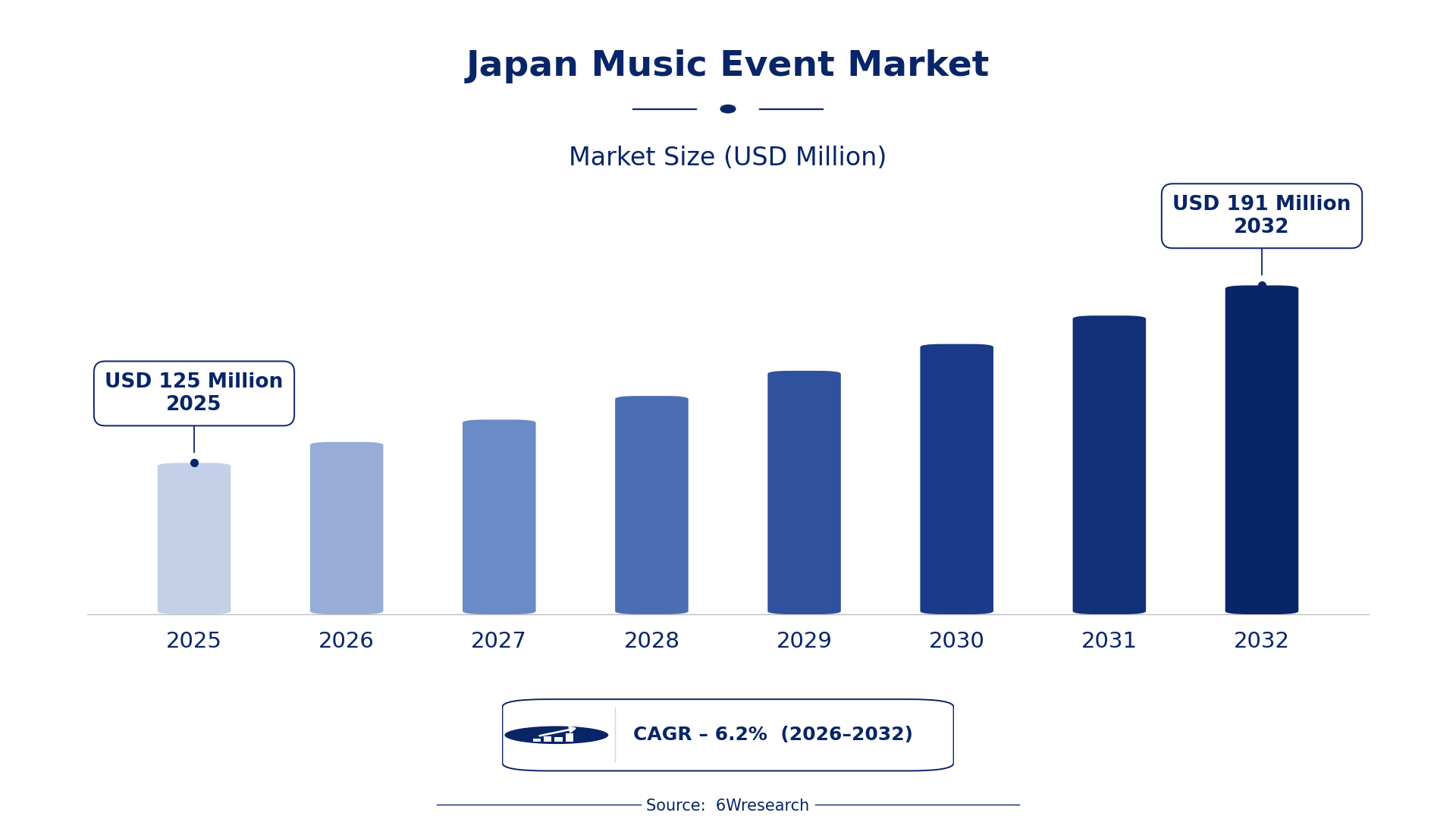
According to 6Wresearch internal database and industry insights, the Japan Music Event Market was valued at USD 125 Million in 2025 and is projected to reach USD 191 Million by 2032, growing at a CAGR of approximately 6.2% during 2026–2032.
Japan Music Event Market Highlights
| Report Metric | Details |
| Report Name | Japan Music Event Market (2026-2032) |
| Market Size 2025 | USD 125 Million |
| Market Size 2032 | USD 191 Million |
| Absolute Growth 2025–2032 | USD 66 Million |
| CAGR 2026–2032 | 6.2% |
| Peak Annual Growth | 7.0% in 2028 |
| Forecast Period | 2026–2032 |
| Historical Data | 2022–2025 |
| Base Year | 2025 |
| Leading Event Type, 2025 | Concerts (40% share) |
| Leading Venue, 2025 | Stadiums (36% share) |
| Leading Audience Size, 2025 | Massive (48% share) |
| Leading Performance Type, 2025 | Live Bands (39% share) |
| Leading Revenue Model, 2025 | Ticket Sales (42% share) |
| Fastest-Growing Event Type | Music Competitions (8.7% CAGR) |
| Fastest-Growing Venue | Clubs (8.5% CAGR) |
| Fastest-Growing Audience Size | Medium (8.1% CAGR) |
| Fastest-Growing Performance Type | DJ Performances (9.0% CAGR) |
| Fastest-Growing Revenue Model | Sponsorships (8.9% CAGR) |
| Growing Sector | Live Music |
| Key End Users | Event organisers, sponsors, local artists, concertgoers |
Japan Music Event Market Year-wise Growth Rate and Key Drivers (2022–2032)
This graph illustrates the annual growth rates of the market from 2022 to 2032, highlighting a steady upward trajectory and projected market expansion over the forecast period.
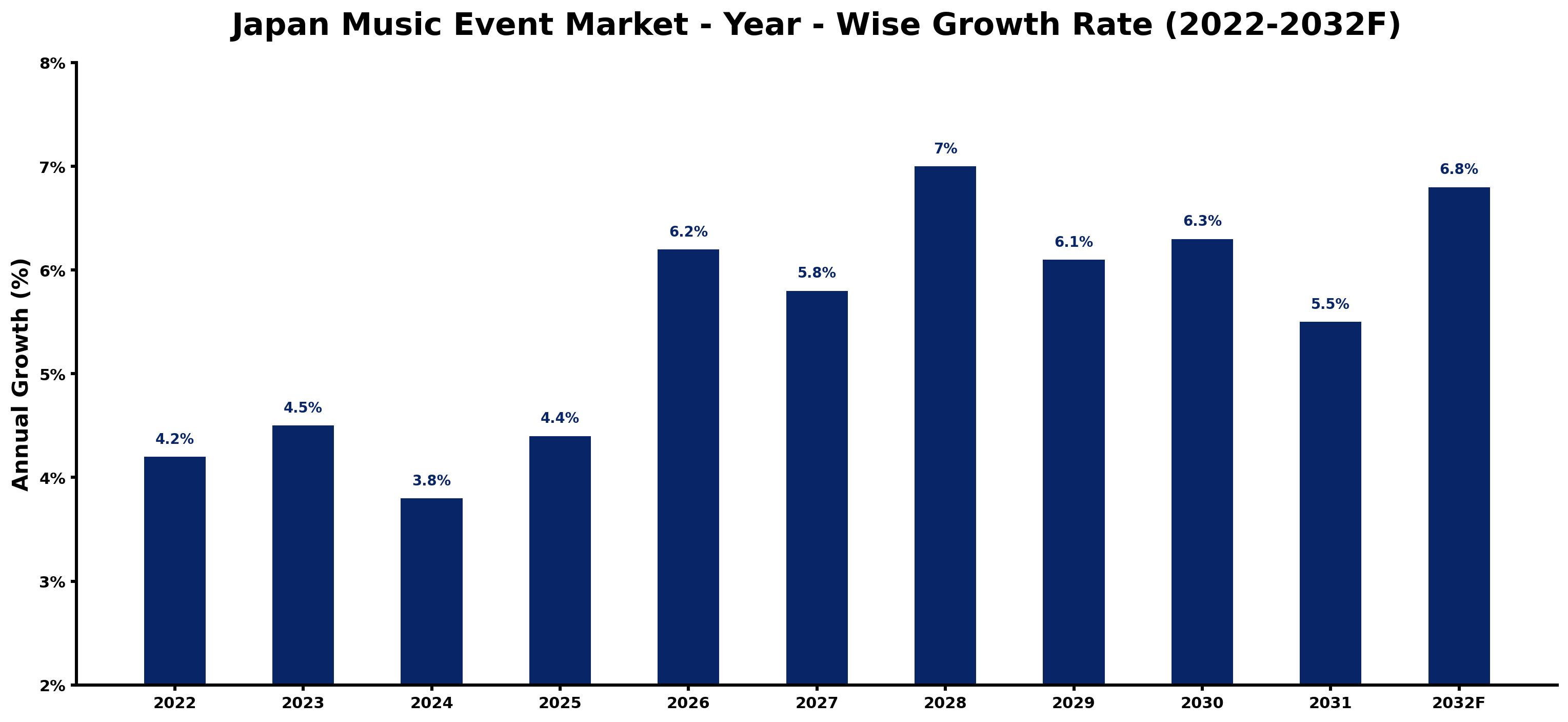
For each year, the table pairs the estimated growth rate with the leading influence on demand, showing how the drivers changed across the period.
| Year | Estimated Annual Growth (%) | Market Rationale |
| 2022 | 4.2 | The market showed steady growth due to strong local interest in live performances. |
| 2023 | 4.5 | Concert attendance increased, reflecting a growing preference for in-person events. |
| 2024 | 3.8 | A slight slowdown occurred as the market adjusted after rapid growth in previous years. |
| 2025 | 4.4 | Demand rose again as cultural events gained traction, attracting more attendees. |
| 2026 | 6.2 | The market is expected to experience a boost from increased festival activities and sponsorships. |
| 2027 | 5.8 | Growth is projected to slow slightly as the market stabilises after a peak in festival attendance. |
| 2028 | 7.0 | A surge in demand is anticipated, driven by major concerts and cultural events. |
| 2029 | 6.1 | The market is expected to slow as competition increases among event organisers. |
| 2030 | 6.3 | Growth is projected to pick up again as technology improves event experiences and accessibility. |
| 2031 | 5.5 | A slight slowdown in growth is expected as the market matures and competition intensifies. |
| 2032 | 6.8 | Demand is expected to rise as new technologies enhance live event experiences. |
Note: Market size estimations and growth projections presented in this report are based on 6Wresearch's proprietary forecasting methodology, utilizing the latest available industry data, government publications, and primary research inputs.
Japan Music Event Market Synopsis
The Japan Music Event Market encompasses a variety of performances, including concerts, festivals, and competitions, generating revenue through ticket sales and sponsorships. The market is expanding due to local and tourist demand for music experiences, with over 200 billion yen generated in 2022. Key drivers include government support for cultural initiatives and a strong preference for live performances, with 75% of concertgoers favouring them over virtual options.
Market Dynamics Impact Analysis (2026–2032)
| Factor | Type | Impact | Primary Segment Affected |
| Rising local and tourist attendance at live events | Driver | High | Concerts |
| Increased sponsorship opportunities for major festivals | Driver | High | Festivals |
| Growing interest in music competitions among emerging artists | Opportunity | Medium | Music Competitions |
| Expansion of club nights in urban areas like Osaka | Opportunity | Medium | Club Nights |
| High operational costs for event organisers | Restraint | High | Festivals |
| Limited availability of large venues for major events | Restraint | Medium | Concerts |
| Competition from virtual events affecting attendance | Challenge | High | Virtual Events |
| Regulatory compliance costs for safety standards | Challenge | Medium | Concerts |
Evaluation of Drivers in Japan Music Event Market (2026–2032)
The main growth drivers and the segments they affect most are set out below.
| Drivers | Primary Segment Affected | Why It Matters (Evidence) |
| Increased attendance at live performances | Concerts | Tokyo hosts over 1,500 concerts annually, boosting ticket sales. |
| Growing sponsorship deals for festivals | Festivals | Major cultural events attract substantial sponsorships, providing funding for organisers. |
| Emerging artist participation in competitions | Music Competitions | Competitions promote new talent, increasing audience engagement. |
| Urban nightlife expansion in Osaka | Club Nights | Osaka's thriving nightlife increases attendance at club events. |
| Government grants for cultural events | Festivals | Funding initiatives support cultural events, ensuring a steady flow of activities. |
Buyers are increasing capacity as concert attendance continues to rise, with over 200 billion yen in revenue generated in 2022. The growth in sponsorship deals for festivals allows organisers to host larger events, improving audience experiences. In Osaka, the vibrant nightlife with over 300 active venues fuels demand for club nights. Emerging artist participation in competitions attracts audiences, promoting new talent and engagement.
Evaluation of Restraints in Japan Music Event Market
The table below lists the restraints and the evidence behind each.
| Market Restraint | Primary Segment Affected | Why It Matters (Evidence) |
| High operational costs for event organisers | Festivals | Organisers face rising costs, impacting profitability and limiting event scale. |
| Limited availability of large venues for major events | Concerts | The scarcity of suitable venues restricts the number of large-scale concerts. |
| Competition from virtual events affecting attendance | Virtual Events | As virtual events gain popularity, traditional live attendance may decline. |
| Regulatory compliance costs for safety standards | Concerts | Compliance with safety regulations increases operational costs for event organisers. |
| Seasonal fluctuations in attendance | Festivals | Attendance varies with weather conditions, affecting revenue. |
Japan Music Event Market Challenges
High ticket prices averaging around 8,000 yen limit attendance for buyers, reducing overall market engagement. Competition from both domestic and international acts leads to aggressive pricing strategies, which can erode profit margins for producers. Compliance with JIS Z 8301 for event safety incurs additional costs for organisers, delaying event planning and increasing operational expenses. A shortage of skilled professionals in event management hampers the development of new music initiatives, making it challenging for local artists to connect with audiences and gain visibility.
Trends in the Japan Music Event Market
Four trends stand out in the Japan Music Event Market.
- Shift from Traditional to Hybrid Events: In 2023, many festivals began incorporating hybrid formats, blending live and virtual experiences, appealing to a wider audience. This shift is illustrated by the Tokyo Jazz Festival, which saw a 20% increase in participation.
- Emergence of DJ Performances: DJ performances are becoming increasingly popular, particularly in club nights, reflecting a shift in audience preferences. This trend is supported by a projected CAGR of 9.0% for DJ performances from 2026 to 2032.
- Growth of Sponsorships in Music Events: Sponsorships are becoming a primary revenue source, with an expected CAGR of 8.9% from 2026 to 2032. This trend is driven by major festivals attracting corporate partners.
- Rise of Cultural Festivals: Cultural festivals are gaining traction, with over 50 events organised yearly by the Japan Association of Music Festivals. This trend is contributing to increased local tourism and engagement.
Investment Opportunities in the Japan Music Event Market
Several openings in the Japan Music Event Market merit attention from investors.
- Partner with Local Venues: With over 300 active venues in Osaka, partnerships can improve event reach and profitability. The market gap for new club nights presents opportunities for local promoters.
- Invest in Festival Sponsorships: The growing trend of sponsorships, with an expected increase of 8.9%, offers opportunities for brands to engage with audiences at major events like the Tokyo Jazz Festival.
- Supply Merchandise for Concerts: Merchandise sales account for approximately 15% of total revenue, indicating a gap for suppliers to provide unique products at events. Targeting concerts in Tokyo can yield high returns.
- Develop Hybrid Event Solutions: As hybrid events gain popularity, there is a demand for technology solutions that facilitate both live and virtual participation. This trend is evident in the increasing integration of streaming services.
Government Initiatives in the Japan Music Event Market
The Industrial Standardization Act, established in 1949 and amended in 2019, governs safety and quality standards for events. Compliance with these standards ensures that music events adhere to safety regulations, protecting both attendees and organisers. The Digital Agency, established in September 2021, promotes digital transformation in event management, improving operational efficiency.
The Japan Association of Music Festivals utilises government funding to support cultural events, receiving 1 billion yen in 2023 for promotion. This funding enables the organisation to improve the quality and reach of music events, benefiting local artists and audiences alike.
Future Insight of the Japan Music Event Market
Technological advancements in ticketing systems will streamline purchases and boost attendance at live performances. By 2032, increased government funding for cultural initiatives will create more opportunities for local artists and venues to thrive. The rise of hybrid event formats will cater to diverse audience preferences, blending in-person and digital experiences. Enhanced safety measures will ensure a secure environment for attendees, promoting higher participation rates in live music events.
Market Segmentation Analysis
Japan Music Event Market report covers a detailed analysis of the following market segments:
By Event Type – Concerts Lead, Music Competitions Expected to Grow Fastest
According to Anjali Gupta, Research Analyst at 6Wresearch, in 2025, Concerts led the event type split with a 40% share. Concerts dominate the market as they consistently attract large audiences and generate substantial revenue. The example of Tokyo hosting over 1,500 concerts annually demonstrates the strong demand for live music experiences among local audiences. The quickest growth will come from Music Competitions, forecast to expand at a CAGR of 8.7% between 2026 and 2032. The growth of music competitions is fuelled by initiatives from the Japan Association of Music Festivals, which organises over 50 events each year. This focus on promoting emerging artists is likely to increase participation and audience engagement. Suppliers should explore opportunities to incorporate music competitions into their offerings to leverage this growing interest.
By Venue – Stadiums Lead, Clubs Expected to Grow Fastest
Stadiums accounted for 36% of the market by venue in 2025. Stadiums hold the largest share as they are the primary venues for major concerts and events, accommodating thousands of attendees. Their capacity to host large-scale performances makes them a preferred choice for organisers. Clubs are projected to grow fastest, at a CAGR of 8.5% during 2026–2032. Clubs are experiencing rapid growth as they cater to the nightlife scene and smaller performances, with numerous active venues in regions like Osaka. This trend indicates a shift towards more intimate music experiences. Buyers may find increased opportunities in club events, reflecting changing preferences for live music.
By Audience Size – Massive Leads, Medium Expected to Grow Fastest
With 48% of audience size revenue in 2025, Massive was the largest category. Massive events represent the largest segment due to their ability to attract extensive crowds, reflecting the cultural affinity for large-scale music gatherings in Japan. The popularity of such events is evident in the vibrant festival scene that characterises the market. Over 2026–2032, Medium is expected to post the fastest growth, at a CAGR of 8.1%. Medium-sized events are gaining traction as they offer a balance between scale and intimacy, appealing to audiences who prefer a more personal connection. This trend suggests a shift in audience preferences towards diverse event experiences. Suppliers should adapt their services to cater to both massive and medium-sized events to optimise their market reach.
By Performance Type – Live Bands Lead, DJ Performances Expected to Grow Fastest
Live Bands held 39% of the Japan Music Event Market by performance type in 2025. Live bands are integral to the concert experience, forming the backbone of many events and festivals. Their popularity among audiences ensures they maintain a leading position in the performance type segment. DJ Performances are set to record the highest CAGR in this split, 9.0% over 2026–2032. DJ performances are rapidly growing in popularity, particularly in club settings and festivals, as they offer dynamic entertainment experiences. This trend indicates a shift in audience preferences towards electronic music. Suppliers should consider expanding their services to include DJ performances to meet evolving audience demands.
By Revenue Model – Ticket Sales Leads, Sponsorships Expected to Grow Fastest
The largest revenue model category in 2025 was Ticket Sales, at 42% of revenue. Ticket sales are the primary revenue source for music events, accounting for the majority of income for organisers. This reliance on ticket sales highlights the essential role of audience attendance in driving revenue. The quickest growth will come from Sponsorships, forecast to expand at a CAGR of 8.9% between 2026 and 2032. Sponsorships are becoming increasingly vital for financing large events, providing essential financial backing that complements ticket sales. This trend underscores the growing importance of strategic partnerships in the music event sector. Buyers should actively pursue sponsorship opportunities to enhance the financial viability of their events.
Key Attractiveness of the Report
- 10 Years of Market Numbers
- Historical Data Starting from 2022 to 2025
- Base Year 2025
- Forecast Data until 2032
- Key Performance Indicators Impacting the Market
- Major Upcoming Developments and Projects
Key Highlights of the Report:
- Japan Music Event Market Outlook
- Market Size of Japan Music Event Market,2025
- Forecast of Japan Music Event Market, 2032
- Historical Data and Forecast of Japan Music Event Revenues & Volume for the Period 2022-2032
- Japan Music Event Market Trend Evolution
- Japan Music Event Market Drivers and Challenges
- Japan Music Event Price Trends
- Japan Music Event Porter's Five Forces
- Japan Music Event Industry Life Cycle
- Historical Data and Forecast of Japan Music Event Market Revenues & Volume By Event Type for the Period 2022-2032
- Historical Data and Forecast of Japan Music Event Market Revenues & Volume By Concerts for the Period 2022-2032
- Historical Data and Forecast of Japan Music Event Market Revenues & Volume By Festivals for the Period 2022-2032
- Historical Data and Forecast of Japan Music Event Market Revenues & Volume By Club Nights for the Period 2022-2032
- Historical Data and Forecast of Japan Music Event Market Revenues & Volume By Music Competitions for the Period 2022-2032
- Historical Data and Forecast of Japan Music Event Market Revenues & Volume By Virtual Events for the Period 2022-2032
- Historical Data and Forecast of Japan Music Event Market Revenues & Volume By Venue for the Period 2022-2032
- Historical Data and Forecast of Japan Music Event Market Revenues & Volume By Stadiums for the Period 2022-2032
- Historical Data and Forecast of Japan Music Event Market Revenues & Volume By Open-Air Grounds for the Period 2022-2032
- Historical Data and Forecast of Japan Music Event Market Revenues & Volume By Clubs for the Period 2022-2032
- Historical Data and Forecast of Japan Music Event Market Revenues & Volume By Theaters for the Period 2022-2032
- Historical Data and Forecast of Japan Music Event Market Revenues & Volume By Online Platforms for the Period 2022-2032
- Historical Data and Forecast of Japan Music Event Market Revenues & Volume By Audience Size for the Period 2022-2032
- Historical Data and Forecast of Japan Music Event Market Revenues & Volume By Large for the Period 2022-2032
- Historical Data and Forecast of Japan Music Event Market Revenues & Volume By Massive for the Period 2022-2032
- Historical Data and Forecast of Japan Music Event Market Revenues & Volume By Small for the Period 2022-2032
- Historical Data and Forecast of Japan Music Event Market Revenues & Volume By Medium for the Period 2022-2032
- Historical Data and Forecast of Japan Music Event Market Revenues & Volume By Unlimited for the Period 2022-2032
- Historical Data and Forecast of Japan Music Event Market Revenues & Volume By Performance Type for the Period 2022-2032
- Historical Data and Forecast of Japan Music Event Market Revenues & Volume By Live Bands for the Period 2022-2032
- Historical Data and Forecast of Japan Music Event Market Revenues & Volume By DJ Performances for the Period 2022-2032
- Historical Data and Forecast of Japan Music Event Market Revenues & Volume By Solo Artists for the Period 2022-2032
- Historical Data and Forecast of Japan Music Event Market Revenues & Volume By Orchestras for the Period 2022-2032
- Historical Data and Forecast of Japan Music Event Market Revenues & Volume By Multi-Artist Shows for the Period 2022-2032
- Historical Data and Forecast of Japan Music Event Market Revenues & Volume By Revenue Model for the Period 2022-2032
- Historical Data and Forecast of Japan Music Event Market Revenues & Volume By Ticket Sales for the Period 2022-2032
- Historical Data and Forecast of Japan Music Event Market Revenues & Volume By Sponsorships for the Period 2022-2032
- Historical Data and Forecast of Japan Music Event Market Revenues & Volume By Merchandise Sales for the Period 2022-2032
- Historical Data and Forecast of Japan Music Event Market Revenues & Volume By Advertising Revenue for the Period 2022-2032
- Historical Data and Forecast of Japan Music Event Market Revenues & Volume By Subscription for the Period 2022-2032
- Japan Music Event Import Export Trade Statistics
- Market Opportunity Assessment By Event Type
- Market Opportunity Assessment By Venue
- Market Opportunity Assessment By Audience Size
- Market Opportunity Assessment By Performance Type
- Market Opportunity Assessment By Revenue Model
- Japan Music Event Top Companies Market Share
- Japan Music Event Competitive Benchmarking By Technical and Operational Parameters
- Japan Music Event Company Profiles
- Japan Music Event Key Strategic Recommendations
Market Covered
The report covers the following segments.
By Event Type
- Concerts
- Festivals
- Club Nights
- Music Competitions
- Virtual Events
By Venue
- Stadiums
- Open-Air Grounds
- Clubs
- Theaters
- Online Platforms
By Audience Size
- Large
- Massive
- Small
- Medium
- Unlimited
By Performance Type
- Live Bands
- DJ Performances
- Solo Artists
- Orchestras
- Multi-Artist Shows
By Revenue Model
- Ticket Sales
- Sponsorships
- Merchandise Sales
- Advertising Revenue
- Subscription































