Japan Ophthalmic Devices Market Size & Growth Rate
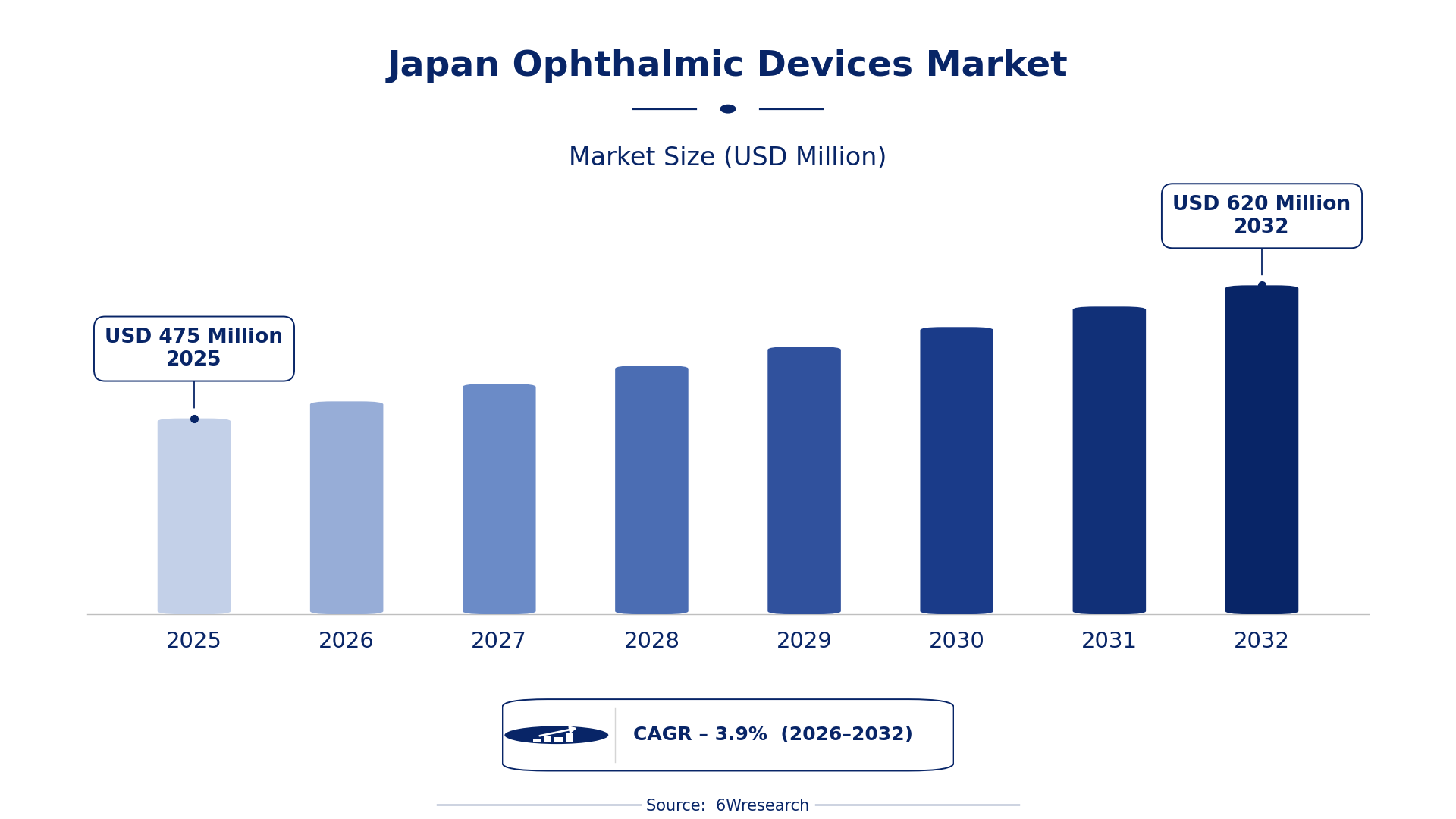
According to 6Wresearch internal database and industry insights, the Japan Ophthalmic Devices Market was valued at USD 475 Million in 2025 and is projected to reach USD 620 Million by 2032, growing at a CAGR of approximately 3.9% during 2026–2032.
Japan Ophthalmic Devices Market Highlights
| Report Metric | Details |
| Report Name | Japan Ophthalmic Devices Market (2026-2032) |
| Market Size 2025 | USD 475 Million |
| Market Size 2032 | USD 620 Million |
| Absolute Growth 2025–2032 | USD 145 Million |
| CAGR 2026–2032 | 3.9% |
| Peak Annual Growth | 4.2% in 2031 |
| Forecast Period | 2026–2032 |
| Historical Data | 2022–2025 |
| Base Year | 2025 |
| Leading Product, 2025 | Optical Coherence Tomography Scanners (40% share) |
| Leading Application, 2025 | Cataract (46% share) |
| Leading End-use, 2025 | Hospitals and Eye Clinics (42% share) |
| Fastest-Growing Product | Fundus Cameras (5.9% CAGR) |
| Fastest-Growing Application | Vitreo retinal disorders (5.1% CAGR) |
| Fastest-Growing End-use | Academic and Research Laboratory (5.0% CAGR) |
| Growing Sector | Hospitals and Eye Clinics |
| Key End Users | Hospitals, Eye Clinics, Academic Institutions, Research Laboratories |
Japan Ophthalmic Devices Market Year-wise Growth Rate and Key Drivers (2022–2032)
This graph illustrates the annual growth rates of the market from 2022 to 2032, highlighting a steady upward trajectory and projected market expansion over the forecast period.
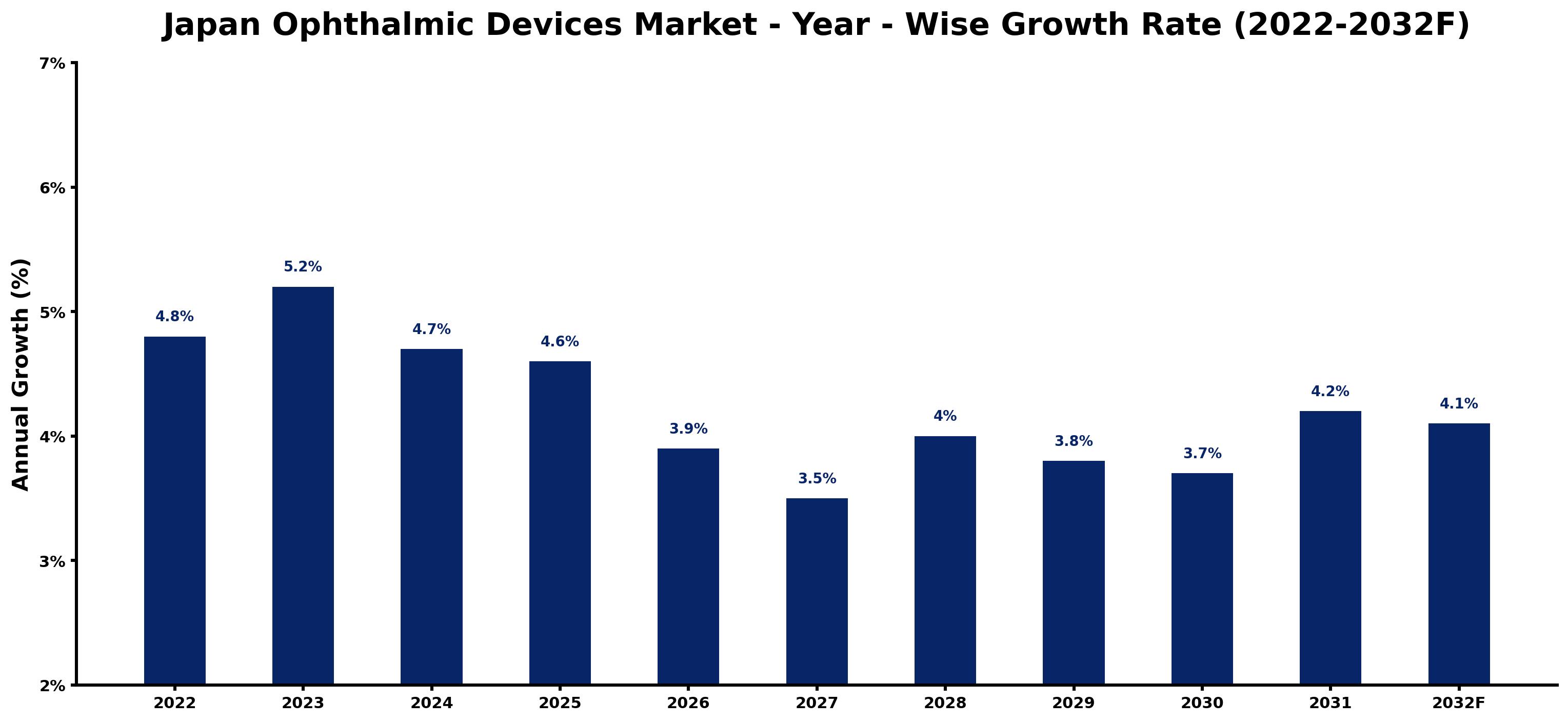
Below, each year's estimated growth is shown next to the factor that most influenced it.
| Year | Estimated Annual Growth (%) | Market Rationale |
| 2022 | 4.8 | The market experienced steady growth, reflecting ongoing demand for eye care services. |
| 2023 | 5.2 | Demand increased due to a rise in eye examinations and advancements in technology. |
| 2024 | 4.7 | Growth slowed as market saturation began to affect new device adoption rates. |
| 2025 | 4.6 | A slight decline in growth was observed as competition intensified among manufacturers. |
| 2026 | 3.9 | The market continued to grow, but at a slower pace due to changing consumer preferences. |
| 2027 | 3.5 | Demand growth further slowed as the market adjusted to new healthcare standards. |
| 2028 | 4.0 | An uptick in growth occurred as hospitals invested in modern ophthalmic technologies. |
| 2029 | 3.8 | Growth decelerated again as the market faced challenges from emerging alternatives. |
| 2030 | 3.7 | The market maintained a steady growth rate, supported by ongoing healthcare investments. |
| 2031 | 4.2 | Growth accelerated as new innovations in ophthalmic devices gained traction. |
| 2032 | 4.1 | A slight slowdown in growth was noted as market conditions stabilised. |
Note: Market size estimations and growth projections presented in this report are based on 6Wresearch's proprietary forecasting methodology, utilizing the latest available industry data, government publications, and primary research inputs.
Japan Ophthalmic Devices Market Synopsis
Ophthalmic devices serve as crucial instruments for diagnosing and treating various eye conditions, utilising advanced technologies. In Japan, more than 120 million eye examinations take place each year, driving the demand for these devices. Market growth is supported by an ageing population, rising healthcare expenditure, and technological advancements, particularly in urban centres like Tokyo, where substantial research and manufacturing activities are concentrated.
Market Dynamics Impact Analysis (2026–2032)
| Factor | Type | Impact | Primary Segment Affected |
| Increasing prevalence of glaucoma and cataracts drives demand for diagnostic equipment. | Driver | High | Tonometers |
| Growing number of eye examinations boosts the need for imaging devices. | Driver | High | Optical Coherence Tomography Scanners |
| Expansion of eye care facilities creates opportunities for new device suppliers. | Opportunity | High | Hospitals and Eye Clinics |
| Rising health awareness among the population increases demand for routine eye checks. | Opportunity | High | Academic and Research Laboratory |
| High costs of advanced devices may limit access for smaller clinics. | Restraint | Medium | Fundus Cameras |
| Regulatory compliance can delay product launches in the market. | Restraint | Medium | Ophthalmic Ultrasound Imaging Systems |
| Limited supply chain capacity can hinder timely device availability. | Challenge | High | Slit Lamps |
| Intense competition may lead to price wars affecting profit margins. | Challenge | Medium | Perimeters/Visual Field Analyzers |
Evaluation of Drivers in Japan Ophthalmic Devices Market (2026–2032)
The factors lifting demand, and the evidence behind each, are summarised below.
| Drivers | Primary Segment Affected | Why It Matters (Evidence) |
| Rising number of eye examinations increases demand for tonometers. | Tonometers | Over 120 million eye examinations conducted annually drive the need for accurate intraocular pressure measurement. |
| Growing prevalence of glaucoma necessitates advanced imaging technologies. | Optical Coherence Tomography Scanners | An estimated 2.5 million glaucoma cases in Japan boost the demand for detailed retinal imaging. |
| Technological advancements improve device capabilities and attract buyers. | Fundus Cameras | New features in imaging technology increase diagnostic accuracy, appealing to hospitals and clinics. |
| Increased healthcare expenditure supports investments in ophthalmic devices. | Ophthalmic Ultrasound Imaging Systems | Japan's national medical care expenditure reached about JPY 46.7 trillion, facilitating device purchases. |
| Expansion of healthcare facilities creates a larger market for ophthalmic devices. | Hospitals and Eye Clinics | With approximately 8,100 hospitals in Japan, the demand for modern eye care equipment rises. |
Volumes grow on the back of a notable increase in eye examinations, with over 120 million conducted annually. The growing prevalence of glaucoma drives demand for advanced diagnostic tools like optical coherence tomography scanners. Japan's national medical care expenditure supports investments in ophthalmic devices, facilitating purchases. Recent advancements in imaging systems attract hospitals and clinics seeking improved diagnostic capabilities. The expansion of healthcare facilities further fuels the demand for modern ophthalmic equipment, enhancing service delivery across the country.
Evaluation of Restraints in Japan Ophthalmic Devices Market
The following restraints limit how fast demand can grow.
| Market Restraint | Primary Segment Affected | Why It Matters (Evidence) |
| High costs of advanced ophthalmic devices limit access for smaller clinics. | Fundus Cameras | The annual market for tonometers is valued at approximately 15 billion yen, making them expensive for some facilities. |
| Regulatory compliance can delay product launches in the market. | Ophthalmic Ultrasound Imaging Systems | The PMD Act regulates the approval process, potentially extending time to market for new devices. |
| Limited supply chain capacity can hinder timely device availability. | Slit Lamps | With approximately 2,500 hospitals equipped with ophthalmic devices, demand can outpace supply. |
| Market saturation may slow growth as competition increases. | Optical Coherence Tomography Scanners | As the adoption rate exceeds 60% in hospitals, new entrants find it challenging to gain market share. |
| Changing consumer preferences may affect device sales. | Perimeters/Visual Field Analyzers | As alternative diagnostic methods emerge, traditional devices face declining demand. |
Japan Ophthalmic Devices Market Challenges
Regulatory requirements impede product approvals, as the Pharmaceuticals and Medical Devices Agency demands extensive documentation, potentially delaying market entry by up to 12 months for manufacturers. Intense competition among producers drives prices down, resulting in a 15% decline in profit margins, which discourages new entrants. A shortage of skilled personnel in the healthcare sector restricts hospitals' ability to fully utilise available technologies, leading to longer wait times for patients. High costs associated with adopting advanced technologies, such as optical coherence tomography scanners, can exceed 60 million yen, compelling clinics to delay upgrades and diminishing service quality.
Trends in the Japan Ophthalmic Devices Market
Below are the shifts with the largest effect on the Japan Ophthalmic Devices Market.
- Hospitals Embracing Advanced Imaging Technologies: Healthcare facilities are increasingly integrating advanced imaging technologies into their operations. For example, the adoption rate of optical coherence tomography scanners in hospitals surpasses 60%, indicating a shift towards precision in eye care.
- Expanding Eye Care Services: Healthcare providers are broadening their service offerings to include enhanced eye care options. In 2023, the government initiated a programme aimed at improving eye care services nationwide, promoting better access for patients.
- Growth of Telemedicine in Eye Care: Telemedicine is becoming more prominent in eye care, enabling remote consultations and diagnostics. This trend is particularly noticeable in urban areas, where technology adoption is high, enhancing patient access to specialists.
- Emphasis on Preventive Eye Care: Preventive eye care is increasingly prioritised among healthcare providers, with a growing focus on routine examinations. The Japan Ophthalmological Society advocates for best practices in eye care, encouraging regular check-ups.
Investment Opportunities in the Japan Ophthalmic Devices Market
Several openings in the Japan Ophthalmic Devices Market merit attention from investors.
- Tokyo as a Hub for Ophthalmic Innovation: Tokyo stands as a major centre for ophthalmic device manufacturers, offering opportunities for investment in new technologies. The demand for advanced devices is projected to rise as the market continues to expand.
- Academic Institutions Seeking Advanced Devices: Academic and research laboratories are increasingly requiring advanced ophthalmic devices for their projects. With over 200 research projects annually, there is a clear demand for cutting-edge solutions.
- Increasing Demand for Cataract Surgery Equipment: The average age of cataract surgery patients is approximately 75 years, indicating a growing market. Suppliers can capitalise on this trend by providing high-quality surgical equipment to hospitals.
- Investment in Eye Care Facilities: With around 2,500 hospitals equipped with ophthalmic devices, there exists a gap in advanced technology. Investing in modern equipment for these facilities can address the rising demand.
Government Initiatives in the Japan Ophthalmic Devices Market
The recent PMD Act, revised in 2014, strengthens regulatory oversight for ophthalmic devices, ensuring rigorous quality and safety standards. This legislation requires manufacturers to adhere to extensive testing and documentation protocols, enhancing the reliability of products available in the market. Additionally, the Industrial Standardization Act regulates manufacturing processes, ensuring that devices comply with established Japanese Industrial Standards, thereby building trust among healthcare providers and patients.
In 2023, the government allocated approximately JPY 10 billion to improve eye care services nationwide, managed by the Ministry of Health, Labour and Welfare. This funding supports the advancement of ophthalmic technologies and training for healthcare professionals, ensuring that hospitals and clinics are equipped to deliver high-quality eye care. The initiative aims to enhance patient outcomes, particularly for the ageing population, by increasing access to essential ophthalmic devices.
Future Insight of the Japan Ophthalmic Devices Market
Hospitals will adopt advanced imaging technologies by 2032, improving diagnostic accuracy for eye conditions. The government's programme to improve eye care services will increase accessibility for patients, particularly the ageing population. With over 120 million eye examinations conducted annually, innovation in ophthalmic devices will create opportunities for suppliers and buyers. The integration of ISO 13485 standards will promote higher quality and safety in devices, building greater confidence among healthcare providers and patients.
Market Segmentation Analysis
Japan Ophthalmic Devices Market report covers a detailed analysis of the following market segments:
By Product – Optical Coherence Tomography Scanners Lead, Fundus Cameras Expected to Grow Fastest
According to Bhawna Singh, Assistant Manager at 6Wresearch, the largest product category in 2025 was Optical Coherence Tomography Scanners, at 40% of revenue. Optical coherence tomography scanners hold the largest market share due to their critical role in detailed imaging of the retina and optic nerve, with over 60% adoption in hospitals. Their advanced imaging capabilities are particularly sought after in major urban healthcare centres, such as Tokyo, where precision in diagnostics is paramount. Over 2026–2032, Fundus Cameras are expected to post the fastest growth, at a CAGR of 5.9%. The fundus cameras are witnessing rapid growth, driven by heightened awareness of eye health and the increasing incidence of retinal disorders, supported by over 120 million eye examinations conducted annually. This trend indicates a growing necessity for effective diagnostic tools in both clinical and research settings, ensuring the lead in this segment will expand further. Suppliers must focus on improving the features and accessibility of fundus cameras to meet the rising demand in the market.
By Application – Cataract Leads, Vitreo retinal disorders Expected to Grow Fastest
Cataract accounted for 46% of the market by application in 2025. Cataract procedures lead the market as they are among the most frequently performed surgeries, particularly affecting patients around 75 years old. The extensive use of ophthalmic devices in these surgical interventions solidifies the segment's leading position. Vitreo retinal disorders are projected to grow fastest, at a CAGR of 5.1% during 2026–2032. The rising incidence of vitreo retinal disorders is driving rapid growth in this segment, with advancements in treatment options becoming more widely adopted. This trend creates a pressing need for a diverse range of diagnostic devices to support effective management. Buyers will gain from improved access to devices tailored specifically for the treatment of vitreo retinal disorders.
By End-use – Hospitals and Eye Clinics Lead, Academic and Research Laboratory Expected to Grow Fastest
Hospitals and Eye Clinics took 42% of end-use revenue in 2025, more than any other category. Hospitals and eye clinics represent the largest share of the market as they are the primary users of ophthalmic devices, essential for delivering patient care. With approximately 2,500 hospitals equipped with these devices, their role in healthcare is reinforced, ensuring consistent demand. The quickest growth will come from Academic and Research Laboratory, forecast to expand at a CAGR of 5.0% between 2026 and 2032. The academic and research laboratory segment is growing rapidly, fuelled by increased funding for ophthalmic device research, with over 200 projects conducted annually. This focus on research and innovation will continue to drive demand for advanced diagnostic tools in these environments. Suppliers should strategically engage with academic institutions to capitalise on the growing emphasis on research and development in ophthalmic technology.
Key Attractiveness of the Report
- 10 Years of Market Numbers
- Historical Data Starting from 2022 to 2025
- Base Year 2025
- Forecast Data until 2032
- Key Performance Indicators Impacting the Market
- Major Upcoming Developments and Projects
Key Highlights of the Report:
- Japan Ophthalmic Devices Market Outlook
- Market Size of Japan Ophthalmic Devices Market, 2025
- Forecast of Japan Ophthalmic Devices Market, 2032
- Historical Data and Forecast of Japan Ophthalmic Devices Revenues & Volume for the Period 2022-2032
- Japan Ophthalmic Devices Market Trend Evolution
- Japan Ophthalmic Devices Market Drivers and Challenges
- Japan Ophthalmic Devices Price Trends
- Japan Ophthalmic Devices Porter's Five Forces
- Japan Ophthalmic Devices Industry Life Cycle
- Historical Data and Forecast of Japan Ophthalmic Devices Market Revenues & Volume By Product for the Period 2022-2032
- Historical Data and Forecast of Japan Ophthalmic Devices Market Revenues & Volume By Optical Coherence Tomography Scanners for the Period 2022-2032
- Historical Data and Forecast of Japan Ophthalmic Devices Market Revenues & Volume By Fundus Cameras for the Period 2022-2032
- Historical Data and Forecast of Japan Ophthalmic Devices Market Revenues & Volume By Perimeters/Visual Field Analyzers for the Period 2022-2032
- Historical Data and Forecast of Japan Ophthalmic Devices Market Revenues & Volume By Autorefractors and Keratometers for the Period 2022-2032
- Historical Data and Forecast of Japan Ophthalmic Devices Market Revenues & Volume By Ophthalmic Ultrasound Imaging Systems for the Period 2022-2032
- Historical Data and Forecast of Japan Ophthalmic Devices Market Revenues & Volume By Ophthalmic Pachymeters for the Period 2022-2032
- Historical Data and Forecast of Japan Ophthalmic Devices Market Revenues & Volume By Tonometers for the Period 2022-2032
- Historical Data and Forecast of Japan Optical Coherence Tomography Scanners Ophthalmic Devices Market Revenues & Volume By Slit Lamps for the Period 2022-2032
- Historical Data and Forecast of Japan Ophthalmic Devices Market Revenues & Volume By Application for the Period 2022-2032
- Historical Data and Forecast of Japan Ophthalmic Devices Market Revenues & Volume By Cataract for the Period 2022-2032
- Historical Data and Forecast of Japan Ophthalmic Devices Market Revenues & Volume By Vitreo retinal disorders for the Period 2022-2032
- Historical Data and Forecast of Japan Ophthalmic Devices Market Revenues & Volume By Glaucoma for the Period 2022-2032
- Historical Data and Forecast of Japan Ophthalmic Devices Market Revenues & Volume By Refractor Disorders for the Period 2022-2032
- Historical Data and Forecast of Japan Ophthalmic Devices Market Revenues & Volume By End-use for the Period 2022-2032
- Historical Data and Forecast of Japan Ophthalmic Devices Market Revenues & Volume By Hospitals and Eye Clinics for the Period 2022-2032
- Historical Data and Forecast of Japan Ophthalmic Devices Market Revenues & Volume By Academic and Research Laboratory for the Period 2022-2032
- Historical Data and Forecast of Japan Ophthalmic Devices Market Revenues & Volume By Others for the Period 2022-2032
- Japan Ophthalmic Devices Import Export Trade Statistics
- Market Opportunity Assessment By Product
- Market Opportunity Assessment By Application
- Market Opportunity Assessment By End-use
- Japan Ophthalmic Devices Top Companies Market Share
- Japan Ophthalmic Devices Competitive Benchmarking By Technical and Operational Parameters
- Japan Ophthalmic Devices Company Profiles
- Japan Ophthalmic Devices Key Strategic Recommendations
Market Covered
Segments analysed in this report are listed below.
By Product
- Optical Coherence Tomography Scanners
- Fundus Cameras
- Perimeters/Visual Field Analyzers
- Autorefractors and Keratometers
- Ophthalmic Ultrasound Imaging Systems
- Ophthalmic Pachymeters
- Tonometers
- Slit Lamps
By Application
- Cataract
- Vitreo retinal disorders
- Glaucoma
- Refractor Disorders
By End-use
- Hospitals and Eye Clinics
- Academic and Research Laboratory
- Others































