Japan Real Estate Property Management Market Size & Growth Rate
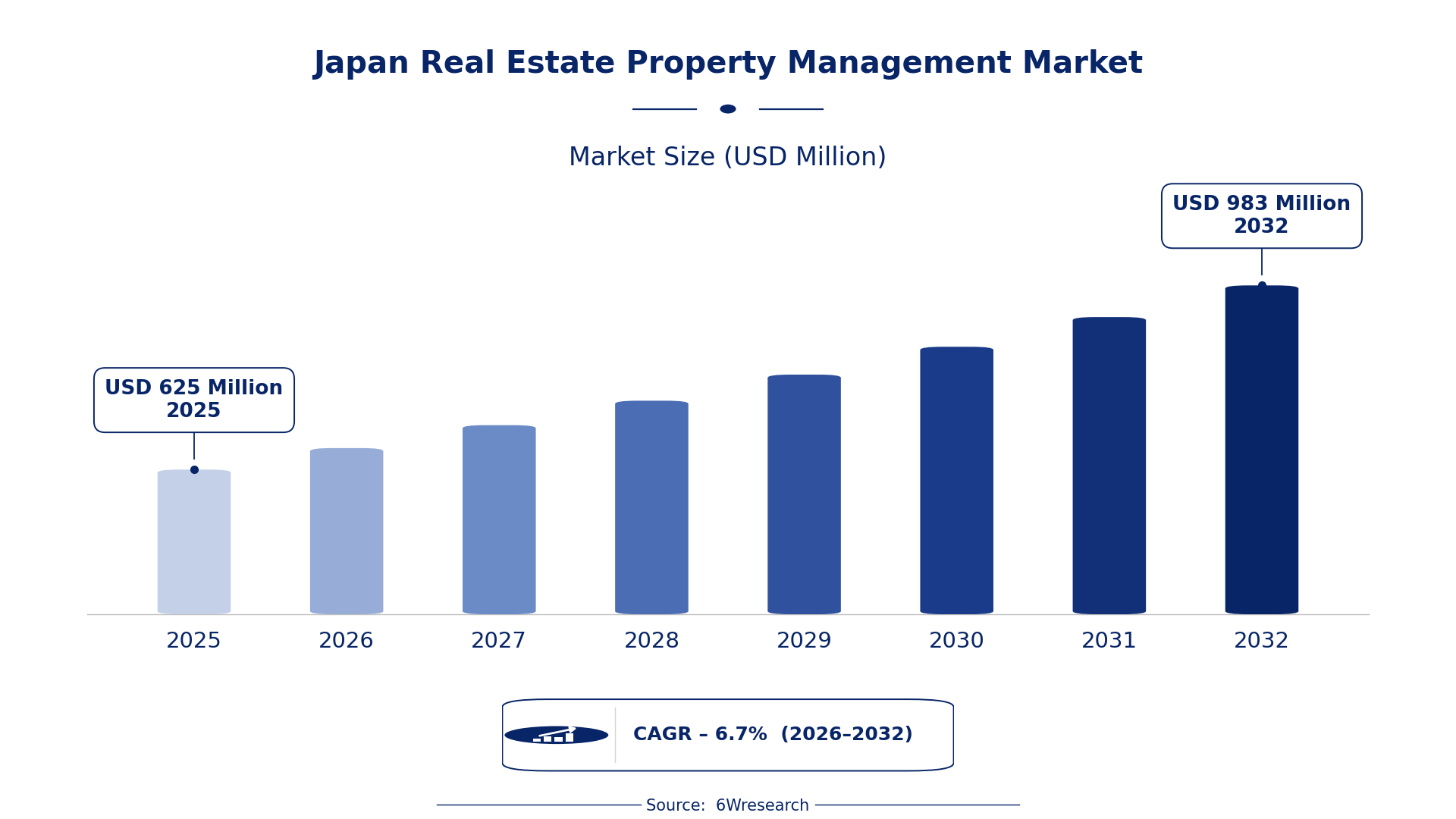
According to 6Wresearch internal database and industry insights, the Japan Real Estate Property Management Market was valued at USD 625 Million in 2025 and is projected to reach USD 983 Million by 2032, growing at a CAGR of approximately 6.7% during 2026–2032.
Japan Real Estate Property Management Market Highlights
| Report Metric | Details |
| Report Name | Japan Real Estate Property Management Market (2026-2032) |
| Market Size 2025 | USD 625 Million |
| Market Size 2032 | USD 983 Million |
| Absolute Growth 2025–2032 | USD 358 Million |
| CAGR 2026–2032 | 6.7% |
| Peak Annual Growth | 7.5% in 2026 |
| Forecast Period | 2026–2032 |
| Historical Data | 2022–2025 |
| Base Year | 2025 |
| Leading Service Type, 2025 | Tenant Management (55% share) |
| Leading Property Type, 2025 | Residential (58% share) |
| Leading Client Type, 2025 | Real Estate Investment Trusts (REITs) (69% share) |
| Fastest-Growing Service Type | Maintenance Services (8.6% CAGR) |
| Fastest-Growing Property Type | Commercial (8.9% CAGR) |
| Fastest-Growing Client Type | Individual Owners (9.1% CAGR) |
| Growing Sector | Individual Owners |
| Key End Users | Real Estate Investment Trusts (REITs), Individual Owners |
Japan Real Estate Property Management Market Year-wise Growth Rate and Key Drivers (2022–2032)
This graph illustrates the annual growth rates of the market from 2022 to 2032, highlighting a steady upward trajectory and projected market expansion over the forecast period.
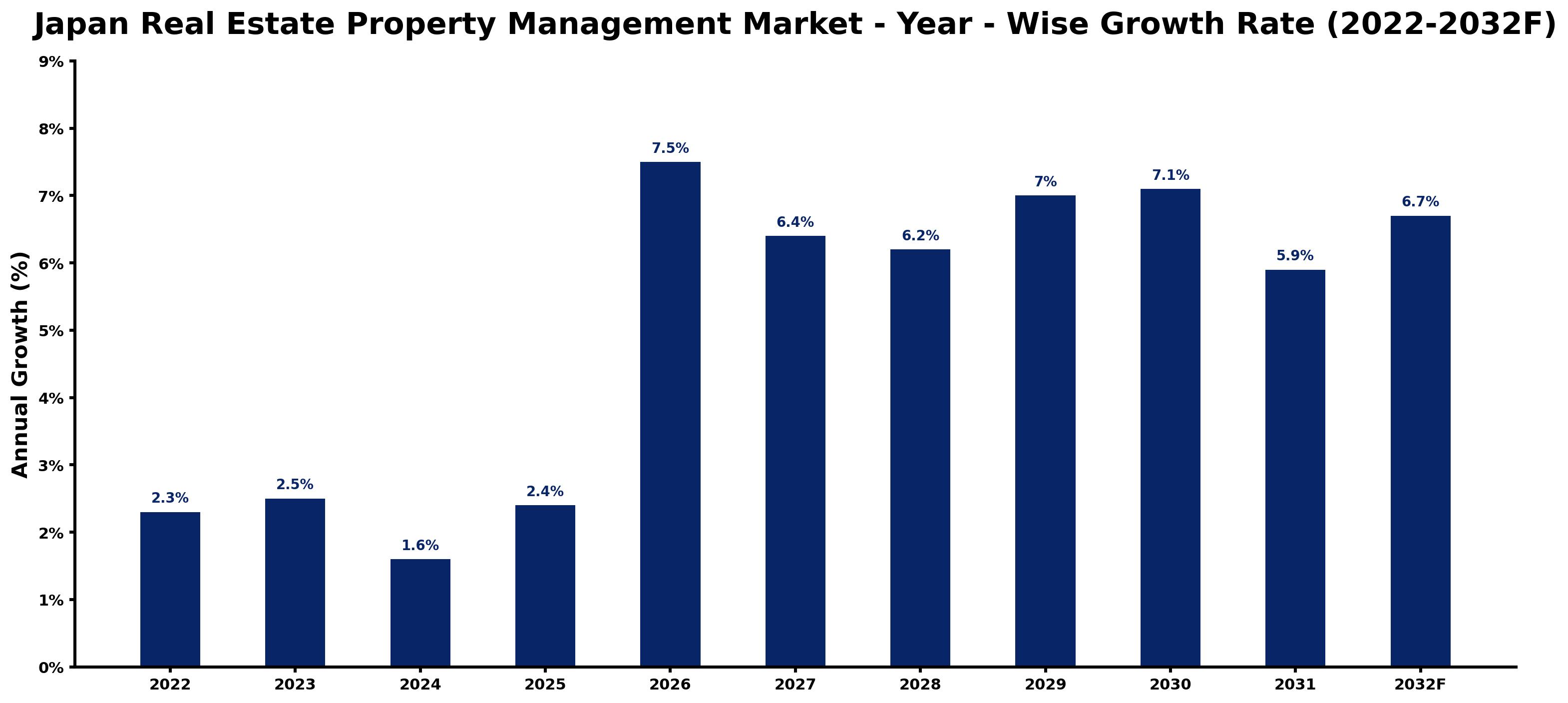
The table below sets out the estimated growth rate for each year and the main factor behind it.
| Year | Estimated Annual Growth (%) | Market Rationale |
| 2022 | 2.3 | The market showed steady growth, supported by ongoing urbanisation and demand for housing. |
| 2023 | 2.5 | Growth accelerated due to increased foreign investment and rising rental yields. |
| 2024 | 1.6 | Growth slowed as market adjustments occurred following previous years' rapid expansion. |
| 2025 | 2.4 | Demand improved with a focus on tenant satisfaction and property maintenance services. |
| 2026 | 7.5 | A surge in property management efficiency initiatives will lead to a peak in growth. |
| 2027 | 6.4 | Growth will slow slightly as the market stabilises after the previous peak. |
| 2028 | 6.2 | Continued demand for commercial property management will contribute to slower growth. |
| 2029 | 7.0 | Growth will pick up again as urban areas expand and investment increases. |
| 2030 | 7.1 | The market will maintain its momentum with ongoing urbanisation and property development. |
| 2031 | 5.9 | Growth will begin to slow as market conditions shift towards stability. |
| 2032 | 6.7 | Continued investment in technology and efficiency will support further growth. |
Note: Market size estimations and growth projections presented in this report are based on 6Wresearch's proprietary forecasting methodology, utilizing the latest available industry data, government publications, and primary research inputs.
Japan Real Estate Property Management Market Synopsis
Real Estate Property Management involves overseeing residential and commercial properties, ensuring tenant satisfaction and compliance with regulations. The Japan Real Estate Property Management Market is expanding, driven by urbanisation, with Tokyo housing over 9 million residential units and an average rental yield of around 5%. Demand is further supported by the increasing number of registered Real Estate Investment Trusts, which reached 62 in 2022, highlighting the sector's growth and investment potential.
Market Dynamics Impact Analysis (2026–2032)
| Factor | Type | Impact | Primary Segment Affected |
| Urbanisation drives demand for property management services, particularly in metropolitan areas. | Driver | High | Residential |
| Increasing rental yields attract foreign investments into property management. | Driver | High | Commercial |
| Growing urban populations create a need for more efficient property management solutions. | Opportunity | High | Residential |
| Technological advancements in property management enhance operational efficiency and tenant satisfaction. | Opportunity | High | Commercial |
| High management fees can deter individual property owners from seeking services. | Restraint | Medium | Individual Owners |
| Regulatory compliance requirements can complicate property management processes. | Restraint | Medium | Real Estate Investment Trusts (REITs) |
| Rising operational costs challenge profitability for property management firms. | Challenge | High | Tenant Management |
| Capacity constraints in skilled labour limit service expansion for property management. | Challenge | Medium | Maintenance Services |
Evaluation of Drivers in Japan Real Estate Property Management Market (2026–2032)
Below are the drivers that matter most for revenue growth, with supporting evidence.
| Drivers | Primary Segment Affected | Why It Matters (Evidence) |
| Urbanisation in Tokyo and Osaka increases demand for property management services. | Residential | Tokyo's population of approximately 14 million drives the need for effective tenant management. |
| Rising rental yields attract foreign investments into commercial properties. | Commercial | The average rental yield for residential properties is around 5%, encouraging investment. |
| The total value of managed commercial properties exceeds 30 trillion yen, indicating market potential. | Commercial | This substantial market size encourages firms to expand their service offerings. |
| Technological advancements improve operational efficiency in property management. | Maintenance Services | In 2023, a government program was launched to improve property management efficiency using technology. |
| The Japan Property Management Association's membership of over 1,000 companies supports industry growth. | Tenant Management | This network facilitates collaboration and knowledge sharing among property management firms. |
Several shifts outside the market lift sales. The growing population in urban areas is driving demand for property management services, with over 9 million residential units managed in Tokyo. The average rental yield for residential properties is around 5%, attracting foreign investments. The total value of managed commercial properties in Japan exceeds 30 trillion yen, indicating market potential.
Evaluation of Restraints in Japan Real Estate Property Management Market
These are the pressures that could keep growth below its potential.
| Market Restraint | Primary Segment Affected | Why It Matters (Evidence) |
| High management fees deter individual property owners from seeking services. | Individual Owners | The average management fee for residential properties is about 5% of the monthly rent, impacting affordability. |
| Regulatory compliance requirements complicate property management processes. | Real Estate Investment Trusts (REITs) | The Ministry of Land, Infrastructure, Transport and Tourism oversees regulations that can increase operational complexity. |
| Rising operational costs challenge profitability for property management firms. | Tenant Management | Increased costs for maintenance and services can reduce profit margins for management companies. |
| Capacity constraints in skilled labour limit service expansion for property management. | Maintenance Services | A shortage of qualified personnel can hinder the ability to meet growing demand. |
| Market fluctuations can impact rental yields and investment attractiveness. | Commercial | Economic uncertainties may lead to reduced investment in property management services. |
Japan Real Estate Property Management Market Challenges
Regulatory complexities burden property management operations, as compliance with local laws can lead to project delays and increased costs for firms. High management fees, averaging 5% of monthly rent, discourage buyers from investing in property management services, impacting overall market growth. A lack of skilled professionals in the sector prevents firms from delivering quality service, resulting in tenant dissatisfaction and increased turnover rates. Heightened competition among property management companies forces many to cut costs, which can degrade service quality and hinder their ability to invest in essential technology and staff development.
Trends in the Japan Real Estate Property Management Market
Several trends are reshaping the Japan Real Estate Property Management Market; the most important are set out below.
- Shift towards Technology-Driven Property Management Solutions: A government program launched in 2023 is pushing firms to adopt digital platforms, streamlining operations and improving tenant satisfaction.
- Transition from Traditional to Flexible Leasing Models: The trend towards flexible leasing options began in 2022, allowing property managers to cater to a broader range of clients, improving occupancy rates.
- Emergence of Sustainable Property Management Practices: Sustainable practices are becoming important in property management, with the GX Basic Policy adopted in 2023 promoting decarbonisation investments, reshaping property management approaches.
- Growing Demand for Integrated Property Management Services: The demand for integrated services has increased since 2022, as clients seek comprehensive solutions, evident in the rise of service packages combining maintenance, tenant management, and financial services.
Investment Opportunities in the Japan Real Estate Property Management Market
Several openings in the Japan Real Estate Property Management Market merit attention from investors.
- Market gap for affordable property management services: With high management fees averaging 5%, there is an opportunity to provide affordable services. Individual property owners in urban areas like Tokyo require cost-effective solutions to manage their properties.
- Investment in technology platforms for property management: The shift towards technology-driven solutions presents an opportunity to supply software and platforms. Property management firms in Osaka are increasingly looking for tech solutions to improve efficiency.
- Demand for eco-friendly property management solutions: As sustainability becomes a priority, there is a growing need for eco-friendly management practices. Real Estate Investment Trusts (REITs) are seeking green certifications to attract environmentally conscious tenants.
- Expansion of property management services in rural areas: With urbanisation trends, rural areas are seeing a demand for property management services. This presents an opportunity for firms to extend their operations beyond major cities.
Government Initiatives in the Japan Real Estate Property Management Market
The Act against Unjustifiable Premiums and Misleading Representations, enforced by the Consumer Affairs Agency, prohibits misleading advertising in property management. This ensures transparency for buyers and protects them from deceptive practices, building trust in the market.
The Ministry of Land, Infrastructure, Transport and Tourism implements property management regulations, ensuring compliance with standards like JIS B 1001. This oversight helps maintain quality and safety in property management services, benefiting both property owners and tenants.
Future Insight of the Japan Real Estate Property Management Market
Technology will reshape property management by 2032, with automation and data analytics streamlining operations. The 2023 government initiative to improve property management efficiency will accelerate the adoption of new tools. By then, the total number of registered REITs in Japan is projected to reach 100, encouraging suppliers to offer more competitive services. As urban populations expand, especially in Tokyo, the demand for efficient property management solutions will rise, benefiting those suppliers who embrace technological advancements.
Market Segmentation Analysis
Japan Real Estate Property Management Market report covers a detailed analysis of the following market segments:
By Service Type – Tenant Management Leads, Maintenance Services Expected to Grow Fastest
According to Bhawna Singh, Assistant Manager at 6Wresearch, Tenant Management took 55% of service type revenue in 2025, more than any other category. Tenant management holds the largest share due to its critical role in ensuring tenant satisfaction and retention, which are vital for property owners. In densely populated areas like Tokyo, effective tenant management is paramount given the high demand for residential units. Maintenance Services are set to record the highest CAGR in this split, 8.6% over 2026–2032. Maintenance services are growing rapidly as property owners recognise the importance of property upkeep and safety. The government's 2023 initiative to enhance property management efficiency through technology is a significant factor propelling this growth. Suppliers should focus on developing robust tenant management solutions while also improving maintenance service offerings to align with market trends.
By Property Type – Residential Leads, Commercial Expected to Grow Fastest
The largest property type category in 2025 was Residential, at 58% of revenue. Residential property management dominates the market as it represents the majority of property management services, catering to a large tenant base. The average rental yield of around 5% for residential properties highlights the demand for effective management in this sector. Over 2026–2032, Commercial is expected to post the fastest growth, at a CAGR of 8.9%. Commercial property management is experiencing rapid growth driven by increasing demand from businesses seeking professional management services. The total value of managed commercial properties in Japan, estimated to exceed 30 trillion yen, presents substantial opportunities in this segment. Buyers should consider investing in commercial property management services to capitalise on the expanding market and potential for higher returns.
By Client Type – Real Estate Investment Trusts (REITs) Leads, Individual Owners Expected to Grow Fastest
Real Estate Investment Trusts (REITs) held 69% of the Japan Real Estate Property Management Market by client type in 2025. Real Estate Investment Trusts (REITs) lead the market as they are major clients managing extensive property portfolios that require comprehensive management services. With 62 registered REITs in Japan, their influence significantly shapes the property management landscape. Individual Owners are projected to grow fastest, at a CAGR of 9.1% during 2026–2032. Individual owners are the fastest-growing client segment as more individuals seek professional property management to optimise their investments. The rise in individual property ownership indicates a shift towards outsourcing management responsibilities. Suppliers must tailor their services to address the specific needs of individual owners while maintaining strong relationships with REITs.
Key Attractiveness of the Report
- 10 Years of Market Numbers
- Historical Data Starting from 2022 to 2025
- Base Year 2025
- Forecast Data until 2032
- Key Performance Indicators Impacting the Market
- Major Upcoming Developments and Projects
Key Highlights of the Report:
- Japan Real Estate Property Management Market Outlook
- Market Size of Japan Real Estate Property Management Market,2025
- Forecast of Japan Real Estate Property Management Market, 2032
- Historical Data and Forecast of Japan Real Estate Property Management Revenues & Volume for the Period 2022-2032
- Japan Real Estate Property Management Market Trend Evolution
- Japan Real Estate Property Management Market Drivers and Challenges
- Japan Real Estate Property Management Price Trends
- Japan Real Estate Property Management Porter's Five Forces
- Japan Real Estate Property Management Industry Life Cycle
- Historical Data and Forecast of Japan Real Estate Property Management Market Revenues & Volume By Service Type for the Period 2022-2032
- Historical Data and Forecast of Japan Real Estate Property Management Market Revenues & Volume By Tenant Management for the Period 2022-2032
- Historical Data and Forecast of Japan Real Estate Property Management Market Revenues & Volume By Maintenance Services for the Period 2022-2032
- Historical Data and Forecast of Japan Real Estate Property Management Market Revenues & Volume By Financial Services for the Period 2022-2032
- Historical Data and Forecast of Japan Real Estate Property Management Market Revenues & Volume By Property Type for the Period 2022-2032
- Historical Data and Forecast of Japan Real Estate Property Management Market Revenues & Volume By Residential for the Period 2022-2032
- Historical Data and Forecast of Japan Real Estate Property Management Market Revenues & Volume By Commercial for the Period 2022-2032
- Historical Data and Forecast of Japan Real Estate Property Management Market Revenues & Volume By Client Type for the Period 2022-2032
- Historical Data and Forecast of Japan Real Estate Property Management Market Revenues & Volume By Individual Owners for the Period 2022-2032
- Historical Data and Forecast of Japan Real Estate Property Management Market Revenues & Volume By Real Estate Investment Trusts (REITs) for the Period 2022-2032
- Japan Real Estate Property Management Import Export Trade Statistics
- Market Opportunity Assessment By Service Type
- Market Opportunity Assessment By Property Type
- Market Opportunity Assessment By Client Type
- Japan Real Estate Property Management Top Companies Market Share
- Japan Real Estate Property Management Competitive Benchmarking By Technical and Operational Parameters
- Japan Real Estate Property Management Company Profiles
- Japan Real Estate Property Management Key Strategic Recommendations
Market Covered
Segments analysed in this report are listed below.
By Service Type
- Tenant Management
- Maintenance Services
- Financial Services
By Property Type
- Residential
- Commercial
By Client Type
- Individual Owners
- Real Estate Investment Trusts (REITs)































