Japan Rose Wine Market Size & Growth Rate
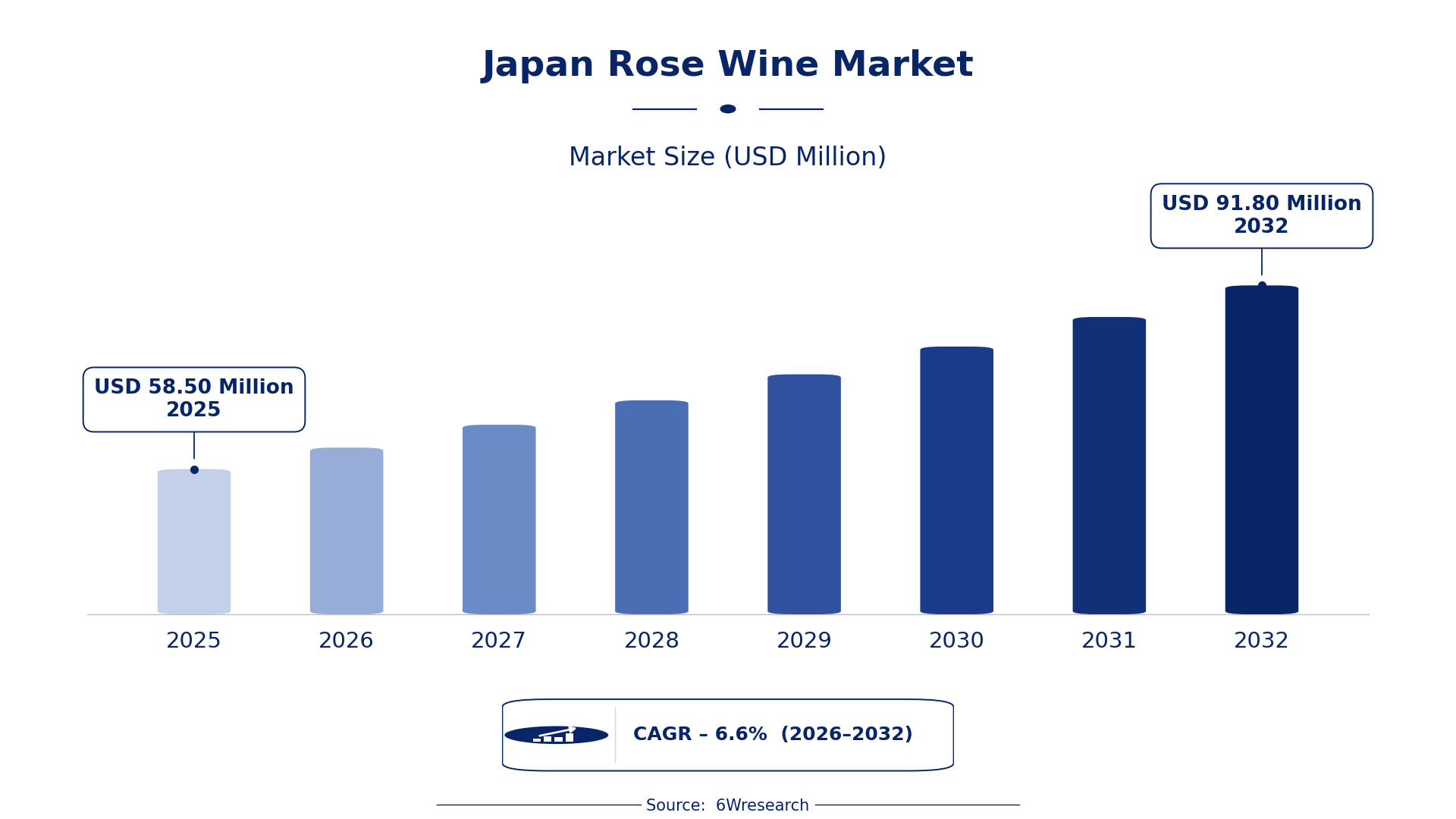
According to 6Wresearch internal database and industry insights, the Japan Rose Wine Market was valued at USD 58.50 Million in 2025 and is projected to reach USD 91.80 Million by 2032, growing at a CAGR of approximately 6.6% during 2026–2032.
Japan Rose Wine Market Highlights
| Report Metric | Details |
| Report Name | Japan Rose Wine Market (2026-2032) |
| Market Size 2025 | USD 58.50 Million |
| Market Size 2032 | USD 91.80 Million |
| Absolute Growth 2025–2032 | USD 33.30 Million |
| CAGR 2026–2032 | 6.6% |
| Peak Annual Growth | 7.4% in 2028 |
| Forecast Period | 2026–2032 |
| Historical Data | 2022–2025 |
| Base Year | 2025 |
| Leading Type, 2025 | Dry (51% share) |
| Leading Grape Variety, 2025 | Grenache (36% share) |
| Leading End User, 2025 | Retail (47% share) |
| Leading Application, 2025 | Beverage Industry (44% share) |
| Fastest-Growing Type | Semi-sweet (8.9% CAGR) |
| Fastest-Growing Grape Variety | Syrah (8.2% CAGR) |
| Fastest-Growing End User | HoReCa (8.1% CAGR) |
| Fastest-Growing Application | Hospitality (8.5% CAGR) |
| Growing Sector | Beverage Industry |
| Key End Users | Retail, HoReCa, Individuals, Social Events |
Japan Rose Wine Market Year-wise Growth Rate and Key Drivers (2022–2032)
This graph illustrates the annual growth rates of the market from 2022 to 2032, highlighting a steady upward trajectory and projected market expansion over the forecast period.
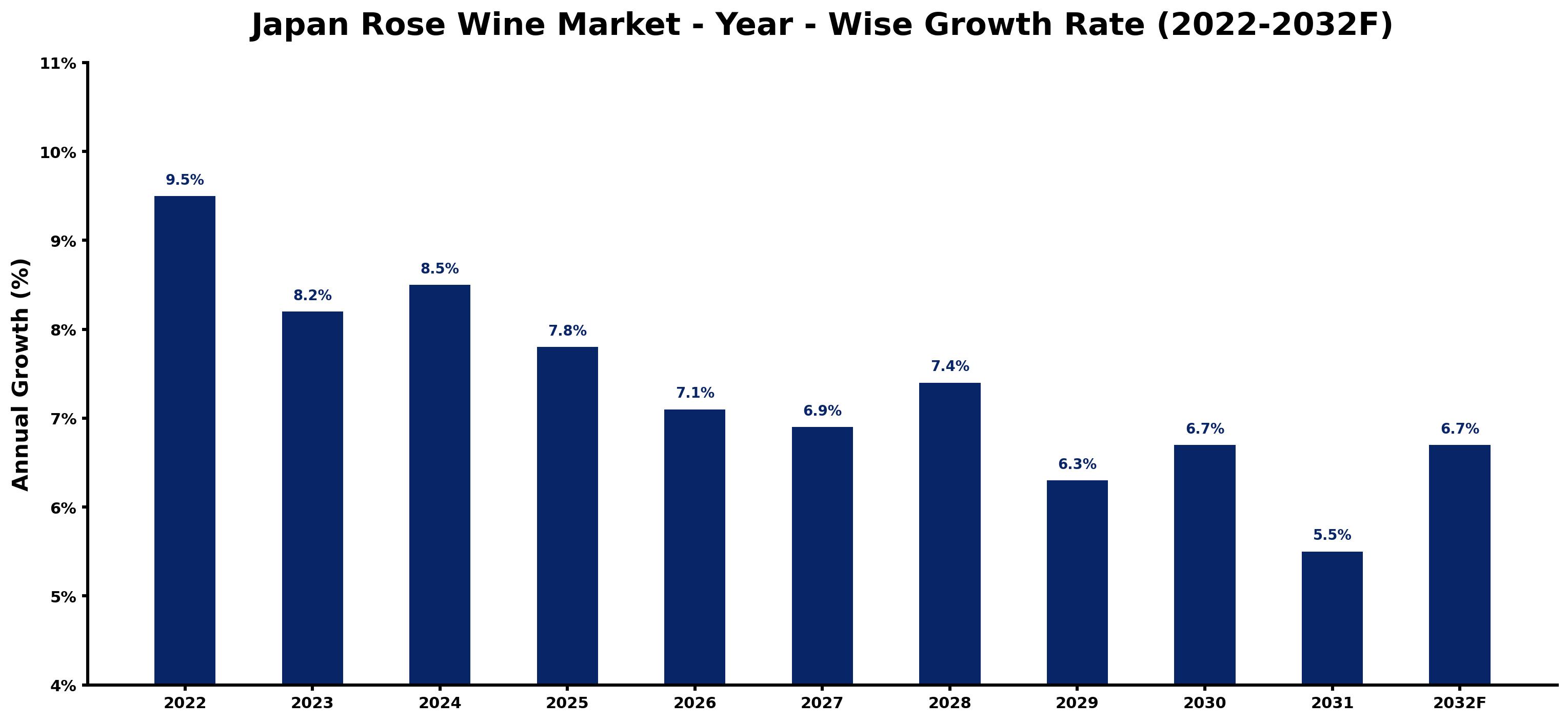
The following figures match every annual growth estimate with the main market development of that year, giving the reasoning behind each rise or slowdown.
| Year | Estimated Annual Growth (%) | Market Rationale |
| 2022 | 9.5 | The market experienced strong consumer interest in rosé wines during social events. |
| 2023 | 8.2 | Consumption growth slowed as buyers adjusted to changing purchasing patterns. |
| 2024 | 8.5 | Increased domestic production led to a rise in rosé wine availability and sales. |
| 2025 | 7.8 | The market maintained growth amid rising consumer awareness of wine varieties. |
| 2026 | 7.1 | Sales growth is expected to continue but at a slower pace due to market saturation. |
| 2027 | 6.9 | Consumer preferences are projected to shift towards premium wines, influencing purchasing habits. |
| 2028 | 7.4 | A resurgence in social gatherings is expected to boost rosé wine sales. |
| 2029 | 6.3 | Growth is projected to slow as competition from other beverage options intensifies. |
| 2030 | 6.7 | Increased wine tourism initiatives will contribute to renewed interest in local wines. |
| 2031 | 5.5 | The market is expected to show signs of stabilisation as consumer preferences evolve. |
| 2032 | 6.7 | A growing focus on quality and unique offerings is projected to drive future sales. |
Note: Market size estimations and growth projections presented in this report are based on 6Wresearch's proprietary forecasting methodology, utilizing the latest available industry data, government publications, and primary research inputs.
Japan Rose Wine Market Synopsis
Rosé wine, produced from red grape varieties, achieves its pink hue through early skin removal. It is enjoyed in social settings, paired with food, and as a refreshing beverage. The Japan Rose Wine Market is experiencing growth driven by rising consumer interest in diverse wine options, particularly in the Kanto region, which accounts for over 50% of wine sales. The average retail price of rosé wine reflects its appeal among buyers seeking quality and variety, with approximately 15% of total wine sales attributed to this category. The market is expected to continue growing as consumers explore new offerings and experiences.
Market Dynamics Impact Analysis (2026–2032)
| Factor | Type | Impact | Primary Segment Affected |
| Growing consumer interest in premium wines | Driver | High | Dry |
| Increased domestic production capacity | Driver | High | Semi-sweet |
| Expansion of wine tourism initiatives | Opportunity | Medium | Individuals |
| Rising number of wine bars in urban areas | Opportunity | Medium | HoReCa |
| Competition from alternative beverages | Restraint | High | Sweet |
| Market saturation in urban centres | Restraint | Medium | Others |
| Regulatory compliance costs for producers | Challenge | High | Dry |
| Limited distribution channels in rural areas | Challenge | Medium | Retail |
Evaluation of Drivers in Japan Rose Wine Market (2026–2032)
The following drivers explain most of the expected growth.
| Drivers | Primary Segment Affected | Why It Matters (Evidence) |
| Increased consumer interest in premium rosé wines | Dry | This trend is seen as consumers seek higher quality options, leading to a 15% share of total wine sales. |
| Expansion of domestic wineries | Semi-sweet | With over 300 wineries in Japan, production capacity is increasing, meeting rising demand for semi-sweet varieties. |
| Growth in wine tourism | Individuals | Promotion of local wine tourism has boosted consumer interest in purchasing rosé, contributing to sales growth. |
| Rising popularity of wine bars | HoReCa | The increase of wine bars by 20% since 2020 has created more opportunities for rosé wine sales. |
| Social events driving consumption | Social Events | Rosé wine is commonly served at gatherings, reinforcing its appeal during celebrations. |
Several shifts outside the market lift sales. In recent years, consumer interest in premium rosé wines has surged, with approximately 15% of total wine sales attributed to this category. The expansion of domestic wineries, now exceeding 300, has increased production capacity, allowing for a wider variety of rosé options. The rise of wine bars, which have increased by 20% since 2020, has created new avenues for rosé purchases, boosting its popularity in various social settings.
Evaluation of Restraints in Japan Rose Wine Market
The table below lists the restraints and the evidence behind each.
| Market Restraint | Primary Segment Affected | Why It Matters (Evidence) |
| Competition from alternative beverages | Sweet | With consumers exploring diverse drink options, sweet rosé wines face challenges in maintaining market share. |
| Market saturation in urban centres | Others | Increased competition among wine producers in urban areas has led to limited growth opportunities. |
| Regulatory compliance costs for producers | Dry | Producers must invest in quality assurance to meet standards set by the JAS, impacting profitability. |
| Limited distribution channels in rural areas | Retail | Rural regions often lack adequate retail outlets, restricting access to rosé wines for consumers. |
| Consumer preference shifts towards premium offerings | Semi-sweet | As buyers seek higher quality, semi-sweet options may struggle to attract attention. |
Japan Rose Wine Market Challenges
Producers face high compliance costs due to regulations from the JAS, with annual expenses reaching ¥500,000 for quality adherence. Suppliers encounter rising production costs driven by fluctuating grape prices, which push the average retail price of a bottle of rosé wine to around ¥2,500, impacting affordability for buyers. Buyers in the Kanto region, which accounts for over 50% of sales, struggle with limited local rosé options, leading to delays in meeting consumer demand. A shortage of skilled winemakers hampers producers' ability to innovate, restricting their competitiveness in the market.
Trends in the Japan Rose Wine Market
These developments are changing demand patterns in the Japan Rose Wine Market.
- Shift from Sweet to Dry Rosé: Since 2022, consumers have increasingly favoured dry rosé wines over sweeter varieties, reflecting a broader trend towards less sweetness. This shift is particularly noticeable in the Kanto region, where dry rosé now represents a significant portion of sales.
- Increase in Wine Bar Openings: The number of wine bars in Japan has surged by 20% since 2020, providing consumers with more venues to enjoy rosé wine. This trend has created new opportunities for local producers to showcase their offerings.
- Growth in Wine Tourism Initiatives: In 2023, local wine tourism initiatives encouraged visitors to explore Japanese wineries. This effort has led to increased awareness and sales of rosé wines among tourists, benefiting local producers.
- Rise of Social Events Featuring Rosé: Social events have become a key driver for rosé wine consumption, with many gatherings featuring rosé as a preferred choice. This trend underscores the wine's role in enhancing social experiences.
Investment Opportunities in the Japan Rose Wine Market
The openings below show where demand in the Japan Rose Wine Market is visible and how suppliers can enter.
- Kanto Region Wine Tourism: The Kanto region's wine tourism initiatives present a valuable opportunity, with over 50% of wine sales occurring here. Investing in local partnerships can enhance visibility and sales for rosé producers.
- Expansion of Wine Bars: With a 20% increase in wine bars since 2020, there is a growing demand for rosé wines. Establishing joint ventures with local bar owners can effectively tap into this trend and boost sales.
- Growing Interest in Premium Rosé: The average price of a bottle of rosé wine indicates a willingness to pay for quality. Targeting consumers seeking premium options can yield high returns for producers.
- Increasing Demand from HoReCa Sector: The HoReCa sector is expanding, with a projected growth rate of 8.1% for rosé wine. Focusing on this segment can lead to substantial sales opportunities for suppliers.
Government Initiatives in the Japan Rose Wine Market
The Food Sanitation Act amendment of 2018, fully applied in June 2021, mandates HACCP-based hygiene management for food businesses, including wine producers. This regulation ensures that producers maintain high standards in their operations, improving the quality of rosé wine available to consumers. Additionally, the Japan Wine Challenge promotes local wines, encouraging producers to meet quality benchmarks and gain recognition.
The Japan Wine and Spirits Producers Association oversees the implementation of the Food Sanitation Act and approves facilities that comply with hygiene standards. This agency ensures that wine producers adhere to regulations, maintaining a safe and high-quality product for consumers. Furthermore, initiatives to support local wine production have been established, promoting sustainable practices and improving the overall wine industry.
Future Insight of the Japan Rose Wine Market
Investment in local wineries is expected to increase by 25% by 2032, driving demand for domestic rosé wine. The Japan National Tourism Organization's initiatives to promote local wine tourism will attract more visitors, creating additional sales opportunities. Training programmes for winemakers will enhance skills and improve product quality, benefiting both buyers and suppliers. The growth of wine bars will further stimulate consumer interest and expand market access.
Market Segmentation Analysis
Japan Rose Wine Market report covers a detailed analysis of the following market segments:
By Type – Dry Leads, Semi-sweet Expected to Grow Fastest
According to Bhawna Singh, Assistant Manager at 6Wresearch, the largest type category in 2025 was Dry, at 51% of revenue. The dry segment holds the largest share as it is favoured by consumers who prefer less sweetness, making it a staple in wine selections. This preference is particularly pronounced in the Kanto region, which accounts for a significant portion of wine sales in Japan. Semi-sweet is projected to grow fastest, at a CAGR of 8.9% during 2026–2032. The semi-sweet segment is experiencing rapid growth due to its appeal to consumers seeking a balance of sweetness and acidity. This trend is reflected in the increasing number of wine bars, which have grown by 20% since 2020, offering diverse options. Suppliers should focus on expanding their semi-sweet offerings to align with the growing consumer interest.
By Grape Variety – Grenache Leads, Syrah Expected to Grow Fastest
Grenache accounted for 36% of the market by grape variety in 2025. Grenache leads the market because of its widespread use for its fruity flavour profile, making it a preferred choice among winemakers. Its versatility in blending contributes to its strong presence in the Japanese wine market. Syrah is set to record the highest CAGR in this split, 8.2% over 2026–2032. Syrah is the fastest-growing grape variety, known for its bold taste that attracts consumers seeking more robust flavours. The rise in wine tourism is also increasing demand for unique varietals like Syrah. Producers should consider incorporating more Syrah options into their portfolios to meet the rising consumer demand.
By End User – Retail Leads, HoReCa Expected to Grow Fastest
Retail took 47% of end user revenue in 2025, more than any other category. Retail is the dominant end user segment as it serves as the primary distribution channel for consumers purchasing wine for personal use. The convenience of retail outlets makes them the preferred choice for wine buyers throughout Japan. The quickest growth will come from HoReCa, forecast to expand at a CAGR of 8.1% between 2026 and 2032. The HoReCa sector is growing quickly, driven by the increasing number of restaurants and hotels enhancing their wine offerings. This growth is further supported by government initiatives that promote local wine production, benefiting the hospitality industry. Suppliers should strengthen their partnerships with HoReCa establishments to capitalise on expanding market opportunities.
By Application – Beverage Industry Leads, Hospitality Expected to Grow Fastest
In 2025, Beverage Industry led the application split with a 44% share. The beverage industry is the leading application for rosé wine, being a crucial part of the overall beverage market in Japan. Its versatility allows it to be enjoyed in various settings, from casual gatherings to formal occasions. Over 2026–2032, Hospitality is expected to post the fastest growth, at a CAGR of 8.5%. The hospitality sector is witnessing the fastest growth, playing a vital role in wine service and sales, especially in restaurants and hotels. The increase in wine tourism is also driving demand in this application area. Vendors should tailor their strategies to cater to the hospitality sector, which is becoming increasingly important for rosé wine sales.
Key Attractiveness of the Report
- 10 Years of Market Numbers
- Historical Data Starting from 2022 to 2025
- Base Year 2025
- Forecast Data until 2032
- Key Performance Indicators Impacting the Market
- Major Upcoming Developments and Projects
Key Highlights of the Report:
- Japan Rose Wine Market Outlook
- Market Size of Japan Rose Wine Market,2025
- Forecast of Japan Rose Wine Market, 2032
- Historical Data and Forecast of Japan Rose Wine Revenues & Volume for the Period 2022-2032
- Japan Rose Wine Market Trend Evolution
- Japan Rose Wine Market Drivers and Challenges
- Japan Rose Wine Price Trends
- Japan Rose Wine Porter's Five Forces
- Japan Rose Wine Industry Life Cycle
- Historical Data and Forecast of Japan Rose Wine Market Revenues & Volume By Type for the Period 2022-2032
- Historical Data and Forecast of Japan Rose Wine Market Revenues & Volume By Dry for the Period 2022-2032
- Historical Data and Forecast of Japan Rose Wine Market Revenues & Volume By Semi-sweet for the Period 2022-2032
- Historical Data and Forecast of Japan Rose Wine Market Revenues & Volume By Sweet for the Period 2022-2032
- Historical Data and Forecast of Japan Rose Wine Market Revenues & Volume By Others for the Period 2022-2032
- Historical Data and Forecast of Japan Rose Wine Market Revenues & Volume By Grape Variety for the Period 2022-2032
- Historical Data and Forecast of Japan Rose Wine Market Revenues & Volume By Grenache for the Period 2022-2032
- Historical Data and Forecast of Japan Rose Wine Market Revenues & Volume By Syrah for the Period 2022-2032
- Historical Data and Forecast of Japan Rose Wine Market Revenues & Volume By Pinot Noir for the Period 2022-2032
- Historical Data and Forecast of Japan Rose Wine Market Revenues & Volume By Others for the Period 2022-2032
- Historical Data and Forecast of Japan Rose Wine Market Revenues & Volume By End User for the Period 2022-2032
- Historical Data and Forecast of Japan Rose Wine Market Revenues & Volume By Retail for the Period 2022-2032
- Historical Data and Forecast of Japan Rose Wine Market Revenues & Volume By HoReCa for the Period 2022-2032
- Historical Data and Forecast of Japan Rose Wine Market Revenues & Volume By Individuals for the Period 2022-2032
- Historical Data and Forecast of Japan Rose Wine Market Revenues & Volume By Others for the Period 2022-2032
- Historical Data and Forecast of Japan Rose Wine Market Revenues & Volume By Application for the Period 2022-2032
- Historical Data and Forecast of Japan Rose Wine Market Revenues & Volume By Beverage Industry for the Period 2022-2032
- Historical Data and Forecast of Japan Rose Wine Market Revenues & Volume By Hospitality for the Period 2022-2032
- Historical Data and Forecast of Japan Rose Wine Market Revenues & Volume By Social Events for the Period 2022-2032
- Historical Data and Forecast of Japan Rose Wine Market Revenues & Volume By Others for the Period 2022-2032
- Japan Rose Wine Import Export Trade Statistics
- Market Opportunity Assessment By Type
- Market Opportunity Assessment By Grape Variety
- Market Opportunity Assessment By End User
- Market Opportunity Assessment By Application
- Japan Rose Wine Top Companies Market Share
- Japan Rose Wine Competitive Benchmarking By Technical and Operational Parameters
- Japan Rose Wine Company Profiles
- Japan Rose Wine Key Strategic Recommendations
Market Covered
Coverage by segment is as follows.
By Type
- Dry
- Semi-sweet
- Sweet
- Others
By Grape Variety
- Grenache
- Syrah
- Pinot Noir
- Others
By End User
- Retail
- HoReCa
- Individuals
- Others
By Application
- Beverage Industry
- Hospitality
- Social Events
- Others































