Japan SaaS Management Platforms Market Size & Growth Rate
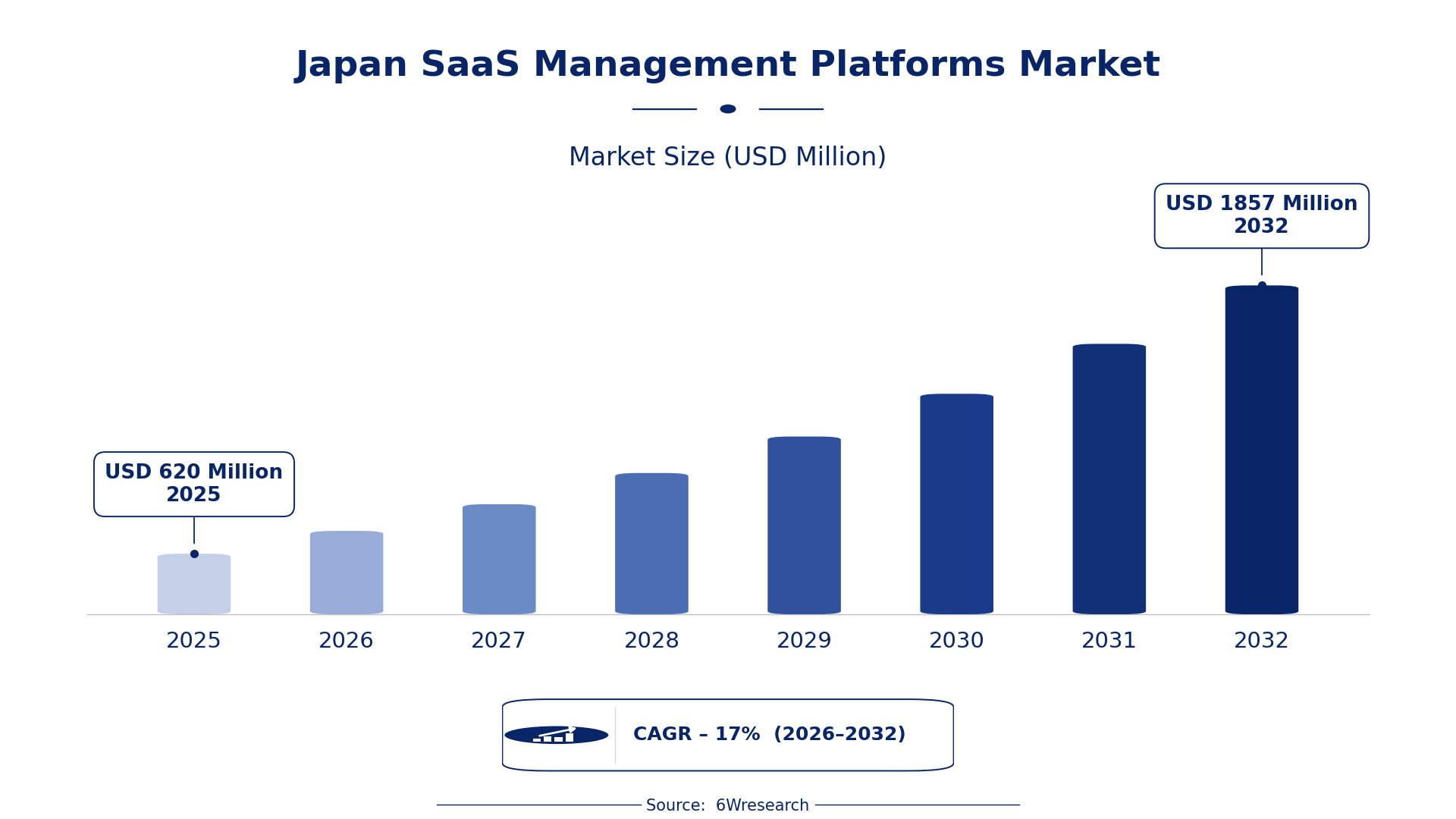
According to 6Wresearch internal database and industry insights, the Japan SaaS Management Platforms Market was valued at USD 620 Million in 2025 and is projected to reach USD 1,857 Million by 2032, growing at a CAGR of approximately 17% during 2026–2032.
Japan SaaS Management Platforms Market Highlights
| Report Metric | Details |
| Report Name | Japan SaaS Management Platforms Market (2026-2032) |
| Market Size 2025 | USD 620 Million |
| Market Size 2032 | USD 1,857 Million |
| Absolute Growth 2025–2032 | USD 1,237 Million |
| CAGR 2026–2032 | 17% |
| Peak Annual Growth | 18.3% in 2026 |
| Forecast Period | 2026–2032 |
| Historical Data | 2022–2025 |
| Base Year | 2025 |
| Leading Platform Type, 2025 | Spend Management (43% share) |
| Leading Feature Set, 2025 | Subscription Tracking (49% share) |
| Leading Deployment Model, 2025 | SaaS-Based (50% share) |
| Leading Target Company Size, 2025 | SMEs (49% share) |
| Leading Use Case Area, 2025 | Cost Optimization (36% share) |
| Fastest-Growing Platform Type | Access Management (18.4% CAGR) |
| Fastest-Growing Feature Set | User Provisioning (22.0% CAGR) |
| Fastest-Growing Deployment Model | Cloud (24.2% CAGR) |
| Fastest-Growing Target Company Size | Enterprises (21.6% CAGR) |
| Fastest-Growing Use Case Area | Security Compliance (19.9% CAGR) |
| Growing Sector | IT and Finance |
| Key End Users | SMEs, Enterprises, Startups, Mid-Sized Businesses |
Japan SaaS Management Platforms Market Year-wise Growth Rate and Key Drivers (2022–2032)
This graph illustrates the annual growth rates of the market from 2022 to 2032, highlighting a steady upward trajectory and projected market expansion over the forecast period.
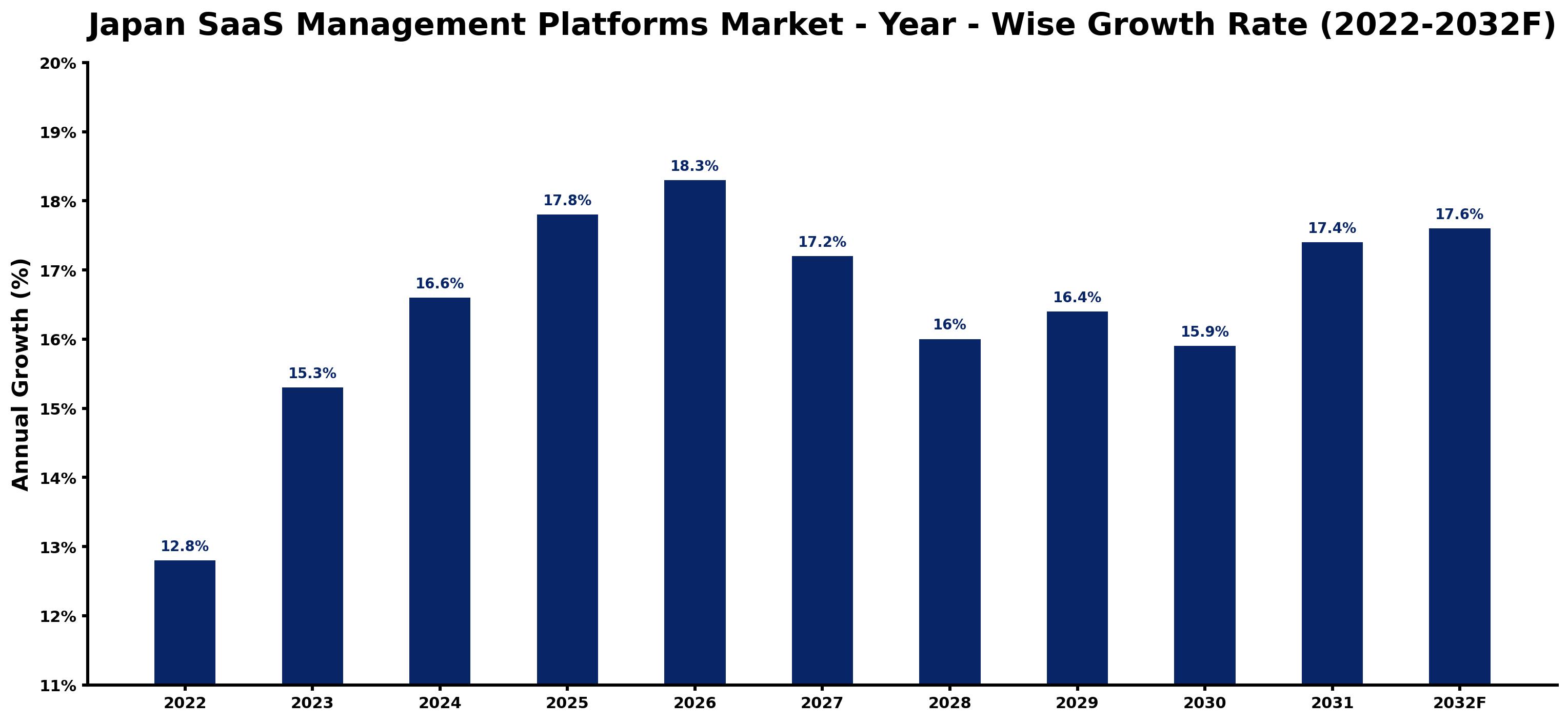
For each year, the table pairs the estimated growth rate with the leading influence on demand, showing how the drivers changed across the period.
| Year | Estimated Annual Growth (%) | Market Rationale |
| 2022 | 12.8 | The market was characterised by steady SaaS adoption across various sectors. |
| 2023 | 15.3 | Increased digital transformation initiatives led to a surge in SaaS platform usage among enterprises. |
| 2024 | 16.6 | Growing demand for cost optimization strategies drove further investments in SaaS management tools. |
| 2025 | 17.8 | Heightened focus on security compliance prompted enterprises to improve their SaaS management capabilities. |
| 2026 | 18.3 | New digital initiatives are likely to stimulate the highest growth rate in SaaS spending. |
| 2027 | 17.2 | Market growth is projected to slow slightly as enterprises consolidate their SaaS applications. |
| 2028 | 16.0 | Cost control measures will contribute to continued but slower growth in SaaS adoption. |
| 2029 | 16.4 | Demand for user provisioning tools is expected to increase, driving growth back up in the SaaS sector. |
| 2030 | 15.9 | Renewed emphasis on security compliance will lead to a moderate slowdown in growth as companies reassess their strategies. |
| 2031 | 17.4 | The market is projected to rebound with more enterprises investing in multiple SaaS applications for efficiency. |
| 2032 | 17.6 | Ongoing digital transformation initiatives will sustain strong growth in SaaS management. |
Note: Market size estimations and growth projections presented in this report are based on 6Wresearch's proprietary forecasting methodology, utilizing the latest available industry data, government publications, and primary research inputs.
Japan SaaS Management Platforms Market Synopsis
SaaS Management Platforms are cloud-based solutions that assist organizations in managing their software as a service applications. These platforms facilitate tasks such as license management, user provisioning, and usage analytics, primarily used for optimizing costs and ensuring security compliance. The Japan SaaS Management Platforms Market is growing due to increased adoption among enterprises and SMEs, with over 70% of enterprises using multiple SaaS applications. The average annual growth rate of SaaS spending is projected at 15%, driven by digital transformation programmes and a focus on cost optimization, which is encouraging further investments.
Market Dynamics Impact Analysis (2026–2032)
| Factor | Type | Impact | Primary Segment Affected |
| Increased adoption of cloud technologies | Driver | High | SaaS-Based |
| Growing demand for security compliance solutions | Driver | High | Security Compliance |
| Rising number of SMEs adopting SaaS solutions | Opportunity | High | SMEs |
| Expansion of SaaS applications in the Tokyo region | Opportunity | High | Spend Management |
| Challenges in integrating multiple SaaS applications | Restraint | Medium | Access Management |
| Limited awareness of SaaS management benefits among smaller firms | Restraint | Medium | SMEs |
| Supply chain disruptions affecting software availability | Challenge | High | Spend Management |
| Inadequate training for users on SaaS platforms | Challenge | Medium | Spend Management |
Evaluation of Drivers in Japan SaaS Management Platforms Market (2026–2032)
Demand rests on the following drivers, each shown with the segment it touches most.
| Drivers | Primary Segment Affected | Why It Matters (Evidence) |
| Growing digital transformation initiatives | SaaS-Based | The average annual growth rate of SaaS spending in Japan is projected at 15%, indicating increased demand for management platforms. |
| Focus on cost optimization | Cost Optimization | The average cost savings reported by companies using SaaS management platforms is 20%, prompting more purchases. |
| Increased regulatory requirements | Security Compliance | The JIS Q 15001 standard drives enterprises to adopt SaaS management platforms for compliance. |
| Rising number of SaaS applications used | Usage Analytics | Enterprises in Japan use an average of 30 SaaS applications, necessitating management solutions. |
| Support from local government initiatives | SMEs | The Tokyo Metropolitan Government supports startups with SaaS solutions through funding initiatives. |
Behind the steady rise in orders sits the average annual growth rate of SaaS spending in Japan, projected at 15%. This growth is prompting enterprises to invest in management platforms for efficiency. Over 70% of enterprises use multiple SaaS applications, increasing the need for effective management solutions. The average cost savings reported by companies using SaaS management platforms is 20%, which encourages further purchases. The JIS Q 15001 standard drives demand for security-focused solutions as compliance becomes increasingly critical.
Evaluation of Restraints in Japan SaaS Management Platforms Market
The key brakes on demand, and where they bite hardest, are shown below.
| Market Restraint | Primary Segment Affected | Why It Matters (Evidence) |
| Integration challenges with existing systems | Access Management | Over 70% of enterprises face difficulties integrating multiple SaaS applications, complicating management. |
| Limited understanding of SaaS management benefits | SMEs | Many SMEs lack awareness of how SaaS management platforms can optimize costs and improve security. |
| Supply chain disruptions impacting software availability | Enterprises | Supply chain issues have delayed the deployment of essential SaaS management tools for enterprises. |
| Inadequate training on SaaS platforms | Spend Management | A lack of training resources for users leads to underutilization of SaaS management platforms. |
| High initial investment costs for SMEs | SMEs | The upfront costs of implementing SaaS management solutions can deter smaller firms from adoption. |
Japan SaaS Management Platforms Market Challenges
Integration of technology remains a critical barrier for SaaS management platforms, as many Japanese companies depend on legacy systems, causing delays of up to six months for producers. Buyers struggle with managing multiple subscriptions, leading to an average overspend of 20% on unused licenses, which directly impacts their operational budgets. Competition among over 1,000 SaaS providers creates market saturation, making it difficult for clinics to identify optimal solutions. Compliance with JIS Q 15001 incurs additional costs of 15% for hospitals, further straining their financial resources.
Trends in the Japan SaaS Management Platforms Market
The shifts below are changing how Japan SaaS Management Platforms Market products are bought and supplied.
- Growth of Digital Transformation Initiatives: In 2023, the Ministry of Economy, Trade and Industry launched a digital transformation programme aimed at increasing SaaS adoption. This initiative aims to boost digital adoption in SMEs by 30% by 2025.
- Shift Towards Security Compliance: The focus on security compliance intensified in 2023 as JIS Q 15001 became a standard for SaaS applications. This shift is driving enterprises to invest more in SaaS management platforms.
- Increase in SaaS Application Usage: The total number of SaaS users in Japan is estimated to exceed 10 million by 2025, reflecting a growing reliance on cloud solutions. This trend indicates a strong demand for management platforms.
- Expansion of SaaS Solutions in Tokyo: The Tokyo region has become a hub for SaaS deployments, accounting for 40% of the market. This concentration is prompting increased investments in SaaS management platforms.
Investment Opportunities in the Japan SaaS Management Platforms Market
The openings below show where demand in the Japan SaaS Management Platforms Market is visible and how suppliers can enter.
- Growing SME Adoption: With 60% of SMEs adopting SaaS solutions in 2023, there is an opportunity to supply tailored management platforms. Local partnerships can facilitate entry into this expanding market.
- Investment in Security Compliance Solutions: The rising focus on security compliance presents an opportunity to develop specialized SaaS management tools. Enterprises are increasingly seeking solutions that meet JIS Q 15001 standards.
- Support for Startups in Tokyo: The Tokyo Metropolitan Government's funding initiatives for startups create a gap for SaaS management solutions. Collaborating with local startups can strengthen market presence.
- Developing Usage Analytics Tools: As usage analytics tools are among the top features requested, suppliers can invest in creating advanced analytics capabilities. This aligns with the growing demand from enterprises.
Government Initiatives in the Japan SaaS Management Platforms Market
The Digital Agency, established in September 2021, leads the government’s digital transformation efforts, setting standards for SaaS management. This agency's initiatives aim to increase digital adoption in SMEs by 30% by 2025, supporting the overall growth of SaaS management platforms.
The digital transformation programme launched by the Ministry of Economy, Trade and Industry in 2023 allocates funding to support SaaS adoption. This initiative encourages enterprises to invest in SaaS management solutions, ensuring compliance and optimizing costs.
Future Insight of the Japan SaaS Management Platforms Market
SMEs will adopt advanced tools for usage analytics, improving their software management capabilities. By 2032, the digital transformation programme from the Ministry of Economy, Trade and Industry will drive a 30% increase in digital adoption among SMEs, boosting their operational efficiency. The Cloud Security Alliance Japan chapter will establish new best practices, raising security standards across the sector. The total number of SaaS users is projected to exceed 10 million by 2025, indicating a growing market that will benefit both buyers and suppliers.
Market Segmentation Analysis
Japan SaaS Management Platforms Market report covers a detailed analysis of the following market segments:
By Platform Type – Spend Management Leads, Access Management Expected to Grow Fastest
According to Uttkarsh, Research Associate at 6Wresearch, Spend Management accounted for 43% of the market by platform type in 2025. Spend Management holds the largest share because it is essential for tracking and optimizing software expenses, a critical need for many organizations. With enterprises using an average of 30 SaaS applications, the demand for effective spend management solutions is evident. The quickest growth will come from Access Management, forecast to expand at a CAGR of 18.4% between 2026 and 2032. Access Management is growing rapidly due to the increasing necessity for managing user access to applications, especially amidst rising security concerns. The promotion of cloud computing adoption by the Ministry of Internal Affairs and Communications further highlights the importance of secure access management. Suppliers should enhance access management features to capture the growing demand in the market.
By Feature Set – Subscription Tracking Leads, User Provisioning Expected to Grow Fastest
With 49% of feature set revenue in 2025, Subscription Tracking was the largest category. Subscription Tracking leads the market as it is vital for managing recurring software costs, which is a primary concern for many users. The average subscription length for SaaS products in Japan being 12 months underscores the necessity of effective tracking solutions. Over 2026–2032, User Provisioning is expected to post the fastest growth, at a CAGR of 22.0%. User Provisioning is the fastest-growing feature due to its importance in efficiently onboarding and offboarding users, which is critical for maintaining productivity. The digital transformation programme launched by the Ministry of Economy, Trade and Industry accelerates this need. Buyers will benefit from platforms that streamline user provisioning processes, enhancing operational efficiency.
By Deployment Model – SaaS-Based Leads, Cloud Expected to Grow Fastest
The largest deployment model category in 2025 was SaaS-Based, at 50% of revenue. SaaS-Based deployment is the most prevalent model, as it is the primary method for accessing these platforms and aligns well with user preferences for cloud solutions. The Tokyo region accounts for 40% of SaaS deployments in Japan, reinforcing this model's dominance. Cloud is set to record the highest CAGR in this split, 24.2% over 2026–2032. Cloud deployment is growing rapidly because it is essential for deployment and accessibility, particularly with the government's push for cloud computing adoption. The increasing number of SMEs adopting SaaS solutions also supports this trend. Suppliers should prioritise cloud-based solutions to meet the rising demand from various sectors.
By Target Company Size – SMEs Lead, Enterprises Expected to Grow Fastest
In 2025, SMEs led the target company size split with a 49% share. SMEs represent the largest user segment as they seek cost-effective solutions to manage their SaaS applications. With 60% of SMEs adopting SaaS solutions in 2023, their crucial role in market growth is clear. Enterprises are projected to grow fastest, at a CAGR of 21.6% during 2026–2032. Enterprises are the fastest-growing segment due to their complex needs for SaaS management, requiring more sophisticated solutions. The estimated total market size for SaaS in Japan of around 1 trillion yen by 2025 reflects enterprise reliance on these platforms. Suppliers must tailor their offerings to meet the specific needs of enterprise clients, ensuring comprehensive solutions.
By Use Case Area – Cost Optimization Leads, Security Compliance Expected to Grow Fastest
Cost Optimization held 36% of the Japan SaaS Management Platforms Market by use case area in 2025. Cost Optimization is the leading use case as it addresses the primary concern of all users in managing their software expenses effectively. The average cost savings of 20% reported by companies using SaaS management platforms highlights the importance of this focus. The quickest growth will come from Security Compliance, forecast to expand at a CAGR of 19.9% between 2026 and 2032. Security Compliance is the fastest-growing use case, driven by the need to maintain regulatory standards in an increasingly digital landscape. The Cloud Security Alliance Japan chapter promotes best practices for cloud security, further emphasising this necessity. Buyers will increasingly prioritise platforms that ensure compliance with security standards, influencing their purchasing decisions.
Key Attractiveness of the Report
- 10 Years of Market Numbers
- Historical Data Starting from 2022 to 2025
- Base Year 2025
- Forecast Data until 2032
- Key Performance Indicators Impacting the Market
- Major Upcoming Developments and Projects
Key Highlights of the Report:
- Japan SaaS Management Platforms Market Outlook
- Market Size of Japan SaaS Management Platforms Market, 2025
- Forecast of Japan SaaS Management Platforms Market, 2032
- Historical Data and Forecast of Japan SaaS Management Platforms Revenues & Volume for the Period 2022-2032F
- Japan SaaS Management Platforms Market Trend Evolution
- Japan SaaS Management Platforms Market Drivers and Challenges
- Japan SaaS Management Platforms Price Trends
- Japan SaaS Management Platforms Porter's Five Forces
- Japan SaaS Management Platforms Industry Life Cycle
- Historical Data and Forecast of Japan SaaS Management Platforms Market Revenues & Volume By Platform Type for the Period 2022-2032F
- Historical Data and Forecast of Japan SaaS Management Platforms Market Revenues & Volume By Spend Management for the Period 2022-2032F
- Historical Data and Forecast of Japan SaaS Management Platforms Market Revenues & Volume By Access Management for the Period 2022-2032F
- Historical Data and Forecast of Japan SaaS Management Platforms Market Revenues & Volume By License Management for the Period 2022-2032F
- Historical Data and Forecast of Japan SaaS Management Platforms Market Revenues & Volume By Workflow Automation for the Period 2022-2032F
- Historical Data and Forecast of Japan SaaS Management Platforms Market Revenues & Volume By Feature Set for the Period 2022-2032F
- Historical Data and Forecast of Japan SaaS Management Platforms Market Revenues & Volume By Subscription Tracking for the Period 2022-2032F
- Historical Data and Forecast of Japan SaaS Management Platforms Market Revenues & Volume By User Provisioning for the Period 2022-2032F
- Historical Data and Forecast of Japan SaaS Management Platforms Market Revenues & Volume By Usage Analytics for the Period 2022-2032F
- Historical Data and Forecast of Japan SaaS Management Platforms Market Revenues & Volume By App Integration for the Period 2022-2032F
- Historical Data and Forecast of Japan SaaS Management Platforms Market Revenues & Volume By Deployment Model for the Period 2022-2032F
- Historical Data and Forecast of Japan SaaS Management Platforms Market Revenues & Volume By SaaS-Based for the Period 2022-2032F
- Historical Data and Forecast of Japan SaaS Management Platforms Market Revenues & Volume By Cloud for the Period 2022-2032F
- Historical Data and Forecast of Japan SaaS Management Platforms Market Revenues & Volume By Hybrid for the Period 2022-2032F
- Historical Data and Forecast of Japan SaaS Management Platforms Market Revenues & Volume By API-Driven for the Period 2022-2032F
- Historical Data and Forecast of Japan SaaS Management Platforms Market Revenues & Volume By Target Company Size for the Period 2022-2032F
- Historical Data and Forecast of Japan SaaS Management Platforms Market Revenues & Volume By SMEs for the Period 2022-2032F
- Historical Data and Forecast of Japan SaaS Management Platforms Market Revenues & Volume By Enterprises for the Period 2022-2032F
- Historical Data and Forecast of Japan SaaS Management Platforms Market Revenues & Volume By Startups for the Period 2022-2032F
- Historical Data and Forecast of Japan SaaS Management Platforms Market Revenues & Volume By Mid-Sized Businesses for the Period 2022-2032F
- Historical Data and Forecast of Japan SaaS Management Platforms Market Revenues & Volume By Use Case Area for the Period 2022-2032F
- Historical Data and Forecast of Japan SaaS Management Platforms Market Revenues & Volume By Cost Optimization for the Period 2022-2032F
- Historical Data and Forecast of Japan SaaS Management Platforms Market Revenues & Volume By Security Compliance for the Period 2022-2032F
- Historical Data and Forecast of Japan SaaS Management Platforms Market Revenues & Volume By Renewal Management for the Period 2022-2032F
- Historical Data and Forecast of Japan SaaS Management Platforms Market Revenues & Volume By Productivity Boosting for the Period 2022-2032F
- Japan SaaS Management Platforms Import Export Trade Statistics
- Market Opportunity Assessment By Platform Type
- Market Opportunity Assessment By Feature Set
- Market Opportunity Assessment By Deployment Model
- Market Opportunity Assessment By Target Company Size
- Market Opportunity Assessment By Use Case Area
- Japan SaaS Management Platforms Top Companies Market Share
- Japan SaaS Management Platforms Competitive Benchmarking By Technical and Operational Parameters
- Japan SaaS Management Platforms Company Profiles
- Japan SaaS Management Platforms Key Strategic Recommendations
Market Covered
Segments analysed in this report are listed below.
By Platform Type
- Spend Management
- Access Management
- License Management
- Workflow Automation
By Feature Set
- Subscription Tracking
- User Provisioning
- Usage Analytics
- App Integration
By Deployment Model
- SaaS-Based
- Cloud
- Hybrid
- API-Driven
By Target Company Size
- SMEs
- Enterprises
- Startups
- Mid-Sized Businesses
By Use Case Area
- Cost Optimization
- Security Compliance
- Renewal Management
- Productivity Boosting































