Japan Scarlet Fever Market Size & Growth Rate
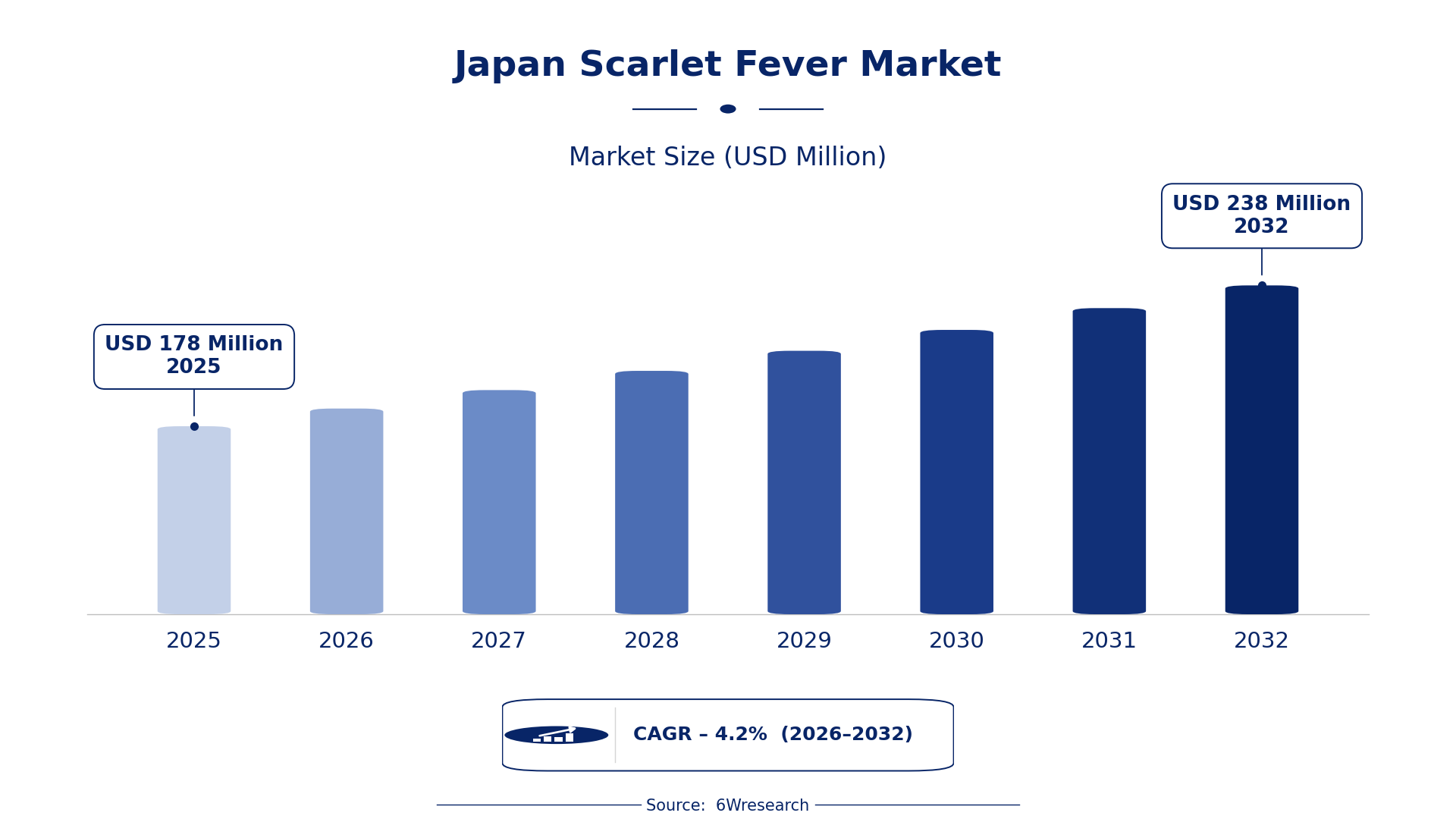
According to 6Wresearch internal database and industry insights, the Japan Scarlet Fever Market was valued at USD 178 Million in 2025 and is projected to reach USD 238 Million by 2032, growing at a CAGR of approximately 4.2% during 2026–2032.
Japan Scarlet Fever Market Highlights
| Report Metric | Details |
| Report Name | Japan Scarlet Fever Market (2026-2032) |
| Market Size 2025 | USD 178 Million |
| Market Size 2032 | USD 238 Million |
| Absolute Growth 2025–2032 | USD 60 Million |
| CAGR 2026–2032 | 4.2% |
| Peak Annual Growth | 5.4% in 2028 |
| Forecast Period | 2026–2032 |
| Historical Data | 2022–2025 |
| Base Year | 2025 |
| Leading Treatment, 2025 | Antibiotics (67% share) |
| Leading Route of Administration, 2025 | Oral (46% share) |
| Leading End-Users, 2025 | Hospitals (38% share) |
| Leading Distribution Channel, 2025 | Hospital Pharmacy (49% share) |
| Fastest-Growing Route of Administration | Parenteral (5.3% CAGR) |
| Fastest-Growing End-Users | Homecare (5.7% CAGR) |
| Fastest-Growing Distribution Channel | Online Pharmacy (5.9% CAGR) |
| Growing Sector | Pediatric healthcare |
| Key End Users | Hospitals, Homecare, Specialty Clinics |
Japan Scarlet Fever Market Year-wise Growth Rate and Key Drivers (2022–2032)
This graph illustrates the annual growth rates of the market from 2022 to 2032, highlighting a steady upward trajectory and projected market expansion over the forecast period.
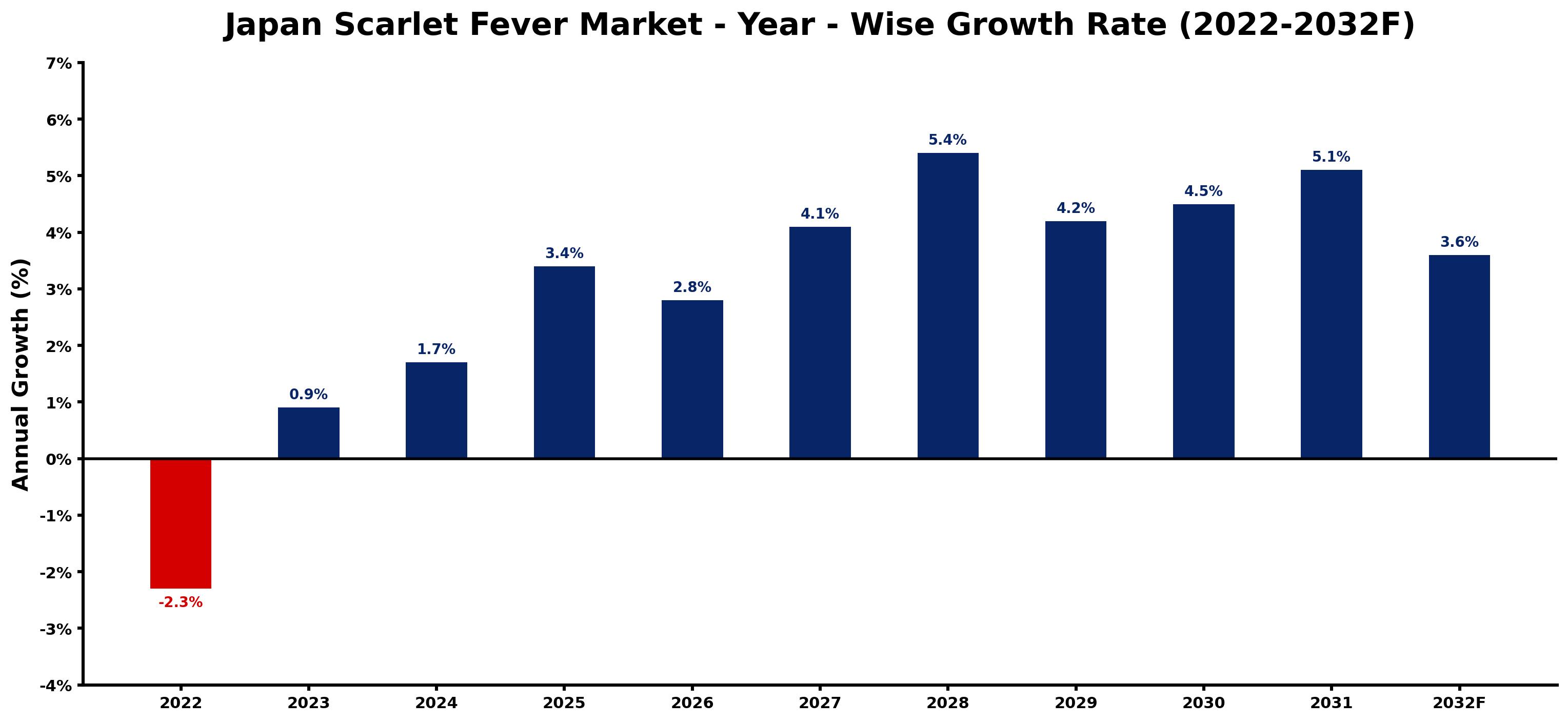
Year by year, the estimates below pair each growth rate with the development that shaped it.
| Year | Estimated Annual Growth (%) | Market Rationale |
| 2022 | -2.3 | Scarlet fever cases were reported at approximately 15,000, reflecting a stable healthcare response. |
| 2023 | 0.9 | An awareness campaign launched by the Ministry of Health, Labour and Welfare contributed to increased public knowledge. |
| 2024 | 1.7 | The demand for antibiotics rose as treatment protocols were reinforced by clinical guidelines. |
| 2025 | 3.4 | The market saw growth as hospitals increased capacity for treating infectious diseases. |
| 2026 | 2.8 | A slowdown in growth is expected as the market adjusts to previous peaks in demand. |
| 2027 | 4.1 | Demand for antibiotics is projected to rise as healthcare providers focus on effective treatment options. |
| 2028 | 5.4 | A peak in growth will be driven by heightened awareness and preventive measures against scarlet fever. |
| 2029 | 4.2 | Growth is expected to slow slightly as the market stabilises after the peak year. |
| 2030 | 4.5 | Increased healthcare expenditure will support a rise in antibiotic purchases for scarlet fever treatment. |
| 2031 | 5.1 | A growing focus on infectious disease management will lead to rising demand for effective treatments. |
| 2032 | 3.6 | The market growth is projected to slow as treatment protocols become standardised and well-established. |
Note: Market size estimations and growth projections presented in this report are based on 6Wresearch's proprietary forecasting methodology, utilizing the latest available industry data, government publications, and primary research inputs.
Japan Scarlet Fever Market Synopsis
Scarlet fever, caused by Group A Streptococcus bacteria, is primarily treated with antibiotics, particularly effective in children aged 5 to 15 years. Japan's healthcare system addresses this infectious disease through hospitals and clinics, with demand arising from domestic patients and healthcare providers. The Japan Scarlet Fever Market is growing due to increased public awareness campaigns, rising healthcare expenditure, and a focus on effective treatment protocols, with approximately 15,000 reported cases in 2022.
Market Dynamics Impact Analysis (2026–2032)
| Factor | Type | Impact | Primary Segment Affected |
| Rising incidence of scarlet fever cases | Driver | High | Antibiotics |
| Increased healthcare expenditure | Driver | High | Antibiotics |
| Growing demand for effective treatments | Opportunity | High | Hospitals |
| Expansion of online pharmacies | Opportunity | Medium | Online Pharmacy |
| Limited awareness of scarlet fever prevention | Restraint | High | Others |
| Challenges in antibiotic supply chain | Restraint | Medium | Antibiotics |
| Inadequate healthcare facilities in rural areas | Challenge | High | Hospitals |
| Competition from alternative treatments | Challenge | Medium | Others |
Evaluation of Drivers in Japan Scarlet Fever Market (2026–2032)
The main growth drivers and the segments they affect most are set out below.
| Drivers | Primary Segment Affected | Why It Matters (Evidence) |
| Increased awareness of scarlet fever symptoms | Antibiotics | This awareness leads to early diagnosis and treatment, resulting in higher antibiotic sales, with approximately 15,000 cases reported in 2022. |
| Growing healthcare expenditure in Japan | Antibiotics | The national healthcare expenditure reached approximately 42 trillion yen in 2022, enabling hospitals to invest in effective treatments. |
| Rising number of pediatric healthcare facilities | Hospitals | With over 3,000 pediatric healthcare facilities, hospitals are equipped to treat more cases of scarlet fever effectively. |
| Implementation of clinical guidelines by the Japan Pediatric Society | Antibiotics | These guidelines ensure standardized treatment protocols, increasing the demand for antibiotics like penicillin, which are essential for effective treatment. |
| Expansion of online pharmacy services | Online Pharmacy | The growing option for homecare prescriptions is increasing access to treatments for mild cases of scarlet fever, enhancing patient convenience. |
Behind the steady rise in orders sits increased awareness of scarlet fever symptoms, which leads to early diagnosis and treatment. In 2022, approximately 15,000 cases were reported, driving higher antibiotic sales. The national healthcare expenditure reached approximately 42 trillion yen, allowing hospitals to invest in effective treatments. With over 3,000 pediatric healthcare facilities, hospitals are well-equipped to manage scarlet fever cases. The implementation of clinical guidelines by the Japan Pediatric Society is standardising treatment protocols, further increasing the demand for antibiotics like penicillin.
Evaluation of Restraints in Japan Scarlet Fever Market
The table below lists the restraints and the evidence behind each.
| Market Restraint | Primary Segment Affected | Why It Matters (Evidence) |
| Limited awareness of scarlet fever prevention measures | Others | Many patients remain unaware of preventive measures, resulting in higher incidence rates, with approximately 15,000 cases reported in 2022. |
| Challenges in the antibiotic supply chain | Antibiotics | Supply chain disruptions can create shortages, affecting hospitals' ability to treat patients effectively, with a reported 15 billion yen in treatment costs in 2022. |
| Inadequate healthcare facilities in rural areas | Hospitals | Limited access to healthcare services in rural regions hampers timely treatment for scarlet fever cases, impacting recovery times for many patients. |
| Competition from alternative treatments | Others | The emergence of alternative treatments may divert attention away from traditional antibiotic therapies, affecting overall treatment adherence. |
| Insufficient funding for infectious disease control initiatives | Others | The government allocated 500 million yen for infectious disease control, which may not fully cover the needs of healthcare providers. |
Japan Scarlet Fever Market Challenges
In 2022, treating scarlet fever cost healthcare providers approximately 15 billion yen due to the high volume of reported cases. A shortage of trained paediatric infectious disease specialists in Japan delays timely diagnosis and treatment, impacting recovery for around 5,000 affected children annually. Limited access to advanced diagnostic technology in rural areas forces clinics to rely on outdated methods, resulting in misdiagnosis and prolonged illness for many patients. The lack of awareness campaigns in certain regions leads to late presentations, increasing hospitalisation costs for families by up to 30% during peak seasons.
Trends in the Japan Scarlet Fever Market
Four trends stand out in the Japan Scarlet Fever Market.
- Launch of Awareness Campaigns: In 2023, the Ministry of Health, Labour and Welfare initiated an awareness campaign for scarlet fever prevention. This initiative aims to educate the public about symptoms and treatment, resulting in increased demand for antibiotics.
- Shift Towards Online Pharmacies: The rise of online pharmacy services is changing how patients access medications. In 2023, online pharmacies are becoming a popular option for homecare prescriptions, contributing to a 5.9% growth in this segment.
- Focus on Pediatric Healthcare: The installed base of pediatric healthcare facilities in Japan exceeds 3,000 hospitals. This concentration allows for better management of infectious diseases like scarlet fever, supporting a growing demand for antibiotics.
- Standardisation of Treatment Protocols: Clinical guidelines published by the Japan Pediatric Society are standardising treatment for scarlet fever. This shift is resulting in increased antibiotic sales, with hospitals adopting these protocols.
Investment Opportunities in the Japan Scarlet Fever Market
The openings below show where demand in the Japan Scarlet Fever Market is visible and how suppliers can enter.
- Investment in Pediatric Healthcare Facilities: With a growing number of pediatric healthcare facilities, there is an opportunity to invest in expanding services. The national healthcare expenditure of approximately 42 trillion yen supports this growth.
- Partnerships with Online Pharmacies: The online pharmacy segment is growing at 5.9%, presenting opportunities for partnerships. Collaborating with online platforms can improve access to treatments for patients managing mild cases.
- Development of Awareness Campaigns: The government allocated 500 million yen for infectious disease control initiatives, creating opportunities for healthcare providers to develop awareness campaigns. These initiatives can drive demand for effective treatments.
- Focus on Antibiotic Research: With rising cases of scarlet fever, there is a growing need for effective antibiotics. Investing in research and development can lead to new treatment options, benefiting hospitals and patients.
Government Initiatives in the Japan Scarlet Fever Market
The NHI drug price standard, revised regularly, sets reimbursement prices for antibiotics used in Japanese medical care. This measure ensures that healthcare providers can access affordable medications, facilitating effective treatment for scarlet fever. Additionally, the Medical Care Act sets standards for hospitals and clinics, ensuring adequate facilities and staffing to manage infectious diseases, which is critical for effective patient care.
The Ministry of Health, Labour and Welfare oversees the implementation of the Long-Term Care Insurance Act, which funds nursing care and support services. This act indirectly benefits scarlet fever patients by ensuring access to necessary healthcare services, thereby improving overall treatment outcomes.
Future Insight of the Japan Scarlet Fever Market
Investment in paediatric healthcare facilities will exceed 500 million yen by 2032, creating a surge in accessible treatment options for children. Advanced diagnostic technology will emerge, enabling quicker identification of scarlet fever cases and reducing recovery times. Ongoing awareness campaigns will improve early detection rates, benefiting both patients and healthcare providers. New clinical guidelines from the Japan Pediatric Society will streamline treatment protocols, ensuring that patients receive timely and effective care.
Market Segmentation Analysis
Japan Scarlet Fever Market report covers a detailed analysis of the following market segments:
By Treatment – Antibiotics Lead and Record the Fastest Growth
According to Dhaval Chaurasia, Assistant Manager at 6Wresearch, the largest treatment category in 2025 was Antibiotics, at 67% of revenue. Antibiotics hold the largest share as they are the primary treatment for scarlet fever, with approximately 15,000 reported cases in Japan in 2022. The established clinical guidelines by the Japanese Society of Pediatric Infectious Diseases ensure consistent use of these medications in hospitals and clinics. Its lead should widen, with a projected CAGR of 5.5% during 2026–2032, the highest in this split. The sustained demand for antibiotics will keep their lead widening, as they are essential for treating the infection effectively. With the ongoing awareness campaign launched by the Ministry of Health, Labour and Welfare in 2023, more patients are likely to seek treatment promptly. Suppliers should focus on maintaining a reliable supply of antibiotics to meet the ongoing demand.
By Route of Administration – Oral Leads, Parenteral Expected to Grow Fastest
With 46% of route of administration revenue in 2025, Oral was the largest category. The oral route dominates the market as it is the primary method for administering antibiotics to children, who represent a large portion of scarlet fever cases. This route's convenience and effectiveness make it the preferred choice for outpatient treatment protocols across Japan. Parenteral is set to record the highest CAGR in this split, 5.3% over 2026–2032. The parenteral route is witnessing rapid growth due to the rising number of severe cases that necessitate hospitalisation, particularly in urban areas like Tokyo and Osaka. The increasing awareness of scarlet fever and its complications further propels the demand for this method of treatment. Suppliers should prioritise the development of parenteral solutions to address the growing needs of healthcare facilities managing severe cases.
By End-Users – Hospitals Lead, Homecare Expected to Grow Fastest
Hospitals accounted for 38% of the market by end-users in 2025. Hospitals dominate the market as they are the primary treatment facilities for severe cases of scarlet fever, accounting for a large volume of antibiotic prescriptions. Their established infrastructure and access to specialists make them the preferred choice for managing complex cases. Over 2026–2032, Homecare is expected to post the fastest growth, at a CAGR of 5.7%. Homecare is growing quickly as more mild cases are managed outside of hospitals, supported by recent awareness campaigns promoting self-care. This shift reflects changing patient preferences and the increasing acceptance of home-based treatment options. Suppliers must adapt their strategies to cater to the increasing demand for homecare solutions in the treatment of scarlet fever.
By Distribution Channel – Hospital Pharmacy Leads, Online Pharmacy Expected to Grow Fastest
In 2025, Hospital Pharmacy led the distribution channel split with a 49% share. Hospital pharmacies lead the market as they serve as the primary source for medications dispensed in hospitals, ensuring timely access for patients receiving treatment. Their established relationships with healthcare providers facilitate efficient medication distribution. The quickest growth will come from Online Pharmacy, forecast to expand at a CAGR of 5.9% between 2026 and 2032. Online pharmacies are rapidly gaining traction as a convenient option for homecare prescriptions, particularly as patients seek alternatives to traditional pharmacy visits. The rise in digital health solutions is propelling this segment's growth. This indicates a need for suppliers to strengthen their online presence to capture the growing market of homecare prescriptions.
Key Attractiveness of the Report
- 10 Years of Market Numbers
- Historical Data Starting from 2022 to 2025
- Base Year 2025
- Forecast Data until 2032
- Key Performance Indicators Impacting the Market
- Major Upcoming Developments and Projects
Key Highlights of the Report:
- Japan Scarlet Fever Market Outlook
- Market Size of Japan Scarlet Fever Market, 2025
- Forecast of Japan Scarlet Fever Market, 2032
- Historical Data and Forecast of Japan Scarlet Fever Revenues & Volume for the Period 2022-2032
- Japan Scarlet Fever Market Trend Evolution
- Japan Scarlet Fever Market Drivers and Challenges
- Japan Scarlet Fever Price Trends
- Japan Scarlet Fever Porter's Five Forces
- Japan Scarlet Fever Industry Life Cycle
- Historical Data and Forecast of Japan Scarlet Fever Market Revenues & Volume By Treatment for the Period 2022-2032
- Historical Data and Forecast of Japan Scarlet Fever Market Revenues & Volume By Antibiotics for the Period 2022-2032
- Historical Data and Forecast of Japan Scarlet Fever Market Revenues & Volume By Others for the Period 2022-2032
- Historical Data and Forecast of Japan Scarlet Fever Market Revenues & Volume By Route of Administration for the Period 2022-2032
- Historical Data and Forecast of Japan Scarlet Fever Market Revenues & Volume By Oral for the Period 2022-2032
- Historical Data and Forecast of Japan Scarlet Fever Market Revenues & Volume By Parenteral for the Period 2022-2032
- Historical Data and Forecast of Japan Scarlet Fever Market Revenues & Volume By Others for the Period 2022-2032
- Historical Data and Forecast of Japan Scarlet Fever Market Revenues & Volume By End-Users for the Period 2022-2032
- Historical Data and Forecast of Japan Scarlet Fever Market Revenues & Volume By Hospitals for the Period 2022-2032
- Historical Data and Forecast of Japan Scarlet Fever Market Revenues & Volume By Homecare for the Period 2022-2032
- Historical Data and Forecast of Japan Scarlet Fever Market Revenues & Volume By Specialty Clinics for the Period 2022-2032
- Historical Data and Forecast of Japan Scarlet Fever Market Revenues & Volume By Others for the Period 2022-2032
- Historical Data and Forecast of Japan Scarlet Fever Market Revenues & Volume By Distribution Channel for the Period 2022-2032
- Historical Data and Forecast of Japan Scarlet Fever Market Revenues & Volume By Hospital Pharmacy for the Period 2022-2032
- Historical Data and Forecast of Japan Scarlet Fever Market Revenues & Volume By Online Pharmacy for the Period 2022-2032
- Historical Data and Forecast of Japan Scarlet Fever Market Revenues & Volume By Retail Pharmacy for the Period 2022-2032
- Japan Scarlet Fever Import Export Trade Statistics
- Market Opportunity Assessment By Treatment
- Market Opportunity Assessment By Route of Administration
- Market Opportunity Assessment By End-Users
- Market Opportunity Assessment By Distribution Channel
- Japan Scarlet Fever Top Companies Market Share
- Japan Scarlet Fever Competitive Benchmarking By Technical and Operational Parameters
- Japan Scarlet Fever Company Profiles
- Japan Scarlet Fever Key Strategic Recommendations
Market Covered
The study includes the following segmentation.
By Treatment
- Antibiotics
- Others
By Route of Administration
- Oral
- Parenteral
- Others
By End-Users
- Hospitals
- Homecare
- Specialty Clinics
- Others
By Distribution Channel
- Hospital Pharmacy
- Online Pharmacy
- Retail Pharmacy































