Japan Severe Combined Immunodeficiency (SCID) Market Size & Growth Rate
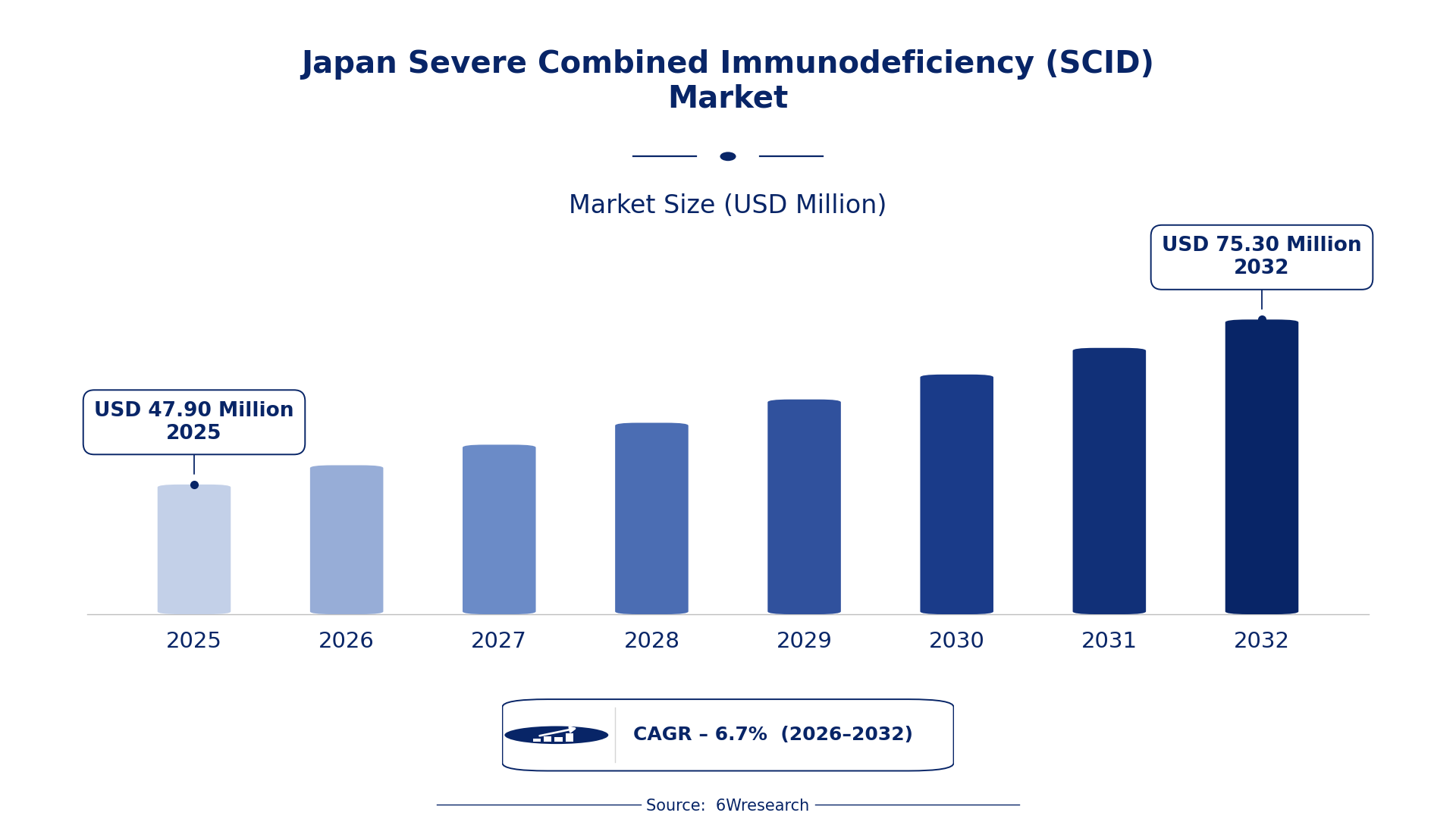
According to 6Wresearch internal database and industry insights, the Japan Severe Combined Immunodeficiency (SCID) Market was valued at USD 47.90 Million in 2025 and is projected to reach USD 75.30 Million by 2032, growing at a CAGR of approximately 6.7% during 2026–2032.
Japan Severe Combined Immunodeficiency (SCID) Market Highlights
| Report Metric | Details |
| Report Name | Japan Severe Combined Immunodeficiency (SCID) Market (2026-2032) |
| Market Size 2025 | USD 47.90 Million |
| Market Size 2032 | USD 75.30 Million |
| Absolute Growth 2025–2032 | USD 27.40 Million |
| CAGR 2026–2032 | 6.7% |
| Peak Annual Growth | 7.2% in 2032 |
| Forecast Period | 2026–2032 |
| Historical Data | 2022–2025 |
| Base Year | 2025 |
| Leading Treatment Type, 2025 | Bone Marrow Transplant (46% share) |
| Leading Therapy Approach, 2025 | Donor Stem Cells (45% share) |
| Leading Delivery Mode, 2025 | IV or Injection (33% share) |
| Leading End User, 2025 | Pediatric Hospitals (38% share) |
| Fastest-Growing Treatment Type | Gene Therapy (9.6% CAGR) |
| Fastest-Growing Therapy Approach | Targeted DNA Editing (9.1% CAGR) |
| Fastest-Growing Delivery Mode | Regular Infusion (8.9% CAGR) |
| Fastest-Growing End User | Genetic Disorder Centers (9.2% CAGR) |
| Growing Sector | pediatric healthcare |
| Key End Users | pediatric hospitals, specialty clinics, immunology specialists |
Japan Severe Combined Immunodeficiency (SCID) Market Year-wise Growth Rate and Key Drivers (2022–2032)
This graph illustrates the annual growth rates of the market from 2022 to 2032, highlighting a steady upward trajectory and projected market expansion over the forecast period.
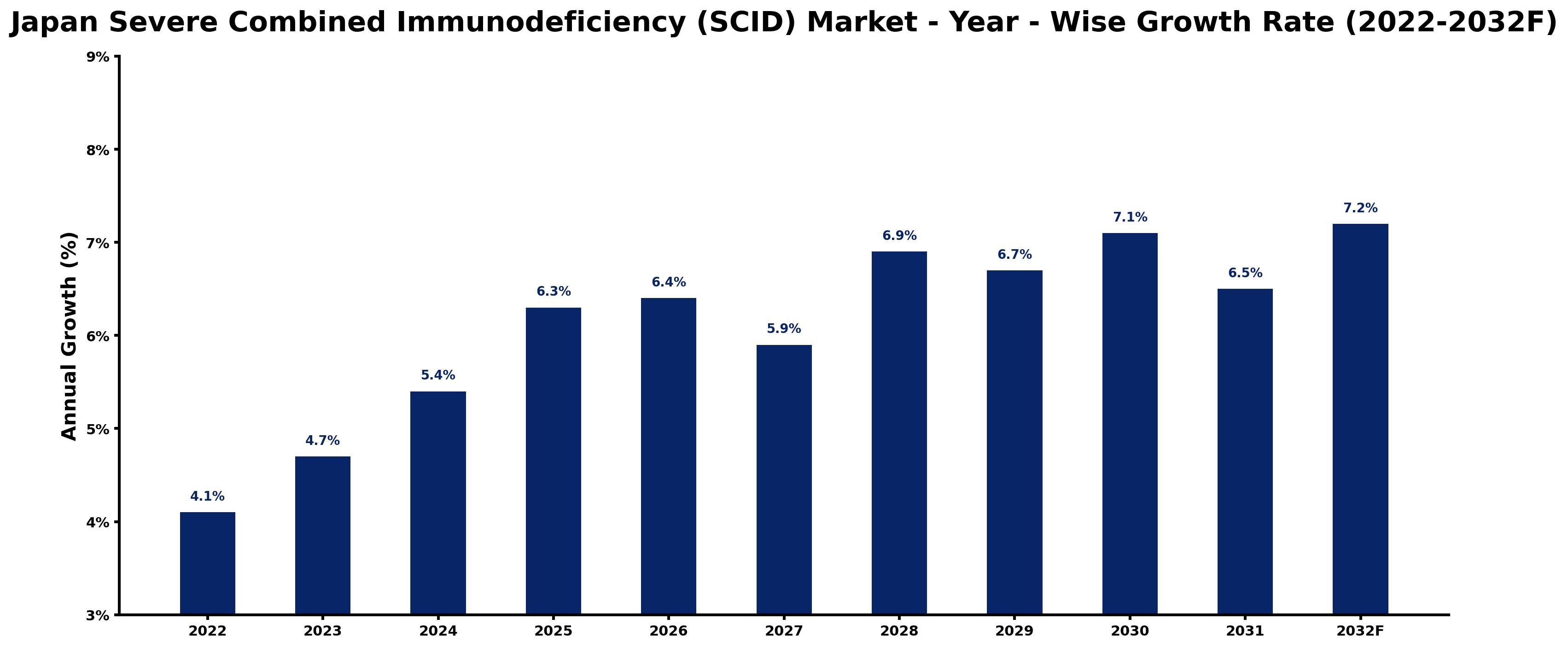
Below, each year's estimated growth is shown next to the factor that most influenced it.
| Year | Estimated Annual Growth (%) | Market Rationale |
| 2022 | 4.1 | The market showed steady growth, reflecting ongoing advancements in treatment options. |
| 2023 | 4.7 | Demand increased due to heightened awareness and improved diagnostic capabilities. |
| 2024 | 5.4 | The introduction of new therapies contributed to a faster growth rate than the previous year. |
| 2025 | 6.3 | Growth accelerated as more pediatric hospitals adopted advanced treatment protocols. |
| 2026 | 6.4 | The market is expected to expand further, driven by increased investments in gene therapy research. |
| 2027 | 5.9 | Growth is projected to slow slightly as the market begins to stabilise after rapid expansion. |
| 2028 | 6.9 | A resurgence in demand is expected as new therapies gain approval and acceptance. |
| 2029 | 6.7 | Growth is projected to decelerate, indicating a normalisation after previous peaks in treatment adoption. |
| 2030 | 7.1 | An increase in treatment options will lead to renewed interest and purchases in the market. |
| 2031 | 6.5 | The market is expected to experience a slowdown as growth rates begin to stabilise. |
| 2032 | 7.2 | The peak growth year is driven by advancements in gene therapy. |
Note: Market size estimations and growth projections presented in this report are based on 6Wresearch's proprietary forecasting methodology, utilizing the latest available industry data, government publications, and primary research inputs.
Japan Severe Combined Immunodeficiency (SCID) Market Synopsis
Severe Combined Immunodeficiency (SCID) is a rare genetic disorder that severely impairs immune function, primarily treated through gene therapy, bone marrow transplants, and enzyme replacement therapies. The Japan Severe Combined Immunodeficiency (SCID) Market is growing due to rising demand from pediatric hospitals and specialty clinics, driven by advancements in genetic therapies and increased awareness of the condition. The annual budget for rare disease research in Japan is approximately ¥10 billion, supporting ongoing innovation and treatment development.
Market Dynamics Impact Analysis (2026–2032)
| Factor | Type | Impact | Primary Segment Affected |
| Rising prevalence of SCID cases drives demand for effective treatments. | Driver | High | Gene Therapy |
| Increased investments in gene therapy research create new treatment options. | Driver | High | Bone Marrow Transplant |
| Growing awareness of SCID among healthcare providers presents opportunities for education and training. | Opportunity | High | Pediatric Hospitals |
| The need for advanced treatment solutions in rural areas creates demand for mobile clinics. | Opportunity | Medium | Specialty Clinics |
| Limited availability of specialized treatment facilities constrains access for patients. | Restraint | High | Pediatric Hospitals |
| High costs associated with gene therapy may limit patient access to treatments. | Restraint | Medium | Gene Therapy |
| Competition among treatment providers may lead to pricing pressures. | Challenge | High | Bone Marrow Transplant |
| Regulatory hurdles can delay the introduction of new therapies to the market. | Challenge | Medium | Gene Therapy |
Evaluation of Drivers in Japan Severe Combined Immunodeficiency (SCID) Market (2026–2032)
The factors lifting demand, and the evidence behind each, are summarised below.
| Drivers | Primary Segment Affected | Why It Matters (Evidence) |
| Increased diagnosis of SCID cases leads to higher demand for treatments. | Gene Therapy | In 2023, Japan had over 1,200 diagnosed SCID cases, prompting hospitals to seek effective therapies. |
| Advancements in gene therapy techniques improve treatment efficacy. | Bone Marrow Transplant | Clinical trials for new SCID therapies are ongoing in multiple hospitals, improving patient outcomes. |
| Growing investment in rare disease research boosts treatment development. | Gene Therapy | The annual budget for rare disease research in Japan is approximately ¥10 billion, facilitating innovation. |
| Rising infection rates among SCID patients create urgency for effective therapies. | Pediatric Hospitals | Infection rates in SCID patients can exceed 80% without treatment, increasing demand for specialized care. |
| Collaboration among research institutions accelerates therapy advancements. | Pediatric Hospitals | The Japan Society for Immunology provides guidelines for SCID treatment, promoting effective protocols. |
Volumes grow on the back of increased diagnosis of SCID cases, with over 1,200 diagnosed in 2023. Ongoing clinical trials are improving treatment efficacy, supported by approximately ¥10 billion allocated for rare disease research annually. Rising infection rates among SCID patients, which can exceed 80% without treatment, create urgency for effective therapies. Research institutions are collaborating to accelerate advancements, ensuring effective protocols are followed. Pediatric hospitals are increasingly adopting these innovations to meet the growing demand for specialized care.
Evaluation of Restraints in Japan Severe Combined Immunodeficiency (SCID) Market
The following restraints limit how fast demand can grow.
| Market Restraint | Primary Segment Affected | Why It Matters (Evidence) |
| Limited availability of specialized treatment facilities restricts patient access. | Pediatric Hospitals | Around 300 pediatric hospitals are equipped for SCID treatment, which may not meet demand. |
| High costs associated with gene therapy treatments can limit patient access. | Gene Therapy | The average cost of gene therapy can be prohibitive, affecting patient affordability. |
| Regulatory hurdles can slow the approval process for new therapies. | Bone Marrow Transplant | The PMD Act regulates approval, manufacture, and quality of pharmaceuticals, impacting timelines. |
| Limited awareness among healthcare providers can hinder timely diagnosis. | Specialty Clinics | Increased education and training are necessary to improve recognition of SCID symptoms. |
| Inadequate insurance coverage for SCID treatments can limit patient access. | Gene Therapy | Many insurance plans do not fully cover the costs associated with advanced therapies. |
Japan Severe Combined Immunodeficiency (SCID) Market Challenges
In Japan, 1,200 diagnosed SCID cases reveal a critical skills shortage among healthcare providers, delaying timely treatment for affected children. Lengthy approval processes under the Pharmaceuticals and Medical Devices Act can postpone access to necessary therapies, impacting patients who need immediate care. Fragmented care arises from competition among specialty clinics, complicating the treatment journey for buyers seeking cohesive solutions. Limited funding for research, with an annual budget of ¥10 billion, restricts technological advancements, preventing producers from efficiently developing new therapies.
Trends in the Japan Severe Combined Immunodeficiency (SCID) Market
These developments are changing demand patterns in the Japan Severe Combined Immunodeficiency (SCID) Market.
- Shift towards Advanced Gene Therapies: In 2023, Japan hosted a conference on advancements in gene therapy for SCID, highlighting the shift towards new treatment solutions. This trend is expected to improve patient outcomes.
- Increase in Pediatric Hospital Facilities: The Tokyo region has the highest concentration of pediatric hospitals treating SCID. This increase supports better access to specialised care for affected patients.
- Emergence of Targeted DNA Editing: Targeted DNA editing is gaining traction as a method for precise genetic correction in SCID patients. This approach is projected to transform treatment protocols in the coming years.
- Growing Focus on Infection Prevention: Infection prevention strategies are becoming critical for managing patient health, with over 80% of SCID patients facing high infection rates without treatment. This focus is reshaping care protocols.
Investment Opportunities in the Japan Severe Combined Immunodeficiency (SCID) Market
The openings below show where demand in the Japan Severe Combined Immunodeficiency (SCID) Market is visible and how suppliers can enter.
- Timing for Improved Treatment Solutions: The current demand for advanced SCID therapies is rising, with a notable gap in treatment accessibility. Investing in mobile clinics can help reach underserved populations effectively.
- Gap in Specialized Training: With over 200 immunology specialists practising in Japan, there is a clear need for enhanced training programmes. Investing in educational initiatives can improve SCID diagnosis and treatment.
- Investment in Gene Therapy Research: The annual budget for rare disease research in Japan is approximately ¥10 billion, presenting an opportunity for treatment development. Collaborating with research institutions can facilitate entry into this market.
- Expansion of Pediatric Hospital Facilities: The increasing number of pediatric hospitals equipped for SCID treatment creates opportunities for suppliers of specialised medical equipment. Establishing partnerships with these facilities can strengthen market presence.
Government Initiatives in the Japan Severe Combined Immunodeficiency (SCID) Market
The Building Energy Efficiency Act, amended in 2022, requires all new hospitals to meet energy standards by April 2025, ensuring that facilities treating SCID patients are equipped with modern infrastructure. This measure complements the Medical Care Act, which sets standards for hospitals and clinics, including those providing SCID treatments.
The Japan Agency for Medical Research and Development funds SCID-related projects, with an annual budget of ¥10 billion. This agency supports research initiatives that improve treatment options for patients suffering from SCID.
Future Insight of the Japan Severe Combined Immunodeficiency (SCID) Market
By 2032, new facilities dedicated to rare disease research will emerge, expanding treatment options for SCID patients. Increased funding for rare disease initiatives will support the development of therapies, benefiting both buyers and suppliers. Enhanced collaboration among hospitals will streamline patient care, ensuring timely access to treatments. With a prevalence of 1 in 50,000 live births, growing awareness will drive advancements in SCID management, ultimately aiding healthcare providers in delivering effective care.
Market Segmentation Analysis
Japan Severe Combined Immunodeficiency (SCID) Market report covers a detailed analysis of the following market segments:
By Treatment Type – Bone Marrow Transplant Leads, Gene Therapy Expected to Grow Fastest
According to Saurav Kr Singh, Senior Research Analyst at 6Wresearch, Bone Marrow Transplant took 46% of treatment type revenue in 2025, more than any other category. Bone marrow transplant serves as the primary method for restoring immune function in SCID patients and is widely utilised in pediatric hospitals throughout Japan. The concentration of these facilities in the Tokyo region highlights the importance of this treatment approach in managing SCID cases. The quickest growth will come from Gene Therapy, forecast to expand at a CAGR of 9.6% between 2026 and 2032. Gene therapy is rapidly gaining traction as a viable treatment option, with ongoing clinical trials showcasing its potential benefits. The Japanese government's commitment to supporting gene therapy research is expected to accelerate its adoption in medical practice. Suppliers should focus on advancing gene therapy solutions to meet the growing demand for effective SCID treatments.
By Therapy Approach – Donor Stem Cells Lead, Targeted DNA Editing Expected to Grow Fastest
The largest therapy approach category in 2025 was Donor Stem Cells, at 45% of revenue. Donor stem cells play a crucial role in transplants for SCID treatment, establishing their significance in therapeutic protocols. The extensive network of approximately 300 pediatric hospitals equipped for SCID treatment reinforces the reliance on this approach. Targeted DNA Editing is set to record the highest CAGR in this split, 9.1% over 2026–2032. Targeted DNA editing is emerging as a precise method for genetic correction, capturing the attention of healthcare providers. As research continues and awareness increases, its integration into clinical practice is anticipated to expand. Buyers can expect enhanced access to advanced therapies as targeted DNA editing becomes more prevalent in SCID treatment options.
By Delivery Mode – IV or Injection Leads, Regular Infusion Expected to Grow Fastest
With 33% of delivery mode revenue in 2025, IV or Injection was the largest category. IV or injection is the most common delivery method for therapies, ensuring immediate administration of treatments in clinical settings. This mode is particularly vital in pediatric hospitals, where timely intervention is critical for SCID patients. Over 2026–2032, Regular Infusion is expected to post the fastest growth, at a CAGR of 8.9%. Regular infusion is becoming the preferred method for ongoing therapy needs, allowing for sustained treatment of SCID. As more patients require long-term management, this delivery mode is expected to see increased utilisation. Suppliers should consider developing more efficient infusion systems to cater to the rising demand for regular infusion therapies.
By End User – Pediatric Hospitals Lead, Genetic Disorder Centers Expected to Grow Fastest
Pediatric Hospitals accounted for 38% of the market by end user in 2025. Pediatric hospitals are the primary facilities for managing SCID, handling the majority of diagnosed cases due to their specialised expertise. With over 1,200 diagnosed cases, these hospitals are vital for effective SCID management. Genetic Disorder Centers are projected to grow fastest, at a CAGR of 9.2% during 2026–2032. Genetic disorder centers are increasingly concentrating on conditions like SCID, contributing to their rapid growth. The heightened awareness of genetic disorders is likely to further expand the services offered in these centres. Suppliers should target genetic disorder centers to capitalise on the rising demand for specialised SCID treatments.
Key Attractiveness of the Report
- 10 Years of Market Numbers
- Historical Data Starting from 2022 to 2025
- Base Year 2025
- Forecast Data until 2032
- Key Performance Indicators Impacting the Market
- Major Upcoming Developments and Projects
Key Highlights of the Report:
- Japan Severe Combined Immunodeficiency (SCID) Market Outlook
- Market Size of Japan Severe Combined Immunodeficiency (SCID) Market, 2025
- Forecast of Japan Severe Combined Immunodeficiency (SCID) Market, 2032
- Historical Data and Forecast of Japan Severe Combined Immunodeficiency (SCID) Revenues & Volume for the Period 2022-2032F
- Japan Severe Combined Immunodeficiency (SCID) Market Trend Evolution
- Japan Severe Combined Immunodeficiency (SCID) Market Drivers and Challenges
- Japan Severe Combined Immunodeficiency (SCID) Price Trends
- Japan Severe Combined Immunodeficiency (SCID) Porter's Five Forces
- Japan Severe Combined Immunodeficiency (SCID) Industry Life Cycle
- Historical Data and Forecast of Japan Severe Combined Immunodeficiency (SCID) Market Revenues & Volume By Treatment Type for the Period 2022-2032F
- Historical Data and Forecast of Japan Severe Combined Immunodeficiency (SCID) Market Revenues & Volume By Gene Therapy for the Period 2022-2032F
- Historical Data and Forecast of Japan Severe Combined Immunodeficiency (SCID) Market Revenues & Volume By Bone Marrow Transplant for the Period 2022-2032F
- Historical Data and Forecast of Japan Severe Combined Immunodeficiency (SCID) Market Revenues & Volume By Enzyme Replacement for the Period 2022-2032F
- Historical Data and Forecast of Japan Severe Combined Immunodeficiency (SCID) Market Revenues & Volume By Antimicrobial Therapy for the Period 2022-2032F
- Historical Data and Forecast of Japan Severe Combined Immunodeficiency (SCID) Market Revenues & Volume By Therapy Approach for the Period 2022-2032F
- Historical Data and Forecast of Japan Severe Combined Immunodeficiency (SCID) Market Revenues & Volume By Targeted DNA Editing for the Period 2022-2032F
- Historical Data and Forecast of Japan Severe Combined Immunodeficiency (SCID) Market Revenues & Volume By Donor Stem Cells for the Period 2022-2032F
- Historical Data and Forecast of Japan Severe Combined Immunodeficiency (SCID) Market Revenues & Volume By PEG-ADA Therapy for the Period 2022-2032F
- Historical Data and Forecast of Japan Severe Combined Immunodeficiency (SCID) Market Revenues & Volume By Infection Prevention for the Period 2022-2032F
- Historical Data and Forecast of Japan Severe Combined Immunodeficiency (SCID) Market Revenues & Volume By Delivery Mode for the Period 2022-2032F
- Historical Data and Forecast of Japan Severe Combined Immunodeficiency (SCID) Market Revenues & Volume By IV or Injection for the Period 2022-2032F
- Historical Data and Forecast of Japan Severe Combined Immunodeficiency (SCID) Market Revenues & Volume By Inpatient Procedure for the Period 2022-2032F
- Historical Data and Forecast of Japan Severe Combined Immunodeficiency (SCID) Market Revenues & Volume By Regular Infusion for the Period 2022-2032F
- Historical Data and Forecast of Japan Severe Combined Immunodeficiency (SCID) Market Revenues & Volume By Oral/IV for the Period 2022-2032F
- Historical Data and Forecast of Japan Severe Combined Immunodeficiency (SCID) Market Revenues & Volume By End User for the Period 2022-2032F
- Historical Data and Forecast of Japan Severe Combined Immunodeficiency (SCID) Market Revenues & Volume By Pediatric Hospitals for the Period 2022-2032F
- Historical Data and Forecast of Japan Severe Combined Immunodeficiency (SCID) Market Revenues & Volume By Specialty Clinics for the Period 2022-2032F
- Historical Data and Forecast of Japan Severe Combined Immunodeficiency (SCID) Market Revenues & Volume By Genetic Disorder Centers for the Period 2022-2032F
- Historical Data and Forecast of Japan Severe Combined Immunodeficiency (SCID) Market Revenues & Volume By Immunology Specialists for the Period 2022-2032F
- Japan Severe Combined Immunodeficiency (SCID) Import Export Trade Statistics
- Market Opportunity Assessment By Treatment Type
- Market Opportunity Assessment By Therapy Approach
- Market Opportunity Assessment By Delivery Mode
- Market Opportunity Assessment By End User
- Japan Severe Combined Immunodeficiency (SCID) Top Companies Market Share
- Japan Severe Combined Immunodeficiency (SCID) Competitive Benchmarking By Technical and Operational Parameters
- Japan Severe Combined Immunodeficiency (SCID) Company Profiles
- Japan Severe Combined Immunodeficiency (SCID) Key Strategic Recommendations
Market Covered
This report examines the market across the segments below.
By Treatment Type
- Gene Therapy
- Bone Marrow Transplant
- Enzyme Replacement
- Antimicrobial Therapy
By Therapy Approach
- Targeted DNA Editing
- Donor Stem Cells
- PEG-ADA Therapy
- Infection Prevention
By Delivery Mode
- IV or Injection
- Inpatient Procedure
- Regular Infusion
- Oral/IV
By End User
- Pediatric Hospitals
- Specialty Clinics
- Genetic Disorder Centers
- Immunology Specialists































