Japan Shipborne Launch Technology Market Size & Growth Rate
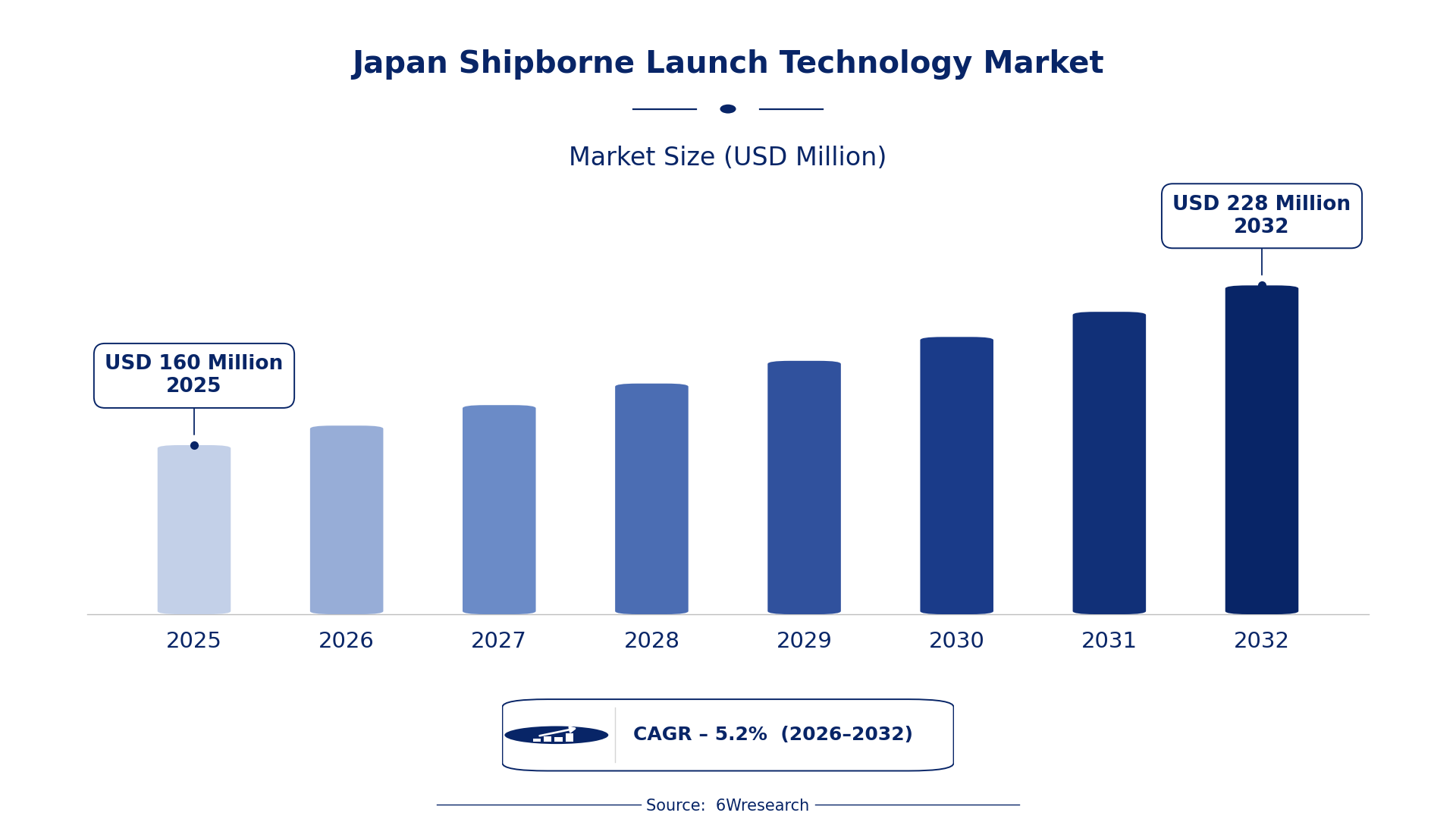
According to 6Wresearch internal database and industry insights, the Japan Shipborne Launch Technology Market was valued at USD 160 Million in 2025 and is projected to reach USD 228 Million by 2032, growing at a CAGR of approximately 5.2% during 2026–2032.
Japan Shipborne Launch Technology Market Highlights
| Report Metric | Details |
| Report Name | Japan Shipborne Launch Technology Market (2026-2032) |
| Market Size 2025 | USD 160 Million |
| Market Size 2032 | USD 228 Million |
| Absolute Growth 2025–2032 | USD 68 Million |
| CAGR 2026–2032 | 5.2% |
| Peak Annual Growth | 5.9% in 2032 |
| Forecast Period | 2026–2032 |
| Historical Data | 2022–2025 |
| Base Year | 2025 |
| Leading Launch System Type, 2025 | Vertical Launch Systems (39% share) |
| Leading Payload Type, 2025 | Missiles (53% share) |
| Leading Ship Platform, 2025 | Destroyers/Frigates (36% share) |
| Leading End User, 2025 | Navy (37% share) |
| Fastest-Growing Launch System Type | Catapult Systems (7.3% CAGR) |
| Fastest-Growing Payload Type | Aircraft (7.7% CAGR) |
| Fastest-Growing Ship Platform | Aircraft Carriers (7.5% CAGR) |
| Fastest-Growing End User | Naval Aviation (6.8% CAGR) |
| Growing Sector | Naval Defense |
| Key End Users | Self-Defense Forces, Navy, Naval Aviation, Marine Defense |
Japan Shipborne Launch Technology Market Year-wise Growth Rate and Key Drivers (2022–2032)
This graph illustrates the annual growth rates of the market from 2022 to 2032, highlighting a steady upward trajectory and projected market expansion over the forecast period.
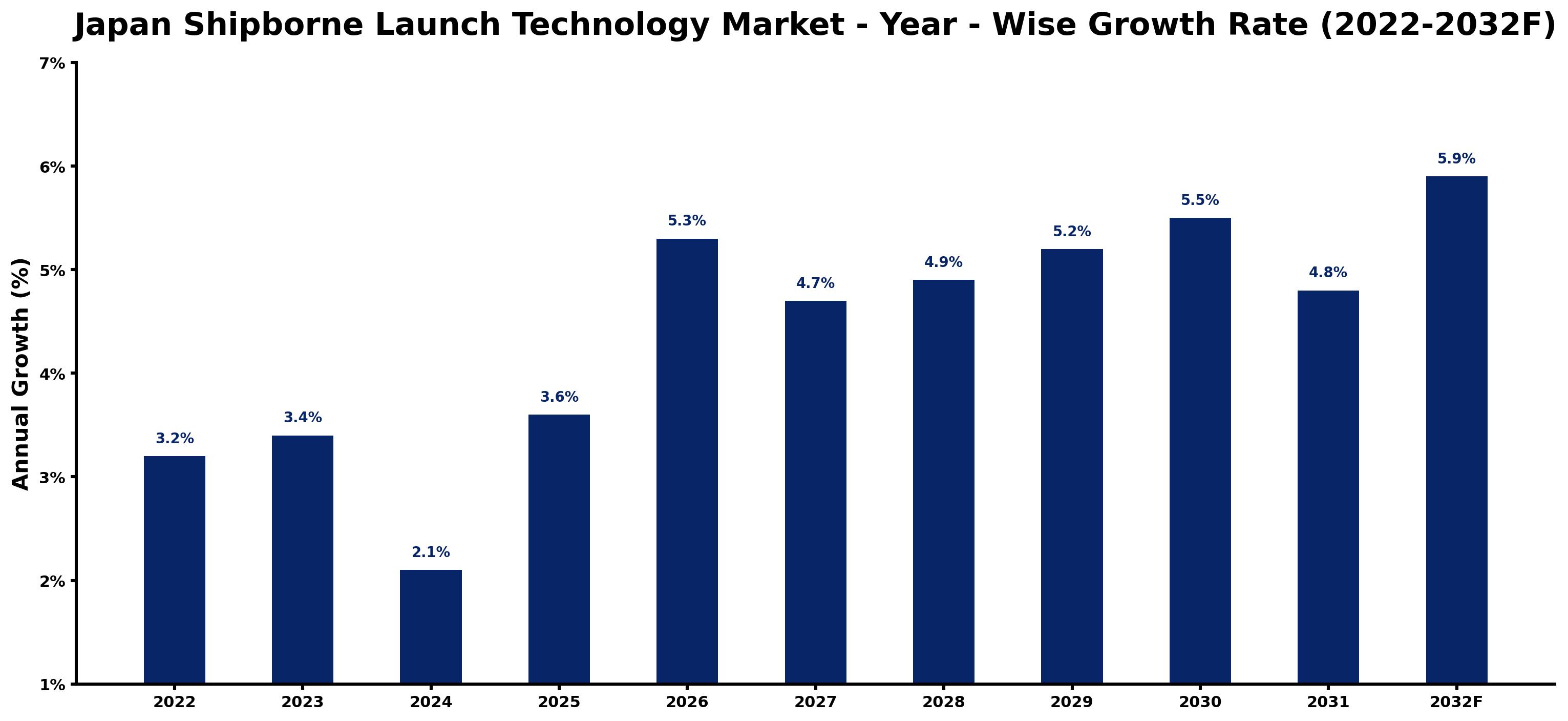
Annual growth estimates for each year appear below with the principal reason behind them, explaining the shifts that set the pace of the market.
| Year | Estimated Annual Growth (%) | Market Rationale |
| 2022 | 3.2 | The market showed steady growth due to ongoing investments in naval capabilities. |
| 2023 | 3.4 | Growth accelerated as the Japanese Navy increased its focus on modernising its fleet. |
| 2024 | 2.1 | A slowdown occurred as budget allocations shifted towards other defence priorities. |
| 2025 | 3.6 | Growth picked up again as new missile systems were integrated into naval operations. |
| 2026 | 5.3 | The market is projected to grow faster as UAV capabilities improve by 2025. |
| 2027 | 4.7 | Growth is expected to slow as the focus shifts towards compliance with standards. |
| 2028 | 4.9 | An increase in growth is anticipated as demand for aircraft carriers rises. |
| 2029 | 5.2 | Growth is expected to remain strong as surveillance drone deployments increase. |
| 2030 | 5.5 | The market is projected to grow as new technologies are adopted in naval operations. |
| 2031 | 4.8 | A slowdown is anticipated as the market stabilises after rapid growth phases. |
| 2032 | 5.9 | Growth will peak as investments in advanced launch technologies accelerate. |
Note: Market size estimations and growth projections presented in this report are based on 6Wresearch's proprietary forecasting methodology, utilizing the latest available industry data, government publications, and primary research inputs.
Japan Shipborne Launch Technology Market Synopsis
Shipborne Launch Technology encompasses systems that deploy payloads from naval vessels, such as vertical launch systems and catapults. The Japanese Self-Defense Forces are the primary users, actively enhancing their naval capabilities in response to regional security needs. The Japan Shipborne Launch Technology Market is growing due to increased defence budgets, a commitment to modernising naval fleets, and the adoption of advanced technologies. In 2023, Japan's defence budget allocated ¥6 trillion for naval capabilities, stimulating demand for new systems and technologies.
Market Dynamics Impact Analysis (2026–2032)
| Factor | Type | Impact | Primary Segment Affected |
| Increased defence budget allocations drive demand for advanced naval technologies. | Driver | High | Vertical Launch Systems |
| Growing emphasis on UAV capabilities enhances demand for launch platforms. | Driver | High | UAV Launch Platforms |
| Rising need for advanced surveillance capabilities offers new market opportunities. | Opportunity | High | Surveillance Drones |
| The integration of new missile systems creates demand for vertical launch systems. | Opportunity | Medium | Missiles |
| Compliance with JIS standards can slow down production timelines. | Restraint | High | Catapult Systems |
| Budget reallocations may limit investment in new technologies. | Restraint | Medium | Torpedo Launch Tubes |
| Cost pressures from advanced technology development can impact budgets. | Challenge | High | Naval Aviation |
| Capacity constraints in local manufacturing may delay project timelines. | Challenge | Medium | Destroyers/Frigates |
Evaluation of Drivers in Japan Shipborne Launch Technology Market (2026–2032)
Below are the drivers that matter most for revenue growth, with supporting evidence.
| Drivers | Primary Segment Affected | Why It Matters (Evidence) |
| Increased defence spending supports the acquisition of advanced vertical launch systems. | Vertical Launch Systems | Japan's defence budget allocated ¥6 trillion in 2023, boosting procurement. |
| Growing investments in UAV capabilities drive demand for launch platforms. | UAV Launch Platforms | The Ministry of Defense aims to enhance UAV capabilities by 2025. |
| Rising regional security concerns necessitate advanced missile systems for naval operations. | Missiles | The Self-Defense Forces plan to integrate new missile systems by 2026. |
| The expansion of naval operations increases the need for catapult systems. | Catapult Systems | Japan has 4 active aircraft carriers equipped with catapult systems. |
| The focus on interoperability with allied forces enhances demand for advanced technologies. | Naval Aviation | The Self-Defense Forces aim for improved interoperability by 2027. |
Orders continue to rise as Japan's defence budget allocated ¥6 trillion for naval capabilities in 2023, prompting greater procurement of advanced launch technologies. Investments in UAV capabilities are set to increase, with targets for improvements by 2025. The integration of new missile systems by 2026 is generating demand for vertical launch systems. The emphasis on interoperability with allied forces is likely to drive advancements in naval aviation technologies. Surveillance drone deployments have surged by 30% in recent years, further propelling market growth.
Evaluation of Restraints in Japan Shipborne Launch Technology Market
These restraints slow adoption and weigh on supplier margins.
| Market Restraint | Primary Segment Affected | Why It Matters (Evidence) |
| Compliance with JIS standards can slow down production timelines. | Catapult Systems | Manufacturers must ensure 100% compliance with JIS standards, affecting delivery schedules. |
| Budget reallocations may limit investment in new technologies. | Torpedo Launch Tubes | Shifts in budget priorities can restrict funding for technological advancements. |
| Rising costs for advanced technology development can impact budgets. | Naval Aviation | Increased expenses for new technologies may lead to reduced procurement budgets. |
| Capacity constraints in local manufacturing may delay project timelines. | Destroyers/Frigates | Limited manufacturing capacity can hinder the timely delivery of new vessels. |
| Market volatility can affect long-term investment decisions. | UAV Launch Platforms | Economic fluctuations may lead to uncertainty in funding for UAV projects. |
Japan Shipborne Launch Technology Market Challenges
Japan's shipborne launch technology market contends with fierce competition from international manufacturers, compelling local producers to lower prices and squeezing profit margins. High production costs arise from the need for advanced materials, resulting in delays of up to six months for manufacturers to launch new products, ultimately hindering their ability to satisfy buyer demands. Rapid technological advancements necessitate substantial R&D investments, diverting resources from core operations and slowing growth. Supply chain disruptions in sourcing essential components can extend delivery timelines for buyers by 20%, threatening their operational readiness.
Trends in the Japan Shipborne Launch Technology Market
Several trends are reshaping the Japan Shipborne Launch Technology Market; the most important are set out below.
- Initiative to Improve UAV Capabilities: The Ministry of Defense has initiated a program to improve UAV capabilities by 2025, which is likely to increase demand for UAV launch platforms. This initiative aligns with Japan's strategic focus on maritime surveillance and reconnaissance capabilities.
- Shift Towards Advanced Vertical Launch Systems: Japan's naval strategy is increasingly prioritising advanced vertical launch systems for missile deployment. The Japanese Navy operates two types of these systems, reflecting a commitment to modernising its fleet and improving operational effectiveness.
- Focus on Interoperability with Allied Forces: The Self-Defense Forces are working on interoperability with allied forces, which is driving demand for advanced naval technologies. This focus is likely to lead to increased procurement of systems that meet international standards.
- Growth in Surveillance Drone Deployments: Surveillance drones launched from naval platforms have increased by 30% in recent years, indicating a shift towards modern reconnaissance methods. This trend is reshaping how naval operations are conducted in the Pacific region.
Investment Opportunities in the Japan Shipborne Launch Technology Market
The following areas offer the clearest openings for investors and suppliers in the Japan Shipborne Launch Technology Market.
- Growing Demand for Advanced Surveillance Technologies: With a 30% increase in surveillance drone deployments, there is an opportunity to provide advanced UAV launch platforms. The Japan Maritime Self-Defense Force represents a key buyer group, and local partnerships can facilitate market entry.
- Investment in Naval Capabilities: Japan's defence budget of ¥6 trillion in 2023 presents an opportunity to invest in advanced launch systems. The Navy serves as a primary buyer group, and establishing joint ventures can strengthen market presence.
- Integration of New Missile Systems: The plan to integrate new missile systems by 2026 offers an opportunity to supply vertical launch systems. Collaborating with the Japan Defense Agency can streamline the approval processes for new technologies.
- Focus on Indigenous Naval Technologies: The government has implemented a subsidy program for the development of indigenous naval technologies, creating opportunities for local manufacturers. Engaging with the Japan Shipbuilding Industry Association can facilitate access to funding.
Government Initiatives in the Japan Shipborne Launch Technology Market
The Industrial Standardization Act governs JIS product and test standards, which are critical for producers of shipborne launch technology. Compliance with these standards ensures that systems meet safety and performance requirements, impacting procurement decisions for the Self-Defense Forces.
The Japan Defense Agency oversees all naval procurement and development, approving projects that align with national defence strategies. This agency funds initiatives aimed at improving naval capabilities, ensuring that investments are directed towards advanced technologies.
Future Insight of the Japan Shipborne Launch Technology Market
Buyers in the Japanese Self-Defense Forces will see improved operational capabilities by 2026, with the integration of new missile systems boosting their effectiveness. The Ministry of Defense's UAV enhancement program will result in a 30% increase in surveillance drone deployments by 2025, benefiting both suppliers and military personnel. Compliance with JIS standards will elevate the quality and reliability of naval equipment, instilling confidence in buyers regarding their investments. The Tokyo region will remain a hub for naval defense technology development, encouraging innovation and collaboration between suppliers and military organisations.
Market Segmentation Analysis
Japan Shipborne Launch Technology Market report covers a detailed analysis of the following market segments:
By Launch System Type – Vertical Launch Systems Lead, Catapult Systems Expected to Grow Fastest
According to Saurav Kr Singh, Senior Research Analyst at 6Wresearch, Vertical Launch Systems held 39% of the Japan Shipborne Launch Technology Market by launch system type in 2025. Vertical launch systems are essential for the Japanese Navy's missile deployment, as they operate two distinct types to enhance their defence capabilities. This strategic focus on advanced technologies ensures a robust installed base within the naval fleet. Catapult Systems are projected to grow fastest, at a CAGR of 7.3% during 2026–2032. The rapid growth of catapult systems is linked to the increasing number of aircraft carriers, which play a vital role in Japan's naval operations. With four active carriers equipped with these systems, demand is anticipated to rise as naval capabilities expand. Suppliers should prioritise advancements in catapult technologies to address the evolving requirements of the Japanese Navy.
By Payload Type – Missiles Lead, Aircraft Expected to Grow Fastest
Missiles accounted for 53% of the market by payload type in 2025. Missiles represent the primary payload for vertical launch systems, which are critical for the Japanese Navy's defence strategy. This focus on missile capabilities is reflected in the substantial allocation of the defence budget towards naval advancements. Over 2026–2032, Aircraft is expected to post the fastest growth, at a CAGR of 7.7%. The demand for aircraft as a payload type is surging due to the operational requirements of aircraft carriers, which are central to Japan's maritime strategy. This is evidenced by the increasing emphasis on catapult systems for launching aircraft. Buyers will benefit from suppliers who can provide advanced missile and aircraft launch technologies tailored to naval applications.
By Ship Platform – Destroyers/Frigates Lead, Aircraft Carriers Expected to Grow Fastest
With 36% of ship platform revenue in 2025, Destroyers/Frigates was the largest category. Destroyers and frigates serve as the backbone of Japan's naval fleet, employing various launch systems to bolster their operational effectiveness. With a total of 50 such vessels in service, they are integral to the nation's naval defence strategy. The quickest growth will come from Aircraft Carriers, forecast to expand at a CAGR of 7.5% between 2026 and 2032. Aircraft carriers are witnessing rapid growth as they become increasingly central to Japan's naval operations, particularly with the emphasis on advanced launch systems like catapults. This focus on enhancing carrier capabilities is expected to drive further investments in this segment. Suppliers should concentrate on innovations for aircraft carriers to align with the Japanese Navy's strategic objectives.
By End User – Navy Leads, Naval Aviation Expected to Grow Fastest
The largest end user category in 2025 was Navy, at 37% of revenue. The Navy is the primary end user of shipborne launch technology, highlighting Japan's commitment to strengthening its maritime defence capabilities. This focus on naval operations leads to substantial investments in advanced launch systems. Naval Aviation is set to record the highest CAGR in this split, 6.8% over 2026–2032. Naval aviation is experiencing rapid growth as it supports the operational needs of the Navy, especially with the integration of new aircraft and technologies. This segment's expansion is essential for maintaining operational readiness and effectiveness. Suppliers must tailor their offerings to meet the specific needs of naval aviation as it becomes increasingly crucial to Japan's defence strategy.
Key Attractiveness of the Report
- 10 Years of Market Numbers
- Historical Data Starting from 2022 to 2025
- Base Year 2025
- Forecast Data until 2032
- Key Performance Indicators Impacting the Market
- Major Upcoming Developments and Projects
Key Highlights of the Report:
- Japan Shipborne Launch Technology Market Outlook
- Market Size of Japan Shipborne Launch Technology Market, 2025
- Forecast of Japan Shipborne Launch Technology Market, 2032
- Historical Data and Forecast of Japan Shipborne Launch Technology Revenues & Volume for the Period 2022-2032F
- Japan Shipborne Launch Technology Market Trend Evolution
- Japan Shipborne Launch Technology Market Drivers and Challenges
- Japan Shipborne Launch Technology Price Trends
- Japan Shipborne Launch Technology Porter's Five Forces
- Japan Shipborne Launch Technology Industry Life Cycle
- Historical Data and Forecast of Japan Shipborne Launch Technology Market Revenues & Volume By Launch System Type for the Period 2022-2032F
- Historical Data and Forecast of Japan Shipborne Launch Technology Market Revenues & Volume By Vertical Launch Systems for the Period 2022-2032F
- Historical Data and Forecast of Japan Shipborne Launch Technology Market Revenues & Volume By Catapult Systems for the Period 2022-2032F
- Historical Data and Forecast of Japan Shipborne Launch Technology Market Revenues & Volume By Torpedo Launch Tubes for the Period 2022-2032F
- Historical Data and Forecast of Japan Shipborne Launch Technology Market Revenues & Volume By UAV Launch Platforms for the Period 2022-2032F
- Historical Data and Forecast of Japan Shipborne Launch Technology Market Revenues & Volume By Payload Type for the Period 2022-2032F
- Historical Data and Forecast of Japan Shipborne Launch Technology Market Revenues & Volume By Missiles for the Period 2022-2032F
- Historical Data and Forecast of Japan Shipborne Launch Technology Market Revenues & Volume By Aircraft for the Period 2022-2032F
- Historical Data and Forecast of Japan Shipborne Launch Technology Market Revenues & Volume By Submarine Weapons for the Period 2022-2032F
- Historical Data and Forecast of Japan Shipborne Launch Technology Market Revenues & Volume By Surveillance Drones for the Period 2022-2032F
- Historical Data and Forecast of Japan Shipborne Launch Technology Market Revenues & Volume By Ship Platform for the Period 2022-2032F
- Historical Data and Forecast of Japan Shipborne Launch Technology Market Revenues & Volume By Destroyers/Frigates for the Period 2022-2032F
- Historical Data and Forecast of Japan Shipborne Launch Technology Market Revenues & Volume By Aircraft Carriers for the Period 2022-2032F
- Historical Data and Forecast of Japan Shipborne Launch Technology Market Revenues & Volume By Submarines for the Period 2022-2032F
- Historical Data and Forecast of Japan Shipborne Launch Technology Market Revenues & Volume By Deck Mounted for the Period 2022-2032F
- Historical Data and Forecast of Japan Shipborne Launch Technology Market Revenues & Volume By End User for the Period 2022-2032F
- Historical Data and Forecast of Japan Shipborne Launch Technology Market Revenues & Volume By Navy for the Period 2022-2032F
- Historical Data and Forecast of Japan Shipborne Launch Technology Market Revenues & Volume By Naval Aviation for the Period 2022-2032F
- Historical Data and Forecast of Japan Shipborne Launch Technology Market Revenues & Volume By Marine Defense for the Period 2022-2032F
- Historical Data and Forecast of Japan Shipborne Launch Technology Market Revenues & Volume By Military Operators for the Period 2022-2032F
- Japan Shipborne Launch Technology Import Export Trade Statistics
- Market Opportunity Assessment By Launch System Type
- Market Opportunity Assessment By Payload Type
- Market Opportunity Assessment By Ship Platform
- Market Opportunity Assessment By End User
- Japan Shipborne Launch Technology Top Companies Market Share
- Japan Shipborne Launch Technology Competitive Benchmarking By Technical and Operational Parameters
- Japan Shipborne Launch Technology Company Profiles
- Japan Shipborne Launch Technology Key Strategic Recommendations
Market Covered
Coverage by segment is as follows.
By Launch System Type
- Vertical Launch Systems
- Catapult Systems
- Torpedo Launch Tubes
- UAV Launch Platforms
By Payload Type
- Missiles
- Aircraft
- Submarine Weapons
- Surveillance Drones
By Ship Platform
- Destroyers/Frigates
- Aircraft Carriers
- Submarines
- Deck Mounted
By End User
- Navy
- Naval Aviation
- Marine Defense
- Military Operators































