Japan Smart Glass Market Size & Growth Rate
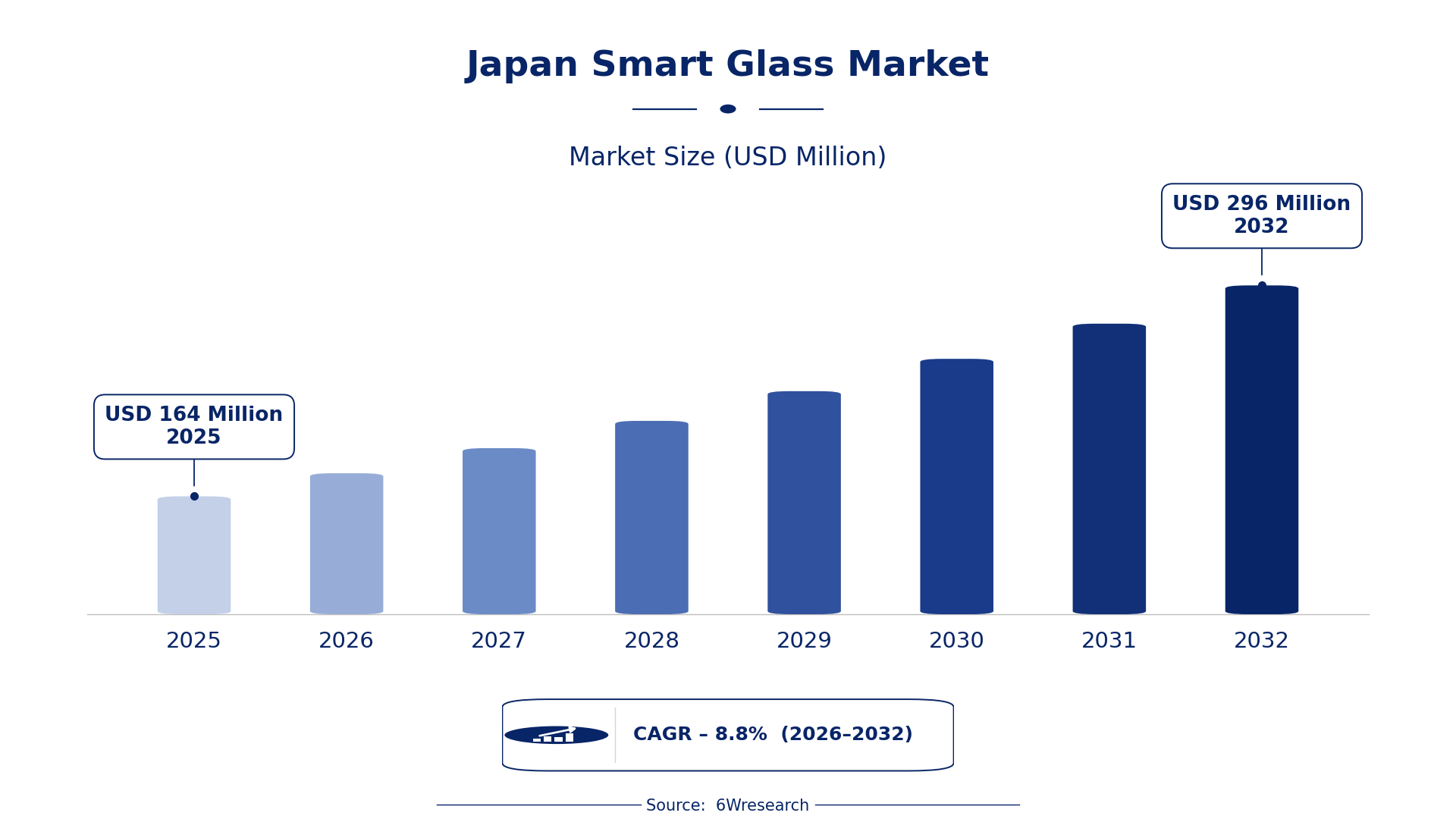
According to 6Wresearch internal database and industry insights, the Japan Smart Glass Market was valued at USD 164 Million in 2025 and is projected to reach USD 296 Million by 2032, growing at a CAGR of approximately 8.8% during 2026–2032.
Japan Smart Glass Market Highlights
| Report Metric | Details |
| Report Name | Japan Smart Glass Market (2026-2032) |
| Market Size 2025 | USD 164 Million |
| Market Size 2032 | USD 296 Million |
| Absolute Growth 2025–2032 | USD 132 Million |
| CAGR 2026–2032 | 8.8% |
| Peak Annual Growth | 9.6% in 2028 |
| Forecast Period | 2026–2032 |
| Historical Data | 2022–2025 |
| Base Year | 2025 |
| Leading Technology, 2025 | Thermochromic (33% share) |
| Leading End User Industry, 2025 | Transportation (42% share) |
| Fastest-Growing Technology | Photochromic (12.3% CAGR) |
| Fastest-Growing End User Industry | Construction (11.6% CAGR) |
| Growing Sector | Construction |
| Key End Users | Transportation, Construction, Power Generation |
Japan Smart Glass Market Year-wise Growth Rate and Key Drivers (2022–2032)
This graph illustrates the annual growth rates of the market from 2022 to 2032, highlighting a steady upward trajectory and projected market expansion over the forecast period.
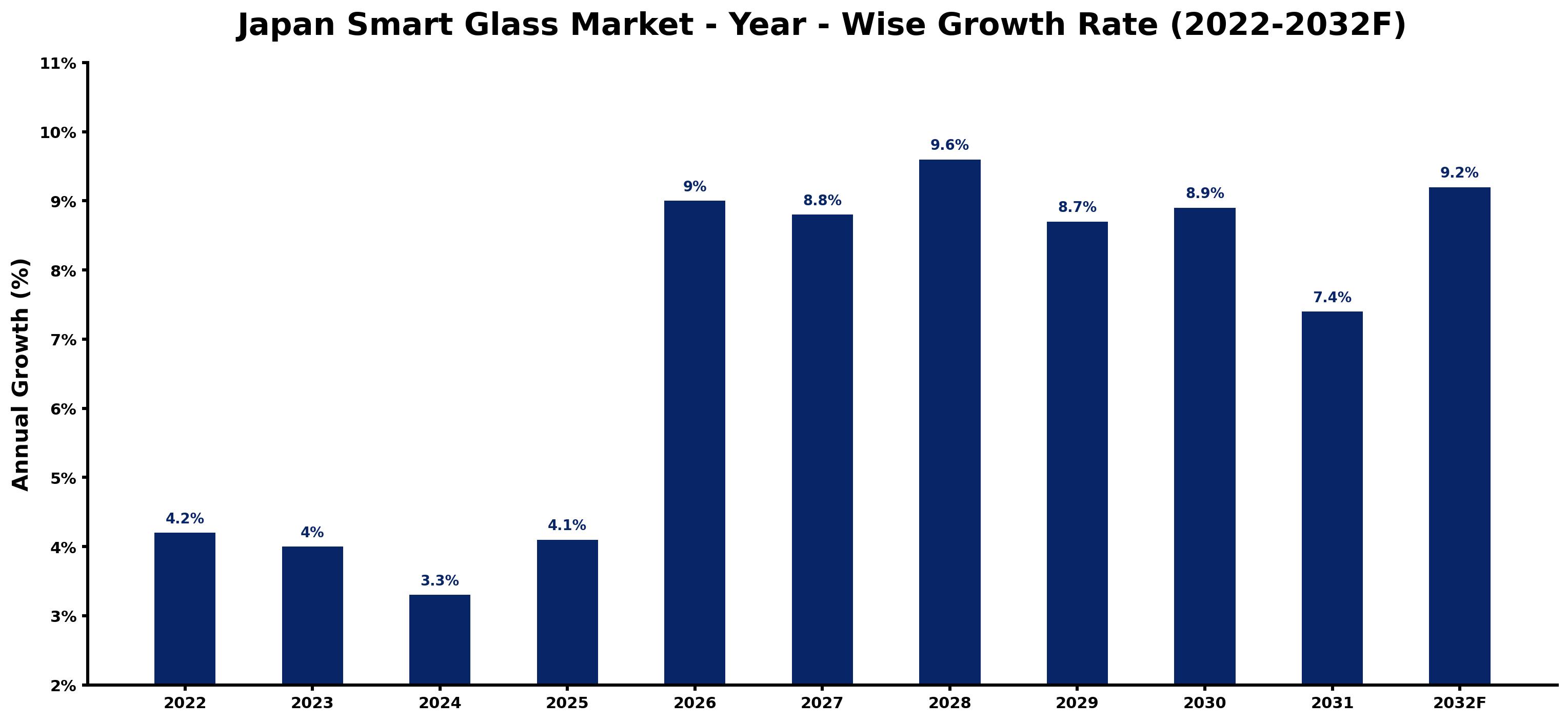
Each row of the following table gives one year's estimated growth and the event or demand shift that explains it.
| Year | Estimated Annual Growth (%) | Market Rationale |
| 2022 | 4.2 | Demand for smart glass was strong, driven by energy efficiency needs in construction. |
| 2023 | 4.0 | Growth slowed slightly as market adjustments took place amid rising material costs. |
| 2024 | 3.3 | Continued demand for energy-efficient solutions led to further deceleration in growth rates. |
| 2025 | 4.1 | A resurgence in construction projects spurred increased orders for smart glass products. |
| 2026 | 9.0 | Demand is expected to surge as new building energy standards come into effect, boosting orders. |
| 2027 | 8.8 | Growth is projected to moderate as the market adjusts to the rapid expansion of the previous year. |
| 2028 | 9.6 | The market peaks due to heightened demand for advanced smart glass technologies. |
| 2029 | 8.7 | Growth is expected to slow as market saturation begins to impact new orders for smart glass. |
| 2030 | 8.9 | A renewed focus on energy efficiency in existing buildings will drive demand higher again. |
| 2031 | 7.4 | Growth is projected to decelerate as competition intensifies among suppliers in the smart glass sector. |
| 2032 | 9.2 | Increased adoption of smart glass in automotive applications will spur further demand. |
Note: Market size estimations and growth projections presented in this report are based on 6Wresearch's proprietary forecasting methodology, utilizing the latest available industry data, government publications, and primary research inputs.
Japan Smart Glass Market Synopsis
Smart glass, also referred to as switchable glass, modifies its light transmission properties using technologies such as electrochromic and thermochromic processes. Its main applications encompass energy-efficient windows and privacy glass within the construction and automotive sectors. The Japan Smart Glass Market is growing due to heightened demand from these industries, spurred by new energy standards and advancements in smart glass technologies.
Market Dynamics Impact Analysis (2026–2032)
| Factor | Type | Impact | Primary Segment Affected |
| Rising demand for energy-efficient solutions in construction | Driver | High | Construction |
| Increased adoption of smart glass in automotive applications | Driver | High | Transportation |
| Growing investments in energy-efficient building technologies | Opportunity | High | Construction |
| Rising consumer interest in privacy solutions for residential and commercial spaces | Opportunity | Medium | Transportation |
| High production costs of advanced smart glass technologies | Restraint | High | Electrochromic |
| Limited awareness of smart glass benefits among potential buyers | Restraint | Medium | Photochromic |
| Competition from traditional glass products that are less expensive | Challenge | High | Thermochromic |
| Technological barriers in manufacturing advanced smart glass solutions | Challenge | Medium | Suspended Particle Device (SPD) |
Evaluation of Drivers in Japan Smart Glass Market (2026–2032)
Demand rests on the following drivers, each shown with the segment it touches most.
| Drivers | Primary Segment Affected | Why It Matters (Evidence) |
| Demand for energy-efficient windows | Construction | The Building Energy Efficiency Act mandates energy standards, driving demand for smart glass in new buildings. |
| Increased comfort in vehicles | Transportation | Automotive manufacturers are integrating smart glass to improve aesthetics and thermal comfort in vehicles. |
| Technological advancements in smart glass | Electrochromic | Innovations in electrochromic technology are making smart glass more accessible and attractive to buyers. |
| Growing environmental awareness | Photochromic | Consumers are increasingly seeking sustainable solutions, boosting interest in smart glass applications. |
| Government incentives for energy-efficient technologies | Thermochromic | Subsidies and incentives for energy-efficient products are encouraging adoption in the construction sector. |
Behind the steady rise in orders sits increasing demand from the construction and automotive sectors. Energy-efficient windows are becoming essential as new building energy standards are implemented, leading to a surge in smart glass orders. Automotive manufacturers are integrating smart glass to improve vehicle aesthetics and comfort, further stimulating demand. As awareness of environmental issues grows, consumers are increasingly seeking sustainable solutions, boosting interest in smart glass applications across various sectors.
Evaluation of Restraints in Japan Smart Glass Market
Below are the constraints most often cited by buyers and suppliers, with the segment each affects.
| Market Restraint | Primary Segment Affected | Why It Matters (Evidence) |
| High production costs hinder smart glass adoption | Construction | Raw materials and advanced manufacturing processes are expensive in Japan, resulting in increased prices for producers. |
| Technology limitations restrict efficiency | Electrochromic | Many products still lack optimal performance under varying conditions, leaving buyers dissatisfied and seeking alternatives. |
| Buyers face challenges in understanding benefits | Transportation | This complicates decision-making and slows market penetration, resulting in lost opportunities for suppliers. |
| Intense competition from traditional glass products | Construction | This pressure on prices makes it difficult for suppliers to maintain margins while trying to attract buyers. |
| Limited local suppliers increase costs | Electrochromic | This situation results in higher production costs for smart glass, affecting overall market growth. |
Japan Smart Glass Market Challenges
High production costs present a major barrier to smart glass adoption, as sourcing raw materials incurs substantial expenses, resulting in inflated prices for producers. A limited number of local suppliers exacerbates this issue, compelling producers to depend on imports, which raises costs for buyers by approximately 15%. Technological limitations restrict the performance of existing smart glass solutions, leading to inefficiencies that can delay project timelines for buyers by several weeks. Many buyers find it challenging to grasp the advantages of smart glass, complicating their purchasing decisions and causing missed opportunities for suppliers in a competitive marketplace.
Trends in the Japan Smart Glass Market
Buyers and suppliers in the Japan Smart Glass Market are adjusting to the following trends.
- Shift from Traditional to Smart Glass in Construction: The construction sector is increasingly adopting smart glass solutions, with a 20% rise in installations reported in Tokyo in 2023. This shift improves energy efficiency and modern aesthetics in buildings.
- Transition to Eco-Friendly Smart Glass: In 2022, the demand for eco-friendly smart glass surged, with a 15% increase in sales attributed to growing environmental awareness among consumers in Japan. This trend is reshaping product offerings.
- Emergence of Smart Glass in Automotive Design: Since 2021, automotive manufacturers have started integrating smart glass into vehicle designs, with a reported 30% increase in smart glass usage in new models. This improves comfort and aesthetics.
- Prioritisation of Energy Efficiency Standards: The implementation of new energy efficiency standards in 2025 is driving demand for smart glass, with a projected 25% increase in installations in commercial buildings across Japan.
Investment Opportunities in the Japan Smart Glass Market
The openings below show where demand in the Japan Smart Glass Market is visible and how suppliers can enter.
- Supply of Advanced Smart Glass Technologies: With the market projected to grow, there is a pressing need for advanced smart glass technologies. Construction firms are particularly interested in energy-efficient solutions that comply with new standards.
- Investment in Energy-Efficient Solutions: Now is an ideal time to invest in energy-efficient smart glass products, as demand is on the rise. The construction sector is actively seeking suppliers capable of providing effective solutions.
- Expansion of Smart Glass Applications: With a notable increase in demand for smart glass in automotive applications, suppliers should focus on developing products that enhance vehicle aesthetics and functionality.
- Collaboration with Local Manufacturers: Partnering with local construction firms in Japan can ease entry into the smart glass market, particularly as demand for energy-efficient solutions continues to expand.
Government Initiatives in the Japan Smart Glass Market
The Building Energy Efficiency Act, amended in 2022, mandates that all new buildings comply with energy standards starting April 2025, reinforcing the regulatory framework for smart glass producers. This law promotes the adoption of energy-efficient technologies, benefiting both producers and buyers by ensuring adherence to modern standards.
The Plastic Resource Circulation Act encourages the reduction and recycling of plastics, supporting alternatives such as smart glass. The Ministry of the Environment (MoE) and the Ministry of Economy, Trade and Industry (METI) oversee this initiative, which funds projects aimed at integrating sustainable materials into construction.
Future Insight of the Japan Smart Glass Market
By 2032, regulatory changes will drive a notable shift towards energy-efficient materials across various sectors, prompting suppliers to adopt advanced manufacturing technologies. This will improve product performance and reduce costs, benefiting buyers seeking effective solutions. Enhanced standards for building materials will facilitate the broader adoption of smart glass in multiple applications. The automotive sector will increasingly integrate smart glass to improve vehicle aesthetics and functionality, with projections indicating a 30% increase in usage in this industry.
Market Segmentation Analysis
Japan Smart Glass Market report covers a detailed analysis of the following market segments:
By Technology – Thermochromic Leads, Photochromic Expected to Grow Fastest
According to Ravi Bhandari, Research Head at 6Wresearch, the largest technology category in 2025 was Thermochromic, at 33% of revenue. Thermochromic technology commands the largest share as it is commonly used in energy-efficient windows that react to temperature variations, appealing to both residential and commercial markets. This technology aligns well with Japan's focus on energy conservation, making it a popular choice among builders and architects. Over 2026–2032, Photochromic is expected to post the fastest growth, at a CAGR of 12.3%. Photochromic technology is rapidly gaining traction due to its application in eyewear and windows that darken in sunlight, catering to consumers who value convenience and comfort. This growth trend is expected to persist as consumer awareness of smart glass benefits increases. Suppliers should prioritise advancements in photochromic technology to meet the rising demand in the market.
By End User Industry – Transportation Leads, Construction Expected to Grow Fastest
In 2025, Transportation led the end user industry split with a 42% share. The transportation sector commands the largest market share due to the widespread application of smart glass in automotive windows, which enhances both comfort and aesthetics for passengers. The strong automotive production in Japan supports the high demand for advanced glass solutions in this industry. Construction is projected to grow fastest, at a CAGR of 11.6% during 2026–2032. The construction industry is experiencing the fastest growth, driven by the increasing adoption of smart glass in modern buildings focused on energy efficiency. This trend reflects a broader commitment to sustainable construction practices in response to regulatory requirements and consumer expectations. Suppliers should prioritise the construction sector to meet the rising demand for energy-efficient building solutions.
Key Attractiveness of the Report
- 10 Years of Market Numbers
- Historical Data Starting from 2022 to 2025
- Base Year 2025
- Forecast Data until 2032
- Key Performance Indicators Impacting the Market
- Major Upcoming Developments and Projects
Key Highlights of the Report:
- Japan Smart Glass Market Outlook
- Market Size of Japan Smart Glass Market, 2025
- Forecast of Japan Smart Glass Market, 2032
- Historical Data and Forecast of Japan Smart Glass Revenues & Volume for the Period 2022-2032
- Japan Smart Glass Market Trend Evolution
- Japan Smart Glass Market Drivers and Challenges
- Japan Smart Glass Price Trends
- Japan Smart Glass Porter's Five Forces
- Japan Smart Glass Industry Life Cycle
- Historical Data and Forecast of Japan Smart Glass Market Revenues & Volume By Technology for the Period 2022-2032
- Historical Data and Forecast of Japan Smart Glass Market Revenues & Volume By Thermochromic for the Period 2022-2032
- Historical Data and Forecast of Japan Smart Glass Market Revenues & Volume By Photochromic for the Period 2022-2032
- Historical Data and Forecast of Japan Smart Glass Market Revenues & Volume By Electrochromic for the Period 2022-2032
- Historical Data and Forecast of Japan Smart Glass Market Revenues & Volume By Suspended Particle Device (SPD) for the Period 2022-2032
- Historical Data and Forecast of Japan Smart Glass Market Revenues & Volume By Polymer Disperse Liquid Crystal (PDLC) for the Period 2022-2032
- Historical Data and Forecast of Japan Smart Glass Market Revenues & Volume By Others for the Period 2022-2032
- Historical Data and Forecast of Japan Smart Glass Market Revenues & Volume By End User Industry for the Period 2022-2032
- Historical Data and Forecast of Japan Smart Glass Market Revenues & Volume By Transportation for the Period 2022-2032
- Historical Data and Forecast of Japan Smart Glass Market Revenues & Volume By Construction for the Period 2022-2032
- Historical Data and Forecast of Japan Smart Glass Market Revenues & Volume By Power Generation for the Period 2022-2032
- Historical Data and Forecast of Japan Smart Glass Market Revenues & Volume By Others for the Period 2022-2032
- Japan Smart Glass Import Export Trade Statistics
- Market Opportunity Assessment By Technology
- Market Opportunity Assessment By End User Industry
- Japan Smart Glass Top Companies Market Share
- Japan Smart Glass Competitive Benchmarking By Technical and Operational Parameters
- Japan Smart Glass Company Profiles
- Japan Smart Glass Key Strategic Recommendations
Market Covered
The report covers the following segments.
By Technology
- Thermochromic
- Photochromic
- Electrochromic
- Suspended Particle Device (SPD)
- Polymer Disperse Liquid Crystal (PDLC)
- Others
By End User Industry
- Transportation
- Construction
- Power Generation
- Others































