Japan Soft Tissue Disorder Treatment Market Size & Growth Rate
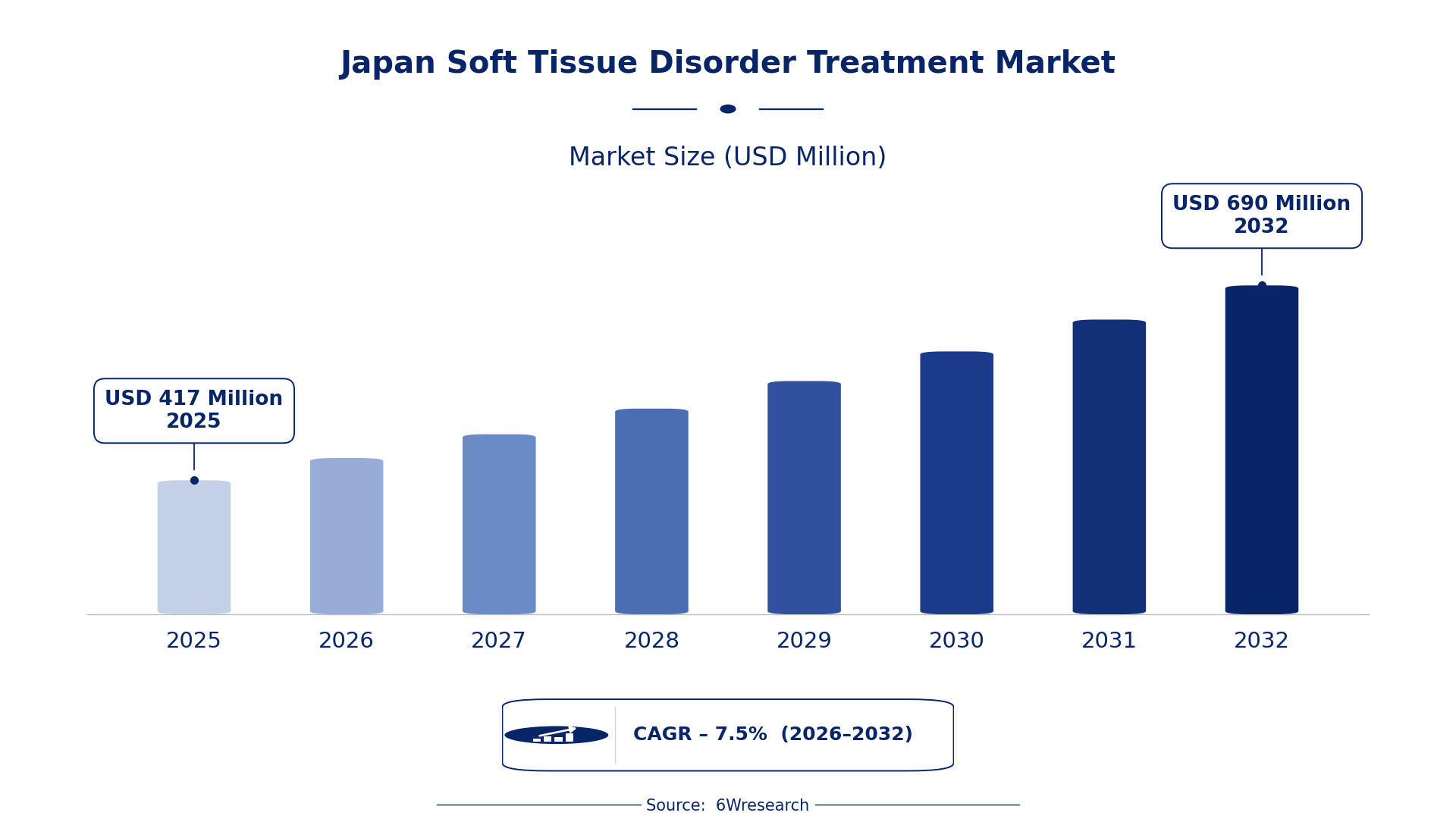
According to 6Wresearch internal database and industry insights, the Japan Soft Tissue Disorder Treatment Market was valued at USD 417 Million in 2025 and is projected to reach USD 690 Million by 2032, growing at a CAGR of approximately 7.5% during 2026–2032.
Japan Soft Tissue Disorder Treatment Market Highlights
| Report Metric | Details |
| Report Name | Japan Soft Tissue Disorder Treatment Market (2026-2032) |
| Market Size 2025 | USD 417 Million |
| Market Size 2032 | USD 690 Million |
| Absolute Growth 2025–2032 | USD 273 Million |
| CAGR 2026–2032 | 7.5% |
| Peak Annual Growth | 8.7% in 2032 |
| Forecast Period | 2026–2032 |
| Historical Data | 2022–2025 |
| Base Year | 2025 |
| Leading Disorder Type, 2025 | Tendonitis (44% share) |
| Leading Treatment Type, 2025 | NSAIDs & Physiotherapy (51% share) |
| Leading Care Setting, 2025 | Outpatient Clinics (46% share) |
| Leading End User, 2025 | Sports Injury Patients (41% share) |
| Fastest-Growing Disorder Type | Sprains & Strains (10.8% CAGR) |
| Fastest-Growing Treatment Type | Cryotherapy (10.9% CAGR) |
| Fastest-Growing Care Setting | Emergency Rooms (9.8% CAGR) |
| Fastest-Growing End User | Orthopedic Patients (9.9% CAGR) |
| Growing Sector | Outpatient Clinics |
| Key End Users | Sports Injury Patients, Orthopedic Patients, Elderly Population, Rehabilitation Units |
Japan Soft Tissue Disorder Treatment Market Year-wise Growth Rate and Key Drivers (2022–2032)
This graph illustrates the annual growth rates of the market from 2022 to 2032, highlighting a steady upward trajectory and projected market expansion over the forecast period.
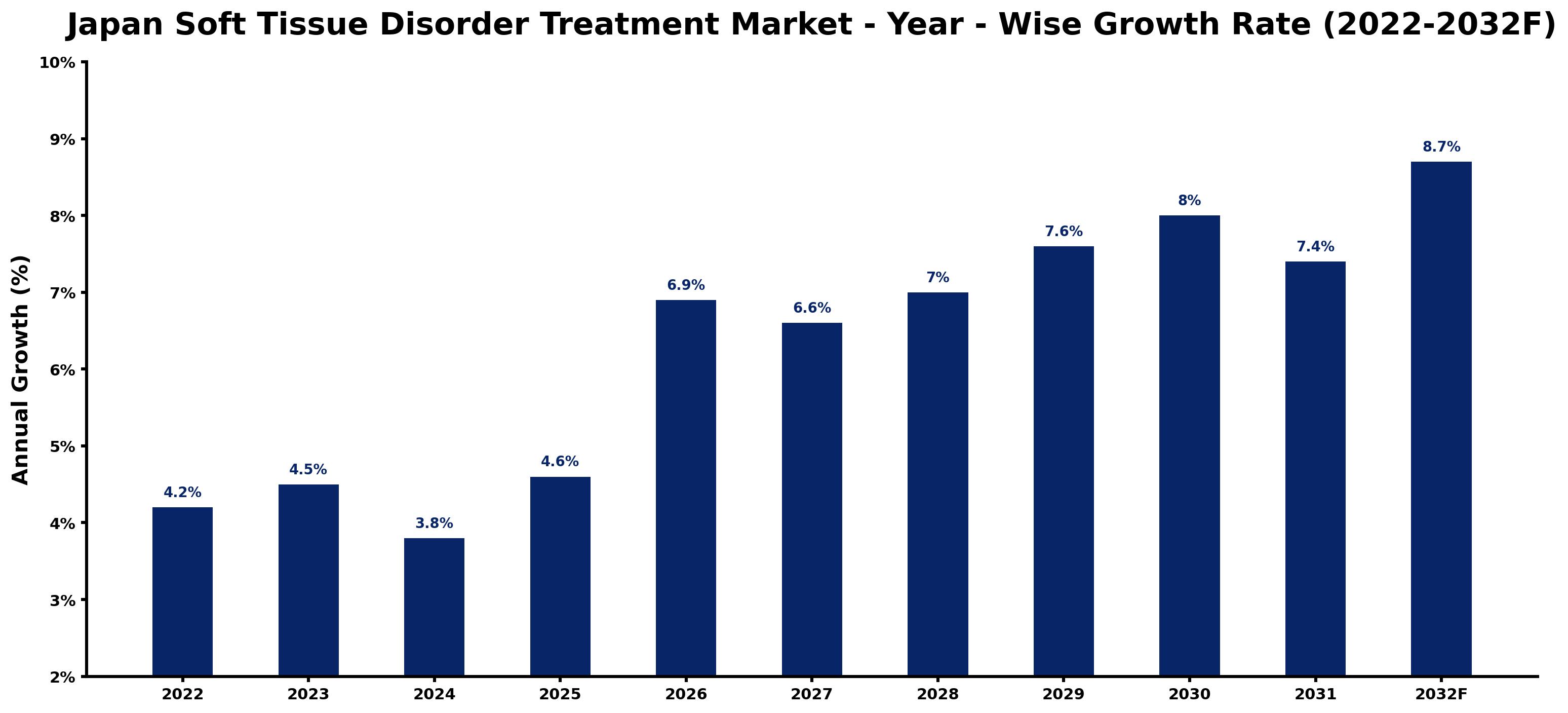
Year by year, the estimates below pair each growth rate with the development that shaped it.
| Year | Estimated Annual Growth (%) | Market Rationale |
| 2022 | 4.2 | The market experienced steady demand from sports injury patients and outpatient clinics. |
| 2023 | 4.5 | Growth was driven by increased awareness of soft tissue treatments among the population. |
| 2024 | 3.8 | A slight slowdown occurred as treatment options became more standardised across facilities. |
| 2025 | 4.6 | Demand surged due to the Tokyo 2020 Olympics highlighting sports injury management. |
| 2026 | 6.9 | The market is projected to grow as physiotherapy adoption rates continue to rise. |
| 2027 | 6.6 | A slowdown is anticipated as the market stabilises after rapid growth in previous years. |
| 2028 | 7.0 | Increased investments in outpatient clinics will support further growth in treatment access. |
| 2029 | 7.6 | The market is expected to expand as the population ages and requires more treatments. |
| 2030 | 8.0 | Growth is projected to accelerate with advancements in treatment technologies and methodologies. |
| 2031 | 7.4 | A slight slowdown is expected as the market reaches a more mature stage. |
| 2032 | 8.7 | The market will peak as new treatment standards and practices are widely adopted. |
Note: Market size estimations and growth projections presented in this report are based on 6Wresearch's proprietary forecasting methodology, utilizing the latest available industry data, government publications, and primary research inputs.
Japan Soft Tissue Disorder Treatment Market Synopsis
Soft Tissue Disorder Treatment involves managing conditions like tendonitis and sprains through methods such as NSAIDs and physiotherapy. In 2022, approximately 30% of patients treated were sports injury patients, reflecting strong demand. Growth is driven by the increasing elderly population, projected to exceed 36 million by 2025, alongside a government initiative launched in 2023 to improve physiotherapy training in clinics, further enhancing treatment accessibility.
Market Dynamics Impact Analysis (2026–2032)
| Factor | Type | Impact | Primary Segment Affected |
| Growing elderly population increasing demand for treatments | Driver | High | Tendonitis |
| Increased awareness of physiotherapy benefits among patients | Driver | High | NSAIDs & Physiotherapy |
| Expansion of outpatient clinics in rural areas | Opportunity | High | Outpatient Clinics |
| Rising incidence of sports injuries among active populations | Opportunity | High | Sports Injury Patients |
| Limited access to specialized treatment in rural areas | Restraint | High | Emergency Rooms |
| High wait times in emergency rooms for treatment | Restraint | Medium | Pain Management Centers |
| Inadequate training for physiotherapists in some regions | Challenge | High | Tendonitis |
| High costs associated with advanced treatment technologies | Challenge | Medium | Corticosteroid Injections |
Evaluation of Drivers in Japan Soft Tissue Disorder Treatment Market (2026–2032)
The main growth drivers and the segments they affect most are set out below.
| Drivers | Primary Segment Affected | Why It Matters (Evidence) |
| Increasing elderly population | Tendonitis | The population of elderly individuals in Japan is projected to exceed 36 million by 2025, leading to more treatments for age-related conditions. |
| Growing awareness of physiotherapy | NSAIDs & Physiotherapy | Physiotherapy adoption rates in Japan are around 60% among patients with soft tissue injuries, encouraging more treatment purchases. |
| Expansion of outpatient clinics | Outpatient Clinics | The Tokyo metropolitan area has the highest concentration of outpatient clinics, improving access to treatments for patients. |
| Rising incidence of sports injuries | Sports Injury Patients | The annual number of sprains and strains treated in clinics is estimated at 1 million cases, driving demand for effective treatments. |
| Government initiatives improving training | Tendonitis | In 2023, the Japanese government launched a program to improve physiotherapy training in clinics, increasing treatment quality. |
Behind the steady rise in orders sits the increasing elderly population, projected to exceed 36 million by 2025, which raises demand for treatments. Awareness of physiotherapy benefits has led to adoption rates of around 60% among patients with soft tissue injuries. The annual number of sprains and strains treated in clinics is estimated at 1 million cases, driving demand for effective treatments. The expansion of outpatient facilities, particularly in urban areas, is improving access to treatments for patients.
Evaluation of Restraints in Japan Soft Tissue Disorder Treatment Market
The table below lists the restraints and the evidence behind each.
| Market Restraint | Primary Segment Affected | Why It Matters (Evidence) |
| Limited access to specialized treatment in rural areas | Emergency Rooms | Many rural areas lack sufficient outpatient clinics, restricting access to timely treatment for soft tissue injuries. |
| High wait times in emergency rooms for treatment | Pain Management Centers | The average wait time for treatment in emergency rooms for soft tissue injuries is around 2 hours, delaying care. |
| Inadequate training for physiotherapists | Tendonitis | Some regions face challenges with physiotherapy training, affecting treatment quality and patient outcomes. |
| High costs associated with advanced treatment technologies | Corticosteroid Injections | Advanced treatment options can be costly, limiting their availability to certain patient demographics. |
| Limited awareness of treatment options among patients | Myofascial Pain | Patients may not fully understand available treatment options, hindering their willingness to seek care. |
Japan Soft Tissue Disorder Treatment Market Challenges
Clinics treating soft tissue disorders in Japan contend with intense competition, particularly in the Tokyo metropolitan area where outpatient facilities are plentiful. Patients often face long wait times, averaging 2 hours in emergency rooms, which delays essential care for injuries. Rising operational costs are straining budgets, as the government allocates ¥500 million for pain management research, impacting both clinics and patients. Compliance with standards like ISO 13485 for medical devices complicates processes for producers, resulting in higher prices for buyers seeking effective treatment options.
Trends in the Japan Soft Tissue Disorder Treatment Market
Four trends stand out in the Japan Soft Tissue Disorder Treatment Market.
- Sports Injury Patients Prioritised over Other End Users: Sports injury patients are increasingly prioritised in treatment settings, particularly following the Tokyo 2020 Olympics, which highlighted the need for effective management. Approximately 30% of patients treated for soft tissue disorders were sports injury patients in 2022.
- Shift from Traditional to Advanced Treatment Methods: The trend towards advanced treatment methods like dry needling is gaining popularity among physiotherapists, with many clinics adopting new techniques. This shift is evidenced by the rising interest in dry needling as an effective treatment method.
- Emergency Rooms Emerging as Key Treatment Settings: Emergency rooms are becoming critical for soft tissue disorder treatments, especially with a projected CAGR of 9.8% from 2026 to 2032. This shift reflects the need for immediate care for acute injuries.
- Physiotherapy Adoption Rates Rising: Physiotherapy adoption rates are around 60% among patients with soft tissue injuries, indicating a growing acceptance of this treatment modality. This trend is supported by government initiatives to improve training.
Investment Opportunities in the Japan Soft Tissue Disorder Treatment Market
Investors looking at the Japan Soft Tissue Disorder Treatment Market should consider the following areas.
- Growing Demand for Outpatient Clinics: With the population projected to exceed 36 million elderly individuals by 2025, there is a notable opportunity to invest in outpatient clinics. Expanding facilities in rural areas can address the rising demand for treatments.
- Investment in Physiotherapy Training: The 2023 government initiative to enhance physiotherapy training presents an opportunity to invest in educational programs. Collaborating with training institutions can improve treatment quality and accessibility.
- Expansion of Pain Management Centers: The increasing number of pain management centers, with over 1,200 across Japan, suggests a gap for investment. Focusing on enhancing services in these centres can cater to the growing patient population.
- Rising Popularity of Dry Needling: The growing interest in dry needling as a treatment method presents a unique investment opportunity. Partnering with physiotherapy clinics to provide training can facilitate market entry.
Government Initiatives in the Japan Soft Tissue Disorder Treatment Market
The Medical Care Act (1948) sets standards for hospitals and clinics, ensuring treatment facilities meet necessary criteria. The Long-Term Care Insurance Act (1997) funds nursing care and support services for older individuals, ensuring they receive adequate treatment and support.
In 2023, the Ministry of Health, Labour and Welfare allocated ¥500 million for pain management research, administered by the MHLW. This funding aims to improve treatment options and access for patients suffering from soft tissue disorders.
Future Insight of the Japan Soft Tissue Disorder Treatment Market
By 2032, government initiatives will enhance access to outpatient facilities in rural areas, broadening treatment availability for patients. Improved physiotherapy training programmes will elevate care quality, leading to better recovery outcomes for buyers. The increasing elderly population will drive demand for soft tissue treatments, prompting clinics to diversify their service offerings. Adoption of treatment standards such as JIS Z 8801 will ensure high-quality physiotherapy equipment, building patient trust.
Market Segmentation Analysis
Japan Soft Tissue Disorder Treatment Market report covers a detailed analysis of the following market segments:
By Disorder Type – Tendonitis Leads, Sprains & Strains Expected to Grow Fastest
According to Saurav Kr Singh, Senior Research Analyst at 6Wresearch, Tendonitis took 44% of disorder type revenue in 2025, more than any other category. Tendonitis is a common condition treated in outpatient settings, particularly among athletes who require effective rehabilitation. The high volume of cases related to sports injuries ensures that this disorder maintains a significant share in the treatment market. Sprains & Strains are set to record the highest CAGR in this split, 10.8% over 2026–2032. The increasing incidence of sprains and strains is largely attributed to the rise in sports participation, with approximately 1 million cases treated annually. This trend is expected to continue, further driving the demand for effective treatment solutions. Suppliers should focus on developing targeted treatments for sprains and strains to meet the growing market needs.
By Treatment Type – NSAIDs & Physiotherapy Leads, Cryotherapy Expected to Grow Fastest
The largest treatment type category in 2025 was NSAIDs & Physiotherapy, at 51% of revenue. NSAIDs and physiotherapy are the primary treatment modalities for soft tissue disorders, favoured for their effectiveness in managing conditions like tendonitis. Their widespread use in outpatient clinics solidifies their dominant position in the market. Cryotherapy is projected to grow fastest, at a CAGR of 10.9% during 2026–2032. Cryotherapy is gaining traction as a supplementary treatment option for reducing inflammation, particularly among physiotherapy practitioners. Its increasing adoption is likely to boost its market presence in the coming years. Buyers may benefit from integrating cryotherapy into their treatment protocols to enhance recovery processes.
By Care Setting – Outpatient Clinics Lead, Emergency Rooms Expected to Grow Fastest
Outpatient Clinics held 46% of the Japan Soft Tissue Disorder Treatment Market by care setting in 2025. Outpatient clinics are the main venue for treating soft tissue disorders, offering accessible care to a diverse patient population. Their prevalence, especially in urban areas, ensures a steady flow of patients seeking treatment for various conditions. The quickest growth will come from Emergency Rooms, forecast to expand at a CAGR of 9.8% between 2026 and 2032. Emergency rooms are seeing a rise in patient visits as the first point of care for acute injuries, underscoring the necessity for immediate treatment options. This trend is expected to continue as awareness of timely care grows. Suppliers should consider collaborations with emergency rooms to improve treatment accessibility and response times.
By End User – Sports Injury Patients Lead, Orthopedic Patients Expected to Grow Fastest
In 2025, Sports Injury Patients led the end user split with a 41% share. Sports injury patients constitute a major user group for soft tissue treatments, particularly in urban areas with high levels of sports participation. Their demand is driven by the necessity for effective rehabilitation to return to athletic activities. Over 2026–2032, Orthopedic Patients are expected to post the fastest growth, at a CAGR of 9.9%. Orthopedic patients are emerging as a rapidly expanding segment, frequently requiring various treatment modalities for soft tissue issues. This growth is associated with the ageing population and increasing activity levels among older adults. Providers should customise services to meet the specific needs of orthopedic patients to capture this growing market.
Key Attractiveness of the Report
- 10 Years of Market Numbers
- Historical Data Starting from 2022 to 2025
- Base Year 2025
- Forecast Data until 2032
- Key Performance Indicators Impacting the Market
- Major Upcoming Developments and Projects
Key Highlights of the Report:
- Japan Soft Tissue Disorder Treatment Market Outlook
- Market Size of Japan Soft Tissue Disorder Treatment Market, 2025
- Forecast of Japan Soft Tissue Disorder Treatment Market, 2032
- Historical Data and Forecast of Japan Soft Tissue Disorder Treatment Revenues & Volume for the Period 2022-2032F
- Japan Soft Tissue Disorder Treatment Market Trend Evolution
- Japan Soft Tissue Disorder Treatment Market Drivers and Challenges
- Japan Soft Tissue Disorder Treatment Price Trends
- Japan Soft Tissue Disorder Treatment Porter's Five Forces
- Japan Soft Tissue Disorder Treatment Industry Life Cycle
- Historical Data and Forecast of Japan Soft Tissue Disorder Treatment Market Revenues & Volume By Disorder Type for the Period 2022-2032F
- Historical Data and Forecast of Japan Soft Tissue Disorder Treatment Market Revenues & Volume By Tendonitis for the Period 2022-2032F
- Historical Data and Forecast of Japan Soft Tissue Disorder Treatment Market Revenues & Volume By Sprains & Strains for the Period 2022-2032F
- Historical Data and Forecast of Japan Soft Tissue Disorder Treatment Market Revenues & Volume By Bursitis for the Period 2022-2032F
- Historical Data and Forecast of Japan Soft Tissue Disorder Treatment Market Revenues & Volume By Myofascial Pain for the Period 2022-2032F
- Historical Data and Forecast of Japan Soft Tissue Disorder Treatment Market Revenues & Volume By Treatment Type for the Period 2022-2032F
- Historical Data and Forecast of Japan Soft Tissue Disorder Treatment Market Revenues & Volume By NSAIDs & Physiotherapy for the Period 2022-2032F
- Historical Data and Forecast of Japan Soft Tissue Disorder Treatment Market Revenues & Volume By Cryotherapy for the Period 2022-2032F
- Historical Data and Forecast of Japan Soft Tissue Disorder Treatment Market Revenues & Volume By Corticosteroid Injections for the Period 2022-2032F
- Historical Data and Forecast of Japan Soft Tissue Disorder Treatment Market Revenues & Volume By Dry Needling for the Period 2022-2032F
- Historical Data and Forecast of Japan Soft Tissue Disorder Treatment Market Revenues & Volume By Care Setting for the Period 2022-2032F
- Historical Data and Forecast of Japan Soft Tissue Disorder Treatment Market Revenues & Volume By Outpatient Clinics for the Period 2022-2032F
- Historical Data and Forecast of Japan Soft Tissue Disorder Treatment Market Revenues & Volume By Emergency Rooms for the Period 2022-2032F
- Historical Data and Forecast of Japan Soft Tissue Disorder Treatment Market Revenues & Volume By Primary Care Clinics for the Period 2022-2032F
- Historical Data and Forecast of Japan Soft Tissue Disorder Treatment Market Revenues & Volume By Pain Management Centers for the Period 2022-2032F
- Historical Data and Forecast of Japan Soft Tissue Disorder Treatment Market Revenues & Volume By End User for the Period 2022-2032F
- Historical Data and Forecast of Japan Soft Tissue Disorder Treatment Market Revenues & Volume By Sports Injury Patients for the Period 2022-2032F
- Historical Data and Forecast of Japan Soft Tissue Disorder Treatment Market Revenues & Volume By Orthopedic Patients for the Period 2022-2032F
- Historical Data and Forecast of Japan Soft Tissue Disorder Treatment Market Revenues & Volume By Elderly Population for the Period 2022-2032F
- Historical Data and Forecast of Japan Soft Tissue Disorder Treatment Market Revenues & Volume By Rehabilitation Units for the Period 2022-2032F
- Japan Soft Tissue Disorder Treatment Import Export Trade Statistics
- Market Opportunity Assessment By Disorder Type
- Market Opportunity Assessment By Treatment Type
- Market Opportunity Assessment By Care Setting
- Market Opportunity Assessment By End User
- Japan Soft Tissue Disorder Treatment Top Companies Market Share
- Japan Soft Tissue Disorder Treatment Competitive Benchmarking By Technical and Operational Parameters
- Japan Soft Tissue Disorder Treatment Company Profiles
- Japan Soft Tissue Disorder Treatment Key Strategic Recommendations
Market Covered
The following segment groups are covered in the report.
By Disorder Type
- Tendonitis
- Sprains & Strains
- Bursitis
- Myofascial Pain
By Treatment Type
- NSAIDs & Physiotherapy
- Cryotherapy
- Corticosteroid Injections
- Dry Needling
By Care Setting
- Outpatient Clinics
- Emergency Rooms
- Primary Care Clinics
- Pain Management Centers
By End User
- Sports Injury Patients
- Orthopedic Patients
- Elderly Population
- Rehabilitation Units































